Subscribe
Share
Share
Embed

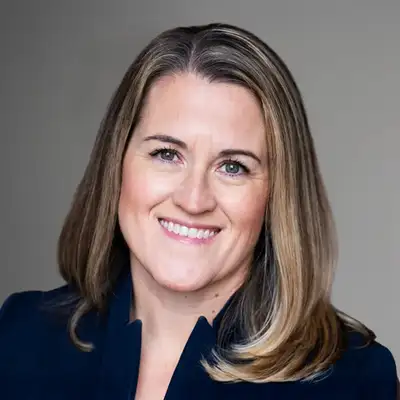
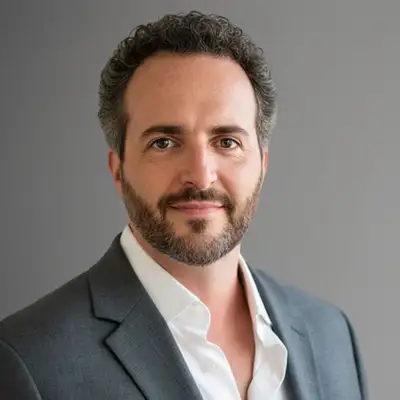
Meet the Insiders rewriting the rules of influence. Pulitzer Prize-winning journalist Brody Mullins and veteran DC strategist Lisa Camooso Miller interview the leaders who shape perception, move policy, and win when it matters. Not pundits or commentators – these are the operators driving some of the most critical strategies and outcomes in today's Washington.
JIM: The single worst thing that you could do to the men that I know is have them not work. This idea that they're going to go and read poetry and that they're going to learn a foreign language, no. Porn, gambling, smoking, drinking, getting high, Polymarket, Kalshi, you're not going to have this romantic outcome.
ANNCR: Behind every major policy decision, every corporate strategy, every Washington power play are the insiders shaping the game and the new rules to win it. The Deciders with Pulitzer Prize winning journalist Brody Mullins and veteran DC strategist Lisa Camooso Miller.
LISA: Welcome to The Deciders where we talk to the insiders rewriting the playbook for effective advocacy in Washington DC. Today we're joined by Jim VandeHei, who's the co-founder and CEO of Axios. Jim, it's great to have you.
JIM: Good to be here. Thank you.
BRODY: So before we start, I got to tell a story. So my first job in Washington DC was at Congress Daily covering the energy and commerce committee, writing about lobbies and campaign finance. And every few days when roll call came out, I get scooped by these two guys at roll call Jim VandeHei and John Bresnahan. And so I decided that in order to be a good reporter, I needed to go to roll call. So I spent a couple years trying to write roll call type stories to get myself to roll call. I finally got there and you left and went to the journal. So then I decided, shit, I need to go to the journals. Then I worked on my butt off to get the journal, got there and you'd already gone in the post, I think.
JIM: Keep running for me.
BRODY: So tell us about a mentor that you had who helped you in Washington.
JIM: David Rogers, certainly. I was like 28 when I got to the journal. I got hired at a relatively young age to cover the hill and David was notoriously a hard ass and really demanding. And I decided like the Wisconsin kid in me, I'm going to outwork everyone. I'm going to outwork David. So I'm going to get there before him and I'm going to leave after. And so I would get there literally before they would open the Senate gallery and be waiting there when David would be the first person to come in at seven. And then after three weeks of being there till 11 at night, I was like, screw it. You win. And then he was, I don't think they wanted, we're great friends now, but he didn't want them to hire me at the time. So he was kind of brutal towards me. So he would rip apart my stories. But then little by little he actually taught me how to write a back pager, which was thinking much more conceptually and really made me a much better writer and a much better reporter, probably the most serious, thoughtful, deeply reported reporter we're ever going to meet. He was literally an institution. Members of the appropriations committee would call him to figure out whether or not their understanding of the rules and the process and the history of a piece of legislation were accurate. That doesn't happen anymore.
BRODY: I think a sad thing about the changes in journalism is that they don't want reporters like David Rogers anymore. It takes too long, does too much research. I think part of the reason why people are losing trust in the media or why by the media can't employ reporters like that anymore.
JIM: Yeah, you need that institutional knowledge. David would really care about a line item and a budget and he would actually understand, well, where did that come from? Why is that money there? Who does it go to? Is it being spent the way it should be spent? It's kind of what Congress is supposed to do in some of its watchdog functions. But once you lose that, then nobody's doing it. And when nobody's doing it, that's when bad things happen or money gets misspent or things get abused. That's why the system, as imperfect as it is, is a hell of a lot more perfect than any other system because you've got the media and you've got the different branches of government working in a relatively free market. And I wish there were more David Rogers.
LISA: From the flip side, when I was a comms person, we used to wait for hours long after the floor had closed to outweigh David Rogers. Inevitably, the next morning we would wake up and he would've had an exclusive with the speaker that I worked for because he waited longer than we did. No one would sit outside of Hastert's office and just wait and wait. Absolutely. Absolutely. But Jim, so you started your career as a journalist, but now you've become a founder. I'm curious about what it was that inspired you to start Politico, which really has changed and revolutionized media in Washington and all across the country. I
JIM: Mean, it's where we start to date ourselves. That was 20 years ago. I'd left the journal. I couldn't keep a job back then. So it went from the Journal to the Post covering the presidency and had maybe the best job in Washington. So I wasn't looking to do something else. It literally was one of these stories where we had this idea in the summer of 2006, talked to a couple people about it, people got excited about it, took on a life of its own, and Politico went live six months later. It was crazy. It was like a storybook looking back at it. I didn't set out to be an entrepreneur, but then you become an entrepreneur. Well, once you start something, you got to run something. Well, we never run anything. So we knew how to break news and we knew how to play the media and we're pretty sophisticated on that stuff. But you got to pay people, hire people, fire people, arrange people, have a culture. All this stuff we knew nothing about. And so that's where being a reporter really helped. Luckily, there's a lot of smart people in town. I would just call people. I'd call CEOs and be like, "Man, this culture thing, what the hell is it? How do you do it? What worked? What doesn't work?" Read a lot of business books and some of them were useful, some weren't. But little by little learned how to do it. And we had Fred Ryan had been at the TV station. He was there. He'd been used to running something. So we did have some adults in the room, but it was wild back then for sure. Remember, we launched in January. It was going to be Barack Obama versus Hillary Clinton. We've got to ride this, we've got to ride this. Well, we rode it. All of a sudden we'd launch, everyone's covering us. Back then everyone thought we were going to fail, so they were kind of covering us, rooting for us to fail. But it took off and three or four months later, we're on stage co-moderating a presidential debate. And I'll never forget because we showed up, it was with MSNBC. We show up to the Reagan Library, walk into a room with 150 people from NBC. They're like, "What the hell is this ranking dink little political guys?" But we were co-equals at the thing. So it was just a hoot watching Chris Matthews or Brian Williams try to make sense of these exotic startup guys, but it worked eventually.
LISA: Was there a catalyst for what made you guys decide to do it? Was there something that happened that caused that
JIM: Satisfaction? No, it really was just being excited about the idea. You could tell something was happening. Media was going through something quite profound. The internet is where people were starting to really consume news. The Washington Post inexplicably was two companies. You had to cross the river to go to the website. And when I went over there, they literally looked at me like I was an exotic species. Nobody from the papers ever come here. And I look at their digital board, more people are reading me here than reading me back there. We've been telling everybody that for years and no one will listen to us. And I was like, huh, maybe that's what we should be doing.
BRODY: Could you ever imagine a time when your two companies, Politico and then Axios, are competing almost in the same level as the New York Times, the Wall Street Journal and Washington Post around the country?
JIM: I believed that when we launched. I got a lot of crap for it because I think it was in a USA Today interview. I said, I think we're going to be better than the Washington Post and the New York Times, which people literally one though was arrogant, which it was, but also thought it was ludicrous. Nobody thought that was possible back then. No one left these big institutions. No one started companies. But I believed if we had, I really, you know me, the one thing where you and I connected very early in your careers, I love good journalists. I'm addicted to good journalists. And I believe that one good journalist is better than 20 mediocre journalists. And so I knew that thesis was right. I knew if we could consolidate a couple of the people that we knew could break news routinely, that we could compete. And then I assumed that because they were big institutions, they were going to be slow. And that one we were not only right on, but we even underestimated how slow our competition would be. We really, by year one, two, three, we were eating everyone's lunch and people didn't love us, but it was a hoot. I
BRODY: Mean, the big media companies are still adjusting, I feel like.
JIM: It's really hard to change a big institution. Why is government so hard to change? Why is Microsoft so hard to change? The bigger you are, the more powerful you are, the more habits you build up, the more difficult it is to change. So there's a real advantage to being a startup. And I think with every year, that advantage gets stronger. Eventually we learned how to run businesses. And once you've done it, by the time we did Axios, I was highly confident we would be successful because we'd already done it. I was telling Mike today, I had lunch with him and I was like, "I've never had more fun and I've never worked harder."
BRODY: So assuming you're not going to start another media company, if you were starting over, what are the openings in the marketplace right now, do you think?
JIM: So you've seen this big rise in boutique media, and all of them, almost all of them run by former journalists, which was unheard of till we did Politico. But you look at what Jake and Anna and John have done at Punchbowl. You look at what Ben and Justin have done at Semaphore. You look at what the work that you guys are doing. What is the common thread? A journalist at the top starting with a very specific focus, run much more like a business. And so the opening I think is for anybody who has passion around micro topics, I still think there's massive openings everywhere. If I just wanted to make money, I would start a healthcare company. I would cover every part of the healthcare industrial complex. Nobody covers healthcare like Politico covers politics or government or Axios covers the most important topics across the board. And so I think there's an opening around healthcare. And I think the ability to start companies is going to become exponentially easier and cheaper. And so I think there's going to be a lot of boutique media companies, a lot of boutique companies period, that will start. I think we're on the verge of what will be an astronomical explosion of individual businesses. For anybody who's entrepreneurial, now's the time.
LISA: Let's talk about your company today. Axios is a media outlet, but you also are doing communications advising for corporations about internal communications. How do those two align?
JIM: So we start out, we come up with this idea for smart brevity, which is how do you disseminate high quality information in the most efficient way possible? So it needs to be smart, needs to be brief, hence smart brevity. We put it mainly in newsletters on the site, works really well, resonates extraordinarily well. Well, we start getting calls from our friends at the United Health Group, our friends at BP, our friends at JP Morgan. And they literally were all within a month or two all said the exact same thing. They said, "Hey, all of our executives read Axios, but they won't read a damn thing we write. Will you teach us to write?" And I remember the first time I chuckled actually as the NBA was the first to call us. I just laughed. I was like, "No, go learn how to write, go to school, not my job." But then you have that many people calling, you're like, "Oh my God, there's something here." The punchline is companies are atrocious at communicating, atrocious, way worse than journalists. So we end up creating this business called Axios HQ that uses both software and teaching to teach people how to communicate, teach companies how to communicate. It's a really good business and there's a lot of demand for big companies and small companies to learn how to communicate much more efficiently. And that's the neat thing about being in media or being in a startup is you can just have an idea and you can go make it happen. And then we turn it into a book. The book becomes a bestseller. We had an agent, Rafe, who lives here in DC, called me one day and he's like, "You guys, I love smart brevities. You got to write a book." I'm like, "Rafe, what publisher wants me to come in and tell them that I think most of their books should be magazine articles? It sounds deeply offensive." He's like, "No, man, I'm telling you, there'll be demand for this book." Lo and behold, five publishers bidding more for it, ends up becoming a bestseller to this day, three years later, still sells a thousand worldwide every single week. And so we put that into a book and it worked.
BRODY: We'll be right back on the deciders.
LISA: Welcome back to The Deciders.
BRODY: Jim, you wrote an Axis a few weeks ago how you and Mike Allen had brought on some AI experts to teach you at Axios how to become experts yourselves. What do you learn?
JIM: We brought in fellows to do special projects for me. What I learned is it was a super valuable lesson. If you're a young person and you can teach yourself to be AI fluent, you're instantly going to be 5X more valuable than any of us were on day one in your office. Because nobody else understands how to use it, you instantly become the most important person in the room. And I specifically looked for people who are self-taught AI sabans. I didn't want anyone with an engineering degree because I wanted that entrepreneurial dimension to it. They're building things that it would've taken a company to do six months. One guy, if you really understand the technology, you're superhuman, beyond superhuman. And anyone who thinks it's overrated, I'm telling you, take it to my grave, you're completely delusional. The technology's better than you think it is. It makes me even more outraged at what colleges are teaching kids. They're scaring the hell out of these kids, but there are downsides to artificial intelligence. They should be thinking about the ethics, but you got to send these kids into the workforce fully equipped with the technology of that day at a highly proficient level so that they can go and succeed.
BRODY: It's amazing. My fifth grader last year had some book report that she had to do and it said specifically, do not use AI. And I though, no, you should be teaching people how to AI. The same way that we went to libraries, you need to teach people how to use these tools.
JIM: I think it's fine for a teacher to say, don't cheat using ChatGPT. I just don't think it's fine to say it sucks up all the water, don't use it and don't be ready to go into the real world using it. I just want people to be equipped to be successful.
LISA: I've heard you say too that it's important for us to not outsource our thinking to AI.
JIM: Like every conversation, you guys deal with very nuanced stuff on the show. It's just much more nuanced than the black and white debate that we're having publicly. The truth is really AI is exceptional. If you are a pretty deep thinker and you're creative and you're innovative, it's fantastic. All good creativity, all good new ideas, all good innovation, it comes from some level of thinking and conversation. And if you're just interacting with a machine, you probably lose that.
LISA: Let's talk a little bit about your new book. It's simplified. Do 50% more with 50%
JIM: Less
LISA: Available September 15th. Talk to us a little bit about it.
JIM: In some ways it's a sequel to smart brevity. So we basically took the smart brevity principles, which were applied to communications and applied it to every part of our company. Started doing this three years ago, which is just what is the most efficient, smartest, simplest way to do things? And it sounds like, oh yeah, doesn't everyone do that? No, almost no one does it unless you kind of force yourself to do it. And what we learned is if you create a system that forces you almost every week or at least every month to simplify what are you trying to do as a company, name it in order, one, two, three, what are the most important things you're going to do? What am I, Jim, the leader? What are the three things I need to do in order of importance to be able to achieve that? And then cascade that all the way down to the person who's starting today, what are the three most important things they should do? What are the three things they're doing that they think are stupid that they should stop doing? They should have a conversation with their manager. Maybe they stopped doing it that day. The new thing adding is what are the three things you can automate? Taking this mindset, we took a company that I look back at the budget three years ago, we were budgeted to have 750 employees today. We have about 430 and we're doing 75% more revenue per employee than we had budgeted back then, and we're growing way faster than we ever thought possible. I'm 100% certain it's because we adopted this mentality.
BRODY: Can you give an example of something that you cut from your professional life?
JIM: Big time. So three years ago when we started this, you'll appreciate this. So we did PolicyPro. We had our own version of what Politico Pro did, which is this high end content for lobbyists, trade associations. And we though, whatever, we did it before, we can do it again. Well, we did it and we were doing fine, but we weren't doing great. We were also trying to do sports at the time. And basically I pulled people together and I just said, listen, it's impossible to be great at five things. What are three things we could be great at? And let's just today make the decision we're killing everything else. And we did, but it's hard, real consequences to that. So we're going to stop doing that and then we're going to take a look at the three things that we're going to keep focusing on and we're going to figure out what are the fewest number of meetings we can have to achieve those, what are the fewest number of process steps that we can have to get there, and what are the fewest number of people we can have involved? And like that, everything started to move super fast. So here you have, you think about us, we're maniacal about smart brevity. We naturally think about simplifying things. And yet here in five short years, we had become too complex. We had become too slow. Well, no wonder it happens to everyone else who's not thinking about it at all. And that was really the light bulb moment that there's a whole philosophy here. And then when we dug into it, there's tons of science that backs us up. It's not written to win a literary award. It's like smart brevity. It is a power tool. You take it, you put it into action. You're not like, "Oh my God, Jim, you're pros, you're just so magical." That's not this book. But I do think in terms of usefulness, we really try to achieve that with the book.
BRODY: You also talk about killing complexity. What does that mean?
JIM: We are a weird species. One of the weird things about us is we just naturally gravitate towards complexity. We make everything exponentially harder than it needs to be. We lard up our closets and lard up our work with stuff we never think about why do we do that? Why should we do it? And then we wonder why we're stressed out and not accomplishing anything. So you need to understand that complexity is a real cancer because every minute that you spend doing something you shouldn't be doing, you're not doing the thing you should be doing. Economist had done a survey, 25% of your workday, work week is spent on things you shouldn't be doing. That's 2.5 years out of a decade, and it's actually a worse problem than you think because everybody has basically cognitive fatigue. Every decision that you make makes it harder for you to make a good decision the next time. You eventually drain your capacity. There's tons of different studies, whether they're neuroscience or observational, where people just can't make good decisions if they have to make a lot. And that's why there's this beauty in simplifying things. One of the things we talk about in the book is saying, listen, just take 15 minutes today and write down the three things you want to say about yourself on your deathbed that are true. Almost nobody does that. I want to say that Jim was a really great son, sibling, father and husband. Well, it's one thing to say that, then what comes downstream from that? That's a lot of people to take care of. That means I have to give up something. So the thing that I gave up and really have militantly given up the last three years is I don't do anything socially in DC. You'd say, okay, but you're a public facing CEO. You have to. I don't have to do anything. No, I say no to 99.99% of things because that's an hour or five hours that I could spend with my brother or with my kids. And that is a decision. Or even at work, what do you actually want to get out of work? Okay, if that's what you want to get out of work, what would have to be true for you to get that out of work? Write it down just so every month you can look at it and be like, okay, maybe I shouldn't take that meeting. Maybe I don't need to do that trip.
LISA: Is that where confront, delete, and amplify come online?
JIM: Yeah, we basically try to come up with this three steps to any decision you have to make. Confront the decision like, why am I doing this? Do I need to be doing it? Most people never even do that step. And then delete. Just get rid of stuff. Stop doing things. If it doesn't make you excited to do and you don't absolutely have to do it out of obligation, just say no. And that if you do those two things, then you can amplify the things you actually want to do. And if you do that, you're just a happier person and you're a more productive person. So it's not just about making Axios wealthier. I want our employees to feel good about themselves, feel like working here is bringing something out of me that would not have been brought out in a different workplace. Well, focusing on work you're actually good at and not doing dumb stuff because Jim made some order to do it seven years ago and we forgot to say stop doing it. It's a good, healthy way to get there.
BRODY: Sounds like also you have to empower your employees to make their own decisions, right? Because you're not micromanaging, you're sort of backing off.
JIM: Think about if you're a new employee, you come in and you just watch other people and you're doing something and deep down you're like, God, this is dumb. Why do I do this? Well, because the person before you did that. Well, why did the person before you do that? Well, I don't know, just because. A good example, and there's John Stankey from the CEO of AT&T. We talked to him a lot for the book and he was talking about simplifying AT&T, which is a massive company, hundreds of thousands of employees, a hundred year old. And he talks about how when he took over, they had 8,000 policy proclamations. 8,000 just because they just piled up and he went on a mission to get rid of them and by the time we did the book, I think he had it down to 400 and he wanted to get down to 10. All these little things build up. So any small change might seem trivial as a one-off, but you pile them up and next thing you know, you've got extra weeks or months or years of life where you're kind of doing fun stuff and we don't have that much time on earth, so you might as well do fun stuff. Good stuff.
BRODY: It seems like carrying from your book to Modern Washington, a key under Trump's Washington is figuring out what to ignore. What are things he's saying that just don't matter? What things that matter? How do you do that?
JIM: That would be art, not science. I mean, part of it's having been here a long time, part of it is having a broader view. We spend a lot of time talking to business leaders. I spend more time talking to AI leaders than I do even political leaders, and we talk to them a lot and just trying to really keep thinking ourselves, what are the big things that actually matter? What are the things that are going to outlast Trump? So we write a lot about precedent setting and things because he's not making a lot of laws. A lot of stuff he's doing could easily be undone. So we really try to focus on the substantive things and really try to help people just without hyperventilating have a clear sense of what's going on. And we write some tough stuff on him, but yet we've probably interviewed, my guess is if someone did the tally, he's probably spent more time on the phone with Axios than maybe any other publications. I don't think he necessarily likes us. I don't know that he dislikes us, but I do think they think we try to look at this town clinically and try to explain what's happening. The critique of us right now would be Jim's got to screw loose for AI. He writes way too much about it. But that is a decision that we've made that people, especially in this town, don't understand the topic well enough and don't understand the consequences and that if we don't get this right, if we don't get the policy architecture right, if companies don't get the structural cultural dimensions right, this could end badly. In some ways it's like the scariest time to be alive, but I will say intellectually, it is the most electrifying period of my lifetime. I find all of this stuff endlessly fascinating. And there's going to be more change in the next two years than there were in the previous 20, and you're going to keep seeing that cycle happen. I want to be helpful to humanity and I want to understand these really profound changes.
BRODY: So you've got Axios, Axios HQ, two books, and now you're sort of becoming a thought leader on AI. How does that last part impact your life? Is that a business decision or something you've just done on your own?
JIM: I'm just interested in it. We have a unique lens into the world. Very few people can talk to the top folks in the White House in Congress and have gotten to know the Sam Altmans and the Dario Amodei of the world and get to spend some time thinking about China and get to run a company that's predominantly people under the age of 40. They're trying to help me understand AI more broadly. They're trying to help me understand maybe how AI intersects with government more broadly. They're trying to help me understand the parts of Trump that could become precedent setting. And so I think when we're at our best, we do that. Right now it's very black and white. You have the utopians who think that this superhuman intelligence is going to make us all rich and we're not going to have to work, which seems like a laughable proposition. And then you have the doomsdayers where no one's going to have a job and we're all going to be dead. I happen to fall somewhere in the middle of that. So Elon Musk makes the argument that we're going to have so much prosperity and that we're going to use technology to basically bring the cost of everything down to nothing. So everybody will have infinite energy and infinite robots and capacity, not have to work and be able to do that at no cost. The single worst thing that you could do to the men that I know is have them not work. This idea that they're going to go and read poetry and that they're going to learn a foreign language, no. Porn, gambling, smoking, drinking, getting high, Polymarket, Kalshi, you're not going to have this romantic outcome. So I think we have to find a solution where people are working and where everybody benefits from it. And I hope that we all sort of figure that out and figure out how to make sure that everyone's a beneficiary of it.
LISA: It's amazing how fast it's all working.
JIM: It is. And it'd be sad if just the rich keep getting richer and the powerful keep getting more powerful. What you want to do is figure out, okay, well, how do you take that and make sure that everybody is benefiting from it still with free markets, still in a capitalistic society so that people are sharing in that, otherwise you're going to have the revolt. And that's why I think we'll figure out a solution to it. An all powerful technology with an all powerful oligarch cannot coexist with people who have deep envy and feel like they're getting screwed by the system. And that's where we're at right now. And right now it's manifesting itself in a backlash against data centers because a data center has become a stand-in for all of artificial intelligence. That's how you get to vocalize yourself. I hate data centers. You really think the average person has sat there and studied whether or not it uses more water than a golf course or not? Do you think they've really studied whether or not it's driving up energy prices or is that different geographically or is that based on the quality of the distribution system and the surrounding area? No. They just hear it and they have a reflexive reaction to it.
LISA: Well, Bruce Mehlman says anytime new technology came online, like the train, the car, all of those were moments where people are like, "It's the end of the world." And then they're like, "How did we live without it?This will be another
JIM: Moment,
LISA: But it'll be
JIM: Faster." I think so. My thought experiment is what I say to the AI companies, what's more likely in the next year? Is it more likely that AI does something so magical that it changes public perception in a positive way? Is that more likely or that the Iranians or the Koreans shut down the water system, not just in Minnesota, but the entire country or that a pathogen is released? So it's probably a 90 / 10. So now play that out. Let's say in the next 18 months, something really bad happens, which I think is more likely than not. Then look what happens after that. After that, you'll have the Democratic nominee, their platform will be, we're going to shut down AI. If I were the AI companies, my number one concern is not data centers. I think there's a not insignificant chance that one of the parties, and I think it'd be the Democrats, will call for literally shutting it down, which you can't. By then you won't be able to do. They'll think you can, you can't. Can't
LISA: Put the genie back in the box at that point. Yeah.
JIM: You can't. It's no putting it back now, for better or worse.
LISA: We'll be right back with the Deciders.
BRODY: Welcome back to The Deciders.
LISA: Jim, we ask every decider three questions. The first is what's something in the past year that you are especially proud of?
JIM: I think it goes to AI. One of the things that we did early is we basically told all of our staff, "You're going to use AI and we're going to help you learn how to utilize it." And so we gave everyone free access to ChatGPT, and then we started what we called AI enablement, and we started teaching them how to use it. And the coolest moment of my life on the work side was a young woman who worked for us who was in finance, had solved about 20 different things in finance, had automated them on her own, a junior employee that saved the company tons of time and tons of money. And I did a call with her and she just lit up the screen and she said, "For the first time in my life, I feel superhuman." And within weeks, she was one of our head of AI enablement across the company. It's like a real success story where people think it's going to crush your job. She has a better job and she feels really good about herself.
BRODY: What's one thing you'd like to do over?
JIM: In life or in business? Don't matter. Probably a do-over would be. I wrote about this last week and my wife's had a lot of health issues and I would have. We ended up at Mayo, which ended up being really helpful and really maybe the only part of the healthcare system I have any faith in right now is Mayo, the one specific hospital. But I probably would've pushed harder, faster, even though we were pushing harder faster to make sure that she got the right care from the right people. And that'd be my message to anyone. Don't trust any doctors. I'm not saying they're bad, but if you don't have somebody who really understands your specific condition and can prove to you that they have domain expertise in that fight like hell to get to a hospital that does, and make sure that once you get there, you're fighting to make sure that if it's not just one thing, you get specialists across different. Different areas to look at your family member or yourself because the hospital system's not set up to do that and it is atrocious, it's an awful wart on our healthcare system.
BRODY: How's she doing now?
JIM: How's she doing all right? Better. Thank you. Good.
LISA: What's something that people in Washington are not talking about but should be?
JIM: I still think that this town thinks way too conventionally and I thinks in old patterns that no longer exist. So a couple of things I would think about if I were in this town is don't assume that anything about politics is the way that you think it is. Trump proved that it's not. So if you think that a socialist couldn't be the nominee, you're wrong. If you think that one of the two parties might call for a complete ban of the use of AI, you could be wrong. All those things are in play. So that would be one. And then two is related is don't underestimate the profound and fast effect that AI is going to have across politics business in your specific job. I still think people don't fully appreciate what's about to hit and the ramifications that it's going to have. I don't think most people in this town have come to grips with the fact that essentially Silicon Valley and Washington have merged under Trump. These two sides of the country, two sides of the brain that used to be completely separate, are now wholly ingrained with each other and they live in a sort of parasitic way and you can't extract them because government cannot ever come up with the type of technology that these private companies can. These private companies won't have a license to create their technology and they won't have the money from government contracts to fund some of it without Washington. And so this integration of technology and government will never change. It will only intensify and it has real ramifications, good and bad. You see it in the lobbying community where it used to be really hard to get around the big couple of companies in the defense sector. And now some of the most interesting defense companies are these smaller companies that can build these new technologies. You only ask for one, but I'll give you a third. It's like don't underestimate asymmetry. The lesson of Ukraine and the lesson of Iran is that whatever you thought about power and that not just global power, because I think this applies to business, is there's no chance in hell the Ukrainians are still fighting the Russians or that the Iranians are doing what they have done to us without 25 to \$75,000 drones. They basically took what was impossible, an underfunded, underwhelming group of sort of inferior tacticians and were able to basically beat or at least to draw to a standstill to the biggest, most powerful militaries in the history of man. And that will apply to your business. Everybody's going to be able to move quicker. I wouldn't be worried about the guy ahead of you. I'd be worried about that young kid in the closet who knows AI better than you do.
BRODY: Jim, thanks much for joining us.
JIM: Thank you guys. Great show. Appreciate it.
LISA: Welcome back to The Deciders. That was Jim VandeHei. Brody, what did you think? I
BRODY: Felt like we just sat in a room with a modern version of William Randolph first. Here's a guy who's a complete media innovator who started with the legacy media at the Wall Street Journal, at the Washington Post, saw an opportunity in the marketplace, started Politico, was at Politico, saw another move in the marketplace, started Axios. Then he's writing these books. Now he's talking about how AI is going to revolutionize the world. I really think it's one of the most fascinating conversations we've had so far here.
LISA: I agree. And I also think that what excites me is how excited he was about all of it. He talked about how it wakes him up at three o'clock in the morning because he has so many ideas and thoughts and that I think is what ignited this conversation.
BRODY: Thanks for watching The Deciders.
ANNCR: The Deciders is hosted by Brody Mullins and Lisa Camooso Miller and produced by Dave Tobey. Subscribe wherever you get your podcasts. Find more online at deciders.show and follow The Deciders on YouTube, LinkedIn, and X.