Subscribe
Share
Share
Embed
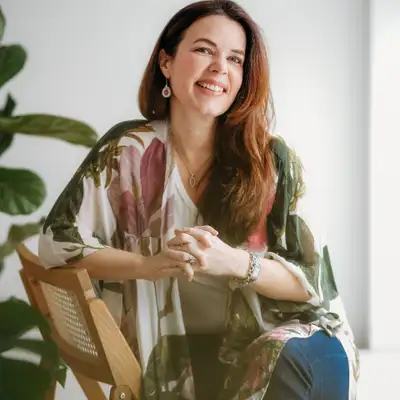
The Words in the Wilderness podcast is for those who have the conviction to make changes in their life as they drag their feet through the messy middle, crying into the void "it ends with me."
Led by Jacky Power - The Therapeutic Poet - these are conversations that look underneath the label, the diagnosis, the tidy explanation, at what's actually going on.
If you've made a decision to change your life and now you're in that wobbly, lonely bit where nobody quite gets what you're going through, I made this for you. Because I've been there. Many times.
Each episode starts with one of my own poems, using therapeutic poetry to set the scene. Sometimes it's just me, unpacking human tricky things. Sometimes it's a guest - a therapist, a coach, someone whose lived experience has taught them something worth passing on.
We talk about leaving what doesn't fit anymore, about breaking the patterns you inherited and don't want to leave as your legacy, about all your human tricky things that you've maybe been taught to hide.
I'm Jacky Power and I'm on a mission to rehumanise, one poem at a time. Reminding you that you have permission to feel and use those feelings as data to decode, not symptoms to squash.
Follow Jacky on Instagram: @the_therapeutic_poet
Find out more: www.jackypower.com
Listen to Jacky on Insight Timer: www.insighttimer.com/TheTherapeuticPoet
Join her on Substack`:www.jackypower.substack.com
Jacky (02:16)
Welcome to Words in the Wilderness. Today I'm talking to Stephanie Aspin, Dr. Stephanie Aspin, and we are talking about her book called Poetry and Therapy, Why Words Help. And I couldn't think of more apt discussion and person to get on the podcast to talk about poetry and therapy. But you know what, before we dive into the conversation, I need to tell you something. If you've ever felt like poetry isn't for you, if you remember sitting in that English class feeling stupid because you couldn't figure out what the poem meant, then this episode is going to completely change your relationship with words. Because what Dr. Stephanie Aspin and I uncovered in this conversation is that poetry isn't about getting the right answer. It's about finding your answer.
It's about taking back control of your narrative when the world has told you who you should be. So we're going to talk about why discomfort in poetry is actually the invitation you've been waiting for. How you can take something painful and raw and put it at arm's length in an image where it's safe enough to hold, safe enough to work with. And why combining random words can give you more agency than a thousand journal entries can do.
You're going to understand why a poem that makes no sense can hold more truth than a perfectly logical explanation. You're going to learn simple exercises you can do right now with a newspaper and scissors. And you might just discover that the you in your poems is the articulate you that's okay. And if the world thinks you're not okay, then maybe the world is wrong.
This isn't about becoming a poet. This is about reclaiming your voice. So let's get into it.
Jacky (04:06)
Welcome to Words in the Wilderness. And I'm here with Dr. Stephanie Aspin.
So you have two PhDs, not just one. I mean, that's impressive. So you obviously love to learn and are very open and curious an author, coach, teacher, academic, and poetry lover, and co-founder of Atypicaat, a neurodiversity training
Steph (04:14)
Yes, I do. Yeah.
yeah
Jacky (04:32)
Coaching and consultancy and a member of the Association of Person Centred Creative Arts. how? It's my first question. How have you managed to be all of those things?
Steph (04:45)
Not by design. I think I have been not a planner and sort of followed the interest. So I'm neurodivergent. I think that's a very neurodivergent trait as is sort of special interest. So I think I started off in literature, so PhD in the New York School 1970s poetry and poetics. And that was my interest. And then I started working away from home, so was working in Norwich half the week, took an evening class, got very interested in and that just snowballed into a second PhD but it's about 20 years between PhDs so I had a bit of a break. So I moved from literature into therapy but the second PhD was on the relationship between poetry and therapy and the psyche so there was a link. So yeah not by design and I picked up a coaching qualification.
Jacky (05:26)
Ha
Steph (05:43)
On the way as part of my role at the UNiversity of East Anglia I was the ⁓ staff, one of the staff coaches and coaching supervisor. So that was a kind of a natural thing that I just picked up. A like snowball picking bits up.
Jacky (05:57)
Yeah, yeah.
I love that idea as well, because there's actually a format of poetry called the Snowball Poem, which is, there, where you, yeah, it's where you start with one word and then you go with two and then you go with three on the next line, and you know, you build it like a snowball. So there's lots of themes in this book, I was reading it, a poem came to mind that I've written, which I'd love to use as a starting point.
Steph (06:03)
Right, I don't know that.
Hmm. Yeah.
Brilliant.
Jacky (06:19)
And it's called The Power of Poetry and it goes like this. Sometimes we don't want to tell our story straight for fear its weight will make others stumble in their sentences of reassurance. Sharing should not be an endurance. Sometimes what we have to say is unpalatable as we plunge into the depths of the unfathomable. So we try to make our world more habitable, carrying what's heavy on the wings of a melody that is sweeter to the ear.
Steph (06:21)
Good.
Jacky (06:49)
In the hope that it helps someone to listen and not just hear. I think that for me encapsulates the work that poetry can do.
Steph (07:01)
I would agree it does give space you know to speak the unpalatable and maybe gives melody to that there is a role for poetry to speak what can't be spoken in any way I suppose
Jacky (07:12)
And there's so many themes that you have in your book. you talk about meaning and how when we come into therapy, really it's about realizing or having peace with the fact that there is no singular or simple meaning. There's different ways of looking at something or taking meaning out of something and how poetry can be a good place for us to explore that.
Steph (07:18)
Hmm.
Hmm.
Mm.
Yeah, why I think poetry is so important and I think poetic language more generally, which is sort of a point I make in the book, is that as you say, it is multiple. And I think, when we come into ⁓ therapy, often it's a process of tolerating, I suppose, multiplicity that there often isn't a simple answer. But I guess what
What poetry can do, being multiple, it also gives us different ways of thinking about things and poetry brings with it, I suppose, it has built into it multiple meanings but when we're speaking now we tend to adhere a simple meaning, know, singular meaning. I'm saying something to you, you understand the context and you'll read it in that way.
What poetry does is it encourages us to look differently. So you think of an unusual metaphor or something that doesn't quite fit. We often have to struggle with poetry to some extent and I think that's really important in the therapeutic to actually make discourse, I suppose, a bit more difficult that we sit with it, we reflect on it, we unpick it. The other thing I think is really important about poetry is that we are very much I think creatures of meaning which is something I talk about in the book. think that the way we frame I think, mean these are established ideas as I talk about in the book, the way that we construct the world is very much through language, through meaning connections.
So I think the ways in which things go wrong for us ⁓ psychologically, the things that might bring us into therapy when we lose meaning perhaps or things aren't as we thought they were or we can't understand why we feel as we do. The problem is in language but also I think the solution can lie in language. So language offers opportunities for remaking. So when we perceive the world, mean this comes from psychology, but when we perceive the world we're not perceiving the world as it is, we're perceiving a construction. We're perceiving something our brains doing to put it together and I think that language is very much in that domain. It exists within that world building, So we have the raw material of perception and then the brain engages in world building. So that's why think poetry can be so important in therapy
Jacky (09:56)
Mm.
I think a couple of things that you said there, I the first thing around discomfort, and I wonder if that's why people, because poetry has a bit of a bad rap, doesn't it? I saw something on social media recently and it was sort of saying, you know, if you think about performances, there's music's up there, then you have comedians, and then like right down at the bottom, would be the sort of poetry things. But I wonder if part of that is because
Steph (10:15)
yeah.
Mm. Mm. Mm.
Jacky (10:32)
of the discomfort that poetry can bring because we don't necessarily get the meaning straight off or we might not be familiar with some of the things that are being referenced within the poem and that can make us feel uncomfortable, a bit stupid, you know.
Steph (10:39)
Mm.
Mm.
Yeah, and think it's very much that, I think as back to school, I poetry is often really badly taught, that, we're taught ⁓ to think a poem has a meaning, you know, if you remember back to school, I'm sure you remember this, where the teacher would be, okay, you we're going to list the themes of this poem and the metaphors. And actually that's not what's happening, you know, a poem is a little machine, it's a kinetic object.
Jacky (10:53)
Hmm
Steph (11:13)
It's about the relationship of words in space and meaning shifting. And that's what's really exciting about poetry. But I think when it's taught, it kind of takes the life out of it. But I think that has a knock on effect. The sort of corollary of that is when we come across a poem, we think we need to understand it. We can't just engage with it.
Jacky (11:31)
poem can be a bit like a firework display, right? Like if you think like it can give you that awe and wonder, but we're taught about it as if we're in a chemistry lesson, if these are the components of the firework, you're like, how do we just connect to talk about the awe of the firework display? Yeah.
Steph (11:35)
Mm. Mm.
Yeah. Yeah. Yeah.
Mm.
Yeah, absolutely.
And you know, it's about response. You know, it's about being a chin to your response and your response is your response. But I think that the poetry sits in that. think because it has something of a privileged position in culture, we feel that there's something to know. There's something, there's an answer to be got. And I think it kind of sucks the life out of it. I think poetry is actually quite akin to comedy.
You know, that it uses imagery, it uses words in odd ways, you know, will shift as comedy, know, good comedy does, shifts context But yeah, I think it does have a bad rap. if people can, be a bit less pressured when you're reading, doesn't matter if you don't understand it, do you like it?
know, read something in different language, do like the sounds of the words? that's enough.
Jacky (12:32)
Mm.
And also what meaning do you take from it? Regardless of what the poet might have intended or what another reader read, I've got a poem called Odd Socks, which I wrote, which was, wrote after kind of matching odd socks and thinking how futile it was and then linked that to kind of how futile it is that we all try and fit into these certain categories and things. And actually, wouldn't it be much better if we all just embraced the fact that there are, you know, we're all odd socks, do you know I mean?
Steph (12:39)
Yeah.
Right.
Mm.
Yeah.
Jacky (13:03)
you
know and but whenever I perform it I'll have people go they see it at the odd socks level and not kind of the deeper meaning level which is which is kind of fine you know but it's just it's whatever you take from it that's good enough isn't it
Steph (13:06)
Hmm.
Yeah. Yeah. Yeah.
yeah, absolutely. as I say, I see poems very much as machines, you know, where the bits are moving around, there's no finite meaning, And as you say, it's what you take from it when you engage with it. I mean, I think there, you know, there is intention in writing.
Jacky (13:27)
Yeah.
Steph (13:30)
you know, the writer will have an intention. But sometimes not. I mean, I'm really drawn to more abstract stuff. So it's like saying, what's the meaning of, you know, if you're thinking about abstract art, what's the meaning of ⁓ orange against blue? You know, that will have a very embodied effect on you. And yet, you know, in terms of discussing its meaning, we wouldn't do that in the same way. And I think poetry can be like that. You know, that words can have an effect.
Jacky (13:48)
Mmm.
And it's a bit like what
you said about comedy as well. I remember listening to, they were talking about comedy on the radio and they saying about how do you dissect a joke? as soon as you try to pull it apart to try and get the bit that's funny, it kind of disintegrates around you. You know, and maybe if we absorb poetry more in that way. I'm really keen.
Steph (14:07)
Mm.
Mm.
Yeah. Yeah.
Mm.
Jacky (14:21)
to look at poetry as a tool, like you were saying, a machine, you know, it can be a machine, but also a tool that we can use to feel witnessed. And one of the things you say in the book is about how poems can answer you back. Can you talk a bit about that?
Steph (14:25)
Mm.
One of the key ideas in the book is this idea which comes from the French psychoanalyst and other places Jacques Lacan that language is a system of signs, which is quite a complicated idea but just thinking about it really simply it just means that words relate to other words so when we pick up one word those words have connotations.
Once we acquire language as babies, then we no longer see the world unfiltered anymore. What we see is meaning, which exists in the fabric of language. and I think this is true of poetry. So when you...
Jacky (15:10)
Mm.
Steph (15:18)
use words poetically, so you pick them up and you want to express something, some feeling, some experience. You can do that but also language keeps its connections. So there's very much, so I think I say in book when you speak a poem, language speaks back
that language itself has some agency because of these connections. And I think that's what makes poetry really powerful. We have a certain amount of control over what's expressed through a poem, but a poem will also bring all of the connotations of other words. I think I use example of the word chair? So if I said to you, on the chair, you know, and you understand the context, but actually, you know, chair has lots of meanings. Chair could be, the chair of a board.
Jacky (15:54)
Yeah.
Steph (16:04)
to chair a meeting So when we use a word in one way all of these other meanings they become latent but they're still there and I think that's what poetry kind of programs that multiplicity. So in prose we don't expect a second meaning usually but with a poem I think we've always got an ear out for it that we know that poetry is about metaphor, multiplicity, all of these things.
Jacky (16:06)
Yeah.
Steph (16:27)
So there's a real richness in it, which can, you know, writing poetry, just the act of speaking gives you a sense of agency, and I think often when people come into therapy, they have lost a sense of agency. So I just think, you know, the act of writing, of speaking, of expressing yourself is a really important function of poetry.
But think there are other functions as well, one of which is that a poem can be a kind of crystal ball, so we can find meanings in what we've written, so we can write to express meanings, but equally we can then go back and look and find meanings which may be, depending on your theoretical orientation or in the unconscious or the out of awareness.
you know, we can work with poetry, you know, which is something I do as a therapist, actually looking at what's been said, looking at the connotations,
Jacky (17:12)
Hmm.
Yeah, I have a poem that I wrote after being in Texas and there was a tree that had all of these origami animals put on it and each origami animal represented somebody that had died on the streets homeless. I wrote this poem called Homeless Bum,
Steph (17:20)
Hmm.
Jacky (17:32)
it starts go on your right walk on I'm just a homeless bum and it's this idea, from the homeless person's point of view. it talks about all of the stories the things that you don't see And then I left it for about a year or so and I thought actually this is also for me as a poem about my own stories and how my own stories are homeless.
Steph (17:36)
Hmm.
Bye.
Jacky (17:53)
my stories into poems because there's something about, it's OK, people can walk by and they can not really regard it in any way. But
Steph (18:01)
Yeah.
Jacky (18:02)
exactly what you're talking into about that uncertainty. rather than going, my God, I don't know and therefore it's not for me, it's seeing that as an invitation to get curious.
Steph (18:09)
Right.
Yes.
Jacky (18:13)
And what's it like
when I'm uncertain And can I tolerate that in a poem? And if I can tolerate that in a poem, can I tolerate that in my life in some way?
Steph (18:20)
next.
Yeah,
yeah, that could be then carried over. you know, you use the word curious, which I think is so important to poetry and therapy, you know, to be curious, to remain curious.
Jacky (18:33)
Yeah.
playful, right? Like that's one of the things that you talk about, that poetry can be a place to play.
Steph (18:38)
Yeah.
And also, you you mentioned the idea of the image, you thinking that's something in your life, you know, that poetry and poetic images can provide containers for things, you know, and when you're doing trauma work, containment is really important. And, these ideas are taken from art therapy.
Jacky (18:43)
Yeah.
Mmm.
Steph (19:02)
as well, you know, the idea that we can make a container in an image, whether that's a poem or a visual image that can hold, all of the fear, it can hold the anger, whatever, and, represent it and be worked with in that way. And I think poems can offer that.
Jacky (19:21)
I think it does it in such a lovely way because you can put something that's so painful and raw at arm's length in an image. I've got a poem that starts, and Iron Bar sits on her chest. who knows what that Iron Bar is as far as anyone else is it's not like it was a finite thing in the world that I can say it's this, or it was that experience. But again, it's that sensation of.
Steph (19:23)
Yeah.
Yeah.
Yeah.
Mm. Mm. Mm.
Jacky (19:45)
something being held down and it feeling solid and something to push against or you know see all of these meanings starts to be brought in just in one phrase.
Steph (19:50)
And.
Yeah, exactly that multiplicity. As you see, it doesn't need to fit to one, but it's holding a multiplicity of some things in some area.
Jacky (20:02)
Yeah.
So how do you encourage people? Because not everybody, is keen necessarily on even the idea of poetry. How do you bring somebody in and say, this might be fun place to be or a safer place to be?
Steph (20:13)
No.
I think tentatively, so I always make it clear to clients, you know, it's not required. We don't have to do anything creative if you don't want to. But again coming back to that word play, I think it's making poetry accessible to people. you know, just starting with the word.
So starting with games, starting with anything that breaks down that feeling that a poem is this thing. It is difficult and it must be whatever. But anything could be a poem. So we use cut up. So thinking about like dada practice. Maybe just starting with one word and we'll maybe write it down and kick it about, look at the connections of that word. Sounds, so maybe have lots of words that you like the sound of.
I think the simpler the exercise and the further away it is from what we might think of with our education as a poem, the bigger the invitation in, the more effective.
Jacky (21:11)
one of the exercises I use combining words together. I did it recently and someone was like, oh, I've got a flubies. And my flubies is when I'm actually feeling really like lots of procrastination. And you can see people start to take ownership of that. Like you were saying about,
Steph (21:25)
Mm.
Jacky (21:28)
Like this is where you can start to pull things apart and go well I don't quite like that but I like this and I'm going to those two things.
Steph (21:28)
Yeah.
yeah, absolutely. And it's and the other thing about poetry as well is that it's very embodied, which is good for therapy, it will say thinking about the sounds of words, how words look on the page.
Jacky (21:36)
Yeah.
Steph (21:50)
whether they're, slippery words, quiet words, in ways that we don't think about everyday conversation or prose. we're not just thinking about meaning, we're actually thinking about these physical aspects, that we can experience. I like that word. I like the sound of that word. I like how that feels to say it. making connections in that way.
which is Julia Christopher's point in the book, she talks about the revolution in poetic language, know, that it can take us back to the body, the connection with the mother's body, a place where you can start to rebuild again, because it's all of these things, it's not just about meaning, it's not just about the thinking head, it is about rhythm, you know, it's about all of these other things.
Jacky (22:32)
Yeah, often, when we talk about trying to understand poetry it feels like it's a real head exercise. But actually, it is a real heart experience and an embodied experience,
Steph (22:38)
Mm.
you know, using poetry with groups, you know, can be fantastically powerful. You know, where everyone writes a line, everyone adds, you know, to something, you know, the snowball effect, just turning it around. But you can find often emotional rhythms emerging from groups, which is really interesting, and words taking turns that you didn't quite expect.
Jacky (22:58)
Mmm.
Steph (23:10)
that you know I remember a group I'm not sure if I talked about in the book but a group where somebody came in I think their dog had died and then the whole thing started to become about loss and other people's losses and it was almost like a kind of movement of music and everything I planned to do in the group you know I just had to shove because the group was so with this theme and we worked with it in language.
Jacky (23:31)
Mmm.
And therapeutically, I that's
a great thing about trusting the process, not just for you, but for the group as well, We can let go here and just trust that there's something going on that has collective meaning and is important. You talk about it being a disruptive force in the book. I think...
Steph (23:40)
Yes.
Mm.
Mm.
Mm.
Hmm.
Jacky (23:56)
There's so many poets that are pretty much activists, know, poetry can be a real place for activism. Can you speak a bit more about that and what your experience is as a disruptive force?
Steph (24:00)
Yeah.
I think it can be disruptive at different levels, so it can be just disruptive in the psyche because it's, I think, know, neurotypical capitalist model is that, meaning is linear, it's singular, things are fixed.
Jacky (24:11)
Mm.
Steph (24:23)
Whereas poetry comes in and actually says no it's not, can be multiple means, it can be happening, I can say something that's seemingly nonsensical and yet because it's in a poem the reader is in some sense is forced to make connections, put it somewhere. So I think it just is fundamentally disruptive. We can't ever take poetry on face value. So like the example Sit on the Chair, if I told you that was a poem.
Jacky (24:42)
Mm.
Steph (24:48)
suddenly you're looking, you're scanning the horizon, what's this about, what's going on? So I think just at that level it's disruptive. But also, as you say, it can be very political. think poetry can, images can give us something to cling onto, something to frame a narrative, which can be really important.
Jacky (24:54)
Yeah.
Steph (25:14)
So I'm thinking about Shelley's poem, I don't know if you know it, The Mosque of Anarchy. I don't think I talk about it in the book, but ⁓ it's about the political situation at his time.
and he talks about it as a kind of masked kind of play. So I met murder in the way, he had a face like Castle Ray and it kind of goes on like that, but it's very powerful. It's almost, you know, a bit like the ancient Greek idea, you know, of the principles of theatre. that one is catharsis, we watch these things on stage, we will somehow...
Jacky (25:37)
Mmm.
Steph (25:50)
be changed, which obviously is connected to therapy, Freud draws on those ideas of catharsis. So I think it can be a force for political change. then if you think about contemporary music or art forms, think poetry is very much involved in that.
So I think, yeah, I think it is disruptive at lot of levels, know, fundamentally because it disrupts it disrupts that sort of certainty, but also it can be disruptive because, you know, gives us these images to coalesce around and, further down the line, these images are presented. And, if you think about dissident poets, you poetry is often a space of political dissidence.
Jacky (26:34)
Yeah, one of the things that you talk about in the book is, it's like the role of poetry, but you talk about aesthetic poetry and then can poetry that's written for therapeutic purposes be aesthetic?
Steph (26:45)
Mm.
Yeah, think, I mean, I don't put a dividing line between poetry written for, aesthetic purposes and poetry written for therapy. I think all poetry is therapeutic. we may not be writing it for a therapeutic purpose, but we're doing something. It's an act of the imagination. It's an act of the psyche. It's an act of the self.
Jacky (26:52)
Mm.
Steph (27:08)
And I think whether that happens, in therapy or whether that, it's just an artist working through their process. I think that it is always a psychological process. I think there is a bit of snobbery, thinking this is poetry and this isn't poetry. So my area is avant-garde poetry, which maybe sits somewhere in the middle, so not the canon. I'm really interested in...
that space and I think that space very much is a space where there isn't such hard and fast division between what is poetry and what isn't but like Duchamp when you put the urinal in the gallery you know that kind of if I put it in if I put it in a poem then it is by default poetic.
Jacky (27:47)
Mmm, mmm.
it has a different connotation and meaning to it just by being in a poem.
Steph (28:00)
I don't think we pay attention to language much day to day. I think there's a beauty and a complexity in most words, but we don't tend to see it unless we put it in a poem. I think that's what's helpful for therapy. It makes us pay attention.
Jacky (28:12)
I think it's so much about noticing, isn't it? I think both poetry and therapy is about awareness and the noticing of things.
Steph (28:15)
⁓
Yeah, I noticed behind you see the word joy that you've got in that picture? just putting it in that frame completely changes what that word is.
Jacky (28:23)
Yeah.
Steph (28:29)
Now somebody could see it and think, that's nice, joy, and focus on the meaning. But it's in gold. I can see, you know, the letters are all the same height. There's a placement, there are spaces between the letters. And that's how the brain switches on when we tell somebody it's a poem and not, we think, it's art and not a word. We then start to switch onto the other qualities of words and think about what is there.
and that shifts and changes things. And I think that's what Christaiva means partly when she talks about the revolution of poetic language, you know, it allows other things to come through. Meaning isn't so. Shut down.
Jacky (29:02)
I wrote a
Yeah, I wrote ⁓ a whole poem. It's a chant. none of it makes sense. It's all completely made up words. But as you start reading it, it brings out this emotion. You can almost imagine that it's this incantation of calling down ancestral power or something, you know? But it's all made up words.
Steph (29:11)
Hmm.
Mm.
Thank
Jacky (29:28)
think there's something where it really does take on a quality of its own. Like you say, whether it's a word that we know and understand or whether it's something that we've made up, that there's a presentation of it, isn't there? Just like the word joy, like it's presented in a certain way and that is then making a statement in some way.
Steph (29:32)
Hmm.
Yeah.
Hey. Hey. Hey.
it's opening questions, starting to get us to make connections. So it's gold, joy, is that about may not understand it, if we're curious, then other things can come in. But as I was talking about in the book, poetry and language is also really important to ritual.
And I do think that we have an almost magical belief in language, whether we're spiritual, religious or not. chance, when things are important, when we may not feel a sense of control, we're often drawn to language, particular forms of words. It's as if if we say the right words in the right order.
change will happen. I think that's quite belief or long standing rather than primitive, goes back a long way in our psyche. But actually I think it shows up in all sorts of contexts. We have phrases that we might say, prayers. ⁓
Jacky (30:37)
Mmm.
Yeah, touch wood.
Steph (30:47)
religious rituals
football matches. You know, if we do this all together in the same way at the same time, there's a kind of maybe a belief something will will shift.
Jacky (30:58)
I always think it's really interesting with football chants as well of how quickly everyone agrees on the same things that they're going to say. it grows out of non-visible energy that's going There was something, there was a quote that I wanted. I love this. you were different.
Steph (31:03)
Yeah.
Mm. No, absolutely.
Jacky (31:19)
people that you had that contributed to the book of them writing, either poets themselves or people that are used as like professional poets. as therapeutic ⁓ clients, right? And there was a guy, Sean, that said, the me in my poems is the articulate me that's okay and that says I'm okay and the world if it thinks I'm not okay, it's wrong.
Steph (31:23)
Yeah.
Yeah.
Jacky (31:41)
quote really struck me about, like we've talked about the sense of agency taking narrative and meaning that you make.
Steph (31:52)
Yeah, I thought that was an incredibly powerful thing to say, and that particular contributor, you know, was struggling with quite a lot, in terms of personal history and also mental health, was what it's been a poet. it's about that sense of agency and about, you what I said about being able to reconstruct the world. And I think actually...
establish your own point of view. You know, if the world has told you a certain thing about yourself, then it's really important to be able to go back and take back control of the narrative. And I think poetry, you know, is one way of doing that.
Jacky (32:22)
Hmm.
Steph (32:26)
The self that I construct in my poetry is me okay. It has for me a coherence. It's my perspective. I am moving the blocks of language around. have agency.
Jacky (32:41)
Well, like you said, also, I think there's that benefit because it's it's non-linear. It's not like someone that's reading it can pin it down. You know, there's a, I think there's a real sense of ownership on that. yeah. So if someone's been listening to this and they're, would like to take tentative first steps at giving...
Steph (32:46)
Yeah.
Hmm.
Jacky (33:00)
giving therapeutic poetry a just with a pen and a paper. What kind of things would you recommend? You've got kind of a couple of tips for them.
Steph (33:03)
Hmm.
I'd say start really simple. One thing you can do is start with found poetry. So, you know, this is a really established form in avant-garde poetry like Sirius and the Dardos. But just get a page of text, bit from the newspaper, just cut it up.
and move the bits around and does it please you? can you make interesting without any thought, can you do something with the words that look interesting to you? That's a really good place to start. Or, you can print out these word sheets often. They did them for children, for teachers, maybe print a couple of those out from the internet and then just really quickly without thinking, run your eyes over them. What words jump out?
And they needn't be words you know, or they needn't be particularly important words. They can be quite small words, but a bit like the word joy. What is it you liked about that word? Somebody has put that in the frame. What was that choosing? Really get in touch with, ⁓ that connection. What do you like? What do you like about that word? I think most people have words they like,
Jacky (34:04)
Mm.
And you can go even,
It me think of Miranda Hart, because she always, she's like, love the sound of like plum. And she goes, I'm plum, plum or something. Yeah. Yeah.
Steph (34:18)
Yeah, yeah, exactly, yeah. But
I think that's a really good place to start. Another good one to do is to take a photograph. or a picture and then to write a really, really plain text description of each element. So blue sea, for example, sand, little dog.
and then just see what you've got. Take those words, write them down and then can you move them around? Can you add to them? You know, maybe you just want to give them a title, but anything that's really simple, I think. But it's about, you know, playing.
Jacky (34:48)
⁓
I think it's also, I think what's key in what you're saying is it's about, it's an insular thing, right? It's a relationship with you and those words. It's not about how do I present these for someone else to read or understand. I think people can get a bit lost in that which can lead to self-censorship, And actually it's flipping that on its head, isn't it? How can I do this so I'm not self-censoring
Steph (34:56)
Yeah.
Yeah.
Jacky (35:11)
like you say, if I play and just start messing all of these around, what happens? And how, what happens within me when I do that, you know? Yeah.
Steph (35:18)
Yeah. Yeah. I think
it takes that schooly bit out, that bit, we must do it right, we must get it right and all of that. Actually, you know, if we can just make it play. I've done stuff on blocks, you know, there's big blocks you can get for children that stick together. They're not Lego, they're the bigger ones and just put random words on there and get people to make piles. So it's all about,
Jacky (35:39)
Nice.
Steph (35:41)
approaching language as a material rather than just a vehicle it's actually a material we can play with it like we might play with paint.
Jacky (35:47)
Yeah.
And what outcomes have you seen as a result of people using poetry therapeutically? What shifts do you see?
Steph (35:56)
The issue I work with most with in therapy with neurodivergent adults is identity. And I think it is really helpful at building stronger senses of more helpful senses of identity. Because I often work with people whose identity has been denied, distorted, criticized. I think that's the biggest outcome, you know, working with finding words, finding phrases. ⁓
Jacky (36:20)
Hmm.
Steph (36:25)
that express something of their experience and I think over time, know coming back to what I saying about agency, that just doing that process can trigger a sense of agency that can really help this strengthening of a sense of identity that I'm okay to have this got one client who I got a brilliant technique off, they work with headlines.
you know, like sun headlines. they'll, cause a lot of people are really resistant to journaling cause it can seem like long and it's not for everyone. but they came up with this. I thought it was absolutely brilliant. that they would just put an experience into headlines, just pick three or four words. And I've actually used that. I told them I've credited them with other clients, you know, and that's been really helpful, you know, as a way of saying, this is what I've got to say about this.
Jacky (36:49)
Yeah.
Steph (37:12)
which comes back to agency, this is how I'm framing this experience.
Jacky (37:18)
And there's something as well with just using such a small number of words think the poet Andrea Gibson they said that they used the same five words over and over again, in different forms of different poems, the different meanings you can make, even though, the material might be the same, Yeah, that's really interesting. Well, it's been...
Steph (37:22)
Mm.
Mm-hmm.
Yeah.
Jacky (37:35)
lovely to chat with you today. We
Steph (37:37)
Yeah, I'm you.
Jacky (37:38)
really appreciate it. If people want to know more about what you do and I know you work specifically, not exclusively, but specifically around neurodiversity, where can they find out more about you?
Steph (37:49)
Yeah, so you can find me on my website, is StephanieAspen.com or Atypicaats.com, which is the collective that I work with, two other colleagues. Or I'm in Instagram, the books on Amazon and also on the PCCS website. and I was really happy to hear from people that are interested or have questions. yeah.
Jacky (38:10)
I'll put all of those details in the show notes as
well so that, yeah, they can get in touch. Thanks so much. Yeah, thank you. Thanks.
Steph (38:14)
Fantastic. But it's been lovely. Thank you very much. Yeah.
Thanks a lot. Bye.
Jacky (38:20)
So what did we uncover today? Well, poetry isn't about getting the right answer, but it can help you find your answer. It's about taking back control of your narrative when the world has told you who you should be. Steph and I talked about why that discomfort that you feel in poetry is actually an invitation, how you can take something painful and raw and put it at arm's length in an image safe enough to hold.
safe enough to work with. You don't need to explain what it means to anyone, maybe not even yourself at times. Stephanie showed us that we can combine words and play with words and that can give us more agency than a thousand journal entries. Because when you speak a poem, there's this idea that language speaks back, that it brings its own connections, its own wisdom, its own malleability.
And maybe most importantly, we learn that the you in your poems is the articulate you that's okay. The you that says, I'm okay, and if the world thinks I'm not okay, then the world is wrong. And I think we all need a place like that. This isn't about becoming a poet, but it is about you reclaiming your voice. So grab a newspaper, cut it up, move the words around. Don't try to make it good like Stephanie said, just make it yours.
Start with one word and then two and build your headline or build your phrase or your poem because poetry doesn't require perfection. It just gives you permission, permission to play, to notice, to speak your truth, albeit slant.