Subscribe
Share
Share
Embed

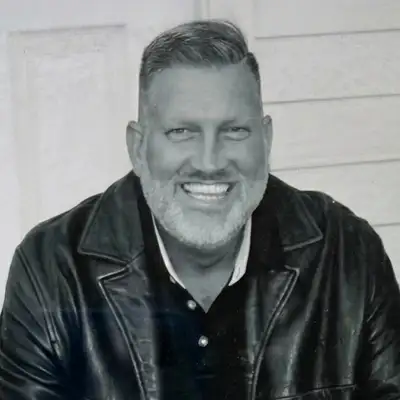
Between Two Doors is a unique exploration of the real estate world through the eyes of its most fascinating professionals. Hosted by Nate Carver, a seasoned mortgage expert, and proud veteran, this podcast dives deep into the personal journeys of realtors, offering listeners insider perspectives on the challenges, successes, and the little-known stories behind the sale signs.
From first-time buyers to seasoned investors, Between Two Doors provides valuable insights, tips, and tales that illuminate the real estate industry in a whole new light. Sponsored by Success Mortgage Partners, we're here to inspire, educate, and empower our listeners with stories of perseverance, innovation, and success.
Join Nate as he bridges the gap between real estate professionals and enthusiasts, exploring what it takes to thrive in this dynamic industry. Whether you're seeking advice, inspiration, or just a good story, "Between Two Doors" has a place for you.
All right.
When the unthinkable happens in your home,
what do you do next?
Something traumatic has happened.
The police, the fire department,
the first responders.
They've all left. Now what?
Hey, everyone.
I'm Nate Carver, Your Favorite Mortgage Guy and
host of the Between Two Doors.
And today we're meeting with Christina and Zac
of Clean Scene
Investigators in DFW.
Hey, I'm Nate Carver and welcome
to Between Two Doors.
Hey, Christina.
Hey, Zac.
Welcome to the podcast. Hi.
So we're going to jump.
We're going to jump right into this.
I got a host of questions for you.
And, because, you know, this happens.
It does happen.
And people, you know, what do we do?
It's not something
that's front of our minds.
And so we're going to put this out there
and help guide people in the DFW area.
All right.
So now what?
Christina, let's start with the situation
none of us wants to experience.
Let's say something
traumatic has happened inside a home.
Everyone's left,
all the first responders have left.
And,
you're left with a house and, or a home.
And there's some things
that need to be taken care of.
So then let's say I'm standing there,
I'm looking at my house.
What am I supposed to do next?
Who should I call first?
You should call 911, obviously.
Once the police, paramedics and coroners leave,
It is up to the families to clean up
after a traumatic incident.
And I learned that
when I was a crime scene investigator.
And so the next step to do is to call CSI: Clean
Scene Investigators,
So you are not having to clean
up after your own loved ones.
Should I call the insurance company?
We can work directly with insurance
companies.
It depends on the policy,
what your homeowner policy covers.
Sometimes they can cover restoration
for incidences like this.
And if the victim has life insurance, that
usually covers it as well.
Okay.
Let's say the what
what should I do in the affected area?
Should I stay clear of it? Or.
I would completely avoid cleaning it yourself.
Most people— all the chemicals that we use are
EPA,
bloodborne pathogen, OSHA approved.
And so,
if you come at it with typical household
supplies like Lysol or bleach or anything like
that,
you're actually risking a contamination that
could severely damage
your health or your pets
or anybody that is in the residency.
Okay.
How quickly, is that cleanup process?
I mean,
I guess it can be pretty involved, but.
It can be as little as, like, two hours,
depending on the severity.
Let's say it's like a simple cut.
We don't always deal with death.
And so, like, sometimes you need, like,
just a bad arm cut or something like that.
It could be as little as two hours,
and sometimes it could be as involved
as 3 to 4 days, depending on
the level of restoration,
that our clients are needing.
We have the ability
to completely remediate any situation.
And so sometimes it's more involved.
So are you seeing any any mistakes that.
I mean, let's be let's be,
very charitable in
what is obviously a hard, hard situation.
Any mistakes homeowners are making that y'all
see up front in that
for the first few hours
after everyone's left
before y'all get there?
Sometimes they will,
you know, try to move the body.
They will, attend to the area themselves.
Or,
they'll simply remove things
and that can further
cross-contaminate areas that have not already
been affected.
That's
that's some of the, that's
general mistakes that we've seen or,
they'll come at it with Lysol or think that
bleach is the cure-all.
And they end up prolonging the,
the issues that come from that.
Okay. All right.
We're going to delve deeper.
Yeah.
We'll delve deeper into this.
But, let's,
let's let's step back a little bit.
Christina, tell me, before we go
any further,
I'd like to know your journey,
how you came to being a crime.
You know, and,
a scene cleanup investigator.
It all started
when I was a crime scene investigator.
So I was a real-world crime scene investigator.
And when I was on the scene
after the body was gone, I realized it was up to
the families.
And so that never sat well on my heart.
And I actually made a simple joke to him.
He had his own standard cleaning company called
Simply Spotless,
and that was operating
for about 3 to 4 years.
And just because of the economy, people
couldn't justify hiring a house cleaner.
And so I made a joke to him saying,
you know what's economy resistant?
Crime. You should clean up crime scenes.
And three days later,
he hands me a ten-page business proposal and
he's like, this is your idea on paper.
Let's go. You own a business.
And I was like,
people don't just start businesses.
That's not a thing.
And this all started.
The company rebranded
in January of this year, 2026,
and we have been running
and gunning since really
It's a 24-hour business, because crime doesn't
stop.
And so we get calls at 2:00 in the morning
and we get calls at 2:00
in the afternoon, and we respond
within about an hour right now.
How long were you a crime scene investigator?
I was a crime scene investigator for
about five years in multiple departments,
and I say that the good ones last about
five years before the PTSD gets too much.
Right.
Oh, I can imagine. All in the DFW area?
All DFW.
We are licensed
in the entire state of Texas.
But if we're being completely honest,
Dallas–Fort Worth has enough to keep us
employed.
Oh yeah.
Now, it's not all.
It's not always crime scene.
It's, you know, your life.
Life,
the journey of life. Things happen. Right.
And so, you know,
there's there's other scenarios there too,
where y'all would be
your services would be needed.
We. We,
we clean anything that a standard
cleaning company
isn't licensed or trained to do
and that any normal person can't stomach.
So we do hoarding situations, odor
removals.
A lot of the times we're noticing
realtors are trying to sell a house
and it smells like pets.
And so we have a ozone scrubber
that we can extract the oxygen,
scrub it on a molecular level,
and then put it back out there
and the house will smell brand new.
My mind immediately went to pet ferrets. Yup.
We get those.
I'm telling you, nobody, no pet
owner of ferrets knows how bad their house
smells.
Seriously. Nose blindness is truly a thing.
It is.
And you know me too.
When I cook something and burn it, the house
smells.
That smell stays there forever.
It seems like it's the.
Yeah, yeah.
So you have the opportunity to come
in there and and get that neutralized.
So that would be really, really.
Well, I'll get I'm going off
on a tangent here, but,
with homeowners that are looking
to sell their home and,
you know, maybe they've collected
a lot of things over the years
and, or, you know,
they have a lot of pets, what have you.
And in getting a home in its tip-top
presentation, y'all have an opportunity
there to come in and help help homeowners
and help realtors.
I get those conversations pretty
frequently with real real estate agents.
And they're like, well,
I'm off to go clean a house this weekend.
And, you know, you know, successful
realtors, their schedule's full.
And so for them to stop and do that
whenever there's,
some experts in the area
like y'all that would be able to,
partner with them and take care of that.
That's that's fantastic.
I will definitely I'm
going to introduce you to some realtors.
They'll be grateful.
We would love that.
We handle—
There's a couple of invisible things that some
people don't notice,
like we do mold remediation or water
damage.
Fire.
Okay. It's.
We say crime scene
because that has the most shock factor.
And— sure— really grabs everybody's attention,
but there are invisible,
contaminations or,
you know, not necessarily problems, but,
things that realtors would not want
to sell their homes with. So.
Yeah. Yeah.
And on the transaction side, you know,
you got home
homeowners that have to sell for whatever
that reason is, they need to sell.
And and then you've got buyers,
they need a place to live.
And where those two intersect,
there's the financial transaction.
And and I want to see everybody win.
Right.
As a lender, I want to see the homeowners
get as much as they can
for the value of their home.
And I want to see the home
new home buyer get as much as they can
out of the value of their home.
And y'all, y'all being able
to do what y'all do
there will certainly help that. And,
in qualifying the loan,
you know,
if you're doing FHA, VA, conventional,
they all have minimum standards
that you got to comply with.
And if you've got mold,
or some water damage
that that's going to provide some,
some obstacles, to keeping from people
from selling a home or buying a home.
Okay.
So yeah, so there's the post
clean up from an event,
and then there's what y'all could do
to help
maximize the value of a property
for someone that's selling great.
Okay, so I learned something.
I just learned, you know, from y'all,
the police don't clean up the site.
I mean, we're gonna switch back, right?
That's a common misconception
that most people think
is that they'll call 911,
and it's all handled.
And it's like, well,
that's not necessarily true.
It's all handled until the body's gone,
and then the families
are left to clean up the mess.
And so as a crime scene
investigator myself, I have taken the duty
to kind of help remediate the crime scene
by picking up some chunks to where the families
didn't have to see it.
But the
unfortunately,
most people don't handle that.
And so we don't want the families to be
re-traumatized
because most of the time it's the families
that find, next of kin.
Yeah. And then.
Oh yeah.
And then if they were to just use bleach
or household products,
they're not getting the detailed clean
that they need.
And so your carpet may start moving
in a few weeks if you don't call us.
I think
there's also a lot of psychology,
that goes with this.
Like, it's taking an emotional toll on the
people,
And, you know,
if it's a traumatic scenario
that's taking a secondary psychological
toll on whoever's left behind.
But then there's, like, hoarding situations and
stuff like that.
They, there is a psychological,
misfire in a way that's happening
where we, we kind of
we provide
a remediation of the physical space,
and then we also try to help
the emotional, space as well.
We offer services that can help,
guide people or counsel
anyone.
Wow. I think.
Yeah, they go get.
Yeah.
And it it's not
I mean, it's not always homicide, right?
Right.
We're not
I mean that that is a potential component,
but it's not it's
not always that I'm trying.
I'm trying to dance around this subject
gingerly.
Yeah.
Let's let's walk through some situations
and, you know, without being too graphic,
but let's say
an unattended death, maybe,
accidental death crime scenes.
I don't know, hoarding for sure.
Biohazard contaminations.
I don't know,
I don't know what that could be, but,
I don't know, maybe,
you know, a little bit more about that.
Yeah, yeah. Urine and feces. Yeah. Like,
there you go.
It's that, like, we work with elderly a lot.
They'll have incontinence.
Or just a simple,
They're losing their balance.
Have trip and fall situations.
It's not.
It's not always homicide,
suicide or, you know,
but we have found our source.
I, you know.
We're still going
to get flagged on YouTube.
Yeah. Surprisingly not.
I have yet to be flagged
talking about it because it's, Okay,
so I think we'll be okay.
All right.
Okay. So.
I. Why?
I guess you've touched on this,
but why wouldn't
someone just clean it up myself?
A lot of people can't stomach most people,
some not most.
But some people can get queasy
from seeing certain substances.
A lot of the times
the families would rather not handle
it themselves because they're realizing
that that was at one point
their family members.
And so you don't want to necessarily
pick up after your loved one,
especially seeing the inner
parts of your loved one.
And so you don't want to handle it
yourself
simply because of the re-traumatization of that
individual.
Like, if we're being honest,
if you imagine your closest loved one,
you don't want to be the one to pick up
after them in that severe of a case.
If they left their socks on the floor,
you don't mind picking up after them,
but if they've left,
you know something else
the inside of their brains on the floor.
You don't want to pick that up.
So it's it's
better for you to call a company,
especially us,
because we are the only company that is,
founded and operated
by a former crime scene investigator.
So we have the real world experience
going in versus
your standard company may not be licensed
or trained to do, but
I think we've noticed this a lot
with, unattended death situations.
Whoever shows up, to, to find
their family member or whatever it is,
they most of the time on that phone call,
they're like,
I haven't been there
in six months to a year.
And they they didn't realize
how bad it had gotten up to that point.
And so,
it really is
like we're just handling what
most people can't stomach, I say, from.
But the blood, like, that's that's true.
Yeah.
Do— in the cleanup, is it,
is it at your level,
is it complete restoration?
Is that part of it or is it,
I don't know, like,
it'll say they got carpet in the home
and you're removing that
or y'all replacing carpet, is that.
Yeah. So we give the option.
We work, hand-in-hand
with general contractors.
So we we give customers three options.
And so it's,
we can handle the baseline cleaning,
which just basically ensures
that there is no biohazard left.
Now, when you do that,
You can't tell that anything has happened.
Our second option
is a forensic level of detail.
Come in with alternative light sources. We'll
black out the room
and make sure that we get
every possible contaminant.
And then the third option is full, complete
restoration.
Let's say they have drywall damage,
their mattresses
are ruined, their couches are ruined.
We will not only remove the furniture
and pieces of the floor, carpet, whatever.
But we tried to offer the ability
to replace everything.
We'll find painters and, and, and,
general contractors
that will do just about anything. So.
Okay, so you do offer a full solution.
Wonderful.
Correct.
Do you think there is there licensing?
Is there there's there's training.
There's things that you all have to do
to stay certified,
that give you,
you know,
where the knowledge base comes from
to be able to come in
and do take care of people like this
for sure.
We are— what's it— HAZ... HAZWOPER? HAZWOPER
certified.
That's basically any hazardous material.
And then we have OSHA
bloodborne pathogen, which is anything
to do with blood.
And it kind of covers— HAZWOPER— between those
two, that covers
anything from mold to blood to dang near
every type of remediation possible comes from
those two certifications.
But then we also have general liability
insurance.
We have contractors insurance,
just to
legalize and make
to make it professionally sound.
our certifications are about 3 to 4,
different trainings that we've been to
on top of all of your background,
which gives us an edge
because you can only learn
so much from a textbook.
You can only train so much on paper.
But then the real world experience
is a completely different beast.
And so that's what sets us apart, is
we have the certifications
and the trainings to make us, you know, legal
and licensed,
but we also have the real world
crime scene experience where I've handled
thousands of different cases,
different situations.
No two scenes are the same.
No two houses are the same, no
two people are the same.
And so part of the extra training
that we have is
we are a trauma-informed coach on the side.
And so that's where we help
with the physical remediation and the mental and
emotional space as well.
So we have multiple certifications
and trainings to be able
to provide the best services for anybody
handling really any sort of situation.
I gotcha.
So let's say we have a scene
that y'all are about, to clean
up, and maybe there are some effects
in that room
that are valuable, important, significant,
emotionally connected to,
I would imagine
that homeowner
would be looking at some things
that sentimental that they want to save.
Are y'all able to work through
figuring out in a
in a in that space what, what you can
truly save, or what has to go?
Definitely, that's a part of our initial
assessment.
Most customers
do want to keep all their stuff.
It is pretty rare that they're like,
just get rid of all of it.
So, that is 100%
a part of our job is restoring
we we've discovered that there's
almost nothing that can't be restored.
There are very few items that.
It wouldn't matter how much we did, it's
still going to be a problem
or contamination in some way.
But in our experience so far,
we have restored
every item that a customer
has found sentimental
other than, you know,
probably a mattress or furniture
that sometimes
those just have to go right.
But things with intrinsic value,
we have I mean, we've done like, coins.
We had a coin collection,
that had stuff all over it.
We were able to restore all of those.
We had,
like, let's say just a fabric lamp.
We were able to redo the shade,
and if we can't, we will try to find them.
The best option on online is where it's
like, hey, this is exactly where you can
replace it.
I got you.
I mean, you have obviously you're
dealing with people
in a very traumatic and emotional
point in life in and doing
a significant thing to help them,
to help them move forward.
Right.
Wow.
Okay.
I'm digging through this.
I'm trying to think through it, too.
What?
So you did mention insurance up
front and possibly,
a life insurance policy or homeowner's insurance
policy.
You are.
Are y'all coordinating
with those those those, entities, third
party entities to bring this together on the
homeowner's behalf, or—
Yes, sir.
Yeah, we try to handle
every bit of the heavy lifting.
Okay.
So what what what does it cost?
I mean, I,
I can imagine there's a range here, right?
Or, I mean, it could be.
It could be a lot
or could be, I don't know, I
really haven't had to think about this,
but I'm just, you know, obviously
it's not a it's not a free service. So.
So you're dealing with an insurance
company.
Let's, let's talk
about what's going to cost the insurance.
So not the bor— not the homeowner.
Well,
you know I don't want them focus on that.
But I guess it is
something they're going to wonder about.
Definitely depending on the severity,
we'll have like,
let's say it's a car remediation.
Somebody had an accident car
or something like that.
That could be anywhere from, like, $500 to
$2,500,
out of pocket.
With the insurance policy, it's about 50% of
that.
And that if we're doing like, let's say,
the worst of it, but I think, probably,
suicide in a basement, that will cost
insurance, anywhere from 25 to 50 grand.
And then.
Okay, that's just the restoration.
If they're wanting us to replace flooring and
stuff like that, that— that comes,
we try to separate it at least
and give that multiple along
with our three options that we offer.
We give them multiple price brackets, as well as
to the level of restoration
that we can do.
And Texas does offer a crime
compensation program
to where if you realize
that you are a victim of crime,
Texas does have some extra finances they could
throw your way
depending on your different circumstances.
So we try to do all the heavy
lifting for the people
to where they can handle their families,
and we handle the cleaning
and we handle the, the, the, the money.
We handle all of it to where
you can sit down and handle yourself.
Yeah.
A lot of,
a lot of this job is informing customers.
So most people,
most of our clients so far did not know
if they can claim this on their insurance.
And so we upfront we inform the customer
like, hey, do you have this policy
or they they're usually shocked,
to know that that's even an option.
Do they are they
the ones that need to initiate that claim
with their insurance policy,
or are y'all able to do that for them?
Yes. They, the client
normally has to initiate policy.
That's how.
And then that's
when the handshake starts to happen.
Okay.
We'll get their information
or they will give their insurance company
our information.
And from that point forward
is where we try to handle it.
We come back to our client
with, the options,
And it's really— we don't know your insurance
policy.
We don't know, you know,
and so it's that initial heavy lifting
for the client to say,
hey, this is I've had this happen to me.
They're calling their insurance company
to be like,
I have a company, let's talk to them.
And then we start talking directly
to the insurance company.
We can set up the claim
for that client as well.
Yes. Okay.
And so there's a lot of a lot of
communication there.
Okay.
So you've completed the cleaning.
What happens next?
Usually just so our
I actually while we're cleaning,
we film everything.
Okay.
So for us,
we usually go home and start posting it.
You know,
there's a massive thing with true crime.
Everybody wants to see
the morbid curiosity of it.
And so I learned that as a crime scene
investigator, that I'm sitting here
working a crime scene,
and there's a group of people staring,
and so not only do
we clean the physical space,
but then we can take it and post it on social
media for the morbid
curiosity of others, and then the general
education of:
I know you don't want to know
that this may happen to you.
You don't want to know of our company,
but we do exist.
And so that's a different way
of getting our name out there
to where people can see the real world
before
and afters of the ability
that we can do for sure.
On the on the client side, we,
as we're leaving, we would usually offer
like, besides our condolences,
we will offer the mental health coaching,
give them
kind of a little packet of things
to not necessarily keep their space clean,
but how to keep their mind clean,
and deal
with whatever trauma has happened there.
And then on the business side, for us,
there's a lot of,
preventing cross-contamination.
We have to sanitize.
And, we have, like,
medical grade equipment cleaners,
to make sure that we're not bringing any
of that home with us as well.
Okay.
You mentioned
unattended deaths or so.
What?
Can you define that a little bit briefly,
and then I'll.
I've got some follow ups on that one.
All right.
So unattended death is the nicest way of saying
that somebody
has unfortunately passed by themselves
without other people's knowledge.
And it could be anywhere from a few hours
to a few weeks to a few.
Right.
So it really just depends on when,
when we find that and the severity
at which we find them.
It could be something
as simple as slipping in the bathtub.
Yeah, it could just be old age.
Just somebody died of old age,
natural causes.
But the families weren't aware
that they had been gone for a hot minute.
Right.
Well, in in the news not too long ago,
I guess
I'm thinking of the actor
Gene Hackman and his wife.
Yeah.
She passed away several weeks,
and then he passed away.
And it was.
It was a while
before they were discovered.
And that's. Famous.
And so imagine, you know,
you're a random person on the street.
They may not know
that their family members have passed,
and famous people can pass.
And nobody knows
what's a common person doing.
So that was really that case as traumatic
and sad and heartbreaking
as that was to learn.
That kind of helps show
that stuff like this
does happen to anyone
and everyone like you.
No one wants to believe our services
exists.
No one wants to use us.
But then, yeah,
like that happens to almost everyone.
And so, had we been licensed in California at
the time, we would have assisted in
the cleanup.
Right.
Well, well, we're all convinced
we're going to live forever. So.
Yeah, I would not admit that I'm a.
I know, right. You know.
You know, it comes for all of us.
Okay.
Let's,
let's shift gears a little bit. I'll.
I want to jump, into the hoarding,
collecting.
I call it collecting.
I got. Yeah,
but the hoarders, the.
It's a different kind of cleanup.
You walk into a property,
and I imagine realtors
do this all the time.
Or frequently enough.
They'll walk into a home and there will be
a collection of newspapers and magazines
to the ceiling and a little corridor
right through the middle,
winding to exactly their sofa,
their love, their seat wherever there is
and their TV and the kitchen and,
Yeah, that's a lot of newspapers.
And, let's just leave it at newspapers.
It can be all kinds of stuff. So,
tell me,
it's a health and safety issue.
But I guess that at that point,
realtors are looking at
how do I get this on the market to sell?
Yes, it's a health and safety issue, for
one, but it's also a mental health issue.
So we can— we are trauma-informed coaches
and so we can take it one room at a time.
And as you mentioned earlier, people
collect things
that have sentimental value.
But this whole stack of newspapers,
what out of all of this
is the most important to you?
And so we have a, a way to talk to them
and be like,
okay, on a scale of 1 to 10, let's say,
how much do you love this?
How much do you need this?
And then most of the time, we're able
to talk them out of releasing a lot of it
and keeping just a portion of it
to where we can help with the
the safety issue, as well as keeping them
being able to keep their belongings,
that they care about the absolute
most out of all of that.
So having that conversation person
to person and be like,
I know this means a lot to you,
how like on a scale, how much?
And out of all of this,
what can we let go of?
So having to talk to them
on a personal level
and realize that there's
a lot of mental health that goes along
with collecting items at a rapid rise,
that's, and what she's describing is
when the tenant is still a resident,
sometimes, like, what you're
probably used to is a real estate.
They've already moved.
They're trying to sell the place.
We will help stage items that are,
disposed,
like things that cannot be sold.
And then we'll help
stage for an estate sale.
Okay.
Wow. There's a lot of things that aren't
necessarily ruined
In those cases. Sure.
And that's even things
because of the collection
and how it can be in this area
from floor to ceiling.
That spot may be a lot cleaner than the walk
path that you—
we normally take
because the floor's been preserved.
Exactly.
So, but we can come in
and make sure that the little path
that was able to walk is just as clean
as what was underneath everything.
Yeah, I bought a I bought a,
I bought a house at auction
one time, like, I paid ten grand.
Nobody showed up to the auction.
I did my homework. I got a house for ten grand.
Now you pay for what you get, right?
So I get over to the house.
They had converted just one car, garage.
But they or carport
that they converted into a room.
They turned it into an add on room and,
and then they filled that room up.
Over decades, I hope it was decades.
It was a lot, five gallon
buckets, floor to ceiling, wall to wall
of used cat litter,
every every five gallon bucket.
And I remember when I first looked at now,
the odor was horrendous for sure,
but I kept thinking, there's got to be
treasure in these buckets.
No, no, it was it was so bad.
My remediation for it
was I blew out all the walls
and turn it back to a carport and,
that it was far cheaper to do a tear out.
And, anyway, I just,
anytime I think of hoarders,
I think of that collection.
That collection specifically,
I don't know, I,
I don't know, I guess I had no idea
what what the train of thought
was, but, We try not to sift through
looking for treasure.
We'd all access. Right.
Well, that's.
About the homeowner. So, yeah.
It became my hoarding mess and stuff.
Yeah.
Oh, you would think.
And that's that's the crazy part is that.
Yeah, I have people that were truckers
for 20, 30 years.
And as a trucker, you have to use
the facilities a certain way.
And they continue
that when they came home.
And so there's containers
of, of incontinence
and that we have
we've had to deal with that.
That was human.
And so Mountain Dew bottles full— yes.
Yeah.
So we've, we've had to come
across situations like that.
And so it happens a lot more than
the general public would like to admit.
You never really know what's going on
in someone's house until you're in it.
Yeah.
It's about getting that
property
whole again, for everybody involved.
Okay.
So as a lender and
realtors and home buyers
listening to this,
let's talk about history,
house with the house.
Let's say you've remediated a situation,
even from minor to severe.
Should a home buyer
have any concerns about that property?
Let's say if there was a death
or for whatever cause.
Absolutely not. After.
After we've shown up and taken care of it,
we have a checklist.
Everything we have completely restored.
Everything from subflooring to,
let's say marble, porous rock surfaces,
tile, granite grout.
We even do. Ventilation.
There is no issues
left behind other than maybe pest control.
That's the only
thing we really don't handle.
Okay.
But we we leave with a sense of confidence
that anybody that is going
to continue living in this home
or is purchasing a home, there is.
Absolutely. We we put a guarantee.
And what sets us apart is that
because of the real world
crime scene experience that I have,
normal companies can only clean
what you can see with the human eye.
We've come in with alternative light
sources like you see on the TV show CSI.
Yeah, we're able to see below
and beyond what the human naked eye can see.
And so that's how that's
why we can guarantee a deeper level
of clean than most companies,
because we have the real world crime scene
technology to be able to clean on a deeper
level than what the human eye can see.
So yeah, we broke.
In the state of Texas.
Are there any any laws
that.
Disclosures
that if there's been a death,
whether it be
an unattended passing or something
traumatic
that, homeowners
or home buyers need to be concerned with?
Or is that.
As far as we know, in Texas,
the only laws that,
would leave that kind of scar, on a home
would be, an actual murder, homicide,
typically suicide, unattended deaths
or anything else is it's not documented,
and does not need to be attached
to the property.
The only time it does say
is whenever it is a legitimate homicide.
All right.
But if you're if y'all done
any kind of remediation
on a property,
there's documentation of that.
Exactly. Okay. Gotcha.
I just was curious on the disclosure
piece.
What?
I never see
I haven't seen anything like that yet.
For sure, we have, like, let's say a meth
lab or something like that.
Okay, we do.
Come in, and,
that is when we have our signature
on there that it has been fully remediated
and the, that,
I don't know necessarily
the right verbiage, but the scar that
that would have on the home title is removed.
Let's let's go a little deeper in that
you brought up
meth labs,
so let's, I mean, that happens.
And so you, you can remediate a home
that's been used in the, in the meth
production.
Yes, sir.
Wow. And make sure that there's nothing
seeping in the vents.
Anything like that.
We take out all of the equipment that was used.
Air filters, everything.
We cover it all.
Wow. I didn't know
you could do anything with meth.
Structures.
You can do a lot with radiation.
We try to do that.
Yeah.
Wow. Well, that's good to know.
I, you know, because,
I mean, I could just.
There would be a huge pause
for anybody trying to get that property
livable again.
Good for y'all.
Okay.
I'm going to see if I can get some
CSI bumper music tag to this podcast.
You know, I think you can do, like, ten seconds
or something, maybe five seconds
before you have to start paying royalties, and
we don't have that kind of money. So,
what are the top five things not to do?
The top five things not to do is one.
Don't touch it. Don't touch it.
Number two is call us so we can touch it.
Okay.
Then most of it's just
be cognizant of the cross-contamination, that
you're not walking through it
and then dragging it into your kitchen
from your living room.
Just. Yeah, that's all I can.
Yeah, I've call us before it
starts growing, I guess is the best thing.
The human side of this, we've
touched on a little bit.
What is— what does the family need to know from
you
in that moment?
I think that they are not alone.
Is usually
the kind of, the tunnel vision
that a lot of people get in
that situation is like, what do I do next?
How do I handle this?
That can totally.
Lead to making
split decisions in the moment
that aren't necessarily wise.
And so reaching out
doesn't necessarily have to be us, but reach out
to
whether it's your local law enforcement,
something as simple as Google, like
educate yourselves before
you insert yourself into these situations.
Because there is
there is a risk
that comes with it.
And I personally have been
on the side of that family member
who's heard, hey,
your family member has deceased in a
in a traumatic way.
And so I we come with a unique experience
versus other crime scene
cleaning companies, that I have been that family
member who's heard it,
then I was the investigator
and now I'm the cleaner.
So we have real world experience in it.
So I know firsthand what it's like to hear
your family
member has been killed in a traumatic way.
So we bring a level of compassion
that most people don't understand
and don't come with that.
Most people are there for the job.
They see the job, they go home.
And we want to make sure that not only
is the job complete,
but then we're also still there
for the people that are left behind.
Right?
So y'all have walked that
journey in life
and can be very empathetic,
very sympathetic to people
that are going and going
into in that right now.
Yeah.
That can be very, very powerful.
Okay.
Let's do let's do some rapid
fire questions about to wrap this up.
Okay.
Well, before we do the rapid fire, tell me.
So who I've obviously the
the homeowner is your
your your customer, your client.
Are y'all
do y'all reach out to,
local law enforcement?
EMS, is that— who—
Who are y'all networking with to
to make sure they know
your services are available.
So we do network with police departments, fire
departments,
funeral homes, medical examiners.
The problem that we're running into is
that none of them can recommend a company.
The most they can do
is have a resource booklet, a packet
that they hand out to the families
who those who were left behind.
And it's up to them
to go through the packet of resources
and pick what they need and for.
If we're being completely honest,
when you are faced with the possible
worst day of your life, you're not taking
the time to look at that packet.
And so you are kind of throwing
that over your shoulder
and you're getting back to your life
that's going on.
And so it's getting our name out there
that we are services, that we exist.
And you don't know, we exist until it's
2:00 in the morning and you're asking
Google, who's cleaning this up, and you're
finding us.
So getting our name out there
before it happens,
keeping us
in the back of your mind in case.
And it doesn't have to be the most severe.
It could be a simple nosebleed.
It could be a simple fall.
You know, elderly people have,
you know, thinner skin
and they tend to bleed easier.
And so a simple call from an elderly person, and
they—
ultimately don't want the elderly person
who's hurt to have to clean it up,
or they're having to call their grandkids
to come do it.
So it's
letting people know that our services are,
in fact, a thing
because law enforcement doesn't.
I've heard first hand law enforcement
tell people, Google it.
There's a lot of preemptive networking
You know,
we do like with property managers,
hotels, hotels and really anything
that has to do with property or even car
dealerships, even in car dealerships,
like we do for like,
let's say it's a car rental association.
Somebody smokes in that car.
They.
Yeah, that's, something like that. So.
Yeah, I rent the, the nonsmoking cars
and I guarantee someone smoked in it.
And, But then that's
We can come in and get rid of that smell and
make it smell like a brand-new car.
And so we're the people renting out
cars don't have to smell
that smell that somebody wasn't
supposed to be doing in that type of.
Oh yeah.
I hope they stuck it to them on that cleaning
fee.
Sorry, I just— I've got no empathy on that one.
All right.
Rapid fire questions for both of you.
All quick answers.
We're going to wrap this up
morning or night.
Morning.
Morning.
All right. Coffee or tea?
Coffee, neither. Yes.
Oh, no.
She's weird, I am weird.
That's weird. Well, I love that.
I could never get coffee to taste
as good as it smells.
If I can get coffee that taste as good
as it smells, I'd be a coffee person.
Well, I can't help you.
I'm gonna pray for—
You. No one can.
She's not keeping me.
All right.
You should be hard.
Yeah, well, you know,
strengths and weaknesses.
Texas barbecue or Tex-Mex?
Tex-Mex?
And then I move it.
Tex-Mex. All right. Beach. Mountains.
Beach.
Yeah.
Dogs or cats?
Dogs. Oh.
All right.
Yeah. Y'all have pets, right?
We do.
We got two of each. Two dogs, two of each.
All right, so, Zac, congratulations.
You're cat person.
Yeah, I his allergies.
Yeah, yeah.
Okay.
True crime, CSI or comedy?
True crime comedy.
Because I lived the true crime.
I had my my fair share.
All right.
It's interesting
because, like, nurses, nurses
tend to watch all the nursing shows.
Maybe that stereotype,
I don't. Know, real.
They do.
But also, it's like asking a nurse or a doctor
if Grey's Anatomy is accurate.
Yeah, I can guarantee you it's not.
So what I find myself doing is
I will start screaming at the TV
like CSI, NCIS, like a man screams at the TV
during football.
Oh, and I'm like, what are you doing?
You're a terrible
you're not even sure anything.
So I'm like that with me.
With war movies.
There's some great ones,
But there's some others. You're like,
no, that's not possible.
That's not. Okay.
Like nobody would ever do that
in real life.
And so I'll pick up on the little things. True
crime irritates more than it excites me
Nowadays.
Errors on uniforms is a pet peeve of mine, but,
it's in movies.
All right, so, introverts or extroverts?
Extrovert.
I have to be adopted by an extrovert in order to
be— but I'm so introverted.
Favorite way to decompress?
Meditating.
All right. Yeah.
Video games.
Who do you love to have dinner with?
Oh, Mr.
Beast. Yeah, MrBeast.
MrBeast, yes.
Yeah, he's doing some pretty neat things.
Seriously, we love his channel.
We watched all of them religiously, so.
Yeah. Yeah.
He does some pretty, pretty neat things
with people.
For people.
Yeah.
We love his philanthropic stuff right now.
That's that's where we're hoping
we get to.
Something for both of y'all
that people would be surprised
to learn about you.
I'm six foot.
I, yeah, that's something.
Most women aren't that tall.
So I guess until you see me,
you have no idea.
I'm six foot right ahead.
There you go. Right now.
Reformed. Criminal.
So, like, it's really interesting
to be, on this side of crime,
is how I've been approaching strategy. From
criminal to crime scene
cleaner. It's great.
It's honestly a beautiful story.
Is his entire testimony
is absolutely a beautiful testimony
to not only, can
can you fix your life and find God
and get healthy again after facing,
you know, your own worst demons?
But then, yeah, because of that, we are
a second opportunity employer ourselves.
And so we want to be able to give people who
have fixed their life
and come back
from the pits of their own life and,
and be able to be a productive member
of society and help other people.
So we because of his past,
we are able to help
other people get from their past
dating a CSI.
It's been interesting, so we've got— we've got
both sides.
I'm the good girl.
He's the criminal. It works out.
When.
All right, well, one side of the same coin
there, or both sides of the same coin.
Good for y'all.
Best advice you've ever received?
Oh, don't mess up today.
worrying about tomorrow.
For sure.
For me, life is only 10%.
what happens to you. The other 90% is all
attitude.
That's good.
All right.
Okay, so what's just been fascinating
and a tough subject, and,
I think we did it with some levity and,
I hope
I hope that, you know, this finds it's.
This will find it to the people
that need to hear it.
The best way that people can get ahold of y'all
when they need you, online, social media,
phone number, whatever.
Visit our website,
www.cleansceneinvestigators.com.
Or you can give us a call. It's probably the
most direct route.
940-654-6334.
All right.
I'll put the links down below.
Christina.
Zac, thanks for being on the Between Two Doors
podcast.
Everyone else, there you have it.
In your time of need in that crisis
or a traumatic event
when it happens.
If it happens,
there is a, an avenue for you
for help and,
to help you to deal with that moment
and picking up the pieces and,
and moving forward.
It's been I really enjoyed
having you on the podcast today.
Thank you.
We enjoyed being here.
Thanks for having us.
All right, until next time.
This is Nate Carver, Your Favorite Mortgage Guy.
And host of Between Two Doors podcast.
As always, if you need any lending,
questions answered, some guidance
on a clear path to homeownership.
My contact information will be down below,
and I will see you on the next podcast.
But.