Subscribe
Share
Share
Embed
People First! with Morag Barrett explores the human side of leadership: workplace relationships, leadership trust, Meaning-FULL Connectivity™, and the Ally Mindset™ practices that drive real results in business and life.
In each episode, keynote speaker, executive coach, USA Today bestselling author, and Marshall Goldsmith 100 Coaches member Morag Barrett sits down with authors, business leaders, and everyday humans to uncover practical ways to strengthen connection, collaboration, and culture in an increasingly disconnected world.
Because success in business is powered by relationships. And success in life is fueled by connection.
Learn more at skyeteam.com/speaking
Morag Barrett (00:01.228)
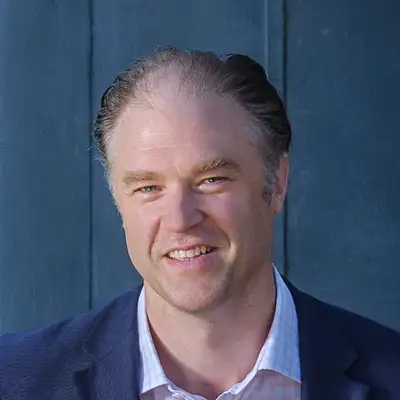
This week, my guest is Andrew White, who is the founder and CEO of Transcend Space. He is the CEO and executive team advisor and a leadership retreat facilitator. And we are going to be talking about his upcoming book, which is all about transformation, change and transcendence, which sounds very...
Hi, Falutin Andrew, but I am looking forward to this conversation immensely. So, origin story, my friend, origin story. When you were a wee lad, what did you want to be when you grew up? And in what way does that show up in the work that you do today and how you lead?
Andrew White (00:47.007)
It's a wonderful question and I'm going to take you back to not such of a wee lad and I don't think I was that for that long because I'm actually six foot ten tall so no one's ever really called me a wee lad in any form of recent history but I had a deep spiritual curiosity.
And around probably the age of 16, I wanted to be a priest. Now, stuff happened in my early 20s and I found that I was more comfortable with questions than with answers. And the kind of, I went through a bit of a crisis, I think, looking back. But I don't think...
a sense of service left. I don't think a sense of human growth, human potential, what is possible. And that still stays with me. And I think that is probably at the heart of the work that I do. And it shows up in a bit of the book on leadership thresholds, which I'm in the process of publishing.
Morag Barrett (02:06.114)
So I love how that actually all comes together. And whilst I mentioned the word transcendence in the introduction, your work is all focused on leadership thresholds. And my recognition as I was reading your research, reading the early copies of the book, is that we are all experiencing thresholds every day, not always as intentionally or as consciously as we could.
So let's start with the basics. What do you mean by leadership thresholds? And give us some examples.
Andrew White (02:39.656)
Yeah, great question. So let's think about thresholds in life before we think about thresholds in leadership. So the biggest threshold that all of us went through was from our mother's womb to being a semi-independent baby breathing for itself, digesting its own food except it. So it was a place where the status quo changed. There was literally something unsustainable about the status quo. We no longer fitted in that environment and we had to come out and...
Sometimes that's an easy process, sometimes that's a difficult process, but the net result is a baby that's breathing for itself and digesting food for itself and its organs are running independently. And then we grow up through life. And I think probably one of the next thresholds we go through is going to kindergarten or to a nursery school, to one school, to the next school. And so it's a state in life where the status quo no longer works. And for whatever reason, either through choice or because we're pushed,
We have to move into an unknown future. And then let's fast forward a bit. We get to the point where we're leaving home, we're going to university, we're doing our first job. That's not just a threshold for us, it's a threshold for our parents as well. Because often that means we move out of the house. So our parents have to adjust to what does our life look like? There's a threshold there. We get married, we become a parent. And perhaps then the biggest final threshold as we move from life
to death and who knows where we go into in terms of the mystery. So these are the thresholds and religions and cultures have always found ways to help people cross those thresholds intentionally. And what I began to notice in organizations is that we didn't give people that same support. And that's when things went wrong. That's when there was underperformance. That's when there was excessive stress. And essentially it's a deeply, deeply human process.
So really what the book is about is the 10 thresholds that I've identified that individual leaders go through and teams and executives and whole organizations go through. And it's full of case studies around how do people make those transitions intentionally? What is, are there some pathways that people take? Are there ways that people can improve their chances of success?
Andrew White (05:00.607)
and really go through with more intentionality, more awareness and to high levels of impact and performance.
Morag Barrett (05:06.806)
It was interesting as I was listening to you there, even with the life thresholds, is that there is a real mix in, is the word locus, because it's whether it's being done to me or whether I'm initiating it. So depending on, for example, a promotion. I put my hand up, I get promoted. Maybe I get the congratulations, Morag, you are now responsible for more.
Andrew White (05:20.095)
Absolutely.
Morag Barrett (05:35.176)
Is there a difference in your research for how successfully we navigate those thresholds, depending on whether we seek it out or whether it's bestowed upon us?
Andrew White (05:46.174)
Yeah, yeah, I I think so. I think the more proactive you can be about these things, the more intentional.
the better for a couple of reasons. One is any of us who have been consultants have worked with organizations that are stuck. There's a status quo which is failing and they're finding it difficult to acknowledge that. And as a result of that, they stay in that zone of underperformance for too long. Whereas if they were more proactive, if they were more intentional, if they were more comfortable with crossing that threshold,
made the jump rather than had to be pushed by circumstances. I think they would be more successful. The second is, and this may as happens to organizations, but I think it's more stuck with individuals.
People can stay in a job for too long and they can see the writing on the wall and then they get made redundant or they're fired. And all of a sudden they're in a crisis of identity, they're in a crisis potentially of money and it's difficult. Whereas if they'd been more intentional about that, more aware that something was dying. And I think this is somehow, we've got to become a bit more like nature, right?
Nature's constantly in these cycles of living and dying. If you walk into a woodland or into a garden, you can see this in the plants and the trees that are around. But as people, we find it difficult to let go of things. often you have to let go to create space for something new to emerge. So I think the more intentional you can be, the more you can jump rather than be pushed.
Andrew White (07:36.154)
My sense is that the greater the chance of success on the other side.
Morag Barrett (07:43.597)
Well, that leads me to that question then, because in order to let go or to seize new, we have to care. So why are leadership thresholds important? Why should the people watching or listening to this podcast care?
Andrew White (08:01.798)
Yeah, right. Because we're in a world that is at a profound point of disruption. And the more the world is at a profound point of disruption, the more that is causing thresholds to hit organizations where the status quo no longer works and they have to let go of it. And we can talk about the different things they have to let go of. And the more there are some significant prizes on the other side, as industries collapse,
industries reinvent as companies collapse, companies come in and take their space. So this is at the heart of high performance, long-term success. And whenever that's happening at an organizational level, that will also mean things for individuals. And that is about letting go of competences, letting go of identities, recognizing that relationships need to be transformed, that conflict can no longer be tolerated.
So it's a deeply, deeply human process at the end of the day. So it's almost a cascade down from the environmental things that we're seeing, the disruption in technology, the disruption in regulation, in trade, in all of these things, as it comes down into the strategy of a firm and the operations of a firm, it then comes down into the people. And the thresholds then come down. The opportunity is, if you can get across it,
then it's high levels of performance. But something has to die in order for something to be created. And that's the process which I think can be really, really difficult.
Morag Barrett (09:40.975)
So in your book, I know you outlawed and you've mentioned it, 10 thresholds that you've identified and they are grouped by the inner thresholds, those personal transformations and change, but also the outer, the organisational perspective. Let's leave a few mystery to be discovered in the book, but in terms of two that people would recognise, can you describe them for us and give us examples of what that might look and feel like?
Andrew White (10:07.025)
Yeah. Yeah. So one of the ones on the individual side of the page is what I call on becoming. And a wonderful case, which I refer to in the book, was a CEO that I coached who had come from a technical leadership role. So he was in a technical leadership role and came, made a big jump into a CEO role. And when I met him, to be honest, after a few sessions, I didn't
really give him much chances of succeeding. Because he was leading using his old methods. And it was crushing him. He was spending so much time in the office. I was worried about his health, his stress, he wasn't sleeping, and he hadn't let go of something. Fast forward.
What I saw when I finished the engagement and we completed the work was somebody who was comfortable in his own skin. It took 18 months. He had addressed some major challenges. He'd done a massive reorganization. He changed the board. He'd put a new strategy in place. And I can remember in our final session, and it happened contractually at the end of the process, but it also, he was there. I said, you're done.
He said, yeah, I'm done. Thank you. You've helped me become a CEO. It took 18 months for him to be comfortable in that place. He said, I'm going to call you when I'm adopting a new strategy, and it's going to be in a couple of years, and I'm going to need help then. And so that was, to me, a really powerful story of a situation where it wasn't just about the promotion, and it wasn't just about the appointment. It was about the 18 months after that of the human process of crossing that threshold.
So that's one. On the other side of the house, on the organizational, one of the big ones is a strategy. And this case, I have to be quite careful because of the confidential nature of it, but this was an organization that was doing, I would say it was a B plus, right? It was doing well. And there was new leadership on the board and suddenly the demand was for A plus.
Andrew White (12:31.228)
And what that meant was that things which were tolerated in the old world no longer could be tolerated. And that was a deeply human process. And essentially there were relationships were amongst the top team, which were fraught. There were micro strategies which were failing. And there was a team that was not pulling together.
Morag Barrett (12:36.334)
Mm.
Andrew White (12:59.258)
And the only way that they would get to A-star or A-plus levels of performance was by coming together as a team. And there was a significant gift on the other side of the threshold. I mean, the new leadership was correct in actually challenging them in my view and pointed to things that they were, successes that they were avoiding because of this behavioral dynamic that was in play. And so, yes, they needed
McKinsey to come in and show them what that looked like in terms of the what. But that wasn't enough. The actual challenge was them. They were able to outline that through the deck that was created and the assessments of different opportunities. But unless they stepped up, unless they went over a threshold, both as a collective leadership team and as individuals, they were never going to get that prize of A-Star performance.
And so I've worked with other organizations where they've had three different consultants come in telling them what they needed to do, but they hadn't crossed the threshold. And the consultants basically said the same thing, but the issue was them. And could they behave in a different way? Could they get let go of certain ways of working? Could they change the way they made decisions? Because that was going to be the unlock. It was a deeply human process of transformation.
to actually cross the thresholds.
Morag Barrett (14:32.588)
It's interesting as I listen to you, because you know, workplace relationships, human connection are at the heart of my work and research. And what I'm hearing in successfully navigating any threshold, it comes down to that relationship I have with myself, that identity and in what way does it need to be shift to shift? And am I willing to let go and embrace new skills, mindsets and approaches?
Andrew White (14:49.915)
you
Morag Barrett (14:57.89)
but especially those relationships with key stakeholders, whether it's on the team or more broadly, an explicit recalibration of how do we move forward together?
Andrew White (15:09.69)
Absolutely, absolutely. I mean, the way I do this, I have a specific methodology. We do all the prep work, but then we have a two to three day event. We always have the executive team in a circle and we put a piece of rope across the middle of the room. And one half of the room is the status quo.
The other half of the room is the future state, and the piece of rope represents the threshold that they have to cross. And over the process of those two days, we do what we call, constellate. We look at the relationship dynamics in a very physical way. We get people to stand in certain places, and we get them to have a very honest conversation about what it's going to take to cross that threshold. And are they willing to do it?
And so in some ways, you know, it's quite similar to walking down an aisle at a wedding. You're willing to make that process. It becomes a physical thing of where you go in in one state as a single person and you leave as a married person. And we're doing the same with this. Are you willing to identify parts of the status quo that aren't working? Understand what it's going to take to cross that threshold. Do that with your colleagues.
And then what does it mean to stand on the other side and how are you going to operate, how are you going to work, what is it that you're going to move towards, and what is the high performance and the impact that you're going to make happen?
Morag Barrett (16:44.088)
So in anticipation of a threshold, it can be both exciting and terrifying at the same time. The, my goodness, but what if I, you know, if I win this? And also what it's striking, yeah, go for it.
Andrew White (16:48.889)
Absolutely. Yeah. Yeah.
Andrew White (16:55.129)
Can I just stop you there? I just stop you there? Because I think you've got it absolutely right. The word, I couldn't find a word in English that captured this. The word which I found is a frisson, which captures both fear and excitement. And it's when people are feeling this that we know that there's something, there's a threshold moment at play.
Morag Barrett (17:06.526)
Feezo. Mm-hmm.
Morag Barrett (17:12.483)
Yeah.
Andrew White (17:25.209)
And sometimes it can be overwhelming fear. Sometimes it can be what I would call ignorant excitement because it's actually the interplay of both of them, which is really, really important.
Morag Barrett (17:37.741)
Yes, the butterflies in your stomach that you know are both nerves and anticipation, but also a little bit of, dare I speak up? And also that whole visual, I was listening to you describe the rope and the what would it take for us to cross the threshold? But even once we've crossed the metaphorical rope, that isn't the end. isn't ta-da! We've we've threshed our hold because
Andrew White (18:02.444)
day. No, no, no, no,
Yeah.
Morag Barrett (18:06.786)
there's the reality of, and it wasn't quite what we expected and the, I promised I was going to listen more and not interrupt you, Andrew, but I'm going to keep interrupting and keep talking. And so how do we unlearn, relearn and continue to adjust in what is ultimately an infinite number of thresholds that I'm experiencing, let alone that you're experiencing and where are they actually intersecting or not? wow. There was a lot there. Okay. Pick your thread.
Andrew White (18:10.637)
Yeah.
Andrew White (18:25.413)
Absolutely.
Andrew White (18:34.584)
That was a lot. So, I mean, what I've noticed is that this is not an instant process. It's also not a linear process. You know, a significant personal threshold takes months, if not years. Organizations don't change overnight. So there needs to be an awareness of the journey and accountability.
you know, an understanding of what the new performance parameter looks like, a deep awareness and honesty about where are we and have we moved. And so what we're trying to do is unpack the journey and what the book does. We've actually spent a lot of time with a graphic designer really trying to capture this. So what you'll find in the book is some graphics where we really try to capture the emotional essence of the journey.
And often if you look at a company's strategy and the corresponding project plan, it looks linear. Well, actually, we know it's illogical. We know it's backwards, forwards. We go around in circles. We then have to come backwards. We then make a little bit of progress. We then go down another dead end. We come back. We might do some experiments. We find our way forward. And then one day, we suddenly find ourselves where they are. And even when we get there,
Morag Barrett (19:34.248)
Mm-hmm. And logical.
Andrew White (19:57.291)
Are we still holding a mindset that we came from before? Have we fully understood where we're at? Have we fully, you know, done what some people call the 10x work that realize in this world we could achieve so much more? And there will always, this is what I've also found, which has been wonderful. There are always things on the other side of the threshold which you cannot see from the point of departure.
And so a friend of mine uses this phrase, is true transformation happens when you cannot see the shore that you've departed from. And I would also see true transformation happens when you cannot see the shore that you're going to. so being aware that we've struggled to find a word other than gifts. There's gifts on the other side of the threshold. There's things that you didn't expect. They're wonderful. But you have to have the courage to leave the known shore.
and cross an ocean of uncertainty in order to find them.
Morag Barrett (20:56.366)
So I would imagine for the, well, I was going to go with the assumption, the miss assumption, which I'm recalculating as I speak, that for those of us listening to you now, identifying personal thresholds are easier. Hey, I'm looking for my next opportunity. I've just been promoted. AI is impacting my team and product suite. The world is impacting. But then in almost asking it that way,
I recognise that no, organisational changes or need for them are just as visible in many ways. So for the folks listening who recognise that they are in either an inner or an outer imposed threshold, what do we do now other than enjoy those butterflies in the frisson of anticipation?
Andrew White (21:30.931)
Yeah.
Yeah, yeah. I would say you need to find space to explore what's going on. What's brought you to this point? What's brought the organization to this point? What might the journey look like going forward?
might the destination look like? And that could be a coaching space. You know, I think you need to find the right people to bring in to find, to hold the organizational space because they're not going to bring answers. And if they come with a very prescriptive, defined process, that's not going to work. They need to hold the space for you to explore.
It's going to take time. You're going to have to step out of the busyness of life to explore that and with people that you trust. And so that's coaching, that's perhaps going on a retreat, that's taking the executive away on a retreat and with the right guidance to take you through that process. And it's not a one-off event. know, the story of the CEO I spoke about, that was about 18 months.
organizations going through a strategic threshold, usually two years, in terms of the end-to-end process. I think it can be fast-tracked, but in large complex organizations, it's difficult. And then what are the big decision points? What are the big decisions? And that's where the frisson comes up, right? We all know there's those decisions which are difficult, which are uncomfortable, which are ambiguous, and which will...
Andrew White (23:29.979)
Ultimately, if you get them right, be accelerators. And that's the other thing we're interested in exploring is what accelerates people across a threshold, what creates a sudden sense of momentum, and is going to, particularly in an organization, show to the rest of the organization what it's like to be on the other side of that threshold.
Morag Barrett (23:53.856)
strikes me as I'm listening again though is that that threshold.
can't be successfully navigated in isolation, i.e. just me. So I need my people, which is the relationship's piece. However, if I'm the only one, for example, at this point who understands the need for this threshold, that despite saying, we need to do different, I'm getting pushback, there is a risk of disconnection and leaning back from the people who are
Andrew White (24:27.928)
Yeah.
Morag Barrett (24:31.97)
and it's both keeping us stuck but also needed in order to help us move forward.
Andrew White (24:37.263)
Absolutely. Absolutely. And could also be not willing to move to a different world. You know, I did some work with a large media company who were moving from spreadsheets to a big CRM system. And this changed the power of the salespeople. They no longer controlled.
Morag Barrett (24:45.336)
Mm-hmm.
Andrew White (25:02.804)
the way they worked because they had to feed data into a large CRM system. And there was a proportion of them that didn't want to work in that way and didn't go on that journey. They didn't stay in the business because the organization was crossing a threshold to a very different way of working. And I think there's an honest conversation that's needed with people. Are you with us or not? Are you coming with us on this journey or not? And so there's...
There can be a loneliness if you're the only one making that call. There can also be a challenge of when do you call that people have been given a lot of opportunity to understand that if they don't want to cross, they don't want to operate in a different way, have a different culture, drive a higher level of performance, then they're not the ones to come with us on this journey.
Morag Barrett (25:57.423)
So there's the recognition that I or we as an organisation are at this threshold. There's the recognition of the how I or we used to work is not going to be a one for one transition. Then there is the who needs to join this transition, who needs to exit and how do we do that gracefully? Who needs to stay in order to make it? And then there's the how fast do we want to make it all happen?
Andrew White (26:27.557)
Yeah, well, and sometimes that's not just our decision. If the shareholders involved, if there's competitive pressures involved, there's a how fast do we want to move and there's a how fast does a market or a opportunity require us to move.
Morag Barrett (26:45.262)
Well, I can't wait to learn more and go deeper on this. For those who are listening, how can they learn more about your work and the concept of thresholds?
Andrew White (26:56.339)
So there's two ways. I publish a lot on LinkedIn. So please reach out and follow on LinkedIn. If you just search for Andrew White and Transcend Space, you should find me. And there's a newsletter there you can subscribe to. I'm going to be releasing a Transcend Space podcast series soon as well. And there's a sub-series in there where I'm talking with my co-author about
almost our weekly experiences of observing companies going through thresholds in the press or our experiences from coaching and from consulting. And then we have the book coming out. That's already, think, on the Amazon platform. You can preorder that. And we're going to be launching a global leadership community platform for leaders around the world who are going through thresholds and want support. And there's going to be
kind of interventions and various other things that you can find. That's all on LinkedIn. And so it would be wonderful to hear from people.
Morag Barrett (28:00.675)
That community is inspiring. It's the hashtag better together. You don't need to navigate these thresholds on your own and the ability to learn from and adapt from others is going to be just such a powerful community. I encourage everyone listening to look at the book, follow the podcast and register for that community and platform. So as we come to the end of our time together, what's the message that
you want people to take away and reflect on and do on as a result of our conversation.
Andrew White (28:35.246)
Yeah, so one of the things I realized, both myself in crossing the threshold that I've been over, but also coaching others and working with organizations is it's that point. There are gifts that you could never imagine. So.
If we found the confidence and the belief, and I think it's confidence and belief fundamentally in ourselves, that we can do this. This is where the 10X comes in. I think there's a huge amount of wasted human potential because for whatever reasons we get stuck. And the sooner we can let go of what's not working and move through that process of crossing a threshold, there's extraordinary gifts that lie on the other side.
But we have to have confidence to let go and move and call things and move towards things. And that's what I hope the biggest takeaway from this is.
Morag Barrett (29:36.11)
Well, Andrew, you've inspired me. As I said, I can't wait to learn more. Check out his work at transcend.space and follow him on LinkedIn. You will not regret it. In fact, you will learn so much and accelerate your own thresholds and transformations. Andrew White, thank you for joining me on People First.
Andrew White (29:56.114)
All right, thank you.