Subscribe
Share
Share
Embed

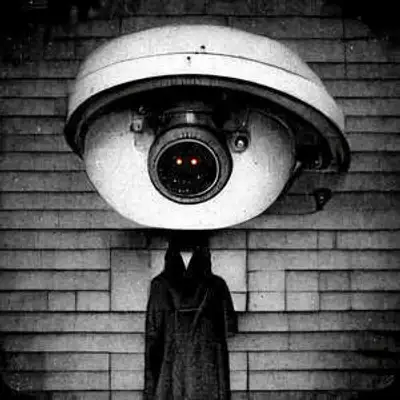
Stupid Sexy Privacy is a miniseries about how to protect yourself from fascists and weirdos. Your host is comedian Rosie Tran, and the show is written by information privacy expert B.J. Mendelson. Every episode is sponsored by our friends at DuckDuckGo. Tune in every Thursday night —or Friday morning if you're nasty — at 12 am EST to catch the next episode.
00:01
Back to the DuckDuckGo Privacy Challenge, where contestants get a chance to learn why millions use DuckDuckGo's free browser to search and browse online. Now for our first contestant, Julie. True or false? Google's Chrome protects your personal information from being tracked. Hmm, I'm going to say true. Incorrect, Julie.
00:24
If you use Google search or their Chrome browser, your personal information has probably been exposed. Not just your searches, but things like your email, location, and even financial or medical information. Wow, I had no idea. Second question, what browser can you switch to for better privacy protection? Is it DuckDuckGo?
00:46
That's correct. The DuckDuckGo browser keeps your personal information protected. Say goodbye to hackers, scammers, and the data-hungry companies. Download from DuckDuckGo.com or wherever you get your apps.
01:01
Welcome to another edition of Stupid Sexy Privacy, a podcast mini series sponsored by our friends at DuckDuckGo. I'm your host, Rosie Tran. You may have seen me on Rosie Tran Presents, which is now available on Amazon Prime. And I'm your co-producer, Andrew VanVoorst. With us, as always, is Bonzo the Snow Monkey. I'm pretty sure that's not what a Japanese Macau sounds like. Oh, it's not. Not even close.
01:29
Let's hope there aren't any zoologists listening. Okay, I'm also pretty sure that's not what a snow monkey sounds like. Over the course of this mini-series, we're going to offer you short, actionable tips to protect your data, your privacy, and yourself from fascists and weirdos.
01:57
These tips were sourced by our fearless leader. He really hates when we call him that. DJ Mendelson. Episodes 1 through 33 were written a couple of years ago. But since a lot of that advice is still relevant, we thought it would be worth sharing again for those who missed it. And if you have heard these episodes before, you should know we've gone back and updated a bunch of them, even adding some brand new interviews and privacy tips along the way.
02:21
That's right. So before we get into today's episode, make sure you visit stupidsexyprivacy.com and subscribe to our newsletter. This way you can get updates on the show and be the first to know when new episodes are released in 2026. And if you sign up for the newsletter, you'll also get a free PDF and mp3 copy of BJ and Amanda King's new book, How to Protect Yourself from Bastions and Weirdos. All you have to do is visit stupidsexyprivacy.com.
02:51
That's what I just said. Stupid, sexy, privacy dot com. I know, but repetition is key to success. You know what else is? What? Alfonzo, eat your pablin like a good boy and pretty soon you'll grow up to be a big, strong, man just like your daddy.
03:09
then you'll have Swedish pancake too. I'm really glad this show isn't on YouTube because they pull it down like immediately. I know. Google sucks. And on that note, let's get to today's privacy tip. oh
03:27
This week, we're joined on the show by Amanda Litman, author of When We're In Charge and the co-founder of Run For Something. Run For Something has helped elect 1,650 plus candidates since 2017. Presenting people across America with candidates who aren't fascist weirdos are funded by some kind of people who pay the bills for fascists and weirdos. Just a note, before we get into today's episode though, we are now in season two of Stupid Sexy Privacy. But, BJ is still finishing up the copy edits of How to Protect Yourself from Fascists and Weirdos. So.
03:56
This week's episode and last week's episode did not include a new privacy tip or introduction. We apologize for the delay and thank you for your patience. This book was supposed to be 20,000 words and finished it over 45,000. So we're badly behind on just about everything here at the moment. At the end of this month, we expect to have the book available on our website and the audio edition and PDF available not long after. Once those things are done, we'll circle back and update all the season two episodes, including this one with new privacy tips, intros and more. So if you look at the website and you're like,
04:26
Where are the show notes? This is why they've been delayed. We're just trying to catch up, which we will. Until then, we want you to go check out a resource our friends at the StopGenAI Collaborative have put out called How to Search Now that Google Search is Gone. We recommend you check it out and as well as the workshops they're offering on how to avoid generative AI at stopgenai.com. We also want to give a shout out to a friend of the show, Kim Crowley at the Collaborative, who is the author of the Technofascism Survival Guide. If you like the content we're about to give you,
04:54
in How to Protect Yourself from Fascists and Weirdos, you'll like Kim's book as well. She's still taking pledges via Kickstarter through the end of the month. We'll link to that in the How to Search guide in today's show notes. Now, let's get to BG's interview with Amanda Litman. Hi, Amanda. Would you take a moment to introduce yourself and run for something? So my name is Amanda Litman. I'm originally from Northern Virginia, born and raised. went to Northwestern University for college where I studied American Studies. My first job when I was a senior in college was for the Obama re-election campaign.
05:23
So was an email writer for Obama 2012 doing online fundraising and volunteer recruitment. uh I worked through the election, which we won. So was great. I love winning. Stayed and worked for the president's nonprofit for about a year. Moved to Florida and worked on the governor's race there for about a year. And then moved to New York to work for Hillary Clinton's presidential campaign in 2015, 2016. I was her email director. again, online fundraising, volunteer recruitment, raising money from people to support the campaign. We lost.
05:53
It was bad. About a week after election day, I started hearing from people I had gone to high school and college with. Hey, Amanda, I'm a public school teacher in Chicago and I'm thinking about running for office. You're the only person I know that works in politics. What do I do? And at the time, if you were young and newly excited about politics and wanted to do more than vote and more than volunteer, there was nowhere you could go that would help you. So I reached out to a whole bunch of people with an idea. What if we started an organization to solve this problem? One of those folks became my co-founder, Ross Morales-Riccietto.
06:22
And we wrote a plan and we built a website and we launched Run for Something on Trump's first inauguration day thinking it would be really small. We'd get a hundred people who want to run in the first year because nobody wants to run for office. This would be a good hobby. What a cool side project. We had a thousand people sign up in the first week. And as of today, we're up to about 230,000 young people across the country who've raised their hands to say they want to run. We've helped elect more than 1,500 across 49 states plus DC. And I think in the process have changed what leadership looks like.
06:52
Yeah, I mean, I've been a fan of the organization and first book. I've personally hand distributed your first book to a number of people who have since either run for office or have gotten into politics and other capacity. So, yeah, I mean, look, I was very excited to do this interview. So before we dive in, though, I did get a press release that I did want to talk to you about. I think you touched on it a little bit, but I think it's so important to stress.
07:22
At the time we recorded this interview, the press release had mentioned that 67,000 people have signed up to run for office, which is more than the entirety during Lord Goldemort's first term. And I would just love to hear a bit more about just the excitement and enthusiasm that's going on with Run for Something. So right after the election in 2024, we started to see people very quickly saying, you know what, I am not deterred, I'm going to run for office.
07:51
And I was really surprised, if I'm going to be honest. thought people feel demoralized, like, you know, what's the point? uh Instead, we had about 10,000 people sign up in a couple of weeks after the election. And in the weeks and months since, we've had more people sign up in about 10 months since Tony 24's election than we did in the entirety of Trump's first term, about 67,000. And the biggest moments, you know, right after the election, uh right when Elon Musk and Trump started firing people from the federal government.
08:18
when Chuck Schumer folded on the budget fight back in the spring um and showed people that this Democratic Party was not going to be the solution forward. And then after Zorin, Mamdani won the mayoral primary in June, giving people an example of what a different kind of leader could look like. And each of those moments with Mamdani's win actually being the biggest have inspired people to step up and lean in a whole new way. And I think we are just getting started with building what we believe is the largest pro-democracy candidate pipeline.
08:47
around. Yeah, it's it's amazing to see I was on a call ah recently with ah I believe Bernie Sanders was was one of the guests and ah correct me if I'm wrong, but they were talking about how Zoom was maxed out and you had more signups and you can handle like, that's just that just shows the excitement. ah But I mean, there's a lot to talk about with the first book, but I did want to ask you about the new book first, ah because you talked about something that I think
09:15
we're all experiencing right now with a bad boomer boss, uh both in the White House that I think maybe around different offices and environments that we work in. Something that's a running theme in Stupid Sexy Privacy is that while not all boomers are bad, of course, a majority of them have voted for policies and leaders who have endangered themselves and the planet. This kind of self-interest makes federal privacy legislation, for example, impossible because it's hard to train the B generation to think collectively.
09:44
What can you tell us about bad boomer bosses, generally speaking, and how to navigate them? Yeah, it's a big theme through When We're In Charge, which is my new book about next generation leadership and thinking about what it means for in particular millennials and Gen Z to lead differently than the bad boomers that came before us. And the bad boomer boss doesn't believe in work-life balance, thinks mental health is a joke, uh is either aggressively oversharing to the point of like, I don't need to know.
10:12
everything about you in the workplace or alternatively so much of a robot that you don't know anything about them at all and there's no humanity there. The bad boomer boss trusts in institutions. know, the institutions have been there for them and they believe in them. The bad boomer boss has climbed a career ladder that made sense and has seen the safety net and can count on the safety net to be there all the way through to the bitter end. But that is not how millennials and Gen Z see things on basically every front. There's some variation within millennials and Gen Z, of course, but
10:42
broadly speaking, a deep understanding that the institutions that have gotten us to this point are not sufficient to get us to the next one. That work-life balance, you know, while it's not always possible, is aspirational. And that our jobs will never love us back. And that we need to build lives that are more than just our jobs. That the way in which you show up at the workplace needs to be somewhere in between oversharing and beep-bop robot.
11:11
that actually if you work many of your waking hours, you can't like keep all of yourself out of that. But also it's not the right place for every part of who you are. I think that tension, all of those things are really hard to do. In part because we don't have models from the boomers and to be honest, the Gen Xers, I was getting yelled at in my mentions, they don't talk about Gen X enough, which is in itself very Gen X. But we don't have models for how to do it, which is why it's so difficult.
11:41
Yeah, I'm thinking of like so many questions with Gen X in particular where it definitely like speaking as an elder millennial, I felt an abdication almost of. I mean, we certainly have some great Gen X leaders that are out there, but it seems like they just kind of stepped to the side and left us holding the bag as elder millennials, where you're right, we don't know where to look for, we don't know where to go. uh
12:08
Oh, and I don't blame them in a sense. It's the boomers fault. Like the boomers held onto power for too long and didn't. And now that they're handing it over, they're handing it. There's been some articles by this Fortune 500 company. CEOs are skipping Gen Xers and boards are skipping Gen Xers. They're going from boomer to millennial. Sorry. And that sucks. That sucks for everyone. Absolutely. Yeah. I feel like they've held on to the point where we have policies in place. Like you talk about the four day work week, which is something I'm a big fan of.
12:36
And that's something that I've personally, in what I worked as a consultant, struggled in trying to explain to Baby Boomers why it's so important. So I was hoping you might be able to touch on that point real quick before we go back to the first book. The four-day work week is the future of work. Run for something has had a four-day work week since 2022. I have not worked on a Friday, at least on Run for something since then. 32 hours paid full-time, paid like it's a 40-hour work week or like your normal salary.
13:05
And what it does is allow you to have a day to yourself. It is a day for rest, a day for community, a day for freedom. It is so powerful. And I say this, especially as a working parent, I have two little kids to have the time to like actually get your shit together before you go into a full-time weekend of parenting, which as anyone knows, it's not restful. Uh, coming off a long weekend with my kids, was not the vacation I imagined. Um, it is absolutely doable, but I do think it has to start from the top.
13:35
know, for when we're in charge, interviewed 130 some odd leaders from across a bunch of different sectors. I talked to lawyers and doctors and faith leaders and teachers, as well as tech executives, media executives, business folks and the like. And I heard themes from across these conversations. But one of them was that in order to create environments where you had work-life balance, which is what the four-day work week enables, like leadership has to model it. They have to plan for it. They have to structure their teams accordingly. You have to create scaffolding for it.
14:03
Like it has to come from the top. That's why when we're in charge, it's really directed towards leaders. Because when the leaders do things better, everything is better for the people who work for them. Now let's talk about future leaders real quick. Because, you know, fascism depends on overwhelming people and making you feel like you can't perceive a better future. And so one of the things we're constantly telling people is you should run for office. So one of the things that like fascism depends on, right, is overwhelming people and making them feel like they're hopeless. There's no point.
14:32
But we tell people you should run for office and you should have hope for the future because hope is contagious. But one thing I've personally found is when I talk to people about running for office, they're kind of like, yeah, I want to do it. What do I do next? And I'm sure you've gotten this question a lot. So I figured I'd ask you, like, what is what's some of the basic advice that you would give someone who's thinking running for office? Well, first, go to run for what.net and look up where you can run. Pick up a copy of the Run for Something book, which was my first book, and it's a guide on how to run for office. Self-promotion out of the way.
15:02
Think about three things. One, what is the problem you care about solving? Like quite literally, what is the reason you would run for office? What is the thing that you want to do that you want to make better or the harm you want to prevent? What is the problem you care about solving? Two, what is the office that would give you power to solve it? Is it housing and therefore city council? Is it voting rights and therefore state legislature? Is it book bans and therefore school board? Like really connect problem with lever for solution. And then third, think about why voters should want you to win.
15:31
It's different than why you want to win. You want to win because winning is great and losing sucks. Voters want you to win because you're going to do something for them. Like what are you going to do to make their lives meaningfully better in a way that they can feel? If you can answer those three questions of the problem you want to solve, the office that will give you powers to solve it and why voters should want you to win. Everything else about a campaign is logistics and logistics is what run for something can help you with. Yeah. And so let's talk about some of the logistics real quick. I mean, the thing I hear a lot.
15:59
I will mention the person's name, but let's say, so let's say you have a candidate who is well funded, right? It doesn't matter if it's a Democrat or a Republican. um They've got like $6 million in their campaign bank account. You want to run against them. It doesn't matter if it's assembly or state or whatever. um Have you had that conversation though with someone who's like, I want to run grassroots against someone that's well funded? You don't need to outspend your opponent to outwork them.
16:26
Like, especially if you're going up against an incumbent or a longtime establishment candidate, like you're probably never going to have enough money to outspend them. You can knock doors, talk to voters, build relationships. And often these candidates who have a lot of money haven't actually communicated to voters in a while. They've been a little complacent. They maybe been a little lazy. They are a little often a little out of touch with where voters really are. I think that can be your superpower. Being underestimated is,
16:55
I think a uh low key hack um to being able to win these campaigns. Because when your opponent doesn't see you coming, you can really outwork them.
17:07
Hey everyone, this is Amanda King, one of the co-hosts of Stupid Sexy Privacy. These days I spend most of my time talking to businesses and clients about search engine optimization, but...
17:18
that's not what this is about. I wanted to tell you a little bit about a book I've co-authored with BJ Mendelsohn called How to Protect Yourself from Fascists and Weirdos. And the title tells you pretty much everything you would want to know about what's in the book. And thanks to our friends at DuckDuckGo, we'll actually be able to give you this book for free in 2026.
17:41
All you need to do is go to the website stupidsexyprivacy.com and sign up to our newsletter. Again, that website is stupidsexyprivacy.com and then put your name in the box and sign up for a newsletter. We'll let you know when the book and the audiobook is ready because if you want a PDF copy that's DRM free, it's yours. And if you want an MP3 of the new audiobook, also DRM free, you can get that.
18:11
Now, I gotta get out of here before Bonzo corners me because he doesn't think that SEO is real and I don't have the patience to argue with him because I got a book to finish. Let me ask you about, we have, we as Stupid Sexy Privacy definitely have some issues with the Democratic Party, right? Like it's, feel, and you you've already touched on some of it, right? With like Schumer in particular and in New York state here, we have Jill O'Barian who voted for the Genius Act.
18:39
which allowed Lord Goldemar to enrich himself further. And then you've got senators like Cory Booker who kind of talk a good game, but when you're not looking, you see them voting for ah private equity deals that allow predatory practices that harm everyone. Or you have someone like our Congressman, Ryan, who ah his office refuses to commit to a constitutional amendment to overturn Citizens United. So when you see that,
19:09
as someone who wants to run for office. I'm sure if you're listening to this and you're Republican, and I've heard this too, it's like, I don't know if I can count on the local party to support me because I'm not, I'm not mega enough, right? Or I'm not corporate enough. But what do you tell people who think about the local political parties, the state political parties? Is that something that they should even consider going to as a resource or should they just sort of go it on their own?
19:37
Definitely go and ask for help, can't hurt. But I think the thing that I like to remind folks is that there's not some like secret list of donors or that was easy button that the party will be able to give you. They don't really have the juice anymore. In a lot of these states and communities, some state parties, and I'm saying this, I know this only on the democratic side, I can't speak to it for the Republican party, but these democratic state parties, most of them are underfunded and understaffed. Most of them do not have the ability to help you the way that
20:06
they would like to or that they will posture like they can. They are all bark and very little bite. So yeah, go to them for help. And if you get it, great, can't hurt. But if they ignore you or don't answer your emails or try and undercut you or you're going up against one of their incumbents, it doesn't, they are not unbeatable. They are often just only unchallenged. And think we have seen that over and over again over the last six or eight months. The party's chosen candidate doesn't usually win.
20:35
because the party's chosen candidate or the party itself is often pretty out of touch with where normal people are. And one of the ways we can change that is by changing who makes up the party. But that's just to say, don't get spooked out of it. Absolutely. And let me ask you about some of the, what are some of the tools and resources? I'm thinking, let's, so let's segment this out for a second. So run for something focuses more on potential candidates under 40. Oh, let's say you're listening to this and you're Gen X or you're millennial.
21:02
ah Who's on the older side? What are some things that they should know about in terms of resources that are available to them? uh Run for something can help you with everything from figuring out what office to run for, how to get on the ballot, how to access the voter file. We've got trainings and materials to give you stuff to prep for your campaign, how to write a campaign plan, how to hire staff if that's something you'll need. We've got discounts for different tools that you might use, including texting tools, web processing tools, voter file access tools.
21:30
And we can connect you to other people running for office, which candidly is the thing we hear from folks the most often about, because it's really lonely and really isolating. Being able to talk to someone who's been in your shoes, has been through this decision-making process and has actually run themselves or is currently running is almost more valuable than any kind of money we can provide because it's isolating to do this thing and to put your name on the ballot and put yourself out there for public consumption. Yeah. And I know, I think I hear a lot of this.
21:59
people that are afraid of being attacked, right? So, you know, the concern is, okay, if I run for office, I become a public figure. So I feel like having that connection is really important, right? Because you can speak to someone who's been there, who's been on the receiving end and stuff like that. Let me ask you, I found with the political campaigns that I've worked on, it's not to say that social media doesn't matter, like, because I don't want to sound like I'm dismissing it because I'm not, but...
22:28
What I found though is that if I were to compare the effects of social media versus the effects of going door to door, right? And doing like a deep canvas with someone and then following up with that person, we found that that is more successful in driving people to the polls. And I'm sort of, I first want to ask like, have you found that in your experience? And then I want to ask a little bit about what tactics you would recommend for someone who's like in the middle of a race?
22:54
So if you think about what actually moves someone to the polls, it's the sense that they have a personal relationship between candidate and voter. Everything that you do is part of a campaign, whether it's advertising, TV ads, radio ads, know, fringe ads, yard signs, all of that is meant to replicate that intimacy and to get you one step closer to that sense that like, know this person, I trust this person, this person likes me, I like them. Knocking doors is the most direct way to build that relationship. Like meeting someone in person, I would say knocking doors is sort of a
23:22
catch-all term rather, that could be like being present at the school PTA meeting, going to the Little League soccer games, or the baseball, whatever, the Little League games, the, you know, seeing people at the grocery store, going to their place of worship, wherever it might be, like really getting to know them in person, face to face. Social media can, as we know, help give people a sense that they know you, they trust you, they like you, and that you like them. It is, it alone cannot win an election, but...
23:50
as part of a larger strategy around communication, around sort of surround sound intimacy can be really, really powerful. Let me ask you about some of the additional tactics. So let's say you're on a shoestring budget, right? You're running against a well-funded incumbent. You're going door to door. What are some things that people don't think of doing that they could do? I think showing up at community meetings, being present in
24:17
group spaces, galvanizing volunteers. I think a lot of people think about these things. The thing about campaigns is like, it's not rocket science. Right. I mean, it's hard work. You don't want to undercut this. It's very hard work. requires a lot of time, a lot of energy, ah lot of like sweat equity, certain amount of financial resources. But it's not like there's some secret shortcut to building relationships with the number of voters you need to win. You just have to do.
24:45
presence, like the literal presence in these community spaces. And the best candidates are the ones who already know where those community spaces are. So one of the things we often tell people is like when you're thinking about where you if you're ready to run for office, like, okay, if you had to throw a campaign launch party in two weeks, do know where you would throw it? Do you think you could fill the room? Do know where you'd like send the invites both, you know, literally, where would you fly or where online would you go? Do you know where the community is and how to reach them?
25:14
If the answer is no, that doesn't mean don't run, but like that's part of the questions you're going to have to answer as part of your campaign. So if you do have an answer to that, you've got to leg up. I think we covered a lot of them, but are there any frequently asked questions that you get from people that are either thinking about running for office or are running for office that you think are worth addressing? lot of people say I can't run for office because I have a full-time job. Most local offices are barely paid or if they're paid at all, which is
25:43
worth naming, but they're also not things that require you to quit your job to run for or to serve. Congress, different story, but state ledge, city council, library board, school board, almost everyone run for something works with, I would say 99 % of the people we work with hold their full-time jobs if they have one or their full-time caregiving responsibilities or whatever it might be, students, whatever it might be, while running and then while serving. It's hard. It becomes your full-time job outside of your full-time job, but it is absolutely doable.
26:13
The other thing we hear from folks is I can't afford to do this. And like, I, again, I don't want to under count that as a reality. The way in which we get better public servants from all different kinds of backgrounds is by paying people more, like we should make these jobs more well paid. There should be ways that you can fund people running for office, besides donations, like pay people salaries, all of that is true. And uh you don't have to be rich to run for office. You don't have to own property to run for office.
26:40
You don't have to be a lawyer to run for office. You don't need a political science degree to run for office. The only qualifications beyond maybe like age and residency and citizenship in most offices, which vary from place to place. And even then residency is not always a requirement is that you need to care. You need to be willing to do the work. You need to listen and you need to learn. Everything else figure outable. People dumber than you who care less than you have and are doing this. So if you're the kind of person who like actually gives a shit,
27:10
you can and we'll help you. Before I get to my last question, where can we find you? Where can we purchase the books? What should we check out? What resources should we check out? So you can learn more about Run for Something at runforsomething.net and you can go to runforyout.net to look up where you can run. The books which are Run for Something, A Real Talk Guide to Fixing the System Yourself and When We're in Charge, The Next Generation's Guide to Leadership are both available wherever you get your books or on audiobook, ebook, bookstores all over the place.
27:38
And I'm on all different social media platforms, either Amanda Lippman or Amanda Litman. And I have a weekly sub stack just at amandalippman.substack.com.
27:54
In a world of notice and consent, the onus on protecting yourself from fascists and weirdos falls on you and not the greedy tech oligarchs. The problem is we don't all have $110 million to buy 11 homes in one of America's most expensive zip codes, just so you can have your privacy. So whether it's buying a brand new MacBook Pro or purchasing a used vehicle all at cash, that was built before 2015, this stuff can get real expensive real fast.
28:22
And when most Americans look paycheck to paycheck, this situation can be disheartening. That's why we partnered with DuckDuckGo. Their browser is free. Their search engine is free. You can privately access select AI chat models for free. And you can get an at Duck email alias for free as well. All without putting money into the pockets of companies like Google.
28:44
A company that stalks you suppresses information around the world and has been illegally using its dominant position in search to crush competitors and squash innovation. You don't have to be a part of Google's ecosystem. You can use DuckDuckGo instead. And if you have a little extra money, you can support what they do by getting the DuckDuckGo subscription. This gets you access to a solid VPN, data removal services, private access to advanced AI chat models, and identity theft protection.
29:12
all for about $10 a month or $100 for the year. That's less than the cost of virtually every streaming service these days, especially because those services now routinely raise their prices every six months. Congratulations, everyone. We reinvented cable.
29:28
You can sign up for the DuckDuckGo subscription via the settings menu in the DuckDuckGo browser, available on iOS, Android, Mac, and Windows, or via the DuckDuckGo subscription website, DuckDuckGo.com slash subscriptions. The DuckDuckGo subscription is currently available to residents of the U.S., UK, EU, and Canada. Feature availability will vary by region, but your peace of mind will not, because supporting companies like DuckDuckGo is one of the key ways we can defeat the fascists and weirdos. Don't support companies that support them. Support DuckDuckGo instead!
29:58
it.
30:01
you
30:06
This episode of Stupid Sexy Privacy was recorded in Hollywood, California. It was written by B.J. Mendelsohn, produced by Andrew Van Vorse, and hosted by me, Rosie Tran. And of course, our program is sponsored by our friends DuckDuckGo. If you enjoy the show, I hope you'll take a moment to leave us a review on PocketCast, Apple Podcasts, or wherever you may be listening. This won't take more than two minutes of your time, and leaving us a review will help other people find it.
30:31
We have a crazy goal of helping 5 % of Americans get 1 % better at protecting themselves from fascists and weirdo. Your reviews can help us reach that goal, since Leaving One makes our show easier to find. So please take a moment to leave us a review and I'll see you right back here next Thursday at midnight. After you watch Rosie Tran Presents on Amazon Prime, right? Bonzo, I wish that you'll have many more birthdays just like this one. With those you love and trust around you always to share your happiness.
31:01
And I wish that you'll get a chance very soon to prove that being loved and looked after like a human being has made you feel like a human being. And that if love can do that to you, then it ought to be able to make some other human beings... human beings.