Subscribe
Share
Share
Embed
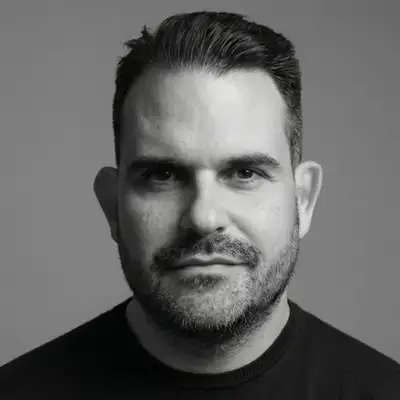
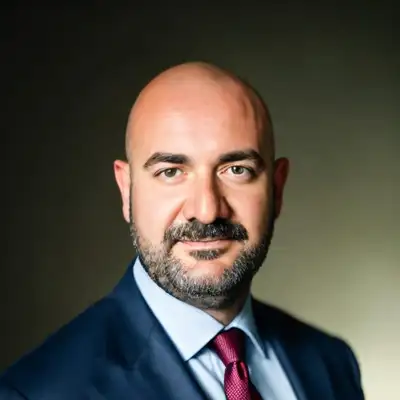
In this episode, Chris Maffeo talks with Filiberto Amati.
He is a Growth Advisor. He has extensive Spirits experience having spent many years in Campari in the Netherlands, Mexico, the Caribbean and in Di Saronno in Central and Eastern Europe. He has been in both marketing and commercial roles.
They speak about how to choose the right city to start from in a market, as they are not all the same. They dive into how to win there before moving to the next city and how to ensure you get the right distribution set-up based on your brand lifestage.
If you enjoyed the episode, please rate it and share it with your
friends and colleagues.
About the Host: Chris Maffeo
About the Guest: Filiberto Amati
In this episode, Chris Maffeo talks with Filiberto Amati. He is a Growth Advisor. He has extensive Spirits experience having spent many years in Campari in the Netherlands, Mexico, the Caribbean and in Di Saronno in Central and Eastern Europe. He has been in both marketing and commercial roles.
They speak about how to choose the right city to start from in a market, as they are not all the same. They dive into how to win there before moving to the next city and how to ensure you get the right distribution set-up based on your brand lifestage. If you enjoyed the episode, please rate it and share it with your friends and colleagues. About the Host: Chris Maffeo About the Guest: Filiberto Amati
The MAFFEO DRINKS Podcast is a leading drinks business podcast delivering actionable insights for drinks leadership.
For founders, directors, distributor MDs, and hospitality leaders navigating the tension between bottom-up reality and top-down expectations.
20+ years building brands across 30+ markets. Each episode features drinks builders: founders, distributors, commercial directors, sharing how the drinks industry actually works. Not the conference version. Honest conversations.
Insights come from sitting at the bar.
Beyond episodes: advisory for leadership teams, subscription with episode deep dives and principles to navigate your own reality.
Beer, wine, spirits, Low and non-alcoholic.
Bottom-up Insights & Episode Deep Dives at https://maffeodrinks.com
Hi, and welcome to the Maffeiro Drinks Podcast. I'm Chris Maffeiro, founder of Maffeiro Drinks, where we provide a non nonsense approach to building drinks brands from the bottom up. I will be your host, and in each episode I will interview a drinks builder from the drinks and hospitality ecosystem. In episode fifteen and sixteen, I had the pleasure to interview Filippo Matti. He is a growth advisor.
Chris Maffeo:He has extensive experience having spent many years in Campari in The Netherlands, Mexico and The Caribbean, and in Disaronno in Central And Eastern Europe. He has been in both marketing and commercial roles. I hope you will enjoy our chat. Remember that this is a two part episode. So if you liked it, feel free to listen to both part one and two of our chat.
Chris Maffeo:Hi, Filippo. How are doing?
Filiberto Amati:Ciao, Chris. Very well. Thank you.
Chris Maffeo:So it will be a pleasure to have this chat with you. And for the listeners, the funny story about how Filberto and I met. We met through LinkedIn, I think, seventeen years ago. More or less, think it was, yeah, 2007. I reached out to him because I was looking for a job.
Chris Maffeo:We connected. And since then, we have never met in person until last year at Barre Convent Berlin. We finally managed to meet in person. So we hugged each other and we took a picture. And in the meantime, we realized that we have, I don't know, maybe 50 people in common and friends and friends of friends.
Chris Maffeo:So in the seventeen years, we have built closer and closer ties. That's a bit of a funny story since we're always talking about LinkedIn and we probably know each other from LinkedIn with many of the listeners. So let's dive in, Filipeta. So you have been working for some of the biggest brands in the world. You work and advise also smaller brands.
Chris Maffeo:What do you think is the main difference between a big and a small drinks brand when working in the on trade?
Filiberto Amati:I think it's the magnitude of what you're moving in the sense that you can deal with smaller brands which are as happy to place one bottle. And that's a big achievement, one bottle in a bar. And that's an achievement to celebrate with companies that have much larger size that think, okay, we can make a truckload of bottles when we launch, because we're gonna get immediate return or listing. I think that you can't really compare. It's the same industry, but it's actually not the same industry.
Filiberto Amati:That's right. Smaller and larger brands in that sense.
Chris Maffeo:And what is your take on this one? Because I share your view, but at the same time, I feel that there is a lot of brands that with their growth, they've lost sight of what the on trade is about and they've become more commodities like selling cases on promotion at twenty, thirty percent off in supermarkets. And they forgot that they actually supposed to be consuming the on trade as well. So a lot of time there is a bit of unlearning and relearning. I remember we had this conversation in a previous session what it's supposed to happen in the on trade and they go back to their basics and to many years ago when they used to celebrate for the one bottle listed in one bar, and they have to actually relearn it even though you take for granted that they know how to do it.
Chris Maffeo:Do you have the same experience?
Filiberto Amati:Yeah. And by the way, if you add to that complexity of the geographical diversity, it gets even more complicated than that. Because if you look at certain countries, you're not going to be able to get a bottle in a bar unless you're listed with the wholesaler because those bars only buy from the wholesaler. And the first thing the wholesaler is gonna want to know once you propose your drinks to them is what kind of promotion you're gonna be running. Can you match one case every six or one bottle every five and so on and so forth.
Filiberto Amati:So I would say that it is true. There are brands, there are categories, there are geographies, but the bottom line is that what drive the following growth is how big your margin is. And so I think part of the cycle story depend on the fact that a lot of brands see this sunlight of retail expansion And then basically, suddenly they need to finance it and they need to get velocity because if they don't get velocity, they're gonna get delisted. And so they start putting a lot of resources. And then one day they checked the numbers and they said, Hey, great volumes, but where is the margin?
Filiberto Amati:And so they go back and say, Okay, maybe on premise it's a margin positive type of game. And very often it's the only brand building they can really afford. Okay. So there are, I think, a number of different directions here you can take. Of course, are also cases in which basically you can't have the same on premise offering in the off premise in countries which is not possible, both in soft drinks and in spirits.
Filiberto Amati:So case of Prosecco, you really have even two Prosecco consortium, one which is more off premise driven and one which is more on premise, premium on premise focus. So it's completely different approaches and products. So I think more or less that's what is behind that, I think.
Chris Maffeo:That's very interesting. You opened the Pandora box. So dive in directly into a very broad topic. So it's very interesting what you say. I agree with a lot of the stuff about the complexity that you mentioned.
Chris Maffeo:But how do you see that brands create demand? You've been working for major brands, You're advising smaller brands in entering market. And what I felt is that when I'm studying and digging is that a lot of brands end up in front of people that don't want to buy. They rush into capturing demand, but they haven't created the demand upfront. What is your take on this one?
Filiberto Amati:Unfortunately, there is a lot of people who are very good at selling whatever they sell. And so they ultimately create demand, let's say build brands, and they ultimately move cases. And that's the issue, I think. How do you build a framework which works more or less every time? First of all, you're not gonna have any sales unless you have some distribution.
Filiberto Amati:So you need to hit the ground and, you know, your field and move the products. You need to have your bottle in a bar. But that's the first step. Unfortunately, a lot of experts or a lot of teams, a lot of people with experience in the industry, that's the only activity they focus on. And they think the magic happens.
Filiberto Amati:But it's a value chain. Then the next step is how do you promote and move the bottle from the shelf, from the back bar where it's getting a bit dusty, and you make sure that the bottle gets pulled as much as possible. Based on my experience, and I might be wrong, love and care is what makes the difference between how fast and how good you grow in the at the very beginning as a small beverage brand. And then love and care depends on how much passion your salespeople can transmit to the most important people in the industry, which are bar owners, bartenders, bar managers, and so on and so forth. Because that passion has the ability to become viral and it becomes their passion.
Filiberto Amati:And if they show commitment to your brand, regardless of what the incentives is, because they like the proposition, they like the story, they like the narrative, and of course they like the liquid, Because that's also very important. Then that's what makes the difference at the beginning. That's what gets you to have conversation and scale. You and I have discussed, very much saw this in the past and worked on projects together, about the fact that sometimes you need to slightly look a little bit bigger than what you are, and then add the various pieces of the puzzle to the equation.
Chris Maffeo:Yes, absolutely. And listening to you, it makes me think like that one of the biggest challenges that I see around the world of drinks is the ability for the brand owner and the inner team to translate that love and care and passion to the other links of and connections of the drinks ecosystem. I see that a lot of time, like they struggle explaining that first from the founder to the people they hired and then from the people they hired, how do they manage to translate that to the people that had many degrees of separation from them are not going to be thinking about, okay, Iliberto launched this brand because his grandmother had a fantastic recipe. So how do you see this happening? And what's your experience on this?
Filiberto Amati:I would say that the big hurdle is sometimes the route to market, it's made of people who are gonna care so little about you. Because think about Italy. Italy, you have to have independent agents who fulfill orders for the wholesalers. And these guys are usually independent freelancers or trainers, so to speak. And they literally are a muscle for you.
Filiberto Amati:Okay? But these guys have a portfolio, so they can dedicate to you so little time, especially when you are so small at the beginning. So the challenge, depending on the market, focus on the route to market and make sure that each one of the important pieces of the chain are well oiled, because otherwise that's never gonna move. So that's number one. Then for me, which is why I've always been fond of brand ambassadors, you will need someone who can tell your storytelling and can share that passion.
Filiberto Amati:The agent is not gonna be that guy. The founder, co founder, or whatever team are usually at the beginning, their own brand ambassadors. First, because they're gonna have the resources to be able to hire a full time ambassador. Second, because whoever they're gonna be hiring at the beginning is not gonna have enough of the stamina or the passion and the knowledge about the brand and the product that these guys have. So I would say, for me, that's the key.
Filiberto Amati:It's always start with the value chain, but then focus on your listings, your narrative, occasions. And then you're gonna make sure in this way that you hit the right target, you hit the right occasion, and you have your right or the perfect self. Because with that focus, which the agent again, is not gonna have, you're sure you're moving in the right direction. Direction. And the one glass is going to become a bottle and the one bottle is going to become several bottles and the cases and so on and so forth.
Chris Maffeo:That's very interesting how you line that up. And listening to you, and I know that we share common, let's say pragmatic approach to brand building. We are very brand building driven, but at the same time, we know how tough it is and how at the end of the day, show me the money. It's what matters now in terms of margins and in terms of pragmatic approach. So what do you think is the approach for a brand in a market when they are launching in their own geography, for example?
Chris Maffeo:I see a lot of brands that want to run before they can walk. I get like sales pitch through LinkedIn about brands like we are selling already in 10 markets and we want to expand to 20 markets next year and 30 markets in three years time and so forth. Then I feel that when I dig into the data, they are already struggling with their first markets. What do you think is the issue there? How can they solve it?
Chris Maffeo:And what would you advise them?
Filiberto Amati:First of all, I'll tell them don't use your investors desk for commercial purposes to begin with, which I see all the time, by the way. I think that the investors at the end of the day, they want to know how big the pie is and how big the size of your piece of the pie is going to be, which is why a lot of gin are attracting lots of investors. A lot of new whiskies are attracting a lot of investors because huge pie growing, global, it's gonna be the new whatever. But that's not how your route to market locally works. First of all, because if you talk about money and you don't have money, the various gears I was referring to will wanna be shown money as well.
Filiberto Amati:And that will be the most inefficient launch ever for you. If you are a CEO, a founder who's looking for money to grow. That's great. But who's going to be in your team doing the narrative pitch? And how do you start?
Filiberto Amati:First of all, forget about national and even regional strategies. What's your neighbor? What's the neighbor where you can serve yourself? And by the way, also non tribal point of view, If you are in Italy and you want to build a brand, you better be in Rome and Milan. Because starting from How many brands do you know that started in Turin and became national?
Filiberto Amati:Nothing against Turin, but how many brands do you know that started in Turin and became national?
Chris Maffeo:One.
Filiberto Amati:Okay.
Chris Maffeo:And it was like a couple of 100 years ago.
Filiberto Amati:Probably. Exactly. Even within the Vermont category, which is Vermont Superiority Torino, they're made in Turin. But when they start their narrative and their route to market pitch rolling, it's never in Turin. No.
Filiberto Amati:Okay. So there is also, there are adoption curves, what we call in marketing. When we talk about early adopters and so on and so forth, of course, you need to think about what's your target, where they move, where they go around. But the early adopters are not everywhere all the time. Of course, you're going to find certain early adopters, in the premium segment in Portofin and Marona Rigampillo and so on and so forth.
Filiberto Amati:But during the peak season, and because they're probably people from Milan or Rome. So that's very important because you need to have a local neighbor strategy. And probably the first deliveries are gonna be you with a bottle in your hand, begging a guy to put the bottle on a back bar. And then focus on a local route to market. For me focus, it's the name of the game.
Filiberto Amati:You don't have a lot of resources, then you really need to eat harder with what you have. And that means limit yourself to a very specific geographic area, which has the potential then to be a platform for the future, by the way, because you could become the best gene in Kanika tea, But that doesn't mean that you can have then a platform to become national.
Chris Maffeo:Let's look at this from a different angle. I fully agree with you. I just developed a little bit of a different take on this when it comes to smaller brands from smaller towns. COVID has probably affected this. So maybe before COVID, I would be 100% with you on it.
Chris Maffeo:Now I'm, let's say, 80% with you on the big cities. There's been a bit of a diaspora of people going back to their towns, like to smaller towns. And also because there's a lot of brands and I'm thinking, for example, The UK as an example, there are some countries in which the geography is much more scattered across the nation. And sometimes I'm approached by people that launched a gin brand or another like a vermouth brand in a smaller town, and they directly want to approach London, or they directly want to approach Milan. So if you have the muscles and some funds, I would advise them as you do go directly into Milan or London.
Chris Maffeo:But then I had the feeling they lacked the relevance of their homeland or their home turf if they are selling their dream. So today's example, if it's a gin from Sicily and then they are directly sold in Milan, but then when I go on holidays in Sicily, I don't find this brand. Then all of a sudden it becomes like a bit of a weird situation. How would you advise them on to say, Okay, like actually own Sicily or own Veneto or the wider region of where you are born and where you can actually do the last mile yourself before you venture into this. To articulate better like this discussion, because otherwise it sounds like one against each other, like the big city or the smaller city, but actually it's the same thing, just with different stages at different take.
Filiberto Amati:Yeah, okay. First of all, I would answer your question, but then I have a second point as well, is the
Chris Maffeo:counter
Filiberto Amati:intuitive Flip side. So the first is, if you can, of course you need to be local. If your aspiration is to build a national and an international brand, okay, you have two, three shots at becoming debt in the first three, five years. If you wanna do it in seventeen years and you have the resources of doing it in seventeen years, that's a different story. Okay.
Filiberto Amati:But a lot of people, even if they're not looking for investors, they wanna be somewhere in the next three to five years. Okay. In those cases, and a lot of people, me and you have spoken with in the last three years probably, there is a lot of them. And yes, you want to have a presence in Sicily. Okay?
Filiberto Amati:But you don't wanna end up like, and there are very famous soft drink beverages in Sicily, which are sold in Sicily, nowhere else in Italy, and have a little bit of experts in The UK and The US. That's it. You go to Milan and you ask, do you have this drink? Experts are said, no, they don't produce those any longer. So there is also that risk.
Filiberto Amati:Why I'm saying that? Because The UK, it's one specific country because of the size, because of the dynamic where it's actually easy to start a business or a brand in Manchester and Liverpool, and then get to London later. In fact, I would say get to London as late as possible with beverages, because the cost of running an operation in London could capsize you completely. But in The Netherlands, there is a difference in it rate if you start a brand in Rotterdam and Amsterdam instead of Arnhem and Groningen. Even in France.
Filiberto Amati:That's true. In certain Scandinavian markets, less so. But you know that we've been in Sweden for many years, you know that hitting the capital city in those market, it's critical to give you credibility at national level.
Chris Maffeo:It's country specific. If it's one of those countries in which the capital city is the make it or break it, or if there are some other localities that can play In a
Filiberto Amati:Spain, it's Madrid and Barcelona. You could be the king of Gin and Seville, literally nobody knows who you are. And it's a big city, Seville. So there is a country specific dynamic in terms of if you want to have an accelerated path where you can build, Okay? And the relevance.
Filiberto Amati:Of course, if you have time, and you say, I'm going to do it in my own pace, which is not the case when you have investors. And if you decide you want to have an Italian strategy and you have investors, then it boils down on how successful and how quickly you can be successful in Rome and Milan, whether you are from Sicily, Rimini or Puglia.
Chris Maffeo:So there is another level. There is another layer that needs which to come into is the time frame listening to you and the level of if you have investors or if you are boot strapping and you don't have any hurry and you are doing it as a of a passion project.
Filiberto Amati:Exactly. And again, the Partesa in Italy, the Frans Boisson, which are the organic and distribution companies, which are critical route to market elements for all beverages, alcoholic, alcoholic, beer, soft drinks, water, they are a key player. And of course, they have regional level and they have national levels. You need to be on the radar screens of the ones who are in Milan and Rome to become national. You're not gonna build it just bottom up by being everywhere, but in Rome and Milan.
Chris Maffeo:No, absolutely.
Filiberto Amati:Or Paris, Marcel Lyon.
Chris Maffeo:Yeah. How do you build the relevance from your experience with those big players? Because one of the things that I'm always asked is which kind of route to market Should I go with the small one that gives you more focus or with the big one in which I have very little focus, but they can give me the wider footprint? What would you advise on this matter?
Filiberto Amati:I'm gonna be actually pretty garrogant, which is I think there is a better way, which is depends on your life stage. At the very beginning, if you have a chance of going into this one big wholesaler, you need to ask yourself, will I have any time and money and resources to build independently the demand that requires for me to be successful in it? Because the listing is the first step. Whereas a smaller wholesaler, a smaller distributor with a focus and dedicated team, not a national reach, but they know their customers and you feed their customers. Now how many times have we discussed about that?
Filiberto Amati:They know their customer, they feed their customer. And it's someone who you can actually transmit your passion and they can grasp at 10% and put that 10% of your passion in selling your brand, I think it's a much better job, honestly. Of course, if you have the money to be in a big wholesaler and to have seven on premise executives who are doing the passion narrative job. So the indirect selling, great, if you have the money.
Chris Maffeo:You have to be able to feed the beast, Otherwise
Filiberto Amati:We're talking about hundreds of thousands of euros every year for an operation. If you have an operation of four on premise guys in Europe, you need to hire them, pay taxes on them, give them tablets, training, cars, the whole line. Yeah. So depending on the country, we are really talking about anything between 40,000 and €100,000 all included cost, because the car's leasing doesn't pay itself. So one needs to pay for the lease.
Filiberto Amati:And so do you have that kind of money? Great. And you have time because by the way, in the first twelve months, whatever money you put, you're going to think you're losing because you're not going to reach any clinical mass to begin
Chris Maffeo:Absolutely. Absolutely. Do you see brands struggling with working with wholesalers in your experience? We're talking about distributors. Like there's always a misunderstanding between importers and wholesalers, so they're both called distributors, but then in the end they are at different levels.
Chris Maffeo:And a lot of people like do stuff that is good for distributors, but they actually mean importers and they forget that actually they don't go direct and they go through wholesalers and vice versa. They are used to work with distributors wholesalers and they don't know what it takes to work with importers in another market. So what's your experience with this?
Filiberto Amati:Well, in fact, I think that there is a lot of confusion. In fact, I always ask, so is this the guy who buys trailers or containers and sells pallets? Or is the guy who buys pallets and sells cases? How I understand where they are, to be honest with you. Because that's what makes the difference.
Filiberto Amati:So I think that big brands, small brands have one big mistake always. They think that getting an importer, a distributor, it's the end game. That actually it's the beginning of your headache. It's not the end of the journey. That's the point, because it's a necessary condition, but it's not sufficient.
Filiberto Amati:Yeah. Then you need to start working with them. And at the end of the day, there is no magic recipe. Visit the market, listen to them. If you have access to quantitative data, great, because we'll avoid you being lost in, ah, but nobody's drinking this any longer.
Filiberto Amati:Or there is a huge trend in this flavor and there is actually no proof whatsoever that that's true. But I'm a big fan of qualitative research. Get in a bar, drink, talk to the bartender, see what they say, hear what they hear, let them tell you what's happening on the street, because they'll know more about what's happening on the street than anybody else in the beverage industry. And I think that's a key aspect to do. Go do that and then generate insight, see opportunities.
Filiberto Amati:Is visibility at point of sales really, really important? Do you need to be on the menu? Can you be on the menu? What can you do? Can you promote their own consumption?
Filiberto Amati:And so on and so forth. I have one promotion, which whenever I am in a new market or also with a new client, I always try to learn, which is get a bartender, okay? An extra bartender for two, three hours a day who can only serve your cocktails. And basically with a dynamic where consumers buy the cocktail from the bar, you make it for them. So for them, it's actually cheaper to make and it's extra income.
Filiberto Amati:And that always works because you are helping the bar in a peak hour to make more money. By what? By literally selling your own product.
Chris Maffeo:Absolutely.
Filiberto Amati:Very simple and usually works. Then of course you can play with, and of course, if it's a charming cocktail bartenders, mixologists, whatever the name of the year is, because it keeps changing. Some of them have a ego like a house, but they tend to be pretty chucky and pretty good at what they do. And that's a great way of selling. If you try this gin tonic, but with this tonic, and I have an herbal tonic for this gin, and I have a salvia tonic for this other gin.
Filiberto Amati:And then when you start doing that, by the way, the bar 500 meters down the street is gonna contact you and say, Hey, I saw that promotion. When I'm gonna get it? Remember
Chris Maffeo:that this is a two part episode. So if you liked it, feel free to listen to both part one and two of our chat. That's all for today. So thank you for joining me on the Maffeiro Drinks podcast. I hope you have gained valuable insights in these episodes.
Chris Maffeo:If you have enjoyed the content, please review it and share it with friends and colleagues. I would really appreciate it. Don't forget to subscribe and follow the Mafir Drinks podcast on Spotify, Apple Podcasts or your favorite podcast platform. By doing so, you'll never miss an episode and you'll stay up to date with the latest interviews, stories and strategies shared by industry experts. I truly appreciate your feedback and suggestions.
Chris Maffeo:So feel free to reach out to me on social media at mafjordrinks or through our website mafjordrinks.com to share your thoughts, guest recommendations or topics you'd like to explore in future episodes. Until next time. Cheers from the Maffeiro Drinks podcast. And remember that brands are built bottom up.