Subscribe
Share
Share
Embed
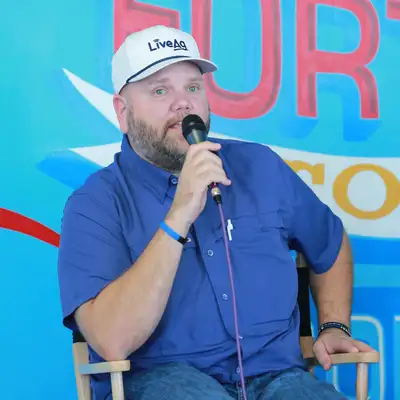
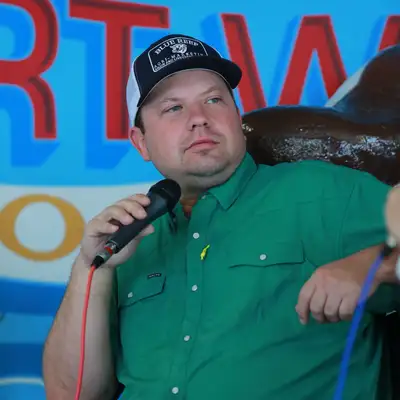
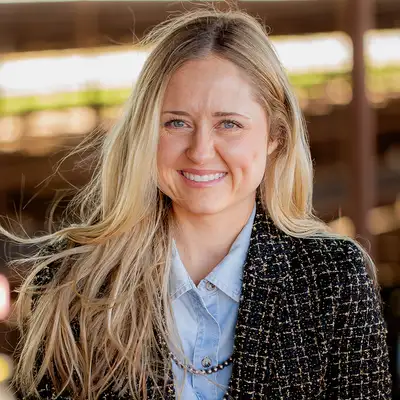
Welcome to the "We Live It" ranch and livestock marketing podcast, where cattle market intelligence meets ranch-ready wisdom. Join hosts Ty deCordova with LiveAg and Casey Mabry with Blue Reef Agri-marketing as they bring you straight-talk market analysis, proven strategies, and insights from industry leaders who understand ranching isn't just a business - it's a way of life.
From livestock market trends to cattle management practices, each episode delivers actionable knowledge to help take your ranching operation to the next level. Whether you're in the saddle or in the truck, tune in for conversations that matter to modern cattlemen. Because we don't just talk about the cattle business...we live it.
Well, you think of this as being the horse capital, but, I guess this is when you start talking about horse breeders and ranchers and and people who raise horses and have horses and have a need for horses, Fort Worth here is kind of the southern point of
Speaker 2:it. Mhmm.
Speaker 1:But from from here all the way up through Oklahoma, Kansas, Nebraska, South Dakota, you know, Wyoming, North Dakota, Montana, all the way from here to the Canadian border is is horse country. South Dakota right there where we are in Corsica is actually Central horse America. It's very central located to, to the majority of of of Horse USA in my opinion.
Speaker 3:That's a head on. We live it, the live ag podcast From seed stock bull sales built on generations of performance to commercial video auctions backed by real relationships to equipment auctions that keep operations moving forward. LiveAg connects cattle producers to opportunity. Quality cattle deserve premium prices. The right bulls deserve more buyers, and dependable equipment deserves a fair bid.
Speaker 3:Whether you're consigning to a LiveAg video auction, auction, marketing seed stock, or moving iron through the equipment exchange, we combine local representation with nationwide reach. Connect with your live ag rep by scanning the code on your screen or visit us online at live-ag.com. We are proud to be powered by Biozyme, the makers of VitaFirm and GainSmart, value added nutrition partners trusted by cattle producers across the country. Now here are your hosts, Ty deCordova and Casey Mabry.
Speaker 4:Welcome back to the We Live It Podcast. Myself, Ty deCordova and cohost Casey Mabry here. We have a, Blake Thompson here with Corsica Horse Show joining us today. As we get started like normal, Casey, how's everything going? I guess it's summertime, summer shows.
Speaker 4:The kids got pigs. You got a county fair. You've had a county fair going on. How's that going?
Speaker 2:Yeah. It's been good. I mean, this typical, you know, county fair stuff. I mean, the kids are pretty excited about all the projects. We actually added a project this year at the at our show.
Speaker 2:We've got kind of the softer side of, you know, the county stock show stuff now, you know, art projects, baking, and that kind of stuff. Yeah. We also have a crop show at our show, which we've never participated in that. What? A crop show.
Speaker 2:Yeah. So there's you can grow, like, whatever, squash, any kind of garden crop. There's a lot of in Parker County, there's a lot of families that have got greenhouses.
Speaker 4:Yeah.
Speaker 2:And so having a greenhouse is comparative to somebody trying to grow out in the yard. That's like having a, you know, buying a $100,000 show steer probably. You know? But I didn't think we wanted to get in that investment. So my kids actually grew mushrooms, and it was pretty cool.
Speaker 2:So I found this whole deal. There's a kit. You can get on North Spore or whatever website and order it. And, so the girls grew lion's mane and chestnut mushrooms in the house in this little deal, and they were awesome. And they ended up they made the sale with their mushroom.
Speaker 2:Yeah. With their mushrooms.
Speaker 4:So how does that work? Do you have to grow them a whole new crop, or do you give them the mushrooms, or is it just a premium?
Speaker 2:Yeah. It's just a premium. Oh. Yeah. So they they they grew those.
Speaker 2:They made the sale. And, you know, the traditional tomato and corn and squash people that have been focused on that. They're not
Speaker 4:very happy about this.
Speaker 1:Yeah.
Speaker 2:We kinda threw a loop whenever we showed up with some mushrooms. And so the both girls got reserve champion showmen, and this crop show is pretty big. There's, like, I don't know. There's probably 30 or 40 kids that do it, but it's pretty cool to see that. That's fun.
Speaker 2:Yeah. The mushroom thing is pretty neat. But pig show yesterday, girls did well, and, yeah, pretty excited to kinda probably, it was pretty swampy yesterday. And so I think they were all ready to go chill out after the after that.
Speaker 4:In the pool.
Speaker 2:Yeah. But then the the rodeo's kicking off, and so all in that that's what I've been dealing with this morning is even girls are wanting to go watch the rodeo.
Speaker 4:Happy days. Happy days. Yeah. I got a freshman and a senior this year, and they're all wanting to go everywhere. So it's gonna be really, really fun this year.
Speaker 2:Good thing is you can put them on Life three sixty and just go go do whatever you wanna
Speaker 4:go do. Yeah. Shoo. Bye. Anyways, let's get let's get into it.
Speaker 4:Blake, kinda fill us in where where you live, where you're from, and just just we'll get into a backstory of course here in just a little bit, but just kinda give us a background of yourself.
Speaker 1:Well, I grew up in New Albany, Mississippi. And back in the day, that was one of the larger horse sales in The United States. At one time, it was the largest horse auction there in New Albany. It was the largest horse auction, East Of The Mississippi River.
Speaker 2:River. Mhmm.
Speaker 1:And my daddy was a manager of the sale barn. He was a stockyard manager. So we had a horse auction there every Thursday. You know, lot of kids, they grow up and they get into roping or cutting or raining or get, you know, get the horse bug, you know, for some type of sport. Well, I I got it for the auction.
Speaker 1:Mhmm. You know, ever since I was a little kid, I loved horse auctions, and that's what I wanted to do.
Speaker 2:Were you that little kid that set up there and it could auctioneer at, eight years old? Everybody's like, man, this thing's are miraculous. You know mean?
Speaker 1:No. But I'm a little kid that sit out from the front row and watched every move made and and and tried to start buying horses when I was eight years old. As you know, I I I like the horse auction. That was what I wanted to do. Didn't really have a a a big desire at that age to to be an auctioneer.
Speaker 1:That all came by necessity. Mhmm. Later on in life, we I I wanted to be an auction. I wanted to be in the auction business. I wanted to do what daddy did.
Speaker 1:I wanted to promote the sales. I wanted to be the sale manager. And that and I love buying and selling horses but the auctioneer story, we we put on a sale, one of the first sales that we ever diary put on as a manager. I put on for a guy in Mickey Tennessee and Billy Grizzle was his name and big production, 280 head of horses. Sale time showed up.
Speaker 1:Auctioneer.
Speaker 4:Rut row.
Speaker 1:Auctioneer didn't show up.
Speaker 4:So so you learned pretty fast by the hot seat.
Speaker 1:So we just spent every dime we had. It was we we had to have a sale. You know? My my partner said, what are we gonna do? I said, I don't know about you, but I can't go home.
Speaker 1:If I go home, they're cut the lights off. Mean, we gotta have a wholesale. So I got up there and and sold it, first time ever, just throwing in the grease. And after that, it just kinda went from there and started selling sales just a few at a time to got to where it was nationwide.
Speaker 2:So So you just got up there whenever it was crunch time and said, alright. Well, you know why? Because you had your back is against the wall, and you're like, if this don't go, we're done.
Speaker 1:If this don't go, I can't go home.
Speaker 4:Yeah. Yeah. Shut the doors.
Speaker 1:Shut the doors. We gotta we gotta do something. So
Speaker 4:Wow. Well, kinda now let's let's get into this Corsica. It's been a premier deal for a long time. The the name's been around forever. Kinda give us a background on that, where it come from, who kinda started it, kinda some
Speaker 1:of that. The the original old stockyards was built there in nineteen o seven, so it's it's been a a piece of American history. I mean, it's been there a
Speaker 4:long time.
Speaker 1:Mhmm. But, there's a lady named Cleon, Euchre. She took it over in the early eighties, and, Cleon was light years ahead of her time as far as her marketing. And she really advertised it and built that into one of the premier horse auctions in The United States, and it was that way for decades. It was that way from the eighties up until, you know, the last fifteen years.
Speaker 1:You know, Cleon's got some age now and getting to that age of slowing down, and and it's it's fallen off some. But, we had the opportunity to to take it over and and or become part of it, with the Peterson family there in South Dakota. And, we took it over we actually took it over first of the year, but getting everything set up, it was March before we had our first sale this year, and it's been phenomenal. It's been really good.
Speaker 4:Good. That's that's that's a that's a neat deal to to take something that's been such a success and just continue to grow it. New ideas, new visions, which which I'm sure y'all have for it. Sure. And just to revitalize it for tobacco what it what it used to be.
Speaker 1:Yeah. We we're we're going to try our best to make it not only South Dakota's premier horse auction but we want to make it one of the prime locations nationwide. We want to make it one of the top sales markets in America. Mhmm.
Speaker 2:What's so so just like let's talk about South Dakota for a sec second. Because whenever I think I mean, this is just me. I grew up in South Louisiana. I was born there, lived in Weatherford, you know, part of my life. And I know I live right here in horse country as far as don't know if this is where the horse activities go on or this is where the horses are from or whatever.
Speaker 2:But, you know, when you think about South Dakota, me personally, you don't necessarily think about horses for some reason. I don't know. So then so why specifically is that area such a great area to have a horse sale? Like, what what has made it such a good place? Is it the is it the lady that started it?
Speaker 2:Is it the air is there just a need right there in that area?
Speaker 1:Well, you think of this as being the horse capital, but I guess this is when you start talking about horse breeders and ranchers and and people who raise horses and have horses and have a need for horses. Fort Worth here is kind of the southern point of it. But from from here all the way up through Oklahoma, Kansas, Nebraska, South Dakota, you know, Wyoming, North Dakota, Montana, all the way from here to the Canadian border is is horse country. South Dakota right there where we are in Corsica is actually Central Horse America. It's very central located to, to the majority of of of Horse USA, in my opinion.
Speaker 4:It's a different too when you think of, like, this area right here. This is cutting horses, reining horses. This is This
Speaker 2:is where everybody has their fancy rich horse place.
Speaker 4:Yeah. Up there, you're talking about. This is that's where they're breeding. Ranching country. That's where they're they're old some of the old foundation is, some of the old breeders are.
Speaker 4:I mean, and and
Speaker 1:People still have a need for horse, and and I wish I knew the exact specifics and numbers, but I would say South Dakota, if I'm not mistaken as far as rodeo members, would it be PRCA or high school rodeo? I think they're like have second out of The United States. I think they ranked second, only second to Texas and when you compare population. So, as far as people who actually rodeo and use a horse, there's probably a greater percentage of people there than any other place in The United
Speaker 4:States. Absolutely.
Speaker 1:Yeah. Absolutely.
Speaker 4:So how did you how did you end up there? How did you how did this come about? I mean
Speaker 1:I have a very dear friend of mine. He's actually one of my partners. We we are in the embryo transfer recipient mare business together. But the guy who owns the the family who owns the stockyards there now is a one of his best friends. And he is, in return, one of my best friends.
Speaker 1:But they they own the facility. Their kids are going to school there. They didn't want to sell the stockyards. They want to live there and go to school there but weren't able to to to manage it at the moment and they wanted to bring in someone to to help make it better and they approached me with the opportunity and it just seemed like a great opportunity because I know what it could be. I know what it used to be.
Speaker 1:I was there one time when I was younger and saw what it was and when it was in its prime and I still remember everyone talking about it and how great it was, how much people enjoyed going there, and I knew what it could be and felt like, you know, with my history in the region, I've worked a lot of sales up in that region and got a lot of customers up in that region. Lot of friends up there and I and I thought that, you know, it would, you know, with my help, I could help them bring it back to where it needed to be.
Speaker 2:Yeah. What numbers? Like like, let's talk about, you know, years ago when you said that it was a premier sale in the eighties, nineties, and early two thousands. You know, what what kind of volume are they doing, and how what's the frequency on the sale?
Speaker 1:You know, back then, it was the the numbers of of horses period everywhere was bigger but they used to sell from three to 500 head in their catalog every single month. They'd have a catalog sale and and that was one thing that put her ahead of of everyone else. Back then, most of your local stockyards just have a horse sale. You know, there was no internet sales. You know, there were no internet sales.
Speaker 1:There was no very few. There'd be your cutting horse sales and your your you know, specific discipline sales that would have a catalog.
Speaker 4:Yeah.
Speaker 1:But your mixed markets didn't there was very few catalog sales. And she would have an advertised, published, mailed out catalog every single month. And
Speaker 2:And this is before AI and before AI on a computer. I mean, this lady's working her tail off.
Speaker 1:Yeah. Can you can you imagine that? She were the first ones I ever saw when you opened the sale catalog that had pictures of the high sellers from last month. Pictures of the horses. Oh, that's pretty cool.
Speaker 1:I mean, she was She probably
Speaker 2:work she's working twenty hours a day putting all stuff together. Yeah.
Speaker 1:Yeah. I and I I don't know the history. Did she invent it? Did she learn it from someone? I don't know.
Speaker 1:She's the first one I ever saw do it. Yeah. And her marketing was just outstanding. And, people came there from from all over The United States. It was it was a a heck of a market.
Speaker 4:So as far as kinda getting involved, what does that look like as far as maybe as far as let's start as a consignor. So how do how do you get involved? Where do you go to to consign something? What are y'all looking for? What is the criteria?
Speaker 4:Mean, when it comes to selling cattle, performance matters. That's why BioZyme Incorporated and LiveAg have partnered to bring more value to beef producers across the country. Cattle fed VitaFirm and GainSmart products are backed by proven nutrition programs designed to support reproductive efficiency, feed efficiency, and overall herd performance. And now through LiveAg's nationwide video auction platform, those nutrition backed cattle are positioned in front of buyers who recognize the value of a documented premium feeding program. This partnership connects what happens in your pasture with what happens at sell time.
Speaker 4:Better nutrition, better documentation, increased market exposure. Talk to your buyer's arm or your live ag rep or visit your local dealer to learn how and GameSmart paired with live ag marketing can help your cattle stand out when it matters most.
Speaker 1:We're an all breed horse sale. I mean, we we'll we'll we're in the commission business.
Speaker 4:Oh, absolutely.
Speaker 1:We'll sell We'll sell anything. We
Speaker 4:will yeah.
Speaker 1:We'll we'll you put them in there.
Speaker 2:Understood. Yeah.
Speaker 1:We'll sell them. But but what our criteria is, we hold people's feet to the fire. We make them if if you we can't guarantee we can't guarantee the ratability of horse because if you've been around him very much, you know. Mhmm. You get on him and ride him, you get on him and ride him, and you're light handed and soft and riding correct, and you get on him, you're heavy and pulling, and you hold him in the box, and and he might have a different reaction to this guy than this guy.
Speaker 1:That's hard to guarantee as far as the the ability, but we do guarantee the soundness of the horses and we make sure people call a spade a spade. We we try to market them for what they are. We try to sell them to be what they are. We're really going to try to hold people to that. If we're at the horse sale and we see we have two previews, we have two demonstrations, we have a demonstration on Friday and on Saturday.
Speaker 1:So, you get multiple chances to see that horse move, see him ride, see him do well, or give him the opportunity to mess up. You know, we want you to, I'd rather, I'd rather you don't misunderstand me. We wanna sell them as high as we can. Mhmm. But
Speaker 4:But you wanna bring their value.
Speaker 1:Yeah. Want people number one thing I want is people be happy when they get home. Yeah. I don't want the phone call saying, alright. You know, whatever it might be, this complaint.
Speaker 1:I want you to be comfortable when you spend. But as far as any specific criteria to answer your question, there's not a specific criteria. We've had a lot of luck. We've we've been selling some better horses than than you one might think. There's more breeders in that country.
Speaker 1:Mhmm. There's and and when you talk about the rodeo, the high school rodeo, the cutting is pretty big in the high school rodeo. And I I'm ignorant to the whole rodeo situation, but they tell me that they need the the cutting to win the all around. Oh, yeah. So the cutting horses that we've had and took up there have done really well.
Speaker 4:Yeah.
Speaker 1:Really well. But, but there's not any specific discipline. The rope horses do great. The cutting horses do great. There's still a need for for ranch horses.
Speaker 1:So the the young Gildans that have enough bone and structure to make a ranch horse, they've done exceptionally well. But, we have also sold some draft horses. I mean, we'll sell whatever they wanna put in. It is it's an open consignment sale. We'll take whatever.
Speaker 1:We just wanna market whatever it is to be what it is.
Speaker 2:Where's your where's your primary platform to market on? Is it your website, or is it a, like, social media platform? You guys hitting TikTok pretty hard.
Speaker 1:I have a young lady. I'm probably the most technologically illiterate human being alive.
Speaker 2:I think I've met some people probably worse.
Speaker 1:I would I would still have I still have an Android phone, never owned an iPhone. I've never I've never sat down in a computer in my life. I'm not I'm not that guy. Yeah. But I have a young lady who works for me.
Speaker 1:Her name is Sarah Halberson and she is a marketing genius. She's great with advertising. And yes, Facebook has been a big tool, but, yes, she does TikTok. She does I don't know what all she advertises on, but she's social media.
Speaker 2:Yeah. Because that draws a lot of interest in. I mean, I know our kids show pigs, and and they're I mean, it's amazing because a a pig can go you know, they they sell most of these things eight, nine weeks old, but they put a lot of hype on them. Like, I mean, it it only takes three or four days, and then all of a sudden, you'll take something that's worth, I mean, literally $45 or $50 from a, you know, a true market value, maybe zero. I don't know.
Speaker 2:And then they'll have these things bringing 30,000 or 20,000 or 10,000 or whatever it is. So probably same thing on the horses. I mean, somebody's out there and and they might they might be in you know, they got a kid rodeo in Weatherford, Texas, but then they might catch this horse, a glimpse of this horse on your sale because of a TikTok video or something like that.
Speaker 1:Yeah. Well, back you know, I made mention of growing up in New Albany, Mississippi and New Albany being a a a key market.
Speaker 4:Mhmm.
Speaker 1:Back then in the seventies and eighties and nineties before the Internet got big, you know, before social media, before all the online sales, there were markets like that around The United States. Corsica being one of them. You know, there was Corsica, South Dakota. There was Fort Smith, Arkansas. There were, you know, New Albany, Mississippi, and Tulsa, Oklahoma, and there the list goes on but Joplin, Missouri but in in every region, there would be a major market and if you were interested in selling your horse or buying your horse, you know, or buying a horse, you went to those markets and that's where you shopped.
Speaker 1:That's where you looked unless you knew a breeder. You went there to shop for your horses and now, the whole because of the internet, everything has changed. People went through a cycle there for a long time where they would do private sales, you know, just advertise their horse on line. The source is $10.00. Well, what they've run into, what a lot of people are are running into over the last ten years is you advertise that horse for $10.00.
Speaker 1:He buys him. Then the next 10 people that wanted to look, wanted to buy him. There'd be so many people just flooding, wanting to buy the horse, then you got nine people mad or or the flip side to that is, nine of them show up and waste your time before one guy buys it.
Speaker 4:Oh, yeah.
Speaker 1:I mean, it's just, it's, it's way more complicated than than a lot of people realize and if you're not, if that's not what you do for a living, it's the most aggravating thing in the world selling them private online. So, a lot of people are going back and putting them in auctions And in my opinion, a a live auction is the number one marketing tool in the world. It's the best way to sell.
Speaker 4:What you're marketing.
Speaker 1:No matter what you're selling.
Speaker 4:And I always tell a lot of everybody that commission is the cheapest thing you can pay when it
Speaker 1:comes back
Speaker 4:to it because that cuts you out of everything. You're you got a man that's gonna tend to that for you. So commission is the cheapest thing you can pay.
Speaker 1:Absolutely. Absolutely. And that's
Speaker 2:I'm a I'm a buyer at the auctions normally, and I'm like, man. I wish I would spend buy these things back at the house.
Speaker 1:But I'm not I'm not real educated on the cattle industry. Yeah. But just what you said, anything you're selling. Yeah. In my opinion, the number one way to sell anything now is to video it.
Speaker 1:Yeah. Get pictures, advertise it, do all the online marketing, but put it in a reputable auction with a good auctioneer and a good staff and let the people who actually want to bid have a fair opportunity to bid. Yeah. And it gets the most value to me.
Speaker 4:And Yep. To your point, that's why you would rather buy it there because there's five other people that want that animal.
Speaker 2:Well, but then the other part of it is, I mean, there's tons of times where I've run into places where I've, you know, I wanted to buy an animal from a kid or I saw a buddy of mine over here and then, you know, a breeder that I go to his place and, you know, that animal, you know, I see it at somebody else's hands. I'm like, man, why didn't I get a shot at that? Mhmm. You know? And the guy's like, well, I mean, he showed up here, and I'm like, it's just easier if you just put it up there.
Speaker 2:Right? And then let whoever's bid and bid till it hurts. Right?
Speaker 1:That's that's the most fair form of marketing
Speaker 4:to me.
Speaker 2:That's the most fair way.
Speaker 4:True price discovery.
Speaker 1:True price discovery.
Speaker 4:As Jim Modell would say, true price discovery. So what else we wanna touch on? What kind of what what does a buyer should expect? I mean, how how should how does that go? Where where can they I know I know in person, but I mean so then then how does that work?
Speaker 4:What is your
Speaker 1:first of all, if you, what I think puts Corsica ahead of a lot of these horse auctions, most horse auctions that are held now, not all. I'm not saying we're the only one but most horse auctions that are held are either held in a stockyards, a cattle sale facility or they're held in an arena somewhere that they rent for the weekend. So, if you live in in due to the online bidding and and you know, internet sales, there may be people buying these horses in South Dakota that live in Maine or they may live in Washington State or from one, you know, may live in Florida. We sent some horses to Florida last month but we send them all over from New York to Florida to to California.
Speaker 4:But
Speaker 1:there at Corsica, it's a wholesale facility. It is a wholesale auction barn. There are no cow sales. There's no other events there. So, if somebody is a is an out of state buyer or you know, a distant buyer, remote buyer, and they buy one there, they don't have to be in a huge hurry.
Speaker 1:It's not a cram to get them out of there. See, a lot of those locations, you gotta get them out of there within twenty four, maybe forty eight hours because they got a cattle sale coming up on Monday. Those horses got to go. So, by Corsica being just only a horse auction, people can buy them. We have stalls there.
Speaker 1:We have people that work there full time to feed them, take care of them. We have shippers. We have ways to arrange them. So, from the buyer standpoint, they can buy a little more comfortable there without having to be in quite such a rush to figure out what they're going to do. So, if they choose to buy there, to answer your question, They they can bid online.
Speaker 1:There's phone bidding. You can be there in person. We have a we have I've mentioned it earlier. We have two demonstrations, two previews at 04:00 on Friday. Corsica is a small town.
Speaker 1:I mean, it is a small town. Mhmm. And so on our Friday night preview, there may not be a huge crowd there at the facility, but we might have a thousand people watching online. So a lot of people, you know, watch those horses. They get to watch them preview on Friday and then make their mind up where they want to come on in, look at them again on Saturday.
Speaker 1:We preview them again on Saturday. So as a buyer, you got two shots to see that horse and check him out. They're consigned at least the week, the consignment deadlines two weeks prior to the sale. So, they've got two weeks to see the pictures, see the videos, call the consignor, research the horses. You know, they they have a a full opportunity to be confident in their purchase.
Speaker 1:You know what I mean? They're they're not buying. There's no, I hate impulse buyers. I mean, it's there was a time in my life where I love impulse buyers. I want to sell em something but if you're on the commission side of things, I hate impulse buyers.
Speaker 1:I want em to investigate till they're happy because I want them to know what they're getting.
Speaker 2:Well, and then you don't have to spend as much time on them after the fact because they're they're they're gonna make some knee jerk reaction. It's they're not gonna get what they want.
Speaker 1:I'd rather not get them sold as have somebody do it. Yeah. Like you said, knee jerk reaction and just and impulse buy.
Speaker 2:So you have quite a few people in person there in the sale?
Speaker 1:Oh, yeah. Oh, yeah. There'll be there'll be a lot of people like on Saturday morning. We'll have from three to 500 people there. Oh, wow.
Speaker 1:In in person.
Speaker 2:When do they bring most of the horses in?
Speaker 1:There's we've been getting horses for from all over, and, a lot of them will start coming in. A lot of them come in on Thursday, but the majority of them will be there by Friday.
Speaker 2:Yeah. So then you got a lot of these people that are raising horse. I mean, you gotta think back to the consignor on this deal. They're they're they're very proud of that product they're producing, and so they're probably promoting it themselves too. And you guys are giving them the platform to do it, and then you they get to share their Facebook video or or whatever, tell all their friends.
Speaker 2:But, I mean, I see this a lot in different places where they I mean, no different than your sales where you have the you got the people showing up to the sale. Absolutely. Watch their cattle sale and I mean, that's their I mean, that's the one thing I've always thought about when you go to an auction. You got, you know, call it 300 or 400 or whatever catalog items, whether it's a pin of cattle or or a horse, but that's that one person's Super Bowl. Yes, sir.
Speaker 2:Right? That's that one person's paycheck or could be that paycheck for that year. You know? And so, I mean, they've invested a lot of time and effort into it. And so it's it's it's great to see you guys focus predominantly on that versus and that's where I'd say if I was, you know, selling horses, probably the most important thing is you guys are professionals at this and making sure that you're getting, like you said, the the most value out of that.
Speaker 2:Not saying you're selling them crazy high to make sure that, you know, to the buyer side of it, that's not what they're but but getting the right value and getting them in the right hands. But I think, I I I think it's awesome that, you know, the lady that built that auction up and and invested her blood, sweat, tears, hearts, and soul into putting that deal together, pushing it and and kinda creating a little bit of a, or a big part of a, you know, I'd say, you know, a dynasty in that, then you guys revitalizing that, bring it back. I bet she finds a lot of joy in it herself.
Speaker 1:She does, and, you know, she's been there. She's been there every sale. We've had three sales. We have an auction coming up this weekend, and it'll be our fourth auction since we took over. But she's been there every sale.
Speaker 2:She's I bet she's tough.
Speaker 1:Oh, man. Is she telling
Speaker 2:you what you need to get done?
Speaker 1:No. She's she's she's she's been she's been a complete lady. She's she's she's been very supportive and and we're proud to have her support, you know, but I started to say earlier, like you said a minute ago, that's that guy's Super Bowl. What she realized that. She would advertise and she was the first person I ever saw do this for sure.
Speaker 1:Instead of advertising only the 10,000, back then, 10,000 was a big price. 20,000 was a real big price back then. But instead of advertising only that $20,000 horse, she would also advertise the high, you know, the high selling pony or look at this cool pony. It only brought $800 She she would support and and let people know that that it you don't have to be a millionaire to come here. We have them to fit all budgets and and she promoted not only her top end.
Speaker 1:She promoted the the lesser ones too. And from an auctioneer standpoint of things, it gets hard sometimes. But you you gotta realize that guy that's selling that one for $800, that $800 might mean more to him than the guy that just sold one for 80. You know what I mean? That $800 might be more important to that guy than the 80,000 was to the other guy.
Speaker 1:So they all pay the same catalog fee. They all pay the same percentage of commission. And, like you said, it's their Super Bowl. It's their spot.
Speaker 4:Yep.
Speaker 1:And Cleon and all the great ones nationwide, not not just us. I'm not saying we're the only ones. Yeah. But all the great ones that really get it, they realize that.
Speaker 2:Yeah. No. And I think it's important if you focus on the customer, which on your side, it's both people.
Speaker 1:Both people.
Speaker 2:And making sure that they they leave there satisfied. You know, happy is probably not a great word, but satisfied. Then that's that's the most important thing. But
Speaker 4:What is, I guess, July? Does your next sale is next week or this Saturday? This Saturday. This Saturday. Mhmm.
Speaker 4:And then you've you have one in July?
Speaker 1:We we set it up to, have one on the second Saturday of every month from February to November. Okay. We we won't have one in December and January. Holidays, NFR,
Speaker 2:all rolled of course. I'd probably go on in July, not December. Well,
Speaker 1:our first our first sale there that we had this year in March, it it came a blizzard. We have a two day sale. I don't even think I mentioned that. We have a we try to service the entire equine community. Yeah.
Speaker 1:We have a catalog sale on Saturday that is ran professionally to the best of our ability. We we give it a a professional effort to do things right. Have everything in the catalog. Like I said, preview em, full disclosure, talk to the consignors, put their phone numbers in there. Yeah.
Speaker 1:You know, so people can be comfortable. But then on Sunday, there's still a need for the open consignment sale. The the guy who doesn't have access to getting pictures and write ups and videos and and doing the the catalog route. There's still those people that want to sell their horses. There's still people who have loose horses, you know, brood mares, horses they don't use anymore.
Speaker 1:They want to bring in. So, we have that portion of the sale on Sunday. We sell all the the drive ups and open consignments and loose horses on Sunday But, but we do that, two days. We have ourselves two days a month, February through November.
Speaker 4:That's what I when I was reading this earlier, it said open slash loose. I was like, yeah, what's a loose? What is a loose horse sale? But you just explained that. That's that's just kind of your your Sunday sale.
Speaker 1:And the reason we don't do that the reason we do it in two days, the reason we don't have it all in one day, we could cram it all together in one day, but I don't think it's fair to that guy that that paid his consignment fee, that took his pictures, took his videos, and did all his homework, and, you know, and he pays for that slot. He deserves a little more
Speaker 2:time. Absolutely. That makes sense. Absolutely.
Speaker 4:So where can they watch it? Where can they bid online, in July?
Speaker 1:In July, we'll be with LiveAg.
Speaker 4:Okay. So We'll be
Speaker 1:with LiveAg.
Speaker 4:How did that come about? And I think you're gonna mention the guy's name, and I'm sorry you have to deal with him on a daily basis. But so how did you and Blake meet?
Speaker 1:I was selling a sale out in Utah Mhmm. In Heber City. Yeah. I was selling a sale out there. And the company that I was working for as an auctioneer had hired him to be the Internet thing guy.
Speaker 1:And I met Blake, and he's become a really good friend of mine. He lived here here in Fort Worth.
Speaker 4:He met.
Speaker 1:He was only twenty minutes from me, so I'm I guess I'm one of the few guys he knew when he came here,
Speaker 4:and Yeah.
Speaker 1:We got to hang out a little bit and got to be really good friends. But, what we're looking for, you know, you guys in the cattle business, a lot of your customers are the heart of our region. Mhmm. And a lot of your customers, a lot of your your ranchers and cattle guys, they're they're in the horse business also. Or they have a horse for their have horses for their ranch or they breed horses on the side.
Speaker 1:This is their side gig. But, you're in you're in cattle America. You're in horse America.
Speaker 4:Yeah.
Speaker 1:So, LiveAg is is where I think we need to be. Perfect.
Speaker 4:Well, that's good. We appreciate you. Appreciate the trust and coming our way. And Blake, he's pretty persistent.
Speaker 1:He'll do
Speaker 4:a good job for you. He'll get it tended to right. But like I said, we can't appreciate you. I mean, can't thank you enough for coming our way and trusting us.
Speaker 1:I I I've watched what you guys are doing even though I'm not in the cattle business. I like what you're doing. Yeah. Y'all are doing a good job.
Speaker 4:Well, appreciate that. Appreciate that. Every Saturday, second Saturday of every month. Right?
Speaker 1:Second Saturday from February to November.
Speaker 4:Website?
Speaker 1:Corsicahorsesale.com.
Speaker 4:Corsica Horse Sale.
Speaker 1:On Facebook, Corsica Horse Sale LLC or Corsica Horse Sale.
Speaker 2:I'm guessing her his social media girl is probably good enough to where you and I are gonna walk out there and flip through our phone. It's gonna be in our feed.
Speaker 4:There's no
Speaker 2:doubt. We said Corsica so many times right here. It'll be in our Facebook feed.
Speaker 4:And at the bottom of the link, there'll there'll be a link on the bottom of the of the podcast feed that they'll take you to Corsica, and and you can get there that way too. So and and there'll there'll be a link on on LiveAg as well on all your upcoming sales. So we look forward to that. Man, I'm I'm I'm excited about it. When when Blake, he worked on this for several months and when we was talking through it, it was pretty exciting to to see him get so excited about doing something like this.
Speaker 4:It's it's gonna be a great partnership, and that's how we view it as a as a partnership deal. I mean, we're gonna we're we're hope we hope we can benefit and help you grow as we grow.
Speaker 2:So
Speaker 1:I believe you can. I really believe. And I hope that we as a as a horse market can I hope that your customers in the cattle industry can benefit from what we do as I think that one hand washes the other? I think that we can be a a great asset to to one another.
Speaker 4:And the relationship. I mean, that's the main thing. The friendships, the relationships we build through this thing is is pretty neat. So we we thank you, and we appreciate you. Sure.
Speaker 4:I mean, we like we said, we can't thank you enough for for trusting us and and letting us get out there.
Speaker 1:So Thank you all for having me here this morning. I appreciate it.
Speaker 4:Well, everybody, thank y'all. Corsicahorsesale.com. How does it
Speaker 1:corsicahorsesale.com, or you can look us up at Corsica Horse Sale LLC on Facebook. Facebook.
Speaker 4:So go online, or you can find him on live-ag.com as well. Thank you everybody for watching. On behalf of Casey and I, we appreciate y'all and we enjoy the time we get to fellowship with everybody else. If you have any questions, be sure you address them straight to Casey. He will answer all the questions that you have and try to do it to the best of his ability.
Speaker 4:If you want to get involved, just reach out to LiveAg or katielive ag dot com to to send in some information if you wanna wanna be a part of the podcast. So we thank y'all, and as always, God bless.