Subscribe
Share
Share
Embed
The She Leads Podcast is where women entrepreneurs and business leaders get the real strategies behind scaling a business to one million dollars and beyond. Each week, host Adrienne Garland, CEO of She Leads Media, professor at NYU and Rice University, and business growth advisor, speaks with women who have actually built it: founders who broke past the revenue ceiling, executives leading thousands, and strategists rethinking how women build wealth, lead teams, and grow companies. Episodes cover business growth strategies for women, from pricing and hiring to leadership communication, AI and the future of work, networking and social capital, and the founder to CEO transition. If you're a woman entrepreneur building toward your first million or your next one, this is the show that meets you where you actually are: past the motivational fluff, deep in the work, and ready to scale.
Leadership isn't just changing. It's evolving in ways we're only just beginning to imagine. And women, we're not playing this game anymore. We're the ones reshaping the entire field, building models, movements, and businesses that serve more than just a few. On the She Leads podcast, you'll hear real conversations with women who've broken through all kinds of barriers, revenue, identity, orders, and expectations.
Adrienne Garland:There's no sugarcoating here, just the truth told by those who are living it. I'm Adrienne Garland, entrepreneur, strategist, educator, and creator of live experiences gathering women leaders together for over a decade. And this is the She Leads Podcast. Hi, everybody, and welcome back to the She Leads Podcast. Before I introduce you to our next guest, I'd like to ask you to take an action to support women everywhere.
Adrienne Garland:If you haven't done so already, please take two minutes to give the show a five star rating and review on Apple or Spotify. It's so important for women's visibility to share the journeys, wisdom, and lessons of the women entrepreneurs and leaders that we feature here on the She Leads Podcast. And the best way to get the visibility that we deserve is to rate, review, and share the show with anyone and everyone who's interested in seeing more women leaders in this world. Thank you so much in advance for helping to share our incredible show with more people. Now, I'm very excited to welcome my next guest.
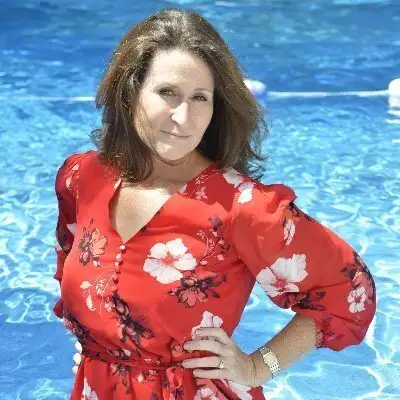
Adrienne Garland:Her name is Melissa McCann-Tilton, and she's the president and chief revenue officer at Criteria, where she helps organizations unlock performance at the intersection of organizational psychology, technology, and human potential. Over the past two decades, Melissa has led companies through hyper growth, transformation and successful exits across several industries, including automotive, b to b SaaS and marketplace businesses. Melissa is known for her ability to see patterns that others missed, and she specializes in scaling revenue and transforming culture. Today, Melissa is focused on helping leaders move beyond fear based outdated models of success to redesign organizations for a new era of human and machine collaboration. Her approach centers on building high performing human centered environments where AI amplifies rather than replaces human capability, unlocking creativity, adaptability, and sustainable growth.
Adrienne Garland:Melissa tells the truth about why, what is really happening inside companies offers practical frameworks leaders can actually use and make the future of work, not just more efficient, more human. Welcome to the She Leads Podcast, Melissa.
Melissa McCann-Tilton:Thanks, Adrienne. It's really nice to meet you.
Adrienne Garland:I'm so excited for you to be here. Love the aspect of telling the truth within corporations because I feel that that has sort of gone astray. And I know so many people are, I think, both worried and also optimistic about what I can do in their organizations. So I I would love to sort of frame this whole conversation around women and what women can do to help leverage machine learning, AI technology in order to start businesses, grow businesses that get past that million dollar mark more quickly, because we know that that is so difficult for most women to achieve. So we'll frame all of that.
Adrienne Garland:So before we get there, I would love to know about you and how did you get into the incredible work that you do?
Melissa McCann-Tilton:Sure. So I started out in industries that were kind of brutal, frankly, like automotive was not an easy place to grow up in the late 90s, early 2000s. And I was running around the country trying to convince car dealers that they were gonna sell cars on the internet. That was an interesting position to be in. I could write a few Me Too books probably about that experience.
Melissa McCann-Tilton:You know, picture a 22 year old girl with braces walking into a car dealership, installing a computer system, and I had to sleep in the car dealership to get that done because there was a tape based backup system. It's a miracle I didn't get kept. Wow. Sometimes I look back on experiences and I'm like, how did I survive?
Adrienne Garland:How am I alive? I get it. It
Melissa McCann-Tilton:was pretty crazy. But I gravitated to those industries because of my background and my upbringing was very bizarre. I don't, you know, I've only recently started to talk about it openly as I've been in a business environment, because I think there's a little bit of uncomfortableness. It's one of the things I love about the business that I'm in right now, is the concept of it's not always what it seems. And there's more texture underneath a human than a resume or your surface story really can portray.
Melissa McCann-Tilton:So you know, I grew up in a pretty chaotic environment. I understood toxic masculinity deeply. Business to me was like, Oh, I get this. I totally understand. I comprehend how to find the man in control in the room, get right next to him.
Melissa McCann-Tilton:And frankly, my approach was to keep the other women away. And I talk about this a little bit in the book that I'm about to publish, like it's a realization that I had, as I went through my career, it was such a deeply ingrained pattern. And I've encountered so many other women that have worked this system in that way. Like I get, I can be the only one in the room, I need to keep the rest of you out of here. And automotive ready made for that.
Melissa McCann-Tilton:So as I learned business, I learned the mechanics of business through that lens, through that very familiar lens, the behavior of the psychology of that. But also just, know, I learned the math of business and I learned how to scale. But then I gravitated to more sort of aggressive industries like logistics. And you know, those spaces felt safe to me, to my nervous system, strangely. You know, I think we talk about truth telling and patterns.
Melissa McCann-Tilton:A lot of the truth telling in my pattern is my nervous system felt quite safe in an abusive environment. It's terrifying to think about. But it was really okay until it wasn't okay. And then I started to gravitate into, I knew I had to make a leap out of those systems. I could tell my body was eventually not going to do well if I didn't make a change.
Melissa McCann-Tilton:And I got into SaaS businesses, HR tech. But I think one of the fascinating things, your podcast focuses so much on entrepreneurship. My story is so much about needing the system to feel safe. That was a big to me. I needed the system, I needed the stability and the predictability of the system.
Melissa McCann-Tilton:Even if the system was broken, I understood how to work it. And I think that transition for me in the last several years has been really having empathy for the system, compassion for the system, understanding why it got to the place it's gotten to, and helping change it and helping sort of move it to a space where women can exist and humans can exist without it being such brutality, without us making ourselves sick, without us overrunning our capacity, if you will.
Adrienne Garland:Okay, this conversation is going to be multilayered. So I love everything that you just said. And it really resonates with me personally, because I also under stand and understood how the system worked. And I think maybe even school prepared us for that type of a system. And I was in corporate before I was an entrepreneur, and I was very successful in corporate because I knew how to play it.
Adrienne Garland:Right. And I think that other women there were other women that knew how to play it, too. And then there were women that just didn't. And I agree with you that especially when we were coming up in in the nineties and early two thousands, it was very much about I'm the only woman in the room. I'm there's only there's only a place for one or maybe two of us.
Adrienne Garland:And usually, the other person was an HR person, and I was the business person. Right? And it was okay for that other woman to be an HR person. But yeah. And I was in the finance industry.
Adrienne Garland:So and also the media industry. So that also, you know, very male dominated type of industries. And, you know, again, it's like it was okay until it wasn't okay. And then when, you know, you launch a company and you start to, you know, wanna break some of those patterns, you wanna create something new. It's very difficult because you're so used to, like you said, like, that system, even though it it's not fair, it it was a system to operate within.
Adrienne Garland:It it was the the boundaries. So what so this realization and this like pivot for you into working in in some other industries that were maybe more human. What was the the triggering event that you said to yourself, I need to be working in a different sphere?
Melissa McCann-Tilton:Yeah, I think it started to just surface. You know, I had been in the automotive and logistics business for almost twenty years. And I was like, don't get out, I'm never gonna, it was like a death sentence. Had to get out. And it wasn't an easy pivot.
Melissa McCann-Tilton:I had to convince somebody, I think there was a perception at the time that automotive and logistics was sort of behind the times, which, you know, in some ways, yes. And in other ways, I think that those businesses are very hard run businesses and you learn a great deal in them. But it really took effort to convince somebody to sort of take a chance, if you will. And it was as much me as the person sitting across the desk from me. So I sort of have a pattern of going into businesses around somewhere between 20 to 40,000,000 in revenue.
Melissa McCann-Tilton:They need to hit a point of scale. I understand the scale part. It's sort of like mom shown up and we're going to kind of get it in order.
Adrienne Garland:Here she comes. I
Melissa McCann-Tilton:realized that there were a lot of industries that needed that kind of business acumen that weren't getting the right support. So HR tech was a place where I gravitated for exactly the reason you said. The other woman in the room was an HR leader, but the way that the CEO behaved was like, well, it's okay for the woman to have the HR job. And it bothered me greatly. It bothered me greatly.
Melissa McCann-Tilton:And I think we're entering a place in business where HR becomes the main character if we do this right, if we do it correctly. And that's where my IO psych work comes in, because there will never be a more interesting period of time than the next three to five years in work history. This will be the most fascinating study in organizational behavior we have ever encountered. And if we don't architect this correctly, it could get really dystopian. And it doesn't need to.
Melissa McCann-Tilton:It just doesn't need to.
Adrienne Garland:So say more about all of that. Because in my class at NYU, we're in the Hospitality Events Management Tisch Center for Hospitality. And we are constantly having the conversation about how AI can make things more efficient. But no matter what, you know, hospitality is is service and service is human. And so we can never lose that humanity.
Adrienne Garland:And we also need to be more efficient. So can you talk about where A. I. Is now on that, you know, almost like the the journey and where you see humanity really stepping up to the plate like you're talking about with H. R.
Adrienne Garland:Becoming the main character?
Melissa McCann-Tilton:Yeah. You know, most implementations of AI are mandates right now and they fail. It's that's a real thing. A lot of people are using it in pockets on their own, the more systematic implementations are still kind of struggling to stick. And I think as you think about how to define the work itself, so if you think about the work itself, there's a real decision point around what is the human work?
Melissa McCann-Tilton:What is the AI work? And you have to be conscious of the definition. If you sort of just like slap it in there, the humans become resistant, the AI gets confused. And I really, I believe AI is not the enemy. AI will always go to the average, it will always go to an inefficient answer.
Melissa McCann-Tilton:It will take all of the inputs, right? It will take all of the inputs. I think it's the humans that are attacked these organizations and the humans that interact with these systems that have to be cautious with how they implement, proceed. And there's a real deliciousness right now. It's like, oh, it's, you know, speaking of the system, it's so tempting to tip over the edge of efficiency for efficiency.
Melissa McCann-Tilton:Just eliminate all the humans entirely, we'll let AI run all the systems. It's appealing in a way, until it's not. So I think there really are decision frameworks that we're going to have to go through in the next several years of really saying clearly, that's human work, that's AI work, Here's how I hire a human that's going to be okay, and successful and psychologically safe in an AI based system because even the people you put into the system starts to alter. The things that you emphasize value and you cared about in past worlds don't hold true anymore. There's an alteration to the signal and the system.
Adrienne Garland:This is so fascinating. And my mind is sort of spinning on where to take this next because, you know, I start thinking about the people that are currently running the majority of the corporations that are very large. And even, you know, it extends obviously to, you know, positions of power that go beyond the corporation because the government and corporations are so intertwined, you know, right now. And so it's sort of like if the power of those this technology is being decided on, like, what to use and how to use it and by whom. And if those people sort of fit a certain mold that impacts the rest of us, that's where, you know, it starts to get it's it's just a self fulfilling, prophecy.
Adrienne Garland:The people that are in power stay in power and then technology amplifies that power and and pushes us, you know, maybe others farther and farther away from that seat of power. How do we I don't know if you have the answer, but what are your thoughts on how do we prevent that from happening?
Melissa McCann-Tilton:You know, I think it takes a lot of vocalization and participation, and I think women are particularly good at that and need to be encouraged to do more of that. Look at some of the We're pretty involved in policymaking, honestly. We've been involved in some of the policymaking in New York City around hiring and legality and what humans do once they're employed in an organization. And you could think of AI as the next arms race right now. There's camps of models around the world, and if you think of alignment to, you know, you get a whole set of nations aligned to a model that is ours or theirs, it's the same thing as sort of like defining a whole language for a set of people.
Adrienne Garland:And
Melissa McCann-Tilton:so there's really a lot of need for policymaking and thoughtful process at the top of this. Again, not because of the AI, because we should You know, think, so let's paint two pictures. One picture is, there's massive consolidation of power, it keeps going. And there's a group of people who live, there's a movie about this, there's a group of people who live on the moon that are super rich, the rest of us swallowing garbage on the earth until it goes too far, and there's like, know, it tips over the edge. I think that hopefully that doesn't happen.
Melissa McCann-Tilton:I think most humans will be like, okay, come on, before it gets too far. The alternative viewpoint on this is we have a real opportunity if we can work through our own psychology. And I really do think this is rooted in human psychology, to reframe how work occurs and work doesn't have to be about efficiency and effort anymore, because we have such a beautiful assistant here. So our work hours can alter fundamentally, we can go to creative practices, to all of those human things you talked about in hospitality, the interaction points can become richer, they can become longer because we're not doing all of this administrative burden, calculating all of those things. It can be a real human renaissance.
Melissa McCann-Tilton:But to get there, and I think this is the most important part of all this, it's not just the system design. We inside ourselves have to redefine how we think of success. Because so many of us are hardwired to believe that I am only worthy when I am productive.
Adrienne Garland:Yeah.
Melissa McCann-Tilton:And that will become the wrong metric. Productivity is cheap in the future. Nobody cares to send an email at 3AM because the AI can do it. So it's a fundamental psychological shift for the humans involved in the system. And if we can't let it go, we'll cling to it and we'll create the dystopian reality.
Adrienne Garland:I love what you're saying. It makes my heart happy to think that humans can be more human and go back to what made things so what made life so beautiful, like and messy in in a lot of ways, too, because there was a lot of experimentation there. There was a lot of, you know, especially during, you know, some of the times when, like, the great novels were being written and the great, you know, art was being created and those conversations that happened in, you know, the Paris cafes. I think that if this can push us toward more connection with one another, sharing creative ideas with one another instead of just pouring those ideas into some type of an AI model asking us, like, does this sound right? Does this sound right?
Adrienne Garland:What do you think of this? I think that, yeah, we can create something that is new and that nobody has thought of before. I think this is going to be a humongous shift. And it's it's funny because I think the pandemic gave us a taste of what a new type of work could be. And it also placed a lot of undue burden on caretakers, too, because everything shut down.
Adrienne Garland:Right. So so now not everything is shut down, but that flexibility, that ability to work, however, wherever, whenever that that remains. Right. And so companies that want to go dial it way back to before pandemic, I feel like they're making the wrong decision. But there's something, there's something valuable about companies wanting people to come back together to interact with one another in a shared space.
Adrienne Garland:There's something good about that.
Melissa McCann-Tilton:There's a, I don't remember exactly when it was published, probably a couple of months ago, Wall Street Journal article that did a study on return to work mandates versus people actually showing up in the office. Now I would define a return to work mandate as I've implemented a system where I'm checking your badge to see if you're showing up. There's no real connection purpose to showing up to work. I haven't defined a purpose and agenda. I just want you here.
Melissa McCann-Tilton:Want I want to see you in front of me. Yeah, because it's an old system that makes me feel comfortable. Right. Right. It's an old system and it makes me feel comfortable.
Melissa McCann-Tilton:I want to see my people.
Adrienne Garland:Okay, change. Read it.
Melissa McCann-Tilton:Tell me how you win. Right. So the study shows this, you know, return to work mandates, just going up into the right, it's just rising, rising, rising. And you watch the actual return to work statistics. And each time a large company mandates, you see a bump up and then it just declines again, a bump up and then it just declines again.
Melissa McCann-Tilton:People are like, I want flexibility.
Adrienne Garland:Yeah.
Melissa McCann-Tilton:I want the flexibility of, I want to be productive, and I want to have a balanced life. And I don't think those two things need to be at odds, but it ties back to that psychology piece of my goodness. You've got to be able to let that go as your definition of worst. Output, what you actually produce from an outcome perspective is the important thing, not just that you did a bunch of stuff, and you showed up for a lot of hours.
Adrienne Garland:Yeah, which was the measure, or it was the it was the map for how to be, like you're saying, successful. And now if we as humans define success as having more creative time, Right? We all we all need income in order to, you know, purchase the things that maybe make our lives a little bit easier. So there's that piece of it. But it doesn't need to be this grind, this commute, this always on.
Adrienne Garland:Because you're saying that the technology allows for some of those menial tasks that we had to do and had to be there for and had to type in and and do the AI can take those things away.
Melissa McCann-Tilton:Yeah, yeah. And I think if you think about growth as something exclusive of pure efficiency, right? Efficiency works when you have a system that's fairly optimized, you've done the creative thinking, you've proven that a thing works, and then you repeat it for a while. But even in those efficient systems, you have to break them once in a while. If you don't break them, you get stuck.
Melissa McCann-Tilton:And you can look at a zillion companies out there where they stopped putting time into creative mode. Kraft Heinz is a really good example where their stock dropped massively in the last few years because they stopped investing in creativity and they really doubled down on that spreadsheet management efficiency side of things. And the bronze wandered off. There's a lot of examples of this. I think solopreneurs have to face this more frequently.
Melissa McCann-Tilton:But I think once you get in bigger systems, there's really a tendency to get trapped in the efficiency. And you just forget to be creative. You don't value the time and space to allow a human to be thoughtful, to close their eyes for a minute and actually think. Like sometimes I really will close my eyes. One of the guys on my team that we worked, you know, worked together for years, we've worked at a couple of different companies together, and I'll close my eyes and think sometimes because I have an ocular migraine.
Melissa McCann-Tilton:But it's like your brain works differently.
Adrienne Garland:It does. Right?
Melissa McCann-Tilton:Yeah. Just functions differently when you're not jacked into a computer system. So understanding the balance of how to partner with AI, how leverage those moments to grow even more with less pure efforting, I think is the future.
Adrienne Garland:Hey, everyone. So for years, I've been working with Dr. Kent and sending people in my network his way. He does so much impact work. What do I mean by that?
Adrienne Garland:Well, he helps people create books and podcasts and things like that. He even helps with this podcast behind the scenes. Dr. Kent is my thought partner. Anyone listening knows that we all need to do what we can to get our thoughts, opinions, and voices out into the world and how important it is for women to invest in other women and for women to hire other women. I am all about that and you all know that.
Adrienne Garland:But in this case, I think Dr. Kent is an exception. He's doing something really different via this new program that he's launched called the Genius Discovery Program. So he wants to work with people like me and like you who are impact driven. Dr. Kent has an intensive program that goes for a month.
Adrienne Garland:He also has a three month program where he figures out where you're headed with your brand, your business, your speaking, and your signature story as a thought leader. I've known Dr. Kent for a long time. So believe me when I say that he has a ton of experience working with people that are looking to make an impact but might not know exactly how to approach them. So if you're interested in talking to him, you can go directly to talktokent.com or you can send me a DM on Instagram at She Leads Media or just shoot me an email over at hellosheleadsmedia dot com.
Adrienne Garland:Do you think that, I mean, to me, I hear a lot of hopeful possibilities in everything that you're saying. And I'm wondering to myself, you know, does that mean that perhaps companies get smaller, but there's more of them and they solve other types of problems that aren't being solved right now? So there's more choice. There's more opportunity. And second part of that is does that then create more opportunity for women to start these smaller businesses, but still overall be contributing a significant portion to the overall economy, really.
Melissa McCann-Tilton:Yeah, I think again, it could go in one of two ways. And if you look at how GDP has grown in the last several decades, but like 2%, Not much. And there's a lot of projection that GDP grows at 100% with AI alongside of it. Like it could be mind blowingly different. So I think whenever you have that kind of expansion, it always can go in a couple of different ways.
Melissa McCann-Tilton:It could be a huge consolidation of power, I think we have to really guard against that, or it could be a beautiful distribution of power. I think that requires access to the models. I think it requires access for people to be able to hire the right way, find the right people, do retraining programs, be really thoughtful about how the workforce is designed in the future, how humans fit into it. Because without those programs, you've got entire populations of people that haven't had these interaction points with this kind of solution. You know, I have a 23 year old son, I have four kids.
Melissa McCann-Tilton:23 to seven. But so it's an interesting observation in like all levels of reality in child life, right? And my 23 year old is a junior now in college. He has one more year after this. And really terrified
Adrienne Garland:of getting a job. Yeah, they all are.
Melissa McCann-Tilton:Yeah. Like there's a real palpable fear in this generation coming out of college right now of never being able to be employed, almost to the point of like, I don't know why I give up, I'm not even employed. Like, what do I do? Like, you can't crawl into a ditch and die. We have to like decide how to navigate it.
Melissa McCann-Tilton:But I think that the rules are changing so rapidly for these young people, that trying to figure out how to navigate the system is, it's just broken, it's broken. So as women are starting businesses and we're in businesses that are already existing, I think to have voices that are saying, look, we're really smart people, we have a lot of information. We don't have to design a broken system going forward. Yeah, the system is going to be so fundamentally disrupted that we can change the rules right now.
Adrienne Garland:The way it should change. So let's change the rules. Oh, gosh, I almost feel well, I want to address two things. First of all, 100%. Yes.
Adrienne Garland:On the the young people that are coming out of college now. I said to my undergrad students the other day, like, I had the realization. You came into college thinking that things in the world was a certain way, and you're graduating and the world is completely different. So you've been training for the world that was, you know, certain. Mean, everything changes.
Adrienne Garland:Right? But it was a little bit more certain when you came in as a freshman. You're coming out and it's it's like you were in a, you know, in a hole for four years because Light year. Yeah. So everything that they learned about how to network and, you know, how to get an internship and all of that stuff, it's it's all different.
Adrienne Garland:And and we actually had a guest speaker last night, actually, somebody that was on the podcast. She's amazing. And she was talking to the students about, you know, now is the time to experiment. Now is the time to be bold and to try something that no one else has has done before, because quite frankly, you know, companies don't know what the hell they're doing.
Melissa McCann-Tilton:Yeah. Yeah. I think it's a it's a moment for creativity. Right? It really is.
Melissa McCann-Tilton:And it was interesting. Our our CTO, who is brilliant, brilliant guy, brilliant guy, came through very unconventional career path. Super unconventional career path, like just sort of creative, worked a network in a different way. And I tell my oldest son about him all the time. Like, won't be defined by the thing you think has existed before, because the rules are all shattered.
Melissa McCann-Tilton:So I think there's a real freedom to that if we can allow ourselves to be freed. There's also, I think, a really anxiety that I want to acknowledge around that freedom.
Adrienne Garland:Yeah, 100%.
Melissa McCann-Tilton:If you've lived in this system, as I have for a really long time, like it takes a pretty major event, I think for most people to knock themselves out of their pattern, their patterned behavior. Yeah. Because it does, even if it's terrible, even if your pattern's terrible, it feels familiar, and it feels like familiar is way safer, psychological than the unknown. So I think, you know, I've certainly gone through, one of my experiences that knocked me out of this is my best friend who I encountered in work, we could not, when we met each other, be in the same room together. We were both very big, super young, attractive.
Melissa McCann-Tilton:Oh my God, we were so cute. Could not be in the same room together though, we were like, no, you're not allowed in here. And my husband was the one who actually connected the friendship. And we both had this very bizarre background that you don't typically encounter in a corporate space, we became close. And then she passed of cancer in, God, '49, in 2023.
Melissa McCann-Tilton:So it literally a near death experience, like that to me was a near death experience. And the whole family, like everyone around us had this moment of like, what are we doing?
Adrienne Garland:Right.
Melissa McCann-Tilton:What are we doing? Wake up. And after that, I could be in rooms with women, and I understood service, the duty to each other, supporting that because we were literally making ourselves sick. I mean, through the lens of just the grind and staying in that system, and the compromises we had to make to be successful. Like why?
Melissa McCann-Tilton:Stop it.
Adrienne Garland:Yeah, and right. And it doesn't it doesn't work for us. And we we do have the opportunity to create entirely new, not even business models and and not even corporations. Like, maybe there's a different sort of description, definition word for what women are going to create. And I've been thinking about this for such a long time.
Adrienne Garland:And I went through the the Goldman Sachs 10,000 small businesses program, which was incredible. However, what we were taught and even maybe maybe even the way that I teach entrepreneurship is that, you know, there's a way here are companies that are successful. You need to pattern your company in the way that you do things based on these models of success. Well, those models of success are built for certain people doing things in a certain way Now and and when women I I thought about this so much at the with the Goldman Sachs program because when women build companies patterned to not support who they are as human beings. It's it's like that's why women don't get past a million dollars in their business because we're building something that's not meant for us.
Adrienne Garland:What the hell are we doing? So we need to do something different, but nobody knows what that different is. So maybe this is the moment and I still I you know, if I had the answer, I would be a wealthy woman. But, you know, have you seen what some of these other types of models of business could be. Just to give everybody some ideas.
Melissa McCann-Tilton:Yeah. Yeah. So let's one of the things that I do in my business right now is help people hire. And I think hiring is a really important aspect of building a business and being able to get past a million dollars. I find that a lot of people who are stuck in one of those sort of scale knot holes, the challenge is they're trying to keep their hands on all the dials and knobs.
Melissa McCann-Tilton:Okay. And you can't do it. You've got to make yourself, I say, I try to make myself irrelevant. Yeah, yes. I have no assigned work.
Melissa McCann-Tilton:The work is assigned to everyone else in the system. And it allows me to come into the system and see the whole thing as I've designed it.
Adrienne Garland:Love
Melissa McCann-Tilton:it. Not be trapped in it, right? Because you get like trapped down in those dials and knobs, then you have this fear and anxiety of if I take my hands off the knobs, it's all gonna fall apart.
Adrienne Garland:Yep.
Melissa McCann-Tilton:So think about hiring for a moment, old world, new world, because I think this is a good concrete example. And it's one of these things where you can create a framework for this portion of running business, therefore it gives you hope. Can create a framework for the other portions of running business. Yeah. So prior system, if you think Work three point zero, which was the work we were doing before, we were hiring based on resumes, pedigree, credentials, find work experience.
Melissa McCann-Tilton:I need you to have touched these systems, done these things, punched these knobs before so you can punch these knobs again. So the way that you hire for somebody in that world is you read a resume, you conduct an interview, usually unstructured, you conduct an interview, and you make an offer and forty percent of those people blow up in the first year.
Adrienne Garland:Okay.
Melissa McCann-Tilton:And that's okay, it's like a good retention statistic in our world. I don't know that to be retention statistic. And it's not because the people are failures. I think that's the real ship. The people aren't failures.
Melissa McCann-Tilton:It's a bad fit.
Adrienne Garland:Yeah.
Melissa McCann-Tilton:And I think that's one of the things I've had to learn too. Like, certainly I've been in jobs where I'm like, this is a bad bitch. I should leave. Yeah.
Adrienne Garland:But you don't know until you're there in it doing it. And then you're like, Oh.
Melissa McCann-Tilton:Well, then you feel like you can't give up. Right. Like, I've got to make it work. I've got to make it work. And you're tortured.
Melissa McCann-Tilton:It's like terrible. So I think if you think about those Work three point zero frameworks, moving now to Work four point zero frameworks, the things that are going to help are adaptability, your ability to learn, your ability to be creative in a system, your ability to consume change. So you're hiring more generalists, you're hiring people who can think through a set of systems, not just repeat a set of actions. And the way that you get to those signals is fundamentally different because now we're in a world where I can generate, I literally can generate an AI resume for every single application without looking at it. I can just give it instructions, make a resume for all these jobs, apply.
Melissa McCann-Tilton:And then I get a phone call later and I don't even know I've applied for the job.
Adrienne Garland:Yeah, that's crazy.
Melissa McCann-Tilton:But it's the system we've put So these new hires when we start to think about reframing that, as women who are hiring people for adaptability, for these broader skill sets, we're looking at cognitive ability, at broader skill sets, like not pedigree, right? It's the way that I got into business. I shouldn't have been sitting in the seats that I was in based on my background in the system that I existed in. I was able to navigate that through being really frickin smart, and pretty good at saying words. But Casey, we think that there's a lot of people who need a broader set of entry points and you know, almost 70% of candidates right now are like, like the resumes BS.
Melissa McCann-Tilton:Yeah. Like why are we doing this? So I think those systems just start to change, you know, hiring is one. And then you think about the actual work frameworks that we're plugging people into, we used to measure pure productivity, we're probably going to measure amplification of human agent interactions. So this is the other advice that I'd give women.
Melissa McCann-Tilton:AI doesn't create efficiency. AI creates amplification.
Adrienne Garland:I haven't heard that. If
Melissa McCann-Tilton:you have bad judgment in your system, if you have people who are making decisions that don't function, that don't fit with your culture, that don't sit right with the type of business you're trying to run, the AI will amplify the bad decision. Interesting. It'll also amplify a good decision, though. Right. So the whole idea, and I think that's why you can get that kind of GDP growth with AI alongside of you.
Melissa McCann-Tilton:The whole idea is to create a core system, a core methodology, a set of thoughts, belief, structures, core tenets that you want to amplify. And if the core isn't right, you're going to end up with a bad result.
Adrienne Garland:And do you also think that focus for companies to solve, you know, real problems that either, you know, real businesses or real people are facing? Where do you think that that fits into some of these core values of the company that you want to amplify?
Melissa McCann-Tilton:I think there's, I think there's a lot of opportunity, you hear some of these stories, I'll contrast this for a second, you hear a lot of these things on LinkedIn, where there's like some, you know, like tech bro that's like, I started a company with two people and AI and he can get kind of down the road with that. But I think it's, you know, it sort of sells papers.
Adrienne Garland:Yeah. Yeah.
Melissa McCann-Tilton:I don't know what functions in the long run. So I do think, you think about the applications in the medical world with AI, a lot of the things that are being wrought to humanity are quite positive. But also most of the data is telling us, you know, there's a case study about radiology, whereas we've solved more problems in radiology, we're hiring more radiologists than ever. That's amazing. It doesn't necessarily take the human out.
Melissa McCann-Tilton:It's just, it's a design question. And I think there will be more people who are, I encounter a lot of people who are just being reactive. Yeah. Because I have a mandate, I have to use this. But if you really sit and are thoughtful with the process, there's a real opportunity, I think for women to get further in their businesses faster, as long as they stay true to their core.
Melissa McCann-Tilton:Now, you start to just like go, okay, I'm going to just catch this fire over here, it's that efficiency sort of deliciousness of the CEO. I can't help myself. I'm going to make a bunch of money. And you'll make a bunch of money for a minute. But then you're going to have to figure it out on the other end.
Adrienne Garland:Yeah, it's going to stall. I really like that a lot. And I think the challenge for women is because for so long, we have been told or or conditioned to actually not trust our ourselves, our intuition, that we also have to do some work on getting back to ensuring that the decisions and the things that we think about and the stuff that we observe, that it's true. And we should start building things around that and not not allowing others that are in power telling us, no, no, no, you don't do it like that. Right?
Adrienne Garland:There's the rules. This is
Melissa McCann-Tilton:the moment to break the rules. Love it. This Because it really is hitting a tipping point of you can't deny it anymore. I think one of the things I learned through my friend passing and just watching so many other people around me, both men and women, frankly, in corporate environments that were just getting sick and not being able to function and literally our bodies were getting sick.
Adrienne Garland:Yeah.
Melissa McCann-Tilton:I think there's a real tension in the denial of your personal truth. It shows up in your body. Yeah, it's yeah,
Adrienne Garland:100%. Yeah, you just keep pushing it down and pushing it down. And it's got to, it's got to either come out or it's going you know, fester. And I totally agree with you. And so maybe maybe this technology will help us to be more human.
Adrienne Garland:That's what I that's all I can hope for.
Melissa McCann-Tilton:Strangely, I think it's the catalyst that allows that human renaissance. We had we had to sort of get to the robots. Yeah, before we could have the space to see our humanity again because we were so lost in that sauce.
Adrienne Garland:Well, I think that I could talk to you forever because I think we have a lot of philosophical things to discuss. Would love to Yeah, I would love to continue our conversation, but maybe on a round two. But let's end it there with the robots showing us our humanity because I love that. I love that thought. Melissa, thank you so much.
Adrienne Garland:If people want to reach out to you, talk to you, get in touch with you, how can they do that?
Melissa McCann-Tilton:They can reach me on Instagram at Melissa McCann-Tilton. LinkedIn, same thing, Melissa McCann-Tilton. And you can of course go to criteria.com. We have a great candidate experience report that we run twice a year that really gives a lot of good statistics on how to navigate those frameworks in hiring. And I think that's one of the most important things we can do for people right now is give them dignified work.
Adrienne Garland:I love that. We will include all of that in the show notes because I do agree that that is going to be very helpful, especially for incredible women entrepreneurs and leaders that are growing their businesses. And, you know, I've said it before, but, like, the million dollar mark is not a vanity metric, and I hope women get way past that. But it's so that, you know, when when we have access to wealth and resources, we do really good things with it in the world, and it is really all about humanity. So I just really, really appreciate everything that you've shared with us today.
Adrienne Garland:Your intelligence is it's just making me think about so many different things, and I I feel so hopeful after our discussion. So thank you for for that.
Melissa McCann-Tilton:Thank you. Thank you. It's great.
AdrienneGarland:Inspired you, or made you think differently, please take a moment to leave a five star rating and review. It's not just about boosting the show. It's about amplifying the voices of women entrepreneurs who are leading with vision, building with purpose, and shaping what's next. We need more
Adrienne Garland:of these conversations in the world right now, don't you think?
AdrienneGarland:And if someone came to mind while you were listening, someone who matters to you, send this episode to them. If there's something on your mind about leadership, legacy, or what's next, I want to hear it. Head to sheleadsmedia.com backslash voice and leave a voice memo or note. Your insight might just help shape a future episode. Make sure to follow the show and come back next week
Adrienne Garland:for more conversations you won't hear anywhere else. Thank you so much for listening.