Subscribe
Share
Share
Embed
The World Pipelines podcast, with Elizabeth Corner, is a podcast that connects and unites pipeline professionals to learn about issues affecting the midstream oil and gas industry.
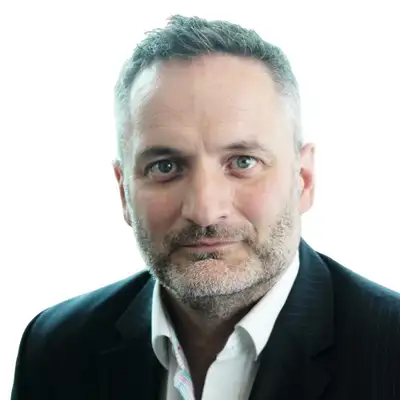
Hello, and welcome back to the World Pipelines Podcast. With me for this episode is doctor Chas Spradbery, operations director at Peritus International, a specialized subsea engineering and project management firm serving the offshore energy industry across oil and gas, renewables, hydrogen, and CCS. World Pipelines helps oil and gas pipeline professionals stay informed about the midstream oil and gas sector, offering technical articles, regional briefings, project and contract news, and think pieces on pipelines all over the world. Register to receive a print or digital copy at worldpipelines.com and search World Pipelines on LinkedIn to join our community. Hi, Chas.
Elizabeth Corner:Welcome to the podcast.
Dr Chas Spradbery:Thank you so much for having me. It's an absolute pleasure to be here.
Elizabeth Corner:Let's start off with talking about your work at Peritus. And I want to know at what point in a project do conversations typically start to involve you? So when someone picks up the phone, calls Peritus, asks the chairs, what are they usually trying to get clarity on?
Dr Chas Spradbery:Yeah, that's a really interesting question actually because I wish there was an easy answer but there just isn't. We get a whole range of inquiries from people who for instance are halfway through PipeLay and they found something that wasn't shown on the survey and it's like, okay, I've got this really expensive PipeLay vessel, can we keep going? Do we have to pull the pipe up? So then we have to mobilise a team and get guys working over the weekend to kind of, you know, reanalyse stuff for them. On the other end of that spectrum, there are projects that we are looking at that probably won't be built for ten years.
Dr Chas Spradbery:So it's a massive range of inquiries that we get. And I guess if I was going to say to you what would I like, when would I like clients to call me rather than when they do actually call me, obviously we want to be involved as early as possible in a project. And that's the time that you can really make a difference. As design engineers, the earlier on you can make decisions, the less it will cost you if you need to change things. We much rather be involved early on rather than right at the end because at the end the costs become astronomical.
Elizabeth Corner:So while you can respond and work on the hoof, you much prefer an earlier input.
Dr Chas Spradbery:Yeah, definitely.
Elizabeth Corner:And what do you think your clients value most about having some external input, some specialist input?
Dr Chas Spradbery:Pipeline engineering or subsea engineering in general is super specialist anyway. It's a really specialist field. As I was kind of just alluding to, some of the costs associated with it are astronomical. You could be having a lay vessel a million pound a day, which gives you maybe three or four kilometers of pipeline. Now a million pounds is equivalent to about ten thousand engineering hours.
Dr Chas Spradbery:So one day vessel time, 10,000 engineering hours, which is five engineers for a year. So the added value that you get from engineering is just massive. If I can save half a day of vessel time, then the engineering more than pays for itself. So I think that is valued, but I also think in terms of Peritus itself Peritus is a relatively small company, so we like to think we are pretty nimble on our feet, so we can do though we can respond quickly to things. We're also independent, so we don't have to design a particular project to fit a particular vessel.
Dr Chas Spradbery:But I guess the biggest thing and one of the biggest differentiators that we have is that our guys are quite experienced, and so there's a whole bunch of engineering contractors and they will typically let's say they do a FEED study but they are FEED study specialists. Their guys won't have the offshore experience or the experience to know what happens when you're really trying to build something. And because we've got that kind of depth of experience, we've got those kind of crusty old offshore guys, I would say special input is the, I think, partly the ability to ask the difficult questions. You know, half of the study, you haven't thought about that, how are you actually gonna build this, how are you gonna solve that problem? So I think it is that ability and that confidence to be able to say the uncomfortable thing and challenge people a little bit more than maybe they'd be expecting, you know, from a contractor.
Elizabeth Corner:Yeah, you're not yes men, you're able to work in partnership with a company and really get to the heart of what they need.
Dr Chas Spradbery:Yeah, yeah, and sometimes they may not know that. So for instance, they may have considered how to design a landfill or how to design the main pipeline route, but they won't have considered how to join the two together. Are you gonna have to do an above water time? What's that gonna look like? What strains and stresses is that gonna put in the pipeline?
Dr Chas Spradbery:So it's it's that kind of stuff, which I think is the one of real benefits we bring to the table.
Elizabeth Corner:Yeah. Now we talk a lot on this podcast about the energy transition. We talk about targets and timelines, often saying 2030, 02/4250. But what does energy transition work actually demand from your side of things, from pipeline engineering, and how does that shape the work that you're doing at Perrottive?
Dr Chas Spradbery:Yeah, brilliant. So energy transition, so if you're talking about CO2 or hydrogen, we are still talking about pipelines. And pipelines, you will not get away from all of the standard pipeline engineering things, they will still need to be stable, they still cannot be overstressed. If there's any kind of buckling issues or temperature issues these all need to be addressed as well. The routing needs need to be addressed and then as time moves on there's nature inclusive design requirements as well.
Dr Chas Spradbery:So there's an awful lot of the standard pipeline work. However, that standard pipeline work has to be done in the context of the fluid you are transporting. So CO2 for instance, dense phase CO2, is a really difficult fluid. It does odd things, and you have these running ductile fractures which you need to take into account. You need to think hard about the flow assurance and the impurities and all of that kind of stuff.
Dr Chas Spradbery:And if you look at hydrogen, for instance, hydrogen causes, like, embrittlement in the pipeline steel, so actually the steel becomes effectively weaker. So then the question becomes, if we just take that hydrogen one, for instance, the pipeline will still run over the same seabed, but, actually, it cannot take because the steel gets bristle, it cannot take the same level of of stress as it might be if it was transport with natural gas. So for instance, hydrogen, you might decide, you run your analysis, and you kind of go, well, actually, we're gonna spend a lot more time rerouting this pipeline to lower the stress levels to avoid the rocky areas or to design some kind of pre lay intervention to keep that down. So it's a real mix of the kind of traditional pipeline engineering skills, but I would say tempted or informed by the fluid that you're actually transporting, by the energy transition fluids that you need to put through those pipelines.
Elizabeth Corner:Great. Now we heard from you at the World Pipelines CCS Forum in March, where you very kindly spoke, and you spoke really well about designing and engineering offshore CO2 pipelines. So for listeners of the podcast who weren't in that lovely room, what was the key message that you wanted people to take away from your presentation?
Dr Chas Spradbery:I mean, that was a that was a really good fun conference. Although I I have to give I think the coffee was super strong, so that may have been why I was quite energized.
Elizabeth Corner:Always caffeinated on World Pipelines.
Dr Chas Spradbery:Yeah, I really was. I guess in terms of a golden nugget to take away is that some of the project developers that we have come across in the energy transition space, they're not your usual oil and gas companies. Some are, but some And there seems to be a of a lack of understanding of just quite how different and quite how difficult offshore pipelines are compared to onshore pipelines. It's not just a case digging a hole and putting a pipeline in it, and you can't send guys out in a van to fix it if it goes wrong. So the costs are different, engineering has a whole set of different challenges as well.
Dr Chas Spradbery:And then I think also there's, in terms of line pipe, obviously there's still the same kind of lead time on that, but on vessels as well and vessel threads. So I think it's one of those things which, going back to the very first question, early engagement is paramount. Solve the engineering challenges early, and then you can book yourself a slot in a pipe mill and a slot for the vessels as well. And so I guess to summarise all of that, I would I would just kind of say offshore pipelines are difficult and they shouldn't just be a line on the map that you leave until the last moment, which is what seems to be happening every now and again.
Elizabeth Corner:Okay. And you mentioned hydrogen transport, and that often gets talked about in the same breath as c o two transport. We put them next to each other, but they're actually quite different technically, aren't they?
Dr Chas Spradbery:Yeah. They are. They absolutely are. So as I mentioned, c o two has quite strange thermodynamics. So for instance, if you have a c o two pipeline that is running in dense space and you shut that pipeline in, usually, you shut a pipeline in, the temperature drops and the pressure drops or whatever else.
Dr Chas Spradbery:But with c o two, it starts sucking heating from the environment, so the pressure goes up, and the temperature goes up. So there's, like, little oddments like that and CO2 results things to polymers as well. And in terms of hydrogen, hydrogen again, is a very small molecule and that small molecule can get into cracks and that's what makes the steels harder. So yeah, they have absolutely they have different compression requirements, have different requirements for line pipe steels, materials requirements, different requirements for welding, and different risk profiles as well in terms of CO2. Again, it's an odourless gas but it's very heavy so it doesn't disperse like an ordinary natural gas pipeline would, and hydrogen is actually very hard to detect when it leaks because it's such a small such a small molecule.
Dr Chas Spradbery:So they are they are different from each other, and they are different from your standard natural gas pipelines as well.
Elizabeth Corner:Absolutely. Now pipelines aren't the only thing that you work on. They're they're not the only way that we can move energy. The obvious alternative is a subsea cable. Maybe you can talk a little about your experience with interconnectors.
Dr Chas Spradbery:Yeah. So obviously with the political situation at the moment as well, getting energy from one place to another is a really hot topic, and cables are certainly one way of doing this. Although the energy density you get by transporting energy through a cable is typically less than a pipeline, so you may need to have to get the same amount of energy from it to be you may need to have let's say six or maybe eight cables compared to one pipeline. But obviously then it's electricity and that you don't need to process it anymore and it can be used wherever it goes. And cables are great and in some ways they're a bit easier than pipelines because they have no pressure in them, so they don't buckle or snake around on the seabed.
Dr Chas Spradbery:But in other ways, obviously, they are a lot more fragile and susceptible to damage as well. So the protection requirement can typically be higher for a cable, although the overall engineering associated with them is less than for a pipeline, which is a shame for us as an engineering contractor. Some of the cables are massive as well. Some of the telecom cables are so long. I think it's SIMU Wii, which is 39,000 kilometers long.
Dr Chas Spradbery:They're just huge. I've got a map on my wall of all the cables. I think people are really aware just how many cables there are connecting everything, you know, or the fact that 99% of all internet traffic goes via subsea cables.
Elizabeth Corner:Yeah, people think that everything is in a cloud or with Wi Fi, but actually all of that is enabled by cables,
Dr Chas Spradbery:All of that is enabled by cables, yeah. And there's obviously a lot more focus on them at the moment with, security as well and transmission of information too.
Elizabeth Corner:Absolutely, and I think probably a while ago we'd have been worried about earthquakes or tsunamis damaging infrastructure like that, but perhaps now we're even more tuned into the idea of bad actors.
Dr Chas Spradbery:Yeah. Earthquakes and geohazards. If you, for instance, if you have a slope failure, and this can be a slope which is as low as, say, three degrees, so, you know, really shallow slope, That can cause a turbidity flow, like a soil flow, which can cut through cables because it's just like a pressure washer or like a sand buster. But, yeah, though, it's interesting looking with conflicts around the place at the moment. The you know, in the straight awful moose, has loads of cables going across it.
Dr Chas Spradbery:None of those have been cut, so there definitely is a threat to the subsea cables, and they are very, very difficult to protect. But whether the likelihood of them being cut is as large as people currently think, I don't know. I'm probably not qualified to talk about that one.
Elizabeth Corner:So that's just a risk profile that you have to build into any project?
Dr Chas Spradbery:Yeah. Absolutely. Yeah. And we are seeing projects coming through now which have specific requirements for cable security and risk assessments and protection of those cables to minimize the bad actor risk.
Elizabeth Corner:Are there any assumptions in the industry that when you hear them voiced, when you hear people say them, you think, that's gonna be a lot harder than this person realizes?
Dr Chas Spradbery:Probably the main one is timeline. Everyone wants their projects done immediately, sometimes the gap between the project and when they expect it to start working, think, is generally pretty consistently underestimated. You've got permitting, procurement, as I've said, lead times for line by offshore installation windows, vessel availabilities, all of that kind of stuff. And then the other thing as well, which you see much more in the in the wind industry and cable industry, is that you'll have no projects for three years, then all of a sudden there'll be 10 projects. And thinking that you could understand it with the different oil and gas developers in different countries just doing their projects in isolation.
Dr Chas Spradbery:But for things like kind of strategic infrastructure or government funded infrastructure, it would be much nicer if we could have a timeline of projects that was just like, okay, one year we have one project, the next year we have another one, and so on and so forth. Maybe some coordination with Europe so we don't get three Dutch projects and two German projects all in the same year, Cause I think that would be much better for the supply chain for the industry as a whole.
Elizabeth Corner:I think the supply chain would agree. And what's the typical length of your involvement in a project? Or is there not a typical length?
Dr Chas Spradbery:No, there's not. I mean, we get involved from little, you know, one month long studies to assess the the feasibility or something, all the way through to a five or six year project, taking something all the way through the detailed design, the installation, the as built analysis. I think our longest running project started in 2010, which is still in the conceptual phase, which is this Middle East to India pipeline. And in fact, we've just got a new study looking at an oil pipeline from The Middle East to India, which then bypasses the current trade routes. So, yeah, so there's a massive range of lengths of involvement.
Elizabeth Corner:And any projects that you can remember that you loved and lost or that never got built and that they were your baby and they are no longer?
Dr Chas Spradbery:Yeah. Well, I guess one of the ones that I was really involved with, was the Wave Hub project down in Cornwall.
Elizabeth Corner:Okay. Yeah.
Dr Chas Spradbery:And that was one of my first renewable energy projects. And took that project all the way from concept through the detailed design, built it
Elizabeth Corner:Zoom in.
Dr Chas Spradbery:And then it sat on the seabed, and no one really came and connected up to it. Right. So, yeah, that was that's sad. I think that was a bit before its time.
Elizabeth Corner:Yeah. You were originally.
Dr Chas Spradbery:Yeah. Quite. Quite. Cover that in writing, please.
Elizabeth Corner:Yes. You can. Yeah. If you had to pick, what do you think is most likely to disappoint people over the next ten years? Is it hydrogen?
Elizabeth Corner:Is it CCS? Is it something else?
Dr Chas Spradbery:Oh, that is difficult. It's difficult because they are both effectively pushed forward by by the government. I mean, CCS is needed for, climate change goals. If you take the Aramis project in the North Sea, 200 kilometers of 32 inches pipeline, but it will take 50% of all of Holland's carbon dioxide and they kind of need that project to meet their climate goals. But it is at the end of the day you are shifting around something which is a waste project with no real intrinsic value, so CCS will only go ahead if there's a government push to make it happen.
Dr Chas Spradbery:Hydrogen is moving forwards. There is this European hydrogen backbone and bits of it are now coming certainly into the FEED type studies moving forwards, but again I think it will take government pushing those projects forwards and helping to try and make them economic, because economics are not really there at the moment. So think the 2,030 targets of both of those look what's a good word heroic. Challenging targets, I think. I'm not sure either of them will make it in the timeline that it is expected they can be delivered by.
Dr Chas Spradbery:I'm all in favour of them, I think we need them both. Need get rid of, you know, we need the carbon capture and we need to reduce those carbon emissions, so use of hydrogen as well is great.
Elizabeth Corner:Thank you for answering my tricky question. What are the most interesting, or maybe the most challenging or difficult conversations that you're having with clients at the moment? What are they excited about? What are they worried about?
Dr Chas Spradbery:That's a good question. So we have a real big mix of clients and a big mix of projects. So for instance, might be working on say some dynamic cables for a floating wind project off Scotland or looking at 100 kilometres of interconnector cable along the coast of Japan, which is inherently very stable, so working out how to do that. So there are some really interesting projects that we've got. I think actually one of the most interesting ones I'm working on at the moment is this potential for an oil pipeline that I mentioned between The Middle East and India, because the water depth is three and a half thousand metres deep.
Dr Chas Spradbery:We've looked at it, we've looked at it for a gas pipeline, and that all works, and we can get enough throughput through and everything. Now for an oil pipeline, actually, you need a bigger pipe, basically. It's a denser fluid. You need to you need a larger pipe to make it work. The problem that we have is there is not the pipe mills cannot make pipes large enough with sufficient wall thickness to lay those pipes empty.
Dr Chas Spradbery:So one of the things we're looking at is to maybe lay the pipes flooded. So you lay a flooded pipe in three and a half thousand meters of water and keep full of oil from then on, so you then negate sorry. I'm going super technical here. But so then you you negate the collapse issue of having all of that water outside the pipeline. So that's a really interesting project to see if we can actually make that work because it's right on the limits of both the pipe mill technology, lay vessel technology.
Dr Chas Spradbery:So that is probably the one I'm enjoying the most at the moment. That's probably one of the most interesting conversations, if you like.
Elizabeth Corner:Yeah. Very interesting. And also very of the moment, which solves some current problems. I think we're gonna see a lot of, sort of innovation and projects coming out of that region to solve our current Straits Hormuz problem.
Dr Chas Spradbery:Yeah. Yeah. Absolutely.
Elizabeth Corner:And to finish us off, I wonder if you are more kind of excited by solving these new energy challenges that we've been talking about, or whether you still just really love a well designed, traditional pipeline challenge like like the one you've just described.
Dr Chas Spradbery:Yeah, I mean, I love a challenge, and that is what gets me out of head and that's what made you know, made me become an engineer, you know. It's that problem solving and, like, actually, how are gonna do this thinking around it? And so I guess traditional pipelines are great, and that very, very deep water one is super challenging. But I think what's exciting about the CCS and the hydrogen pipelines is you still have to solve the same problems, but actually there's no established codes or standards. There's very limited operational experience.
Dr Chas Spradbery:The codes are effectively being written in real time as the design of these things progress. And also you know that the decisions you're taking now, the engineering decisions you're making now, that's going to define or at least heavily influence how these things are built for the generation of infrastructure. So it's really interesting work in that area, and the other thing is of course it's a relatively nascent industry in terms of offshore hydrogen and offshore CO2. There's a failure now, it's going put the industry back ten years, fifteen years. We absolutely cannot afford to have that happen.
Dr Chas Spradbery:So these pipelines have to be really robustly designed, and failure modes that perhaps aren't even fully understood yet need to be designed and designed for. So I think, yeah, it is great being able to work on those. And it's it's I still love the old water and geohazards as as I mentioned, and and working on those areas are are great. And the thing about pipelines and subsea engineering as well, it's so multidisciplinary. You've got like, you know, the soils, you've got the materials, you've got all your flow assurance and pressure and the general, you know, panics of it all.
Dr Chas Spradbery:It's probably one of the most multidisciplinary areas you could ever get into as an engineer. I mean, it's a it's a brilliant industry to work in, I would say.
Elizabeth Corner:Fantastic. Thank you so much for talking to me, Chas.
Dr Chas Spradbery:You're very welcome.
Elizabeth Corner:That was Doctor Chas Spradbery from Peritus International talking about all manner of subsea infrastructure engineering challenges. He described for us the complexity of traditional and new energy projects alike and offered some perspectives from the frontier of CO two and hydrogen pipeline design. Thanks for listening to the World Pipelines Podcast. Subscribe for free wherever you get your podcasts. And if you've enjoyed this episode, please rate and review and forward to a friend.
Elizabeth Corner:World Pipelines helps oil and gas pipeline professionals stay informed about the midstream oil and gas sector, offering technical articles, regional briefings, project and contract news, and think pieces on pipelines all over the world. Register to receive a print or digital copy at worldpipelines.com and search World Pipelines on LinkedIn to join our community.