Subscribe
Share
Share
Embed
On the Bold Brand Show, host Josh Miles and his guests go deep on a topic to uncover the growth secrets of the most successful firms, how firms can create lasting legacies, and what the future has in store for the AEC industry.
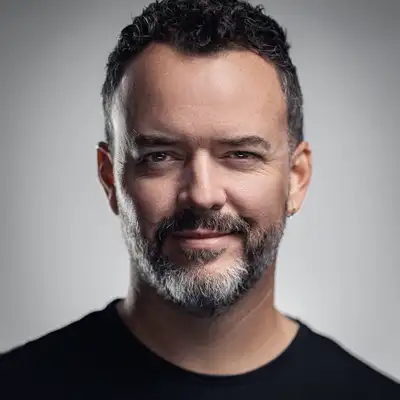
Keynote speaker, past TEDx presenter, and AEC brand strategist, Josh Miles hosts The Bold Brand Show.
This series showcases conversations with firm executives, marketing leaders, and innovators in the AEC industries. For more information, visit https://boldbrand.show + https://boldbrand.com
I'm really hopeful that I can get this
edited in time for
Halloween because I'm very excited
about the work that you're
doing with Stanley Hotel.
It's the inspiration for The Shining.
Okay.
Yeah.
So he was there when he was writing the
book, so it is the
inspiration for the setting.
What do you think was the scariest part
of working on that project?
Honestly, it wasn't the ghost.
Welcome to The Bold Brand Show.
If you're in the AEC industry and want to
grow your firm, we're sharing exactly how
bold and innovative firms win more.
The sad truth is most firms that are
struggling in the AEC
industry are still doing things
the way we've always done them, but this
show is about finding a better way.
I'm your host and founder
of Bold Brand, Josh Miles.
I'm a published author, veteran of the
TEDx stage, and a brand
strategist with over 25
years of experience.
But my superpower is my focus on AEC
firms to understand how
branding and marketing in
the professional services industries is
wildly different than for
retail brands like Apple,
Amazon, or Starbucks.
So in this podcast, we're going deep with
AEC firm leaders,
marketers, and innovators
in the AEC industry.
We'll focus on the hottest topics and
trends in AEC to uncover
the growth secrets of the
most successful firms and how firms can
create lasting legacies
and perhaps what the future
has in store.
Today's show is brought to
you by Open Asset and Shred AI.
AEC pursuits are more competitive than
ever, and the best firms
know it's not just about
what you say, but how you say it.
That's why leading AEC marketers are
turning to Open Asset, the
industry's go-to platform
for managing project photos, staff
resumes, and marketing
files, all in one easy to search
place.
And now Open Asset is even more powerful
with Shred AI, the
AI-powered proposal writing
tool purpose-built for AEC workflows.
With Open Asset and Shred AI, your team
can instantly surface
past proposal content, draft,
edit, and polish responses with AI,
seamlessly pull in project visuals and
resumes, and eliminate
the busy work so you can
focus on the storytelling.
Together, they're transforming how AEC
marketers win work, faster,
smarter, and with fewer late
nights.
Visit openasset.com
slash Shred to learn more.
Thanks again to Open Asset.
Today's episode is brought
to you by Fox Photo Studios.
Do you ever wish your video podcast could
just look a little
more professional or that
the process was just a little easier?
I get it.
I mean, when I started the Bold Brands
show, I was setting up
everything in my home office.
Before I could ever hit record, I had to
rearrange the furniture, the
camera gear, and the lights
before each and every episode, and then
tear it all down again when I was done.
That's why I opened Fox Photo Studios.
It's all set up for me just to show up
and start recording.
So now after a year of planning and build
out, it's all open and ready for you and
your team to use too.
Welcome to Fox Photo Studios.
Of course, your show could look a little
like this or even something like this.
And if you're really fancy,
you can bring your own neon sign.
And it's not just for podcasts.
Fox Photo Studios is a fully equipped
studio, great for corporate videos,
commercial productions,
or even photo shoots.
Best of all, we're just north of Metro
Denver near I-25 and I-70.
So follow Fox Photo Studios on Instagram
or visit
foxphotosstudios.com to book your
next project.
We'll see you soon.
Welcome back to the Bold
Brands show on today's episode.
I'm chatting with my new friend here in
Denver, Katie Vander Putten
It's Katie L. Vander Putten, AIA, EDAC,
NCARB, LEED AP, BD&C and from here on.
I promise just to call you Katie.
Please do.
Thank you.
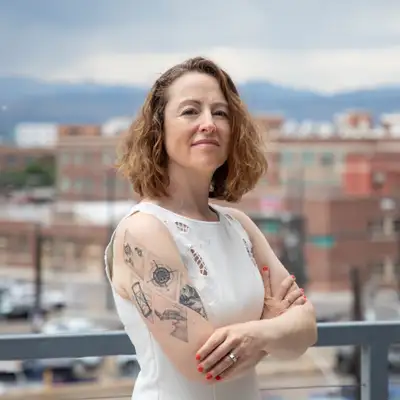
Katie is the president and director of
healthcare at MOA Architecture, a third
generation Denver-based
design firm known for healthcare, K-12
commercial, and community projects.
Her work has been recognized by the
Denver Business Journal's
top 40 under 40 honoring
her both business success
and community contributions.
As MOA's first female president, Katie
leads firm-wide strategy,
growth, and client experience
championing a people-first, profit-smart
approach, and a
collaborative culture that's
now 63% women.
Outside of work, Katie is a mom, mentor,
outdoor enthusiast who believes in
balancing meaningful
work with a full, vibrant life.
Katie, welcome in person
to the Bold Brands show.
Thank you so much, Josh.
I'm super excited to
join today's podcast.
I can't wait to dive into
all these awesome questions.
Well, on this show, we want to learn what
you're thinking and the challenges you're
facing, successes you've had, and maybe
some of the boldest moves you've made.
Specifically today, we're going to dig
into some topics ranging
from legacy building and
growth to, of course, the future of AEC.
Those are such great topics, and
honestly, they've really come
into a lot of my conversations
lately, whether it be internally with my
peers, with my mentors.
There's a lot of exciting things
happening in the AEC
industry, and everybody's looking
to constantly do better and hear what
everybody else is doing.
I'm excited to throw my
two cents into the ring.
I'm curious to hear about your
leadership transition at MOA.
Did you see yourself as being a leader,
principal, and a firm, or
did you think you'd always
be a technical designer?
No, I very much thought it was going to
be a technical designer.
If I think back, I was that little girl
who played with Barbies
a little bit differently.
I was in the driveway drawing floor plans
for them and figuring
out the best way that
they could utilize space and things like
that, because I think
what's always excited me about
architecture is I spend as much time
thinking about people as I
do the built environments.
I think my transition into leadership is
just taking that to the next level.
I've always really loved the fact that
the built environment
can influence outcomes.
That's where we experience life.
It's where we have connections.
It's where you can have a baby.
It's where you educate.
It's where we learn.
It's where we come together.
But all of those center on people, and
leadership is all about people.
It's making it better for them.
It's listening to them.
It's understanding
what they need to thrive.
I never thought myself as a leader, and
it wasn't until I came
to MOA that I was like,
"Oh, you think so?"
"No, that's not me.
Leaders have all the answers.
I don't have all the answers.
Leaders are constantly talking, and I
spend more time
listening than I do talking."
But I think that all plays into
strategies or concepts that really make
for good leadership,
is thinking about things differently, and
hearing what people need, and then giving
them the support in those avenues so that
they can grow and thrive.
Well, this is the third leadership
transition that MOA
has had in its history.
How do you feel like you're setting up
the future legacy of
MOA for what that fourth
transition is going to look like?
MOA has a 44-year
incredible track record.
It's really built on trust,
relationships, and design excellence.
I think each transition is
really built on the last.
It's not forgetting
about where we came from.
It's celebrating that,
but looking to the future.
I love being the first one.
Leadership can be anything.
It doesn't have to
look like it was before.
It can change and evolve as our company
changes, evolving as the industry does.
It's who that right leader is to move it
forward and keep building
and bringing others as we
climb.
I think a lot of that has
to do with transparency.
I feel like with each generation,
leadership, at least at
MOA, has done a really good job
of being more transparent.
I have conversations with my team.
I give presentations about the financial
stability of the firm.
That was nothing that was
ever shared with me previously.
We all do finances.
You do it at home.
I do it at home.
The company is no different.
It just does it with a couple more zeros.
It's really fun to talk through that and
build that next
generation up and give them some
of those fundamentals of what does it
mean to run a business.
I didn't go to school
to be a business owner.
I went to school to be an architect who
became a business owner
and learned on the job.
I'd love that next generation
is going to do the same thing.
How can we give them strategies and
things right now to help
them grow and help them
see that potential in themselves?
Because again, it was nothing I ever saw
in myself, but I'm
loving every minute of it.
Help us set a mental picture to you.
What's the headcount
and size of MOA today?
We are 54 people strong.
We have had tremendous growth this year.
We started with 46 people.
It's been a really exciting, scary,
challenging, fun change because with
every new hire, what
can change is culture.
Culture is at the heart of who we are and
how we grow and what we do and the things
that we go after.
We've got offices in both Colorado and
Wyoming, but we're really
the size we need to be that
our clients need and our projects need.
It's never a number for us.
A lot of people are like,
"What's your sweet spot?
What's your sweet spot?"
I'm like, "It's whatever we need to be to
improve value, to keep people growing, to
deliver great projects, to inspire."
The number doesn't really scare me, but I
never want to get big enough that I don't
know everybody's name.
I never want to get big enough that when
I leave, my coworkers
are not like, "Tell your
daughter really good
luck on her play tonight."
I want that family connection.
I want that people first mentality.
It's not that you can't be that with the
5,000 person firm, but
it's a very different level
of people involvement.
I think in my heart and I think,
"M.O.A.s, we're going to stay smaller."
A lot of us say we're my
business partner, Eric.
It's my favorite acronym that I stole
from him is we're like the
Goldilocks of architecture.
Just the right size.
We are big enough that we can do those
really big projects, but
I will say I'm not too big
that I won't paint your bathroom.
It's the mama bear.
Yeah, that is the mama bear.
It means that we will be whatever we need
to be to do what we've got to do and keep
delivering great design and being real
partners with our clients on projects.
Maybe mama bear is a good transition.
So as the first female president of MOA,
I would imagine you're
bringing some different
things to the table
then, your predecessors.
What has that been like?
How has it been different?
I think it has a lot more to do with at
least my leadership is
empathy and putting the right
people in the right seats.
I don't know if those of you are familiar
with strength finder,
but that's something
we did internally.
That's really looking at everyone and
understanding what
they're intuitively good at.
It doesn't mean that
you're not good at other things.
It doesn't mean we can't teach you those
things, but why not
lean into those strengths?
That's something with my leadership.
We took time and everybody has a right
seat and really
understanding what that is for
each person and then helping them give
that support and then
understanding where some
of their blinders might be and work on
those so that they can
thrive and feel like they
bring value.
But then we're just really transparent
when we come to a meeting,
we have those conversations
up front of like, what do
you need to be successful?
Everybody knows I'm an achiever.
I need bullet points.
I like big picture.
I like strategy.
When you start talking to me about Revit
and Revit families, I
tend to glaze over because
now you're getting a
little in the details.
I need to know you guys have that and
know that I'm here to
support you, but I don't
need that level of detail.
But then you have the next person who I
do really good on the fly.
I love ideas.
I love concepts.
I have a lot of team members who are
strategic thinkers and they
need to be given information.
They need to let them have space and time
to really think about it
and cultivate a response.
But now that I know that, that's great.
I used to sit in a meeting and I clawed
off 10 people and
they'd all look at me like,
"Oh my gosh, I have 10 things to do.
What one do we do?"
But now I know I clawed off 10 things.
Let's meet again at the end of the week
and you guys come and give me your ideas.
But now I've given them space to do that
now that I know that
that's something that they
need to thrive.
With you and your partners, do you feel
like you had major
resets between the leadership
from before?
Is it the same mission vision values or
did you start from
scratch on those things?
We did not start from scratch.
We had a great core and fundamental.
Our mission vision values have not
changed, but we really
built on those and found a way
to make them our own.
We joke at our leadership, "At the end of
the day, if I can
have fun, make money, and
do good shit, it's a good day."
Now that's not necessarily the one we
want to put out into
the world, but that's how
we brought it into ourselves and made it
our own and built on that.
So again, it's not starting from scratch.
We had a great infrastructure.
We had a great business model,
but we're pushing it forward.
We're modernizing it.
We're trying to find efficiencies.
We're trying to find better ways to
deepen that impact and
make it our own so that we
can continue to carry that torch.
And then find that next generation that
we're going to give it
to that's going to do even
greater things than we're doing today.
I'm super excited for that.
So kind of coincidentally, we planned
this recording weeks ago
and I didn't realize that
I was going to run into you at the Crew
Women Leadership
Awards that were last night.
And having done the research that I did
on you before the show,
and also before we met
in person at that event, I might've been
shocked or surprised
that you handed my wife
a gift that you were up against her for
this thing that someone
else ended up winning,
but it was just a really awesome gesture
to bring that to the
other people who you could
see as competitive against.
But having read your thing, I was like,
not surprised at all.
I was like, that seems like a very Katie
thing to do, even though
we'd never met before that.
I really like to celebrate success.
And that was one where I was super
honored to be nominated for the award.
I read what it is and at first I am one
of those people who's
like, that's not me.
I'm not a trailblazer.
That is all of my mentors.
That's every woman that I'm with.
They're totally leading the way.
But then when I pause and think about it,
it doesn't have
anything to do with your age.
It doesn't have anything
to do with your capability.
A trailblazer is somebody who has
courage, who has curiosity, who is
willing to try something
new, but bring others with them.
Because if you do a path by yourself and
nobody follows you,
you are just wandering
aimlessly.
But if you brought people with you and
they learned something
from it, that is so great
and so empowering.
So I just like, I was kind of doing the
same thing as you as I
was curious who I was up
against.
I knew a couple of the women on there and
they're great friends
of mine and do great
things.
And there were a couple
of women I wasn't aware of.
So I did the same research and I just had
to tell them how impressed I was of like,
I am so honored to be on
this platform with you.
And here's a cute little gift to just
like say, Hey, keep
shining your bright light.
I gave them all a little candle and was
like, just keep doing
what you're doing because
you're doing something great.
And regardless of who wins, this is a
great group of a group
to be in and to be a part
of.
And crew does a really great job of just
building a great
community of people who, you know,
it isn't a competitive community.
It's how can we help each other?
How can we be better as a group?
You know, how can we create alliances and
just make the industry a better place?
Do you think the large number of women
that work at MOA, was
that a, an intentional thing
to try to hire more women or has it just
sort of happened organically?
No, it happened completely organically.
I will say, I know my predecessors have
always done a really good
job of like continual growth
and leadership and training.
And they brought in a woman in the
industry and her name is
Sandy Blaha very early on
to help doing some leadership training.
And they did an assessment of themselves
and Sandy came back and
went, you are five white
dudes who are all the same white dude.
Like you all have, you're all driven,
you're all the same profile.
That is not what great leadership makes.
You need diversity in your firm.
You need people who think differently for
you because they challenge you.
They bring different
perspectives to the table.
So that was very intentional early on
with the firm before I
even got there to think
about things differently and bring
different voices to the table.
And as MOA had grown and matured, they
wanted women in leadership
roles and they encouraged
that and they gave opportunities for that
and training and things like that because
they wanted that different voice.
And when you create platforms, women and
others shine when you do
things like that, when you
celebrate success, when
you have things like that.
So I'm proud that we are 63% women.
That was not intentional.
That was organic.
I will hire the best person.
I do not care color, race, ethnicity,
sexual orientation, anything.
I want the best person for the job, but
it takes us a long time to hire people.
We have a kind of rigorous hiring thing
because I can teach you architecture.
I can teach you how to do your job.
What I cannot do is
give you drive and passion.
And it takes a while
to find that in people.
And that's why our interview process,
it's more than one meeting.
It's usually a 30 minute meeting of, hey,
let's get to know you.
And then it's the next meeting with our
leadership of what do you,
instead of what do you bring
MOA, what do you want in your growth?
Because I don't need another me.
I'm doing my job.
I need the value and
skill that you bring.
Where is your sweet spot?
And that throws a lot of people off and
they need time to think about that.
So usually we come back to that on the
third interview of like,
okay, now that you've had
time to think about it,
where's your sweet spot?
And I have to realize it's
going to change over time.
Because my sweet spot today is very
different than it was 10 years ago.
My kids were at a different age.
I needed different
levels and it needed to grow.
But I just love that about us as we spend
time to really find
that right person, because
culture is everything.
And if we brought the wrong person into
our culture, it could
kill it really fast.
Does that impact planes to scale?
A little bit, yes.
And it's tough where
we're having a fantastic year.
I'm super proud of our staff and the work
that we have right now.
We could legitimately keep four people
busy right now, but we're
all gun shy to hire them.
Because I don't want to lay those four
people off in three months
if the project work isn't
there.
So we have always scaled
strategically, organically.
We do not hire and fire for projects.
We never have.
I know there are people
out there that do that.
That is not something
we're ever going to do.
We hire for intentional growth.
And we like to think outside the box.
We've spent some of my favorite hires
this year are job
positions that I wouldn't have
even considered or weren't
even available five years ago.
We hired an industrial designer this year
that's leaning into AI
and things like that.
We've hired people to help us help my PMs
because we also want
them to be doer sellers.
That's really hard to be working on the
project and try to sell work.
But we've created infrastructure and
roles to help give them
that support and backup.
So we have a lot of people at MOA that
don't hold architectural
licenses but are bringing
tremendous value.
That's been really great.
But we've scaled a lot this year because
we're thinking about design
and delivery of architecture.
So much different than the traditional
model of you go to
school, you become an architect,
you work on a
project, and then you retire.
There's so many other great avenues and
things we can bring into
that to really celebrate
design and bring additional value to our
clients and our projects and our teams.
So I was talking to one of the show's
biggest fans who I'm not married to.
But she works at a firm and she's an
owner in a firm and also
leads marketing in this
firm.
And I mentioned to her that you were
coming up next because I
thought she'd be interested
in this.
She said, "Okay, I
got a question for you."
She's like, "One of the biggest
challenges that I have as an
owner and leading marketing
is kind of this push-pull from a fiscal
responsibility standpoint.
I want to push growth.
I want to invest in marketing.
But then on the other hand, I'm like,
"Maybe I should be
tighter with the purse strings.
Maybe I should be making
more responsible decisions."
As somebody who's overseeing strategy and
growth, do you feel that
similar sort of push-pull
or how do you manage that yourself?
Well, and I think I framed
the question differently.
To me, it's not an either or.
It's a yes, but.
I think with financial considerations, it
allows us to expand
and think about things
differently.
I tend to be more of a
profit positive, but people first.
So we invest in things that are going to
make us better, that are going to...
Our ROI is based on culture, client
retention, trust, transparency.
So I'm willing to put
money into those things.
They're going to help us grow that way.
And we at the beginning of the year, I'm
that person that does that.
I have this gigantic spreadsheet that is
everything we do every year.
But we talk about
what do we want to gain?
Where does that go?
Where are we trying to get to?
What are going to be some
of those differentiators?
And sometimes you got to
spend money to make money.
But it's a tough commodity.
And when people come having that
transparent conversation
with people, I remember my first
firm, I remember...
I think I was asking
for Bluebeam at the time.
And that's something like this was a
couple decades ago, but
it was probably like a $500
investment to want Bluebeam.
And I remember going to my leadership and
was like, "I want Bluebeam."
And the response was, "Well, I would give
that to you, but our executive leadership
won't sign off on it."
And I was like, "What?
Somebody who doesn't work with me,
doesn't know my name, is
making a decision about
spending $500.
Where's that fiscally responsible?"
So now when somebody comes and asks for
something, I'm like, "Talk
to me about the return on
investment.
How's that going to save you?
What's that going to do?"
And 9 times out of 10, instead of buying
it for just you, about for everybody.
Because I'm like, "That is a cool widget
that saves us a lot of
time and efficiencies."
So it's just, I think it's reframing the
question a little bit
differently of it's not on either
or, it's an and, but, and what value can
that bring us to really
think about it differently?
So this is coming from me actually.
Having had a larger team back in the day,
my former company, we had 20 some people,
and being the person who was in charge of
vision, I think one
of my biggest downfalls
was I had a hard time in the moment when
we got to achieve a thing,
like actually celebrating
it because as you're going the mountain,
you're like always
looking at what the next
peak is and not necessarily celebrating
that you made it to this
little summit that you're
at now.
Do you find that a challenge?
Yeah.
And I think it's tenfold because as an
architect, you're always
like that project deadline,
that next project,
you're on this cyclical cycle.
So I think that's something I really, in
my leadership and in
MOA, we've really tried
to take pause and build in reflection and
celebration into the process.
So we literally in our project processes,
we have milestone celebrations.
Take your team out to a lunch.
We close the office on Fridays, well,
each quarter, one
quarter we go golfing, the next
quarter we might go skiing, the next one
we have late days
because I tell my team we work
really hard, but we play hard too.
And then my favorite thing I did with my
leadership and I call
it High Five Fridays,
we do so many great things every week and
I'm not even aware of
half of them because
we're all moving to my own minutes.
So I talk to my PMs, I talk to my
partners and I ask them
every Friday, tell me a high
five for the day.
What is something cool that happened?
And at the beginning I
was like, tell me one.
I got so many that now I send out
probably anywhere from
three to six high five emails
every Friday to either a staff member, a
client, a consultant, because I reiterate
that to you because how awesome is that
to celebrate those
achievements and just take
five minutes out of the day to be like,
Hey, Josh, I heard from
your PM that you knocked
it out of the park this week.
You were in a client meeting, you had a
really tough conversation
with them and you handled
it like a pro way to go.
Thank you for
representing MOA really hard.
That's not hard to do, but just think, I
think hopefully
everybody else, that just gives
you a little warm and fuzzy of like,
well, somebody heard
that I did something great.
Not only did I do something great, but
somebody else talked about it.
And then they brought that loop of
congratulations back to me.
That honestly is my
favorite part of the week.
Every week is my high five Fridays.
And I schedule that in my day of like,
Nope, you can't take my
high five Friday because
that is my favorite thing to do is to
like give that
recognition back to my team, my
industry partners and let them know that
they're valued and what
they do really matters.
And the small things.
You just created that
hypothetical for me and it felt good.
Even though I hadn't even done anything,
it wasn't even real
and it still felt good.
I'm a branding guy at the core.
So positioning and differentiation and
how do we stand out in the market?
I mean, you've talked about a lot of
things already that I
feel like are different.
How do you answer that question?
What makes MOA different and what are you
doing to differentiate
your firm from a pretty
crowded marketplace?
It is incredibly in crowded marketplace
and it's a great marketplace.
Some of these people are my friends.
A lot of them really are.
And it's really fun to
have that healthy competition.
I do think that drives a lot of us, but I
think for me and MOA,
it's truly designing
with purpose.
It's looking at things differently.
It's inviting our clients in to be a part
of the process, really
listening to them and
designing with them
because design is really fun.
And you know what?
At the end of the day, I can like,
there's no one solution
fits all design solution.
There's a hundred different solutions,
but you know what client?
You know your space better than anyone.
It's really my job is
what I would tell them.
I'll give you a couple options.
I'm going to tell you
what's really great about them.
I'm going to tell you some
constraints too with them.
I'm going to arm you with the facts and
then I'm going to help you make the right
decision and then I'm going to tell your
story along the way.
And we're going to celebrate that through
the design process and
really have it be fun
and engaging.
And to me, that's our differentiator.
We're going to have fun.
We're going to do it together and
hopefully do some really
good stuff that is socially
relevant, that is fun, is engaging and
makes a lasting impact.
I understand that the
Traverse Academy or is it Traverse?
Like Traverse City.
Like Traversing Mountains.
Think of that.
The Traverse Academy.
That there's a lot of
impact behind this project.
So tell us in on what
that project is about.
Yeah, it's one of those rare projects
that for me personally
is to why I went into
architecture.
So Traverse Academy is the nation's first
day treatment Senate
owned and operated by
a school district.
This is unheard of because right now
insurance doesn't support this.
That is not what
insurance models are made up of.
But back in 2018, 2019, Cherry Creek,
child suicide had affected nine of their
students.
It was the number one
cause of death in the state.
And they went to legislation and was
like, what are you guys doing for kiddos?
Because a lot of the places for them in
town had been closed.
And the response back they got was, well,
if you want something, build it yourself.
And Tony Poole, the assistant
superintendent of the schools
was like, OK, I will do that.
And I remember seeing an RFP that came
out and read it and it
was like, it didn't know
what it needed to be.
But I read through the lines and was
like, no, this is not a school.
This is a day treatment center.
This is a school that really wants to
help kids where they're at.
So it's not a school for somebody born
with a disability or
somebody that has maybe
autism. It's a school designed for
somebody who goes
through a mental health crisis.
Unfortunately, in our nation and in
Colorado, I'm going to
try not to get emotional.
Like school shootings is a thing.
And one of the students that needed help
was somebody who was at
that theater shooting and
want somebody that they were loved was
greatly affected by that.
And that can create a mental spiral of
you just don't know how
to deal with the pressure
that is happening on the outside.
And you need a place, you need therapy,
you need help of how
to break that negative
thought spiral. And that's what this
building is trying to do.
And it was just I remember being in the
interview and after the
fact, Tony told me he's
like, I had somebody in mind that I
wanted for this project.
And then you came in and you even brought
up like ligature resistant devices.
And I had never heard of such a thing.
I didn't even know what that was.
And I was like, because this
is a mental health facility.
These are kids who are capable of hurting
themselves or someone else.
The built environment needs
to meet them where they're at.
It needs to be safe.
It needs to be healing.
It needs to give them choice.
And just the opportunity to be a part of
something like that.
Again, that's why I went into
architecture because I do
think the built environment can
do that. And about.
I was six months after it opened, I did a
tour because that's
another thing I love to do
is we don't leave the
minute the building is done.
We come back after a month,
after a year, after three years.
How is the building functioning?
What is going well?
And I have a picture of it and it was my
favorite artwork they were making.
The students were making their own
artwork for the building.
And it was they were
prompted with Imagine If.
And it was 30 because there was like 30
students that first
semester and they all had to
fill in the blank.
And I took a picture of it because I was
in tears by the time I was done reading.
But it was like, imagine having a space
to go where you feel like you belong.
Imagine having a space to go that meets
you where you're at.
Imagine having the support you need to
get through it and
realize that life is worth
living. And I'm like, if that facility
helps one kid realize
that they're valuable, that
they're special, that they
have a place that they're loved.
There is light at the end of the tunnel.
That is why I went into architecture.
So that's my, it probably will forever be
one of my favorite
projects that is, I hold in my
heart.
And is this really targeted for K-12?
Yes, it's actually that facility is
middle school and high school.
And it's really fun and
set up with like three wings.
So it has Severe, which are, these are
kids that basically
spend most of their day in
therapy because they
really need that interaction.
There's Moderate and that's where it's
like, you probably
have four to six hours of
therapy, but then you're starting to
bring some of those core
curriculums back in like math and
science.
And then Transitional.
So these are probably kiddos who are in
school regularly, but maybe
only need one or two hours.
And the thought would be you're not in
this facility for a
school year, you're in here and
hopefully you can graduate and go through
the steps as quickly as possible.
But that school is there to support you.
So the back half are all these pods that
are made up that way.
And there's a each of the pods has a
middle school pod and a high school pod.
And then you get eighth graders who could
look like a fifth
grader or look like a senior.
So eighth grade can
kind of run the gamut.
And then the front half of the school is
a traditional school.
There's a gym in there
with a climbing wall.
There's a messy lab for like art.
There's a clean lab for like sciences and
computers and things
like that in a cafeteria.
So, you know, somebody who's in that
Severe wing would hang out in their pod
most of the time, but have
opportunities go to the other areas.
But someone in that transitional is going
to classes like they would.
They have that schedule.
They're kind of back there, but then the
facility is there to support them where
they need to be and
give them some choice.
Because that's really something I think
all humans, but especially kids when
they're dealing with things like that,
choice is a big thing.
If I can't control my emotions, it really
helps when I can control my environment.
So we created rooms where it's like you
can plug and you can control the music.
You can control the light fixtures
because you might be having a thing.
And if you can't control your emotions,
that gives you power and dignity to be
able to control some of your environment.
So that was really fun
project to do and be a part of.
Super cool.
Yeah.
Another cool project.
I'm really hopeful that I can get this
edited in time for Halloween because I'm
very excited about the
work that you're doing with
Stanley Hotel, which for our listeners
who maybe are not familiar as the hotel
is featured in The Shining.
It's the inspiration for The Shining.
Okay.
Yeah.
So he was there when
he was writing the book.
So it is the inspiration for the setting.
Super cool.
What do you think was the scariest part
of working on that project?
Um, honestly, it wasn't the ghost, which
some people might think.
I think it is probably the logistics.
Although I will say we did get the
opportunity to recreate the bathroom
that's in The Shining,
that iconic green bathroom.
So if those listeners, um, if you can,
the caretakers
cottage, you can stay there.
And one of the rooms you can stay in has
that iconic green bathrooms and it is
eerie to be in that room.
Let me tell you, like I don't personally,
I don't know if I can sleep in that room
because even being in there for a couple
of minutes, I'm like,
okay, this is so real.
I need to leave.
It's great.
But it's really the logistics.
The Stanley really is an icon and it's
hard and tricky to really blend something
that is historic preservation with
modernization because you need to be able
to like, we can't just put in that
baseboard radiator because
it was historically there.
That is not best practices and that's not
best for the staff and things like that.
So how do you pay homage to that historic
building and that icon that it is, but
still let it be flexible and modern and
cost effective to do this.
So we're super
excited about that project.
It is a groundbreaking project that my
office has been working on for 10 years,
different projects at the
Stanley and the horror film center.
We did conceptual design for that 10
years ago and we're going to complete CDs
here at the end of this year.
It is exciting and a real joy for a lot
of our staff to be a
part of that project.
It's been really fun.
And we've got an event here where we're
going to be showing the shining for those
that haven't seen it.
So it's going to be really fun and a good
celebration and kind of do a sneak peek
of what's going on and what the film
center is going to
have in store for people.
I feel like the radiant heaters are
clanging in the middle of the night.
That's a good way to, you know, it's a
good way to get that ghost story back in.
The haunting is real.
Yes.
100%.
Do they market it as haunted?
Yes.
Well, I don't, I'm yes and no, but I
think that's, they're real.
They really lean into that because that
is a fun thing and it does a
great thing for Estes Park.
It is a tourist thing and I've even done
the tours and things.
It's a lot of fun to just
be there and be a part of it.
It's a beautiful building.
It's a beautiful campus and they're doing
a lot there to revitalize Estes Park and
put Colorado back on the map.
You know, if you're willing to dip a toe
into this topic, mergers and acquisitions
are a big way that firms
are growing these days.
I know it's a very hot
topic and lots of markets.
Do you think a future merger or a future
acquisition, I mean, where is you and
your, your partners and your heads at
when it comes to this kind of growth?
Our focus is on legacy,
not on an exit strategy.
And I hate to say that, but I think a lot
of other firms didn't
have a legacy strategy.
So a buyout is your really only option if
you don't make it affordable and you
haven't picked on that next generation.
So our, our growth strategy is organic
and it's intentional.
It's tapping on that next generation.
It's showing them the
value of leadership.
It's giving them
opportunities to flex that.
It's giving them education of what does
it mean to be a
leader, giving them pride.
And, and really it's that's embedded in
who MOA is, who our
culture is, is a legacy firm.
So no, the end game for us is not, but we
are open to strategic
partnerships and things like that.
And whatever is the best for our client
or that project or that pursuit, we are
open to those opportunities, but we're
not looking for an exit strategy.
It's refreshing to hear.
So many industries
are changing right now.
AEC is certainly not
outside of that list.
But when you think about marketing and
technology, how are you guys looking at
AI and other ways to
kind of grow and evolve?
What's changing on your end?
Yeah.
I think the biggest challenge with like
marketing is cutting through the noise
and to be authentic.
Um, I think the differentiator with us is
trust and storytelling, you
know, and we really leverage AI.
We've leaned into it because I think it's
a do or die, you know, if you aren't, and
there's things that can do and it can do
a lot better and faster than me.
We really leverage it for like research
and some initial things, but
it doesn't replace creativity.
It just enhances it.
So I, as much as we can, we're going to
continue to lean into it, to use it, to
adapt to it, but it doesn't replace
people in storytelling.
And that's where I think we're our
differentiator is going to remain.
Yeah.
I liked the nuance I heard the other day.
It's not that I'm using AI to do XYZ.
It's that I'm going to do XYZ and I'm
going to use AI on the way.
I'm going to use it to
like augment what I'm doing.
I'm going to do it smarter.
I'm going to do it faster.
I'm going to use it as a learning curve.
But it's kind of like an intern.
Give it a shot, but then spell check,
spell check, like fact check.
Same thing as I tell my kids, just
because you heard it
online doesn't mean it's true.
Just use it as, because sometimes it's
hard to start from nothing.
So you could have AI, so you're not
starting from something.
So it can do a lot really quickly to just
give you a hundred ideas and then you
could take one of them and expand on it.
And I really encourage that with our firm
is please use AI, but use it smartly.
Back when I was right out of school, I
remember using spell check and I
developed a theory that spell check
doesn't work on stupid.
So you can have the wrong word and it'll
tell you if it's spelled right or not.
100%.
Now things like Grammarly at least, you
know, give you a hint that
maybe you've said it wrong.
But AI is sort of at
that level right now.
There's no check for stupid.
Any other trends that you're seeing in
your space right now, good or bad?
Well, consolidation is a
lot of it in terms of firms.
And I think COVID taught us
that you can work differently.
So like we have a lot of office space and
adaptive reuse and things like that.
We have, especially in small towns, we
have a lot of empty malls and things.
So like, how can we think smarter, think
differently about the built environment
and do cool and fun adaptive reuse?
I like to say to people that
is a lot of our sweet spot.
You know, it's not that we don't love the
shiny new ground up buildings, but we
really like getting into that existing
building and figuring out
the ghosts that are there.
And how can we think
about it differently?
How can we celebrate the structure of how
it was really built?
How can we play on that, but make it
efficient and modernize it?
That was a really fun challenge.
Any particular kind of reuse you're
excited to sink your teeth into?
Oh my gosh.
My favorite one right now is we are
taking a three story hotel wood frame
construction and turning it into an
inpatient behavioral health facility.
Oh wow.
Yeah, that has been a fun code challenge.
Let me tell you to take a type five
construction and say we're going to turn
it into iOccupancy with a locked unit.
It has been a super
exciting adaptive reuse project.
You can do anything, but
it's how much money do you have?
I always like to plant the seed with my
guests because it's an idea
that nobody's taken me up on yet.
But I think it'd be really cool in our
space to do a documentary on a project.
So like a really deep, meaningful project
that's going to be big for a community.
Like the Stanley thing might've been cool
to do this if we rewound 10 years, but
like get the owner, get the vision, set
the stakes of what's up for grabs and
then kind of follow the project along and
the ups and the downs and the
drama and like the door doesn't fit and
this material doesn't work
or it's not for sale anymore.
All the things that can go wrong with the
building project and then
all the things that go right.
So once it's occupied and all the amazing
things kind of afterwards.
But I think that would be a really cool
thing to see in the future.
A hundred percent.
And we do that like a dip our toe in it
because we aren't,
you know, movie addicts.
But we've done a lot with drones.
We really try to, with our storytelling
capture planning, we try to glean that
information throughout the process so
that like after the fact,
we can help tell that story.
You know, it isn't a visual one, but I
think a visual one
would be far more impactful.
So I will gladly take
you up on that offer.
You want to engage with us on a project.
Um, but I think it would go a long way
to, to telling those stories.
And that's what architecture is.
It's the process of design.
It's how do we get here?
What were the decisions that make?
And there isn't a
right and a wrong decision.
Like math is great because one will has
one is two, but design
is completely different.
It doesn't mean there was
a right and a wrong answer.
Every decision you make has consequences
and it's how you deal
with the consequences of
that, that is makes a successful or an
unsuccessful project.
So that's where I love your idea because
it's, what are the consequences?
And it's almost maybe like even cooler,
find two projects that
maybe did different paths
and what were the different consequences?
Because there wasn't the
right or wrong way to do it.
It was just what did that team do?
And what was, what came out of that?
What did they learn out of that?
And what were the fun
stories that they had?
That's great.
I love it.
Well, even as you think about your
definition of design,
um, you know, client
expectations are even beyond that.
So what are some of the shifting changes
that you're seeing on the
client expectation side?
Clients really like transparency,
innovation, and partnership.
Um, they, they need help.
They have a job to do.
Architecture is my job.
They have a need for a
project to do their job.
So it's really, they're looking for a
partnership and
somebody who that they can
put their trust in and that will guide
them to, to the right
answers and be a part of
them with it.
That's why I said, I'm, I'm one of the
few people I know of.
I want more people to do this.
So please do this.
But once a building is designed, I go in
and do user mapping with, with the staff.
Like this is why we laid it out this way.
It's kind of like, cause nobody makes an
instruction manual for a building.
Yes, you do for building systems, but not
the intention of how
the building was meant
to flow because that's what design is.
It's understanding a client, their
business, and trying to
find a way to make it more
efficient for them to do their business.
So really you have to
get to know your client.
You have to listen to them and then you
have to give them options and asking them
sideways, upside down and backwards
because they don't understand design.
So you might ask them a
and they're answering C.
So then now you have to
answer B and go back and forth.
So it's that fun, my, my best analogy.
And I've done this, I've had this happen
before is you might be in the doctor's
office and the doctor will be like, you
know, would you say
you're a heavy drinker?
And you're like, no,
I'm not a heavy drinker.
Well, talk to me about this week.
Have you had any drinks this week?
And you're like, well, you know, I had a
beer at lunch on Tuesday.
I had a bottle of wine at dinner.
Um, then I met somebody for cocktails and
like, you have to keep getting and
asking more questions to getting at the
heart of the story, because the first
time you ask somebody
there is a superficial answer.
Yeah, it's the whatever to, you have to
go three or four and sometimes
five questions deep to really get the
heart of what they need.
And I think that's what clients need.
They need that partner that's going to
ask them five questions, but not ask them
105 questions, but ask them five and
then, and then stay a
step ahead of them and
look out for what their risk
is and just be transparent.
Yeah.
We see that same
thing with brand identity.
So like when I, I was trying to
understand, do you have vision for this
logo going on a blimp or being on a long
horizontal surface, or does it need to
work small and in a square and on social
media and the answer is usually like
yes to all those things.
So then you got to figure out how to make
it adjustable and, uh, to flex with
all the, all the needs that you have.
Yeah.
When we kick off any project, I asked
Mike, like the whole team, the first
meeting, there's two questions I ask.
One is what does
success look like for you?
And I don't want to fill in the blank
because to some people it's on
time and budget on schedule.
To some people it's when somebody walks
in the door, they cry.
You know, it could be anything.
And so I don't want to write that story
for them, but I want to know what
success looks like.
And two, I always ask
them, close your eyes.
Imagine we're five years from now.
Describe for me what
this building does for you.
Like what, what
sensations does it give you?
What feeling does it evoke?
Cause that tells me more about what
you're looking for than like you
telling me what spaces you need.
It's what feeling like, well, get to the
heart of why you're here.
What is this?
What does that, what does
this project do for you?
What, what difference is it
going to make in your business?
How is it going to move the needle for
your clients, for your employees,
things like that.
And that informs design a lot when you
just stop and ask some
of those really simple questions.
Yeah.
I ask a really similar question on my
clients about imagine
everything goes great.
How, how is life different two, three,
five years from now?
What's changed?
Um, thinking about, uh, the ownership
transition again, and how it's not just
about impacting you and your partners.
It's also about generationally, the
different generations of the
workforce who are there.
Um, what piece of advice might you give
to future owners to help kind of, I
don't know if future proof is the right
word, but set up for success
for future generations.
I would say lead with clarity and
humility and realize that
people are your biggest asset.
So make sure you create space for them.
And that's how you're
going to help generations.
If you listen to them, because every
person is different.
Every person needs different
things and you really need to
listen to what each person needs.
You know, we asked that question too of
like, what would make you leave MOA?
And it could be, it's
different for everyone.
One person was like, you know, it's
because I'm worried that
my family isn't taken care of.
I'm worried that I don't
like parking and getting down.
I'm worried that I'm not seen.
I'm worried that, you know, and I can, I
can help solve some of those
if I know what they are.
So if you really listen to your people,
cause they're the biggest asset
you're ever going to have.
And that's going to create your
transition planning.
If you really listen to people and you
make them feel seen and heard, they're
going to fight for you all day long.
They're going to stay with you.
They're going to invest in you.
They're going to help you grow.
They're going to, like, if I take care of
my staff, my staff is going to
take care of my
clients and their projects.
And then my clients are going to say that
word of mouth of, Hey, MOA cared
more about me than anyone else.
They, they really took care of me.
They had my best interests at heart.
I felt like a team member.
That's the best business development I'm
ever going to do is take
care of my people and
they're going to pay it forward.
Yeah.
The internal audience is so incredibly
valuable with everything that you do
at a firm, knowing that they're going to
echo that message and they're going to
take that forward to the
other clients they serve.
Yeah.
Our leadership
structure is really different.
I came from a, I think most of us are
familiar with the pyramid of I am the
president, I am the top of the mountain,
all will bow down to me.
No, our actual, ours is a tree and
leadership is at the bottom because we
support the roots and our people are the
leaves and we give them what they
need to grow and thrive.
And that's what our leadership makeup is,
is we are not the biggest, the
brightest, the best.
My staff is the biggest,
the brightest and the best.
And I'm here to support them, to nurture
them, to give them what they need
to grow and thrive.
And it's a very different model.
That's very cool.
Um, what's the biggest
challenge with that model?
The biggest challenge with that model is
making sure my team doesn't get burned
out because this is a high performing
team that keeps raising the bar and
stress can be a big thing with them.
And it's self-imposed because they're
constantly wanting to do a great job.
They're wanting to do a
great job for their clients.
They take so much
pride in what that they do.
And the stuff that they're churning out
is just mind
boggling, but stress is a big
factor and that's where
it's taking the time to pause.
It's taking the time to listen and
sometimes just letting them be stressed
and hearing we're all
stress, like it's, it's stressful.
And I challenge them.
I'm a mom and I'm a leader.
My first instinct is
usually to solve the problem.
And I think that's the biggest thing I've
learned in leadership.
It's not to solve the problem.
It's to listen.
It's to be there and be supportive and
listen to what they need and ask the
right questions and, and be that support
system for them, not
go in and solve their
problems.
Well, I think especially as the roots of
the tree, if the goal
is to listen, you've
also got to have bandwidth to have time
throughout the week, throughout the day
that you can take time to do that.
Well, cause a lot of it is just listening
to them and it would be like, oh, you
really need help with this.
Like that's the one piece
that's stressing you out.
Somebody on a different project could do
that one piece or this other person can
help you and just being that outside, but
I got to get to the root of what is
causing the stress to
then be that resource.
It's time for your crystal ball.
What, uh, what's your bold prediction for
the future in our industry could be
design, could be marketing, could be, you
know, whatever, whatever is, whatever
you're seeing.
I really think the next decade is going
to belong to firms that blend purpose
and performance, I think just with where
the economy is going
and things like that.
We have got to figure out a way to be
more efficient, to build differently, to
be partners throughout the process and
realize it isn't one person's show.
We are better as a design industry when
we work together as a team and understand
and bring together cost schedule budget
and what is right at the end of the day.
Value engineering is a, a,
a word from a decade ago.
The new word is target value design.
It's let's figure out what we can design,
like what we can afford, what is the best
for the project and
let's design to meet that.
Let's focus on that for the next decade.
Let's be purposeful.
I like that so much better.
I'll have my clients
adopting that as well.
Don't have me pitch blue sky.
Let's figure out exactly
what we think we can spend.
We'll design to that.
Yeah.
Well, cause I can design anything and
it's fun, but it's just coming to that
term and getting to it as quickly as
possible of what can we do?
Cause we could, but the, it's limitless
what we can do, but we are all tied to
budgets and reality and we have to think
things differently, but technology is
allowing us to do that and use products
and things differently or, you know, with
tariff and things like that, where can we
source things locally and think of things
differently than what we did last year or
last week, let's, let's be innovative and
think about it differently.
Yeah.
Uh, before we let you go, it's hard to
believe we're about to wrap up here
already, any parting thoughts for
audience, any big challenges, anything
you want to share before we go?
My parting thoughts
would be be bold, but kind.
Don't wait for permission.
Own your voice.
Um, don't feel intimidated.
Like I said, I thought originally I
thought leadership was about having the
answers and it's not dared to be
different, but don't forget to bring
others up as you go along your way.
Like I think I'm only great because I
work with the greatest people on earth.
I have a great support system.
I have great partners and I'm building
that next generation to be an even better
leader than I will ever be.
That's awesome.
Uh, tell us where our listeners can learn
more about you and MOA.
Yes.
You can check us out at www.moaarch.com.
We're also on LinkedIn, Instagram,
Facebook under MOA architecture.
I'm on LinkedIn.
I'm on it a lot.
Please reach out.
I absolutely love talking to people about
design, about
leadership, about mentorship.
I like people.
I like interactions.
I took a test.
I am a 99.9% extrovert.
I have no idea where the
0.1% is, but I love people.
So please come hang out with me.
Well, Katie
Vander Putten, it's been a pleasure.
Thanks so much for being
on the Bold Brand Show.
Thank you so much for having me.
Josh has been fantastic.
We'll see you guys next time.
Thank you for joining us
today on the Bold Brand Show.
For all of today's show notes and links
to our sponsors, head
over to boldbrand.show.
Be sure to subscribe to our email
newsletter where I'll update you on the
latest episodes and other exciting things
happening at Bold Brand.
If you liked today's episode, do me a
favor and share this episode with a
colleague over at boldbrand.show.
You can subscribe on Apple podcasts,
Spotify, and everywhere you get your
podcasts, including YouTube, where you
can watch full
versions of each episode and
join the conversation
by commenting below.
The Bold Brand Show is produced by yours
truly, Josh Miles, and is a product of
Bold Brand LLC, a branding and video
agency for AEC firms based in Denver,
Colorado.
Visit boldbrand.com to learn more or hit
that orange button up top to schedule a
time to chat about your
branding or video project.
Catch us next time, where we chat with
another bold innovator in the AEC
industry. Thanks for listening.
We'll see you next time.