Subscribe
Share
Share
Embed
The Dad Manual is a fatherhood podcast hosted by Tony Cooper, featuring honest conversations with dads about the real, unfiltered journey of parenthood. This parenting podcast for dads explores everything from the excitement of being a first time dad to navigating the teenage years. As one of the best podcasts for expecting dads and experienced fathers alike, we dive deep into what it actually means to be a modern dad—the struggles, the growth, the mistakes, and the moments that change you forever. Whether you're looking for a new dad podcast or seasoned parenting wisdom, this family podcast delivers the honest guidance you won't find in books.
Andrew Adams [0:00:00] Some people, like, just know that they're meant to have kids. Right? I was probably like the other end of that spectrum. You can't go to a trade school for this. My peace is learned, is forged through lived experience. You're not my dad. I'd be like, I know. Yeah, we already had this conversation.
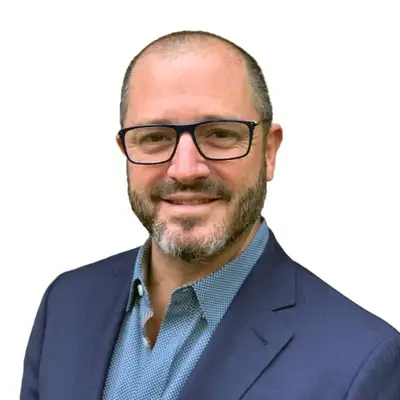
Tony Cooper [0:00:30] Hi, I'm Tony Cooper, host of The Dad Manual podcast. And I'm here today with one of my favorite dads. You are stepfather of Cadence, of Emory and Linden. Will you please introduce yourself?
Andrew Adams [0:00:45] Yes. My name is Andrew Adams. I'm a great dad and I have some wisdom to share.
Tony Cooper [0:00:50] Yes. So, Andrew, I love the shit out of you. Let's just start with that. Put that on the table. You're an incredible human who I've been so blessed to get to know over this past year. And you and I met through the context of transformation, so we get to have a lot of — I mean, this podcast is really about transformation and about breaking through limitations, fears, insecurities to become the best version of ourself. But like you, most people I know are so steeped in that. So I love that you bring such a unique perspective to this conversation. You are a gay man. You're in a same-sex relationship. You're about to get married, right? You and Dylan — a wedding to come.
Andrew Adams [0:01:28] No date yet.
Tony Cooper [0:01:29] Okay. In the future. You grew up in a same-sex family. You struggled with addiction for a number of years of your life, and then you came clean and transformed. And now you are stepfather to three amazing kids. So there's so much in there that — I mean, we could probably do an entire podcast on any one of those things, but all of those things make you Andrew. And so what I'm really excited about is just, you know, us having a conversation about you sharing this experience of your journey and where you are right now in your stepfathering. You're the first guest I've had whose legit ass stepdad came into the kids' lives when they were full-on functioning beings. And you had to introduce yourself to that. So I think for the context of transformation — and the biggest one you've been through was your becoming an addict and then spending the time in your life that way, who you became during that period and then how you changed that whole story. So let's start there.
Andrew Adams [0:02:37] Yeah, so when I was a teenager, you know, it started off as experimentation, house parties. It was fun. I mean, I, you know, alluded to my upbringing. I was brought up in a not same-sex relationship at first, you know — my dad was married to a woman, was raised in a church. He was a pastor. We lived with strict rules, lots of, you know, yeses and nos. This was okay, this is not. This is right, this is wrong. And didn't have a lot of freedom as a child. And then at the age of 11, my dad came out of the closet, separated from my mother. That was really the turning point of the structure in my family and the — the parenting — I'd say the parenting kind of came to a stop at the age of 11 or 12 for me, because my dad was, you know, going off to figure out himself. My mother, you know, obviously was handling her things, and we kind of just went from what felt like lockdown to complete freedom overnight. I mean, as a young teen, I was kind of excited. I was like, I can get away with things now. I can just, like, leave the house and not have to, like, tell anyone that I'm leaving and come back when I want. So reflecting back, yes, I was, you know, hearing that my parents were separated. And it also, to me, it was kind of like a good thing because, like, I was at the age — you know, 12 years old, 13 years old, you know, creeping into being a teenager — I'm like, I just want freedom. And then I got freedom. So I was like, yes. And then as far as the drugs go, I mean, what started as an innocent, you know, playing around, smoking weed, turned into high school house parties and really trying anything that was at those house parties. You know, lots of alcohol, lots of drugs. And that went on for years. You know, I graduated high school.
Tony Cooper [0:04:40] Are you saying that the thing that allowed it to continue to escalate was that the parenting sort of ceased to be any sort of restriction for you? Is that —
Andrew Adams [0:04:50] Yeah, I mean, I could now get away with anything.
Tony Cooper [0:04:53] Yeah. And sort of like, well, I mean, how far can I go? Because there's no parenting that's preventing it. Okay, that's an interesting point. Okay, got it.
Andrew Adams [0:05:02] And it was really — I mean, I just — you fell into it because it's fun. It felt fun at the time. What I know now, you know, many years later, reflecting back on why I did drugs and was like, ah, this feels good — is because, you know, drugs allowed my brain, my very neurodivergent, beautiful, spicy brain to slow down. So it's like drugs, alcohol — it's like, yes, it was a party, it was a fun thing, but it also shut a lot of the internal noise off. Now, at that age, it was internal noise that I had no training on, I had no reference point, I had no teaching on how to effectively manage my emotions and shift my emotions. So therefore you enter drugs — it shifted my emotions. I feel fantastic. Give me more, give me more, give me more, give me more.
Tony Cooper [0:05:54] Yeah. And like it felt more and more like you got to be who you are. Like you had more access to yourself because of it.
Andrew Adams [0:06:02] Yeah. And then that's where, you know, obviously a very ineffective belief formed. I'm like, I just need to do drugs and then I'll be me. Right. And then that led to, you know, teenage years after high school, daily use of opiates, which was my drug of choice, which very quickly turned into heroin, you know, which very quickly turned into a needle in my arm — because that was the most effective way. I looked at, you know, effectiveness. What's the most effective way to get heroin into your body? Straight to a vein. Yeah. I was against it for many, many, many, many years. But I, you know, at the end of the day I was like, what's gonna get me the highest? Yeah.
Tony Cooper [0:06:42] And also, you know, drugs are there talking to you and convincing you of things. Like you're no longer just using your own thought process.
Andrew Adams [0:06:52] Yeah, not at all. And then like physical dependence on drugs is another complete topic, right?
Tony Cooper [0:06:59] Yeah. You know, it's interesting — when my kids were, before they had any real interest in drugs, I don't know, they're probably like 10 or 11. We were driving somewhere and they were in the back seat and they were having a conversation — a full-on conversation where they were like high-fiving about this topic. And the topic was how bad weed is. And I was like, what? Like, first of all, I'm not anti-weed. And two, I was like, where did they even get this from? Because I know they're not smoking. So I was like, why? Why is weed so bad? They're like, because it's illegal. And I was like, ah, yes, you're right, it is. It is illegal. And laws are made by people, and they're made by people for various things. And so I flipped the conversation because they grew up in San Francisco. And I was like, how do you guys feel about same-sex marriage? Like, well, we're for it. We're all for it. Like, you'd be an asshole not to be. I was like, you know, when you were kids it was illegal. Like, it was illegal. Just like weed is illegal. Would you, knowing that it was illegal, been against it? And they're like —
Andrew Adams [0:08:03] No.
Tony Cooper [0:08:03] I was like, right, like laws are good and we should challenge them. And I want you to know, in your lifetime, weed is going to be legal. So you get to actually have your own opinion about it, rather than what someone else tells you. But I was like, right from the beginning, I'm like, I'm not saying you should do drugs. I'm saying I'm not against drugs, but you should only have a relationship with drugs that you can try. And there's two drugs you can't try because they just start turning you into a host. And one of them is heroin. Like, it grows receptors in your brain for itself. Like, it starts to take over you — you lose the ability. And I'm like, I'm not saying that you can't try it because dad's saying you can't try it. I'm saying you can't try it because heroin won't let you just try it. Heroin would be like, whatever you do, you're gonna want more and more and more of me, and I will become more and more the solution to your problems.
Andrew Adams [0:08:54] Yeah, it's just one loop for me that continued on for 12 years.
Tony Cooper [0:09:02] Yeah.
Andrew Adams [0:09:03] Give or take. I mean, there was some clean time in there, but it's — yeah, 12 years. The terminology that they use is like, when you get clean, it's like you're unlearning animalistic behaviors and you're learning how to integrate into being human again. I now, like, reflect on, like, why I do the work that I do. It's like, how fun — I've gone to the bottom of the spectrum in my mindset. Like, I can talk to anyone. I've gone to the lowest of the lows. I have been at a point where I had to retrain myself how to participate in and sustain in society without my animalistic tendencies that I had acquired to get my drugs and get my money for 12 years straight.
Andrew Adams [0:09:49] I know that there's a lot of messed-up things that happen in the world, but, like, that's a deep swing on the pendulum of close-to-dead animalistic tendencies. Lying, cheating, stealing, robbing, hurting, harming. Nothing was standing in my way. Nothing would stand in my way. Like the — the crazy things that we would do for money to get drugs. Like, that could be a podcast for hours.
Tony Cooper [0:10:19] Yeah. Yeah. I mean, I think everybody can understand the animal instincts and urges because we're all biological. But, like, having that be your entire relationship reality — like, that's the only thing driving it as a whole. So let's just acknowledge — at that point, you probably would not have been a great dad.
Andrew Adams [0:10:39] No, no, no, no, no. I would have been an endangerment to any child that I was near.
Tony Cooper [0:10:47] Did you have a desire to be a dad? Like, was that ever inside of you growing up at any point?
Andrew Adams [0:10:54] I don't really know. I mean, I obviously, like, I know that it's something that I thought about, and like, I would say that there's always some energy of like, that being a possibility. But it's never a belief that I led with, of like, I'm gonna have kids one day, like some people do. Like some people, like, just know that they're meant to have kids, and their whole life is like, the day that they have kids. I was probably like the other end of that spectrum. Not like attached. Like, I'm like, sure, open to it. Always a possibility. Always open to it. But I mean, at that point in my life — no. Hard no.
Tony Cooper [0:11:32] What caused you to get clean?
Andrew Adams [0:11:34] I mean, a magnitude of things. I mean, it was an on-again, off-again relationship. But the last thing was a major car accident. Going 75 miles per hour on the highway, falling asleep because I was high on drugs, rear-ending another car, another vehicle on the highway, while going like 75 miles per hour, no seatbelt on. I pushed that car clear off the highway. I came to on the side of the road with like a smashed windshield from my head, drug paraphernalia everywhere. And the first thought was not, did I just kill somebody? It was, hide the drugs. I can't go to jail.
Tony Cooper [0:12:11] Yeah.
Andrew Adams [0:12:11] So that's what I did. Animalistic tendencies. My first thought wasn't, did I just kill someone, as I rear-ended a car and pushed them off the highway.
Tony Cooper [0:12:27] Wow.
Andrew Adams [0:12:29] That's animalistic. Nope. Hide the drugs, can't go to jail. And I didn't go to jail. I got away with it. But then, you know, that day, the person that I was dating at the time had left the house that we were staying at — like, I was on my way back there — had left the house and went to treatment. His family came and picked him up because he called them, and he didn't tell me anything. I got back to the house, he was gone. And that was the last time that I went into treatment. My mother was there for some reason and obviously knew something was wrong. And I just collapsed and, you know, opened up and was like, yeah, this is all of the things that are wrong. Because she wasn't really present to or aware of how bad it was.
Tony Cooper [0:13:15] Yeah. So that's — man, it's amazing, like, what it takes to get a wake-up call. And it's crazy how many wake-up calls you're like, nah, I'm good, I'm good. But like they — sometimes they're big enough —
Andrew Adams [0:13:28] — but I mean, that's one of four cars that I totaled in that year period. So it's like, yeah, I'm stubborn. It was like the third or fourth car accident.
Tony Cooper [0:13:37] Yeah. And you're still around. Like, any one of those could have been the end of Andrew too.
Andrew Adams [0:13:42] Yes. And countless overdoses and every other lifestyle choice.
Tony Cooper [0:13:50] Yeah. So going back to like you being 12, you getting this newfound freedom — and look, that's also every 12-year-old in the world. The next thing on their horizon is freedom. And it's also freedom and it's like a claiming of myself, like who I am. So like your story — like how you got there is different than a number of other people's. Like I think it's important to understand that 12, 13-year-old kids, that is all they're looking for: who am I in the world outside of my family, and what does freedom look like, and what does joy look like, and who am I in that expression? So you found a version of it. But since you've gotten clean, you've been on a real journey to start that process over again and go like, okay, what does real freedom look like? Who am I really? What does joy look like for me, and how do I get to be myself fully? So look — getting clean is an enormous undertaking. Mad kudos to you for being able to go through it and stay clean for as long as you have. Because the numbers are not in your favor.
Andrew Adams [0:14:54] No, not at all. No, not at all.
Tony Cooper [0:14:58] Like, how did you get to the place now where you are not just someone's stepparent, but someone who is, like, loving and trustworthy and safe and protective and all the things you just weren't at that time? Like, how did you get to that place?
Andrew Adams [0:15:14] Many different modalities. And it's been about eight years and three months. So it's been eight years and three months of consistent pouring into self in one way, shape, or form. When I first got clean, it was 12-step fellowships, until I, you know, outgrew those. And then it was the spiritual journey that I started with getting my yoga certificate, you know, to be a teacher. That opened many doors, and I went down into, like, Hinduism and Buddhism and all different levels of spirituality. There's been so many different modalities. And obviously, you know, the work that we've been together in — it's been eight years of consistent action to swing the pendulum in the other direction. Because it's like I was basically at death — right in grief and apathy. David Hawkins's levels of consciousness — apathy, fear — on repeat, which is basically spiritual death for 12 years. You know, what I teach on is the frequency of peace, the peace frequency. So it's because I've seen so much chaos that I'm able to coach and teach and have people, you know, transform their lives, guiding them to the peace. Because like now I've — you know, I'm making my way — making my way downtown, so to speak — it's like, we're going over here because I know where that road leads.
Tony Cooper [0:16:47] The vision that I'm seeing as you're explaining is like you have tuned your body as an instrument to detect chemicals — chaos versus peace. Like, you know chaos so deeply as an instrument in your body, and what you've learned to generate and vibrate at is a frequency of peace. You're like an expert in those frequencies.
Andrew Adams [0:17:10] A hundred percent. I mean, they're doing a lot of, like, deep diving into redefining, like, brand and mission and all that. You know, all the business things — all of the doings that I don't care for at the base level. It doesn't matter, all of that stuff. But I'm uncovering a lot in that process, that, like, I've discounted. Even now, like, I own my past and, like, I know the powerfulness in it. And in diving into my brand and all of that stuff, I'm like, wow, I'm discounting myself. Because what I have been able to move through — it's like there's no certification for this. You can't go to college for this. You can't go to a trade school for this. My peace is learned, is forged through lived experience. And like, you know, I was just like reading something and I was like, whoa. I like — it hit me. And I was like, I've been disqualifying myself. And again, that may be like the worthiness, you know, the worthiness conversation that's deeply rooted in me. Like, am I worthy of this? Am I worthy enough? Where, like, I was secretly discrediting myself and my past and what I've come through. It's tremendous. And it's the skill set that I now utilize every single day. Pattern recognition. Leadership and identity architecture, pattern shifting, loop smashing. That type of work. How you create the life that you want to live.
Tony Cooper [0:18:43] Yeah.
Andrew Adams [0:18:44] A peaceful life. Peace. Just because that's the hill that I'll die on top of. Tony — peace is a choice. No matter what is happening in your life, peace is a choice.
Tony Cooper [0:18:55] Peace is a choice. But it's also, as you and I have talked about, it's a remembrance. Right. Because we enter this world as divine beings and then we enter this plane as mortal chaos. Humanity — like, that is the nature of biology. I have these windows outside my office because I'm like you. Like I need to be able to see. People who have their desks up against a wall — I don't understand that. And so I'm looking out all the time. I see nature, and I see, like, birds and squirrels. I see birds and squirrels in cats' mouths. I see it happening all the time. Like, everything is all chaos at all times. It's all survival, animalistic — like you were talking about. That's the plane we're on. And you were like, I'm going to experience that to the nth degree so I can remember my way back to my divine self.
Andrew Adams [0:19:50] Yes. And I mean, easily put — the work that I do — I feel like when you walk this path, the doing is always going to look different. But we all have the same message: let's uncover and have you remember that you are a piece of God, universe, source. You are the creator here on earth. No ego — ego is of the human brain, mind, body. I am not just human. I am a spiritual being. I am pure consciousness in this human body. You know, the ego came with this vehicle. We chose this. But the ego came with this avatar.
Tony Cooper [0:20:35] Yeah.
Andrew Adams [0:20:36] And it's something in this journey of life we get to work with — not fight, not try to shut up or shut down. It's love, simply love. Awareness that I'm consciousness, then leading with love. That is the core of everything that I now do. That is the being behind everything that I do.
Tony Cooper [0:20:59] That's the goal. That's the avatar. That's the highest level of performance that a dad can be in his family — being that love. Because you know, the traditional role of father is provider, protector, approver.
Andrew Adams [0:21:15] Right.
Tony Cooper [0:21:15] Like, you get approved — I give you approval, you get that from me. Like, you get love from your mother. And the idea that actually men can come from a place of love — like, it's something. A journey you and I have both been on. Like, how do we unbox our heart? How do we actually realize the greatest safety doesn't come from protecting our hearts, but actually opening them? And that's just not a thing that exists in a lot of the masculine. And so in you doing the work to find your way to your true self and to your own joy and your own freedom, you also did the work to really craft a pretty spectacular version of a father. And so then, like, your path to becoming a stepdad — let's talk about that.
Andrew Adams [0:22:01] Yeah, it kind of just happened. It's like an overnight thing — one of those things that just showed up at my doorstep.
Tony Cooper [0:22:10] No, you created it, right? I mean —
Andrew Adams [0:22:11] Oh yeah. Sourced it.
Tony Cooper [0:22:12] That thing — and that brought it into your life. Yeah, a hundred percent.
Andrew Adams [0:22:16] A hundred percent.
Tony Cooper [0:22:18] Yeah.
Andrew Adams [0:22:19] Two and a half years ago, I met my husband Dylan. We went on a date, and the rest is history. But all I remember on that first date — he was like, I have three kids. And I was like, okay. You know, conversation went on, brought up again. But I have three kids. I'm like, okay. And it happened a few more times. You know, he didn't understand the use of this word then, but it was like — I'm neutral. Neutrality, baby. I am neutral. If you are the person, and this is going to be the thing, then you and I — you having kids — it didn't impact anything for me. It truly didn't. It's only because of the work that I have done within myself. So, like you said, I created the environment to now have a husband with three kids. And I'm just like, okay. And like, it aggravated him for so long when I was just like, you know — I'm just neutral. He's like, I don't like that. I don't like that answer. And I'm like, well, what's your perception of neutral?
Tony Cooper [0:23:28] His interpretation.
Andrew Adams [0:23:30] His interpretation of neutrality was more so on the lines of apathetic — apathy, like, checked out. And I'm like, no, neutral is just like — it doesn't impact me negatively.
Tony Cooper [0:23:44] That's the it of it, right? Because also as a father, you're like, I don't want someone in my life who's gonna be like, yeah, kids are fine, whatever. Like, you definitely don't want that. You want someone who's like, I'll love the shit out of these kids. Like, so you going, I'm neutral — it's like —
Andrew Adams [0:23:59] And like, that's what I meant — what you just said. Like, I'm neutral is like, they come into the picture, I'm gonna love them as my own.
Tony Cooper [0:24:08] I kind of relate to Dylan a little bit in that. When Tammy and I met, I got married early and I was going through a divorce, and I was definitely damaged goods, you know. And I was in a fucked-up place for a while about it — you know, first person in my family to ever get divorced. And I was like, man, the one promise I made for the rest of my life ends after two years. That's pretty shitty. And I was still working through that and I was bartending — because I'm a social person and it was a nice, safe way to, like, talk to people without it leading to anything. And anytime anything would get a little steamy or interesting, I would just always go like, well, I'm going through a divorce. Which was just bizarre for, like, a 26-year-old kid — who also, I looked like I was 21 — to say. And so it was like the easiest get-out-of-jail-free card ever. I'd say it and they'd be gone. And then when I meet Tammy, I was like, all right, this is getting a little interesting and I don't want it, so I'm just going to throw it out there. And I was like, I'm going through a divorce. And she was like, okay. The same way you were like, okay. Like, she was so neutral about it. I was like, what's wrong with this? And then she eventually said, I'm divorced too. And I was like, what? Like, that changed everything for me. And so I think even in your — however he interpreted neutrality — the fact that you were just like, okay. And like, I think what you're saying is like, I like you, and if kids come with the package, fucking fantastic, I'm good with that. And it's like, I can love you through whatever you think is an obstacle. That's a pretty sweet moment. So I'm sure he also had that experience.
Andrew Adams [0:25:45] Yeah, I like that. I like the way that you just said that. Loving them through what they believe is an obstacle — you gotta, like, put that —
Tony Cooper [0:25:56] — in a quote, make some T-shirts —
Andrew Adams [0:25:59] — make some T-shirts. That's really the work that I do with my clients. I just have never heard it reflected that way. Right. Loving people through what they believe to be truth. Even when, you know, you're like — when people are like, I don't have money, like, loving people through scarcity — I would say is like one of the most beautiful and challenging things to do, because, like, it's not real. Money's not real, money's not real.
Tony Cooper [0:26:28] So, yeah, but scarcity is real. Matrix scarcity is very real. But scarcity, to me, is the whole origin of why we even have money. Because if there was so much money that everybody had it, it wouldn't be worth anything. The whole idea of economics, supply and demand — like, it's scarcity.
Andrew Adams [0:26:45] If every single human on this planet was operating from the lens of abundance, nothing would cost anything. Yeah, there would be no need. Houses don't cost anything. Electricity doesn't cost anything. Gas doesn't cost anything. You know what I mean? Like, all of these things — they don't cost anything. Yeah, that's abundance. There's always enough. You're always going to be provided for.
Tony Cooper [0:27:08] That's the mindset of abundance. Abundance is the idea that there's enough to go around. Scarcity is the mindset of there isn't. I mean, it's just a decision. I watched a lot of movies with my kids, but Pixar's The Incredibles is a super great movie. The villain in that movie has developed technology to make everybody a superhero. Like, everybody can become a superhero. And he's like, when everybody's super, then nobody is super. Like, yeah, if everybody's rich, nobody's rich. Like, we can't have that. Capitalism doesn't work that way. And so —
Andrew Adams [0:27:44] Nope.
Tony Cooper [0:27:45] But coming from, you know, love — back to love. Love is abundant. Like, that's the other funny thing — because you mentioned you and I relate about the power of love, and love is the only thing there actually truly is. It's the most abundant of all. Like, if I love you with all of my heart, there's still more love. Like, there's always enough love to go around. And so, so you meet Dylan, you're now just done this work to transform yourself, you're like this source of love. And then you're like, okay — I love this guy, I want to marry this guy, I want to spend the rest of my life with this guy. And there are these three little beings that are part of the package. So how was that for you? How did that come to be what it is now?
Andrew Adams [0:28:30] The word neutrality is just replaying in my head over and over and over again. Because I entered this situation with so much understanding of myself. Obviously that makes me more understanding of children and of people, so that when they did enter my life, of course, like, in the beginning it was awkward — because, you know, of course it is. Like, this random new person in my life. Kids are weird, you know. But I mean, I just, from the get-go, I was like, I'm not going to push this. There's not going to be pressure. I'm just going to, you know, show up as me, show up in love. And over time, you know, the relationship has built, and there hasn't ever been this force or need for it to grow, or like, pressure for it to grow. Our relationship has definitely grown very organically. And I mean, now we're at a point where they listen to me, they respect me. You know, I'm watching them — and "Andrew says something" — it's like, we get to listen. And there's never really been — I mean, kids will be kids — but there's really never been any real situation. There are instances where they're completely defiant, to the point where I want to put them in a closet. But they're very well-behaved kids. And again, it's how I'm showing up, how I'm being. And then therefore I'm able to reflect back to them what a healthy relationship could look like — for them to choose into, of which they always have a choice. Right. And I wouldn't say I discipline them — because it's like, I don't want to be the one to discipline Dylan's kids. Dylan's their dad. I'm like — that's a feeling in my mind. It's like a ten-year-plus thing. Is there gentle guidance? Of course. Where I give them two choices. The way that I see it as the adult: you've got two choices. You can either, you know, stop doing what you're doing and this happens — or, you know, you can continue down this path that you're currently walking, and I can let you know that this is what's going to happen. So in this moment, make a choice.
Tony Cooper [0:30:40] Yeah.
Andrew Adams [0:30:40] And let them know — I'm like, it's not wrong for the choice that you make. But just know that every choice has a consequence. Right. Every choice has a result. Cause and effect has an effect.
Tony Cooper [0:30:54] Yeah. You get to take responsibility for the choices that you make and whatever results come from that. In parenting, there's always this moment of — just like in a police interrogation — all right, you be good cop, I'll be bad cop. Like, I think parents, when they figure out their roles and who's going to do what, it actually works really well because you're being a team and you're also understanding that the kids need both. But it's almost like — I mean, I have no experience being a stepparent, but like, as a stepparent, I'm like — so I always get to be the fun one? Like, is that like the bonus?
Andrew Adams [0:31:26] I get to be the fun one. That's the truth. And like, again, there have been instances where I was not the fun one. But there is — you know, because of, again, there is no force in the relationship, in the relationship build. There's respect there. And I talk to them like they're little adults. Sometimes I have conversations with them that are the same conversations that I have with coaching clients.
Tony Cooper [0:31:52] What's their attention span and interest — like, connection to that level of conversation that you've found? Right. What are they, 6, 7, and 9?
Andrew Adams [0:32:02] My words are small and I'm speaking in shorter sentences, and I'll probably most likely repeat myself. But the context of what I'm saying — even the example that I just gave you — is like, okay, we got this one choice, the road leads here. Or we got this other choice, the road leads here. Again, you got two lanes. Love, fear. Vision, fear. Faith, fear. Chaos, peace. Whatever. It's always just two lanes. There's no in between. And you get to pick. I mean, that's what I do with my coaching clients every single second. Fork in the road, pick a direction. Fork in the road, pick a direction. Nonstop. You know, this happens all the time — every single time. You make a choice, you have a decision. You make a choice from vision or you make a choice from love. Now that I'm, like, saying that — it's really cool. I like to be a part of little humans' development.
Tony Cooper [0:32:53] Yeah.
Andrew Adams [0:32:55] So that — maybe, like, when they do get older, these teachings, these ways of being are already embodied in them by the age of, like, 16. It's like their life is going to look completely different versus if I were not to be here or if I would have not shown up. I'm creating impact, I'm creating legacy in these — in these, you know, these little humans, these cute little humans.
Tony Cooper [0:33:24] I hear from a lot of people, like, yeah, I have my parents, my mom and my dad, but I had this, like, really cool aunt, or I had this really cool uncle who, like, spoke into me. And then like when things got hard — especially when, like, when we get into teenager years or tween years where they just start becoming more of an interesting version of themselves — and their job is to push on parents. Like, that's the easiest thing in the world to do as a teenager: oh, yeah, I'm gonna make my parents wrong so I can find myself. And I took the philosophy, I'm like, okay, but what if you tried to find yourself without making anybody wrong? Like, what if you just found yourself and what if I was supporting you to find yourself? So that's what I kind of hear you saying. Because, like, a lot of people are like, well, some things happened and I didn't talk to my parents — I talked to my aunt about it, I talked to my uncle about it. You know, because with some stepparents it's this "you're not my dad" thing — because there's another dad out in the world. But you're like, the dad's right there in the room. Like, the only other parent out there in the world is their mom, and you're not even trying to be their mom. So it's sort of an interesting — like, how have you found all of that dynamic?
Andrew Adams [0:34:31] Well, I mean, I've had conversations with them. If there's something, you know, there's context that I need to land with them. I have spoken into — I am not your dad. I am simply the adult. I am simply the adult in the equation right now that's watching you. I'm simply the adult. You're, you know, six, seven, nine years old. I know that you think that you can make decisions. You want to make adult decisions. You'll be able to one day. In this moment, I'm the adult. So, like, I've had that conversation. I don't even feel like that will come up. Like, if they were to say, like, you're not my dad — I'd be like, I know. We already had this conversation. I'm simply the adult. Yeah.
Tony Cooper [0:35:20] And you're somebody who's very important in their dad's life. And so that whole — like, a family's emerging. Like, you are the adult, and you're not trying to be anyone's parent, but there's a family you're inside of now. And so that's sort of an interesting thing — to kind of go from the place of, like, I don't know, I never really thought I even wanted to be a dad, to now all of a sudden I am. I'm a father, I'm a parent. I'm inside of a family unit. And so how are you experiencing that?
Andrew Adams [0:35:51] Like, I love his kids, and I'm building everything that I'm building with them in mind. Like, they are part of the vision. But there's no, like, moment where I'm like, oh, I have kids now. Like, it's never become — I mean, granted, again, in those moments that they're not cooperating — sure. But there's never been any, like, ineffective emotions present when I'm like, I have kids now — because then this is just a conversation of scarcity. They didn't take anything from me. Right. They're not taking anything from me by coming into my life because I am full, I am complete. You know, kids, husband — they're never going to complete me. So it's like, they're coming into my life and I'm already whole and complete. So they're just adding to it. There's been no ill will. I don't like to use the word positive or negative, but there's been, like, no negative emotions. There's no resistance.
Tony Cooper [0:36:57] And I'm going to take you right back to, like, when Dylan goes, I've got three kids — and you're like, okay, I'm neutral about that. And that's the through line. The neutrality is — I'm not a victim. I'm not at the effect. I'm not burdened by it. Okay. Like, it is part of what I'm saying yes to. Like, that steak comes with a side salad. Okay, great. I love both of those things. Makes the steak even better. Yeah. I really appreciate what you're pointing to — is it's easy as a parent to feel there's a burden. It's easy as a parent to think like, oh, these kids have taken this thing from me, whatever it was — forgetting the fact that we are the ones who chose it. Like, it is the result of the thing that we picked. Like, we chose. They didn't ask to be brought into our lives — we did. And so there is something about how you're holding it that feels really pure and clean and beautiful and a nice environment to grow up inside of — which is, no matter how fucked up a situation gets, the kids aren't ever made to feel like they did something wrong.
Andrew Adams [0:38:06] Yeah. Oh, this part — this episode could probably trigger a lot of parents. By saying: your kids never have the ability to take anything from you unless you give them the ability to take things from you. I hear it — like, I'm obviously surrounded by parents and people having babies. And it's like, that's a very common theme or belief: having kids means you've lost a part of yourself because you've given up — blah, blah, blah. It's like, okay, well then your choice to have a kid was not made through the lens of vision or love. You're like, this kid is going to fix something. And then the kid comes and doesn't fix the thing that you thought it was going to fix. And you're like, well, screw this — and now the whole life, the whole baby, infant, child — you have this belief running that this child is taking something from you. It's like a constant energy of resentment.
Tony Cooper [0:39:07] Yeah.
Andrew Adams [0:39:08] That's prevalent. Not everyone — I know amazing parents that don't lead with that energy. And it's very prevalent. My — oh my God. That's another podcast — Episode 2.0. You know, I lived with it. I lived with it, you know, in the mindset that I was taking something by existing. That's the fucked-up part. By existing. And it's like you chose — like you just said, you chose. You chose to put me here. Took two to tango. You made that decision. Now I'm here. So yeah, no — doesn't work.
Tony Cooper [0:39:54] Brother, I love you so much. I'm so happy that we had some time to talk about this. There's so much more for us to cover, and I think we can start wrapping this episode up. However, what I would love for you to think through is the stepping into becoming a stepfather and all that's entailed. That's such an interesting entrance into relationship, because it's already much more complex and multidimensional than the ones we normally step into. And you're stepping into a brand new relationship with somebody that you love — and all these additional beings that are part of the package — that you're learning to navigate through everything that you've learned and did and worked on yourself. And like, we're very intentional about — like, what was the thing that you would say was the most valuable part, or the best mindset or thought process or approach? Like, if you're giving advice to somebody who's just stepping into stepparenting — what would you impart to them?
Andrew Adams [0:41:01] Take it slow. Allow the children to come to you. Nothing needs to be forced. And also, I put myself in their shoes quite often — like, remembering myself as a child. And if for some reason I was in the situation and some random person just showed up — like, of course there's going to be a period of adjustment. And that is where I feel like if someone is moving from the energy of, like, I need these kids to like me — there's a lot of force there. And then you can, you know, be going over the top or being overbearing. And I feel like that's the easiest way to shut kids down. So take it slow. Allow kids to come to you. Nothing needs to be forced. And remember yourself as a child.
Tony Cooper [0:41:52] Yeah, it's great. Don't require anything of them. Yeah, that's really good.
Andrew Adams [0:41:57] Yeah. There's nothing that you need to, like, do. It's like in the beginning period, like, you just get to exist. That's all that you can do. You just get to exist until, like, the next step is required. And you will know when that time comes.
Tony Cooper [0:42:12] Right. I love it. Thank you, Andrew. Thank you for your time. Love you so much.
Andrew Adams [0:42:19] Love you too.
Tony Cooper [0:42:20] Okay, until next time.
Andrew Adams [0:42:22] All right, bye. Bye.
Tony Cooper [0:42:24] I just want to thank you for listening to this episode of The Dad Manual podcast and for supporting dads to become the best version of themselves as they strive to bring healing and inspiration to their families. I'm looking to grow a community of fathers who are ready to change the world, but I need your help. It's super valuable to the podcast when you like an episode, when you leave us a rating and subscribe to our YouTube channel, when you follow us on Instagram @thedadmanualpodcast — and maybe even the most important, when you share the podcast with the dad you love. Also, you can impact what we talk about here. If you've got questions or topics you want me to explore, email them to me at dadmanualpodcast@gmail.com. I would love to answer your question on our next episode. And until next time, I'm Tony Cooper, and this is The Dad Manual podcast.