Subscribe
Share
Share
Embed
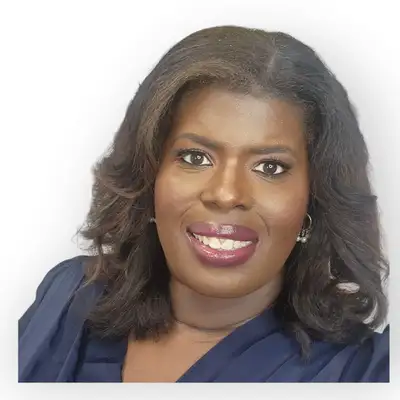
Passionate about modern feminist issues? Want to learn more about how today's political, academic, and cultural leaders strive for a future of universal equality and justice?
Join NOW in a podcast dedicated to intersectional feminist discussions in American society with leaders in entertainment, sports, politics, and science. From conversations on constitutional equality, to economic justice and reproductive rights, listeners will find new ways to learn, engage, and get empowered.
Listen for new episodes released every other Wednesday.
Bethany Brookshire [00:00:06]:
Hello, everyone, and welcome to Feminism now, the podcast from the National Organization for Women. I'm senior producer Bethany Brookshire. Our theme this season is protecting women in a hostile world. And one of the ways women often seek protection is through the power of the legal system. Unfortunately, society isn't equal, and that can mean that legal protection isn't equal either. Today, NOW's National President, Christian F. Nunes, speaks with Azaleea Carlea, the legal director of Legal Momentum, the nation's first and longest running legal defense and education fund for women, about the power and limitations of the legal system in protecting women's rights. Have you gone through the legal system in an effort to protect your rights? We'd love to hear your story. Contact us at feminismnow.org and now let's get to the interview.
Christian F. Nunes [00:01:01]:
Hello. Hello, everyone. I'm Christian F. Nunes, the national president of the National Organization for Women. And as you know, our theme this season is about protecting women in a hostile world. And I think a lot of us can resonate with this season so much because we really feel we're under attack. Many of us might see the legal system as one of the last best defenses of our rights. And yes, work in the courts has done a great deal to protect the rights of women. But we also have to realize right now we're also seeing so many of those rights being taken away and the court's not really doing sometimes what they need to be doing. Let's just tell the truth, Right? That's what we're seeing. So that's why it's so important for us to speak today to Azaleea Carlea, the legal director of Legal Momentum. NOW and Legal Momentum have a really close relationship and go a long way back. In fact, Legal Momentum began as the NOW Legal Defense and Education Fund, and it was founded by early members of now, including Betty Friedan and Muriel Fox. Legal Momentum became its own non profit organization in 2004, and we are so proud to continue to partner with them on so many important issues. So I am so ready for this conversation. Azaleea, we are so glad to have you here today. Thank you for joining us on Feminism now.
Azaleea Carlea [00:02:31]:
Thank you so much for having me. It really is an honor to be here joining you and I'm so excited for this conversation.
Christian F. Nunes [00:02:38]:
Absolutely. I really love the work of Legal Momentum and I really appreciate that it really focuses on women. So let's just start off today by you giving our listeners a little bit more information about Legal Momentum and the Legal Defense Fund for Women and what that actually means.
Azaleea Carlea [00:02:56]:
Sure. So as you know it, as I'm sure some of your listeners know, we started out as the National Organization of Women Legal Defense and Education Fund. And like you said, In 2004, we became legal Momentum, the Women's Legal Defense and Education Fund. And we are the first and longest serving legal defense fund for women in this country. So I feel incredibly proud and privileged to be part of this organization and to carry on the legacy and the incredible work that we've done together and the progress that we've achieved. But like you said, there's a lot of work that needs to be done to really protect and defend gender equality across the country. We focus on several pillars. We work on economic justice and economic opportunity challenges for women in the workplace. We work on combating gender based violence, furthering and advancing educational equity, and of course, the National Judicial Education Program, which fights gender bias in the courts.
Christian F. Nunes [00:03:59]:
Wow. So, so many important things. Can you tell us a bit more about the judicial part of the work that you do?
Azaleea Carlea [00:04:05]:
Sure. So in about 1980, our vice president, Lynn Hecht Schafran, started the National Judicial Education Program because she was witnessing and writing about and researching so much gender inequality in the courts and gender bias in the courts. You know, courts, judges, judicial staff, just were not getting it on gender bias and how it really has deep and profound negative impacts on how women are treated in the courts. And so she started this amazing national project. A lot of the funding was through federal funding, which of course we could have a separate conversation about, you know, in terms of what's happening right now and how it is in such jeopardy. But it was funded to educate judges and the courts and, you know, everyone involved in that system, law enforcement, prosecutors, on how gender bias is manifested and, and how it impacts women. And you know, what we've learned is that as a woman, when you're facing a judicial process, there's a very high likelihood of you not being believed, of being of being blamed. And you know, and that overlaps a lot with the work that we do on domestic violence and intimate partner violence, stalking, dating violence, all kinds of gender based violence. And I saw it personally when I was representing survivors. There was so much victim blaming that was going on. And unfortunately that is a trend that continues. And I think that we see it now in terms of the backlash to the movement and how it's so hard for women to come forward and to take on these systems that are not trauma informed and were not meant to really adequately handle these issues.
Christian F. Nunes [00:05:49]:
In my opinion, it's like toxic masculinity is so deeply ingrained in our culture that we even see sometimes, you know, everyone. Men and women, participating in the victim blaming of those who've been victims of sexual violence. And I think that makes it hard as long as we have, like, this system of toxic masculinity that's so strong and getting stronger every day with our current administration.
Azaleea Carlea [00:06:18]:
Yes, it is, unfortunately. And, you know, we're seeing it at the highest levels of government right now, as I'm sure that you and your listeners and all our. All our partners and advocates, anyone, really, who's paying attention to what's happening in the news, really, anyone that is following just the horrors unfolding every day, will see that we're living in a moment now where it seems that it's almost a requirement to be an abuser in government. Maybe that's coming across as harsh, but it's true. I mean, we have someone in the highest level of government in the White House right now who's been adjudicated to be an abuser, you know, committed sexual offenses. We have people in his cabinet that have had longstanding, credible allegations of misconduct. Like, Matt Gaetz was out, because even his supporters were like, wait a minute. This. This guy is a little.
Christian F. Nunes [00:07:10]:
This.
Azaleea Carlea [00:07:11]:
A little problematic. We even have, you know, RFK Jr. And Hegseth. These are not the people that I think we want to trust, that we can trust to uphold the protections that they are tasked with enforcing and upholding.
Christian F. Nunes [00:07:25]:
This is such a great point that you're bringing up about, like, how can people trust this system when the system. I'm gonna straight point it out. Most marginalized communities, women of color, women with disabilities, they face even harder opportunities to get justice. Could you talk a little bit about that?
Azaleea Carlea [00:07:44]:
Absolutely. And it is well settled that underserved communities like women of color, like LGBTQI individuals, like immigrant women, they're already at the margins. They are already underserved, and they are not getting the outcomes that they need from these various systems. You know, there's so much bias in policing. There's bias in prosecution. There's bias even in health care and in education. And so it is a fight. We have to continue to fight. You know, one thing that I will say is that despite all this harmful rhetoric that's coming out of this administration, the law is still there, and the law can still protect us. And the people that came before us did not go through this so that we can just, you know, sit back and roll over and say, fine. You know, we stand on the shoulders of all these Amazing advocates and trailblazers. Whenever I'm having a hard day and I. And I'm sure that people are having a hard time right now. And I get it. I completely understand. Like, it's very easy to feel disillusioned, and it's very easy to feel that our country and the ideals of this country are slipping away from us. But we have to remember, and this is what our staff and our team, we really come back to our mission. Like, we were founded and so many of our advocates and partners and coalitions that we're part of were founded because we. We saw that there was such a need for advocacy and such a need for resistance, and we have to continue that fight.
Christian F. Nunes [00:09:15]:
Absolutely. I want to talk a little bit more about what the legal system can protect and what limits are there in the legal system with protecting women and why we still see these limits in 2025.
Azaleea Carlea [00:09:30]:
Well, the legal system, for all its ideals and for. For what it can do and all its potential, is still a product of white supremacy. It is still a product of a system that was not designed and set up so that women can succeed or marginalized communities to succeed. We have been fighting just to access those systems for so long. Women didn't even, like, get to go to law school, really, and have opportunities. They didn't get to engage in these systems until, you know, not so long ago. I mean, women weren't even able to vote until, you know, a hundred years ago. So we were not meant to be included in this system. And when you have so much inequality and the harmful legacies of this country informing our systems, of course it makes sense that it's not going to be the solution or the dream that it could be.
Christian F. Nunes [00:10:25]:
Women and women allies have fought so long to try to get us to a place that we could finally get these limitations removed, you know, and get protected and have equity in services. But now we see that we are just feels like we're just regressing so far back to the place where they really don't want to give women any protection or even any rights at this point. I mean, what do you think about that? This type of, like, erasure that's happening with women and our right for protections?
Azaleea Carlea [00:10:54]:
It's shocking. It is. It's devastating. I mean, I can't find. I can't find the words to express just how gutted, you know, we feel. But, like, especially when it comes to, you know, reproductive justice and economic justice, we have all these ideals in this country of individuality and freedom and equality. But you Know, the Truth depicts a vastly different story. I mean, when you have like almost half of this country living under health care bans or healthcare restrictions, you know, with like severe, severe limitations on a person's ability to have just the basic bodily autonomy, you know, unless and until we have basic bodily autonomy, we are not free. You know, again, no, it's true. Unless and until one can control what happens to their body, right. It doesn't matter, you know, how, how much opportunity there is in, you know, education or the workplace or if you're a CEO or if you are a top leader or if you're a Christian. Nunes, you know, it doesn't matter. Unless and until like you can determine what is going to happen to your body and when and when and if you are going to become a parent or have a child or not have a child. Unless and until we make basic decisions about our bodies, we are not free. And unless and until, you know, we don't have a gender pay gap, we are not equal.
Christian F. Nunes [00:12:24]:
Absolutely.
Azaleea Carlea [00:12:25]:
Unless and until we eliminate these, these systems that allow the perpetuation of gender based violence and underserved communities, women, people of color, immigrants, second class citizens, we are not free, we are not equal. We are not living up to the ideals of what this nation prizes and represents itself to be. So that is, I think where we really have to double down and triple down on our efforts to ensure that everyone across this country has the right to make decisions, right, about their lives and their bodily autonomy and just to.
Christian F. Nunes [00:13:01]:
Be treated as like full persons. Right? Because it's so much like, you know, peace mealing, segmenting of people where we are not even looking and honoring them as a whole value person anymore. And I want to bring up a case that I know Legal Momentum is famous for working on, that I think resonates with what we're experiencing right now. But first before we do that, we're going to take a quick break to do our action now. Friends, the fog of misogyny these days is so thick I can't even breathe. Laws are being passed against our inclusion. The new campaigns against diversity, equity, inclusion target women and people of color the most now will not stand for that. That's why we are proud to launch a Disrupt now campaign. It's a nationwide movement to increase awareness of the anti feminist policies that are being put in place across the country. It's also a movement to identify and empower the next generation of feminist leaders and people who will help keep our democracy safe for women, girls and all of us. So go to now.org and click on that button that says Disrupt now to join us in our movement. And finally, listeners, before we go back to our interview, I hope you share the show, send it to others, and add to our movement. Thank you so much. And now we're back to the interview with Azaleea Carlea from Legal Momentum. There is a case that Legal Momentum is very well known for, one of historical landmarks and advancements, and this is the case of Sessions versus Morales Santa in 2017, where the Supreme Court ruled that gender based differences immigration law, which they were trying to make it harder for fathers to pass a citizenship to their children, was unconstitutional. And can you talk a little bit about that case and then how that this kind of resonates with what we're seeing right now, with this birthright citizenship that administration is trying to bring back up?
Azaleea Carlea [00:15:20]:
Well, I can't even believe we're having this conversation. You know, it's, it's a matter of basic constitutional law, right? And this is because the Constitution, the framers were very clear that birthright citizenship is guaranteed in the Constitution as a right. So if you are born here, you are a citizen of the United States. And this was in order to ensure that formerly enslaved people who had no rights or were not considered people, they were born here. They were American citizens. And to see what this administration is doing and how it's weaponizing and using this really harmful, vindictive language around the invasion that we are supposedly going through right now as a country by people trying to escape persecution and violence and economic injustice and coming to America just for the opportunity, the beacon that America is supposed to be. And the fact that this was already struck down as unconstitutional gives me some hope to realize that our systems are still in place, the law still exists, and there are courts and systems that will uphold, hold truth, and truth still matters. And when we have leaders who are trying to subvert the truth and trying to make the truth into something that serves only their perspective, that's called fascism, endotalitarianism. And I can tell you from my own personal experience, you know, I grew up in a communist country. I grew up in Romania. It was a totalitarian dictatorship. I, you know, Nicolae Ceausescu, and I remember my parents and communities at the time being afraid of the government because you never knew what the government was going to do and what it was going to say and how it was going to race people and how it would, you know, completely dismantle and disappear the truth.
Christian F. Nunes [00:17:18]:
Right?
Azaleea Carlea [00:17:18]:
And this was a government that banned contraception, banned Reproductive rights, banned abortion, and it, it completely took away people's liberties. And I don't want to get too fatalistic here, but I see what's happening in this country. Like, we're slowly starting to take that walk down this very, very scary road. When you have someone that's saying what the truth is, that just benefits their perspective when it's absolutely not the case. And so everyone that's listening, like, we're not crazy. The situation is, Mimi, you know, it's crazy.
Christian F. Nunes [00:17:59]:
But it's also like, we have to be honest too, that he's not bending the truth, he's just rid of lying.
Azaleea Carlea [00:18:05]:
It is lies. Yeah.
Christian F. Nunes [00:18:06]:
And part of the strategy was to remove fact checking because he knows that being this constant tinge of disinformation and lies is affecting people, you know, and, and I think part of the problem I see right now in our country is that people are being so focused on their own individualistic ideas and interests that they're willing to like, sacrifice. Well, they don't even care, I guess, is really the way to say it, because they don't care that women are being abused, that women don't have bodily autonomy, that women are facing more domestic violence. They don't care. They don't care that you're creating inhumane treatment to immigrants, Black and brown immigrants, more so than any other. But all of them, I think they just don't care because they're so vested in their own interest right now. And it is a really scary, scary place to be. And, and it questions you to wonder, you know, what ways can we help the rights of women and in what ways are legal men in helping the rights women in this place that we're at right now?
Azaleea Carlea [00:19:08]:
It is a very scary time, Christian. It is. You know, we've heard this so much like we're living in an unprecedented times, and it's just getting more unprecedented and more unprecedented. We're in a constitutional crisis. You know, we're, we're just at the, the five year anniversary of the COVID pandemic. We've seen wars happen. We've seen this just like you said, just constant misrepresentations, lies coming out of this administration. I think we have to stay strong. I think we have to educate ourselves. We have to educate our communities. And that is something that we are poised to do. We're going to lead on continuing to educate communities across the country about their rights that still exist. You know, the laws still exist, and we are going to really amplify those efforts and get people to understand that they should not be believe the BS that's coming out of this administration and the harms that that they are actively doing. I mean, one of the things that we have done is joined various amicus briefs on, on various issues, one of which was the EMTALA case, the Emergency Medical Treatment and Labor act, which was a, a law that was passed under the Reagan administration for Republican administration, which just said to hospitals who are patient dumping people because they didn't have insurance that if you had an emergency medical condition, you had to get treatment for that emergency medical condition. And just the fact that the current administration just withdrew that lawsuit against Idaho and said we're not going to pursue this is really sending a message to pregnant patients that they are second class citizens. Like it is literally saying, well, you don't deserve the protections of this federal law. And what's really concerning is that RFK Jr. During his confirmation hearings was unfamiliar with what EMTALA was. He did not know this basic protection that exists in the law, which I might add is our country's only guaranteed right to healthcare in this country. So that is in jeopardy. Then you have the fact that he can make decisions about mifepristone and how if that will continue to be accessible to people across the country, that is really concerning. And so we will double down on our efforts to educate and to remind folks that we are here and we are going to get through this together because there's really no other way.
Christian F. Nunes [00:21:30]:
Absolutely. So one question I do have is I know you have a hotline and I we refer people to this hotline all the time and I think it's really helpful because we know like legal jargon and the court system can be very scary or confusing for people. Can you tell us a little bit more about how the hotline steps into this place?
Azaleea Carlea [00:21:51]:
Sure. So we operate a helpline. It's a national helpline. People can call and get advice and information about various legal issues that they may be facing. And I will say as a side note about our helpline, we have partners that receive federal funding that actually had to remove the links from their website that refer people to our helpline because it is the gender equality helpline and people are so afraid right now and are being censored. And since we have the word gender in our helpline and in our mission statement, people are very scared. But I want people to know that we are still here. We will still take your calls and we welcome your calls and we are here to help and provide any information and support, advice that people may need because we do get cases that way too. We have several cases right now that came from the helpline that involve representing survivors of gender based violence in discrimination, claims in employment arising out of their status as a victim. So, you know, it is, it is active, it is still up, it's still operational. And we encourage people to call if they have questions.
Christian F. Nunes [00:23:00]:
And thank you all too for just holding strong to your commitment, you know, to gender justice and women's rights and not wavering on what we're hearing coming from the administration. Because unfortunately we're seeing some organizations that victims, people have trusted start removing their language as well. And I, I just feel like everyone needs to take a step back and stop because that is breaking the trust, you know, and that is jeopardizing the integrity of the organization when we only were so quickly to move in fear. So thank you all for holding to it.
Azaleea Carlea [00:23:34]:
Of course, of course. And we understand that people are afraid right now and that that's what's behind this. But this is an effort to silence right advocates, silence survivors, silence, our most marginalized communities. And you know, that's, that's what dictators do. And now is the time more than ever to reach out and get involved in your local communities and local advocacy organizations and really step up because, you know, this fight is far from over. And this fight, while it seems to be an uphill fight, we will prevail. Because I don't think that the American people or anyone that cares about equality and equity and justice and really the, the ideals that this country holds so dear is going to sit back and let this happen.
Christian F. Nunes [00:24:23]:
Yes, absolutely. Oh my goodness. I have so many other thoughts and questions I could go on for. But before we do, we always like to end with just something that we could tell our listeners and you just provided us some like, you know, getting involved and things like that. But for those who might actually be experiencing harassment or violence or any type of injustices, what is something we can tell them or if they know someone who's experiencing that, to make sure that they are protecting themselves and their loved ones in this time.
Azaleea Carlea [00:24:52]:
The first thing is you are not alone. Help is available, resources are available. I mean, we have so many resources. For example, just on our website, we're constantly updating those and we're issuing new guidance as things change and evolve. So the first piece of advice would be just to educate yourselves and educate your communities and your family members. That is key. And just to contact us and stay engaged with us, stay engaged with our work, sign up for our newsletter and realize that we have your back. We're in your corner.
Christian F. Nunes [00:25:24]:
Thank you so much. Azaleea Carlea, the legal director of Legal Momentum. It's just such important information you share today. I think it'll give some listeners some peace that y'all are still there for us, you're still fighting, and that you recognize what's constitutional, what's unconstitutional, and that you are not backing down. I think this will give a lot of listeners peace. So thank you for coming on and sharing. Is there any way that you can tell them how they can get a hold of Legal Momentum as we're ending the show?
Azaleea Carlea [00:25:50]:
Just go to our website, legalmomentum.org you'll find out about ways you can get involved, the resources available, the helpline, everything's there. So please check us out and contact us and stay engaged and we have socials. You can engage with us that way, follow our content and and just, you know, reach out anytime. We are here.
Christian F. Nunes [00:26:11]:
All right, thank you so much. And on that note, we will see you in two weeks. Thank you for joining.
Bethany Brookshire [00:26:19]:
Thank you so much for joining us on the podcast this week as we talk about how the legal system does and doesn't protect women's rights. If you learned something new, why not share this episode with your friends? Please like and subscribe to the show. You can also send us your thoughts and questions at feminismnow@now.org head to now.org to read up on NOW's core issues and our approach to advancing women's equality. Together we can make a difference. Thanks for listening and we'll see you soon.