Subscribe
Share
Share
Embed
Where bold conversations meet Black excellence. Black Business Live (BBL) Podcast is a live, immersive storytelling podcast spotlighting the journeys of successful Black entrepreneurs, creatives, and business leaders who have scaled their companies and are committed to helping others rise.
Born out of a deep need for community, strategic partnership, and authentic representation, our podcast goes beyond traditional interviews. Each episode features accomplished leaders who exemplify Black business excellence.
BBL Podcast is part of the Black Business Network, a peer-driven platform where entrepreneurs connect, collaborate, and grow, all housed within All Things Black and Beautiful (ATBB), a social enterprise focused on business education, market access, and sustainable growth.
Our podcast bridges the gap between knowledge and transformation, showing that real growth happens through visibility, connection, and proximity to those who’ve done it before.
Tune in to be inspired, informed, and empowered.
You don't have a money problem. You have a relationship problem. And I don't think business owners see it that way. I see nonprofit leaders who don't. They're so busy doing the work that they don't recognize relationships can accelerate what you do.
Dr. Froswa:Because you can then pick up the phone and call somebody versus you having to do everything. You built a network of people who can help you grow your work because they got wisdom and knowledge. And there are all these different types of social capital. There's informational capital, where somebody who has all this information, you want to be next to them because they can help you with their knowledge. There's favor capital where it's people that have hookups and I can help you with tickets to a game.
Dr. Froswa:You know people like that that they always seem to have those kind of resources. There are all these different types of capital. It's currency and I don't think we pay attention to that as much in our community because we get so focused on the financial piece. You get the right relationships because money is not operating in isolation, it's operating with people. People have access to money.
Dr. Froswa:And so you get the right people in the room, you'll be able to influence that hopefully to get what you need, but you gotta build relationships with folks. And that's what social capital is about.
Tolu:Welcome to the Black Business Live Podcast where we amplify black innovation, culture, and excellence. Our belief is that representation drives aspiration. And when you see people who have walked the same journey as you have, that opportunity becomes easier and more attainable to achieve. And that's why we're always delighted to bring extra special guests to our show. And today, we have an incredible lady, incredible woman.
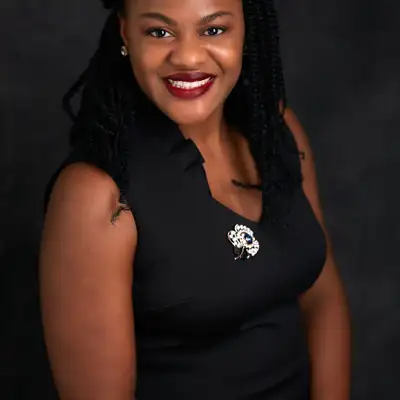
Tolu:She has navigated over thirty years in the philanthropy space. But not only that, she's a nationally renowned and acclaimed speaker and visionary. She is doctor Francois Boukadu Drew, who is also the CEO of Sources Consultancy. She was once the VP for community engagement at the State Fair of Texas here in Dallas. But not only that, she has she has done a lot of literary work.
Tolu:Doctor Froswell has written many books, one of which which is the award winning Front Porch Front Porch Wisdom. This book has already had had its own acclaim, and it's the most outstanding book. Right? The twenty twenty six most outstanding book. You can agree with me that doctor Froswa has many coats, and she wears a coat of many colors.
Tolu:And today, we are going to be digging deep into the conversation with her. So welcome, Doctor. Francois.
Dr. Froswa:Thank you for having me. That introduction, I'm like, wow. Wow. I wanna be like whoever that lady is. Oh, thank you so much, Tolu.
Dr. Froswa:I'm honored to be here with you today.
Tolu:It is a pleasure. Like I like I was saying earlier, I've been so excited dancing. I'm like, I'm gonna have that paparazzi on the show. Just because your the ethos of your of your message, it it cuts across many aspects that that affects black enterprise, black business ownership, and the community itself. And then I also know your work really focuses a lot around women in leadership.
Tolu:So, obviously, that speaks to me and it speaks to many women out there. So thank you once again for for coming to share with Thank us on the
Dr. Froswa:you.
Tolu:And and let's let's jump straight into it because we have plenty and plenty and plenty of things to cover. I wanna start with your leadership journey. Right? Because one of the things that you really talk about is being the only and navigating that only as a leader. What has that been like, and how has that influenced the content that you have?
Dr. Froswa:That's an awesome question because don't think many of us recognize the weight that you carry. You know, you hear the slogans of the crown is heavy. The weight is very heavy and hard. I remember starting out even in school and being in environments where it was so few, you know, black students and in some of my classes, even in college I remember, you know, sometimes feeling like I represented the entire group and that's a weight to carry. So it's not only the collective weight of representing your entire community.
Dr. Froswa:And I remember my mother would always tell me, you gotta be 10 times better. So you've got that weight that you're responsible for how you show up, so you wanna be a good representation. But then there's the internal weight of, oh my goodness, what if I fail? What I've learned through that process is one, I don't have to be responsible for me and the entire group of people, I just have to show up in the totality of who I am and that's enough because God says that's enough. But I also learned that I needed community, that I couldn't do this work well without having a support system.
Dr. Froswa:So whether that was my family, whether it was my very close friends who were there, or whether it was professional friends who were mentors and people that were sponsors who said my name in rooms that I wasn't That community shaped me and helped me even in some of the darkest and most difficult times, there were people walking with me where I didn't have to do it alone. I think about the footprints analogy where you see these two footprints that are starting, or four that are starting, and toward the end, it's only two. And throughout so much of it, it's been God carrying, at least for me, that's been my story is God has also been carrying me along with this cloud of witnesses who've been there to support me whether they're, you know, folks that have passed on or the people that are with me now. And without that kind of support, I couldn't have done it.
Tolu:Yeah. And and you you talked about something that so profound because community in our community, we talk about leadership figures. Right? We talk about representation. We talk about signposting.
Tolu:But at the same time, we almost have a mission to create our own community for those that are coming Oh, yeah. Behind. And in your book, you talk about that quite profoundly when you talk about the multigenerational nature. Yeah. Right?
Tolu:Because you said those that have come before you, then those, you know, God carrying you, but also God speaking through others as well. So tell us a little bit more about that, the multi generational legacy Yeah. How it works.
Dr. Froswa:You know, I I don't think we recognize the power of legacy. And I think we often think about that as we're getting closer to dying. And the reality is none of us know when that's gonna happen, So, it's being very intentional about making sure that the work that you do and the vision that you have continues. So, for me, it's been working with, you know, amazing young women, I often tell a story about Bivens Meshesha, and Bivens was a young woman, family came from Ethiopia to this country and she went to school here and saw me at a conference and had one of her friends come up and say, she wants to meet you and I said, well tell her to come up. And what she thought was I was just gonna go, great to meet you, we're done.
Dr. Froswa:And I was very intentional about learning what she wanted to do and bringing her in. Bivens ended up working for me at World Vision, I brought her to the state fair and what is so amazing is, she's now VP of Girl Scouts of Northeast Texas. Oh. Big time. I'm so proud of her.
Dr. Froswa:But what's crazy is she hired me to be a consultant to do work with her organization and with her. And how does that happen where this young woman in her thirties brings her former boss to work for her? And I'm elated, I'm thinking, oh wow, I get to help you shine, she was so critical in helping me look good, I could never do the work that I've done without her and others. But that's such a testament of what happens when you mentor and when you pour into others, that they see value in you and that they wanna continue to be around you. And so, I was honored for the time that God allowed me to walk with her, that it allowed her to be the woman that she is, and I take a tiny role because her family and other people have been so instrumental, but that's one of many examples.
Dr. Froswa:My daughter is another one. The fact that my daughter would come from college and go, mom, I wanna work for you. How many young women go, I wanna be in your presence beyond just being mom and that I value you, that I wanna learn from you. And so for me, it's planting these seeds and making sure that I'm passing on this work because I don't expect to do this forever. I know that God will call me to do other things and my work will evolve, but for the work that I'm doing, I want to make sure that that vision continues and that means that I got a mentor, I got a sponsor and say their name in rooms they're not in, and making sure that I'm opening doors for them so that the work continues and that whatever God has called them to, that they grow and evolve and I get to play a tiny role in helping them be whatever it is that God wants them to be.
Tolu:Well, thank you so much, doctor Francois for talking about that, and for passing the torch on. That is so profound because sometimes we business owners think about, I'm in this to make money. I'm in this to earn a living. I'm in this to build my own legacy, I suppose. But you are talking about something that is beyond that.
Tolu:Right? You're talking about the seeds. Yeah. Planting the seeds and where the seeds can lead to. Yeah.
Tolu:You just never know how it's gonna germinate. I remember you told me a story about your father and how somebody else, I think,
Dr. Froswa:from My the family cousin. Tell My us about dad was a business owner, had his own restaurant, and I don't think my dad saw what he was doing for me and my cousin because I saw him hustle. And so, I learned very early because I started working in the business, I think he opened it up when I was like 11.
Tolu:Mhmm.
Dr. Froswa:And I remember spending my weekends and my evenings after school working with dad and mom at the restaurant. And so, so much of my teenage life was working there and helping them build a business. And my cousin, fast forward, you know, I go see him, he's a barber, amazing shop in Shreveport, Louisiana. And I walk in, he's got a picture of my dad on the wall, my dad has been deceased now for a little over twenty years, and he's got a picture of dad up and I'm like, oh my goodness, because he was such a little boy.
Tolu:Yeah.
Dr. Froswa:And dad would have him over with his brothers and he'd be at our house playing, and I did not realize that he was watching my dad and that inspired him to be a business owner and he's done well. And we were both talking about how that rubbed off on us. Mhmm. I don't think business owners recognize it's wonderful to make money, beautiful thing. But my grandmother used to say, when your hand is held like this, nothing can get in.
Dr. Froswa:And so, I've chosen to be the kind of person that if my hand is open, not only can I get things in, I can also give things out? And the more that I am willing to give, the more God is able to bless me. When you operate from a scarcity mindset, it's only so much that you will be able to do. But if you truly believe that God is a God of abundance, then you gotta know that that is a part of your journey too. But you've gotta live in a way that says that it's not just about money, it's how you give your time, it's how you give your testimony, it's about how you use your talent to help sowing to people.
Dr. Froswa:And my dad, without even realizing that, was dropping all these seeds to help us think even bigger than he did.
Tolu:Yeah. So he was inadvertently signposting. He was signposting, he was saying, look, look how great it is to be a business owner and I'm sure your cousin would have picked up one or two things even the way he speaks to the customers or the ledger or whatever. And and look at it now, he's his own business owner and he's got his role model right there. And know sometimes for black business business owners, you may not see that role model.
Tolu:Yeah. For for instance, I'm I'm not from here. Right? And when I came to Texas, I had to find a community. But sometimes, even where you are, where you may not have the community of people who look like you, you can have role models from outside.
Dr. Froswa:I guess.
Tolu:But also you can be that role model in the way in the you are doing, how you're doing business, how you're hiring, who you're mentoring, as you rightly said, and how you're paying it forward for the next generation.
Dr. Froswa:Yeah, it's just as simple as how you treat people. Yes. You know, my daughter and I were talking about that on the way here, about character and integrity. And I pay attention to how people treat even janitors and the secretaries, because that's an integrity issue. Mhmm.
Dr. Froswa:So how do I expect God to blow up my business when the very people around me that he's called me to steward, I mistreat and don't treat them well. Yeah. So, it seemed that everything you have a responsibility for and not necessarily being responsible for it, but the way that you carry yourself and the way that you treat people. And I believe that when you, you know, manage those things well, the door is open for you to manage and be over so much more. And that's scriptural to do that.
Dr. Froswa:And so, as business owners, even if you don't have the community to your point, how do you build that by starting with you? And I believe you attract who you are, so if you're a good, kind, loving person, I believe that you're gonna attract more of that into your space. If you're not so much, you'll get more of what you are. So how do you become the person that people want to come to, want to learn from? You gotta be it.
Tolu:Yeah, you gotta be. You gotta have your hands open. You gotta be ready to embrace others as well. Yeah. And and that is a core part of your work in philanthropy, isn't it?
Tolu:And organizational well, not just organizational, but community transformation. Yeah. So so let's talk about that a little bit because usually when people talk about philanthropy, they're thinking, I'm giving money.
Dr. Froswa:Yeah.
Tolu:I'm giving back. Yeah. Well, I don't even have to give back. I don't even have a profit. Yeah.
Tolu:So what can I give back? Let's talk about that and let's talk about let's break philanthropy down beyond just the giving back of your time or the creating of networks. What is the ROI?
Dr. Froswa:Yeah, that
Tolu:What is the ROI?
Dr. Froswa:Philanthropy, really, you know, core definition is love of humanity.
Tolu:Mhmm.
Dr. Froswa:And it is, I care about people, so I want to see them well and successful. And it doesn't have to be money, that's a wonderful thing to do. We started Halima Francis and Akilah Wallace started, and Akilah was her idea to start this black women's giving circle called Heritage in 2017, and it was pooling our money together, we weren't millionaires and I think that's been the problem with the term philanthropy, it's been co opted to believe that it's something that you gotta be a very wealthy multi millionaire to do it, and it's not true. And we took our money, you know, and people were pledging and and we would do $500 for some women and a thousand for others who wanted to vote on who got the money. But people were pledging $50 a month be able to to be a part of this and it taught me just by witnessing that, that philanthropy is so much more than, you know, I have to be responsible.
Dr. Froswa:It can be collective that a group of people come together and say, I wanna do something to bless my community. But it's even more than that, we started giving time mentoring. It was just women going, hey, you got a non profit, I've been doing fundraising, let me help you and talk to you and walk with you. So, that's a form of philanthropy. Your testimony, when you tell people how you did something Mhmm.
Dr. Froswa:And you're helping them with knowledge, that's a powerful thing to give to people because you're using your knowledge and using that to open a door for folks. All of those are part of philanthropy and it doesn't have to be again, this huge check writing, it's just the willingness of your time, talent, treasure and testimony.
Tolu:Absolutely. And as you rightly said, when you do that, it always comes back.
Dr. Froswa:Always does.
Tolu:It always comes back because you are, they are planting the seeds. The seeds will become trees one day.
Dr. Froswa:They do.
Tolu:And those are the trees you'll lean on when you're tired. Yes. Yeah. When your energy fades away, that's where you get the shade. That's where you get the strength.
Tolu:That's so good. Right?
Dr. Froswa:Because I tell young people, I joke with them, I go, the day is gonna come that y'all are gonna have to take me out to eat. And I got a bunch of y'all that I can call and go, I'm hungry, let's go. Because I planted these seeds not with the expectation for you to do something, but with the expectation that you will be a better person and do it for somebody else. And if I get blessed by that, what a gift. But my goal is to do it because it's just the right thing to do.
Dr. Froswa:But you're right, it's really thinking about the legacy of knowing one day we're not gonna be able to run as fast as we can, we're gonna need support. So how are you building that system now to make sure that the work, that the life, the love that you have continues through others?
Tolu:Yeah. Yeah. That has made me pause to think for a minute because you know, All Things Black and Beautiful is a nonprofit and I remember several years ago when I was looking at just self development. I I went for a board training program, and most of the people there, 80% of them, were looking to become non executive directors of whatever for for profit organizations. But I was very clear.
Tolu:Was like, well, I wanna see what it's like to be on on a nonprofit board. Yeah. And, you know, circle back, now we have a nonprofit organization. Now I've also seen many people who have gone into boards, nonprofit boards, because they just want a name on their resume.
Dr. Froswa:Lot of that too.
Tolu:And and sometimes it's like, oh, you know, what if what are you getting yourself? And this is a labor of love. It is. It's a labor of love. You're going to pour into others.
Tolu:So if you're not ready ready as an individual, and you've done that inner work, and decided what portion you're gonna pour into others, you're just gonna go in there and make mockery of yourself, essentially.
Dr. Froswa:And, you're gonna harm good work. Yeah. I see that all the time too, where you see people who get on board for motives that aren't always very And it's okay that you wanna, you know, go there and meet people, but if you don't have a passion for the mission, and you're not committed to the work that folks are doing in this organization, you're causing more harm than good because you're actually taking up a seat for somebody who really wants to be there and do good work. And so, I see that and it drives me just batty. I serve on a number of boards and I'm co chair of four O'Cliffe, and I've been in that role for for a little bit, and it's a job.
Dr. Froswa:It's not just me going, I'm you know, chair of the board, it's work, I'm reviewing financials constantly, I'm having conversations with the executive director and you know, his number two and making sure with property acquisitions things are where they need to be, it's a lot of work. But I recognize that in doing that I'm helping them grow and I have to be committed to this work and it's more than title. And I think for a lot of people we get so caught up in titles and I tell young people this all the time, put your head down and just do the work. Let the titles go because the bible says God gets promotion.
Tolu:Yeah.
Dr. Froswa:So, if you do what you're supposed to do, doors will open for you, but you gotta have the right heart and motivation
Tolu:and intention. Yeah. It doesn't come from the East or the West. Only comes from god. It only comes from god.
Tolu:And let's let's look at that a little bit. So, you know, you have a young person, you know, or someone in business, doesn't have to be a young person, they're considering serving on the board. And all well and good, you are gonna meet people, you're gonna network. But what you're talking about here is social capital. Yeah.
Tolu:And social capital does not necessarily have to be a transactional thing. Oh, absolutely not. Tell us about that.
Dr. Froswa:Yeah, that is my thing, my research is on social capital and it's really about networks, associations, relationships, it is a form of currency and I don't think business owners see it that way, I see nonprofit leaders who don't, they're so busy doing the work that they don't recognize relationships can accelerate what you do. Mhmm. Because you can then pick up the phone and call somebody versus you having to do everything, you've built a network of people who can help you grow your work because they got wisdom and knowledge, and there are all these different types of social capital, there's informational capital, where somebody who has all this information, you want to be next to them cause they can help you with their knowledge. There's favor capital where it's people that have hookups and I can help you with tickets to a game, you know people like that, that they always seem to have those kind of resources. There are all these different types of capital, it's currency.
Dr. Froswa:And I don't think we pay attention to that as much in our community because we get so focused on the financial piece. And I tell most of the non profits I work with, you don't have a money problem, you have a relationship problem. You get the right relationships because money is not operating in isolation, it's operating with people. People have access to money and so you get the right people in the room, you'll be able to influence that hopefully to get what you need, but you gotta build relationships with folks, and that's what social capital is about.
Tolu:Yeah. And also for leaders as well because many people think leadership is is only directional. Right? Yeah. That's the only form of leadership that exists.
Tolu:But for people to want to follow you, even if you're an entrepreneur or you're just a community leader, they've gotta like you. Yes. And trust you. And trust you.
Dr. Froswa:Yeah, it's
Tolu:true. Right? And how do people build trust? You build trust Yes. By doing,
Dr. Froswa:like Yeah, and being good to people. Being
Tolu:good to people.
Dr. Froswa:Showing up, being consistent, being a person of your word. You know, people say a lot of things, but I watch what people do. Right. And so, what you say has to line up with your fruit, and if your fruit looks very different, you're talking all this Godly, I know some people now, they're always quoting scripture and saying things, but the way they treat people and they use people and they're only concerned about their own visibility and they don't want to put other people on when they get opportunities, they're always just focused on them. I'm looking at your fruit and going, well, it's more about you than how you're creating space for other people and this is the thing, there's enough out here for all of us to grow.
Dr. Froswa:Yeah. There's enough space for all of us to shine and so, those are the things that people don't realize in leadership is, it's not only the management of other people, it's the management of you. And if you're not willing to manage yourself and do the deep hard work of looking at the shadow self, and the things that no one knows about you, only you and God know, that you're not willing to dig into that and begin to start working through that, you're gonna be harmful to other people and it's not that you ever get perfect, I'm not there. But it is this constant desire to be better and to constantly work on those areas that aren't always the best, because I know if I'm not aware of them, then I end up causing harm to other people. There's a book that is by Amanda Sinclair and she talked about in it, about the two leaders of Enron and Worldcom, and she talked about these people had very horrible childhoods.
Dr. Froswa:And because of that, they rewrote a story, and because they didn't deal with their own demons, they ended harming other people. Woah. That's a And, good yes, and and what ends up happening for a lot of leaders is, they don't pay attention to the shadow side, they only pay attention to what the public sees, but they're not willing to do the private work to be able to lead themselves. Once you manage you and you're able to get you in control and have the discipline that's required, then you can be better and loving to people when you love you well. And not in this, you know, selfish way, but in this way of understanding how God sees you and how God made you and that God did that for other people too.
Dr. Froswa:When you're able to give yourself grace, you can give other people grace, but until you do that kind of work, you're gonna be so damaging to other people and I see this with non profit leaders, they go out and share all this about how they love their clients, but the very people that they're working with, they mistreat them and they're not good to them and honorable to them. So, what we say has to match what we do.
Tolu:Yes. And it has to it has to speak integrity. Oh, Even at the littlest, at the littlest, minutest level.
Dr. Froswa:Yes. Because God is paying attention to that, you know, there's a scripture that, and I'm paraphrasing, how do I make you rule of many many, when the little things that I've given to you, you haven't mastered well, and that's the people around you, it's the relationships that you have, it's building trust, it's being a trustworthy person, it's treating your family and your kids and your partners well. And if you don't do those things, how can God expect you to manage many? And you might, but it won't last. It won't last.
Tolu:Yeah. Yeah. It's it's it's food for thought, especially because we're at the onset of small business month. Right? Yeah.
Tolu:And it's incredible because the speakers that we've had in preparation for small business month and as we move out of national volunteering month have all talked about the one thing, leadership. It's that inner self. And you're going back to that so much. I'm like, well, God has a message. God has a message for the small business owners out there because we want to be go beyond being small.
Tolu:But beyond that, the seed for greatness starts from the inner self. And it's that inner self that needs to heal, that needs to be in control, that needs to deal with the childhood trauma. Once that's disciplined, as doctor Froshaw said, that is when the growth really starts in your small business. Thank you so much, doctor Froshaw for sharing that Thank with you. It's it's amazing.
Tolu:So let's now go to your book, The Front Porch. I when I was just reading about it, I I could just imagine, you know, a a lovely house with picket fence, the porch Yes. Maybe some nice white, you know, chair in front or a rocking chair, a little table, you know, music playing, you know, and there's a parent or a younger person and, you know You see it. I That is it. I could see it.
Tolu:I could see the front porch. Tell us us a little bit
Dr. Froswa:more That's about exactly what I wanted people to walk away with because when I was growing up in Shreveport, there were all these front porches and people would sit out on the porch and watch their neighborhood, people were talking to each other, you saw kids playing on it or getting their hair braided and there were elders and it's multi generational, you know, vibe that's happening, and we don't see those anymore. You know, many houses now, you just drive into your garage and you don't know your neighbors and the front porch was so critical to neighborhoods in terms of safety and knowing, hey, somebody's here that we don't know, in terms of building community. And I wanted to write a book that brought back the front porch in the sense of, you may not have one literally at your house, but you can create one figuratively. You can begin to start thinking about who are the people that I need to bring on my porch? Who are the people that I need to have as a part of my community?
Dr. Froswa:And start looking at who's missing. Because I think the environment that we're in is causing so much division and isolation, and what people are craving is not only hope, but they're organically desiring to be in presence with people. After the pandemic, you know, folks were just walking up to people just wanting to hug. Hug. It was just the desire for touch and community cause we miss that.
Tolu:Mhmm.
Dr. Froswa:You know, and I hated how they would always say, you need to socially distance, and it's like, no, people need to physically distance but people need each other, we were wired for connection and community. And I often think about the cross and how the cross reaches up to God, but it reaches out to
Tolu:people. People.
Dr. Froswa:And we have a responsibility, when God even created Eden, it was like He said, hey, I can't even, I don't want my animals alone, I want, you know, to create man, and man, I need you to have somebody. And God created all of this community because relationship is so important to God. And so that's the purpose of the book is, I'm hoping that it not only makes people think about who's missing and how do I build a front porch, but I wanted to bring young women to my front porch and say to them, all the stuff you're dealing with at work, all the challenges that you have, I may not have gone through exactly that, but here's my experience and I'm hoping by you sitting on the porch you get some wisdom and that by these case studies, this data, by the devotionals and the reflections, that it brings you closer to God and that you begin to see you're not by yourself. There's room on the porch.
Tolu:There's room on the porch and you may not have you may be the only person navigating that, but there's someone who has at least navigated something similar, isn't it? And the bible says that young men shall see visions, and old men shall dream dreams. The dreams and and and the aspirations and the and the and the future, the painting of the future that they probably won't see, but somebody else will will will run ahead of. Yes. That's good.
Tolu:Yeah. Amazing. Amazing. Well, well, let's talk about that in your own story. Right?
Tolu:Because we know your daughter is here in the studio. Yes. So how are you doing that, what are you doing differently?
Dr. Froswa:You know what I had to do, because in the beginning she would admit, it was challenging with us working together. I had to see her as a woman. Mhmm. And I think she had to see me as a woman and not as mom. That was one of the most powerful lessons for me even in my relationship with my mother.
Dr. Froswa:When I stopped seeing her just as my mom and began to understand her as a woman and the decisions that she made made more sense to me. It's like, well if I had been in your place, I probably would have done the same thing too. And understanding her context, you know, I think about a lot of the women that I had in my life growing up, they didn't have the choices and options that I have. So, they made different decisions that it's easy for me now to criticize, but if I don't look at their context and go, y'all didn't have credit cards until this mid seventies, you couldn't go get credit, you couldn't buy a house without having a man, you had to be in relationships that were dysfunctional to some degree because your economic status depended upon that and your ability to care for yourself and your children, it's different. And so, being able to understand that context gives you appreciation and value.
Dr. Froswa:And so, even me being able to share my stories with my daughter helped her to see me and go, I understand. May not necessarily always agree with it, but I understand and I think us having that kind of deepening to the relationship beyond me wanting to tell her, you should do this and this is how you live your life, but me looking at her as a woman going, I want you to be whatever God wants you to be, totally changed our relationship. And so, I value her not just as my daughter, I value as this woman that God is stewarding and allowing me to be a part of doing that.
Tolu:Wow. That is deep. That is deep. There's a lot there's a lot there to unpack. Thank you so much for for sharing that.
Tolu:So let's let's let's let's look at this for a different perspective. Now, let's look at the community, right? Because you're you're talking about building of society, transformation of society. But for that to happen, you've gotta build literally. So what is what is the one brick you think is missing that we can put back into our community today to create this ecosystem?
Tolu:And what would that one thing be?
Dr. Froswa:Connection. Connection. I think people are missing true connection. When you look at social media, it's so angry, and it's so divisive, and it's so desiring of being connected. What you're seeing, people see the hate and the betrayal, but they're not seeing, people are crying out going, I just, I wanna be seen, I wanna be heard, I wanna feel like I matter.
Dr. Froswa:And social media has given people this false sense of that, when what people really need is that in their own spaces. And so I think what's missing is this connection to self, it's this connection to each other, it's a connection to God. And when all of those are in alignment, you'll begin to start seeing it. I think we look for solutions outside of ourselves and I was telling a group this on Monday, you know, God asked Moses, what's in your hand?
Tolu:True that.
Dr. Froswa:And I think sometimes we're looking for the answer to be outside of us when the reality is, God has already put it in our hand. He's given us relationship, He's given us partnership with Him. It's there and I think we're looking for something so big to happen when it's right in
Tolu:our And sometimes it may be that relationship that you don't want to deal with. Mhmm. But if it's done right, that could be the blessing right there. The reason why it's a struggle is because sometimes there are things that need to be smoothened out and then the moment you're able to do the inner work and navigate that, it becomes its own blessing. Right?
Dr. Froswa:Well, and God had to deal with me about how I was framing things because I was seeing things as problems and what God was showing me was, these are invitations. And so, God is inviting us in these difficult moments, these are invitations where God is saying, you're having a problem with this relationship, I'm inviting you to do something different. And when I began to start seeing it that way that, oh my goodness, all of these things are invitations for my good and for me to be better, what a different way. Slayed me actually, it's like, oh wow, I've been looking at everything as being so problematic and bad. What are the invitations that God is calling to us in this moment of, you could do it different, there's a better way.
Tolu:Yeah. So, that's a message to our community right there. What are the invitations that God is bringing to your way to do it differently, to form that relationship differently, to see the relationship differently? Doctor. Frazier talked about seeing her daughter as a woman, not just her daughter that she has a responsibility for.
Tolu:What is that invitation for you today? I'll pause there, and I'll leave you to think about that for a minute. So, doctor Froswa, it's been such a blessing to have you here. I the conversation has has really blessed me in many ways. I mean, I I really liked what you talked about in terms of the inner work, and also what you talked about in terms of paying it forward and us seeing philanthropy differently because we can pull together.
Tolu:We can pull together. It's not just about, oh, yeah. I don't have to be a billionaire. I can create community. I can influence community for me to actually get the outcomes that that I desire.
Tolu:So thank you once again for sharing that with us.
Dr. Froswa:Thank you.
Tolu:Now in terms of what we we in our community, we always like to give back. We don't get a guest to come in and and then just walk away not doing anything. And one question I wanna ask you is, what would you like us to do for you? What is that initiative? What is that thing on your heart that you would like the community to contribute into?
Dr. Froswa:Find somewhere that you can give your time, talent or treasure. Find a non profit, for me that's the blessing. Mhmm. When you begin to start thinking about who in your community could benefit from your gifts, It could be you coming in and volunteering, if you've got marketing experience, there are non profits that need people to come in and market for them. How do you give your talent?
Dr. Froswa:That opens up doors just being available to do that. So that's what I need is for folks to show up and figure out, it doesn't have be a check, that's great, I would love that for a lot of these organizations, but I would love for people to be able to give their time and their presence, because we need that. For me personally, all I ask for people to do is just be the better version of themselves when you are the best that God has called you to be, that blesses me. Even if I never meet you, it makes the world better.
Tolu:Absolutely. Well, thank you so much. It's been such a great pleasure. So much so much inner work happening to me right now. Everyone's just listening here.
Tolu:But thank you. We appreciate all that, and we appreciate the blessing that you are in our community. Doctor Frozow, you are you are a legend, and you are great. You know, you're just an inspiration to the community at large. So thank you once again.
Tolu:I said thank you so many times, I can't even count. But it's because of the work that you're doing and having a voice like yourself in the community, cheering others on and saying, it's okay. You can do it. It's not that difficult. And and thank you so much for doing that.
Dr. Froswa:Amen. Thank you for having me.
Tolu:Absolutely. So there you go. We are back here at the Black Business Live Podcast studios, and we are doing what we said we'll do. We are bringing to you insights, expert information, not just telling you this is the way, but showing you how. So it's me again, Tolu, the host of the Black Business Live Podcast in studio with doctor Froswa.
Tolu:If you have any questions and anything you wanna share, please feel feel free to reach back out to us. We'll put our details on the screen as we speak. But thank you once again for joining us. Have a good one.