Subscribe
Share
Share
Embed
The top CPG podcast in the world, highlighting stories from founders, buyer spotlights, highly practical industry insights - all to give you a better chance at success.
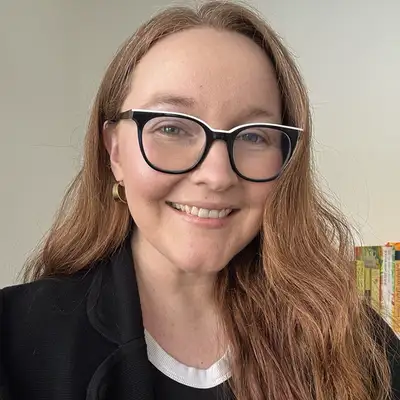
Jessica Assaf
I want people to see both the joy and purpose infused into the brand. I think more than ever, consumers want to understand the mission of the company, not just the product. What are the intentions behind the brand? Why did this company create this product and also just to create more joy in this world. That's part of the reason why I have gone into Candy now. Because the world is scary and sad a lot of the times and if we can create things that spark joy and nostalgia and happiness and connection, that is the biggest win.
00:47
Caitlin Bricker
Hey everybody, this is Caitlin Bricker, Managing Editor at Startup CPG. We are back with another founder feature. Today I'm talking with Jessica Assaf of All Natural Flavor, a brand new candy brand on the market that's backed by a real purpose. Joy. Yes, joy. But being an entrepreneur isn't all rainbows, butterflies and honey bears. Sometimes the brand you've built gets stalled by a global pandemic after getting millions investment and could be giving you all the signs to just give up. That's what happened to Jessica after building and launching high profile CBD brand Prima into stores like C Sephora, Erewhon, Vitamin Shop and many more. But she hasn't stopped. In fact, she's been fueled to keep going. Jessica is a self described professional pivoter, nationally recognized and award winning entrepreneur and without a doubt a founder that should be on your radar.
01:40
Caitlin Bricker
She first got on mine about 10 years ago after starring in Sean Penn's documentary the Human Experiment focusing on toxic ingredients and personal care products. If you're listening, you're in for a real treat. I hope you take your headphones off. Feeling as inspired as I do by Jessica's resilience and the power to keep pivoting and keep building. If you're looking to connect with buyers, investors and industry experts in real time, you need to be in our community. Join our Free Slack community with over 40,000 members. Get access to exclusive events and trade shows where you can meet buyers and investors in real life and tap into free resources and more. Text CPG to 833-605-7002. That's 833-605-7002 and we'll get you hooked up. As always, enjoy. Hey everybody. Welcome back to the Startup CPG podcast.
02:39
Caitlin Bricker
This is Caitlin and today I'm here with Jessica Assaf, founder of Crema and most recently All Natural Flavor. Jessica, welcome to the show.
02:46
Jessica Assaf
Thank you so much for having me.
02:49
Caitlin Bricker
Excited to have you here. This is kind of a full circle moment. I have no idea if you remember us meeting about 10 years ago, but I saw you in a documentary that you were in back in my days working at Cambridge Naturals. You were in the Human Experiment film. And I think I reached out to you via email or LinkedIn. I don't know what or what I said. And you were like, yeah, I'm actually studying at Harvard. Let's meet up for coffee. And here we are 10 years later now, talking on a podcast.
03:19
Jessica Assaf
Wow. Now I remember the Cambridge Naturals connection. That is so cool. And it's so nice to see you again.
03:26
Caitlin Bricker
It's great to see you too. And I saw your LinkedIn post a few weeks back, and I was like, I want to talk to her. So before we get into all things about you and the brands that you've been involved with, can you just tell us what Prima and All Natural Flavor are?
03:41
Jessica Assaf
Yes. Prima is a whole body wellness brand that I co founded in 2019 with Christopher Gavigan and. And Laurel Angelica Myers. And our goal was really to target stress, the epidemic of today with products for the skin, body, and mind. And all Natural Flavor is a brand I just started with my sister. And our goal is to create classic candy with clean ingredients and higher standards.
04:06
Caitlin Bricker
And I just tried them and they taste really damn good.
04:08
Jessica Assaf
So.
04:09
Caitlin Bricker
Nice job. All right. Your post on LinkedIn really caught my eye, because from what I understand, you are some kind of serial entrepreneur. You've had a lot of different things going on. You've had several brands, and now you're continuing to go down that route with another CPG brand. But there's a real story here, I think, for all founders that are tuning in. They can hear about your background with Primo, what you've done in the past, and now building again. So I'd love for you to just take it from wherever you feel like you want to take it from and tell us your story, your background as an entrepreneur, and where you got your start.
04:47
Jessica Assaf
It's been a long journey, and it's definitely been a roller coaster with lots of highs and lots of lows. But that is the entrepreneurial journey. And my philosophy is that if you continue to pivot, you won't fail. The only way you'll fail is if you stop. So I definitely haven't stopped. So I consider that a success. And my career really started when I was a young teenager living in Marin County, California, and I read a newspaper article when I was about 13 that the breast cancer rates have risen 60% in eight years, and no one knew why. And that just fired me up. I Can't really explain it. It just lit this internal fire that I guess is passion. And it made me want to do something about it. I didn't know if I could do something, but I certainly wanted to.
05:30
Jessica Assaf
So I got involved in a local organization. We went door to door. We asked Marin residents about lifestyle choices and cancer incidents. And that was the first time I made the connection between what we put on and in our bodies and health, negative or positive. And there was a question about beauty products, and I just started wearing makeup. To me, makeup is almost like a rite of passage. When you reach a certain age, your parents start letting you wear, whether it's nail polish or eyeliner, lip gloss. And I was just at that time, it was a really tender time. And I started to question what the connection was between cancer and cosmetics. And it turns out that the FDA doesn't really regulate this multibillion dollar industry.
06:13
Jessica Assaf
And cosmetic manufacturers are able to put any raw ingredient into cosmetics without any labeling requirements or safety testing and sell them to the public. And I was just shocked by that. And it made me really angry that many products contain potentially toxic ingredients here in the US but they have safer formulations for other countries like Europe and Japan. It made me question why. Why are companies making products that are harmful here when clearly it's possible to make safer products with stricter regulations? So I started my career as an activist. I had an incredible mentor when I was young, Judy Shills. And she really taught me the power of my voice.
06:56
Jessica Assaf
I started out really insecure, but by the time I ended high school, I had a really strong, passionate, articulate voice because of my experience as an activist, Student protests, direct actions we helped pass a bill into law in California that basically required cosmetic manufacturers to disclose carcinogenic ingredients to the Department of Health Services. So at least there's a public database available. And that was the beginning of my career. And then ultimately I realized I didn't want to just be talking about the problem. I actually wanted to be promoting solutions to the problem. And there were at the time, this was like 2005, 6, 7, 8. There were starting to be cleaner companies that were really focused on standards and ingredient safety. And so I started focusing on the solution, the positive.
07:44
Jessica Assaf
And I realized that business, when done right, can create solutions to the biggest problems that we face. So if we could create cosmetics that didn't have these ingredients, we would be preventing these issues theoretically. So I started working for incredible clean companies like EO Products, which is still around today. SW Basics, making products with five ingredients or Less in Brooklyn at the time. And I started realizing, oh, wow, it's so much fun to actually create products that solve problems or prevent problems. And that's when I shifted my focus to business and entrepreneurship as the solution. And so I went to nyu, I spent two years at SW Basics as the first employee, and. And then I went to Harvard Business School where I got my MBA and really understood the power of business in this world.
08:34
Jessica Assaf
And I started a company there with classmate making single ingredient facial oils called Roz Everything. And I had a beauty blog with a rock star, Alexis Krause, called Beauty Lies Truth. And we did a lot of activism. That's probably where we crossed paths. We did a Kickstarter and I basically just tried a bunch of things, fumbled, failed, learned, got myself back up. And I learned resilience and how if you want to be an entrepreneur, you have to have resilience because the statistics are against you. About 90% of startups fail. So you build something kind of knowing that it could fail, but obviously believing that it won't. You have to be a little bit crazy to start a company today, whether it's big or small. And so I kind of got that tough skin.
09:19
Jessica Assaf
And then when I was in business school, we had a case about cannabis. And at the time I was really interested in an emerging industry. What would it be like to start an industry from scratch, from the ground up, that actually had the power and still does have the power to revolutionize health? And I remember Googling in my Harvard dorm, cannabis and cancer. And I saw all these studies that showed that there were anti tumor properties in cannabis in cannabinoids. And I was like, wait, so this whole time I've been trying to prevent cancer, but could there be a plant family that could actually help fight cancer?
09:56
Jessica Assaf
It sounds crazy even today, but there's a lot of growing science and there's a lot of restrictions on the studies that can be done here in the US but then I really started thinking about cannabis as an exciting place to go after many years in the clean products industry. So after graduation, I moved to Los Angeles knowing no one. But I knew that California was just about to legalize recreational cannabis and I knew it would probably be a fun time to be there. So I moved just with my dog and my bags and started hosting cannabis women's circles in my home where I would invite women to come use cannabis and talk about the way it made them feel. And then we started actually creating home selling events because at the time you could sell products in the Home.
10:44
Jessica Assaf
And that inspired a show with Snoop Dogg that I co created called Queens of the Stone Age. Cannabis Feminist, which was a cannabis community for women that I built. It had around 80,000 followers on Instagram until Meta shut it down, sadly, RIP and just kept doing a bunch of things. And then I realized that while the high of cannabis was really exciting, there was a bigger opportunity to focus on the non intoxicating properties of the plant. It's a whole plant family. And that's where I realized that we could create a CBD wellness company rooted in education, targeting stress. So I called in my dream business partner, Christopher Galvigan. Met him, convinced him to start this with me. He brought on his right hand woman from the Honest company that he co founded with Jessica Alba and two other partners.
11:33
Jessica Assaf
We raised a ton of money, millions of dollars. Started Prima, built that for seven years. I'm sure we'll get into the demise of that company and what happened there. But then I needed a moment to heal and find myself again because I kind of lost myself in that experience. So I took time, which is really important as an entrepreneur, to allow yourself time to reflect and heal because it can be a really stressful experience. And I found myself again. I started consulting for Prima, which was a whole different gig, and then just wrapped that up and started a candy company with my sister, which I'll get into later. So. So.
12:13
Caitlin Bricker
Where do I even begin? So many great name drops in that story that you just shared. And you basically just told me your life story up until this point. It's amazing. And I think for me, the biggest takeaway of what you just said is that you haven't stopped. You did not let failure stop you whatsoever. If anything, it sounds like it just kept you pushing forward and reinventing yourself and these products that you're thinking about. I really like that you went from, did you say you were 13 years old when you first picked up that newspaper and started as an activist to now you're in your 30s, I'm assuming.
12:48
Jessica Assaf
Mid-30s. Yep.
12:49
Caitlin Bricker
And you're still at it. You have not stopped. And now you've gone from cosmetics, which back then even I think you were saying, like 2007, 2008, no one was talking about this stuff. Nobody. And I feel like it really wasn't until maybe 2012ish that you started to see people, but definitely not people our age back then who were talking about clean personal care and cosmetics back then. So to see you start then and now go into body care again with Prima and now get into the F and B space with all natural flavor. It's pretty cool because you've got your hands in so many things. So.
13:26
Jessica Assaf
Thank you. Yep. It's been fun and it's never stop, but I hope to never stop until I really achieve the success that I define success as.
13:35
Caitlin Bricker
Well. What do you define success as? I'm really curious about that.
13:38
Jessica Assaf
To me, as an entrepreneur, creating success is building a lasting brand. A brand that has legs, A brand that becomes my legacy and ideally lives longer than I do.
13:49
Caitlin Bricker
I love that so much. We have all these legacy brands that we're surrounded with that are mainstays in the aisle. They never go away. And I think that is the goal for a lot of founders just like yourself, to be able to have a brand that outlives them and to be able to tell a story that goes along with it instead of it just being a product that sits on the shelf. So when you're gone and your products are still here, what do you want people to take away about you? What do you want them to know?
14:17
Jessica Assaf
I think I want people to see both the joy and purpose infused into the brand. I think more than ever, consumers want to understand the mission of the company, not just the product. What are the intentions behind the brand? Why did this company create this product? And also just to create more joy in this world. That's part of the reason why I have gone into Candy now. Because the world is scary and sad a lot of the times. And if we can create things that spark joy and nostalgia and happiness and connection, that is the biggest win, in my opinion.
14:54
Caitlin Bricker
This is going to sound off topic, but for people who know me and have listened before, this is not going to sound off topic to them. I have a huge interest in death care and end of life work, and the legacy is a big part of that. And what you're saying about creating a brand that sparks joy, that is the purpose. It doesn't have to be something that you solved an issue because you were sick or because somebody in your family was sick or you had an allergy. This is what life's about, to create joy, to just have a good time while we are here.
15:23
Jessica Assaf
And.
15:24
Caitlin Bricker
Honestly, I don't have very many conversations with people who that is the purpose behind their brand. Surprisingly enough,.
15:32
Jessica Assaf
That's interesting. I mean, people keep giving me feedback, other entrepreneurs, a few people have said, these gummies are great, but maybe you should create functional gummies and put some vitamins in there. And I'm like, no, this is a candy company for people that love candy. I don't need to make gummy. Another gummy vitamin brand. The world has enough of that. Let's just enjoy these candies and these sweets like we did when were children.
15:55
Caitlin Bricker
Well, from your track record, I think you've been ahead of your time with seemingly every single thing that you've done. I would say that with all natural flavor, this is probably not going to be the anomaly where you haven't been ahead of your time. So purpose with joy. I think yes, you're hitting the nail on the head and I think more founders are probably going to take notes after this episode.
16:18
Jessica Assaf
I hope so.
16:19
Caitlin Bricker
All right, I'm interested to get into the nitty gritty about Prima because it sounds like maybe there was some shuddering that happened with the company. I'm curious about your experience and what led you to say, okay, this happened. I'm going to reflect on it, I'm going to move on and I'm going to start over. So give us the tea. What happened?
16:38
Jessica Assaf
Well, I think CBD was really challenging from the start. Building a new industry, while it's so exciting, it's also really difficult. There's a lot of red tape and there are a lot of barriers in so many ways, so many levels. So we knew that going in. But at the same time, there was so much hype and excitement. Around 2018, 2019, CBD was projected to be the next billion dollar industry. All major investors wanted to invest in cbd. I think it was the top search Google term of 2019 or a year around then.
17:15
Caitlin Bricker
Wouldn't surprise me.
17:16
Jessica Assaf
There were a lot of green flags, but there were also a lot of red flags. And to be an entrepreneur is kind of to disregard the red flags while you're building. And so on paper, we did everything right. We raised 3.25 million seed round pre launch. Then we followed up with a 9 million bridge round right around launch. So we had capital, we had a dream team, mostly recruited from the Honest company, Christopher's previous company. We had the most beautiful website and products and also connections. Because of Christopher and Laurel's background and my background, we had a lot of encouraging and exciting connections with both influencers and retailers, also celebrities. So there was a lot of hope. And we even worked with Sephora to build their CBD standards. We launched in any retailer we wanted, the Vitamin Shop.
18:13
Jessica Assaf
I had a connection there from business school, Sephora, Nordstrom, Erewhon. And so just as were putting up our end cap in Erewhon, which we had invested a lot of money into. And in case you don't know, Erewhon is the premier luxury grocery store in Los Angeles. There are many locations across la. I remember putting the end cap into Erewhon the day before COVID went mainstream. And basically that threw everything off because all of our financial models and assumptions assumed that in the next few years, the FDA would fully legalize and open up the CBD industry, which it had in some ways with the farm bill. But there were still major restrictions in payment processing and marketing. Sephora could sell our products, but they couldn't market our products on email, social media, et cetera.
19:05
Jessica Assaf
We couldn't use text messaging, sms, we couldn't launch in certain retailers with our supplements because of payment processing restrictions. There were so many barriers. But we assumed and our investors assumed and industry leaders assumed that ultimately all those barriers would come down and it would be a fully legal open market, which is what we wanted. Because of COVID the FDA had many other priorities and that just never happened. Also, building a company, a new, young company in an office, is very different than building a company on Zoom. And that also changes opportunities for meeting new investors and partners. So were locked away. We were locked down for years in the early stages of our company. And the bigger issue was that the FDA never really fully legalized the CBD market. So were handcuffed. Ultimately, stores like Sephora started pulling CBD products from the shelves.
20:01
Jessica Assaf
Even in retailers like Erewhon, where they did allow cbd, they were locked up in a glass case. So there was no impulse buying there. You had to literally wait at the glass case for someone to unlock it. It wasn't like when you go into Sephora and you just start buying things that you didn't come in for. So a lot of the marketing opportunities that you need as a startup did not exist in this industry. And ultimately we started overspending on customer acquisition online. And we couldn't even direct people from a Meta ad to our website. We had to create fake landing pages without the word cbd, because Meta would shut down our ad account if we linked from an ad to our website that had the word CBD in it. Because CBD was our hero ingredient.
20:43
Jessica Assaf
It wouldn't make sense if were describing the products without CBD or we had a ton of education as well. So were just handcuffed. And ultimately we burned through our cash and we ran out of money. And because of COVID weren't meeting new investors. There wasn't a lot of interest in CBD or even CPG our VCs that we worked with stopped investing in CPG altogether after Casper and many of the starlet brands were ended up disappointing them. So we had an opportunity to do a merger with a company based in Maine, and they promised us vertical integration. They had an organic hemp farm. They promised us funding. Their majority investor, which was the brother of one of the executives at the company, promised us the money we needed to get to profitability. They had Brooke Shields as their chief brand officer.
21:34
Jessica Assaf
We were going to build a pet wellness line together, which was very promising because the pet space is slowing up. So it made a lot of sense why went through with it. But deep down, I had a lot of concerns and I saw the red flags, and my intuition was telling me that something was off here. It just sounded better than it was. But there was a lot of false trust because an executive of the company was the cousin of my business partner's best friend. And so there was a lot of trust that maybe shouldn't have been there. We signed the papers. We gave up half of our company. And the night before the investor was going to present the term sheet for the investment, he said he changed his mind, the deal was off.
22:15
Jessica Assaf
We had given up half of our company for nothing, essentially. And so the only way for Prima to survive was for me to find a buyer to buy it out of the merger, so. So that it would retain new ownership. And so 80 conversations later, I did that. We sold to a company that buys distress assets, strips them down of all of their heart, soul, personality, everything that we built, turns them profitable and then sells them again. So then it was acquired again, actually, by a private company based in Austin, Sky Marketing. And they're incredible. They have a line of hemp products. It's veteran owned, privately owned, and it's an incredible company. So Prima is still alive and well. You can still check us out at Prima Co, but none of us are owners anymore.
23:03
Jessica Assaf
I consulted for a year, which was incredible, but it's no longer my baby.
23:07
Caitlin Bricker
Wow. Again, where do I even start? First of all, like, what a feat to have so many acquisitions and you still believed in what you were building. And clearly other people around you were still believing in what you were building, even though it sounds like what you were saying. Skepticism with cbd, skepticism with cpg, which today is like, what are you talking about? This is how we survive.
23:32
Jessica Assaf
I know. Certain industries, though, I think are either overcrowded, there's a lot of competition. Like now, if you look at beauty, it's basically run by celebrity Brands. I wouldn't start a beauty brand today unless you're a dermatologist or celebrity or have something super novel. So there are CPG spaces I think that are a little bit overcrowded. But you're right, I mean, our lives are run on CPG brands.
23:53
Caitlin Bricker
They really are. And I'm curious, after going through this experience, you went to business school, you've run several businesses now. What do you feel like business school does not teach you? That being a CPG founder has taught you?
24:08
Jessica Assaf
I think business school pumps you up with confidence and doesn't really talk about the dark side of business. And they're not throwing statistics at you about how many startups fail. But business schools like Harvard were traditionally for people that wanted to go work at big companies. It's just now transforming and there's a lot now a lot more emphasis on entrepreneurship and startups, which I'm so happy about. But even when I was there, I was the outlier. All my classmates were going to work for a consulting firm or a huge company or Apple. So I don't think a lot of business schools have evolved to really focus on the entrepreneurial journey. But on the other side of that, confidence is so important for entrepreneurship and all forms of business. And I showed up there when I was 24. I was so clueless.
24:57
Jessica Assaf
And it definitely teaches you the importance and the value of confidence and resilience, which are things that I still carry with me.
25:05
Caitlin Bricker
I can definitely get that from you. I mean, I don't think you've stuttered once this entire interview. You've said everything with conviction and confidence and it definitely just like radiates off of you as you're talking. And I feel like that not only must be great for your self confidence, but for people who are looking to invest in your products later because they can feel that coming from you. You feel like you know what you're doing, even if sometimes maybe you don't. You come across as if you do.
25:32
Jessica Assaf
Fake it till you make it, baby. The one thing that's exactly on point in business school at Harvard, they write down every single thing you say. You can only really say one thing per class. And then they grade that on whether it's furthers the class discussion or detracts from it. So it's an important skill because some people just talk to talk, but it really makes you intentional with your words. And that was a very valuable skill set that I gained there.
25:57
Caitlin Bricker
I just recently learned about something called weight, which stands for why am I talking? And if you keep that in your head as you're talking to somebody, it's exactly that you are asking yourself, am I adding anything to this conversation or am I taking the spotlight away from the person who should be talking right now?
26:15
Jessica Assaf
Exactly.
26:16
Caitlin Bricker
Business school tip. And just life in general.
26:18
Jessica Assaf
Yes, absolutely.
26:20
Caitlin Bricker
I'm very curious. You went from cannabis, you had cannabis feminist, which I think is so interesting. So cool. F U meta, obviously. But you built this community of 80,000 people. Feminism and cannabis 2 kind of like hot topics, I would say. What does it feel like being a female entrepreneur in the CPG space outside of cannabis?
26:43
Jessica Assaf
In cannabis? It was exciting because actually at the time the cannabis industry had the highest percentage of female executives. And there was a lot of talk that it could have been the first billion dollar industry run by women. Now today in new industries, I definitely don't feel like that's the case. And there have been many times where I've been pitching products for women to male investors and they just didn't get it. Our company Rods Everything or Prima, they were like, why would you put oil on your face? What's the point of a facial oil? So there are a lot of challenges convincing men to invest in products for women because they don't get it. But I love seeing more women become angel investors or mentors or even executives at VCs. That's what we need more of.
27:28
Jessica Assaf
Because the only way to raise money for a company making products for women, I believe is with the female voice involved. Otherwise you're just hitting a brick wall. It's really impossible.
27:42
Caitlin Bricker
And how are you achieving this female voice with all natural flavor and your new brand?
27:47
Jessica Assaf
We're actually self funding. So I use the money that I made as a consultant for Prima to fund all natural flavor and our first product, Honeybears. So now not relying on investors has been the most empowering thing because I don't have to report to anyone. We can pivot as needed. We can basically maintain control and create our own destiny. So I hope that can continue. Eventually we'll want to raise money to scale and to get to a commercial manufacturer. But for now, I'm loving this fully female company. It's basically just me and my sister. My husband's involved too because he's a doctor and the products are doctor approved. But he definitely a submissive voice in this. So I love self funding this company and maintaining the power and control.
28:36
Caitlin Bricker
That sounds delicious in itself.
28:39
Jessica Assaf
Definitely very refreshing and different.
28:42
Caitlin Bricker
After all of these experiences that you've had, what do you feel is your biggest takeaway? That you would want brands who are listening right now to walk away with.
28:51
Jessica Assaf
It's really easy to think you know what your customer needs, but the only way you can figure that out is if you really listen. And so I think it's important when you're launching a product, especially a food product, to do a small first run and gather feedback and pivot as needed. Pivots are so critical, and it's easy to believe that you know everything, but you really don't until you hear from your customer. Listen, make phone calls, email your customers, ask for feedback real time, and adjust as needed because that can be the most important thing in determining future success.
29:29
Caitlin Bricker
So true. And I think there's a lot of people out there who are afraid to pivot because they've put so much money into their brand and they want to put something out there that's totally perfect. But just like you're saying, you really can't achieve that until you get your audience to come back and tell you how to make it perfect.
29:44
Jessica Assaf
Exactly. And know that up front so that you can back into those decisions that allow you the flexibility to pivot. So when you're thinking about packaging, do a small first run with a design that can be easily adjusted with production. Do a small first run, you know, make those choices up front so you're not making a huge investment in something that you can't change or feels really difficult to change.
30:07
Caitlin Bricker
So true. I gotta ask, are you looking to expand into retail with all natural flavor? Are you keeping it D2C, old mix? What's it looking like?
30:15
Jessica Assaf
I absolutely want to expand to retail. Retail is a point of discovery. I don't know everyone, and so I think word of mouth and friends and connections only get you so far. But retail is that place where people can discover you. They can touch and feel the product, they can compare your ingredients to the product sitting next to it. So I would love to expand to retail, and I'm already having some early conversations, but that's definitely the next step.
30:38
Caitlin Bricker
Well, I'd love to give you the floor real quick to pitch to any retailers who are listening right now. Why should they carry all natural flavor on their shelves?
30:46
Jessica Assaf
All natural flavor is the candy brand of the future. Inspired by the past, we make classic candy with clean ingredients because consumers truly deserve the best. So our candy, our first product, Honey Bears, contains no refined sugar, no sugar alcohols, no artificial colors, no seed oils. It's gluten free, kosher. And the best part is it tastes exactly like the classic gummy bears. You know, and love. We won't compromise on taste. The taste has to be perfect, but the ingredients we're even more proud of and the standards we're building.
31:20
Caitlin Bricker
Beautiful. If I had my buyer cap on, I would be sold. I would have been sold on the joy part of the story, if I'm being honest with you. But the products taste really good and they're so cute.
31:30
Jessica Assaf
Thank you. I love.
31:31
Caitlin Bricker
The branding.
31:32
Jessica Assaf
We're really excited and we already have a next product in the pipeline which is even more exciting. We continue to raise the bar with our products and we're just really excited for what's next.
31:43
Caitlin Bricker
I'm excited for you. So where can we get everybody else excited about all natural flavor? Tell us your website, your socials, how can people get in touch with you?
31:51
Jessica Assaf
You can learn more about us at our website@allnaturalflavor.com our social handles are all @allnaturalflavor and I'm Jessicaassaf. It's J E S S I C A S S A F.
32:05
Caitlin Bricker
Very nice. This is a great conversation. I think founders are going to walk away with a lot from this. I think that your path to where you are right now says a lot about you as a person and just again, staying persistent, persevering, not giving up. If this is something you really want to do, you're living proof. So congrats to you and thank you for a great conversation and nice to see you again.
32:28
Jessica Assaf
So nice to see you again. Full circle. I love that. This has been so much fun.
32:32
Caitlin Bricker
All right, we'll catch you later. Thanks. Bye. CPG BFFs. We've now arrived together at the end of another episode of the Startup CPG Podcast. As you may know, we're not just the top globally ranked CPG podcast. We're a community of tens of thousands of CPG founders and experts. And you should join us if you haven't already. Head to startupcpg.com to sign up. You'll get an invite to our Slack community, hear about events near you, and get access to opportunities that connect you with buyers, investors and other brands. It's free. So what are you waiting for? I'll see you in Slack and in real life. Thanks for listening.