Subscribe
Share
Share
Embed
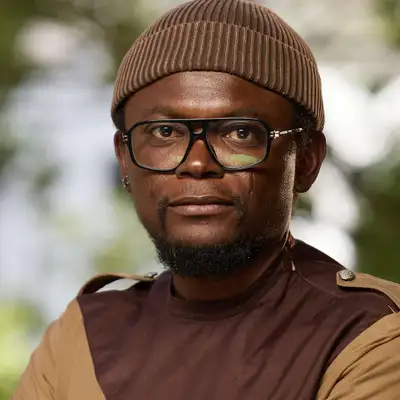
I often wake up in the morning with thoughts reeling in my head. Thoughts inspired by a conversation with someone; something I read, heard, listened to (music/podcasts), a film I saw, a photograph I made, an essay/poem I wrote, or in broad terms, an impactful encounter. They exist as disjointed, scattered particles I often refer to as dots of thoughts.Thus, this podcast show is an attempt to articulate, to converse and to put in relation these floating thoughts. While it relies on random impulses, the podcast is structured by thought-prompts focusing on everyday issues across space, time and works of life. Though it is not a live podcast, it somewhat mimics this approach in that for every episode, the conversation, which begins as a monologue, evolves into a dialogue through a phone conversation with someone else in another part of the world (a friend, a colleague, relative, expert in a subject, creator of a work, originator of an idea). This ensures a broadening of the thematic and locational context of the conversation as a way of demystifying distances. It is a weekly show intended to be spontaneous (as much as technical requirements and logistics allow). Future episodes will feature intro/excerpts of new music tracks made by me. Other times, it will reference aural materials sourced from different corners of everyday life. It will be freshly served – nothing preserved in the freezer! Listeners are encouraged to join the conversation by leaving a comment on the episode in their preferred platform of listening. Selected comments will be addressed in a subsequent episode.Emeka Okereke (host)Available on Apple Podcast, Spotify, Google Podcast, Stitcher, Overcast, etc.
[Airy jazz music]
Hello, it's a new day,
and I woke up this morning with a thought.
But as usual, this is not something
that only started this morning
or from yesterday.
This is something that I have been so
like circling, as always,
and I thought that spontaneously
that this is a right moment
to bring it into this series
of episodes of podcasts that we
are doing here called Dots of Thoughts.
I've been thinking about the condition
of humanity in our present time,
especially with everything
that is going on today.
On one hand,
there's all of these wars and everything,
and then there is all the pressure
and proliferation of, you know,
and regurgitation
of content on social media.
And then, most importantly,
there is now the question
of artificial intelligence and AI.
And even recently,
there was some in the news that there
is this whole notion
that AI is going to kill
us all, and that has been very
much amplified in the news lately.
This is the atmosphere
within which my thought
has been brewing these past days.
And the way I've been thinking
about it is this. And again,
this is not conclusive in any way.
I just thought to bring it here
so that we can use it
for our thought experiment,
which is largely what these podcast
episodes that I'm making are.
They are thought experiments.
They are not conclusions.
They are not stamping me
as an authority over anything.
I'm simply sharing thoughts
that we can use
as a material for reflection,
as an object of reflection.
So, if you're listening to this podcast,
understand that there is no burden
of acceptance of what I say or to think
that I'm some sort of authority.
It doesn't matter eventually
what you make of what I say.
It's simply my own reflection.
Think of it as me reflecting something,
and you joining this conversation is also
you mirroring that in your own way.
And of course, as we know,
human beings, as with light,
we project, we reflect,
and we refract.
You know, just the way light does
when it encounters material
or when it's having this encounter
or contact with material, right?
It projects onto a material, onto a form.
It reflects or it refracts.
And human beings do largely
that, you know.
We are projecting,
reflecting each other, mirroring,
and even moments of refractions as well.
Now, you see, we've just scaled
the first quarter of the 21st century.
So we are like
months into the second
quarter of the 21st century.
So soon the year will be over,
and it will be just one year into the
second quarter of the 21st century.
And the way this century
has played out so far
seems to me to be a kind
of a century of reckoning,
where all of those moving
parts resulting from the way
we have shaped reality
as human beings in the 20th,
19th, 18th,
and even centuries before.
The 21st century became
the century of reckoning.
But you understand also that 20th century,
19th century, and before
were centuries of a strong indoctrination
or reinforcement of the principle,
or the very doctrine of separation
as an organising principle, okay?
We like to talk about modernity
as that which is bringing
human beings together
and advancing the world.
We also like to talk
about modernity as a move away
from those bestial tendencies of humanity:
primitive,
traditional.
That is very much emphasised
or underscored by colonialism,
slavery, and all of that. And there's
a reason why we think of it that way,
so much that now
when we speak about the post-colonial,
we often think about what
is outside modernity, right?
And those who are involved in
fleshing out post-colonial reflections
of thinking are often seen as writing
from the margin or from the shadow.
They are not really considered to be very
much part of the moving
current of modernity.
And that is a misconception in many ways,
but there is a reason
for that misconception.
You see, there was a time when, you know,
it was all about— we know
that it was colonialism.
Christopher Columbus, but we might even
go all the way to Alexander the Great.
Colonialism means
that you think in terms of colonising
and going to a place
and taking over the place
and conquering the place and taking over
and projecting one's knowledge,
one's way of being in the place.
Not to necessarily go
there to make contact
and make encounter
and also truly exchange,
but with the intention to take over
and to co-opt,
pillage and make
those people eventually subservient
to your, to your way of being,
your way of seeing reality.
And so that's been the norm,
and out of that, we created a reality
whereby separation and division
became the organising principle.
And I say organising
principle emphatically
because it led to many of the inventions.
It organised us.
And many would say, well,
you know, there's been all of these
amazing inventions that came out of it.
Look at science.
Look at physics.
All of that was playing out within this.
And that's why I'm saying it
became an organising principle,
because we were able to understand
reality as disparate things,
as already divided.
So a child
who is born today eventually meets a world
that is already divided.
So the child learns,
when the child comes in,
as the child is growing,
as a child is brought into school,
the child learns from his environment,
from his interactions,
from his parents, from his society,
that the world is already divided.
So you see that this is a reality
that we have eventually accepted
and constantly strive to reinforce
and conform to. You see, fast forward
into the 21st century.
We are at a place now
where all the moving currents
are bringing us not only intensively
but extensively into each other.
And this is not by mistake.
This was driven by many of those same
technological inventions,
right?
So think about the invention of cars,
of trains, of even time,
the concept of time, right?
Albert Einstein came up
with the relativity of time,
but eventually—
but essentially, what Albert
Einstein was doing was to invent
a certain matrix of measurement of time.
Because we have to understand
that before then,
there was always a dissonance
between time in one city
as opposed to another city.
And so it was a big issue
in terms of travelling.
For example, when a train leaves Paris
and it's going to Vienna,
there has to be a way
to synchronise the time.
Albert Einstein's theory of relativity
played an important role in the
synchronicity of time as we know it today.
So even that time is an invention.
We invented all of these things.
Planes became faster and more robust
and can take us further.
We organised ourselves across airports,
and we built more roads across borders.
We invented television,
radio, washing machine.
Now, it is true that while all
of those inventions was going on,
certain political factions
and societies and, you know,
races were exploiting
and deploying those inventions
for their divisive,
continuous divisive,
colonial, racist aims.
That's true, very much so.
But at the same time, there was something
that was also happening
that was inevitable,
which is that the world
and people were coming together
by the same technology.
Many of us who grew up in Africa
had, you know, television in our house,
and we discovered the world
through television.
We discovered Hollywood.
We discovered Chinese, Asian,
you know, films, Indian films.
Radio was everywhere.
We listened to music.
All of that was bringing us
and preparing us for a world
that we are going to be encountering
each other beyond those very
provincial pockets of provinciality.
And I use this word very intentionally,
provinciality, that we were raised,
because it continues up until today.
So what I have come to understand
after I have travelled over 50
countries throughout this century,
because I started my, my travel
out of Nigeria for the first time in 2003,
so three years into this century,
and here we are in 2026.
And since then, I've travelled the world.
I have met people. I've been to virtually
almost all continents of the world.
And one thing has become clear to me
is that each and every one of us,
we are raised in our little pockets
and enclaves of provinciality.
Here in Germany, for instance,
the child is raised to be German.
In Nigeria,
the child is raised to be Nigerian.
In America, in Asia,
everyone is raised in their own
little pockets of provinciality.
In other words,
the child is not even being prepared
for a world that the inventions
that we are making are driving us into.
The child is made to understand
the world as divided.
Meanwhile, the technology
is pushing us towards the contrary,
that we are actually connected.
The pencil that a child is writing
with is made by somebody in Asia,
but a child does not know in any way,
is not given any form, any inkling,
or even given a sense
to even reflect on that.
That this pencil that the child is writing
with didn't just fall from the sky,
that it has passed through hands
and has gotten.
So the child learns ownership,
agency, in this very truncated
and provincial way.
So the child will, will think
of his or her world
as a form of entitlement.
The child will feel entitled.
But when we really look at it properly,
there is no entitlement.
There is only interconnection.
And one does not need to go so
far as to really see
how the thread connects.
But the only reason why that isn't
emphasised is simply this provinciality.
But what I am saying is that the world
that we live in is making
that knowledge inevitable.
And if it is inevitable,
and yet we are not learning
to be that way, what then will happen?
What will take place is violence,
continuous violence,
because that violence comes from non-fact.
And non-fact leads to confusion
and a kind of ignorance
and a kind of dissonance.
And this dissonance is very important
because, you see,
when there is dissonance,
there is no harmony,
and there will be confusion.
And confusion will lead to more
and more violence.
Now,
the reason I say this is because today
we have artificial intelligence,
and we are going about saying
that this thing will kill us.
But I want to sort of like keep
that argument on the side a little bit
and come back to the human being,
that is, the human intelligence.
I say, what do we make of it, really?
Where do we start
with the human intelligence,
given everything that I have said so far?
Given the fact
that if we really look at our lives
and what we carry around as knowledge,
we want to lay claim to that knowledge
and say,
this is what makes us who we are.
Some of us even go as far as saying,
this is what makes me better
than this other person.
And that is no different from someone
who says,
this is what makes me worse
than this other person.
We even go as far as doing that.
And yet, in all my travels,
I haven't seen real evidence,
clear evidence,
that says one person is better than
the other based on what they know
or what they have.
I haven't seen any clear evidence,
any undisputable evidence.
They are all, again, projections.
Projections that we deliberately create.
But that projection is based on that old
replay of the doctrine of separation,
division as an organising principle.
And then we come around
and say we want peace.
We want love.
We want harmony.
Each and every one of us
hold this to be true,
that we want happiness.
And yet,
the way we move around in
the world is very contrary to everything
that could actually lead to happiness.
Unless the happiness,
that sort of happiness,
is the kind of happiness
that when one has it for themselves,
it does not pertain
to his or her neighbour.
What sort of happiness is that then?
Is that happiness complete?
Is it real?
Is it not an illusion?
What sort of happiness can be ascribed
to one person and yet not to the other?
Is that real happiness?
Even if there is something to it,
is it sustainable?
Is that happiness sustainable
in the world we live in?
Is it not going to come
around at some point
and form coagulations of conflict,
of animosity, between the poor and the
rich, between the haves and the have-nots?
Will it not come around sometime,
some point, to form a coagulation,
an ugly, sinister coagulation of animosity
that will now completely
undermine the same happiness?
Some would now say,
I would do everything in my power to make
this happiness mine and mine alone,
because that is also
what ensures my security
from this other person that I fear,
from this other person that is about
to attack me, from this stranger.
The whole point of this reflection
for me today is to put
a finger on the very fact
that even up until today,
we are still primitive insofar as we
continue to move in this mindset
and reality that the world is separated
and divided.
Because it is no longer so.
And by that, our technological
inventions are even far ahead than us.
And this is how human intelligence
will become subordinate
to artificial intelligence.
You see where I'm going?
Because the human intelligence
will be stuck in its own provinciality.
The education system
has not been transformed
or reformed or revolutionized.
No, it is still the same.
Today, as we speak here in Europe, there
is a concerted effort, very deliberate,
to omit that part of the European history
that is ugly to them,
that they would rather
not open up to the child.
So the child is raised
and given this idea that, you know,
their life is to have best
side of both worlds.
And that is entitlement,
because that is actually
not how the world is shaped.
The world is divided.
The world runs on the doctrine,
or I would say the illusion,
of separation.
So,
but a child is told
that this is what you will learn
so that you will get ahead in life.
You have more access.
You have more position.
You have, you know,
that's how the child has been raised,
to prepare the child to be competitive,
to be ahead of his or her peers.
Work hard so
that you can be more than your friend.
But I have been looking at children,
because I have kids.
Right from the day they were born, none
of those things really matter to them.
They flow through life discovering,
testing, experimenting,
having contact and encounter with life.
That is how children are.
They have so much to teach the adult in
terms of how to make contact with things,
how to be tactile, how to really give
all of one's entire being
to something without having to know
what one gets out of it in return.
They eventually learn about reward,
mostly from their parents,
but also in their education system.
They learn that they must do
something for a particular reward.
And the more they do it,
the more they push themselves towards
that, they get more of it.
And always at the expense of someone else.
That aspect can be sugar-coated
and said it's simply you getting better
and better.
But the moment you tell a child
that they are getting better,
there must be somebody through whom
or by whom that betterness is measured,
who is worse.
Because if you're going to be better,
then someone is going to be worse.
And I'm not saying there
are no aspects of our reality
where those sort of ways of measuring
or comparing—
I don't like to use those words, you know.
I don't like to use comparing, you know.
You want to compare two things,
two separate brands of toothpaste,
you can do so, you know.
When you want to compare, measure
grains of rice, you can, you can do so.
There are contexts
where those come in handy.
But when it comes
to the human intelligence,
which is the subject
of this reflection today,
human intelligence as opposed
to artificial intelligence,
because now we're talking about how
artificial intelligence will kill us all.
Now, when it comes to human intelligence,
is the human being an object that needs to
be measured that way, compared that way?
As we do this, we are undermining
the human intelligence,
and it's not evolving anyway.
And so that same human
intelligence will turn around
and unleash this thing called
artificial intelligence,
and eventually it will lag behind.
So my thinking is, if the focus
does not turn to human intelligence,
that is to say,
how we relate with each other.
That our life is not to prove
that we are connected.
That is already a given.
The question is, how can we evolve?
How can we learn to be in a world
where we are connected with each
other in all our myriad differences?
Because we were not raised
to actually be in that kind of world
that our technological inventions
are bringing us into. Every one of us,
regardless of where we were born,
none of us were raised really to be in
that world,
for it to be normal for us to sort
of like be familiar with the world,
regardless of where we go.
To see someone who doesn't look like us
and not be afraid,
and the person not carry,
the person's face not carry
the image of what we
are afraid of, or who we have been taught
to be afraid of. Or conversely,
who we have been taught to respect,
to see as the one who is the superior, to
see as the one who is the most beautiful,
to see as the one who is the well-to-do,
the sophisticated,
and all whatnot.
Both same.
And yet, in everyday reality, what we
see in everyday reality is that human
beings come in different ways,
different configurations,
myriad ways of being.
And it is important
that in our time we begin to really
look at that as very much—
or rather,
the investigation of that, the observation
of that— as the very constituent
of human intelligence.
You know, when we talk about the organic,
this is what we are speaking of.
Life is organic.
People come in different ways.
People have different reasons
and, and different ways,
because they've come
from different places,
and they are coming slowly,
closely into each other.
But what is happening?
The political systems are becoming more
and more afraid.
Here in Germany,
the AfD faction has been elected,
you know.
And this is a faction that runs
much of their political thesis on,
and proposal on, you know,
shutting off the border
and saying we really
want to emphasize that provinciality
that is called Germany.
Germany is a country
that has always been at the crossroad,
is at the centre of Europe
by virtue of where,
how it is positioned physically.
It is a deliberate construction
of violence to say you shut off
the borders and there will be no crossing.
But rather than sit and think,
how do we learn how to be in difference,
given that not only in Germany
but the world,
people are coming from different places
and entering into each other,
making contact and encounter.
By the way, this encounter was what
was missing in colonialism.
There was contact,
but there was no encounter.
Encounter meaning that acknowledging
that for every human being
that is a living, moving entity is also
at the same time producing knowledge,
regardless of whether the knowledge
pleases you or, you know,
meets your fancy or not.
That person is producing knowledge.
And that when there's contact
between two human beings,
there has to be a space that allows
for the acknowledgement of this fact,
so that there will be encounter.
So that we can see how this other
human being have made knowledge.
Knowledge
that, when you really look at it,
because we are still talking about how
interconnected our reality is, goes
all the way back, connects to other
meaning, other places and people,
and even goes all the way back in time.
A place like Africa, for instance,
where much of the knowledge
was not really written down,
it was carried in the language.
How was it carried in the language?
It is because the language became
the means of animating this knowledge,
transmitting it
from generation to generation.
So language is not simply something
that one writes with or carries
around as being knowledgeable.
The language is used to live life,
to animate life.
And so when you see someone from Africa,
the person carries thousands,
centuries of knowledge in the language.
But even in our time
and the way the world is designed,
there is no space for the true
acknowledgement of all of that. However,
the person carries a face.
He's black. She's black.
Oh, then there is already
a preconceived notion,
preconceived narrative of what
the person is and who the person is, and
also the limit of the person's knowledge.
These are the things that will come around
and undermine human intelligence,
for which eventually artificial
intelligence might then become dangerous.
It is not artificial
intelligence on its own.
It is the provinciality,
the primitivity of humanity
that will bring about that harm.
I have visited somewhere in India.
I went to a temple,
and someone said to me, this temple
has been here since the seventh century.
And that was marvellous.
I was like, wow.
But then, these days I think to myself:
what is the point of me knowing
that a temple
has been in a place since seventh century
if, on entering the temple,
and the person presiding over that temple,
or someone that I meet there,
does not give me a sense that I,
a stranger coming from somewhere far away,
can also find this place to be my home?
Not that I am made to feel at home.
No, it is my home.
It is a familiar world.
Otherwise then,
that whole narrative
about the temple being
there since seventh century is simply
to continuously reinforce an identity
that might then say
that because you are not Indian,
oh, you, you don't have a place here.
But no. If you really look at how reality
is, we are all connected to that place.
Otherwise, why would I even
be there at that point in time?
Why would I have come there
if I was never connected
to that place in the first place?
How could I have showed up in the places
I've showed up if I was never connected
there in the first place?
And this does not mean that those who
have not travelled, it does not apply.
So these are the thoughts
that I woke up with this morning.
I invite you to enter
into this thought experiment with me.
There is a need for us to embark on
that learning of how to be in difference
and to channel all our creativity,
but also our sensitivity,
towards this, especially now
that we are talking about the danger
that might befall humanity
with our latest invention.
So that's about it for today.
[Airy jazz music]