Subscribe
Share
Share
Embed
Reframe is the podcast about building sustainability.
Commercial and public buildings are among the biggest producers of carbon emissions. It’s a problem of massive scale. But, for building owners, engineers and contractors, solving it may actually be more of an opportunity than a challenge. That’s what the “Reframe” podcast is all about. Join host Jeff Nichols on an exploration of the forces driving sustainability in our built environment. And meet the people who are leading the charge.
Reframe Ep13 Transcript
Jeff: [00:00:00] Welcome to Reframe. I'm Jeff Nichols. Buildings are everywhere where we live, work, learn, and heal. Yet they remain largely invisible. In the climate conversation, we talk about EVs, solar, wind, and batteries, but most people don't realize that the single largest user of energy in the US isn't transportation or industry.
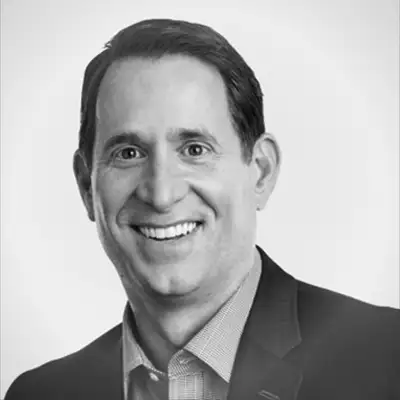
It's buildings. And because so much of the progress to date has been invisible. Hidden in standards, envelopes, controls, and quiet upgrades. The challenge ahead isn't only technological, it's systemic. Financial, cultural, and policy driven. Today's guest, Alex Dews, executive director of the Institute for Market Transformation has seen the built environment from every angle, construction, development, public policy, and now helps shape how cities, states, and markets understand building performance and where this movement is heading next.
Yes, we're talking about buildings, but I wanna talk about how we change the systems that shape them. Well, Alex, welcome to Reframe.
Alex: Thanks so much for having me, Jeff.
Jeff: As I've learned more about you, I've been really interested in your career trajectory. You've gone from a property developer to public policy to nonprofit leader, so you've kind of checked almost every box here.
What's the through line in your journey? How did it lead you to IMT?
Alex: Yeah, sure. So I actually started out working in construction before getting into real estate development, and, uh, began working at the scale of single buildings and got really interested in, uh, retrofit of historic buildings. What makes these buildings stay around, why do they last, what do people like about them?[00:02:00]
And gained a lot of appreciation in doing that. For all the different trades that come through a building project. Uh, both in the design, the construction phase, as well as in the operations. Uh, there's just so many people with so much expertise, uh, that go into making a building what it is. Um, and so I was fascinated by that.
Really enjoyed getting to work in, uh, the development space on that, especially in the redevelopment of existing buildings. Um, but then also got this, uh, fascination with, uh, the policy frameworks that help us make decisions about how buildings are designed and operated and moving from that single building or portfolio of building scale, uh, to the city scale or even beyond that, uh, state and national scale of.
What is the built environment going to look like? What are the decisions that we're gonna make, uh, that, that help us to make those decisions collectively? Uh, and so that's how I've landed here at IMT, which has been, uh, instrumental for a long time now in shaping, uh, the policies that dictate, uh, how buildings are designed and operated.
Jeff: For those that maybe aren't familiar with IMT or the Institute for Market Transformation, you know, what is that? Who are you guys? And, and why is your work important?
Alex: Yeah, so IMT is, uh, we're very excited about celebrating our 30th anniversary, uh, next year. And during the, the past couple of decades we've been focused on how we can change the market for efficiency and performance in the built environment.
So, uh, a lot of the challenge over that time period has been that efficiency tends to be invisible. There's not enough information available to the stakeholders that need it to understand how important and how valuable building efficiency really is. And so, uh, we've worked at the Citi Scale primarily over the last 30 years at improving that.
Um, that starts with building codes and standards, but also things like energy benchmarking that help to bring transparency, uh, to this issue that's really fundamental. Uh. Oftentimes one of the biggest costs in the ownership of a building [00:04:00] is the utility costs. Uh, how much you're paying for energy, how much you're paying to, uh, to, to put your systems in and to maintain and improve your systems over time.
And so, um, going from a place where there's very little information available to now, uh, industry standard is that a lot of these things are. Uh, systematized and we have, uh, agreement about what kinds of metrics are important to track, how we go about doing that. Uh, and that's really changed the conversation about building performance dramatically during that time.
Jeff: It's interesting to me as I've learned more about this space, I, I just think the average person doesn't understand the role the buildings play in climate change and, and the significant role that they play. You, uh, had done an article where you cited that since 2000, the US added 60 million people and grew GDP by 170%, but energy use stayed flat.
And buildings obviously weren't the only part of that equation, but a very significant one. So I'm curious like what do you think were the top three interventions or things that happened in buildings since 2000 that really contributed to keeping that energy use flat.
Alex: Yeah. So one thing that's even more remarkable about that statistic is if you think about how many more things you plug in and how frequently you plug them in in a building than maybe in 2000, uh, that has changed dramatically.
The plug loads in buildings are much, much higher than they used to be, and yet that demand has stayed relatively flat, and that's all about efficiency. So I think it's a little bit different in the existing building space than it is in new buildings. But, um, I think the things that most people would point to are.
Lighting has been a huge, huge change. Uh, the lighting technology has, uh, fundamentally switched from earlier in, uh, this century to where we are now. Believe it or not, there's still a lot of opportunity for older buildings to improve efficiency of their lighting, and that's often considered the lowest hanging fruit.
Um. Automation and controls, I think comes second to that. Um, many, many [00:06:00] buildings are still going through the process of upgrading from, uh, no systems at all or from a very basic, uh, building automation system to more sophisticated controls, huge amounts of, of efficiency to be gained there. And then I think the last one is upgrading systems.
Um, as, as things, uh, come to their end of their useful life. Uh, any system that you upgrade is going to be substantially more efficient, and that's because of the standards in place that require that. Uh, and just how the industry moves forward at eking out additional efficiency as they go. I think on the new building side, um, envelope is the big thing.
Um, we have much, much tighter buildings. Um. Better air ceiling, better insulation, and that allows us to use much smaller systems, um, which again, are already much more efficient, even if you are replacing substantially in kind. Um, but I think to your point about the fact that most folks don't think about buildings as being one of the big issues on, uh, on the climate side.
The reality is that 75% of the electricity that we use in this country is used in buildings. And I think the more we can change, uh, the perception or change the understanding that buildings are really a part of the energy system and not just the end user of it, uh, that's going to, to to be, I think something we see a lot more of in the future.
That they, they really can feed back in, uh, they can be dynamic in the way that they use energy. Uh, that's gonna be a game changer.
Jeff: Most of the people when I talk about, you know, climate change, they think electric cars or they think, you know, coal, fire power plants like smoke stacks, right? But nobody thinks of the buildings that we walk in and out of every day.
Why is that? And how do we change that?
Alex: I think it's a great question and it's one that obviously we spend a lot of time thinking about at IMT, uh, because we are trying to change that perception. I think one of the issues is that it can feel difficult for an individual to, uh, feel like they have a lot of ability to influence that change and the buildings, uh, that they occupy.
If, if you're thinking of a commercial office building, for example. [00:08:00] The individual in there has very little opportunity to interact with the systems that are actually driving, uh, how much energy that building uses. And so I think it can feel kind of abstract and the people feel disconnected from it. But I think it is true that in the residential buildings where people live, they actually do have much more of a, a connection to that and an understanding of that.
And I think right now we're in a moment where affordability is really. A big driver of every conversation that I'm in. And people do understand that the utility prices, if they keep going up, that's gonna impact them and they wanna understand what's driving that and what they can do about it. And I think that's a place where you see a little bit more, uh, direct connection and understanding.
But it's a really difficult question that you ask about, you know, how do we change that perception? Um, and I think the best thing that we can do is. To continue to show examples of how well it works when you do invest in efficiency. I think, you know, maybe one of the more obvious answers to it also is that efficiency tends to be invisible.
The things that we do, uh, are not as tangible as other kinds of improvements that you make in a building, even though you do in the long term yield. Really, really substantial savings. But, uh, an often quoted statistic from the commercial real estate space is the 3 3300 rule where you're paying $300 per square foot for your people, 30 per square foot for your rent, and three or less on your utilities.
So in order of priority, it's not gonna be the thing you prioritize, although I think a lot of the more sophisticated owners and managers understand that if they want those people who they're spending the most money on to be happy. They better have a comfortable high performance building that people wanna show up in, especially in the post pandemic era where they're really doing a lot of things differently to get people to feel good about coming into the office.
Jeff: Leadership is gonna have to come from the public sector. We've seen what a driving force that can be. I'm in Washington state, right? The first state to have, you know, building performance standards across the, the [00:10:00] entire state. And actually it was how I found IMT was the, the wonderful PDF map that you have of every city in the different, um, building performance standards.
One of the issues that is, it is very fragmented. Mm-hmm. But let's dive deep on the performance standards. Where do you think we sit today and where are we going?
Alex: Yeah. So I think, uh, just back to my previous comment about affordability, I think that's what's most top of mind for folks who are stakeholders of all kinds in the building space.
So that could be in the commercial real estate space, you've got issues around a lot of downtowns that are, um, starting to make their way back to where they'd like to see occupancy, but still see challenges. And so. The ability to balance the needs of capital improvements with lower occupancy rates, that's a challenge.
Um, I think in the residential space, obviously you have housing crisis across the country. It's more pronounced in some places than others. But everywhere you've got this issue of how do we have, how do we build enough, or how do we preserve enough housing and bring it to a place that's affordable enough to meet the needs that every city and every state has.
And so I think from the. Codes and the standards perspective, it's about understanding those challenges and framing really in the way that people can understand that these things are in place to protect the consumers and to protect the occupants of buildings. And there are really, really significant benefits to having standards that prioritize the efficiency and the comfort and the health of the indoor environment.
So I think for existing buildings, maybe we could start there. Policies that are grounded in actual performance are what we're seeing a lot of interest in now, and I think that's gonna continue in the future. Historically, there are a lot of policy efforts and a lot of voluntary efforts too that are really looking at.
Quantifying how good a building is in concept. And in reality it's a little bit more challenging to actually measure that. But that's what people are interested in is how well is a building actually performing? [00:12:00] How comfortable is it to be in? And then just using, uh, the, the energy meters as the way to actually validate that.
How is it performing? How much does it cost to actually operate the building? You mentioned, you know, fragmentation across a lot of different jurisdictions across the country. One thing we work hard on at IMT is to standardize that as much as possible by providing model guidance, model laws on how to go about this, how to set it up.
It's just a fact that in the US you are going to have a somewhat fragmented regulatory environment because every state does things a little bit different. Even cities within states do it a little bit different. Uh, but there are opportunities where we can harmonize that a little bit better. And one thing we're focused on right now is in all of the markets that already do have a building performance.
Policy of some kind, ensuring that there is a little bit more consistency across the board in how we support alternative compliance pathways. Because the fact is not every building and every place is going to be able to do what's required to hit the performance thresholds in a policy in. Even when they're trying their best, right?
They might not have access to capital. They might be in a very difficult to decarbonize type of building or location. And so the goal here is not to penalize building owners that are making their best effort and still can't get there. The goal is to make as much improvement as possible and then chart a path to what that performance can look like in the future, ensuring that they're making improvements along the way
Jeff: down the road.
Do you see like a federal standard ever becoming a thing?
Alex: I think it's a possibility. I think it's not likely in the near term, um, given how much shift we've had from one direction to another in how the federal government is focusing on these things. I think, you know, anyone who thinks they have a, a crystal ball on what the federal government will, will do next.
I wouldn't put a lot of stock in, but the place that the federal government has been very helpful to date. A couple of things I'll point to. One is. The Energy Star program enormously beneficial to uh, Americans. The amount of money that is spent on that [00:14:00] program is minuscule compared to how much savings it generates, and in the commercial real estate space, the Energy Star Portfolio Manager program.
Is the industry standard. Everyone relies on it. A lot of private sector companies have built their whole business model on that tool, and so that's just an enormous benefit that EPA has created. Another is all the work that GSA has done to both test things out and then validate them, and then because of their purchasing power and how large they are as both an owner and a tenant, they're by far the largest of both.
They can really drive a lot of market transformation, so. The specifics will, will change from administration to administration a little bit. But that kind of thing is going to continue, uh, to be a driving force where the federal government plays a role in terms of a national building code. I think that's less likely or a national performance standard.
I think you, you may see GSA adopt its own standard and then that has a lot of impact in all of the other jurisdictions that are pursuing something similar. Um, but I, I don't see us, uh, changing from. The current construct where federal government attempts to provide guidance and leadership, but not necessarily set the rules at the buildings level across the country.
Jeff: I was surprised to learn that the federal government is the largest owner of real estate in the country. So, uh, certainly what they do does kind of set the standard. I actually, I want to go back to when you talk about one of the biggest challenges, affordability.
Alex: Mm-hmm.
Jeff: What do you mean by affordability?
Alex: Yeah, so I think it depends on who you're asking. So for the owner manager, affordability is about how can you develop a capital plan that's realistic, um, so that you can manage the first cost that you have now, and then balance that with the savings that you're gonna have over time, the way that you address that in the local markets, or one thing we found successful is to aggregate a lot of the information and the expertise.
By developing a hub. So we've helped to support the launch of hubs in a number of [00:16:00] cities. We run the the DC Building Innovation Hub. We work in partnership with Building Energy Exchange in New York City to disseminate all the information, all the lessons learned from the jurisdictions that are leading on this.
And we've now launched hubs in a number of other cities, uh, Chicago, St. Louis, Kansas City, Philly. Boston state of Massachusetts to be able to have a peer sharing network on this, and also to support the local leadership and the local communities of practice that are necessary to tackle these hard challenges.
So affordability from the owner manager perspective is about how to take these projects on and how to really build an effective strategic plan that is a capital decarbonization plan. I think from the occupants, obviously that affordability question is just about what does it cost to operate this place.
We want it to have certain qualities and attributes. One of those is comfort. Uh, one of those is healthy indoor environment, and we wanna be able to do those things without it. Dramatically increasing the costs and ideally actually saving on expense that you might pay for utilities. And there's so many examples of where modest investments in efficiency have yielded really, really big returns, especially when you look at it over time.
Jeff: I'm still relatively new to the industry, but one of the common refrains is, you know, capital, there's not enough money for this. We can't do it. And a, a speaker said, you know, we actually have to shift our mindset. Capital is actually not the issue, was his argument. It's how we ask for the capital. And I think one of the things that people don't kind of realize is like, we're gonna do some common sense things, especially for historic buildings or big investments.
We're not gonna replace, you know, the HVAC system like overnight. We're gonna as, as equipment, gets to the end of its useful life. You know, that's kind of the strategy. You're gonna have to do a replacement anyways. So when you do that, how do we choose a more efficient system? But I think, you know, especially for contractors, they're so used [00:18:00] to like, here's a project, it costs X.
You either want to do it or you don't want to do it, versus. Really helping portfolio managers and building owners understand like the proforma, right? Like if we do this, here's how much energy we save. Like here's the economics of this argument. Because in many cases it pencils out, like on the savings side.
Or tenants I think are shifting to, they're willing to, you know, participate in that because of all the benefits and you know, they have ESG goals as well. It is an issue, but I just think we have to change. Our mindset around that from a scarcity to like, it is possible. We just gotta go a level deeper is my 2 cents.
Right?
Alex: And, and I think from a, you know, somewhat of a philosophical level, that's what building performance standards are trying to do is to not say, you have to have the perfect building tomorrow, but they're saying. By 2030, by 2035, at some point in the capital cycle of this building, here are the attributes that you wanna have.
Here are the marks that you wanna hit. What does it look like to go from where you are today to all of those qualities and attributes? How do you get there in a way that's orderly and strategic and not just chaotic? Fixing things when they break. Uh, and that's something that makes a lot of sense to people that work in the building space.
You know, whether it's building engineers who are always thinking about these things and are very sophisticated in the way they think about them, or it's people that are just looking at the spreadsheets and trying to figure out what's the smartest way to go about positioning this asset so that it's gonna maintain maximum flexibility, but also maximum R-O-I-N-O-I over over the long term.
Jeff: Let's go there. 'cause I, you've, you've written a lot about just. Thinking of our buildings as assets, you know, given that 75% of all electricity is used in our buildings. Right. Let's talk a little bit about kind of the grid, you know, demand response and you know, how should we maybe be thinking about our different, our buildings [00:20:00] differently?
Alex: I think that because we're now in this era where we have growth and energy demand, not just a little bit, but quite a bit of growth in demand for the first time, it opens up a whole new set of opportunities. And this is also coming at a time where we've spent the last. Five, 10 years really focusing a lot more on grid interactive buildings and how buildings can be part of, uh, supply and not just demand.
And so the opportunity now where you have the need for massive amounts of power availability as quickly as possible, and because of supply chain challenges and just cost challenges in general, it's very expensive to bring new demand online. There's this opportunity to pair the demand flexibility that exists in buildings with the demand needs of data centers and ai.
So that's a really exciting opportunity. It's also a complex one to figure out how to actualize in the near term, but the interesting thing I'm starting to see more of. Is private sector entrepreneurs who are trying to solve that challenge of aggregating some of this demand flexibility and pairing it up with the needs of new data centers that are coming online.
I think the other component of this, that may sound simple, but you know, the reality is that battery technology continues to improve very, very quickly. From now on in human history, it's likely that solar plus storage is going to be the cheapest form of energy and buildings that integrate battery technology.
Into how they operate are making a smart decision now. And that's only gonna get better as, uh, battery technology continues to improve. So the ability to flex demand, um, by integrating that into your building systems is something that a lot of buildings are looking at carefully now, and I think that that is really gonna scale up a lot in the next decade.
Jeff: Can you maybe for the audience explain demand response? Like what is that and, and how is that different from the past?
Alex: Yeah, so traditional demand response, uh, the way that the grid [00:22:00] operates when you're at peak demand, uh, that means that grid operators have to bring on additional power plants that are called peaker plants.
They don't run all the time. It's expensive to do that. It also tends to be the dirtiest form of energy in terms of air quality emissions and carbon emissions. Um, and so. The way that demand response programs were structured. Essentially, the grid operator would say during certain times, typically summer heat waves, they would send out a notice in advance and large users of energy, big building portfolios, industrial users would curtail their usage or.
Just use less energy during a specific period of time to avoid, uh, hitting those peaks on the energy grid. The reality is most of the time we're using far less than that peak amount of energy. Uh, so we're generating much more that we need, but the system is designed for that maximum amount of usage. Now the new era that we're in allows for that flexibility to be targeted much more strategically and with much more specificity because of how much building automation there is.
And because you now can bring batteries, utility, and uh, industrial scale batteries into the mix and to, for that matter, you can also begin doing that even at the residential scale. We're not even yet tapping into the fact that there are a lot of electric vehicles that are pretty large scale batteries.
If you start to tie all of that in, the amount of flexibility that you have is much, much bigger than historically what's been available. And that means you're limiting the amount of peaker plant activity that has to be part of the grid, and you're able to smooth some of these peaks to a degree that hasn't been possible before.
Jeff: It flips right from simply being a cost to like you can actually make money, right? That's right. If you were able to shift your load or demand, you're gonna save on your utility bill, and so I, I'm not sure the industry or facility folks. Have made that leap, like, wow, we should be looking at like, instead of just being a cost center, like we could, we could actually contribute to the organization [00:24:00] based on how we manage this.
So I, I think that is gonna be in the next decades is gonna be pretty, pretty significant driver.
Alex: I think that's right. And that, I think that, just back to the point about automation systems. I know that there are, there's a lot of discussion about that. There's been a lot of uptake in the last 20 years on that.
Um, and internet of things, you know, the, the way that we're. Integrating all of these things to, to more, um, remote management, for example. It's still early for that though. And the fact, uh, that when you're thinking about demand flexibility, the fact that you have so much more possibility now with, uh, understanding occupancy in buildings and measuring that and measuring what the building actually needs to do at that time.
This is the other thing that's exciting to me is going from the kind of benchmarking and management of buildings that we do now really looks at monthly or even annual numbers. And if you start to look at that at the 24 by seven, much more granular level, there's so much more flexibility that's possible to achieve.
And I think that's, to your point, there is really revenue opportunity, uh, in the built environment that owners and managers are just now beginning to understand.
Jeff: As building performance standards roll out and, and people get their, you know, EUI results and you know, maybe are above target. I think controls and automations is gonna be.
The primary lever that people, it's, it's the cheapest, right? That's right. To, to make the biggest dent. Although, you know, I think it, it's still, you're only talking about 15 points or less, I think, to, to get that lower. But as I understand that it's still so fractured. Like you have these really high end, really complex, really expensive and very low market penetration, and then you have like a nest thermostat.
There's like no in between. Um, so it'll be interesting to see the innovation that comes in that, uh, space, but I don't What do you think? Like, why is that? Why is it like you have Nest and then you have like hundreds of thousands of dollars solutions? Like why is [00:26:00] there this delta?
Alex: Yeah, I think it's a really interesting question.
Um, in my experience with automation systems. I think part of the issue is that even the most sophisticated system is subject to human override. I've seen firsthand a lot of times where a really good system is being employed, but if something is broken or someone doesn't like the way something is operating, it's very simple to just override it, and then all the cost that you've put into that tool is not really yielding much benefit.
So there is some reluctance to take that on as a result of that. I think some of that is also like with a lot of technologies, it can be based on one experience someone had 20 years ago. Um, and as the workforce becomes more familiar with this, and also as you know, people who are used to pneumatic systems, for example, are aging out of the workforce.
That's going to also shift. And people who are coming in are much more familiar with digital technologies. It's just something that happens more gradually than I think we would like it to. And uh, it's understandable, but I think that there's, um, probably going to be a lot more kind of in the middle, um, opportunities.
And that's true if you think about solar technology too, right? Like a. Primarily, the only way you can do that right now as a consumer is to go through very complicated permitting process. You have to work with a lot of different specialized contractors to do anything. But now on the other end of that, there are beginning to be products available that you can buy off the shelf and just plug into an outlet.
And that's gonna happen, I think, across all the different elements of the energy system and the building system as, uh, the demand gets there.
Jeff: All of the core elements, as you said, with I, OT and connected devices, the ability to manage this now is, is less of the issue. Somebody said we now have connected buildings, but they're not smart.
Alex: Yeah, they're not actually, you know, kind of overriding the human kind of, uh, factor. They're just, they're not making decisions based on the inputs that's possible. Very few people, I think, [00:28:00] are really doing that well, only at the really large end of, of the market. You know, airports, hospitals, big footprints.
Mm-hmm. So maybe we could talk about that kind of the smaller commercial or even multifamily. I mean, multifamily is huge. You know, if you think about the adoption curve, how do we get this middle to move? Uh, especially when they're, they're just smaller.
Alex: I think that the opportunity is to, again, talk about what the cost benefits are to doing this, and it is a lot of the technologies that you might need to employ are so much more available and easier to access now than may have been the case in the past.
That's the starting point. For the, the big middle. When you think about market transformation, the truth is that when you go along the curve, a lot of the things that we're seen as leading edge or you know, where you get recognized as a top performer 10, 15 years ago, that stuff is now getting into building codes.
And as people start to have experience with what a new construction building looks like and feels like, they're going to have an understanding that, hey, I wanna bring my existing building more up to that standard. Um, you know, it's kind of a, if you think about. The big old computer, you know, CRT monitors, uh, that they persisted for quite a long time, but I haven't seen one of those in a while now.
Um, and I, I think that, that the transformation happens gradually for a while and then pretty quickly all at once. Um, so what are the barriers to it at this point? You know, I think that it is still, it's a first cost question and it's a understanding of what needs to be done and how to go about doing it.
And that's a place where performance standards are a really valuable education tool. Uh, I think benchmarking as the starting point has been incredibly valuable. Obviously, it's very difficult to make changes or manage to something if you, if you haven't measured it and don't really understand what the opportunity is.
And because so many jurisdictions now do have some sort of a benchmarking and transparency requirement, there is an understanding even in the B and c class buildings and the smaller, uh, multifamily residential [00:30:00] buildings that. This stuff actually is a controllable cost and it really does matter, and they can factor it into their capital playing.
And as you move from that transparency to performance expectations, it's gonna be all about meeting those people where they are. And that's again, something I think that whether it's the program we run on, landlord tenant engagement, or the building performance hubs. That's what IMT is really focused on is, yes, we need these elegant policy frameworks, but if we're not also in the implementation phase of the work and we're not trying to figure out how to solve these really pernicious problems, those frameworks are not gonna do anything.
Do you have a favorite example you use? I do have a favorite example. Yeah. So, um, when I was working on, uh, building benchmarking here in Philadelphia, one of the, um, owners that we worked with was the Ronald McDonald House, which, uh, exists nationally, but this is the original, you know, the first location of the Ronald McDonald House, which has a, a really amazing mission, really incredible staff that works there.
And through the benchmarking program, they found that they were, um. Wasting a ton of energy in the facilities that they operate and some. Modest interventions in the existing buildings made a difference, but they were also in a capital campaign to build a new, uh, wing of their building, uh, to house families.
And in going through that process, because of benchmarking, they realized a huge amount of savings, but also made the facilities a lot more comfortable for the people who they were housing. Uh, the amount of money that they were able to save and then put back into the programs rather than into utility costs is something that was really pretty transformational for that organization, which is a nonprofit that relies a lot on, uh, volunteer support, uh, and donors.
And, and so that kind of a example where they had no idea how much opportunity they were leaving on the table, uh, is the kind of thing that happens all the time just by making something visible that otherwise wasn't.
Jeff: The folks I see moving [00:32:00] first, you know, are the owner occupiers, right? Like in, in this example.
That's That's right. But you know, the other challenge that we have in the market is the split incentive, right? The tenants get the benefit, but don't own the building. Let's talk a little bit about, you know, the different stakeholders, tenants, landlords, you know, human behavior, like how does IMT kind of think about balancing each of the stakeholder kind of needs, and what are the challenges that exist between those stakeholders?
Alex: Yeah, so the landlord tenant or split incentive issue is a, a well-known challenge. Uh, we have run a program called Green Lease Leaders for the last 10 years that was started in partnership with the Department of Energy. And that program is all about recognition of landlords and tenants that are working together.
To overcome that split incentive, and it really always starts with transparency and I think what we've seen again and again is when the landlord and the tenant are in agreement about what their shared goals are, it's, it's pretty simple to change the lease language in such a way that it actually is sharing the costs and the benefits.
Of investing in a better building. There are a lot of reasons why that incentive is hard to get to right now, just the way that the lease structure and the transaction structures are set up. But by aggregating all of these examples of how it can work, we have been able to see a much better adoption of this across a lot of organizations that have really big real estate portfolios.
And this is actually something where we've got. A lot of engagement outside of the US now too, because this is obviously not a problem unique to the US context. Uh, and the solutions are pretty transferable. I do think related to this though, it's worth noting whether it's the owner or the tenant. One of the other common challenges is data access.
The ability to have, uh, all the information that you need to be able to do the benchmarking or, uh, to, to evaluate against the performance requirements. And that unfortunately, is also a very fragmented. Thing, the rules look different [00:34:00] or are interpreted differently all across the country. That's a place where, again, IMD has worked to develop model guidance for how to develop policy that, uh, ensures stakeholders are able to get the information that they need and from the utility perspective.
Heavily regulated industry, right? And they're very careful about not sharing things that they're not allowed to. So they wanna make sure that they're following the rules, meeting the needs of their customers, but not sharing information that is proprietary or information that their customers don't want to have shared.
And. Because we've seen this problem in many different places and addressed it with a lot of stakeholder input from utilities and building owners. We have pretty good ideas about how to resolve anything that comes up there so that we're looking at whole building data, aggregating the information that tells the story of how a building is performing without disclosing information that anyone doesn't want to be public.
Jeff: It's interesting that the transparency and just awareness, you know, for the tenants or the people that go into that building, I do think the rest of the world. Is just ahead of us. Australia is a very interesting market. You know, they kind of similar to a lot of restaurants where they have like a, a food grade, you know, there's good, okay.
Which is all suspect like, well it's just, okay, what does that mean? You know, the same applies to building. So I had building grade and efficiency. I was in New York City the other week and you know, I can't help myself just kind of, you know, looking at every building as I walk by and seeing, you know, the, the different grades related to efficiency.
I don't think we have anything out. West here, that's like that. But I think that kind of thing, raising people's awareness like, Hey, what is this thing? And. Why is it, you know, what I love about Australia is, is that if you want to go lease a building that is not very efficient, you actually have to pay an additional premium.
Right? It is the dollars and cents that's gonna drive the biggest shift and change.
Alex: That's right. That's right. Yep.
Jeff: Okay. I wanna transition to a little rapid fire, uh, questions [00:36:00] here as we, uh, as we look to kinda wrap up. So let me ask you this. If 2030 arrived tomorrow, what unexpected shift in the built environment would delight you the most?
Alex: I'd be delighted to see broad adoption of battery technology to help to offset demand peaks. Uh, I think it's quite possible, but I would love to see that move as quickly as possible. Okay. What's a
Jeff: failure, either IMT or earlier in your career that meaningfully shaped how you
Alex: lead today? Earlier on in my career, I did a lot of work, uh, measuring against a big sustainability plan here in the city of Philadelphia.
And one of the big mistakes, uh, that I think I made, but collectively it's, it's very easy to make in this work, is to confuse metrics that are easy to measure with actual indicators of progress. And if you could change one
Jeff: market behavior overnight, what would it be and why?
Alex: Hmm. It has to be moving from just reacting when things are broken, uh, to being proactive and thinking strategically about how to plan over time.
Jeff: Well, Alex, it's been an absolute pleasure to, uh, pick your brain and, and get to know you and hear your thoughts on where we're headed with the exciting world of building performance standards. Really appreciate all that you've done from almost every angle of the industry as a contractor, developer, you know, in the public sector, and now.
Leading IMT. Really appreciate your leadership.
Alex: Yeah, thanks so much for having me. It's been a lot of fun to have the conversation.
Jeff: Wow. Alex has seen it from all angles, and that came through in our conversation. My first takeaway was this idea of invisible progress over the past two decades. LEDs, tighter envelopes, smarter controls and efficient systems, [00:38:00] reshaped energy use in the US without most people noticing. The lights came on, the temperature stayed the same, but the revolution was happening behind the walls.
The opportunity now is to make the invisible value visible to owners, tenants, policymakers, and the public. Which leads me to my second takeaway. The big middle matters. So the client win isn't just in the Ultramodern towers or the DIY smart home market. It's in the buildings in between the schools, the multi-family buildings, offices, and older commercial properties where most people live and work.
Progress here looks less like moonshots and more like momentum. And my third takeaway is that buildings are becoming energy assets. Onsite. Storage and demand flexibility are rewriting the rules. Buildings can now reduce shift store and soon export energy. The grid needs flexibility and buildings can deliver it.
The winners will be the owners, operators, and service providers who see the shift early, which takes us to the reframe. Clean power is only half. The story. The future is adaptive buildings. Not just using energy, but generating, storing, and flexing it. Buildings won't just consume, they'll contribute. I'd like to thank my guest, Alex Dews, for the leadership and clarity he brings to this work and for helping us understand that the transition ahead isn't just technical, it's systemic.
Adaptive buildings are where we will win the climate change fight. Thanks for listening to Reframe. Until next time,
Announcer: you've been listening to Reframe the show about building sustainability presented by Pilotlight opinions shared by the reframe guests aren't necessarily the views of their companies. If you'd like to learn more [00:40:00] about the podcast, the show's host, guests, or tonics, check out this episode's, show notes, or visit pilotlight.ai/podcast.
Got a question for the reframe team. Drop us a note at reframe@pilotlight.ai. The reframe podcast features original music by Dyaphonic. The show's produced by Robert Haskitt with Eric Opel and the show's host Jeff Nichols. Before you go, this would be a great place to hit pause on your podcast app and then hit that little plus sign up in the corner to follow the show.
That way you'll never miss an episode. Thanks for joining us.