Subscribe
Share
Share
Embed
Welcome to The Boardroom Path, the essential podcast for aspiring and newly appointed Non-Executive Directors navigating the journey from executive leadership to the boardroom. Hosted by Ralph Grayson, partner at Sainty Hird & Partners, each episode offers insightful conversations with industry leaders, seasoned board directors, and governance experts. Our guests share practical strategies, valuable perspectives, and actionable advice on how to effectively transition into board roles, maximise your impact, and build a rewarding NED career.
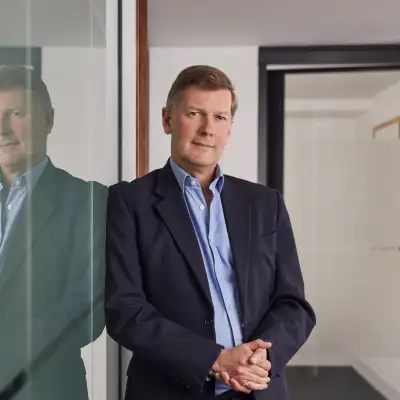
Ralph Grayson: Welcome to The Boardroom Path by Sainty Hird & Partners. I'm your host, Ralph Grayson, a partner in the board practice. In this series, we'll offer practical steps and useful perspectives for aspiring and newly appointed NEDs. Throughout its 30 year history, Sainty Hird has recruited senior board members across the City, Industry, the Public Sector and NGOs.
We're now also evaluating those boards, as well as coaching and mentoring those seeking to transition from an executive career into the boardroom. So we'll be speaking to some leading figures in the board advisory and NED world. Specifically, we'll seek their counsel about how and where to spend time and energy to make an effective transition into the boardroom. The goal is to equip recent and aspiring NEDs with tips, tactics and strategies to be most effective and build a successful career as a board director. In the process, we aim to help you to think more about who you are, how you operate and how you can make this work in the boardroom.
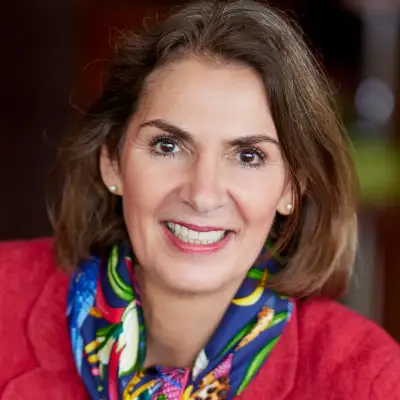
My guest today is Helle Bank Jorgenson. Helle is one of the most influential global voices on board governance, sustainability, and board effectiveness. She leads Board Intelligence's Global Board Development practise, and is the founder of Competent Boards, which became part of Board Intelligence in 2025.
Through Competent Boards, she has helped build board level capability on sustainability, climate, biodiversity, ethics, and long-term value creation across a global director community. Board intelligence has now combined that development expertise with its technology, advisory, and AI enabled governance platform, creating a distinctive vantage point on what future fit boards need to know and do.
Helle's recent writing has sharpened a theme that feels very relevant for this conversation, many boards are not failing because they lack effort or information, they are struggling because the old governance instincts are no longer enough. The docket is fuller, the board pack is heavier, the risk register is longer. But the real question is whether all of that activity is translating into better adjustment?
That takes us to the centre of today's discussion, what leadership in the boardroom looks like now, how it's shaped by context, how we recognise evidence of it, and how AI may change both the practise and the expectations of board leadership.
Hello, welcome to the Boardroom path.
Helle Bank Jorgensen: Thank you so much.
Ralph Grayson: So let's get right into it. When you look at boards today, what's changed most? Let's touch on the issues they face, the expectations placed on them, and the way leadership has to show up in the boardroom.
Helle Bank Jorgensen: It's a good question. I think we move from a world of separate risk to a world of interconnected risk, where you have geopolitics, you have technology, you have climate, capital and allocation of capital, and it's all influencing each other at the same time.
And now, of course, you have AI tools that can help boards be more effective, better informed. So the real shift there is that boards should no longer, in my mind, struggle because they lack the insight. But if they are not careful, they will be struggling because judgement and decision making has, and probably will, become harder.
So the real question is then whether that's translated into better decisions from the leaders, the board members around the boardroom table. And that's where good governance in my mind comes into play.
Ralph Grayson: Let's touch on first, if we can, a theme I'm hearing more and more again on these podcasts and conversations I'm having outside of the podcast. And that's, that governance shouldn't stop at compliance and governance and stewardship need to become much closer integrated.
Board governance as a process or oversight? Can we just explore that shift from compliance to stewardship, especially as you touched on in these conditions of uncertainty.
Helle Bank Jorgensen: Love that. And you know, I wrote the book, The Future Boardroom, but also Stewards of the Future, and for me it's a very, perhaps practical shift, but also difficult. Governance as we see is perhaps about control compliance, oversight, making sure things are within the boundaries.
Stewardship is about the responsibility and also for the future, being a steward, really understanding the organisation and how do we bring that organisations from where it is now to where we'd like it to be. So it's not just asking, are we doing things right? It's asking are we doing the right things for long-term resilience and value?
And then I have to say that I've actually had our chairhired in Copenhagen here the last couple of days for a conference, and Ann talked about three types of boards. The spectator board, the steward board, and then the strategist board, and I would still say, Steward of The Future is a very important thing, but Ann had a part in terms of the world we are in right now on not only being stewards, but really strategists, and as you said, those boards operate in a different way. They set the ambition level, they expand the frame of what the company is willing to attempt. She also talked about where we have 70% of what we do every single day, we spend 20% in an organisation, that's we're testing a little bit out. And then we have the 10% at the top. Have directors that are willing to say, what are those 10%? What is it that's going to be our new market? And I think they are perhaps even further than my thinking in terms of stewards and stewards of the future.
I'd like to see those two things interact, because for me it's very important that we look at not only the company, but also the society and what are the impacts there. But that's again, what the strategist board, if we call it, that needs to take into consideration. So we actually do have our customers, we do have, our supply chain in order and everything, not only for today, also for tomorrow.
Ralph Grayson: I think it's such an interesting exposition of what real leadership in the boardroom should look like and feel like. I'd love to draw out the difference in your mind between board activity and board contribution. In that sense, it's very easy to go through a process, very easy for everybody to fill a diary, but it's another thing for a board member to add value. Could you maybe just bring that to life a little bit for me?
Helle Bank Jorgensen: Yeah. I think what's interesting is that we can all say, oh, we are so busy. Everyone's busy. But busy with what? And are we bringing value into the boardroom? Often I do a lot of board evaluations, board assessments as well as board development, and I think we had a lot of really strong people around the boardroom table. But how do we ensure we bring that insight? How do we ensure we bring the foresight to the organisation and therefore bring value? I think we have a situation where there might be a wait and see. Let's see what's happening, instead of really understanding how can I contribute? So we get to that valuable situation that is more important than ever.
This is not a time for sitting and wait. To me it's really bringing in. not only the individual directors, but everyone around the table and getting the full value out of that. Ralph, we are doing a few surveys about the value that board members believe that they're bringing to the boardroom and there's room for improvement, let's just say that.
And I know when the next of our surveys will come out and interesting in seeing what will that then bring. But there's tonnes of opportunity to improve the value that the directors bring to the boardroom.
Ralph Grayson: I'm so looking forward to having your colleague Megan back on the podcast to update us on that. She appeared a few months ago when you first brought out the survey, and there were some fascinating elements to that. You've had a lot of practical observations. What in your mind really distinguishes a board that governs competently, from one that's genuinely leading?
Helle Bank Jorgensen: The boards that are leading are the ones that not only have the competencies, that's almost a given, but can see a little bit around the corners, can sense what is happening in the world and are not afraid of making the decisions. There is a tendency from time to time that if we are not certain, we'll just wait and see. Can we get a little bit more information about this part? Or can we get a little bit more insight here? But while we are waiting, the world is moving on and this decisions are made for us, but by others.
So the leading boards are the ones that really understand that they're setting the tone, understanding where they want to go and are bringing the organisation to that. They know when to step on the speeder, when to step on the brake and support the management team. Which I think is another very, very important topic.
Ralph Grayson: That segues us beautifully into something you've written about and Board Intelligence have been talking about, which is boards operating in a more complex matrix world. So just draw out that more for us about what your understanding is of this matrix world we're now in and what does that actually mean in a practical sense border?
Helle Bank Jorgensen: There's no single variable decisions anymore. Every decision sits in a matrix of forces, be that economic, technological, environmental, political, so a capital decision is actually also a climate decision. It's also geopolitical decision. It's often a reputational one.
In Canada, we have Wayne Gretzky, a very famous hockey player who once said that you need to skate to where the puck is going. Or you can say you need to look around corners. But the thing is that we no longer, in my mind, in this two dimensional world where you can see, okay, the puck is going to the wall here, then it will turn to be there, so that's where I should skate, during this matrix, where you need to be prepared for everything and all the time. You need to be good at sensing and making decisions without certainty.
So really understanding that you can't just see what is going to happen. You need to have all of the tools ready to have not only the insight, but also the foresight. Do your scenario planning and think perhaps even different think out of the box because we are no longer in a state where we can say, this will probably happen.
Ralph Grayson: I've had some fascinating conversations with Nik Gowing, a recent podcast interviewee talking about "Thinking the Unthinkable". And what they're trying to talk about is how all the givens on which board members have based all their assumptions and their scenarios that's changed.
And not only in this world do we have to think the unthinkable, but also we have to change the way we think about the unthinkable. But is this much a how you change your scenario planning? Or is this more about how board members actually need to think?
Helle Bank Jorgensen: Yes, you need to think differently. You need to have that muscle changed in the way you think. You need to not only ask questions, but really think about what are the questions that will bring us from where we are to where we want to be. But also what are the questions that we need to ask to ensure we are not sleepwalking into a situation we don't want to be in?
And I think that's now in terms of "Thinking The Unthinkable" or,what could go wrong in the boardroom? A lot of things could go wrong. And often, sorry to say, but there is this complacency. Especially when things goes well, right? We don't necessarily have that mind of thinking, oh, this can go terribly wrong. And if someone is thinking like that, it's like, oh yeah, okay. I'm not sure that will happen. But if we don't plan for it, if we don't prepare for it, there is the chance that we will end up there.
I often say luck favours the prepared, right? So hopefully it will never happen, but if you prepared, you at least know what to do. And that's, we can talk everything from cyber, quantum to climate. A lot of other things.
Ralph Grayson: So let's just stay on, because I think it's fascinating this idea of being prepared which is a wonderful aspiration. But how, back into your matrix world, how should boards separate signals from noise in that respect? How do they avoid being detached from reality? And do we need more information or is it less but more relevant information?
Helle Bank Jorgensen: Less, more relevant. But I think in terms of your question of signal from noise, that is one of the core challenges. I think you have boards that needs to be disciplined about what really matters and not assume that more data equals more insight. And that comes back to judgement, right? What are the few critical questions we need to focus on?
Ralph Grayson: How does that actually work then? Is that boardroom culture? Are we back to this psychological safety? How does a board actually lead through this complexity?
Helle Bank Jorgensen: I think board culture has been perhaps seen as a soft issue. But it's not, it's fundamental. It determines whether the board can actually use complexity or gets overwhelmed by it. It's clearly about, can you tr challenge, can you question and think independently. But I also think that goes back to what are the information that we need to have there, and more information on its own unfortunately creates more noise. But if there's clarity, how information is structured, how it's prioritised, of course, how it's interrogated to provide valuable insight and foresight, I think that's where we need to have this play.
And again when I look at Board Intelligence and like the work we do, ensuring that we get the insight, not the information to the boardroom, right? We need to have the insight so the board members can judge based on that, make informed decisions. That's the important thing that we need to ensure that we get in and so the boardroom actually can work as efficiently as possible.
Ralph Grayson: Love that. So it seems to me we've got a bit of a dichotomy here, it's the courage to act before you have all the facts, to have certainty.
Helle Bank Jorgensen: Yes, you need to have the courage to act. again, we are in a situation now where you will not have that certainty. And if you have the certainty it's too late to act. So you need to have the courage not only to ask the questions, but also to decide what direction to go. And then you need to have the courage to say maybe we should change that now.
So you don't say, okay, now we have our strategy for the next X number of years. We'll look at it at that time again, forget it. You need to have strategy in my mind in every single meeting and how do we ensure that this is constantly being reevaluated based on the world that we live in and all the signals we get in from the world we live in?
Ralph Grayson: So there's a few levels of leadership there to avoid that confusion. One is the chair of how the chair manages that process. The other is how the board members individually think they can contribute and not ask questions that aren't relevant and timely. And then there's that collective leadership of how all that fits together. Is that a simplification or what have you seen when you've been a board observer?
Helle Bank Jorgensen: If we start with the board members. In my mind you need to bring the full board up to a certain level of understanding of a lot of different issues in order to have that discussion. Turning all the stones and see what are we going to do in this situation? And you can't have that if there's one board member that are asking questions that are more, I'm not really sure I understand this, while others fully understanding it, but can challenge it in a different way.
So the board development also that we do, that is to ensure that we all in the boardroom have the certain level enough knowledge to ask those questions. In a board meeting you have what three questions you should ask it better be the good ones. So the first level to me that is that we need to ensure that everyone around the boardroom table not only have you know all the fantastic consensus they have from the past, but they continue to upskill themself.
Then you have the chair that has the role in my mind of ensuring that everyone is bringing in their minds, their ideas, their thoughts, but on this level of being informed. Then the chair needs to ensure that kind of okay, can we have a discussion around these things? And then you bring in the whole board and make sure that everyone are willing to say, okay, have we discussed this in a way where we are ready to move on, move with all the variables that we don't know about, but we are then going to come back the next time and say, okay, where were we? Is there anything that have changed since last time?
Ralph Grayson: Correlation and causation spring into mind. I've always been fascinated when I talk to bankers or brokers as to whether a good governed public company should have a higher valuation that's reflected in the share price. So I guess my million dollar question is, can a board still be well led, but deliver poor results or vice versa?
Helle Bank Jorgensen: I guess you can have that, good leadership and then deliver poor results because there's something that's from the outside. However, I'm going back to say that strong leadership improves the quality of decisions, and that tends to show up in results.
Ralph Grayson: So let's get to the elephant in the room then. How AI should or could make decision making better inthe boardroom. And I want to touch on a recent FT article entitled "Bots in the Boardroom", which describes a rapidly developing market in AI tools for board preparation, for research for meeting support and overall governance management, and it's something board intelligence and indeed you have been very much on the forefront of thinking around this. So it highlights in the article as well Lloyd's use of Board Intelligence AI board advice tool as one of the first blue chip deployments of its kind. So let's just start at the macro level. How should boards think about AI? Firstly, as a risk to govern or as a tool that can challenge how boards should govern?
Helle Bank Jorgensen: Both. Increasingly it's also a tool that, in my mind, changes governance itself. AI can improve the preparation, help directors interrogate the information, surface blind spots. The key point is, of course, that AI can change the input, but the judgement and the accountability for the judgement, that stays in my mind with the board director.
So the judgement, the decision making, you can't outsource that, but you can get so much smarter, right? And you are right in terms of the Board Intelligence first business to launch this specialised AI where we've skilled it with over 130 boardroom topics, over 80 capabilities that we based on all the knowledge that we have and all our experience believe that the best boards are experts in.
We've taken all our deep consulting research power our advisory team, and then our technology team and build something that is very powerful. It helped the directors explore lines of curiosity, which I think is a very important thing. You need to be curious as a director. But this can help you do it further, faster. And also like this superpower critical thinking enable the directors to be more informed or perhaps the most informed in the room. You can, augment the power of the boards, but I don't think replace them and their judgement
So for me, this is a fascinating thing, and yes, you, as you said, Ralph I've been upskilling educating board directors in 60 countries with a lot of these things. So I know I have a lot of directors out there that know a lot of this, but you also need to keep it, constantly up to date. And again, making sure that you can ask the right questions, can see around corners or in a matrix worlds can see both up and down and around corners. And therefore get to both more efficient, effective, but also really better decisions for the company and for society. I hope.
Ralph Grayson: Couple of themes I just want to pick up on here. So your colleague, Pippa Berg, talks in the article about Lloyd's, again as a case study, using the tool as an advisor that supports directors ahead of meetings, but importantly not as an active voting voice in the board debate. And I think this is a really interesting topic. What I'm wondering is on the one hand, AI can help augment the board to lead better, but if it over relies on the AI, that's almost in my mind, an abrogation of responsibility of leadership.
Is there a house view that Board intelligence has or you, a personal belief that you have, and this is maybe going in a bit of an ethical direction but where does that balance start and stop and what are the moral influences in your mind that lead you to any judgement?
Helle Bank Jorgensen: I love that question, andI wrote the book, " The Future Boardroom: How to Transform in Turbulent Times". Chapter seven in that starts with the title Technology: Master or Servant? If you think about it, when we started to Google, then we started to Google different things and we got a little bit more. Before then we went to the library and got information. Now you have so much more insight, and I think we are in a step now where it's hard to say, oh, I did not know about a certain topic was going to impact the company, because you are supposed to know. You can now get all of that information. But if you get complacent and say, oh, it seems like the whole world is saying that, this is something that the AI suggests, and they're not critical questions, really figuring out, does this make sense? Then you're in trouble, and then you should not be around that boardroom table.
So we want to make sure that discussion is so much more rich around the boardroom table We all know what it means. And now we can go in and ask the questions,what if this happens? What if this happens? So we basically increasing the knowledge around the boardroom table. We are making those people around the boardroom table even more capable of doing their job and I think that's the important part.
There are bots out there or whatever we call AI that's been appointed to boards also with veto. I don't like it and I don't think that's the way we should go. For those boards that have that, I know that there's also this discussion about, if something goes wrong, can you say, well, it wasn't me, it was the bot. Well, sorry. No, you can't. So you still have the responsibility as director.
This is making it both in my mind, much more fascinating to be a director, but of course also a little bit scary. It's just on a totally different level than if we think X number of years back what is quantum computing? Or what impact can climate have? Now you have it right in front of you. Now it's up to you to decide what to do with that. Not to ask AI, what should I do with it?
Ralph Grayson: So a board director listening to this who wants to understand the power that AI can have in terms of their contribution individually as a collective? What capabilities do these board directors really need and from a development perspective, what one piece of advice would you give somebody to make sure that their personal risk assessment, if you like, around the use of AI is going to be fit for purpose?
Helle Bank Jorgensen: First they need to decide that they want to be the master, not the servant. That's number one. Number two is curiosity. It's not going to do your job, right? You will need to ask the questions. You need to be curious. It will be able to say you might be a little bit biassed in the way you're looking at this. Have you thought about this? But again, you need to make sure that you have the curiosityto dive deeper into some of these things.
Then of course, there's the security, and that's why, you know, in terms of Board Intelligence, of course this is within the most secure systems for good reasons. Where I'm afraid from time to time is that you have a lot of people that are now using different forms of AI, perhaps without really knowing where that information goes. We have seen where someone has shared the full strategy to everyone or where employees might be in a situation where they go like, oh yeah, AI can do this much faster, but I'm not really allowed to use AI in my company, so I'll just use my personal. That's a risk.
The other thing is you can of course develop your own. But what we have built is especially for the board. That is an important thing that you have the best of the best.
Ralph Grayson: Great advice. And look, I think a lot of this does, as you imply, come back to judgement , right? The person has to know how competent, how confident they are in those tools to know how and when they should utilise them. I would also say read Helle's book, because it raises a whole raft of questions that people should be thinking about and looking in the mirror to address not just this issue but many of the other leadership themes that Helle brings to the fore on her book. I've underlined and highlighted most of the book more of it's highlighted than isn't.
One thing before we leave your book, Hella. What you talk about in it, which I think is great is your quote that "boards did not fail, they waited." Which I think is a really important theme that we should drill into a little bit. So why do boards wait? When does caution become a failure? And how the boards actually come to a timely decision, knowing when there is enough information to act?
Helle Bank Jorgensen: Boards wait, I think, because waiting feels safe. But boards don't usually fail because they act too quickly. They fail because they wait too long, and I think that is even more in this fast changing environment we have. Caution becomes a failure when it becomes a way of avoiding responsibility. If you wait for full certainty, you'll almost always too late.By focusing on whether you understand the key risk, is the way, instead of saying, do we have perfect information? Do I understand what are the real key risks and opportunities? Then act instead of waiting for the perfect information.
Ralph Grayson: I think if I'm hearing you right, what we're talking about here are judgement calls on tensions and trade offs, particularly between purpose, performance and stakeholders, shareholders? Sowhat do you think boards are struggling most with these competing priorities?
Helle Bank Jorgensen: Clarity, making sure that they are clear in what is it that is the important part.
Ralph Grayson: so One of the things I'd like to draw out here, is a number of conversations that I'm having with board members are that sensitivity about how you actually rationalise and explain those conflicting judgement calls that you have to make as a board member when you are trying to articulate those to your external stakeholders.
In a world in which we've got geopolitics, we've got increasingly divergent political views, political priorities, social judgments, social media. How would you recommend a board member individually and collectively think about how they articulate or how they should engage with their stakeholders?
Helle Bank Jorgensen: That is a very, very interesting question, especially at this time. How do we explain some of those trade-offs? But I think you need to make it as explicit as possible. The challenge is perhaps not to avoid these trade-offs, it's to making them very clearly and be able to then explain them. And under whatever circumstances that is what we are doing and you mentioned before what is the purpose, not only of the business, but also then what is the purpose of the company? What is our strategy? Where are we going? Having some very clear, this is the north star, this is what we do, and then make sure you are making those decisions and those trade-offs based on that. So you can explain it.
Ralph Grayson: How do you balance your position around ESG? Let's get into that labelling book for want of a better label. If you are in the US, North America, how you articulate that is very different to how you might articulate it in Europe. So if you are a global company, how the heck do you get your head around that?
Helle Bank Jorgensen: What's happening at the moment is that you're using different words for the same. So yes, you and I are now saying ESG environment, social governance. But you can also say we ensuring that we have the supply of what we need in order to have our strategy in place. And I actually think that if you look at it, there's a lot of leaders that's still using the ESG also in the US. It has not gone away. Environment, social, governance have not gone away. How we talking about it is changing. For me, it's like the transparency, the consistency, the reasoning, but it's also what's the outcome? And if the outcome is that we as an organisation, our strategy is to make sure that we also exist in the next a hundred years what will that take? You can't do that if you have not looked into the environmental aspects, the social aspects, and of course the governance aspects. I've worked with a lot of companies in terms of their strategies is really embedded. It's embedded into both the governance but also the strategy of the company and actually that's even stronger.
The issue in terms of the communication right now is when you get to the Annual General Meetings. You have some companies that on one hand are you have to do this from European investors and other investors saying cannot do this. But at the end of the day, I think we all agree that we like clean water, clean air. I think we all agree that we are moving to a situation on this planet where we need to have different types of products. I think we all can agree that we want to have our ki in a better situation, right?
As I say from time to time, if someone can go out and say to Mother Nature that we have decided that she should not send invoices in terms of natural disasters, et cetera, I'm all for it. But I just don't think that anyone have decided or figured out a way to talk to Mother Nature and saying that. So we are seeing big invoices coming from Mother Nature. We are seeing a lot of things happening around the world that are impacting being that geopolitical, societal, impacting companies, impacting what can they sell in the years to come. How can they get their supply? Where can they get their supply from?
Ralph Grayson: Moral leadership and the role of the north star in the board is perhaps a strap line for an entire new episode. So let's try and have a closing reflection on this. Putting you on the spot again. So complete this sentence. Leadership in the boardroom is most visible when?
Helle Bank Jorgensen: When people are willing to challenge each other, make a decision under uncertainty, and take responsibility for it.
Ralph Grayson: Excellent. Hopefully this has excited a number of listeners to think more radically with a small r about their role and how they can lead in the boardroom. I do want to extol the virtues of your books genuinely. Where do listeners go to explore your work, but I guess both through Board Intelligence and Competent Boards.
Helle Bank Jorgensen: Yeah and definitely, website, board intelligence website. I have the LinkedIn newsletter called Stewards of the Future. And of course, the Competent Boards Designation and Certification Programme Global Forum where we help not only build the capabilities, but also that judgement muscle that we talked about that is needed for this more complex world.
Ralph Grayson: Hella our time is well and truly up. That has been fascinating. So much more we could have talked about. Hopefully that segues into another episode in the future. But thank you so much for your contribution today. It was fascinating.
I hope that you've enjoyed listening to this podcast and have found it helpful when thinking about how to approach your own path to the boardroom. If you would like to push this a little bit further, Sainty Hird runs a bespoke one to one programme designed specifically to this end. For more information, please visit our website saintyhird.com, follow us on LinkedIn, and subscribe to the Boardroom Path to receive new episodes. Thank you for listening.