Subscribe
Share
Share
Embed
Welcome to The Boardroom Path, the essential podcast for aspiring and newly appointed Non-Executive Directors navigating the journey from executive leadership to the boardroom. Hosted by Ralph Grayson, partner at Sainty Hird & Partners, each episode offers insightful conversations with industry leaders, seasoned board directors, and governance experts. Our guests share practical strategies, valuable perspectives, and actionable advice on how to effectively transition into board roles, maximise your impact, and build a rewarding NED career.
Ralph Grayson: Welcome to the Boardroom Path. This is the podcast where we explore how decisions are really made in the boardroom, the judgement , the responsibility, and sometimes the uncertainty that comes with leading organisations at the highest level. Because governance isn't just about rules, it's about people making difficult decisions with incomplete information. Decisions that affect employees, investors, and society.
So today we're looking at governance at a particularly interesting moment. In the UK, we have a new Corporate Governance Code. Boards are preparing for new expectations around internal controls. The long anticipated audit reform legislation has been paused, and at the same time, investors are asking tougher questions about risk, stewardship and accountability. So what does that mean for boards and what does good governance actually look like now?
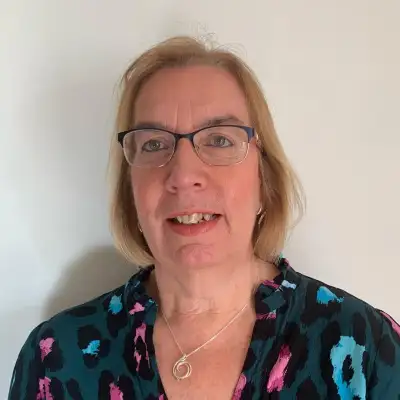
To explore that, I'm delighted to be joined today by Maureen Beresford. Maureen has spent much of her career thinking about one question, what makes governance actually work? She works at the Financial Reporting Council, the UK's regulator responsible for corporate governance, reporting, and stewardship, and her work sits right at the intersection of boards, investors, and regulation.
Maureen has been closely involved in the development and implementation of the UK corporate governance code, helping shape the framework that guides governance across many of the UK's largest companies. Her work touches on board effectiveness, investor stewardship, governance, culture, and how principles translate into real decisions in the boardroom and one of the things she often emphasises is this, governance is not just about compliance, it's about judgement, responsibility, and leadership leader.
So, Maureen, welcome to the Boardroom Path.
Maureen Beresford: Thank you. It is great to be here and thank you for that introduction. Really demonstrated the complexity of this issue.
Ralph Grayson: Good. So why don't we just start with how you found yourself in this arena and what drew you to the content?
Maureen Beresford: I've got to be honest, I was a career civil servant at various different departments, but my last role was in the team that was responsible for the Companies Act and all the legislation that came out of that. And that drew me into more of a governance approach, questioning whether legislation was always the right way to go, more flexibility is needed, more thinking time, et cetera.
And then an opportunity arose to move to the Financial Reporting Council and to review the Corporate Governance Code. I took that opportunity and now, as you said, responsible for the Corporate Governance Code and the Stewardship Code. So really interested in what makes boards tick, really interested in why compliance appears to be the dominant factor quite often, and what we can do to change that in a world where companies always say we want the flexibility, but may not always take it.
Ralph Grayson: And where does the FRC fit within that ecosystem? What are the roles and responsibilities?
Maureen Beresford: Yeah. it is complex. So I always say it's a corporate governance framework. So, a company in the UK listed in the UK will be subject to some of our laws, some of the listing rule laws, the FCA rules, possibly the PRA and the Financial Reporting Council. So the Financial Reporting Council is all about reporting. What it says in the title.
So we don't have the powers as other regulators have to go into companies and to really dig down. It's all about the transparency in that reporting framework. So that's where we fit in. We're responsible for the codes, as I mentioned. We're also responsible for standards for auditors and for accountants and actuaries. But my little world is all corporate governance and stewardship.
Ralph Grayson: So you're not a regulator in that respect. You are setting the tone from the top.
Maureen Beresford: We are a regulator because we do have powers for accountants and auditors to actually enforce the standards. For the Corporate Governance code, the legislation or the legal underpin is from the FCA. So if you are listed in the UK, you are required to follow the UK Corporate Governance Code. And when I say listed, it's the commercial category. It used to be premium listed and standard. That's changed now. So it's a commercial company category that are required to follow the UK Corporate Governance Code.
Ralph Grayson: And how should board members and people who are interested in corporate governance think about this podcast and think about this conversation we're going to have?
Maureen Beresford: They need to take advice from their managers, their company secretaries, their advisors, as to their obligations as a board member. And that means complying with certain rules, regulations, but the Corporate Governance Code sits within that. As I said, it's a legal requirement if you're listed to follow that code.
But you don't have to follow it precisely. It's flexible. So the principles are to be applied so you can apply the principles in a way that suits your company. And the provisions, which is slightly more directive, are to be followed on a comply or explain basis. So you can either comply with each individual provision or you can explain, and I think we'll probably get into the
Ralph Grayson: Yeah, let's come back to that because that's a separate topic in its own right. Let's just to take this back to its basic sense. So when people hear the phrase corporate governance, many immediately think of rules and compliance. But a lot of work that you've written, I've read, suggests governance is really about something much deeper.
So I'm thinking about decision making, accountability, stewardship. How do you describe what governance is actually for?
Maureen Beresford: I think the three words that you just used are really good words. I think governance is about the way a company is run, and that's from the board downwards through its committees, through its management chain. It's about having the policies in place, but more importantly, it's about making sure that those policies are effective. They're doing what they should do.
There is no point in having a great policy and a great target or a programme if there's no output. If it's just put in a drawer. It's about the accountability of the board. It's about oversight, and it's about getting the culture right in the company. You know, there's no point in asking for something if the workforce is unable to deliver that in an effective way.
And I think we forget about the softer side sometimes. We talk about that compliance piece and a tick box approach, I believe, does not help anybody because it's very easy to get a template out and tick a box.
Ralph Grayson: I think that's fascinating. Sorry to jump in. But when I talk to directors, so many of them say governance is all about checklists. But the reality which you are touching on here is full of ambiguity. Would it be fair to say that governance is operating in a grey area and I guess I'm alluding there to you view on judgement rather than certainty and rules.
Maureen Beresford: Absolutely, I think there are some things where you need rules. Health and safety, for example. But governance is about conversations. It's about judgments. It's about thinking about the implications of the decisions that you may make to achieve your strategy. To make your decisions impactful so that the company can grow and that the company can be successful and that is not a science. It's much more of an art, and it's about people, how people work together around the boardroom, using expertise, talking things through and filtering down how a company should be run and how its employees should be responding to the target set, et cetera, and the direction and purpose of the company.
Ralph Grayson: So that idea of governance as a framework for judgments brings us to the heart of the UK Corporate Governance Code. The code is built, as I understand it, on a philosophy that's quite distinctive to other international codes. Most importantly it's principle based rather than rules based.
Can you maybe just dig into that a bit deeper. Why it should be principles based? Why there are differences to way to the way other people interpret codes?
Maureen Beresford: I think you've got to remember that every company is very different, has different objectives, it's on a different path from everyone else. Even if it's the same sector. Oil companies, for example, one will be run slightly differently to another one and there will be a need to do something differently.
So I think those running those companies need that flexibility to be able to make decisions in a space that is not judged by a regulator. They have been, their board has been, in industry or in business generally for quite a while. You've got to trust their judgement you've got to understand that they know the best things for their company within that framework. Framework which will be somewhat legislative but the code offers that flexibility to make decisions, to think for themselves, and if they've got innovative ideas to take them forwards and that is why we don't think it's necessary to say, you must do this, you must do that in terms of governance. It will be a tick box. My view? Potentially worthless.
Ralph Grayson: So let's dig into the code. The latest revision of the code has been published. Most of its provisions will reply to the 2025 reporting period. So what's the thinking behind the latest update?
Maureen Beresford: So I think we generally update the code around every sort of five years. Things change. Sometimes things that you put in a code become kind of second nature, so you don't have to put it in there. Governance is always evolving. So you don't want to write into a code things that are now normalised.
We're trying to evolve all the time, practises improve, et cetera. We consulted a new code a few years ago. Some of that was down to the government's request following Carillion's failure, and much of that consultation was around risk, internal controls and making sure that there was oversight for the company.
We emphasise the need for flexibility and explaining rather than just following the code and we asked for reporting on outcomes. What we were seeing in reporting was that quite often there was a bit of boilerplate there not really telling the reader anything. So we've made it part of the code that, where possible, reporting should talk about the outcome of the actions of the board and management. We made a little tweak in remuneration, and then we've changed what's well known now as provision 29 of the code, which requires the board to declare, make a declaration, that their material controls are effective as at the date of the balance sheet.
That particular provision comes in one year later. So we won't see reporting on that until next year.
Ralph Grayson: Okay. I'd like to come back to that if I can.
Maureen Beresford: I'm sure we will.
Ralph Grayson: I think that's worth digging into a bit. If I'm summarising what I'm hearing, it's reinforcing accountability, but trying to maintain simplicity as much as we can.
Maureen Beresford: Simplicity and proportionality. I think there is quite a lot of repetition within annual reports. There's quite a lot of feeding back what the code says written in the annual report. So we're trying to make it very much outcomes based and giving that flexibility and judgement that you mentioned to companies.
Ralph Grayson: So let's dig into comply and explain a little bit more maybe before we get there. The ICAW has just written a thought piece around some of these issues, I think recently. Perhaps you'd like to update us on that?
Maureen Beresford: Yes. Our chief executive, Richard Moriarty, was at the ICAW conference last week and the ICAW have put out a piece which kind of highlights his views around that. It's nothing new. Both Richard and I have been on the road for some time talking about the value of explanations and boards being brave and bold to move away from this compliance culture that there is sometimes around the code where boards appear to prefer to comply with every provision rather than take that flexibility and do something a little bit different.
Sometimes we fear that it could be down to advisors and sometimes it's down to board members who don't want to see non-compliance as a black mark. So we're trying to move away from that.
Ralph Grayson: This is so interesting and I think it goes to the heart of board leadership and I heard Richard speak not so long ago, and his thesis was, if I can put words in his mouth, was that boards don't demonstrate to leadership, true leadership, unless they have explained why they're not going to comply and the contextual application of those guidelines as to how the board should lead. So can we just get your view of that philosophy?
Maureen Beresford: I think what's missing from the piece, I think what Richard's trying to get at is that an explanation is just as good as compliance, and maybe in many cases better, because that's a board demonstrating leadership, demonstrating courage, that they have got good governance within their structure.
But it might not be exactly the same as the code is saying. It's something different. And I think if the explanation can set that out in a clear and transparent way, that gives so much evidence and confidence to the reader that the board is in charge, that the board is making decisions, they're thinking about governance, they're thinking about what the impact of their decisions will be, and they're not blindly following the code, which is good.
You know, we've got good governance in the UK, I think we forget that, and the code and other things have led to that good governance. But we've always got to try and improve and continually better ourselves, grow our companies, be international leaders, and I think by using that flexibility and making decisions that are right for the company at the right time, that demonstrates leadership in governance.
Ralph Grayson: So do you think this is cultural in some way? Or is this about the perceived role and influence of proxy advisors or stewardship departments? I mean cause and effect, where are the patterns here?
Maureen Beresford: I think there's lots of things in there to unwrap. I think we are a regulator, and as much as we say that we will not take action against an organisation that doesn't comply, that does something different, I think there's that still it's a regulator. So they may do something. So I think that's a kind of built in position for companies because many regulators do take action and they're concerned about that.
I think there is an issue around proxy advisors. Proxy season is very tight, as you know, couple of weeks when all those votes have to be cast. And let's be honest, investors don't have the time to go and speak to every single company. They use their proxy advisors to help them make decisions on voting. Proxy advisors don't have infinite resources. So there's a time constraint that doesn't allow the breadth and depth of discussion that would help everybody. So I think there's a pushback from companies on proxy advisors that they don't spend the time listening to them and they think that if they do an explanation, the proxies will simply suggest to their investors that they should vote against.
We have spent a lot of time with proxy advisors. They've told us that is not the position. They've told us that they do highlight explanations and feed those back to their investors. And then investors are telling us that they make decisions based on what they see in the reports of the proxies, not always simply following the proxy advisors advice and I think you can look at some stewardship reports actually say that.
But I think we've got to remember some investors might have their own rules as well. They might decide that they want to see, for example, 50% of women on the board. The corporate governance code doesn't say that, but the proxy might be looking for that on behalf of their investor. They might have a slightly different approach. So I think it's for the investors to explain that to the companies that they're invested in so that it is not a direct link to the corporate governance code. It's something that the actual investor wants to do.
So it's very complex as to where the levers are. So the Corporate Governance Code sets a framework and a standard, but there are other levers that build into that. I would just like to reiterate that the FRC is doing all it can to smooth that relationship and that understanding of the work of proxy advisors.
Ralph Grayson: Keyword, to me, seems to be trust here. So how does a board best develop that trust with all the stakeholders but in particular, I guess the asset managers and increasing the asset owners? So the QCA debate is how board should better deal with asset owners and asset managers and does the board have a leadership responsibility, not only to be the overseer of the executive team, but also take that strategy, take that vision, mission, purpose to market?
Maureen Beresford: I think so. I think we've got to be real. There are lots of people that invest in companies and you might not even have 1%. The board can't engage with everybody. But what the board can do is give the transparency that those investors need. Whether they be a 5% investor, a 1% investor, or a 0.2% investor. They can give that and then I think there's a need for those that are investing, if they're not happy with that transparency or concern, then they should be looking for ways to engage with the board, senior management, or others in the company to discuss what the issues are.
Now, we've also got to remember that most resolutions pass. Many of them pass. So I think when your bigger investors, asset managers, asset owners are really concerned, they will make an attempt to speak to boards. And I think boards should be open to that and I think they are in many ways. Boards should not be worried about votes against, but that's an opportunity to seek out those organisations that do vote against, understand why, and to see if there's any bridging that can be done or explain the position of the company, et cetera.
So I do think there should be more engagement outside of proxy season. The company should think about who is reading their reports. Some of it might be machine, but they might spill out some information and who they need to talk to best support their strategy. And you might have investors, they've got very different views. One might want to go down one lane, another one might want to do something different. And then I think the board has to decide, we can't follow every investor's particular niche requirement, but we need to build that into our thinking and we need to feed back to investors that's what we're doing and why.
And there are many relationships that we're aware of where investors invest because they know their business is a good one, but they don't agree with everything the company does. And we've got to be mature about this. Not everything will be perfect for everybody, but there should be channels open to engage as and when it's right for everybody.
Ralph Grayson: Can we come back to a word you used a little bit earlier was transparency. There's been a lot written and said around the cost and process of governance and why that is encouraging boards to think being a public company is just not worth the hassle and therefore we're seeing companies going private and or just not floating.
Where do you stand on this balance and duty of care and oversight and governance?
Maureen Beresford: I think, let's be honest, annual reports are too big. They're unwieldy. They're difficult to read. So I think there is a debate to be had about what should be in those annual reports, what they should look like, whether there's any other ways of getting the message across, whether it be on a website or through other channels, and I think the government will be coming out on some proposals for that fairly soon.
But I think you've got to remember that investors look for transparency. They look to find due diligence before they might invest somewhere and anything that could give them the confidence in a company before they invest and impact that as access to capital has got to be a good thing. So I think it's all about getting proportionate reporting that is decision useful and that investors can use as well and cutting out some of the clutter, some of the boilerplate, and some of the repetition that is in annual reports.
We're all guilty of providing more information. We all do it and I think everybody has to take a step back. I think quite often when companies write their annual report, and I absolutely understand why they do that, they look at last year's and they tweak it. You can tell that. In the governance report, I would much prefer to see lesser reporting, but more impactful reporting starting from a blank page.
What story do I want to tell this year looking at the Corporate Governance Code, its principles and what I'm doing as a company to demonstrate good governance in this area? And I think there's a lot of time throughout the year where you can build that message and I think, for lots of different reasons, companies do it all at the end of the year, and I absolutely understand that. But in an ideal world, you'd build that message up throughout the year.
Ralph Grayson: That's so interesting. So what I'm hearing here is explanation is not a loophole or an optout, and actually it's a way of telling investors how the board is thinking.
Maureen Beresford: Absolutely, it's an opportunity to demonstrate good governance, and good governance will be supported by investors. And at the ICAW event there was some investors on a panel there that said the UK does demonstrate good governance and we should be supporting that and we should see it for the value that it has.
Ralph Grayson: So let's dig into Provision 29 then, because that seems to be one of the key topics? I have a lot of conversations with boards and board members about. So internal controls, where and how does that requirement go to the heart of effectiveness, of good governance?
Maureen Beresford: So just to roll back as to how we got to the new Provision 29. I think we've got to remember that there is currently a Provision 29 in the Corporate Governance Code. It's been there for years and it talks about monitoring and reviewing controls. It talks about controls beyond financial. What we wanted to do following our consultation is ensure there was board oversight, there were good conversations around the board on risk and internal controls, and we wanted the board members to really say, we're on this, we're over this.
So what we've done, we've expanded Provision 29 slightly. We've asked for a review of the framework, we've asked the board to explain how they've monitored that framework, and we've asked for a declaration on the effectiveness of material controls and I think that is really important is material controls.
Now what we've not done is told any company what the controls are, what the controls could be, how would I know? I don't know what the material controls are anywhere else than other in my personal house. So we can't tell a company that, we've not told them how many, we've not told them how to write the declaration and nor should we because that is a board and management decision, a governance decision about running their organisation.
I think this goes to the heart of what we've been talking about. We are giving companies the flexibility to do this in a way that suits them, in a way that achieves good governance, but good risk management and good internal controls management in a way that is effective. It's been difficult. We've had lots of questions from companies that we didn't expect because we thought this was purely an evolution. But we found that some companies were only reporting on financial controls, which was not what we expected at all. And some companies have used this change to really go into their risk appetite to really strip back what they really need to do.
What concerns board members and non-executive members, and what they need to be comfortable in making that declaration because they can't hand on hand make a declaration unless they've got the information to do The feedback that we're getting is that it's been a good exercise. But it's been a, I would say, a tricky path because there was a lot of concern to start off with. But I think we're through that and most companies are seeing the benefits of what we've asked them to do.
Ralph Grayson: Interesting because certainly some of the feedback I've had is that this is consciously or unconsciously a step more towards Sarbanes Oxley. I know you don't agree with that.
Maureen Beresford: Absolutely not.
Ralph Grayson: Why do you think internal control has become such a lightning rod of focus and I'm really interested in back to this public private debate and whether board members should want to be on a PLC board.
How should they reframe their thoughts against this provision or set against this provision in terms of their personal liability, their personal responsibilities, and actually how they should conduct themselves on a day-to-day basis?
Maureen Beresford: Let me pick up your first point first about Sarbanes Oxley. It's absolutely not Sarbanes Oxley. Sarbanes Oxley is more about testing every single control, it's about sending information to the regulator, it's about the regulator checking that, et cetera. We are not going to do any of that. We don't want to see in the reporting a list of the controls. We don't want to see the testing. We want to know the governance and the oversight. So that's the first point that I really need to make.
The second point is, what is the role of a NED on a board? It's to challenge, it's to be inquisitive, it's to ask questions and it's to understand their contribution to the effectiveness of that company and to make it successful. And it seems to me that to do such a thing, they need to understand what the risks are. They need to have a conversation about risk appetite, and they need to know that those risks are being managed, mitigated, or dealt with in effective way. So I don't think that is any change to what NEDs and boards should already be doing as a matter of course.
What we're asking them to do as a board collectively states that they've actually looked at the information and bearing what they've said in mind the material controls, and you must remember this is only the controls that they're most critical. There'll be lots of other controls that, will fail whatever. But it's the material controls is to say that the framework is effective as of a set date based on the information.
Ralph Grayson: Okay. So what I'm hearing is that this is about boards taking ownership of
Maureen Beresford: Absolutely.
Ralph Grayson: Not necessarily being more prescriptive or dogmatic around the application of that risk.
Maureen Beresford: That's exactly right. It's exactly right. Yeah.
Ralph Grayson: Okay. Let's just turn audit reform for a second. The governments decided now not to proceed with that legislation for now. I think that's come as a surprise to most people. Indeed, I think there was quite a lot of speculation about whether we'd have even a new regulator created. Does this pause change anything as far as boards should be thinking about their roles and does it have any broader application for the meaning of governance?
Maureen Beresford: I don't think so. I think in terms of governance, there was very little within the proposals that would've impacted on the kind of work that I do in the Corporate Governance Code, et cetera. However, there were some proposals around whether the FRC will be able to enforce against directors because we don't have that power. The FRC'S power as I mentioned briefly at the beginning, is about auditors and accountants. So if we find a failing of an auditor or an accountant, a professional, then we can take action, but not against wider directors. But I think you've got to remember that other organisations can take action against directors.
I think you also need to remember it's a while since the various reports, Bridon, et cetera were done on the FRC and there's been significant change. We've done a lot without legislation. In reality, there are only a few things that would've been left in that Bill to do. And I think we've got to be honest, we're in a time where we're looking to grow. We need things to be proportionate and we need companies to do what is right for them and to reduce the amount of reporting. So I think although there was support for the Bill cross party getting that bill to the stage where it was debated, number of issues in the world that the government has to deal with. It was highly unlikely that would ever get to the top of the list. So I think it's a pragmatic decision and the work that the Department of Business is doing that will come out with a consultation on reporting later this year will help towards that.
Ralph Grayson: So what I'm hearing, if I summarise correctly, is governance is going to keep evolving. this is evolution, not revolution?
revolution Yep.
And it's certainly going to be still about principles, not dogma, and a lot about judgement and demonstrating that judgement
Maureen Beresford: Absolutely right. Yes, I should have said that in that way.
Ralph Grayson: Okay. So let's just stick on judgement because time's running on. I'm particularly interested just to dig in a little bit more about how you see stewardship evolving and how boards need to think about that interface and the demonstration of that judgement to the asset owners and the asset managers.
Maureen Beresford: So I did say that we were responsible for the Stewardship Code as well, and the stewardship code is another principles based code that asks applicants to that code to set out you know, what their objectives are, what they want to achieve, how they're going to achieve it, that what they think about risk, et cetera, and applicants to the Stewardship Code send in their report every year we assess it and they either become a signature to the code or they don't become a signature to the code. There's an absolute bar there.
So I think stewardship, it's important. The work that we've done and the engagement that we've had with stewards, with investors, asset managers and asset owners has demonstrated that they're passionate about what they do. There are very different forms of stewardship. Every organisation will have different priorities and objectives. It's not for the government, for the regulator, to state what they are. That's for them to do. And I think that's for them, as we touched on earlier, to articulate to those companies that they're investing in, particularly where it's an equity investment, and to have the discussions about what they want to achieve through that investment.
Now, I think your question was about private and public, and I think we've got to be honest. A lot of private companies are not what they used to be. They've got a lot of external investment as well. And so I think these conversations are not just happening in public markets, they're happening in private markets, and I think it's really important to think about the UK's growth, not just in terms of how many public listed companies we've got, but what is our investment? What are our investors doing? How much investment can we attract to the UK? And how our asset owners and asset managers are engaging with those companies, driving growth forward, and working with them to achieve sustainable success?
Ralph Grayson: Yeah. I think that's so interesting. Certainly the phrase that comes up a lot when I'm talking with board members around governance is not whether problems are going to arise, because by definition they will, but the real test is whether the board is prepared and not surprised if I can express it like that.
So let's put you on the spot. What distinguishes a board that's genuinely prepared rather than found itself surprised?
Maureen Beresford: That's a tough question. I think it's one with a chair that understands the makeup of their board, the experience of the board, and that they have got a good range of people from different backgrounds and different experiences, et cetera. But they're able to get advice from a wide range of individuals or groups of people.
So let's take cyber, you know, we've got to be honest that the board is not going to be over every single cyber threat. They should not be. It's for them to get the advice, to ask the right questions, to get experts in when they need it, and I think boards that understand that they need to get that help, whether it be internal or external, are better prepared.
And it's the boards that ask questions, really delve into the questions, and link what they're doing to that long-term strategy, rather than individual passion around the table, which is important. But one person's individual requirements does not make a successful board.
Ralph Grayson: And it's a brilliant answer because you can't write it in a job spec.
Maureen Beresford: Exactly.
Ralph Grayson: It's awareness. It's challenge. It's curiosity. These are all judgement themes. And how do you interview for judgement?
Maureen Beresford: You can't, you can't. You've just got to see it around the table and you've got to be brave enough. If somebody's not actually delivering around the board table, then maybe they're not the right person for that company? But the chair's role is very difficult because their role is to make sure that everyone around that board table is able to contribute effectively and that may not always be the case. You know, there might be groups of people that have always worked together, been there for six, seven years, that often make the majority of the decisions. And a chair should make sure that it's everybody contributing their expertise to that decision making.
Ralph Grayson: So better questions, not more questions and curiosity rather than speech.
Maureen Beresford: I love that you're summing up everything that I say.
Ralph Grayson: No, well, you express it very well. There's been a lot of debate around tenure in that respect and a lot of work, I read some recent Spencer Stuart work where they'd looked at the outperformance of, and I think these were S&P rather than FTSE, but chairs who'd gone beyond nine years were actually demonstrating better EBITDA and better share performance.
Is that part of comply or explain, do you have a position on this?
Maureen Beresford: Comply or explain says nine years, but it's comply or explain. If you think your chair is the person that is right for you, they're still delivering, maybe they're delivering better, absolutely keep that chair on. But just explain why. And if the reason is that they're delivering the better outcomes, that's great.
You might have a chair that you think, well, they've been there for ages. What about their independence? And it's always a tricky one, chair independence, because they're so ingrained, but they've got to be independent at least on taking up the post. Maybe there's a better role for the SID. Maybe they can ask much more challenging questions if you're keeping your chair on for longer and they're not becoming part of management. That's the point about tenure. It's trying to ensure that there are people around that board table that are not too ingrained in the business that they can't challenge.
Ralph Grayson: So let's just segue that into your crystal ball.
Maureen Beresford: Oh, no.
Ralph Grayson: So the only constant now is change, volatility, geopolitics, how is this going to impact and shape the right skills, experience, knowledge that we have on boards and how is the FRC going to have to continue to evolve over the next five years to accommodate that?
Maureen Beresford: It is a huge challenge. None of us can know what's going to happen tomorrow, nevermind,two years down the line. Going back to the point I made it earlier, they've got to get expertise from somewhere. And I think boards need to think if they've got too many people from finance on that board, let's change it. Let's change it around. Let's get somebody from a different expertise if that's what they think and don't stick to this almost nine years. I think there's a little bit of, again, the code being a bit, bit more prescriptive, nine years and done almost. It shouldn't be that. It should be, if someone's only there for six years, that's great and get somebody different. Boards should be prepared to be a little bit more fluid to get the right people on. But that's got to be balanced with understanding the business. So that might be where they get their expertise in.
I think overboarding should be looked at carefully. We did consult on overboarding. We've never said there should be a figure for overboarding because you can be on five boards and not have very significant roles. You might not be a chair of a committee, you might not be an absolute chair, you might not be a SID. So I think you've got to think about overboarding, but I think there is something around crisis, and if you've got a number of people around the board that potentially are on five other boards that are all in crisis, if it's a geopolitical issue for example, how are they going to demonstrate that they're giving the right amount of time to your individual board as opposed to another one?
Ralph Grayson: We found it in COVID, right? Yeah. Boy did we find out who was overboarded and I think now we're in a perpetual COVID period.
Maureen Beresford: Yeah, I think you're right.
Ralph Grayson: Fascinating. Time has really run on. So Maureen, thank you so much.
Maureen Beresford: No worries.
Ralph Grayson: For joining us. I think if I try and put one of my pithy summaries together, what we've learned today is that governance really isn't about frameworks, it's about thoughtful decisions, particularly in uncertain situations, and the board can't be looking for perfection but searching for preparation. So is there anything that you might add to that, that you think one board member listening to this should take away?
Maureen Beresford: I think the word that we use quite often is be brave. Do what is right for the company, and stand behind your decisions.
Ralph Grayson: And where do they follow the FRC and where do they follow Maureen?
Maureen Beresford: Yeah, you can find us on our website at the FRC, so you can just Google FRC. I'm on LinkedIn. We're always doing podcasts, webinars, et cetera. We've got an inquiry point at the FRC so if you want to speak to me or my team in person, we are a regulator that's happy to speak to anybody directly.
Ralph Grayson: Fantastic. Thank you so much.