Subscribe
Share
Share
Embed
**Success shouldn’t cost you your peace.**
Welcome to *The Work of Warriors*, the mental health and wellness podcast for the entertainment industry—created for the artists, creatives, and industry professionals building extraordinary careers without wanting to lose themselves in the process.
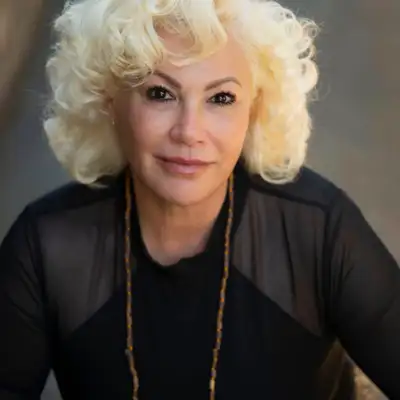
Hosted by former therapist and nervous system strategist Kim Rapach, The Work of Warriors explores the human side of working in entertainment: the pressure to perform, the uncertainty between opportunities, the demands of creative careers, and the challenge of staying grounded in an industry that can ask so much of the people who make it possible.
Through honest conversations with actors, musicians, filmmakers, comedians, producers, executives, entrepreneurs, and other industry leaders, we explore what it actually takes to thrive personally while building something meaningful professionally.
Together, we’re changing the conversation around mental wellness in entertainment by:
• Normalizing honest conversations about mental health and the realities of creative careers
• Exploring practical tools for nervous system regulation, emotional resilience, and greater capacity
• Challenging the belief that burnout, self-abandonment, and constant hustle are simply the price of success
• Redefining success to include well-being, healthy relationships, boundaries, authenticity, and sustainable careers
Whether you’re navigating burnout, anxiety, rejection, creative pressure, career uncertainty, life after a big project, or the complicated relationship between your identity and your work, The Work of Warriors is a place for conversations that remind you: You can love the work without losing yourself to it.
Because a healthier entertainment industry starts with healthier humans.
When artists are well, everybody wins.
Thank you for being part of the conversation, and for helping create a healthier entertainment industry, one brave conversation at a time.
Kim Rapach (00:02.039)
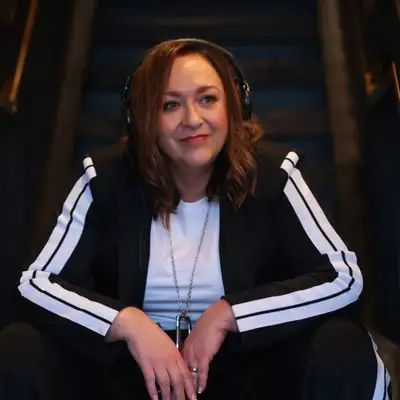
Welcome back, warriors. Today's guest has an inspiring and fascinating story going from a long career as an actress to now a coach. I will let her share her journey with us today, but welcome Sarah Banyan.
Kim Rapach (03:49.919)
Ahem.
Kim Rapach (06:08.248)
Hmm.
Kim Rapach (06:12.878)
Ahem.
Kim Rapach (12:19.246)
Ahem.
Kim Rapach (13:06.434)
There you are.
Kim Rapach (13:18.493)
you
Kim Rapach (13:26.466)
Good morning!
Kim Rapach (13:31.682)
You can't hear me. Hmm.
Sara Banyan (13:38.691)
Can you hear me?
Kim Rapach (13:40.695)
I can.
Sara Banyan (13:41.475)
It's so, uh, testing, Yes. Hi, Kim.
Kim Rapach (13:46.318)
Can you hear me? Hi. Nice to meet you, Sarah.
Sara Banyan (13:51.477)
I'm so sorry, that was the...
Yeah, I did not expect that much downloading and re-chroming and Mac-ing and my laptop is over here, I mean my desktop, but it wasn't working. So I'm here now. oh my gosh, I just listened to your intro.
Kim Rapach (14:16.952)
Thank you.
Sara Banyan (14:18.325)
I was like pumping my arm and like putting my heart, like that was a rocky speech, that was an anthem, that was like purpose driven, inspiring, incredible seven minutes of like, this is what the world means.
Kim Rapach (14:22.318)
Aww, thank you.
Kim Rapach (14:30.444)
Mmm.
Kim Rapach (14:40.182)
Wow, well thank you so much. I'm wondering, I don't think my new intro is even up yet, so that might still be the older one, so thank you.
Sara Banyan (14:48.695)
great mission.
Kim Rapach (14:51.064)
Thank you, thank you, so dear to my heart.
Sara Banyan (14:55.491)
How did it start if you don't mind my asking?
Kim Rapach (15:00.59)
gosh, no, thank you for asking. So I used to be a therapist. And I also have a son who is an actor. And it was always, mean, I was honestly terrified to let him work in the industry. I grew up in the 80s. I just have seen tragedy after tragedy. I...
really waffled for a long time of whether or not I was honoring him by what he wanted to do, or if I was being irresponsible as a parent by letting him do it. And it was this constant, quick and pull. And so we just put everything in place that we could to keep him safe in the industry. And as a therapist, I've worked with artists, musicians, models, you know, just, you know, random here and there.
But after losing someone very dear to me who was an entertainer, and then COVID, and then George Floyd passing away, all of that culminated into me finding myself in a very dark place and contemplating my own existence. And I had to swiftly make a very important decision.
which was life or death, literally. And I just knew I couldn't keep doing what I was doing, which was pouring into everybody but myself. And I was a therapist, so I was taking care of myself. knew what to do, but it was not working and it wasn't enough. And like most energetic, high achieving people, even as a therapist, I just thought if I helped more people, if I worked harder, if I...
Sara Banyan (16:33.24)
Yeah.
Kim Rapach (16:51.522)
built more into my business, then eventually I would be happy and it just never worked. I mean, the business was successful, but I had a great life, a great family, a great business, loved my job, loved what I did, and I was really miserable. So it was through that season and through the beginning of COVID where I realized this isn't what I want to do because what
the medical model of therapy wasn't working for me as a clinician and it wasn't working for my clients who are really driven. It wasn't working for the artists. And, you know, I watched a lot of my clients build new businesses, learn how to play. watched my own kid teach himself how to play an instrument. And I'm just like, okay, I've taught all these people.
So I think it's time for me to do that too. And so I pivoted away from the medical model of therapy into coaching and just developed a coaching model that with the tools that saved my life, which was nervous system regulation and the Enneagram and the window of tolerance. And, you know, over time, I just realized there's a lot of people walking around dysregulated, not knowing that they're dysregulated and also diagnosed.
feeling powerless and feeling like they're broken and something's wrong with them. And certainly some people do have a mental illness, but I believe a lot of people do not. And if they were given the tools and understood their personality, understood their lived experience, how it's living in their body, and then having the tools to untether from that, we would have a much happier, safer world.
Sara Banyan (18:37.858)
Amen.
Kim Rapach (18:38.53)
And we would definitely have a much happier and safer entertainment industry. That's my focus.
Sara Banyan (18:45.335)
Well, as you said, if we change the entertainment industry, the entertainment industry has the reach and the ability to change millions of lives.
Kim Rapach (18:55.702)
Yeah. And that's, that's another reason why it's so important to me because artists are the ones on the front lines. They're the ones the rest of us are watching and learning from. So if someone is successful and we think that they have this glorious, glamorous life and then they end their life, what does that tell the rest of us? Like, well, if that person can't make it, how am I going to make it?
But if we have people on the front lines on film and on stages saying, Hey, here's here, you know, had a, had a rough day and here's what I did. And now I'm back at it and we can normalize the human experience as opposed to there's something wrong with you. It would just be a game changer. I always say like, I long for the day where, know, industry execs say like, I can't work with you unless you're working on your mental health. And we provide that for you.
because it's that important. So, that's where I'm going.
Sara Banyan (19:48.567)
Amen.
Amen.
Kim Rapach (19:55.062)
Yeah, I'll just say one more thing. really, you know, for artists listening, the industry, the entertainment industry puts unrealistic demands on its artists. And then because the artists are not robots and they burn out or they get addicted to something or they start acting out, then the industry has the audacity to then say there's something wrong with you or to cancel your cast you aside. And
I can't sit with that. I just have to be part of a solution because that is just ridiculous to me and so dangerous.
Sara Banyan (20:34.133)
It's been around since the age Hollywood was born. So yeah, wow.
Kim Rapach (20:41.122)
Yep. Yep.
Yeah. So thank you for asking. This is a long-winded answer. Tell me about you. You have an amazing, inspiring story. You were an actress.
Sara Banyan (20:47.223)
Yeah, dude.
Sara Banyan (20:54.029)
Thank you. I was. Yeah, I was. I was in a very high level, very young. I was classically trained. I knew I wanted to be an actor. In hindsight and in my own healing journey, you know, of course, I became an actor in order to survive. And I was, as I said, classically trained. went to Oxford. I went to Carmel Mellon. I did all the technique, all the training, but...
Kim Rapach (20:59.18)
I mean about it.
Sara Banyan (21:22.563)
I went to Hollywood, I love film and TV. I've loved film and TV since I was a little wee child. And I love what it can do for us. I love that it's been a best friend, a lover, a security blanket, a place to cry, or a reason to laugh. It's where I found connection. I love film and TV. But when I started, it was like classical training, classical training. Now it's go to a reality show.
you know, and then get discovered. And what happened is with reality is our audience got used to seeing real people. And when I started in Hollywood in my early 20s, I was like, my God, I've learned all these techniques to act. But they want the actual person to come in the room.
So I was a very good chameleon and I would flip and change my colors. yet, so when I came in the room, I was this version of me that I wanted to bring to the role. So the minute I started doing the scene, they couldn't tell the difference between me acting versus me talking to them.
And I started booking in my early 20s. And I was not prepared. I was not prepared. I like to say there's a place right beneath hell, and that's hollywood
Kim Rapach (22:41.72)
Mm.
Kim Rapach (22:48.183)
Wow.
Sara Banyan (22:50.083)
And I had so much pressure on the way I looked on my body. My weight was a big one. And that started in school. got a note my junior year of college the summer before my junior year saying if I didn't lose weight, they were going to drop me for the program.
Kim Rapach (23:08.376)
Wow.
Sara Banyan (23:09.707)
And that continued to be an issue throughout my career. Casting directors would ask my agents suddenly, well, what's your size right now? I went from being like leading lady at a size four, six, which meant I was eating like two protein bars a day to maintain the hunt and working out three hours. Or at size eight, I was now no longer considered a love interest for someone like Ted Danson, who was, is like 20 years my senior.
I mean bananas because I went out with science. So I'm in the midst of this working like crazy, working at a level actors would come to me on set and say, how are you recurring on both, you know, on two shows right now? That's incredible because back then it wasn't done as much. And I kept quitting the industry because of the pressure, because of, you know,
Kim Rapach (23:42.114)
Mm-hmm.
Sara Banyan (24:06.145)
my mental health, which I didn't even know how to say those words back then. I just knew I was, it was like waking up to someone that you loved your whole life and looking over at them on the pillow and going, don't love you anymore. I'd be pulling up to set with my name on a parking spot, working all the time, the actor's dream. And my heart was breaking, you know, because I was.
Kim Rapach (24:12.14)
Mm-hmm.
Kim Rapach (24:23.544)
Mm.
Kim Rapach (24:30.925)
Mm-hmm.
Sara Banyan (24:35.703)
bulimic or anorexic or constantly going to a dermatologist and I was also you know trigger warning for those listening from battling severe depression and It's not that I wanted to kill myself. It's that most days from the time I was a child I didn't want to live and So here I was you know presenting this image and achieving at the highest level
and I would have the highs but the lows, as you well know, when you're clinging onto the cliff of getting to the next hour, where the pain is so intense or the numbness is so pervasive, it's crippling and stagnating. So I just acted and I kept acting except when I was in front of the camera. And then I would fight fearlessly.
for entry.
And so I quit, I go work in a nursery school. I worked in a nursery school off of La Cienca Temple Beth-Anne. They hired me because I was like, I don't do any, I've worked in a restaurant and I've worked with kids and I'm an actress. And they were like, we support you. And they took a chance and it turned out to be such a healing place because every day I go to school and be surrounded by unconditional love. Like I was the teacher in the sandbox, know, like, We're doing pirates today. I'm the great test, you know.
Like, I hurt you know, and I would, my agents would call and say, no, no, they, you know, and I quit, I left the business. I was like, I'm done, no more. Well, but they just want to see you for this HBO pirate, it's George Clooney, no. You know, I'm not going, I told you I quit. All right, fine, I'll go between app time and story time. And then I go on my overalls, you know, I was like, F you.
Sara Banyan (26:32.675)
And I never walked into rooms desperate. I always walked in. Even when I had like, you know, negative one dollar in my account, somehow some way underneath all of my fear, and security was this iron, this metal, this grit of like determination. And I think that stems from being a trauma survivor.
Kim Rapach (26:58.626)
Mm-hmm.
Sara Banyan (27:02.509)
I just didn't know it at time.
Kim Rapach (27:05.07)
sure.
Sara Banyan (27:06.637)
So yeah, so I just worked and worked and then I transitioned into coaching. The third time I quit the business and walked into my agent's, was like, I'm leaving. They're like, you'll be back. The first time they cried, the second time they were like, don't leave. The third time they were like, yeah, okay, whatever. Bang, and they'll be back. Mornell was my name at the time. And so they called me and they said, we have this client.
Kim Rapach (27:12.984)
How can that happen?
Kim Rapach (27:26.702)
you
Sara Banyan (27:36.183)
And he's really young, good looking, he's been auditioning for a year, nothing, no callbacks, nothing. We know you're a great auditioner. Can you work with him? Yes, sure. His name is Paul Griffin and he immediately got a callback after my coaching. Like I was like, no, no, no, not this, not this, not this, not this. The thing is most people...
Then we're not coaching audition technique. It was all like scene study and method and Stanislavski and Meister. And I was like, you have to get rid of that like immediately. That's not the art form of the audition. That's not the arena of film and TV that's teaching you how to play a character, put something on versus like bringing who you are to the role and not being afraid to break rules and not being afraid that it's not wrong. And so he got a call back, his manager called my agents and was like, who is the
coach and within a few months I was booked. had clients because again no one, it was based off this concept called selling the invisible which was a book my brother got from Harvard way back in the day. And it's this concept of find what's not being offered in the area you want to go in and go into that. Find what's missing. And what was missing was audition technique. No one had succeeded at the level I had succeeded at.
working with George Clooney, Ted Danson, testing for two pilots in the same day, being the it girl of Hollywood for several years when I wasn't working, I was auditioning, and reached their hand down and said, actually, here's how you do it. Like, here's how you get out of the black box theater technique, and here's what it takes to book. There was a lot of people sort of talking about it, but when it comes to really teaching how to audition,
that was an art form that I felt was missing. So because I succeeded at a level as an actress where I actually had fans, a lot of them had stalkers, had like websites developed to me for me, like I had to be very careful with my clients so it's all referral. And so word of mouth just built my business. And as I said, within a few months, I was coaching all the time because my...
Sara Banyan (29:56.385)
I couldn't let an actor leave my room unless I knew that they were going to make an impact. And no one was doing what I was doing. And so I started developing my method, which was teaching people how to be fearless in who they are versus acting like someone else. I like to say, act when you walk into the room, stop acting, and pick up the page. But really, it's discovering all of the versions of yourselves, all of yourselves.
all of the versions of who you are. And we have so many. And leaning into the ones that are like the dark, the deep, the trauma, the trigger, the pain, the hurt, the wounds, and not going into manipulate and massage and masturbate them, which my training taught me how to do, which taught me how to act more. But instead, I teach my actors how to tap in, tap out, to go into the truth, but to take a lot of care.
Kim Rapach (30:29.486)
Mm-hmm.
Kim Rapach (30:45.878)
Mm-hmm.
Sara Banyan (30:54.723)
consideration. You know, I was taught by people screaming. When I first started coaching, I would get people's faces thinking we needed to like break them free of something. Now, all I need to do is just say, tell me about that one moment where you looked in the mirror and you questioned whether or not you were going to make it another day.
Kim Rapach (30:56.782)
Mmm.
Sara Banyan (31:22.667)
or how you were going to quote do it. Like tell me about that moment. I'm not afraid. Let's go in there. Let's nurture that. Let's use that. let's be, I think we need to be very respectful of our emotions and our trauma. And I think traditional acting is like go in and masturbate with it, which I think from a trauma survivor,
I just was like, oh, is that what you're going to do? I'm going to start acting harder now. You're not going to able to tell the difference. And that's why I think Hollywood beckons and calls to so many victims and survivors is because we have had to be chameleons in order to survive.
Kim Rapach (32:07.884)
Yeah, that's such such a profound and true point.
Sara Banyan (32:13.063)
And we want the success thinking it will give us the love and attention we have missed. When in fact, as you said earlier on this conversation, you have it all, but you are happy. So until we can shine a light and really love, nurture and understand ourselves and be at peace no matter where we are, no matter what you achieve, it's not going to be the solve.
as ALB, it's not going to be the medication, it's not going be the fix. And so that's when we start seeing...
we start losing people.
I actually, on a personal note, last month went to LA to attend Cole's memorial.
And it was very full circle. I've been teaching 17 years, coaching 17 years, and he was my first official client.
Kim Rapach (33:15.278)
I'm so sorry.
Sara Banyan (33:15.853)
Thank you. So am I. It's not the first. I've lost a lot.
Kim Rapach (33:25.176)
Me too.
Yeah, that's why we're here.
Sara Banyan (33:28.941)
That's why I'm here. And I knew it. When I started listening to your work and doing your research on you, I was like, this is why I'm here.
Kim Rapach (33:36.898)
Yep. Yeah, I'm so glad you're here.
Sara Banyan (33:39.939)
sure.
Kim Rapach (33:42.094)
Do you wanna talk a little bit more about your passion for mental health? Because you're not just teaching people how to act, obviously. Tell me whatever you're comfortable with, where that stems from and what that means to you.
Sara Banyan (33:45.461)
I mean, of course.
Sara Banyan (34:00.259)
When I realized that I was developing a method that taught people how to stop acting, it started with actors, but then it expanded. And it expanded at a very high level. The first person who reached out was a baseball player named Barry Zeer. Barry was one of the most famous pitchers of all time during his time. And he was in crisis. And his wife had worked with me.
And she reached out and said, we worked with Barry and I was like, on going into acting? She was like, no, on his game. And I said, well, I don't really think about baseball, Amber. But of course I'll talk to your husband. It's like, of course, he's your husband. And she said, yeah, but he has all these psychiatrists, psychologists, managers, agents, sports professionals, coaches, and nothing is working anymore. He had already won a World Series.
point as a side young award-winning pitcher and he was trying to decide if this was going to be his last year and she said none of it's working but when I talked to him about what you would tell me about going into audition rooms he connects to it somehow. I said okay yeah okay let me talk to him and a long story short he ended up hiring me to work with him on the mentality of this game and so for three months I
dedicated everything. think one of the other side effects of trauma, I agree, like you do, that it's not necessarily these names of diseases, and I've been diagnosed with a lot of different things. I think I was trauma triggered for three and a half decades. And that completely rewired and reset my nervous system in a way that
Kim Rapach (35:48.418)
Me too.
Sara Banyan (35:58.253)
we are not meant to live. So I started doing work with Baird about mindset and about conditioning, how to go inside.
And pull, I think I lost track, let me get back on track. How to pull the parts of ourselves that are scariest to us and talk to them.
Kim Rapach (36:28.014)
Hmm.
Sara Banyan (36:30.307)
Barry had been pitching for other people his whole career. And we had to find his why, his reason, and we had to go in and discover all of the voices inside. And what that ended up doing was creating this incredible process and method. I think what I was going to say is I can hyper-focus in a way that is
borderline spectrum I Call hyper focus hyper flow. I haven't a beautiful mind when I was diagnosed bipolar. I'm like aha. This is what it is. It's my bipolar No, I can hyper focus because of trauma and that's what I'm so excited about with The work that I'm doing in mental health and trauma recovery is there's hope there is healing
And in that, there's power, enlightenment, joy, and a life that I think, I'll just speak personally for myself, I know I was meant to lead.
I wasn't being an actor. Yeah, that was a thing. I don't ever want to go back. It's not something that you miss it. No, I don't because I found purpose. I needed that training. I needed to be that for a while. But.
I think when we are able to really understand, accept, and see our trauma, our pain, our suffering, our mental health issues, and I put those in quotes.
Kim Rapach (38:17.312)
Mm-hmm.
Sara Banyan (38:18.743)
PTSD, when we're able to start healing ourselves, the return for what we can do for the world, survivors are gonna change the world. Victims are gonna change the world, not entitled white dudes. did I say that? I think I did.
Kim Rapach (38:33.258)
Mm hmm. Thank you for saying it.
Sara Banyan (38:37.515)
because we're so strong.
Kim Rapach (38:40.354)
Yeah. Yep.
Sara Banyan (38:41.079)
Because through the fire, in the ash, rises the phoenix. And now I believe that because I continually go into the fire. And I now know it's going to be a lesson. So I'm like, the pain and suffering, instead of it being a crucifix, instead of it being something that was taking such a toll on me mentally, spiritually, physically, emotionally, now the suffering or pain is like, aha, I wonder what I'm going to learn.
Kim Rapach (38:51.682)
Yeah. I'm so glad you said that.
Kim Rapach (39:11.498)
Mm-hmm. Yeah, it's an invitation.
Sara Banyan (39:14.359)
denatation.
So just to tie this together for your listeners.
Sara Banyan (39:23.459)
I got into this work because, as I mentioned, I'm a survivor.
And I spent three and half decades searching for what was wrong with me. I'm a middle child of two shrinks, and Jungian shrinks. So I was psychoanalyzed in utero. And then when I was nine, I went to school on eight poison. And I don't know if I need to trigger warning for this. Oh, you have the trigger warnings everywhere. You say it in your.
Kim Rapach (39:56.782)
Yeah.
Sara Banyan (39:58.103)
We know from your show we're going to talk about the real issues. But when I was nine, I went to school and I ate something called hemlock, which was very dramatic because my parents were like, you were thinking of Socrates. And it was labeled as me just trying to get attention. I hadn't spoken in years, not more than a few words here and there. I was wet in the bed. I was sucking my thumb. I was secretly eating. I was beyond shy. I was depressed. I...
was checked out at times and I'm waving a hand over my face like I wasn't totally present. And I was disassociated, not regulated. I hadn't been attached after the traumatic event that reshaped and rewired my system.
Kim Rapach (40:36.75)
You were just so scared.
Sara Banyan (40:51.715)
And then I was psychoanalyzed. So I was fragmented in a way that I could have swung towards psychopath, sociopath, but instead swung towards radical empathy. But it took me three and a half decades of psychiatrists, psychologists, mental health professionals being named bipolar, schizophrenic, DID, on the spectrum, depressed, depression was a big one, all kinds of medications.
someone helps them. And then when I was in my early 40s, I was in Los Angeles seeing a psychiatrist going broke. Going broke. was $500 a week.
And he actually was a really cool dude. After a year, he was like, can I bring a shaman into the office? And I was like, yeah, I'm totally open to that. Went on a spiritual journey, no medicine, no drugs, with a shaman for 90 minutes. A few weeks later, said, think what we're dealing with, my psychiatrist said, think what we're, it was incredible experience, the shamanic feeling, it incredible.
but I was still raw and in a lot of pain. So I felt really good and then my shrink started looking at some of the things that were happening and he said, think what we're dealing with is pre-verbal trauma.
And this was less than a decade ago. We weren't talking about trauma the way we do now. And I was like, what the F is that? What are you talking about? My parents loved each other. I had dinner every night with my family. had a pony. I like, I was fine. Everyone told me I was fine. I knew something was wrong with me. But then it was just, you're different. You're unique. You're special. Who are all the other bad guys? You're crazy. You're bipolar. You're schizophrenic.
Kim Rapach (42:19.768)
Sure.
Sara Banyan (42:42.947)
your bitch. But I knew in my heart something was wrong. So he said these words pre-verbal and I said, what you talking about? What are you talking about? And I'm walking my dog in Studio City. at the time, I didn't know what it was, but I had a PTSD flashback panic attack. And my body started remembering. And all of from deep within, I heard this voice say, you've had more trauma than most people will see in a lifetime.
And again, I'm like, what? What the hell? My psychiatrist had given me a man's name. His name is Will Randall. He's a licensed clinical social worker. And that's the man to change from.
Kim Rapach (43:24.43)
Mmm.
Sara Banyan (43:25.111)
The minute I walked in, he read my body and we started putting pieces together in a way that only someone who was trauma informed can. He wasn't scared of me. He knew exactly what it was. And for a long time, I thought, because I was like, there's no way, there's no way this can't happen. This is too awful. This is too horrendous. This is too evil. But it did happen to me.
And it was never caught.
And I wasn't all of those things. I was dealing with PTSD and complex PTSD for over three and a half decades.
Kim Rapach (44:09.783)
Mm-hmm.
Sara Banyan (44:10.931)
So, while I'm seeing Will, while I'm healing myself, and I knew my first session, I was like, this isn't just gonna change my life, this is gonna change my client's lives. Because old school acting methodology is like yelling in front.
It's here, it's analytical, it's psychological, you're analyzing, you're separating, you're fragmenting, you're disassociating, and then trying to put it all together. So of course you're going to have it. What my work does is remove that, it's trauma-informed.
Kim Rapach (44:37.955)
Mm-hmm.
Sara Banyan (44:46.411)
I believe you have everything inside to pull from. Sometimes you only need a thimble of truth to pull from. But we go in with care and love and kindness and consideration and space, curiosity, not judgment. So after a few years of working with Will, I knew if he changed my life and I had searched and I had like my dad would call.
to get referrals. He was on Oprah. Like I had great quote, in-ear quote care. But time resources, hemorrhaging money, time resources for like, you mean dream analysis that didn't work. And it's why you said that again, things weren't working. But I was watching people transform in sessions that I had with the work I was doing. And whether it was an actor, an athlete, a host, because my work started expanding.
But I also was noticing that in the work I was doing in my acting classes, the exercises I created were helping people heal. So I thought, well, I need to do more. And so I got a credit card. I flew myself. I mean, I had a credit card. I opened a new credit card. I flew myself to where Will had been located during COVID. And he was, we both now, I was in Georgia. He was in Ohio instead of us living in Elk.
And I conducted a three and a half hour interview with him about studying, identifying, and understanding childhood and teen Big T trauma and how to heal. In particular, focusing on S.A.
childhood sexual assault, rape, molestation.
Sara Banyan (46:38.019)
However, just today I was contacted by a father who went to my website, transformingtrauma.info and we have a list of resources and his son has been bullied, bullied online and he reached out to ask if we could connect. Of course, yes, the answer is yes. So it's not just SA in terms of like what Will and I talk about, it's childhood trauma. And because I'm a former patient,
I was able to go in with him in a way that most people wouldn't know. And I had also been working with Apple Music in their hosting department for six years on how to give a good interview. So I felt like this was something I needed to do. I needed to bring his work to the world because if changed my life, then he would change others.
And just in the trailer alone, in 12 minutes, I've seen it transform people's lives. I have three and a half hours. So it's a calling, it's a purpose, it's a mission, and I've given up a lot to do this, but I know it's the right way, and I know it's the way forward, and I know that I'm here to help.
Kim Rapach (47:36.6)
Mm-hmm.
Kim Rapach (48:02.798)
Well, thank you. I don't think there's anything more powerful than someone who takes their pain and brings it to portals. I don't really, I know, I struggle with like the idea of, are you hearing an echo?
Sara Banyan (48:21.559)
little bit.
Kim Rapach (48:24.012)
and move my microphone.
Kim Rapach (48:29.742)
Is that better?
Sara Banyan (48:31.18)
Now it's a little fainter.
Kim Rapach (48:35.63)
How about that?
Sara Banyan (48:35.693)
That's No, think that sounds good. Sounds good, alright.
Kim Rapach (48:38.208)
Still an echo?
Okay. I was, I'm still getting an echo. All of a sudden it like changed.
Where did that come from? Let's see here. Hold on. Okay. How's that?
Sara Banyan (48:58.363)
That sounds great to me.
Kim Rapach (49:01.44)
Okay, strange. But I was gonna say, I have a hard time subscribing to the idea that like everything happens for a reason. Because as a trauma survivor, it's like, I don't want to believe that that happened for a reason. Like that didn't happen. Like, I don't feel like that's like a holy thing or a God thing or the universe is like, here's your lesson. I think that was done by other humans who were broken.
However, I do believe that we have the power to take our pain and to do what we want with it and to turn that into purpose. And, you know, when things happen today in my adult life that I don't understand, I'm like, okay, I trust this is for me. But I'm not there yet with my childhood stuff that it was for me. I don't think any child should have to go through that. Yeah.
Sara Banyan (49:42.029)
Yeah.
Sara Banyan (49:58.179)
Absolutely not. Absolutely not. For me, I am incredibly spiritual. I love God. And whatever name you want for that, great.
But I came to terms in all the work that I've done and working with some amazing shaman killers. I personally believe that God made me to survive that trauma with two parents of shrinks. So I was born with like the psychology speak in terms to shift and change things. But what I did with acting was to say I can create a new method.
Kim Rapach (50:38.35)
Mm-hmm
Sara Banyan (50:46.261)
I can create something that will update the way actors train because not everyone wants to do theater. Not everyone needs to study Meister Stanislavski Adler. And I know that's a very unpopular thing to say, but not everyone needs Freud and Jung to know how to be a great therapist. As a matter of fact, a lot of their work, as Will said in our interview, sets the field back over a hundred years.
I lost faith because of the trauma. It made me believe people are bad and bad things will happen to you.
Kim Rapach (51:17.208)
Hmm.
Sara Banyan (51:27.125)
In a world where I was told everything is fine. You're fine. You have a great family. You two loving parents. You're fine. You're fine. You're fine. You're fine. Underneath I was like, I'm not. That's why I short-circuited. That's why I went and gave him up when I was nine years old. Something wasn't working. But then I was told this different tale and this different truth. But in healing myself, I reconnected to like, no, I talk to the universe all day every day. Like I love God. And
What happened was the sight of me, of Sarah, that was sweet and innocent and kind and loving and innocent and pure. She was broken. I felt that. I was put away. She had to go away in order to survive the abuse. So the strong, masculine, determined, disciplined, focused, that Sarah took over.
But in a world that tells girls you have to be soft and nurturing and innocent, I was told the strong Sarah was wrong. So again, I broke off, learned how to become the middle, learned how to act softer and kinder, but I was constantly at war inside of myself. My nervous system was wrecked.
Kim Rapach (52:42.605)
Hmm.
Sara Banyan (52:47.725)
So learning how through breath, I'm not medicated for the, I'm going on one year of no prescription medication.
Now listen, let me be very clear for anyone who's listening. Four years ago, five years ago, I accepted a bipolar type two diagnosis and I was put on mood stabilizers. That was enormously helpful for me personally and I want to be honest about that. I went through a moment of like, wow, this is what it's supposed to feel like. So I got regulated using some medication.
Kim Rapach (53:00.312)
Good for you.
Sara Banyan (53:30.691)
But it didn't do the work. It's abandoned. And sometimes they work, sometimes they don't, but like had to listen to myself. And a year ago I was like, no, I have three medications I'm taking and I'm gonna wean off, I'm gonna go off and I'm gonna focus, I'm gonna hibernate a bit more, I'm gonna get rid of things. I closed my acting studio. I had six people working with me, closed that down, so now it's just me teaching word of mouth because it's too much.
our nervous systems are overloaded. So we're constantly being in triggered states and spiraling and attacking each other. And so the work and one thing that I wanted to circle back to is I believe we can help heal each other and help the world, but not until we heal ourselves. There are so many people out there teaching courses and workshops and
Kim Rapach (54:07.629)
Mm-hmm.
Kim Rapach (54:22.835)
Mm-hmm.
Sara Banyan (54:29.282)
books and they're not healed. They haven't done the work. And so hurt people hurt people. Right? So we have a responsibility as healers, as coaches, as teachers, as mentors. And it's something I'm realizing as I go to my own journey is like, you know, before I fully lean into healing, I need to make sure that I have the tools, tricks and techniques so that I feel fully healed.
Can we fully heal? I asked will that at the end of three and a half hours. I'll leave that answer up to when people go and watch the docu interview. But my answer is yes. We can heal. coming from our scars is what makes us warriors.
And it's your version of warriors, which is why I love your podcast. I love your mission. I love your statement. I refer to my actors, my clients as warriors. Cause when you walk through what we walk through, but it can't be sacrificing yourself self for others. It's got to be finding who you are, sacrificing yourself to ego, to past, to trauma, to really going in and going, what are my voices? Where do I meet?
Kim Rapach (55:38.424)
Hmm.
Sara Banyan (55:58.914)
Where do need love? Where do I need nurturing? Where do I need a little kick in the butt? And not asking for the exterior or external for someone else to do that for you. Maybe help guide you, maybe give you some tricks and tools and techniques. But my pattern as a victim was waiting for someone to save me. I wanted someone to save me.
Kim Rapach (55:59.596)
Mm-hmm.
Thank
Sara Banyan (56:28.435)
After it happened, I needed someone to hold me or nurture me or love me and that did not happen because the abuse wasn't seen. So many of us will hide the abuse. So people are reacting to how we're acting out in quotations. But what I needed was my mom to be attached, to give me love, to say, what happened?
And that never happened. So I was constantly, over the course of my life, seeking that. And that resulted in very unhealthy relationships.
Now I know how to do that for myself.
And in doing that, what I'm pulling in and the relationships I have are so much richer and deeper and healthier. And it's quieter, can be a little lonelier. But I'm no longer lonely.
Kim Rapach (57:30.892)
because you have you.
Because there you are, as they say. There you are.
Sara Banyan (57:35.427)
Yeah. And in the healing, the Sarah who went away has now come in and she's leading. So in this incredible journey, I'm becoming the person I was supposed to be before the trauma happened. But I have all of this information that I hope to share so that I can help other people who may not have the resources, the time, the energy, the ability.
or you just don't have the right person.
Kim Rapach (58:09.518)
Sure. Yeah. And the healing process is not fun. It's hard. It's painful. But I always say what you get in emotional freedom on the other side pays back tenfold. Yeah. And you just don't understand it or get it until you do it. And there are so many, yeah, there's so many people out here who have, you know, and still are.
Sara Banyan (58:14.059)
No. Yeah. Off.
Sara Banyan (58:24.867)
Bye.
Sara Banyan (58:31.831)
Like online.
Kim Rapach (58:38.234)
going through the process, still healing. Like you said, you know, at this stage of the healing process, it's no longer like, no, I remember there was, there were seasons where I'd be like, no, I can't do anymore. Like really I've been through the frickin worst. I don't want to do it again. I liked it better when I was asleep and numb and drunk and whatever was easier. It wasn't, I was miserable, but you think you think it's better, but now.
Sara Banyan (59:01.987)
now
Kim Rapach (59:07.308)
when another layer comes up or if I get triggered, it's like, okay, well, there's another invitation and I know there's freedom on the other side. So I don't have to be afraid of it anymore. It's just, have to go through the process and learn how to really, really take care of yourself emotionally and untether from those wounds that are still holding you back and causing you suffering.
Sara Banyan (59:28.131)
I can't get quiet. That's my voice. I'll be like, okay, I'm ready to get out there. it's like, no, you need more quiet. And I'm like, what? But my spirit universe will say quietly, because when you really listen. But getting in sync with nature, quieting it down, the way that society is pushing us, the industry will push us, is more more more. We're 18 hours. And then you're online, and it's stimuli, stimuli, stimuli, stimuli, which is...
Kim Rapach (59:31.149)
Yeah.
Sara Banyan (59:57.955)
Ciao.
Kim Rapach (01:00:00.642)
Mm-hmm.
Sara Banyan (01:00:00.771)
So when we quiet, we calm, we listen. It's like when the answer comes, we just don't necessarily like it.
Kim Rapach (01:00:09.592)
Mm-hmm.
Sara Banyan (01:00:10.637)
Because it's like, More quiet? You want me just... But nothing is happening. then healing and resting is literally rewiring and re-building. So, so much is happening. So, why are we spending all this time keeping ourselves from ourselves? We're scrolling going, I need this, I need that. Wait up, you don't need any of that. Unsubscribe.
Kim Rapach (01:00:17.122)
Mm-hmm.
Sara Banyan (01:00:39.629)
Go in, turn off, in.
Kim Rapach (01:00:44.704)
My phone lives on do not disturb because I can't, I don't want to say I can't handle it. I don't enjoy the overstimulation that throws me into a state of hyper arousal where, you know, I'm just anxious or overwhelmed by all the notification. don't have notifications on my phone. If there's like four notifications, I'm like, Whoa, I kind of like set this aside and you know, like do a cleaning. I can't.
Sara Banyan (01:00:46.648)
Right?
Sara Banyan (01:01:02.264)
Yeah.
Sara Banyan (01:01:12.834)
Yeah.
Kim Rapach (01:01:13.998)
I don't enjoy having like, mass emails and notifications. And so a lot of them I just turn off. I don't have social media notifications. I don't care. I don't care who posts, I don't care who liked my post, it doesn't matter to me. I don't want to know. I can go in if I want to see it. I don't need instant notification. And then I just even with texts and stuff when you work from home, primarily.
some people forget that like you're working and You know Some people will just keep messaging you like you got all the time in the world and I do actually have all the time in the world But I also get to say how I want to use my time. So No, patients are off people laugh at me. Like you're always on do not disturb Like I will check my phone when I want to I'll find you I'll get it. Okay, and Certain people have access they can get through, you know, right with double calls
Sara Banyan (01:01:54.476)
Yeah.
Sara Banyan (01:02:03.893)
Yeah.
Kim Rapach (01:02:10.698)
If there's a true emergency, you can get me.
Sara Banyan (01:02:12.643)
Exactly. Yeah, I don't want the notifications. And I find that like, as I post, you know, I start to go and look, well, how many lights? Which I don't like. I don't like that. What is, no, that's not what I'm here for. And that's what younger kids are realizing, like there's more to life. But it comes from human connection and conversation. And that's something that I think is missing.
and kids can use those techniques and tools. Connection, human connection is one of most important parts.
Kim Rapach (01:02:41.517)
Yeah.
Kim Rapach (01:02:45.357)
Yeah.
Kim Rapach (01:02:49.676)
Yeah, I talk about the four pillars of optimal mental health and they are wellness, meaning, connection, and healing.
Sara Banyan (01:02:56.845)
wellness, meaning, connection and healing. Absolutely.
Kim Rapach (01:03:01.034)
Mm-hmm. Yeah.
Yeah. So what would you say to somebody, Sarah? Somebody catches this, they're in a dark season, they're contemplating, you know, I don't know if I can even handle this. What would you, I mean, we're not giving therapeutic advice, of course, but what would you say to them if someone's like, I don't know, I just don't know, not in a great place.
Sara Banyan (01:03:30.531)
You're not in a great place, is that what you said?
Kim Rapach (01:03:33.454)
Mm-hmm.
Sara Banyan (01:03:38.561)
I understand.
First thing I want to know is, do you want to tell me more about it? Because I think finding somewhere to listen is really important.
Sometimes you want to talk, sometimes you just need an assist.
My simplest answer would be two things. One, things change. And that can be scary, and it can also be incredible. We need to get real okay with change, because if the one constant, things are always gonna change.
Sara Banyan (01:04:24.375)
What if you think about dating yourself?
You know, when you follow up, like how incredible that feeling is.
It's like awesome.
I decided a while ago I wasn't going to wait for my husband to walk in for me to feel that love.
I was going to work, I'm feeling it every day for myself.
Sara Banyan (01:04:56.191)
And it's because I started writing this book called Dating for Jews. Because I was dating and I was like, uh-uh, okay, coach is in the corner, I got you, I can help these men. I can help, can do this. So just to make my own dating life easier, I was like, let me write this little book. But then I was like, my God, I'm preaching this whole thing and I'm not doing it myself. So you gotta do, you gotta walk the talk. So I started thinking about, instead of waiting for that person to come in and hold my hand,
What if sometimes at night I just held my opium?
Instead of waking up in the morning and looking at my phone to see if someone I like texted me something sweet. What if I said, morning, love.
Sara Banyan (01:05:43.203)
What if I allowed myself to feel the love that I was searching for because I gave it to me? What if I took myself on a date to a bookstore and got a coffee, stopped by the river and listened to some music? What if I started treating myself like the person that I wanted and instead of seeking that, I just gave it to me? And in doing that,
I started building something I hadn't experienced except with my dog and my niece and my nephews. Unconditional love.
Sara Banyan (01:06:26.487)
Don't wait for someone else to give it. Don't seek out someone else to provide it. I want you to learn how to start loving yourself. Baby steps, go slow. But when we actually allow our heart to feel love, when we sit in that love for just a second or two, think of it like a muscle.
It feels so good. So instead of having the external validation, you have the internal switch. It just is the hardest work you're ever going to do in your life. I compare it to like turning the Titanic around. Because I think we're naturally geared towards what's wrong, what's not happening, what we don't have, deprivation, lack of, hatred, self-hatred, I'm not this enough.
Kim Rapach (01:07:17.346)
Well, our nervous system is always scanning the environment for danger, right? And we're looking for evidence. And we just have to learn how to look for evidence of goodness and of love.
Sara Banyan (01:07:30.593)
When I travel, right, I'll start going to like, I'm going to be late. So the reworking rewiring is self-soothing. Sarah, everything's good. The worst that happens is you miss your flight. What are we all mean? But calming, soothing, relaxing our nervous system and shining the light of self love and finding that love for yourself, I think is powerful medicine.
Kim Rapach (01:07:38.102)
Mm-hmm.
Kim Rapach (01:07:59.777)
Amen.
Sara Banyan (01:08:00.373)
And surround yourself, surround yourself with books, podcasts, this podcast, people who you respect and admire. Don't put anyone on a pedestal. No one is above you. No one is a guru. No one knows you better than you. So start to learn who you are and give yourself every single tool and know that there are answers. There is health and there is absolutely hope. There is always an answer. Don't give up. Find it. It's there for you.
I promise it's there for you. Don't give up, you're worth it.
That's what I'd say.
Kim Rapach (01:08:37.889)
Mic drop.
Kim Rapach (01:08:42.154)
it. And it's so true. You know, and you know, we're talking about nervous system. So like, when you say that, like my nervous system, like smiles, I get my fists in the air, like, your body will tell you what is true. Right? Say that my body's like, yes, because that's true to me. That feels true. And you learn that your body's always I used to think like, 20 years ago, especially I used to think
Sara Banyan (01:08:55.585)
Yes!
Kim Rapach (01:09:09.494)
What my body talks to me because I was so disconnected. I was like, I don't even know what that means. That's weird. That's woo woo. And now after having done so much healing work, it's like, that's the first place I go to. What does my body say? I don't know. Let me ask. Right. And you, you know, I always say like, don't make big decisions. Don't make job decisions, relationship decisions, life or death decisions.
Sara Banyan (01:09:27.587)
That's right.
Kim Rapach (01:09:38.05)
Don't do that from a dysregulated state because it's dangerous. Learn how to regulate your nervous system and you will be limitless. You will be powerful and you will be unstoppable.
Sara Banyan (01:09:52.557)
Yes, if I feel a shake come on, a shake, I know it's a huge, it's not a yellow light, it's a red light. It's like, your body is saying this person is not okay for you, for this situation. Just listen.
Kim Rapach (01:10:05.036)
Yep. Yep. Yep. Yep. Yeah, you don't have to go confront them or shut it. And you just have to honor yourself and say that's not they're not for me. That's okay. Yeah. That's the other thing too, when you know how to read your own nervous system, you just have better boundaries. And when you're dysregulated, and I think
Sara Banyan (01:10:11.106)
Yeah.
Sara Banyan (01:10:16.567)
Yeah. Yeah.
Kim Rapach (01:10:31.24)
of like young artists in the entertainment industry who are, you know, perhaps trauma survivors or and or dysregulated entering into an intense arena and chasing really big goals and lots of pressure and then add in manipulation, add in you don't know who to trust the more successful you are, the less you can trust, the more dangerous it gets like
And you say yes to things that you never thought you would. You do things you never thought you would. Or, you know, you, you just make decisions that I think what I find is people are left going, how did I get here? It's like you weren't regulated and the rest of the world, like, I'm glad we're talking about therapy and I'm glad that we have more resources. You know, people like you have resources on your website and such. And also.
Everybody needs to learn how to regulate their nervous system. All the execs, all the big heads, all the big wigs, all the artists, like, it would literally change the world. I really, really believe that.
Sara Banyan (01:11:32.461)
Yes.
Sara Banyan (01:11:43.447)
Yeah, most execs aren't going to do that. They're wired differently, and we know that. The way Harvard Business School is training these guys is they're not including empathy, regulation, trauma. But we have a responsibility, and think now we're seeing more artists rise and starting their own companies and doing their own things. Because we're like, the way you guys have it.
Kim Rapach (01:12:08.387)
Yeah.
Sara Banyan (01:12:13.443)
It doesn't work.
It doesn't work and it's cruel and it's wrong and we're not protecting artists. have a dream of building like the antithesis of Amazon, but do an Amazon for artists where the artists are making 80 % and we're taking 20 % and we're providing a space and an environment and a setup where they can just create. Because I think about myself and what I've done over the past year, the past let's take four years, you know,
Kim Rapach (01:12:39.832)
Mm-hmm.
Sara Banyan (01:12:46.093)
four books, a docu-series, a web-series, acting classes. Like, if we support artists...
I mean, we have a much better environment. We have much better mental health space. Like, it's not that hard.
Kim Rapach (01:13:07.246)
And isn't it really blows my freaking mind that when the world is upside down, it's the artists who save us, right? Like I would literally would not be on this planet if it weren't for music, right? Like the artists are the ones who save us. And they're the ones we take the least care of. And I just don't get it. We can do so much better.
Sara Banyan (01:13:18.273)
Yeah.
Sara Banyan (01:13:22.754)
Yeah.
Sara Banyan (01:13:31.651)
I just watched the docu-series on Avinci, if I say his name wrong, Avinci, he's the DJ. I mean, just devastated. There's so many, there's so, so, so many. I've been talking to a guy for past few months who came out of foster care in Louisiana. He got a four million dollar contract because he was a musical prodigy when he was 17. And the industry just chewed him up, spit him out.
And that's what it's been. But then we see someone like my actor, Jesse Williams, get up and make an incredible speech and talk about how artists are being taken advantage of and leading a charge for empowering. And he called me a disruptor because he's like, Sarah, you're leading a charge for empowering artists. that's gonna piss off and scare people.
I don't care. Because there's a better way to train actors. There's a better way to... I always wanted to empower actors. That's why I say there's hell and then Hollywood's right below it. Like, let's just prepare. I'll be training gladiators versus little lambs going into a safe space black box. No, no sir. This is an arena. And I've succeeded at a very high level. And I work at very high level. And I can help you. But we have to arm ourselves.
And so many times being an artist is not about the armor, it's about the vulnerability. So teaching people how to navigate, when to put their armor on, how to take it off, when to tap in, when to tap out, like that's something that was not taught in schools. You you're doing a break scene over and over and over on camera. You're not taught how to navigate that as an actress.
Sara Banyan (01:15:29.602)
What? I wasn't?
Kim Rapach (01:15:31.683)
Mm-hmm.
Sara Banyan (01:15:34.477)
I was totally on way.
Sara Banyan (01:15:41.997)
So, you know, I think that... Yeah.
Kim Rapach (01:15:45.304)
Such objectification.
Sara Banyan (01:15:50.391)
We need to go and focus on how to, what's, you know what, here's the thing, people are scared and have been scared by artists being empowered because we have the abilities to change the world.
Kim Rapach (01:16:06.35)
Yeah, and then you can no longer be manipulated. And if you could, you know, if an artist can no longer be manipulated, the person who's benefiting from them loses their power. It's really, it's like a big dysfunctional toxic family. And so as an artist, have to understand what that means and how that connects to your story.
You know, and I always say when artists are well, everybody wins. Right? Everybody makes more money. Everybody stays out of the hospital. Everybody stays safe. Everybody treats each other better. Everybody performs better. Everybody can see their whole tour through. They can see a project through because they're well. But we just haven't figured that out yet. It's like you will actually make more money if you take care of your artists.
Sara Banyan (01:17:02.465)
have an industry that's being run by people who aren't creative. They don't get it. They don't understand. They're doing crazy things that just make no sense and aren't helpful. so it's conversations, talking about raising awareness, fighting for having a therapist on set or available, or talking to executives about, hey, it's not going to cost you more. It's going to save you money. Here's ways we can do that.
Kim Rapach (01:17:02.743)
It's like.
Kim Rapach (01:17:30.818)
Mm-hmm.
Sara Banyan (01:17:32.405)
Apple brought me in to help their artists, their hosts, but then they cut that from the budget because it's not a priority. So there's a lot of talk about it, but they're not actually supporting it. So we need to hold them
Kim Rapach (01:17:36.942)
Okay.
Kim Rapach (01:17:47.372)
Yeah. Yeah. Well, and that happens a lot, you know, and I'm thinking specifically like the music industry, if there is an issue, it's like, okay, well, we're going to send you over there, go away for a while, get better, and then come back and keep doing the same thing because we're not the problem. It's wow. Yeah. Yeah. Yeah.
Sara Banyan (01:18:02.243)
That's right.
Yeah, they're great gas lighters.
Kim Rapach (01:18:11.086)
Well, you are doing incredible work, Sarah. I'm so, so glad that we connected. Um, thank you for saying yes. And thank you for the work that you do. Where can people find you and your, and your doc, you interview, you know, your documentary, your books, your website, where can people find you? And we'll put it all in the show notes too, but you know, just for those listening.
Sara Banyan (01:18:15.171)
.
Sara Banyan (01:18:27.884)
You know, every
Sara Banyan (01:18:31.951)
Thank you. It's under my name, Sarah Banyan, like the tree, b-a-n-y-a-n, sarahbanyan.com. That's for transformingtrauma.info. We're still raising funds to finish the interview series. So if anyone listening is like, want to support this great cause, please go to transformingtrauma.info. We are covered fiscally by a 501C.
So all donations are tax deductible. I have an editor in place. I just need to finish editing. It's all been done. working on that and then sarabandian.com on social media. I'm at sarabandian, saranoh. And if you're an actor listening and you're interested in classes, More Now Studios, which was my former name, is my.
my studio and that's at more now studios on Instagram or www.mornalstudios.com for classes and intensive information. I'm in Atlanta.
Kim Rapach (01:19:38.026)
Amazing. And where are you located? You're in Atlanta. Okay. Wonderful.
Sara Banyan (01:19:42.625)
I'm 100 % online, as so many of us are, until I start doing more like in-person healing conventions, but that's a dream and a work in progress.
Kim Rapach (01:19:54.478)
Well, you'll be great. It's happening.
Sara Banyan (01:19:57.537)
Yeah, thank you so much, Kim. Thank you for the work you're doing. Thank you for the interview. Thank you for, you know, caring so much about your son as an actor and his journey and being a great mom and protecting him. In doing that, you're protecting way more than just your son. And thank you.
Kim Rapach (01:20:18.382)
Thank you so much. Yeah, I see it. When I watch him, he's now a filmmaker. And so when I watch him, I'm like, that is one of my proudest accomplishments is that I know I made a positive contribution to the entertainment industry because I don't have to worry about him being inappropriate. And he's just, he's regulated. He's more mature than most people his age and for sure and older. But thank you for saying that. It means a lot.
Sara Banyan (01:20:45.347)
can we support his work? Does he have something out that we need to be watching?
Kim Rapach (01:20:50.538)
He's doing a little bit of everything right now. Yeah. So he's working on, he's in a baseball series that's not released yet. And then he also does crew work and then he does his own filmmaking. So he's, he's an entrepreneur. He's got, you know, 18 projects going on.
Sara Banyan (01:20:57.869)
Nice.
Sara Banyan (01:21:09.988)
That's the world of the creative. Amen. I love it.
Kim Rapach (01:21:13.494)
Yeah, for sure. Thank you for asking. Yeah, it's EMF productions is his website or no. What is EMF to the world. So EMF TTW EMF TTW.com I think.
Sara Banyan (01:21:18.653)
MF Productions.
Sara Banyan (01:21:32.609)
Okay, little shout out. Hopefully that's the right website. Sounds really amazing. You don't have anything to apologize for. Amazing.
Kim Rapach (01:21:36.462)
You
Sorry, That's so funny. All right. Thank you so much for being here. I look forward to keeping in touch.
Sara Banyan (01:21:49.005)
You too, take care.