Subscribe
Share
Share
Embed
What’s Up, Wake covers the people, places, restaurants, and events of Wake County, North Carolina. Through conversations with local personalities from business owners to town staff and influencers to volunteers, we’ll take a closer look at what makes Wake County an outstanding place to live. Presented by Cherokee Media Group, the publishers of local lifestyle magazines Cary Magazine, Wake Living, and Main & Broad, What’s Up, Wake covers news and happenings in Raleigh, Cary, Morrisville, Apex, Holly Springs, Fuquay-Varina, and Wake Forest.
Welcome to What's Up Wake? I'm Melissa Wistehof, and this episode is sponsored by Bloomin' Blinds Raleigh.
[00:00:06] Speaker: What if every morning, one click open the shades, and every night, one click close them? Yes, your blinds can do that. I'm Chris, local owner of Bloom & Blinds in Raleigh. We install custom shades, blinds, shutters, drapery, motorization. Basically, if it's happening around your windows, we're your people. And the best part?
We bring the entire showroom to you. You see everything in your home in your light. We help you figure out what actually works, measure it, and then we install it. You pick what you love, we handle the rest. So book your in-home consultation with Bloom & Blinds of Raleigh today by scanning the QR code on the screen, visiting bloomandblinds.com, or just give us a call, 919-980-9815.
[00:00:39] Speaker 2: Rescue Wood Rehab in Fuquay-Varina is proud to be your local custom woodworking shop for furniture, home decor, and more. Visit us and maybe spend some time with our shop dog, Amber. Rescue Wood Rehab is more than wood, it's an experience. rwrnc.com
[00:01:30] Melissa: With grocery bills growing faster than a backyard zucchini, and not-so-fun Russian roulette game of is this lettuce safe to eat, it's no wonder growing your own food is more popular than ever.
Plus, there's something pretty satisfying about putting a tiny seed in the ground and eventually getting something you can eat out of it. It's basically the closest thing nature has to a magic trick, and today we're talking about how to pull it off. We're digging into one of my favorite pastimes, all things gardening, with someone who has made it her mission to help people grow their own food without needing a green thumb, a huge backyard, or a degree in horticulture.
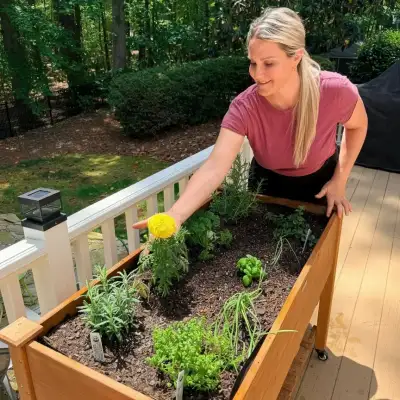
Corinne Byrne, owner of The Nourished Garden, designs and teaches people how to create and maintain kitchen gardens that are beautiful, productive, and most importantly, realistic for everyday life.
She's showing us that when it comes to dinner, the grass really can be greener in your own backyard. So let's get our hands dirty, dig a little deeper, and find out what's really growing on. Welcome, Corinne.
[00:02:37] Corinne Beirne: Thank you so much.
[00:02:38] Melissa: Thank you for putting up with all my food puns. I love a good pun, and there was plenty to choose from, from with a garden theme.
And like I mentioned, gardening is really one of my very favorite pastimes for many reasons, and we're gonna get into that. But first I wanna see if you can tell us a little bit about yourself and how The Nourished Garden came to be.
[00:02:57] Corinne Beirne: Yeah, I'd love to. Thanks for having me. So, um, I'm Corinne Byrne, I'm the founder of The Nourished Garden, and, um, The Nourished Garden came out of a desire to, um, really satisfy some medical needs from herb- from working with herbs.
Um, I had some, some issues that I felt I wasn't getting addressed, um, and so I just wanted to take it into my own hands and make my own medicines. And so when I started making my own medicines, it, with herbs, it made me wanna really get to know the plants themselves and how to grow them and understand r- really more how they behaved in the garden.
So I started just with some herbs on my back porch, and that grew into more studying herbalism and understanding the different types of herbs. And then I wanted to grow my own food. I had a lot of food sensitivities, um, a lot of issues with just everything would make my body sensitive, and so I really took it and made it my mission to, if there's anything I can control, it's the produce I'm putting in my body and my family's body.
So then I just started learning how to grow different vegetables and really studying the way that would make it easier for, I'm a single parent, and so it made it easier for me to, to grow successfully without reinventing the wheel. And so I started growing kitchen gardens in my backyard, and it became a beautiful, um, extension of my home, not just a place to grow food, so I really view the garden, the kitchen garden, as another room in, in the home.
And once I did that, people just naturally started asking me, "Well, h- how do you, how do you grow food? How do you do this? 'Cause we don't know. We weren't taught culturally." So, um, it's been really fun, and that's how The Nourished Carde- Garden was born, and it's been a really enjoyable endeavor for me.
[00:04:45] Melissa: One thing you mentioned is the term kitchen garden.
[00:04:48] Corinne Beirne: Mm-hmm.
[00:04:49] Melissa: What makes a kitchen garden different than a vegetable garden?
[00:04:53] Corinne Beirne: Yes. It's a great question. The kitchen garden is, is just easier, right? We have clay soil here in North Carolina, and it, it's not always the easiest to grow in. A raised bed kitchen garden is going to give you control over the soil that your vegetables are growing in, um, and that's huge.
Soil really is, is critical because the environment that we put those seeds and the, and the plants in matters. Um, and also, my gardens water themselves, so kitchen gardening is a way to just make things simpler for yourself by putting watering system in and putting the right soil in. They're raised up so you're not bending all the way down to, to, um, to tend them, and they look beautiful.
So a kitchen garden is also placed right by the kitchen, so it's more useful. If you plant your... The garden used to sort of be something that was in the far corner of the yard. Yeah. Right? And now the kitchen garden is something that is placed in close proximity to the kitchen, where as soon as I step outside my, my back porch, I am in my kitchen garden.
[00:05:55] Melissa: Mm-hmm.
[00:05:55] Corinne Beirne: And so that makes it... You're more likely to grab a bunch of basil, um, than you are if you have to walk across the entire yard.
[00:06:02] Melissa: That is very true.
[00:06:03] Corinne Beirne: Right? If you're cooking, 'cause
[00:06:05] Melissa: we're all busy. I know myself, and that is very true.
[00:06:07] Corinne Beirne: Yes. Yeah. We're all busy, and so, um, yeah, it makes it much more, more easy to, to, to use on an everyday basis.
[00:06:16] Melissa: You mentioned the raised garden and the clay soil. We live in a county that has really every type of, of backyard. Yeah. We've got backyards with a lot of acreage and oppressive sun. We have wooded yards. I used to have a yard that was so wooded that it made it really- Mm ... um, very difficult to grow a garden.
Then we had a bunch of trees taken out, and boo, game changer. Yeah. We've got tiny balconies. We have little to no spaces. So it's really a little bit of everything that, that people have, um, that are listening to this podcast. How would you suggest that someone even gets started- Mm-hmm ... depending on what kind of space they have?
[00:07:00] Corinne Beirne: Yeah, it's a great question. All you need is a patio. You don't need acres of land. Mm-hmm. Or you need a back porch or a front porch. Most people have some ty- something that they're walking into to get into their front door. Yeah. So you can put something right on that stoop. Um, I don't have a large backyard at all, and I have made the, the space, I've maximized the space for what I would consider a larger kitchen garden, but I didn't start that way.
I started with herbs in pots on my back porch, and I got to know them that way. Um, so someone starting out, that's my biggest passion, is just put it on your, your, in a sunny windowsill in your kitchen inside. You can... Herbs are really forgiving, and they're a great way to start. So that, that's a kitchen garden, too.
[00:07:45] Melissa: And I just, I just started growing basil in my living room, and it's just... I really did it because it was a pretty plant, and I had a sunny window. Yeah. Yeah. And now the basil plant is like, it's just, it's beautiful, and I do go grab that when I'm making pasta sauce or something else, or pizza and- Yeah
and it is so handy to have it right there.
What are the easiest beginner vegetables or herbs?
[00:08:10] Corinne Beirne: Mm-hmm. So for, for getting started with gardening, I always steer people towards herbs.
[00:08:15] Melissa: Mm-hmm.
[00:08:16] Corinne Beirne: Um, so we'll just start with those first. Herbs that are really easy to grow, especially going into the fall, is oregano, thyme, and rosemary. They're all pretty drought tolerant, they're perennials, and they almost thrive on a little bit of neglect.
So if you're someone who doesn't necessarily consider yourself a gardener, but you l- love to cook and you want to incorporate fresh herbs into your daily life, those are three herbs that I always start people with. I do a lot of workshops on those because they are just, um, very versatile and easy. As far as vegetables go, um bush beans are...
You almost can't mess them up. Um, they're pretty e- They're really easy. They sprout in just a few days, and then they'll continue growing. They'll also, the more you pick them, the more they'll, you'll harvest from them. So I always say bush beans are a really good start for a vegetable.
[00:09:05] Melissa: I remember last year I had bush beans for the first time ever, and I thought they were totally done.
And then, like, a month later-
[00:09:12] Corinne Beirne: Yeah ...
[00:09:12] Melissa: more popped up, and, Yes ... they just, they spread, you know, very well too. So they, they take... It's like they don't take up a lot of space, but then they kind of vine and do. I don't know, they're... I enjoyed having the bush beans. Yes. And, and they, to your point, they don't take a lot of care.
[00:09:26] Corinne Beirne: They don't. They're, they're pretty easy. I always recommend those for beginners 'cause there's, there's a quick gratification with them too. You'll be harvesting beans and vegetables in as little as 40 to 50 days. Mm-hmm. That's pretty quick turnaround for a vegetable.
[00:09:40] Melissa: You mentioned something about workshops.
What is that?
[00:09:44] Corinne Beirne: Yeah, so I do workshops at a lot of the local nurseries, um, also private workshops, and this is really ideal for people who aren't ready to dive into a huge kitchen garden or don't, maybe don't have the space for it, but they wanna learn, and they wanna cook with more of these Mediterranean, simple, e- easy herbs like- Mm-hmm
rosemary, thyme, oregano. So, um, for example, at the nursery, um, participants will sign up, and they'll come and they'll make... They'll take a planter where they get to do a make-and-take, and they get to learn how to plant. Um, when they plant, they learn how to care for it, how to harvest the herbs, and where to put it in their kitchen, and now they're growing fresh food every day.
I'm really passionate about people growing fresh food and, and using it at home. We don't need to be so reliant on someone else growing it. It, it makes it better.
[00:10:30] Melissa: D- Well, it d- it certainly makes it better and is cheaper. Well, I say it's cheaper. I, I did not have a lot of success with my tomatoes this year.
I have no idea where I went wr- The plants themself were huge and beautiful, but I did not get many to harvest, and so I- Ooh ... the first tomato I, I brought in to the kitchen, and I said, "Look, honey. This is my $100 tomato."
[00:10:54] Corinne Beirne: I hear that a lot. Yeah. I do hear that a lot. Yeah. You know, when you're, when you're starting with gardening, um, you know, it isn't exactly a, a cost savings from the grocery store, but there is so much more- Because it's also trial and
[00:11:06] Melissa: error, too
[00:11:07] Corinne Beirne: Correct.
[00:11:07] Melissa: Yeah.
[00:11:08] Corinne Beirne: Correct. Well, and that's where a garden coach is really helpful, too, because you, you have the guidance, so it's not as much trial and error. It could take years, really, without some guidance because you have to... Y- you're basing it on seasons, and you gotta try again next year. But I always tell people, "Don't start with tomatoes."
[00:11:24] Melissa: No. I, and I... Again, last year, I had s- I had so many tomatoes I didn't know what to do with them.
[00:11:30] Corinne Beirne: Yeah.
[00:11:31] Melissa: But and then this year- Mm ... it was like my plants just looked at me and said, "No."
[00:11:34] Corinne Beirne: Yeah. There was a lot of drought this year, too.
[00:11:36] Melissa: Yeah. Um- That certainly didn't help, and so much heat, and the heat was early on in the season, too.
Yes,
[00:11:42] Corinne Beirne: yes.
[00:11:42] Melissa: So I, I think it was, it was really the, the perfect storm for my tomatoes, so RIP tomato plants.
[00:11:47] Corinne Beirne: Yes, and that is why a watering system is really helpful.
[00:11:50] Melissa: I, I'm... That that is my next wish list item is the watering system.
[00:11:54] Corinne Beirne: Yes. I always tell my clients, "Think of your plants and think of your garden like little kids."
If little kids don't get their snacks at a certain time of day, they kind of fall apart.
[00:12:05] Melissa: Mm-hmm.
[00:12:05] Corinne Beirne: Your plants are no different. They need to expect that water at 6:00 AM and 3:00 PM every day, especially in this heat. That's when I water my garden. Okay. I have it on a timer, 6:00 AM, 3:00 PM. And they don't get cranky on me if they have their water when they're- Ah
expecting it.
[00:12:19] Melissa: Okay. Yeah. Yeah, my, my plants have gotten cranky with me. We talked about the four seasons brief- briefly. North Carolina, um, is blessed to have four seasons- Mm-hmm ... and with that comes different types of gardens that we can have. Mm-hmm. Now we're getting into the fall season. What kind of plants do you grow as kind of more of a plant pro- Mm
and what do you suggest to beginners?
[00:12:45] Corinne Beirne: So for the fall, this is what I'm growing right now, and I haven't fully planted everything yet 'cause I'm waiting maybe another week or two. But, um, carrots are a great time for the fall, radishes, all your cool season crops. A lot of these overlap with the vegetables you might grow in the spring as well.
[00:13:04] Melissa: Mm-hmm.
[00:13:04] Corinne Beirne: Um, so a lot of cool season crops, carrots, radishes, um, kale, your leafy greens, lettuces. So I just planted romaine and butter crunch kale.
[00:13:14] Melissa: And nowadays with the whole lettuce concerns in the grocery stores and in the restaurants- Yes ... growing your own lettuce, you don't have to worry about that.
[00:13:21] Corinne Beirne: Yes, and what I love so much about growing my own lettuce, first of all, lettuce is very easy to grow.
You can do it from seed or you can also do it from starts. I do it with both because I like my gardens to look full. Mm-hmm. So I do the, the, um, the starts, I'll plant those throughout the bed, but then I will overseed with lettuce because it will eventually fill in, and then you have this endless supply of lettuce throughout the entire cool season.
The other thing that I love about lettuce is that you, aside from it not having the cyclospora
[00:13:51] Melissa: Yes ...
[00:13:52] Corinne Beirne: um, that we all- The
[00:13:52] Melissa: word that I can't even pronounce- ... and I do not want.
[00:13:55] Corinne Beirne: Yes, yes, exactly. Um, is it's cut and come again. So you're not cutting a whole, um, y- you don't wanna cut the whole le- head of lettuce.
Um, you just wanna take the leaves that you need from the outside of the plant, and then it will just keep producing for you. Um, so throughout the whole season you have fresh lettuce that you know how it was handled, you know what went into it, the soil that it was grown in, and it wasn't sitting on a truck for thousands of miles before it got to your plate.
[00:14:22] Melissa: And talking about seed versus plant, so it sounds like you do plant, um, already grown plants and you also seed. Um, how early for something like lettuce do you need to seed so that we can see a harvest?
[00:14:39] Corinne Beirne: Yeah, so we can, you can start planting your lettuce now. Um, all the way up through mid-September is a great time, so we have a few weeks to be seeding.
Okay. I'm gonna be seeding my lettuce in, in about a week. Um, but I already have- And
[00:14:52] Melissa: this episode comes out in September.
[00:14:55] Corinne Beirne: Okay.
[00:14:55] Melissa: So-
[00:14:55] Corinne Beirne: Yeah ...
[00:14:56] Melissa: for anybody listening- So it's perfect ... it's time to go ahead and seed lettuce
[00:14:59] Corinne Beirne: right now. Yes, it's time to go ahead- Okay ... and seed your lettuce. Okay. Yes. You can put starts in there, and you can put, um, your, your seeds in, and they'll carry you through the entire cool season.
So yeah, lettuce is a fantastic cool season crop.
[00:15:12] Melissa: And s- even through the winter season? Yep
[00:15:15] Corinne Beirne: Like super cold? I was harvesting lettuce and spinach underneath snow.
[00:15:19] Melissa: Okay. I, I know that kale, um, is hardy.
[00:15:22] Corinne Beirne: And kale as well, yes.
[00:15:24] Melissa: Yeah.
[00:15:24] Corinne Beirne: Swiss chard is another one- Mm-hmm ... for your cool and colder seasons. Um, all of those leafy greens do really well, so, um, that's the benefit that we have in Wake County here is that we have all year long, we can grow something 12 months of the year.
We don't have to really turn the garden off. Now, we have less that we can do in the winter, but we can still be enjoying all the herbs as well. The herbs will continue to... The herbs, the more you love on them, the more you harvest them, the more they'll produce for you as well.
[00:15:54] Melissa: Even through the winter?
[00:15:55] Corinne Beirne: Yes, even through the winter.
So
[00:15:56] Melissa: you don't bring your herbs inside?
[00:15:58] Corinne Beirne: I don't. Okay. Mine are outside in my kitchen garden.
[00:16:00] Melissa: Okay.
[00:16:01] Corinne Beirne: Yeah.
[00:16:01] Melissa: Yeah, My rosemary certainly lasted through the winter. Yes. A- and it's even more beautiful this year and very full, but, um, I did lose some herbs last year- Yeah, they-
[00:17:50] Corinne Beirne: with the winter ... they do get a little thinner- Mm-hmm ... in, in the winter. Um, they're not gonna be as lush- Mm-hmm ... but they're still going to... They're, they'll still produce for you.
[00:17:59] Melissa: Is it more like it's going through a dormant stage- Mm-hmm ... and then it'll come back in the spring?
[00:18:04] Corinne Beirne: Yes. Okay. 'Cause they're perennials, so they'll, they'll definitely come back.
I've had- Mm-hmm ... my thyme plant is huge now.
[00:18:09] Melissa: Mm-hmm.
[00:18:10] Corinne Beirne: Um, and that started as a little, you know, start.
[00:18:14] Melissa: Yeah. Yeah, and all the, the thyme and rosemary and everything you were talking about earlier is, is perfect for Thanksgiving season.
[00:18:21] Corinne Beirne: It's perfect for the season. Mm-hmm. And that's another thing that, you know, I'm really passionate about talking to people about is that, you know, eating tomatoes in December isn't really...
They're not in season. So we wanna grow what's in season and what we like, right? Um, w- it, it... we think of thyme and rosemary as a fall season herb. Well, that's 'cause th- they thrive, right? Like, that's when... They'll thrive all year, but those are the, the herbs in the class that I did last night, we talked about how certain herbs can remind you of certain places, certain seasons.
Um, like rosemary kinda has a Christmassy smell to it to me.
[00:18:59] Melissa: Mm-hmm.
[00:19:00] Corinne Beirne: Um, and all of that is part of, you know, the, the seasonality that I think is really important with herbs and vegetables.
[00:19:08] Melissa: And, and my beds are raised beds because of this clay soil that we have- Yes ... here that is not very garden-friendly.
Let's talk about the difference between the raised beds and, and the in-ground beds. Do you have some customers that do in-ground beds? And what kind of ways do we need to treat these plants differently?
[00:19:29] Corinne Beirne: So I only coach to raised beds- Okay ... because it's the only thing that I find success with.
[00:19:35] Melissa: Yeah.
[00:19:36] Corinne Beirne: It doesn't mean- Yeah, I
[00:19:36] Melissa: never had success when it was in-ground.
[00:19:38] Corinne Beirne: Yes, and it was because of the clay in my backyard. Mm-hmm. Um, it do- doesn't mean that there's not someone out there that's had success with it. I haven't.
[00:19:47] Melissa: Yeah.
[00:19:47] Corinne Beirne: So-
[00:19:48] Melissa: Yeah ...
[00:19:48] Corinne Beirne: I'm a big believer in raised beds, because you can control and create a well-drained soil ecosystem for your plants. Um-
[00:19:58] Melissa: Yeah, you have way more control of what the soil is going to be.
Yes. The health of it. Mm-hmm.
[00:20:03] Corinne Beirne: Yeah, and the, the drainage. So a little bit of sand is always helpful to have mixed in with your regular soil, and then I like to put a good thick six inches of compost on top right where I'm planting the plants at the top.
[00:20:18] Melissa: Do you compost at home?
[00:20:19] Corinne Beirne: I don't compost. Um, I would like to.
Mm-hmm. I don't just because I, again, single mom, and I'm just a little busy. Yeah,
[00:20:27] Melissa: it's really a time factor, and a- Yeah ... space factor too, to have an area of your kitchen that you're tossing the stuff and then ta- I, I've looked into it, and I, I don't know if it's the lazy or maybe time. But there is that, a lot that goes into composting- There is
even though it's so beneficial to the garden.
[00:20:45] Corinne Beirne: It's so beneficial, and it's something that I do want to find the time to do, but I wanna make sure I'm doing it really well before I do it. Yeah. And I just, I-
[00:20:55] Melissa: It has to be done right.
[00:20:56] Corinne Beirne: Yeah.
[00:20:56] Melissa: Mm-hmm, as with anything. Indoor gardening is having a major moment- Mm-hmm
right now. I am very interested in the hydroponics- Mm ... type of lettuce growing. Mm-hmm. Do you know anything about hydroponics?
[00:21:11] Corinne Beirne: So I, I did grow with hydroponics-
[00:21:14] Melissa: Okay ...
[00:21:14] Corinne Beirne: um, when I lived in Connecticut. Um, it's been a long time.
[00:21:18] Melissa: Yeah.
[00:21:19] Corinne Beirne: Um, but it was successful.
[00:21:21] Melissa: Yeah. Um- I've heard that people really love-
[00:21:24] Corinne Beirne: Yeah, I mean-
[00:21:25] Melissa: that way of growing.
[00:21:26] Corinne Beirne: Yeah. Mm-hmm. Because of the vertical space, if, especially- Mm-hmm ... if you don't have space, um, a lot of people in the cities or with smaller sp- with smaller landscape use that. And, um, it's a matter of getting the pH correct for the drip system, because the plants are just growing from the water and the nutrients in the water in the drip system, instead of soil.
There's
[00:21:45] Melissa: no soil involved at all?
[00:21:47] Corinne Beirne: There's no soil.
[00:21:47] Melissa: Oh, I didn't realize that. There was none.
[00:21:49] Corinne Beirne: There's no soil.
[00:21:50] Melissa: Oh, very interesting.
[00:21:51] Corinne Beirne: Yeah.
[00:21:52] Melissa: Yeah.
[00:21:52] Corinne Beirne: Um, I've heard, I've heard that the, the, I think, like, the Chicago Airport has a huge hydroponic, um, you know, space there. Mm-hmm. And they're, they're growing, like, food there for their, their restaurants.
[00:22:05] Melissa: Oh, wow.
[00:22:05] Corinne Beirne: Um, I- That's neat ... I, I haven't... It's, yeah, a while ago. So I know it's something that's really successful for people, but I like part of the ritual of going outside.
[00:22:14] Melissa: Yeah.
[00:22:14] Corinne Beirne: And so that's, that's my lane.
[00:22:17] Melissa: Well, and now, nowadays, you know, it used to be that y- somebody would say indoor gardening, and it would really just mean a little mint-
[00:22:26] Corinne Beirne: Yeah
[00:22:26] Melissa: Plant in your windowsill. But now there are so many different options to bring the garden indoors.
[00:22:31] Corinne Beirne: Yes, and just for getting people who think they can't garden to be able to garden. No one is born with a green thumb. We just have to try, and we will get there. We can all- Mm-hmm ... do it. We can all do it.
[00:22:45] Melissa: Well, and one thing I've learned and really come to terms with that I mentioned earlier, is that no garden is going to be perfect. Mm-hmm. And each season brings different challenges, and what you did right last season might not work this season, and it really is, um, it's a journey.
[00:23:01] Corinne Beirne: Yeah.
[00:23:01] Melissa: It's a plant journey.
Um- But we have to also learn to take the pressure off ourselves. So let's talk about the, the mental side- Mm-hmm, mm-hmm ... of gardening, which I know you like this topic. Yeah. So talk to us about the, the process of taking the pressure off yourself and learning how to love being in the moment.
[00:23:23] Corinne Beirne: Mm-hmm. The garden teaches us so many lessons.
It teaches us so much. Um, you know, there is resilience in the garden, there is patience in the garden, um, and there is a grounding. And I can speak for me personally, I w- when I was going through moments of grief in my life, and my family world was changing, I should have been... My nervous system was telling me, "Go fill out resumes, and go figure out how you're gonna- Mm-hmm
find a job, and this, this, you know, transition in your life." And with all of the digital and just overstimulation of our world, I, I just shut down and went outside. I didn't even have a big garden at the time. I just went outside, and, and my nervous system was calling me to just connect with nature in that way.
And so I started really exploring, well, what if, what would happen if I planted this seed? And my little five-year-old son was interested in seeing what would happen if we planted a seed. So we would do it, and then we would go back out the next day, and we would see s- see some changes, and then the next day there'd be more changes.
Or carrots take a long time to germinate. We... He loves carrots, and we planted lots of carrot seeds, and we were losing patience, Mm, mm-hmm ... because they weren't sprouting. So it really taught me, you need to slow down, and you need to practice patience in your own life, and it really helped me from that standpoint.
You know, I think a lot of times, um, especially now in, in today's day and w- day and age, we, we... I'm a big believer in wellness. I'm a yoga instructor- Um, I have a wonderful yoga community. But sometimes rushing down Falls of Neuse Road to get to a yoga appointment-
[00:25:11] Melissa: All you had to say was Falls of Neuse and you-
you sent me straight there.
[00:25:15] Corinne Beirne: Yes. Yes, so I mean, it, I needed that yoga so bad, right? Mm-hmm. I needed the, the, the, the community and the class, and I needed to just let off some steam to recover from what I was going through, but I didn't really have the, th- any energy. I was out of gas- Mm-hmm ... literally- Yeah ... to get, to, to go down Falls of Neuse Road.
[00:25:37] Melissa: Yeah. You weren't there mentally.
[00:25:38] Corinne Beirne: It, wasn't there mentally. Mm-hmm. And so my point is, I think that we have been conditioned to think that wellness is something that we have to run to or, and another appointment that we have to get to, or another trend that we have to try. But really, wellness can just be something as simple as a ritual in your garden every day.
I know what it has done for me.
[00:25:57] Melissa: Well, I read a study recently that said that s- even something as simple as going out and pulling a few weeds every day can counteract depression in your life, and I see that- in myself very much. Mm-hmm. That just being outside, put the phone away, you have to have your hands.
Yeah. So the phone is put away. Um, and just going and doing something with your hands. The kids these days like to s- tell us to go touch grass.
[00:26:23] Corinne Beirne: Yeah.
[00:26:24] Melissa: It's the equivalent of going to touch grass, is pulling up the weeds or pruning the, the vegetables in the garden and, and taking off the dead leaves. It really does seem to calm me down.
[00:26:35] Corinne Beirne: Yes. It is, it, it's... Studies have shown time and time again that it lowers cortisol levels.
[00:26:41] Melissa: Mm.
[00:26:42] Corinne Beirne: And that, we all need that.
[00:26:44] Melissa: Mm-hmm.
[00:26:44] Corinne Beirne: We all need that, right? So, um, and you mentioned pruning. That's another lesson that the garden, you know, n- let alone from just being out there and getting your hands in the soil, and maybe some of that ends up in your body because, and, and, and helps your microbiome.
All of it is really, really grounding and good for us. But when we prune, the analogy I like to use there is that I was pruning things that were no longer serving me in my life.
[00:27:09] Melissa: Mm.
[00:27:10] Corinne Beirne: You know? Yeah. Getting rid of- It's
[00:27:11] Melissa: a good metaphor for life.
[00:27:12] Corinne Beirne: Yes. And getting rid of those dead leaves that were no longer serving the plant, it translated into my own life.
And so there's a lot of lessons that we can learn from the garden.
[00:27:23] Melissa: And teaching our children, too. Oh. This, the same mental lessons and how it's good for your mental health, but the lessons of science, and how things grow, and where our food comes from, and- Yes ... and being able to feed yourself and not relying on a grocery store or another farmer.
[00:27:39] Corinne Beirne: Yes. Hands down. Mm-hmm. I think it has been invaluable for my son, who's only five, to see me and witness growing food at home, because culturally, we, I was not shown that. Some people, I'm sure, were, but I was not shown that, and I didn't know how to do any of that. And I want my kids to know that cucumbers don't come from the grocery store.
They come from plants. And so, you know, my teenager, she's more into harvesting than- Oh, yeah ... she is in doing the actual work. She
[00:28:11] Melissa: wants the instant gratification- Yeah ... of actually picking the, the plant off. Yes.
[00:28:15] Corinne Beirne: Yeah. She'll grab the tomatoes when she's making a salad.
[00:28:17] Melissa: Yeah.
[00:28:17] Corinne Beirne: But I'll take it,
[00:28:19] Melissa: you know?
Absolutely. Yeah. Yeah.
[00:28:20] Corinne Beirne: I'll take it.
[00:28:21] Melissa: Hey, just the fact that she's eating a salad.
[00:28:23] Corinne Beirne: Yeah, exactly. Exactly. She
[00:28:24] Melissa: needs to come talk to my teenage daughter. Yeah. My teenage daughter's like, "What's a salad?" Yeah. We just- You mean chicken tenders?
[00:28:30] Corinne Beirne: We just got there recently.
[00:28:31] Melissa: Yes. Oh, yeah. Maybe the tides will turn.
[00:28:33] Corinne Beirne: Yes.
[00:28:34] Melissa: I wanna get to a couple more things before we have to say goodbye. First, and most importantly- You're giving somebody advice for the first few steps to take to starting a garden and building, you know, an at-home garden today.
Mm-hmm. What are you telling people to do?
[00:28:51] Corinne Beirne: Yeah. So my first advice is to start small. Don't think you need to start really huge. Start with just a few pots on your porch. If you have more space, look for a sunny space that's in close proximity to your kitchen. And the last piece is grow what you eat. If you don't...
Like, radishes grow really quickly, and they're kind of gra- it's instant gratification almost. Mm-hmm. But if you don't eat radishes, don't grow them.
[00:29:17] Melissa: I actually, I'm... It, it's funny that you're saying radishes, because I did grow some radishes last year, and I had, I had plenty of radishes. Yeah.
[00:29:25] Corinne Beirne: And then you're like, "Well, who eats these?"
[00:29:26] Melissa: I mean, I, I like them okay- Yeah ... but no one else in my family- Same ... will eat them. And- Same ... considering I only like them okay, like, I'm fine never seeing a radish again.
[00:29:35] Corinne Beirne: Yes. Same. Like, I don't mind putting the crisp pieces of a radish- Mm-hmm ... in a salad.
[00:29:40] Melissa: Yes.
[00:29:40] Corinne Beirne: But there's only so much of that that I'm going to eat.
Yeah. And no one else in my family, certainly not my kids- Mm-hmm ... do- don't enjoy radishes. So I always say grow what you eat. If you like carrots, which a lot of people do, grow carrots. If you, you know, definitely start with herbs too, because they are forgiving, and they are the easiest to grow.
[00:29:57] Melissa: Yeah. Okay, speaking of carrots though, I've ha- had a little issue with carrots.
I don't know when they're ready to pull up.
[00:30:06] Corinne Beirne: Hmm. Great question.
[00:30:07] Melissa: I will think that they're ready- Yeah. ... to pull up, and I'll pull them up, and it's like, wah,
[00:30:10] Corinne Beirne: wah. Yes. They're very tricky.
[00:30:12] Melissa: Yes. So how do you know when something, a root vegetable, is ready-
[00:30:16] Corinne Beirne: Mm-hmm ...
[00:30:17] Melissa: to harvest?
[00:30:17] Corinne Beirne: So I, I actually did a reel about this on, on my Instagram-
[00:30:21] Melissa: Oh,
[00:30:21] Corinne Beirne: good
because a lot of people don't know, and from trial and error, I didn't know at first- Mm-hmm ... either. Um, the carrot stalks at the top can be pretty large.
[00:30:29] Melissa: Yes.
[00:30:29] Corinne Beirne: And they look ready, but they, they, to your point, they aren't. When you see the shoulders in the soil, that's typically when you know this carrot's ready to come out.
So just brush some soil back at the bottom of where the stalk is.
[00:30:43] Melissa: Mm-hmm.
[00:30:43] Corinne Beirne: And if you see little orange shoulders popping out, it's probably ready to come out.
[00:30:48] Melissa: Or it's fooling you, and you pull it up, and it's a-
[00:30:50] Corinne Beirne: Or it's fooling you ...
[00:30:51] Melissa: it's a, you know, tiny, itty-bitty baby carrot.
[00:30:53] Corinne Beirne: Mm. That does happen sometimes.
The other thing you can do, and I always try to do this, and it does work pretty well, is, like, just kind of wiggle the stalk. And if it feels pretty strong, then you usually have a strong root there.
[00:31:06] Melissa: Okay. If it's- That's what I'm gonna do this year ...
[00:31:07] Corinne Beirne: if it's flimsy, and it doesn't feel... Like, like you can kind of tell by the weight of it.
[00:31:12] Melissa: That it's a strong guy- Yeah ... up under there. Yeah.
[00:31:14] Corinne Beirne: Yeah. 'Cause we got some pretty big carrots this year, and I didn't pull them until I felt like they were strong. I checked the shoulders first, and then I looked for the strength with... I, I checked the, the strength with my hands.
[00:31:25] Melissa: That's what I'm gonna try this year.
I'll let you know how it goes.
[00:31:27] Corinne Beirne: Yeah.
[00:31:28] Melissa: I want to ask you about Martha Stewart, because- ... on your website, and even in your email, you have that, "As seen in Martha Stewart." How did this come to be?
[00:31:40] Corinne Beirne: I, I wanted to write. Um, I have traditionally been a, a writer just in my own personal life. I've written a memoir, um, and I'm writing a book about the garden. It's called Good Morning Garden.
[00:31:54] Melissa: Oh, great.
[00:31:54] Corinne Beirne: Um, and, um, I w- so I started reaching out to national publications to see if there was anything I could comment on in their gardening section.
Mm-hmm. And I got in to two Martha Stewart articles.
[00:32:07] Melissa: Which is mind-blowing to me, because you would think that there are so many people that she could reach out to- Mm-hmm ... and, and you got in- Yeah ... which is- I- It's crazy.
[00:32:16] Corinne Beirne: Yes. It's, I mean, w- who, who knew?
[00:32:18] Melissa: Yes.
[00:32:19] Corinne Beirne: Right?
[00:32:19] Melissa: Yeah.
[00:32:19] Corinne Beirne: Um, and so then I'm like, "Wow," and I-
[00:32:22] Melissa: But it goes to show, if you don't ask, you're not gonna get it.
[00:32:25] Corinne Beirne: Exactly.
[00:32:25] Melissa: Yeah.
[00:32:25] Corinne Beirne: Exactly. That's
[00:32:26] Melissa: a lesson right there.
[00:32:27] Corinne Beirne: Yeah. And I really enjoyed writing those articles. One of them was about herbs. I think the other one was about the soil. But the herb article was, um, was r- was also especially enjoying, just because, um, I started this whole journey with, with studying herbs.
[00:32:44] Melissa: Yeah. Okay. What, what is your favorite herb, by the way?
[00:32:47] Corinne Beirne: Rosemary.
[00:32:48] Melissa: Oh, to eat and to grow, or-
[00:32:50] Corinne Beirne: Yeah. Okay. There's s- because, well, so from a, f- it helps me manage my migraines. It improves blood flow. Oh,
[00:32:57] Melissa: interesting. Mm-hmm.
[00:32:58] Corinne Beirne: Okay. And so I was suffering really bad from really bad migraines. I'm certainly not making medical claims, but I'm just saying what worked for me.
Yeah. Um, rosemary, it's well-known, has an properties in it that improves circulation in the blood, and a migraine is a restriction of blood flow to the brain. So I made, started making tinctures with my rosemary to try it, because I couldn't keep eating ibuprofen every day to manage- Yeah ... my, or steroids, to manage my migraines.
And so that was the, that's why it's my favorite. I have a very- Mm. I have a very, um, close relationship with rosemary, because it solved my migraine problem. If I feel... I still get them. That's
[00:33:36] Melissa: amazing.
[00:33:37] Corinne Beirne: Yeah. And w- but when I feel one coming on, I just take a few drops of tincture, and actually works a lot quicker than ibuprofen for me.
[00:33:43] Melissa: Mm.
[00:33:44] Corinne Beirne: Um, it increases blood flow to the brain, and it, and it, and it stops it in its tracks.
[00:33:49] Melissa: All right, I'm gonna talk to you a little bit more about that after this, because I, I get an occasional migraine, and I would love to have a-
[00:33:55] Corinne Beirne: Yeah, I
[00:33:56] Melissa: get 'em ... a magic pill.
[00:33:59] Corinne Beirne: It has been magical.
[00:34:00] Melissa: Can you tell everybody where we can find out more information about you, about The Nourished Garden, about how to have you come and teach us a thing or two?
And before I forget, I do wanna mention that we have a feature article about you coming out in our September and October issues of Wake Living and Maine and Broad.
[00:34:20] Corinne Beirne: I'm so excited.
[00:34:21] Melissa: Yes.
[00:34:21] Corinne Beirne: I can't wait.
[00:34:22] Melissa: Yeah. That's very exciting. I love, I love the story. I've seen it, and seen all the pictures all together, and it, it looks really great, so I think you're gonna love it.
[00:34:28] Corinne Beirne: Fantastic. Thank you.
[00:34:28] Melissa: And where do we learn more about you?
[00:34:30] Corinne Beirne: Yeah, so you can visit my website. It's www.thenourishedgarden.com. Um, and that will explain everything that I do, from kitchen garden consultations, which is where the whole process starts. I'll go out and look at your, your, your property, and tell you where a kitchen garden might make the most sense, and then we talk about what you like to eat, and a plan to put it in place.
Um, my Instagram, I am giving away free tips every day, um, and also announcing my workshops and things that I'm doing in the community. Um, I did something with the local library recently and helped teach, um, kids how to plant basil seeds. Um, my Instagram is The Nourished Garden, but it's got two underscores, so it's the_nourished_garden.
[00:35:12] Melissa: Okay, great. Yeah. Well, thank you so much for teaching us a few things today and, and for coming and educating about home gardens.
[00:35:19] Corinne Beirne: Thank you so much for having me.