Subscribe
Share
Share
Embed
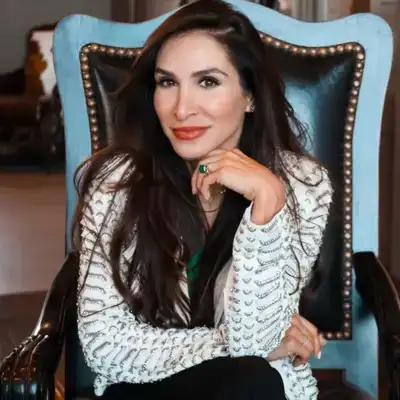
Join host Sarah Zubiate Bennett on Let’s Talk Local as she uncovers the stories, people, and places shaping Dallas, fostering a stronger and more connected community—let's get to know the real Dallas!
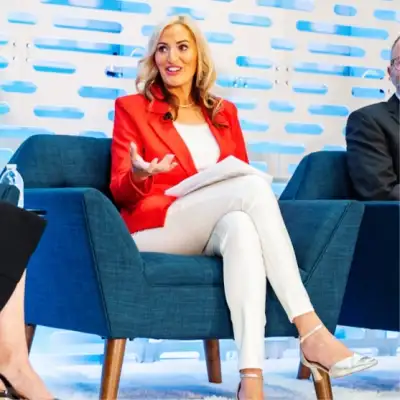
Hi. I'm Sarah Zubiate Bennett. And today on Let's Talk Local, we're sitting down with someone I truly consider a hero, Jenna Quinn, survivor, advocate, and the force behind the federally recognized Jenna's Law is in studio with me to share her powerful story of hope, faith, and redemption. I'm so grateful you're here for it. Let's get into it.
Sarah Zubiate Bennett:Jenna, okay first off
Sarah Zubiate Bennett:just based on our prior conversation these last few minutes, it's a God thing that you're here, it's incredible. And you'll kind of understand as we maneuver throughout the conversation, I'm so grateful to you for being here and for sharing your story. For our viewers and listeners, would you mind giving us a background of who you are, why you're here, and some key parts to be your story?
Jenna Quinn:Absolutely, I am a survivor of child sexual trauma. And there's a lot of different ways that you know, you can victimize a child or a youth sexually. And so, unfortunately, I've been through a lot of those different methods of victimization.
Sarah Zubiate Bennett:Same.
Jenna Quinn:And yes, and it's very evil. It's a very wicked thing and so, I suffered in a lot of ways. I had post traumatic stress, depression, anxiety, suicidal ideation. I was self harming. I had night terrors, couldn't sleep at night, had insomnia, low self worth.
Jenna Quinn:A lot of your very classic symptoms and responses to surviving something so wicked. And I'm very grateful that because of my sister I was able to report at age 16, I reported the abuse. I received services from the North Texas Children's Advocacy Center and I'm very grateful that for me, was believed. Do come from a good family. I was not an at risk child and I think unfortunately a lot of people have the wrong idea that this only happens in certain places.
Jenna Quinn:Mhmm. And it doesn't happen in certain places. But that's not the case. This is an evil that will find its way into every community and every family if it is allowed to be there, right? And so, I received really good counseling services from the advocacy center, court preparation.
Jenna Quinn:I'm grateful that the perpetrator did receive a prison sentence. Good. So, I did see justice. Good. The jury gave him seventy years.
Sarah Zubiate Bennett:Wow.
Jenna Quinn:And that alone was really miraculous because unfortunately, conviction rates for this type of crime are nationally at about less than ten percent. Because it's a very difficult crime to convict on. That's right. And it's been a long road of healing, a long road of rebuilding faith, and rebuilding trust in people and even in God. And what was really interesting is that after I had services through the Children's Advocacy Center, I went on to study psychology and I did my psychology hours, my practicum hours.
Jenna Quinn:I went back to the Children's Advocacy Center where I received services as a victim and they allowed me to go back there and what was really interesting is that this is where I got to see from my own, not just from my own experience but socially how common, unfortunately, it is because I had this ineffable desire to learn more about this crime other than my own experience. And I saw through this advocacy center, you know, children walking in every hour for play therapy and for different all ages of children and youth walking in and many of them they didn't even have the words to describe, they didn't have the language to even describe what had happened to them. And so, from my experience of not having the opportunity to tell and from my mom's experience, my mom was an educator, not having the proper understanding of what warning signs a child or youth may display if they've been abused. The idea for genocide was born and so at this advocacy center, I met a young representative at the time which was representative Tan Parker and it was his first session that year and he came in for a tour with his wife Beth and they I was asked to help give the tour.
Jenna Quinn:It was just alignment like right place, right time. Just it all happened so organically and so naturally and I helped explain my story. I gave them a tour and I said, you know, education would have helped because you know, now Senator Tan Parker is a senator and he said, well, Jenna, what would have helped? And I said, you know, the opportunity to tell. Because for me as a survivor, this was never mentioned to me in a preventative safety manner in any of my safe places.
Jenna Quinn:So, my home, my parents didn't know to have a body safety conversation with me. So, parents didn't talk to me about this in a preventative way. The school didn't talk to me about this. And certainly, our church was afraid to talk about this or address this in a preventative manner. So, I concluded this must be something that's better left unspoken and that's the message that we send to children and youth when we aren't the first ones as safe adults to open that door of communication for them in a safe space.
Jenna Quinn:And so I explained this and he has two daughters himself and he was 100% on board and said, we are going to make this happen. And he meant it. So that started a nice long road of legislating and working together for this bill. And if Senator Parker were here now, he would tell you and I love it when he does interviews on this because his colleagues even said, why are you are you bringing a bill on this? Like it was just a genuine question of why why are you addressing this?
Jenna Quinn:Why are you bringing this bill? Why wouldn't you focus on other bills? See, wasn't even on education committee.
Sarah Zubiate Bennett:Oh, I see.
Jenna Quinn:Yes.
Sarah Zubiate Bennett:Okay.
Jenna Quinn:So this was a real, what are you doing Tan? You know, if I could if I could even say it that way, was like his colleagues were like, why are you bringing this bill? So, you know, the more I sit back and I look at the way everything happened, it truly is just a miraculous thing that was meant to happen. And thank goodness, Jenna's law passed in Texas in 2009. I went down to testify at the State House several times and miraculously, no one voted against it.
Jenna Quinn:Everyone in our Texas House voted for it and everyone in our Senate voted for it.
Sarah Zubiate Bennett:I did not know that.
Jenna Quinn:It was the first of its kind in the country.
Sarah Zubiate Bennett:I did not realize that it received support
Jenna Quinn:It received support.
Sarah Zubiate Bennett:That magnitude.
Jenna Quinn:There was resistance at first because you know, Senator Parker would say, this is kind of an odd thing for you to bring forward as a bill. And I have a lot of compassion on the generation before me because they there were not conversations about this. The conversations didn't exist, the support wasn't there, the resources were not there. And I believe we're in a more hopeful time now where we can have conversations about this.
Sarah Zubiate Bennett:I agree with you. Thank you so much for sharing your story briefly. And just to kind of share a little bit about where I'm coming from as well and why I say it's kind of a God thing. I have a long history of many different types of sexual abuse. I went to trauma treatment at the 2022 after my father passed And my mother was the sort of person who was like, you do not talk about this.
Sarah Zubiate Bennett:Both of my parents have now passed, they were in their 80s. But I was adopted at birth and so that's why they were much older than me. But when I went to The Meadows at the 2022, and I think, well it was all women at this particular place and most of us had some type of traumatic issue for being there because I was there for workaholism and for love avoidance. Those were my two things which was, was masked so much better than so many of the wonderful women who were there, who were there for alcoholism, drug addiction, suicidal ideation. This one particular woman there, it was one of my first times that I ever saw something in the supernatural truly.
Sarah Zubiate Bennett:Her face was kind of distorting in front of me as she was having suicidal ideations. And I looked around panicked in the room and no one else saw what I was seeing. The next day after I slept with my bible on me, I was terrified because
Jenna Quinn:Absolutely, yes.
Sarah Zubiate Bennett:It's not something that I see on the regular. I spoke with her and it turns out she was a member of the satanic temple. So then after I left this treatment place and the whole process was very eye opening. I realized that there was so much evil that was not addressed. And Monty's identical twin, so they both went to Cornell together.
Sarah Zubiate Bennett:Monty went into hospitality. Matt opened what's called Christian Union. It's one of the most prolific Christian organizations at all the Ivies. But he's now, since that's so successful, thank goodness, he now has a deliverance ministry. And one of the primary ways that
Jenna Quinn:Wow, that's amazing. Oh yeah,
Sarah Zubiate Bennett:and it's across the world. So every year we have a conference out at our ranch, which I'm now going to invite you to. And if you've ever met my husband, he's brilliant. His twin equally as brilliant, they're identical twins. And his whole life he's never been married, he's 60, has been devoted to learning the ins and outs of the supernatural realm with respect to how evil enters others.
Sarah Zubiate Bennett:So demonic influence, oppression, how that manifests, how people will everything. So I that's why I told you this is kind of a God thing because it's really rare right to sit here and sit across from someone who understands life at this magnitude. So I just wanted to share that kind of nutshell with you so you understand like my baseline of where I'm coming at with you because I've gone through extreme deliverance, my life has forever been changed. Things that I was plagued with my whole life, perfectionism, all of this. But I kind of went from being top of my class, while I still graduated in the top five, it was my life drastically did this.
Sarah Zubiate Bennett:I mean I started leading a double life after significant evil and pain when was 15. So either way I understand at so many different levels and I thank you for being a champion for women who like myself, I buried a lot. I buried most of it. And it's just been until recent where I had Roland Warren who was he went through Princeton and he was on Matt's board at Christian Union, so very small world but now he works with his pro life ministry and I had a termination of pregnancy at 15. It was layers upon layers of trauma.
Sarah Zubiate Bennett:So kind of back over to you, can you talk about the opposition that you initially faced at the state level and then the steps that you had to take to enact this federally at the end of last year, to December 2024.
Jenna Quinn:Thank you for sharing your experience as well. Yeah. And I think it's beautiful what your life has become now. Yeah. It's true.
Sarah Zubiate Bennett:I'm grateful.
Jenna Quinn:You know beauty from ashes. Yeah. And it's a real testimony of how we have these so many broken pieces and so many shattered pieces. If you talk to any sexual abuse trauma survivor. And it's just really beautiful when you give those pieces to God, and that's hard to do.
Jenna Quinn:Just say that that's no small thing.
Sarah Zubiate Bennett:Real hard. Especially if you're a control freak.
Jenna Quinn:Especially if you're a control freak and you want to manage your own pieces and you want to cope and you want to fix it which is what we all want to result to. But I think that it's just so beautiful because when we can trust God enough and that's hard to do when you've suffered injustice. Trusting God is hard. There's always a damaged faith element that accompanies this. But when you when you do that, he takes those pieces and you know he's a multiplier.
Jenna Quinn:And so, he feeds you with them living water, a new life, but then he also feeds the multitudes. And it's like if I'd kept these broken pieces to myself and I had if I had tried to put band aids on these broken pieces myself, it wouldn't have fed me and I wouldn't have ended up feeding others. I wouldn't have ended up feeding a multitude, and so spiritually that's what's behind Jenna's law as a state policy. So, know, it was really a miraculous thing because there wasn't conversations about this. There wasn't other states to look at where we say, Oh, well this state already has a similar policy.
Jenna Quinn:So, took some time in writing the language for Genas Law as a Texas education law. But essentially what Genas Law does is it's a prevention education requirement for teachers and for students. Mhmm. Because you don't want to leave anybody in the dark, right? You don't want to just train the mandatory reporters and train the teachers and then leave your students in the dark.
Jenna Quinn:The students need to be equally equipped especially now with everything that we have going on with social media and all the dangers out there on the internet and on phones. And so, it's equally important to have body safety conversations. They're age appropriate, they're developmentally appropriate. We talk about red flag sexual grooming indicators And that's really key. And I've seen, you know, primary prevention happen just from going into, you know, a gym assembly and talking to middle schoolers or high schoolers and we say, here are things that can happen online.
Jenna Quinn:Here's grooming, establishing a relationship, trying to fill a role, giving compliments, finding a vulnerability, saying things like I love you, you know. These are red flag grooming indicators and so it's really miraculous to see it just stop right there. And I'll have young girls that I talked to and they're like, we two different situations, two different young girls, two different social media apps but they are all experiencing the same types of grooming. And so, Okay, what are we going to do? Because we give them steps.
Jenna Quinn:So we're going to stop, we're going to ignore, we're going to block, we're going to report, we're going to tell. And so you have to give them those steps and so it does work when we can be aware. So that's what that's what Jenna's law does is it's safety, it's prevention, it's protection, it's equipping through knowledge and giving teachers tools, giving students tools if they do see this type of red flag grooming indicator. And the good news is that we know that it is working. So, in a recent study in Texas, they found that educators who had a Jenna's Law training reported at a rate almost four times greater versus their pre training careers.
Sarah Zubiate Bennett:Wow.
Jenna Quinn:Because before we had Jenna's law, of course, they were already mandatory reporters report on abuse and But most of the focus for abuse and neglect reporting was on you know, looking for visible indicators. So obviously, if a child has suffered neglect or if there's bruises on their arm or someone's put a cigarette out on their child, something like that, it was more visible abuse indicators. But when you look at the deception involved in sexual grooming and sexual abuse, not all of it but sometimes it's nonviolent especially when you look at serial predators.
Sarah Zubiate Bennett:That's right.
Jenna Quinn:It is a nonviolent crime. And it's the key for this crime is it works through deception. Yep. So if pure evil, which you've shared some supernatural experiences, I have had several supernatural experiences.
Sarah Zubiate Bennett:I have two at this point.
Jenna Quinn:Yes. Where I've seen where I've seen you know, the good and I've seen the evil. Right? I've experienced
Sarah Zubiate Bennett:Yep.
Jenna Quinn:Both sides. And it's just really remarkable to see that you know, the way evil works is it won't dare show up in its true form. Has to deceive somehow because if it showed up in its true form, you would run and hide. You would run and you would scream. So there has to be an element of deception.
Jenna Quinn:There has to be an element Even of attraction.
Sarah Zubiate Bennett:Exactly. Even attraction at some points.
Jenna Quinn:Absolutely. There has to be a level of charm.
Sarah Zubiate Bennett:For sure.
Jenna Quinn:Charm, deception, offering, promoting that which is forbidden as good.
Sarah Zubiate Bennett:That's right.
Jenna Quinn:And so, there's a real level of deception and a real specialized teaching and education that we have to really give to children and youth to help them understand. This is what's happening on the surface but here's what's really the ultimate goal. Mhmm. Right? You know, I love to say this.
Jenna Quinn:It's easier to fool someone than to convince someone that they have been fooled.
Sarah Zubiate Bennett:That's right.
Jenna Quinn:And so, it's very difficult when there is a report or an allegation of child sexual abuse. And it's sadly, it's someone who is responsible for children and youth. It's a coach, it's a pastor, it's you know, after school you know volunteer who's around children.
Sarah Zubiate Bennett:It's an older brother.
Jenna Quinn:It's an older brother.
Sarah Zubiate Bennett:Yeah, it's an
Jenna Quinn:older brother. Father of a friend, yeah. Or it's a biological father.
Sarah Zubiate Bennett:That's right.
Jenna Quinn:Or it's a grandmother. You know, it's very difficult for someone to be able to report something like that, right? When known to that child or that youth and that's how this type of deception works. So the research shows that ninety three percent of children and youth are sexually abused by someone that they know and someone that they trust. And I would even add that it's often someone that they love.
Jenna Quinn:Yep. That perpetrator has worked hard
Sarah Zubiate Bennett:Hard.
Jenna Quinn:To gain that trust of that that victim. Yes. So, there's a whole deception element involved and we must be teaching our children about that and our youth Yes. About
Sarah Zubiate Bennett:And what I'm going do, I'm going to read the back of your book just because it'll I think kind of also add layers of pertinent information to our viewers and listeners. So your book Pure in Heart was published before this was across the country, right? So you said that you're going to be coming out with an updated version. So Pure Heart, on the back of the book it says in a swift and breathtaking narrative Pure in Heart tells the astonishing true story of how 16 year old Jenna Quinn broke free from years of sexual abuse at the hand of a trusted family friend and coach. After the painful effects of the abuse almost cost Jenna her life, she found the courage to tell her story.
Sarah Zubiate Bennett:And so I'm going to skip this paragraph and move down to this one, which I thought was particularly helpful. Jenna's story answers the uncomfortable questions people have about child sexual abuse. How can a family not see the signs? What causes a child to keep silent for years? What resources and skills can we teach children to help them prevent or end abuse by speaking up?
Sarah Zubiate Bennett:Can you tell us a little bit a summary of how family can see the signs of abuse in their child if they're not familiar?
Jenna Quinn:There are several different types of warning signs, and some of that is dependent upon age. Youth might act out a little different than a young elementary school student, And sometimes there are gender differences and how those warning signs may be displayed.
Sarah Zubiate Bennett:And
Jenna Quinn:it works both ways. So, sometimes you can, you know, for youth they can run into over performance or it can go the other way, right? So it works both ways on the spectrum as far as you know, withdraw, not working, right? And not apathy. So then there's the other side of that which would be just apathy and not working at all.
Jenna Quinn:So the key when it comes to, you know, what do I look for in my own child if I'm looking for something is any sudden change appearance. So if they if their baseline behavior is a certain way, which every child's baseline temperament and behavior is different. If there's a sudden change in that, then that is something to look into. That is something to ask because for me, you know, I was very social, very vibrant, very trusting, very pure in heart, and that's how children are. That's how God made children to be trusting, to be loving.
Jenna Quinn:And you know, then I changed completely. I worked hard in school, I excelled in sports and I always had a love for God. Well, everything I just listed changed. So I began falling behind in school. I began failing in my classes.
Jenna Quinn:I couldn't focus on my schoolwork and I went from having a good self esteem to having a very low self worth. And from loving life to not wanting to live anymore. And so there's just different sudden changes that I would say that, parents should be aware of in their children or youth. Are they sleeping good and then all of a sudden they start not sleeping well and they start having night terrors. Night terrors is very common, not just for young children and youth but even for adults as well.
Jenna Quinn:So, sudden behaviors are very key to look for. If this is not how your child normally is, this is not their normal temperament or their behavior, Look beyond the obvious diagnosis. So many times, I'll share a story with you. After Jenna's law training, there was a young boy in class who was diagnosed with ADD and ADHD and a little bit of oppositional defiance. But he just didn't want to sit in his chair very much in school.
Jenna Quinn:Mhmm. And after the training, this teacher learned that she knew to ask the right questions and they learned that he wasn't sitting in his chair in his classroom because his bottom was hurting because his dad would sexually abuse him before taking him to school. So, there is something much deeper going on when we look at trauma and we look at the obvious check marks, check the box for diagnosing something. Well, is it really depression or is there an underlying trauma behind that depression that needs to be treated versus just prescribing antidepressants. There's nothing wrong with that but we need to look one layer deeper.
Jenna Quinn:We need to look one dimension further and say, what's the underlying issue here? Why is this happening? Yeah. So I think that's really key where the education comes in for Jenna's Law.
Sarah Zubiate Bennett:I take you know safety environment training. My kids are in school at school age, Mani and I have a blended family, we have three 12 year olds because I bring twins, boy and girl to the family. His oldest is 12, a boy, and the youngest is 10 with Down syndrome. So we have three 12 year olds and a 10 year old. So I go through safety environment training to volunteer at the older three children's school.
Sarah Zubiate Bennett:Have you had any impact on that type of curriculum? Is things that I guess I'm learning every single year, which I'm pretty familiar with most of it, but it's still good to go through. Have you impacted any of that curriculum that I'm receiving and other parents are receiving to your knowledge?
Jenna Quinn:So the reason why you're receiving those trainings is for Jenna's Law. And so with Jenna's Law, our independent school districts are just that. They are independent ISDs and they love their independence. Yes. They love to be able to do things the way they want to do things.
Sarah Zubiate Bennett:Yes.
Jenna Quinn:And so, the way it works at least here in Texas is that we try to give as much power to the districts the authority to choose, the ability to decide when they do the trainings. Generally for the teachers, it's during teacher in service at the beginning part of the year. But they get to choose what curriculum they want to use. They just have to implement it. So, that's a curriculum that I've helped to develop, I've been contracted to help write several of your well known curriculums out there.
Jenna Quinn:So whether it's a curriculum that comes from Texas or a curriculum that comes from, you know, Arizona. There's Mhmm. There's local curriculums. There's national curriculums. There's, thank goodness, a lot of curriculums out there now.
Jenna Quinn:And so some of them cost, some of them have no cost, and that just depends on the district and what what they can afford, what's available for them, and what works for their ability to implement Jenna's law. Some curriculums for the students I've seen, they have one training in the spring and they have one training in the fall. Others, they'll just have them, they'll just do one training a year. So it just really just depends on the flexibility and what the school is able to do.
Sarah Zubiate Bennett:Thank you so much for that. I had a feeling. I just, the kids go to a private Catholic school over here. And I'm so grateful to you because I think to myself, I wish my mom went through this training. I just wish that this was something that was discussed with the generations before us.
Sarah Zubiate Bennett:So thank you for your work because I know that through suffering you have created such good, such good. I'm so grateful for you because you're helping to protect the lives of our youth and all future generations, so thank you. And at the federal level, can you tell us a little bit about what the new laws federally help enact in our day to day lives?
Jenna Quinn:Federally, the Genaquin law just passed in December.
Sarah Zubiate Bennett:And
Jenna Quinn:it's really exciting for those who want to have their children protected, who want their children to be equipped and have the tools and the knowledge to be able to explain if they're in an unsafe situation. And federally, what's great about this is that the Department of Health and Human Services is going to be allocating funding for these trainings. Because unfortunately, a lot of our ISDs, they don't have the funding. They don't have the resources. There are some good free programs out there, but nevertheless, that's all I don't really want to use the word excuse, but if you have a school, an individual school or a district that is failing to meet the requirements, sometimes their excuse is we don't have funding for a program or we don't.
Jenna Quinn:Now, whether that's their real excuse or if that's just on the surface excuse, we don't really know. But we have eliminated that now through the Department of Health and Human Services, which is going to give grants to the states. So that they can have funding for these programs. So, not only is the funding, you know, promoted and supported, but now, there's going to be more training for all 50 states on this education and awareness. Because the problem is there wasn't funding before.
Jenna Quinn:And what's great about the federal genoquin law is that it is not just restricted to school funding because everybody wants schools to fix their children. Everybody wants the school to be the resource that fixes everything. Yeah. And we have to look much beyond that. We have to look further beyond the schools.
Jenna Quinn:Yep. Because our schools are struggling. Many of our schools are struggling. So this funding is available for nonprofits, for child advocacy centers, for crisis centers, for organizations that are doing the training and they do have these programs and they're already knocking on doors and they're already trying to get into schools or after school programs or sports youth organizations. Know, you have a lot of good organizations that are trying to do the right thing by offering these trainings and they're knocking on doors but some of them are being denied because their program costs.
Jenna Quinn:Sure, that's right. So it's really going to help expand the prevention and awareness measures and also fund it.
Sarah Zubiate Bennett:Yeah, thank you for sharing that. What are you doing with your time these days? Where are you speaking? What kind of trainings do you do in person? Yes, so if you could answer those two first, and then I'll move on to my next one.
Jenna Quinn:I'm grateful I'm doing a lot of speaking for different organizations, public sector, private sector, faith based institutions, non faith based, working with a lot of non profits, And training a lot of law enforcement lately for their TQL hours. So I've trained law enforcement and you know, federal agencies on red flag grooming indicators. We have to you should not be training without helping people understand what red flag grooming indicators are.
Sarah Zubiate Bennett:So
Jenna Quinn:that's that's really the key for most of my trainings. So it it goes well beyond different groups, survivor groups, and also there's a restorative side as well. So, I have a foundation that is faith based.
Sarah Zubiate Bennett:Yes, tell us about that if you could. Tell us about your faith based organization.
Jenna Quinn:So, this faith based organization addresses the spiritual impact of child sexual abuse. We have a lot of really wonderful organizations that I received services from that are secular counseling and they focus on the body and the mind. But we really understand through Scripture that the spirit is fragile and the spirit can be crushed. Because the Lord says that he is near to the brokenhearted and he saves the crushed in spirit. Well, there's a distinction and there's a difference between having a broken heart and what what the remedy is.
Jenna Quinn:So, your heart is broken, you're grieving, you need comfort. You need someone to be near, you need a comforter. But if it gets to the point where your spirit is crushed Yes. You need saving. Yeah.
Jenna Quinn:And that's why he says, I'm I'm near to the brokenhearted but I saved the crushed in spirit because a crushed spirit is difficult to recover from and it's difficult to rebuild.
Sarah Zubiate Bennett:And
Jenna Quinn:I've tried to rebuild my own crushed spirit and I failed. If I could rebuild it, I would have done it already. But we don't have the strength to do that and so much of what we do through the organization is restorative care for survivors. So we have an online program where we go through the most common stumbling blocks based on the words of Jesus. Where he said that, you know, if anyone harms one of the least of these and if you look at the Greek word, actually means smallest child.
Jenna Quinn:So if you harm any of these little ones, it would be better for you if a large millstone were hung around your neck and you were to be drowned at bottom of the sea. Better. Yep. And so, well, what does that really mean? It means that in God's eyes, he equates our damaged faith and those stumbling blocks that abuse puts in your way, he equates that with a natural death.
Sarah Zubiate Bennett:With a natural death, interesting.
Jenna Quinn:Yes, in his eyes. Interesting, yeah. Because that's what it does to the spirit.
Sarah Zubiate Bennett:Yeah, it does.
Jenna Quinn:It crushes the spirit. And so, that's why he says, I must be the one to save you. And so, we walk through what that looks like, and we validate the experience that had happened. And you know I always say God validates the victimized.
Sarah Zubiate Bennett:Yeah, He does.
Jenna Quinn:He certainly does.
Sarah Zubiate Bennett:Yeah, He does. And so after people go through that part and the deliverance component, how do they get to that part in your ministry?
Jenna Quinn:Well, it's a process. So it's eight modules.
Sarah Zubiate Bennett:Eight modules.
Jenna Quinn:It's wonderful. Yes, it's very deep and it's nothing surface level that most people have gone through. Surface level things are extremely important. We have to have self esteem classes. We have to have much of what's offered already for the body and the soul and the mind.
Sarah Zubiate Bennett:That's right.
Jenna Quinn:But again, this is this is very different because we focus on the spiritual component. And so, we talk about the difference between guilt, shame and condemnation. Mhmm. Because a lot inspiration and motivation and self esteem, lot of the things, self worth. This is all very important but it doesn't last Mhmm.
Jenna Quinn:As long as most of us would like for it to last. That's right. But if you can give somebody spiritual revelation and if you can give them understanding and insight on what's happened to them spiritually, that's what changes you. That's what changed me.
Sarah Zubiate Bennett:Me too.
Jenna Quinn:That's what changed me. Yeah. Because we see in first Thessalonians, there is a distinction between body, soul and spirit. So, we break down the difference between body, soul and spirit and how it affected your body. How does it affect your soul and how does it affect your spirit.
Jenna Quinn:So we're not leaving any component out. It's not about being hyper spiritual. It's about discussing each part of the person because God's desire for us is that we thrive and that we live healed lives and we are whole body, soul and spirit. That is his desire for us that he's already told us what his will is. His will is that his plans for us are good and they are not to harm.
Jenna Quinn:Just put those three words up. Just put those three words where you can see them. Not to harm. In some translations, it's not for evil. So, his plans are never for evil.
Jenna Quinn:But there's just a lot of deception that most survivors their minds go through. There's confusion, there's doubt, there's damaged faith, there's stumbling blocks. How do I trust God? Does God have a good plan for me? Does God even love me?
Jenna Quinn:And if you don't believe that God loves you and has a good plan for you, it ends right there. You can't progress spiritually.
Sarah Zubiate Bennett:That's right. And live a
Jenna Quinn:life of love and compassion and boldness. Right? And so, it's it's just really important a lot of these eternal spiritual truth. These principles that we readdress and help survivors become empowered spiritually. When the spirit is fed, it's the spirit that gives life to the body and the soul.
Jenna Quinn:It doesn't work the other way around. You can have a broken arm or some physical illness. There can be something wrong with your body but you can still be in good spirits. Like hey, just got out of my surgery and I've got a cast on my arm but I'm in good spirits. But it's interesting, it doesn't work the other way around.
Sarah Zubiate Bennett:Correct.
Jenna Quinn:If your spirit's crushed, your body will suffer and that's where we get into adverse childhood experience studies and we see that trauma affects the body and the mind and it can manifest itself in different ways affecting your physical and causing illnesses in the body. It's remarkable. And so, if we just go back to the Scriptures and we see what God says about the spirit and his love for those who have crushed spirits that have been marginalized, victimized and oppressed, that's freedom right there.
Sarah Zubiate Bennett:Yep. It certainly is. You know, even like the YMCA, spirit mind and body, right? It's the balance of all of that. And when you read the book about the body keeps a score.
Sarah Zubiate Bennett:I mean, right? These very natural books about yes, your body keeps a score. Before I went into trauma treatment at the Meadows, I mean I have never had a panic attack. I had a panic attack. I couldn't sleep.
Sarah Zubiate Bennett:And then Monty would say, Sarah you're working like you're the sole provider of our family. This is really, really out of control. And I don't need to work like I'm the sole provider of our family, but I was. And I still kind of do, just not as intensely. But I know a lot of that I guess is genetic predisposition.
Sarah Zubiate Bennett:But before I went in, I could not even walk by one of those telepastors. You know I went to a non denominational school first through twelfth grade. Oh, okay. And then I kind of finished going through the steps to fully convert to Catholicism. So now I call myself like a born again Catholic because I'm a Catholic but then I can still kind of pray in this charismatic space, it's very bizarre the blend that I am faith wise.
Sarah Zubiate Bennett:But I couldn't listen to one of those telepastors, my body would just clench, and I would say turn it off, I can't stand it, I can't hear it, and I would recoil. So after I got out of that treatment, and again in the natural, mean I wove so many lives from probably like 14, 15 up through when I went into treatment essentially, and just the most innocuous things. So I went through 11 pages front and back of freeing myself of all of those lies, right, just after I got out of this program. And then after that, this kind of clearing and deliverance that walked through, I could all of a sudden, you know I didn't have all these ailments. I could walk by one of these pastors and walk into a non denominational church just like I can a Catholic church.
Sarah Zubiate Bennett:I mean I could not physically do it because of the physical manifestations of so much of this evil that had taken space in my body.
Jenna Quinn:Yes.
Sarah Zubiate Bennett:And so while I went through all of this healing and treatment and also the spiritual healing, I've never looked back. And when I tell people this kind of complicated story, That so many of us who have experienced the freedom from so much of that depravity, depression Yes. Workaholism, perfectionism, needing to prove yourself and you're freed from that. There's nothing like it.
Jenna Quinn:Right? That's exactly right. There's nothing like it. Yeah, there's nothing like it. It's the most beautiful feeling in the world.
Jenna Quinn:Yep. To say, you know what, I am freed and that's what our course is called, Oh.
Sarah Zubiate Bennett:It is so so how can I find out more about this? What Where's your website? How do I learn about it?
Jenna Quinn:So, the organization's called Reveal to Heal International because we can't heal what we don't reveal. Right? That's right. Exactly. And secrecy is the devil's playing ground.
Sarah Zubiate Bennett:Yes. The secrecy, the lies. Oh, god.
Jenna Quinn:Shame, secrecy, deception the devil's playing ground. And that goes for us as individuals, also as organizations. Know, you have institutional cover ups, and you have community cover ups. That's And you have all that. So, we can't heal it if we don't reveal it.
Jenna Quinn:That's right. So, denial and minimization and suppression isn't helping anyone long Yeah. It's not helping. Mhmm. So, revealtohealinternational.com is the website.
Jenna Quinn:And we are a five zero one c three organization and the focus for this is faith based restoration. And helping people understand spiritually what's happened to them And helping them learn and experience the love and power of the Holy Spirit. Yep. Because that's what truly freed me was understanding God's love. And when you've had an encounter and when you've had an experience with God's love, you are changed forever.
Jenna Quinn:Forever.
Sarah Zubiate Bennett:Truly. Truly. Truly. Truly. And you
Jenna Quinn:realize that there's a deeper meaning and that this this this war that we are all in, you're in it, I'm in it, we are all in it is not based on what we see. It's spiritual. If it is based on what we see, then at that point it's already manifested, right? Yes. It happens in the spirit before it becomes a physical manifestation.
Jenna Quinn:So we teach about that. And boy, that education is freedom. Yep. That experience, that love encounter. I always say we have to fall in love.
Jenna Quinn:We have to understand God's love for us. And then we can love ourselves and we can love other people. And that's it. That sums up the law and the commandments, love God, love others, law fulfilled.
Sarah Zubiate Bennett:That's right.
Jenna Quinn:But when you've when you've been through trauma, it's very difficult to even love yourself. So we're really starting at these basics and so we take survivors through these eight modules of through these modules, I actually share a lot of my own supernatural encounters that I've had. And you would be surprised just as you and I are sitting down talking for the first time learning about this, but we're talking very comfortably Yes. Because we know it's true.
Sarah Zubiate Bennett:That's right.
Jenna Quinn:You're comfortable when you're speaking truth.
Sarah Zubiate Bennett:That's right.
Jenna Quinn:And you would be so surprised. So many of the survivors have said, Oh, I've seen that same figure. I've seen that same demonic spirit. I thought it was just me. Really?
Jenna Quinn:I thought it was just me. And and we're saying, listen, men and women because we have a lot of men that take the program. Yep. This is not just something that happens to women. This happens to men as well.
Jenna Quinn:So, historical studies have said one in three girls and one in six boys.
Sarah Zubiate Bennett:Oh my gosh.
Jenna Quinn:So, when you can give someone that freedom, they're not crazy. You don't need to take these types of medications for it's not psychosis, this is spiritual. And guess what? God gives us power and authority over these spirits. That's right.
Jenna Quinn:That's freedom.
Sarah Zubiate Bennett:Yeah, it
Jenna Quinn:is. That is true freedom. But when we open up and we share, this is what's happening spiritually. If you've had a night terror and you've seen this figure, this is what's happening. You would be so surprised or maybe you wouldn't because you understand spiritual things.
Jenna Quinn:They are just cannot believe that someone is speaking about this because no one speaks about this. There aren't enough people to speak about this. So, there's relief. There's I'm not alone. I'm not crazy.
Jenna Quinn:But that's what the devil wants us to think. You are alone, you are crazy, you are condemned, it will be this way forever. Same lies. So we just expose them. We just expose that deception and the enemy loses his power over every survivor that takes the course.
Jenna Quinn:So it's really beautiful to see.
Sarah Zubiate Bennett:It's remarkable. I can't thank you enough for being here. And I'm so grateful that we were even able to delve into that component because
Jenna Quinn:Yeah, I'm shocked we I went
Sarah Zubiate Bennett:didn't even look at my notes just like yesterday, right? It's just whenever you're just speaking from the heart and I kept thinking to myself yesterday, how am I going to weave this spiritual component in because it must be discussed. It must be discussed how evil totally transforms lives. Anyhow, And so I'm just so grateful to know you.
Jenna Quinn:I'm very grateful for you and for your support.
Sarah Zubiate Bennett:And I'm grateful for you. Thank you for all you've done and you continue to do.