Subscribe
Share
Share
Embed
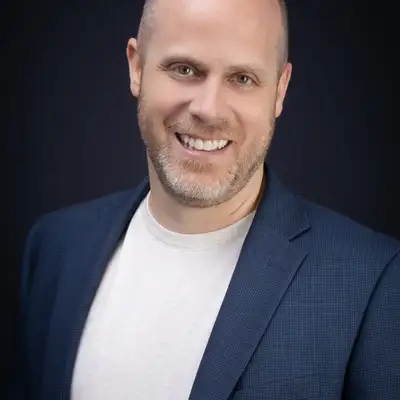
Welcome to Inside Marketing with MarketSurge — your front-row seat to the boldest business insights, marketing breakthroughs, and entrepreneurial real talk.
Hosted by Reed Hansen, Chief Growth Officer at MarketSurge and a digital marketing veteran who's helped scale everything from scrappy startups to Fortune 500 giants, this podcast dives deep into what’s really moving the needle in today’s marketing world. Find us at Marketsurge.io
Each week, we’ll break down the latest marketing and business news (minus the fluff), explore tech trends you actually need to know, and feature unfiltered conversations with the most interesting minds in entrepreneurship and marketing.
Whether you're a founder, a marketer, or just a curious hustler looking to level up, this is where growth happens—loudly, smartly, and with just the right amount of sass.
Subscribe, tune in, and let’s scale something legendary. 🚀
Speaker: Welcome to Inside
Marketing With Market Surge.
Your front row seat to the
boldest ideas and smartest
strategies in the marketing game.
Your host is Reed Hansen, chief
Growth Officer at Market Surge.
Reed Hansen, MarketSurge: today
on Inside Marketing with Market
Search, we've got a guest who's not
just playing the marketing game.
He's rewriting the rule book.
Garrity is the founder of FPW Media.
A powerhouse agency built on
storytelling, visual craft, and a
do it all in one house, so nothing
gets lost in translation mentality.
He's also a filmmaker, a photographer,
brand builder, and somebody who
can grow an agency fast enough to
land on the fastest growing agency
list in 20 20, 20 22, and 2023.
Owens directed Award-winning films
like Lion Hearted, built bold brands
across the industries and still finds
time for boxing Coffee and gardening.
And is basically the marketing
version of a Renaissance man,
but with better lighting.
Today we're diving into how AI
and storytelling intersect and why
content is still king, even though
AI is trying to steal the throne.
Let's get into it and welcome Owen.
Yeah, my pleasure.
So tell me about, I love storytelling.
I'm a big reader.
I love movies as well, and but now in a
media world that has flooded our attention
on so many different platforms, how do you
build a brand story that actually connects
what are some of the fundamentals that
we should be mindful of in that scenario?
Owen Garitty: Yeah, I think the most
recent statistic I saw that is the
average American has seen like, you
know, somewhere between three to
5,000 ads a day, and they're only
recalling like 50 to 60 when quizzed.
So if you think about that
from a marketing perspective
it's a pretty low take rate.
And what we talk a lot with
our clients about is, one, it's
starting with understanding
who you're speaking to, right?
do we understand what matters to the
person that we're trying to show an ad
to or a marketing message to, right?
'Cause without that understanding,
it's really hard to craft a story
that's gonna get them to pay attention.
And number two is the
feeling aspect of it really.
Broadening on the emotional
triggers via advertising to get
somebody to feel something, right?
Because of that very,
very fractured landscape.
Because of how many things are being
thrown at the average person on a daily
basis, you have to get them to what
we call, you know, stop the scroll or
stop, at the bus stop and look at the
ad that is on the billboard or whatever.
It may be, the median that we're
trying to reach people on, but,
we have to get them to feel something and
then we also have to offer them something.
So it's no longer can you
get, just understand them.
Just get to feel something.
But you also have to offer
them some sort of value, right?
And value can mean many different things.
But that's kind of the trifecta
that we look for when we're building
really effective storytelling.
Reed Hansen, MarketSurge:
That, that's interesting.
And I do that you emphasize the
story part of that and engagement.
Now you work across a lot of different
platforms video photography, the branding.
And now tell us what is common and maybe
what's different when you're adjusting
for different storytelling mediums.
Owen Garitty: Yeah, so what's really
interesting is our approach, I think,
kind of differs of where the mediums are.
Almost the last part, right?
Where we think about what is the story
we're trying to tell and what is the
effect we're trying to have that,
that's where we start and we craft
that, and then we adapt it and change
it to be perfect for each of those.
Mediums, right?
And I think oftentimes people start, well,
I wanna run a Google ad campaign and I
wanna run some ads on, on meta platforms.
Okay, great, but what are we even doing?
Right?
That's where people start oftentimes.
So if you start with the story, net,
net, your ROI and your efficacy is
going to be a lot more effective,
and then your story should drive.
Your platforms, right?
What is the most efficient and
effective way to disseminate the
story that we're trying to tell?
And then that's why we advertise
on certain platforms, right?
And so having it be completely
story driven we find
provides a lot better result.
Reed Hansen, MarketSurge: Okay.
That does make sense.
Let's talk a little bit
about AI and storytelling.
I use ai.
All the time.
I use it for content generation.
I use it for, video and image generation.
And I, give it feedback.
I also include firsthand and original
content I generate in my marketing.
But do you think that AI will ever be
good at storytelling or is it a companion,
something that needs to be, enhanced?
A tool, where do you stand on that?
Owen Garitty: Currently
the way that the money.
Models are created.
They're really good at
story regurgitation, right?
Or story adaptation.
I think they're Relatively poor at
completely generating something from
nothing that feels unique, it may be
good on its surface, but if you dig
into it, it maybe is very similar
to a lot of what's been done because
that's how they're trained and that's
how they're generating that content.
We find it currently is the
perfect companion tool, right?
It allows you to do a lot of versioning.
It allows you to do a lot of research.
It allows you to.
Get, the finished product to
a finished state a lot faster.
But so far we see that if you're using
it for the entire process, and I say
so far because all this is so highly
subject to change, but so far, you're
not going to get the level of ROI, that
you are with a wholly generated piece.
Something that's Actually
unique, actually more organic.
and you're starting to see this on
certain platforms where the ads that
are performing best right now on meta
are more the UGC type ad, something
that feels really authentic What we're
seeing from the data that's available
is that the stuff that's completely
AI generated, people seem to have an
aversion to buying from brands that
are using wholly AI generated avatars.
Uh, or people telling because it
doesn't feel authentic, right?
And maybe that gap of the uncanny
valley will close far enough, you know,
relatively soon that it doesn't matter.
But for now, and I think probably
the next maybe 12 to 18 months.
We're, we're seeing that that
authenticity is winning out.
And so it's like, let's use it as a
tool and integrate it into the process,
but let's not wholly replace that this
is actually our customer, or this is
actually our product in an environment.
If that makes sense.
Reed Hansen, MarketSurge: Just to
drill in that a little bit more, do you
have any moral or ethical qualms that
I'm putting you on the spot here, but
about using AI to generate stories?
Can AI have a story that's compelling?
is, is it, is it even possible or
something we should seek after?
I don't know.
I love UGC content but I probably love
it even more 'cause I'm flooded with
so much of the fake sounding content.
I don't know.
What do you think?
Like from a moral and
Owen Garitty: it's a.
Reed Hansen, MarketSurge: I don't know.
I don't know that I have a firm
footing, so I'm not trying to
put you on the spot, but yeah.
Owen Garitty: it's, it's a very
complex issue because what we see
is that you start having brands
who are exploiting it, right?
Some of the more nefarious actors
in the world are putting content
out that seems like genuine
customer testimonials or you know.
Something that is representing
the product in a certain way
that's just wholly untrue.
So I think that's a very
easy line to draw, right?
So we put that to the side, and
then we think about more the nuanced
question behind what you asked.
and my feeling is that at the end of the
day, it's, it's a tool and that it's going
to be here whether we like it or not.
and so I think it's.
If you're using it in a way that is within
the guidelines of good ethics and good
business practices, I think that you
sidestep a lot of those ethical concerns.
What I think though, to be also true
is that, it's going to struggle for
the foreseeable future to create
something that's really compelling.
That's of any length, right?
Really short stuff,
attention grabbing stuff.
Yes.
But it still has to have
that human companion.
And I think that's really what
it is, is like when we talk about
really good AI content, it's
highly human assisted AI content.
So you're using it as a tool,
just like what you would a camera.
So if you think about.
You know, AI generation as it's the
computer, it's the word processor, it's
the camera, and you're interfacing with
in that sort of same construct, I think
you can produce things that are really
good and still feel very authentic.
and at the end of the day, you
know, they say that there's
no original idea left, right.
And so, so much of what we do
in marketing is tweaking others'
ideas that have already existed.
So I think that in my view, that
this is kind of just a continuation
of that for the most part.
Reed Hansen, MarketSurge: I do think
there's some weird, effects that like
we've experienced where you almost look
for ums and uhs in people's video content.
it makes the video worse, but it does,
just makes it seem like it was real,
and so it's like we're in this like
meta world where we're like looking
for mistakes or flaws to embrace and
Owen Garitty: what's so funny is that
we just had a client that we sent over
a proposed, campaign image, and it
was an image that was shot on location
with one of their actual customers.
But the feedback was,
this is AI generated.
It's like, well, no, it's
just a really good photo.
And so it's really funny because then
we start to get into this realm where if
it's too perfect, it feels, inauthentic.
And so I think that's really the
authenticity is the word that I
keep coming back to because I think
that the real risk to brands is if.
All of your imagery is not of your
actual product and actual people.
Why would somebody trust you as a
brand at the end of the day, right?
Like if everything you're putting
out is just AI generated, you're
eventually gonna do brand damage.
That can work for a small period of time.
But over the longer term,
the brands that are.
Still investing in that true
humanistic storytelling are gonna win.
And I think what we're starting to
see is that, especially on social
media, you're starting to see this
backlash of, there's so many comments
of this is just ai, this is just AI.
and people, I think the platforms are
trying to walk this line of, they own
the models, but at the same time they
can't allow it to only be AI generated
content because people will stop engaging.
Reed Hansen, MarketSurge: Yeah.
Absolutely.
I've had that experience with myself,
not, I'm not a photographer or a
visual artist by any means, but there's
some piece of content I posted, like
a long response on a Reddit thread
trying to do some Reddit marketing.
and it was flagged as ai.
I am like, how is this flagged as ai?
I literally, commented the mod, I'm like
maybe I used an M dash or something.
I don't know.
Like it's yeah we're in this surreal world
where we're fighting against both sides
of quality and seeming to be too robotic.
I don't know.
Interesting times and you're
right in the middle of it.
Now why do you think that content is
such a important part of, getting an
audience and improving your brand?
Why is it, so important?
And what do you think?
It unlocks at a lot of brands.
Underestimate.
Owen Garitty: So, you know, I've always,
in my career, felt like content is king.
Um, you know, the old saying is that
a picture tells a thousand words.
I think that that's even
expanded further with a video.
Right?
You know, if you look at just
internet usage trends, like 70% of all
internet traffic is video consumption.
So if you're not playing
in that space, you're.
Leaving out a huge amount
of potential eyeballs.
but more than that is COVID
fundamentally changed the way
that people interact with brands.
You know, when everybody had way
more time, when they were more
self researching, when they weren't
interacting with the world in
the same way everybody wanted.
Brand experiences, right?
Every brand became a lifestyle
brand overnight, and that
trend hasn't gone away, right?
That ability that customers want to
connect with who they're buying from,
or to believe that there's the quality
differential Has only continued.
And so what we see is that the brands
that are most successful and will
continue to be the most successful are
the ones that really invest in that top
of mind awareness, in the brand image,
in those things that are really tangible.
And, and I think in some ways
that's always been true, right?
Like if you look at Coca-Cola
for instance, that brand is the
most recognizable in the world.
You know, more people know
Coca-Cola than Jesus, right?
I mean literally.
So that's what the studies say.
And so if you think about that it
really, I think, crystallizes the fact
that that's always been true, but it's
been put into sharper focus and it's
a lot easier for smaller brands that
aren't Coca-Cola to achieve within
their niche, that level of recognition.
Reed Hansen, MarketSurge: No that's great.
And I agree, I think content, it's
become easier to produce and with
AI and other tools and, but it
continues to be really important.
I think we want something to hold onto,
something to learn from and engage with.
talk a little bit about
your firm FPW Media.
One thing I noticed is that
you do everything in house.
Tell us, about doing everything in house
and why that was the right model for you.
Owen Garitty: So, you know,
like many, we didn't start in
the image that we are today.
You know, we started as just a
video and photo house and have added
services as clients has asked for them.
You know, our whole core ethos is to be.
at everything we do.
And for us, what we found is that we
are only able to deliver on speed,
quality, accuracy, if we have a much
higher level of control than outsourcing.
Some of these things did, uh, or
allowed us to have, I should say.
And so for us and the client mix that
we have it, it's made the most sense.
I know that that's.
By no means most people's models,
but for us, bringing all that
inhouse has been worth it.
and what we feel like it allows us
to do is do a 360 campaign across
all these different touch points
in a much shorter timeline with a
lot higher level of consistency.
Right.
It's really important to me that the flyer
that gets sent out matches the commercial.
Matches the trade show experience matches
the in-store experience that somebody has.
And that all of those colors are
exactly the same, for instance, right?
the little details become a lot easier
when it's all here and our people can
go physically look and check things.
Reed Hansen, MarketSurge: And just
to be clear, that is by no means a
critique that's more of a kudos to you.
It's hard to find.
People for this kind of work here on
shore it's expensive and, it brings
like a whole set of challenges.
But clearly it does bring a level
of quality and execution that
is hard to replicate when you're
working with, outsource teams.
Kudos to you that's a great
selling point of your firm.
now I know you've worked
in photography in the past.
I'm married to a photographer and
so I can appreciate that world.
How would you say that your background
as a photographer, your history
is doing a lot of visual, How has
that, how's that helped you today?
What, what does that kind of training
and perspective give to your firm today?
Owen Garitty: I'd like to think that
infuses somewhat everything that we do.
You know, at the beginning you kind
of said the Renaissance marketing
you know, kind of as a joke, but its
true We find that the intersection
of the digital world and the
physical world is really important.
And so, you know, we have our
own screen print, we have our
own film studio, we have our own,
you know trade show operation.
We have these tactile pieces that.
Bolt onto all of the digital
marketing activities.
And the reason we've combined
all those things is going back
to that visual mindset, right?
That at the end of the day, humans
are visual, they're emotional,
and really good marketing.
is the combination of
many touchpoints, right?
the days are kind of gone where you
could have a single touchpoint conversion
unless you are just so discounted that
it's, uh, you know, not funny, right?
But like at full price, sort of across
any sector, it's almost impossible
to have a single assist conversion.
And so what we really think about
is, okay, what if we think about the
whole conversion journey as a photo.
What does that look like?
and that's really how we
envision things, is what does
that photo make somebody feel?
Right?
Across all these pieces.
And so like, if you remember with
dial up, the photo would like load
Reed Hansen, MarketSurge: Yeah.
Owen Garitty: like this, right?
That's how we think about, you know,
an integrated marketing campaign is
what are the pieces of the photo that
are getting revealed to the person and
how are they feeling as that is coming
into focus over days or weeks or months
of them interacting with the brand.
Reed Hansen, MarketSurge:
Somehow ways you're describing
that I could hear that image.
And it sounds like that, the,
Owen Garitty: Yeah.
Reed Hansen, MarketSurge: so that is.
That's fantastic.
Now, if you were, when you take on a
new client and say they could be at
a variety of stages in their branding
process, where would you start with a new
client typically, that comes to you and
says, we'd just like to boost our brand.
We'd like to, tell a better story.
where would you start with them?
Owen Garitty: Yeah, so we like to
do a lot of due diligence upfront.
You know, our average client engagement's
multi-year, while we do project work,
that's not usually the majority of what
we do, it's these longer term partners.
Ships.
And so we start by tell us
everything about your industry
if we don't already know, right?
If it's not a vertical that we're
super familiar with, we're gonna
start with the industry as a whole.
So like at the 40,000 foot
view, and then we're gonna work
down that height level, right?
Of what are all the things that are true
for your business after we cover industry.
What have you done recently
from a marketing perspective?
what is the data, uh, surrounding that?
If we have data, and then looking
at the customer segmentation,
What do we know to be true?
Right?
Who are we trying to reach?
What do we think that they care about?
And then at those levels we
determine do we need to do some
additional research, right?
do we think that this client
fully understands their customer?
What we find oftentimes is that people
aren't necessarily doing poor marketing.
They're just marketing
to the wrong people.
Because they think something
is true about their customer
base, that's not actually true.
Or they think that the way that
they're perceived is X, but
really they're perceived y And so
we need to align the perception
with the reality of the business.
We talk a lot with customers of, if we
imagine the best day as a business you've
ever had, that's the day that we wanna
represent 365 days a year via marketing.
Reed Hansen, MarketSurge:
No, that's awesome.
Owen, if people would like to learn more
about your process, work with you to build
a brand story, where can they find you and
what are the best ways to engage with you?
Owen Garitty: Absolutely me on a personal
level, I can be found on all the major
social platforms at Owen Garrity.
My last name is spelled a
little weird, G-A-R-I-T-T-Y.
And then as far as the
agency f pw media.com,
and same thing is true on all the
social media platforms at F PW Media.
Reed Hansen, MarketSurge: Owen,
this is super informative.
I love your perspective and
sounds like you have a strong
firm that can really execute.
Please reach out to Owen
and build your brand story.
Thanks so much.
Owen Garitty: you.
Speaker 2: Want to stay ahead of what's
actually working in marketing right now.
Head over to Market surge.io
and see how we're helping businesses
grow smarter, faster, and louder.
That's market surge.io
because your next breakthrough
shouldn't be a guess.