Subscribe
Share
Share
Embed
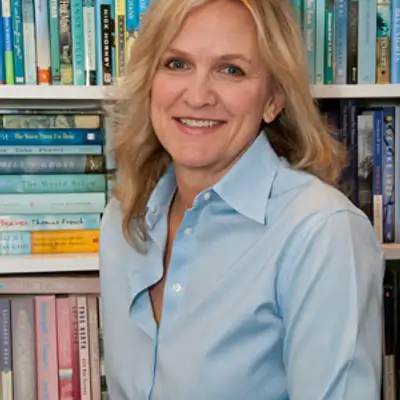
Celebrate the joy of reading with the Book Love Foundation podcast. This is a show filled with information and inspiration from teachers and leaders across grade levels, states, and school systems. We interviewed authors and educators for the first five years and now turn our attention to leaders in public, private, and charter schools. Find out more at booklovefoundation.org or join our book-love-community.mn.co of 2500 educators from 28 countries. We sustain joy together, one kid and one book at a time.
Penny Kittle 00:00
The Book Love Foundation podcast is produced by the teacher learning sessions, connecting teachers with ideas, experts and each other.
Jamie 00:16
It's much easier to find good books that you'd like when there's like a library there
Sully 00:25
at the beginning of the year, I kind of had to force myself to like reading, but then after a little bit, I just liked reading. After that, it was good.
Penny Kittle 00:39
Welcome back to the Book Love Foundation Podcast. I'm Penny Kittle, and I'm your host in this episode, you get an inside view of some of my work this year. This feels like the Kittle classroom exposed, because when Kevin suggested that he come up north and invite some of my ninth graders to talk to them about reading. You can imagine what I was thinking, failure on display. But the three students who volunteered, well, they talked a lot about what changed them as readers this year, because they all came in with similar histories from middle school. Unfortunately, they had read some in elementary, but then went dormant in seventh and in eighth grades. And I would say that we all have dormant times in our reading lives, but dormancy unchecked becomes an identity, a non reader, a pretend, compliant, fake reader, even a resentful reader. Why do we have to read this? And I think we should despair over that. How is it possible for a kid to attend school and then leave uninterested in books? But we know how common it is. The thing that bothers me is that for all of this chatter about summer reading loss, here we are on the brink of summer. Make sure they keep reading. You know, we don't talk enough about all year reading loss. And how about all year reading loss again, if a kid collects experiences like this, it means that regular reading habit has been replaced now by games and sports and social media and jobs replaced by anything but reading.
Penny Kittle 02:25
I think what happens is that once content readers start to believe that they just don't like reading. You know, I've outgrown it, but we know people don't outgrow books. If you're listening to this podcast, I'm betting you haven't outgrown it. You probably got a stack of books beside you right now, in fact, set that book down and listen to me.
Penny Kittle 02:44
But if you're a teacher, you meet kids who believe they have
Penny Kittle 02:50
I liked books when I was little. They'll say, but I don't like books anymore. They've forgotten the superpower of books to name just what you need to know right now this year,
Penny Kittle 03:01
Each kid in the podcast today was in that place last September, they came to me from two different middle schools, one public, one private. This isn't about money. Their teachers had good intentions, and they worked hard to make a few books interesting, but with little balance between teacher selected books and student selected books. These kids read little. My belief is that if kids become uninterested in reading, it's up to us. It's on us to change that. Now, speaking to these students in May, you'll hear a very different story about their lives as readers. What happened? I'm going to let Ashton and Sully and Jamie tell you, but I want you to pay attention to one thing. This was work.
Penny Kittle 03:50
We can fill our classrooms with books, but they'll just be wallpaper to kids who don't like to read. We have to talk about those books. We have to think a lot about how to match a kid to a book that's going to keep them reading, and then we have to give those kids time to read with us as students read, we sit down and talk to them. We sit beside them and work out problems in their reading. Most of all, we encourage them. We encourage them to keep seeking answers to questions that we know can be answered in books.
Penny Kittle 04:22
Choice in reading, that's something we nurture, we personalize, and at times, we have to keep working at to make those choices meaningful for kids, it takes persistence. Some days I feel like I just don't have it, but I keep trying. I know you have it because you're a teacher and you're listening to this podcast, books, in the words of Stephen King, are portable magic. I am dedicated to every kid in my classroom, and I want them to know that that portable magic exists just for them, every student.
Penny Kittle 04:59
Should know that every year, these three kids on the podcast today are going to show you how Joining me is Kevin Carlson from the teacher learning sessions.
Kevin Carlson 05:09
So Sully. Tell me about tell me about you as a reader. What kind of a reader were you when you came into Ms Kittle's room?
Sully 05:16
I didn't really read that much. I was definitely hesitant about reading,
Kevin Carlson 05:21
like, how many books did you read last year? Do you think
Sully 05:24
four maybe?
Kevin Carlson 05:24
How many books do you think you read last year about,
Jamie 05:28
maybe, like, two
Kevin Carlson 05:29
or even the year before, just kind of over the course of your middle school years? How much were you reading
Jamie 05:33
about, maybe five books over the entire year, and two of those were audible books.
Ashton 05:39
When I was in elementary school, I read a lot. I was a pretty avid reader. And then I got into seventh grade, and I started to kind of go downhill, like I didn't read as much as I used to. And then eighth grade, I didn't read. I think I read like two books out of the whole year, I went from like in sixth grade, I read 35 books to two books in two years.
Kevin Carlson 06:09
What do you think happened in seventh and eighth grade?
Ashton 06:11
I don't think I was exposed to as many books as I was in elementary school, like we could go to the library, but we weren't down there every week, and there weren't as many books in the classroom. And so I think that's why it started to go down but now that I'm in Miss Kittles class, I mean, you walk in and you see all the bookshelves full of books. So
Kevin Carlson 06:42
what did it feel like in the fall when you walked in first day and you looked around,
Ashton 06:45
it's kind of overwhelming, like you see all the bookshelves full of books, and you can obviously tell that Miss Kittle loves to Read.
Kevin Carlson 06:53
Was it intimidating?
Ashton 06:54
It was a little bit intimidating, but it's not really anymore. I mean, it's kind of, we've kind of gotten used to it
Sully 07:02
before. It was kind of just, you have to read this book, no question, just read it, and now it's pick the book you want to read. Read it at your pace. And I feel like that was a change for me, because I got to choose the book I wanted to read.
Kevin Carlson 07:17
How many books have you read this year? Do you think
Sully 07:19
10 to 15 probably,
Kevin Carlson 07:21
so a big increase,
Sully 07:22
definitely. Yeah.
Kevin Carlson 07:23
Talk about the book that flipped the switch for you. What was it
Sully 07:26
that was probably the second book I read this year, which was Aragon.
Kevin Carlson 07:29
What about it was appealing to you?
Sully 07:31
Um, I think, I guess the genre of the book, it was a fiction, advanced fairy tale kind of book.
Kevin Carlson 07:38
So a fantasy book, yeah. And had you been a fantasy reader before? Had you tried?
Sully 07:42
Yeah, I had read all the Harry Potter books and listened to all the Percy Jackson books and everything like that, both series. I like that, those kind of books definitely.
Kevin Carlson 07:53
Have you tried other genres this year?
Sully 07:56
Um, not so much. No, yeah. You just, you're, yeah, I know what I like, and she's kind of, I don't know, I guess I'm a little scared about going away from that, yeah.
Kevin Carlson 08:07
Now, what do you do when you find a book that you don't do?
Sully 08:11
At first, I was a little like, I don't know what to do. But then I was like, Oh, wait, I can. It's free reading. I can do what I want. So I dropped the book and I started the book I really wanted to read. That helped me along.
Kevin Carlson 08:32
Yeah, what was the book you really wanted to read?
Sully 08:32
I wanted to read The Martian. That was a good book.
Kevin Carlson 08:32
How come you wanted to read that one?
Sully 08:32
Because a friend of mine had recommended it to me, and a night heard all these good reviews on the movie. I hadn't seen it yet, but I knew people loved that book, and loved the movie, so I thought this might be a good book for me, and this was also a fiction book, so I thought it was kind of on the lines of stuff I like to read.
Jamie 08:49
Well, I was just doing my reading list this morning in reading break, and I think I was at like 25 books, and that's just school year alone. I'd keep track of the books I read over the summer, but that's a lot.
Kevin Carlson 09:01
That's a big change.
Jamie 09:02
Yeah, yeah. Definitely was, yeah,
Kevin Carlson 09:06
that's awesome. So what? What happened?
Jamie 09:08
Um, I'm not really sure. I kind of reminded me that I liked to read. It always helps when, like, there's suggestions from people that are also reading, or, like, from Miss Kittle. Like, I remember at the beginning of the year when I had no idea what to start reading, and she suggested winger, because, like, a lot of kids liked that, and like, after that, like, that got me reading again, because I was a really good book, and haven't really read a bad book This year, mostly because I've been going off suggestions. I so at the beginning of every class, Miss Kittle does a book talk of a book she really likes or like that's on something we're doing. And then if somebody in the class has a book they just finished her reading that they really like, they'll do a book talk on it. And that's just like a sort of summary. But also, like, read, maybe reading something from her, like, talking about how good it is, or, like, the writers crafter, like something like that and like, so that's how I usually get suggestions. But then, like, my mom's a big reader too, and like, last year, I never asked her, like, if she had a good book that she read, that she'd suggest, but like, this year, the series I'm reading now I never would have picked up, if it weren't for her, because, yeah,
Kevin Carlson 10:29
so what is it? What's the series?
Jamie 10:31
It's the Lunar Chronicles. I've never heard of it before. It's like, the way my mom described it to me was like Star Wars mixed with like, like, fairy tales.
Kevin Carlson 10:43
So is that kind of, is that one of your things sci fi and fantasy?
Jamie 10:46
Not really. I mean, I definitely have a like thing for fiction books, but, like, I've read nonfiction books this year and also really liked it. So I know
Kevin Carlson 11:01
you've gone through different genres though, yeah, yeah, because when you mentioned winger, is the first one that you like, yeah, much different kind of book, yeah.
Jamie 11:08
So the first, actually sci fi book I read this year was the Martian, which was just last month. So it was like a while before I tried aside, yeah,
Kevin Carlson 11:19
but you felt comfortable moving in and out of the different genres.
Jamie 11:22
And, yeah, especially the Martian, because one of my good friends, like, told me, you have to read this book, and he's not a big reader. So I was like, I know it's gonna be good. And then as soon as I started reading us as, like, very into it.
Kevin Carlson 11:38
You're in, yeah. Can you think of a time this year when you hit a wall, you just kind of like, oh, man, I'm tired of reading, or I need a break from reading. Like you hit a little dip in your reading life,
Jamie 11:50
definitely.
Kevin Carlson 11:51
So talk about what that was like, and then how did you get out the other side?
Jamie 11:56
It was like, I finished a book, and then the next week I couldn't find something, and then there's Thanksgiving break, and I still couldn't find it. I like, I didn't even think about reading during that because I just didn't have a book. And like, it took me a long time, and I think it was the Fifth Wave that somebody recommended to me, and that starts out really slow. So that was, like, that was still part. I was like, still kind of just grinding through it. And finally, there's like, one night where it's just like, all right, I'm reading this until at least, like, a third of the way, or a fourth of the way through the book to see if it picks up at all. Then I'm just done. Because I was, like, out of reading, just not a fan of it at that point. And then it like, the book got really interesting, and then that finally, like, once I got into the book, then I was, like, putting more time into reading. And then after that, I read the second one. And then, yeah,
Kevin Carlson 12:52
so it was a series book,
Jamie 12:54
yeah, oh, there's, I think there's gonna be three. There's only two out right now.
Kevin Carlson 12:58
So, but a sequel, yeah. So do you think that helped you to know there was a sequel?
Jamie 13:03
I like, I like it because you don't have to start from scratch again. It's like, you kind of know what you're going into. But at the same time, when you finish a series, like a long series, you're like, just, that's probably the worst when you, like, have no idea what to read next, because, like, you're still thinking about those characters like that. You've had seven books or so to go attached to.
Kevin Carlson 13:29
Does it help you to have access to a classroom library?
Sully 13:33
Yeah, it does. Because if I didn't, I would have to walk across the whole end of the school, which, I mean, that could sound lazy, but I mean, I guess it is lazy, but also it's in a classroom where teacher is constantly there. And my English teacher loves reading, and almost all of those books she's read, and so she can recommend books I might like, and she knows all about them. So it's good to have someone who knows what she's dealing with, I guess,
Kevin Carlson 14:06
not just the books, though, right? Like, do you feel like she knows you also as a reader also?
Sully 14:10
So I think it's good because she knows what I like, so then she can go right over to this section, and she's already picking out books for me. So it's good,
Kevin Carlson 14:20
is it helps you to have the classroom library?
Ashton 14:23
Oh, absolutely, we're able to see books and we're exposed to books throughout the class. So you're able to pick out books that you want and explore different genres. And I just can't explain, like, how beneficial it is. Instead of having a classroom that doesn't have books like that, like nobody would go to the I don't think anybody would go to the library and check out a book after school, but having that in her classroom, it's right in front of us, so we're able to get.
Ashton 15:00
Books that we want and get recommendations from Miss Kittle. So yeah, it's very beneficial. I think, yeah, that's cool.
Kevin Carlson 15:07
So it helps also that she knows you as a reader, and so she'll make a recommendation,
Ashton 15:13
yep, yes, yeah.
Kevin Carlson 15:14
And then we also just go look on your own and poke around and explore.
Ashton 15:19
And then you can drop books if you don't want them or don't like them.
Kevin Carlson 15:23
Did you know about that? Like, a lot of kids don't realize that, yeah.
Ashton 15:29
Well, I guess I was kind of afraid to. I used to be like, afraid to because I wanted to read the whole book. But now I don't feel like as bad if you don't like the book, you don't like the book. There's plenty of them out there.
Kevin Carlson 15:45
Do you know what your next book is like? How far into your current book are you right now?
Ashton 15:49
I'm seven pages into my current book,
Kevin Carlson 15:55
So that's not that many. Yeah. Did you know next? Did you know you have a next list?
Ashton 15:57
Yes.
Kevin Carlson 15:57
Okay, now for this book that you just started, you. Start that? Today, yesterday,
Ashton 16:02
today.
Kevin Carlson 16:02
How did you know that was the book you were going to start?
Ashton 16:05
I went over to life stories. I love reading life stories about just people, famous people and athletes and comedians and so I went over to our life story section in Miss Kittles library, and
Ashton 16:27
I saw leaving home, and I kind of thought it was like a cool title and kind of interesting. So I picked it up and I just started reading, and I'm enjoying it. So far. I'm only seven pages in, but
Kevin Carlson 16:40
now you just showed me in your notebook. You have next pages also,
Ashton 16:43
yes, I have next
Kevin Carlson 16:44
talk to you about that.
Ashton 16:46
So these are books that Miss Kittle has book talked about books that have been recommended by kids and maybe other teachers, or books that I've seen and that I've thought were interesting by what people have told me. So I just write them down. And sometimes I get to one or books on here. Sometimes I don't, but yeah,
Kevin Carlson 17:14
so you have picked books off of your neck.
Ashton 17:16
Yes, I have.
Kevin Carlson 17:17
That's cool.
Kevin Carlson 17:22
Has anything changed for you in your other courses, your other classwork, because you're reading so much more, do you see any changes?
Jamie 17:31
Well, I mean, my writing has definitely improved.
Jamie 17:35
My essays have definitely gotten better, like I read one from the beginning of the year or last year it's just like, super boring, and this year my sentence structure is much more interesting. If I was a teacher, I wouldn't mind reading my essays anymore.
Jamie 17:53
Yeah.
Kevin Carlson 17:56
All right, what? What would you say to an eighth grader, seventh grader, eighth grader, who's like, I read the books that are assigned and but I don't read my I don't read much other stuff. What would you say to a kid like that about having a classroom library? What's that? What's that like?
Sully 18:14
um, it's definitely helpful. I think it definitely brought me along to love reading. And I think getting to choose your own books, the books you want to read, definitely helps. So getting the books you want to read is like a key thing you need to do, and
Kevin Carlson 18:33
what if they say, but I don't like reading,
Sully 18:38
I guess maybe, I think at the beginning of the year, I kind of had to do the same thing, where I kind of had to force myself to like reading. But then after a little bit, it became not me forcing myself to read, to like reading. It was I just liked reading. After that, it was good.
Kevin Carlson 18:57
What was the first book you read this fall that really, you really latched on to.
Ashton 19:03
I think it was the Fall in Our Stars. Yep, the Fall in Our Stars. It's a really good book, yeah.
Kevin Carlson 19:10
And what was that like?
Ashton 19:12
It was kind of, I've never, like, the last couple of years. I've never gone home and wanted to read. Like, I've always had sports, and I've always been, like, outside playing and stuff, but like, after sports had gone over in the afternoons, right before I went to bed, I would always read, which is something I've never done before, except for, like, in elementary school. So it was kind of, it was good. It felt good to complete a book. And I think that was the fourth book I read. And I think I read four books in middle school all together. So, yeah, it was, it was good. It was like, refreshing.
Kevin Carlson 19:53
And you've read 16 so far,
Ashton 19:54
I think I've read 17. I still haven't plugged a couple in. Yeah.
Kevin Carlson 20:00
What's your goal for the end of the year
Ashton 20:03
20.
Kevin Carlson 20:04
Okay, you're gonna make it.
Ashton 20:05
Yeah, I'll make it.
Penny Kittle 20:07
In this podcast, we like to share book recommendations and favorite titles from teachers all over this country today. We want you to hear those recommendations from the kids themselves. Here are some recommendations for books from Jamie, Ashton and Sully.
Kevin Carlson 20:24
What are your five favorite books this year that you read? And I'm saying five. It doesn't have to be five, but you've read a lot of books, so I'm like, What are five good books?
Jamie 20:32
All right. Winger was one of my favorites. The second one was, sorry, was good. The first wing, Winger was definitely the best.
Jamie 20:41
Cinder which was the Lunar Chronicles, the ones I'm reading now, and Scarlet, those two have been really good.
Jamie 20:51
I read Swim the Fly, and that was really, I really liked that, just because it was funny. It's like, I really like it was like, teenage boy humor, so just kind of connected with me. But that made me, it made me laugh, so that it's always good in a book, oh, The Martian, yeah, that's definitely one that I really enjoyed, because that really intrigued me as something I'd never read something like that before, like sci fi, like was very informational, like how he made water out of gas fuel.
Kevin Carlson 21:29
What are some books that you you would recommend to another kid?
Ashton 21:32
I like to read books about, like athletes, so Soul Surfer by Bethany Hamilton. It's a true story. She's a surfer. She got her arm bitten off by a shark. Her dream was to become a professional surfer, and when she got attacked, she thought her dream was in fate, but it the story is about how she kept faith and was able to conquer her dream. So that's that was definitely one of my favorite books so far. And then growing up, Gronk is about the Gronkowski family. So that's an interesting read about how all the I think, there's five boys in the Gronkowski family, and so that was really funny, interesting to see how like their lifestyle was when they were little, all playing football. So yeah, those were definitely two of my favorites.
Kevin Carlson 22:35
Recommend some books to me
Sully 22:37
This series. The first one I Am Number Four, and then The Martian.
Penny Kittle 22:49
On this podcast, I like to leave you with one story today. It's about a boy I taught in Washington State many years ago. I met him in his eighth grade year, but he seemed to disappear in my class of 34 students, he would slide into his sea, duck behind his overgrown bangs, and doodle in his writing notebook. He spoke to no one, unless forced to, and he borrowed just one book from me that fall, The Old Man and the Sea an unlikely choice. I remember asking him if he was a fisherman looking for something to connect us. But he said, No. He just thought it might be interesting to try someday.
Penny Kittle 23:30
People who don't teach find it hard to imagine what 34 teenagers are like all together in a small room with no windows. Well, for one, antiperspirant is required. They're overgrown, long limbed golden retriever-ish bodies more than fill the room. Their chatter is constant. Their ingenuity is as well. Everything. Anything can be a projectile.
Penny Kittle 23:53
They are a force of light and power and energy.
Penny Kittle 23:58
But there are also silent teenagers who aren't part of this collective spirit, they wait, as Sherman Alexie said, for the punishment to end.
Penny Kittle 24:08
This was Patrick waiting, silent, alone. Until one morning. He was there at the door before class started, and in his hand was Of Mice and Men. Mrs. Kittle, he said, I want to know if I can take this book with me. I hesitated. I'd been reading it aloud since we didn't have enough copies for every kid to have one, and this was a school with no money for classroom libraries or even class sets of books, yet we had these towering stacks of anthologies in the back of the room that, believe me, were a very weak substitute. Take it where I asked. He looked away, then back, we're moving tomorrow. And he turned his eyes on me with such an intensity, we can't stay we have to move our car. This boy and his parents were living in a car. Yeah, they had been for months. I looked at him more closely, connecting his clothes and his hair and his silence. Sometimes it isn't adolescence that punishes but the relentless grip of poverty. His dad had finally given up on finding a job in our town, and when the police knocked on that car window, they decided to head back to Portland. Patrick said, please, let me take it. And he held the book like the precious gift it was. I will read all night, and I will try to bring it back, but I have to know how this turns out. A pause, can I?
Penny Kittle 25:39
That's the power of story. Thank you. John Steinbeck, there's a point in Of Mice and Men when you can't turn back, you have to know. And for this young man, he felt that power. We need books in our classrooms for all of the kids who've gone dormant like Sully and Ashton and Jamie, and for all of those who never believed in reading. But we also need books we can pass on to kids like Patrick. I have believed in the years since I lived that story, that the copy Patrick took with him that day was an important donation to his life as a reader, I know one book can often lead to the hunger for another. We want students to know books that name just what they need to know to remind them that joy can follow loss, that people can rise from devastation to live lives of remarkable hope and promise, that words can call across the darkest nights and begin the light of dawn, because we know this as an essential life sustaining truth, we have to pass it on.
Penny Kittle 26:45
Thank you for being people who do, and thanks so much for joining me today. The board members of the Book Love Foundation are choosing finalists this week for 2016 we meet on Thursday, I guarantee you It'll be a long night, because I want you all to win every small donation helps us fund one more library. If you can help us, please do if you can pass the word on about the foundation, please do that, and thank you for listening. Now get back to reading.
Kevin Carlson 27:17
If you enjoy the Book Love Foundation podcast and the work we're doing here. Please join our email list at teacherlearningsessions.com/go/booklove. We will send you a list of titles that appear in each episode's book talk on the day the show comes out, and you will also receive our weekly newsletter, which includes podcast reviews, insider information about the teacher learning sessions, projects and more that's at teacherlearningsessions.com/go/booklove. In our next episode,
Future Guest 27:50
I think the biggest thing is to never give up. I think kids are going to tell you a million reasons why that they should be doing their homework or so and so doesn't have to read in his reading break or whatever the key is, is to hold the course, stay steady, stay dedicated to it and driven to it. And kids will read if given the opportunity. They need the opportunity to learn how to read and to learn how to read something other than what you see on the internet, which is typically these days, our attention span is short. Things come out as in bullets and in quick little Capstone summaries. And we need to be able to also have the skill, to have the endurance, to be able to work our way through a text.
Kevin Carlson 28:31
What it looks like when an entire school is committed to reading. Kennett High School reads next time on the Book Love Foundation podcast. The Book Love Foundation podcast is produced by the teacher learning sessions, connecting teachers with ideas, experts and each other.