Subscribe
Share
Share
Embed
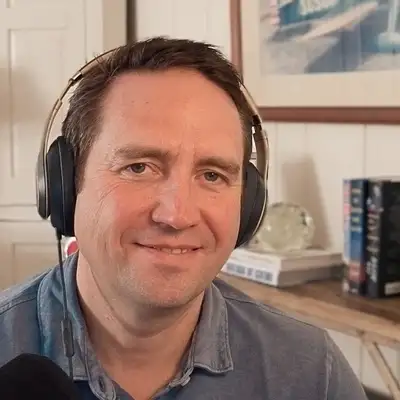
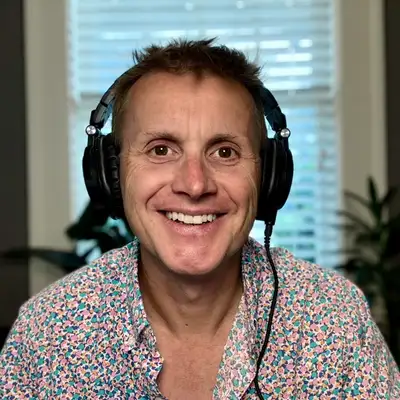
Space Insiders is your bi-weekly deep dive into the intersection of space, cloud technologies, and entrepreneurship. Hosted by Tony Sewell and Rob Ruyak, both seasoned space-tech executives, this podcast features candid conversations with founders, investors, and entrepreneurs shaping the future beyond Earth. Whether you're launching a startup, investing in innovation, or just space-curious, Space Insiders gives you the behind-the-scenes insights you won’t hear anywhere else.
New episodes drop every two weeks. Subscribe now and join the orbit!
Disclaimer: The views and opinions expressed in this podcast are those of the hosts and guests and do not necessarily reflect the official policy or position of any organization or employer.
Welcome to Space Insiders. My name is Tony Sewell, and as usual here with my space mate Rob. How you going, Rob?
Rob Ruyak:Great. Always good to see you, Tony. I'm a little tired from travel this week. Took a red eye last night. Way too old for that.
Rob Ruyak:It's rough. Really rough.
Tony Sewell:No. Just a week in the office for me, a few late night meetings this week. I'm just starting to catch up on some of the news from re:Invent, AWS re:Invent event. A bunch of my colleagues there, I wasn't there, although I'm thankful I wasn't there. But I was actually just catching up on one of the keynotes from Amazon's CTO, Werner Vogels, he's done 14 keynotes, which is a lot.
Tony Sewell:And this is his last one, which it was kind of interesting. It was a little bit kind of sentimental and he was talking about sort of the Renaissance developer. But what I really, really loved, I think firstly, there's a changing of the guard, he's passing the torch on, and I think that's really important for the company. But he talked a lot about curiosity, and it made me think about what we're doing on this podcast. Learning about new things is really important to me, and I'm learning a lot through this podcast.
Tony Sewell:He talked about curiosity leading to learning, which leads to invention, and experimentation and willingness to fail, and just sort of creating that sort of culture in developers. But I think more broadly, it's a really good trait. Yeah, it was nice to hear that just because it's an important part of my own self development. I thought that was kind of interesting.
Rob Ruyak:I love that, Tony. I feel like you don't hear the word curiosity enough, frankly. But in the world that we've lived in the last five to eight years, I would say, in our careers together, it is an important word, and I think it means different things to different people. I think in the startup world, again, I've never started a company. I've worked with startups.
Rob Ruyak:I've started businesses within big companies, but I remember I was at my alma mater a couple weeks ago, University of Maryland, where I got my MBA, and I was leading a panel there. And one of the graduate students asked a question in the audience and they said, you know, What's the best way to just meet people in the industry and like learn about everything that's out there? I mean, I'm a student, I have an interest, but how do I do any of this stuff? And actually my answer was around curiosity. It was around like go to things like this, go to different forums, talk to people that are not necessarily just the engineers, but they might be lawyers, they might be policy people, they might be
Tony Sewell:That's fascinating that you say that because the last thing that I had written down, which he said, is learning is social. And it's not just sitting in front of ChatGPT sending it prompts and taking what comes back or just reading, but it's about talking to people, and what we're doing talking to different people. It's a really simple message, but I think it's a good reminder in the digital world we're living in. The social aspects are so important.
Rob Ruyak:I think I offended a lot of people in the audience when I was doing that because I said, Stop looking at TikTok and get out of your dorm room and go talk to people. It's true. I Yep. Absolutely. I got a few chuckles.
Tony Sewell:All right, Rob. So we've got a really fun guest with us today, Nadine Alamey. She's a great friend of yours, a really well known personality and highly respected person in the geospatial industry. Tell us a little bit about Nadine.
Rob Ruyak:She's a really good example of someone who's a leader with a lot of humility and brilliance. She's a convener of a lot of diverse aspects of people, you know, and what I mean by that is domain expertise and, you know, maybe specific geospatial technical expertise or data expertise. It doesn't really matter, but, you know, her experience in being the first female CEO for the Open Geospatial Consortium, OGC, that was her role, was not only does she understand a lot of the technology and the use cases and has a vision for how all of this can be brought to bear to make impact in business and frankly, livelihoods as well. We'll talk a little you'll hear a little bit about what we talked about there in public safety, but her ability to convene these people around certain topics and find consensus and collaboration is really powerful. And we talk a lot about that.
Rob Ruyak:And I think it's something that's really unique to her and it's something that I've been very drawn to her as getting to know her over the years as well. So I think everyone will really enjoy listening to what she has to say and the conversation that we have with her.
Tony Sewell:Yeah. And she's just a wonderful person. Made the observation at the end that I'll be interested to go back and have a look at the video, but I felt like I was physically smiling a lot of the time. You could really feel how passionate she was, and for someone so accomplished, very humble, and yeah, no, great interview. Okay.
Tony Sewell:Before we get to the interview, Rob, any news stories catch your eye this week?
Rob Ruyak:Yeah, a couple of things around our friends at SpaceX. Think, you know, one in particular was that they got approval through Department of Air Force, I think it was this past week, to have a brand new launch facility for Starship on the Space Coast in Florida. That's huge.
Tony Sewell:I'm glad I don't have a beach house in Melbourne.
Rob Ruyak:Yeah. You have to wear you have wear these you have to wear these nerdy headphones every all the time when you're walking your dog outside.
Tony Sewell:I mean, it's cool to watch that thing, but I can't imagine what it is like being being near it when it launches.
Rob Ruyak:Yeah, all these things down there are transformative to that community. I mean, if you've ever been there, I feel like it's an area that once was booming during the Apollo ages and then of had a lull and you know, after the space shuttle was, you know, kind of decommissioned and now it's kind of it's another burgeoning area. I mean, companies like Blue and SpaceX and Lockheed and all these, you know, committing, you know, hiring thousands of people in that area. So that's exciting. And the one thing that they're doing is they're going to be renovating the Complex 37 down at the Space Coast.
Rob Ruyak:So if folks don't know what that is, these are historical launch sites from fifty years ago that were built specifically for the Saturn V, for the Apollo missions, were used for several decades after for national security launches and other. But these are sites that have a lot of interesting history. And so it's kind of cool, you know, it's not just a brand new facility with all new technology. Got that history. Meaningful.
Rob Ruyak:So it's exciting. Of course. And the other one quickly was that I think, know, kind of the world that you come from, I should not be the one talking about this, but Starlink and SpaceX just have been making some pretty aggressive moves into Asia now, specifically in India and Korea, where they are drastically, you know, not kind of they're aggressively pricing monthly contracts anywhere between 30 some odd to $60 some odd a month, really targeting rural areas now. It's not really just about, you know, how I think these LEO telecom communication capabilities, like where you're a leader, Tony, it's not just about being competitive with telecom. This is now really about, which I think is really cool, putting more people online, is really the whole point at the end of the day.
Rob Ruyak:I thought that was exciting too.
Tony Sewell:It is. Actually, saw some snippets of I think they were presenting at a recent conference in Papua New Guinea. But just think of it, how transformational these technologies are and how it's just broken this threshold that traditional VSAT was never able to do for remote communities and disconnected communities. That's what makes me excited about being in this industry, whether or not they're a few years ahead of us or not, but plenty of room
Rob Ruyak:in this There's plenty to go after.
Tony Sewell:Plenty to after. Alright. Well, I think I think it might be a good time to bring in Nadim. What do you reckon?
Rob Ruyak:Let's do it. She's great and
Tony Sewell:very excited. See you in a minute. Alright. Welcome back. I'm really pleased today to have a a distinguished member of the geospatial community, Nadine Alameh.
Tony Sewell:Thanks for joining us, Nadine, and great to meet you. Rob's told me so much about you.
Nadine Alameh:Yay. Thank you, Tony, and thank you, Rob, for the nice words.
Rob Ruyak:It's great to see you, Nadine. Thanks again.
Nadine Alameh:Exciting. Let's do this.
Tony Sewell:So, Nadine, just to get us going, tell us a little bit about yourself. You've recently started a new company to lynate.ai. We'd love to just hear a little bit about you.
Nadine Alameh:Yes. So first I have to say I stumbled on geospatial by luck. So if anybody's listening and wondering how do we get into geospatial, sometimes it's total luck, but also if geospatial is everywhere, then wherever you stumble, you stumble on our industry. So I started, MIT had scholarships. It was in the urban planning department.
Nadine Alameh:They were using this GIS technology. And I think once you start seeing the world from this perspective of maps and spatial patterns, what's next to what, right? How does one thing happening here impact another phenomena over there? It becomes everywhere. So I am lucky to actually have started what I call before the web, then came all the web mapping.
Nadine Alameh:So we started that, we took that to NASA. So imagine having all of NASA's data that was so scientific. You needed to be a true researcher scientist to be able to use NASA's data. And we started to put it out as interoperable web maps via standards at the time. So that's very exciting.
Nadine Alameh:So I got to see the government perspective, right? So the government, which is you can rely on the data, but also it's slow and bureaucratic. And of course, now the world is changing a little bit, especially here in The US. And also with the amazing advancement in the commercial space sector, right? You don't just need NASA these days.
Nadine Alameh:You have so many other options, which is great for our field. I got to the OpenShare Special Consortium. So that's like my view into what the nonprofit world is and how do you bring people together so that we're not all in silos and not just in data and systems, but honestly, as disciplines and communities, right? Transportation people do transportation and aviation people do aviation. Most of the time they're the same problem.
Nadine Alameh:So long story short, I started a research institute around geospatial, so there's the theme because it keeps changing. We had cloud and now we have AI and we'll talk all about that. In my consulting practice, I'm trying to help my customers make sense of all of this. There's tons of data. There's this AI thing.
Nadine Alameh:There are more foundation models now that we can count on our fingers, right? There are all these amazing applications. So how do we make government agencies, for example, make them AI ready? Right? How do you modernize their infrastructure?
Nadine Alameh:How do you help them sort out through the use cases where we can help, right? Our sector, this birth observation space, geospatial, right? So that's what I'm trying to do.
Tony Sewell:I can hear the passion in your voice. It's incredible.
Nadine Alameh:Yes. It's exciting times. It's exciting, exciting times. This is, again, if you're listening and you're like, is this a sector I should you know, it it is. This is the time.
Nadine Alameh:Yes.
Rob Ruyak:Nadine, I wanna talk to you a little bit about the open geospatial god. What do you call it? Open what was it? Geospatial Consortium. I'm sorry.
Rob Ruyak:Just so you know, I came back on a red hat last night. I'm I'm half baked. But, anyway, so with
Nadine Alameh:OGC Acronyms. Right? We were talking about acronyms. This is it.
Rob Ruyak:Oh, boy. Yep. And and this is for you, Tony, too. So I don't know if you remember, but I think it was two years ago, Nadine was very gracious and invited me to go to Friscati, Italy, which I'd never heard of before.
Tony Sewell:Oh, I remember you telling me about that.
Rob Ruyak:Yeah. At the European Space Agency, ESA. And first of all, was like, Italy? Yes. I'll go to that.
Rob Ruyak:That sounds great. And then we I flew into Rome, and it was an hour outside of Rome, and I end up in this little town. And it was just incredible. Like, you know, it's just, you know, what you would think of as like a little European town, really good food, people walking in the streets. I show up at ESA, and I'm the only person there from, you know, from from, you know, the company.
Rob Ruyak:And I go there, and it and the energy I remember the energy in that group was incredible. It was it was I'm not going to do it justice, Nadim, but maybe maybe you can kind of explain what it's really all about. But but it was a lot of, like, brilliant minds coming together to figure out how we can really collaborate around this industry, which I always really enjoyed because I kind of came from the open source world years and years ago from some microsystems. You know, it requires collaboration and integration and talking about the difficult things. I remember I attended a few sessions and a lot of it was around a very deep technical discussions on standards and how we can like integrate the information.
Rob Ruyak:And so, you know, when when you just talked about, you know, readying the industry for AI and, you know, and how all the and getting the data ready for that, Like, you were the middle of that. Not only that, you know, I think you were weren't you the first female CEO for that organization too? I think it's fascinating. Can you talk a little bit more about your experience there and and and maybe even more about, you know, to help people understand how important is that organization in the community to do the things that, like, you wanna do personally and the impact you wanna make. Yes.
Nadine Alameh:Well, this is like 10 questions in one, Ross.
Rob Ruyak:I know. I'm sorry. Like I told you I told you, I'm I'm kinda half baked here.
Nadine Alameh:I I love it. But this is what I also love. When you remembered the experience, you didn't start with the technology. You started with the setting and with the people, which I think is why I am of course biased, but this geospatial community is a unique community because I think geospatial started with everything related to the earth and geography, and you cannot do this, you know, just in my town. So, we're by nature a little bit more global, more collaborative, right?
Nadine Alameh:And you can see that. So, in that meeting, what I love about the geospatial community coming together is the many nationalities that show up, the many accents, the many disciplines, because it's never, like I said, like I was an engineering student, stumbled on urban planning, then civil engineering and aviation. People come from everywhere and this is very, very unique. So coming from everywhere is great, but eventually we are all here to build systems for decision making. So how do you then interoperate?
Nadine Alameh:That's the problem. Great, we're diverse, but how do you And this is where standards and interoperability start to come in. If you think about it, how many data formats, how many ways you can access the data, how many systems it's in, how we name things. Oh my God, like the semantics of all of this is the problem of standardization and interoperability. And I was very lucky, right?
Nadine Alameh:Because I keep saying every five years, I say, this is the time for geospatial. So when I was at OGC, was like, this is the time for geospatial. Now I say, this is the time for geospatial. Because at the time, it was the beginning of cloud. So we really changed everything.
Nadine Alameh:Think about it, right? The formats have changed. They're now cloud native formats, right? The way we share data has changed. It's not FTP, it's not URLs, it's not an API, right?
Nadine Alameh:It's like, it's on the cloud, it's everything. So I was, I feel like at that forefront of that amazing change, which then opened the door to AI, right? So I created the geo AI, opened the door to digital twins, because you need that certain minimum level, right? So that you can create these big structures, ecosystems. And then my favorite is I also started this group on startups because now that we've lowered those barriers for access and discovery and so on, Ideas, people, smart people, amazing.
Rob Ruyak:And that's a Taylor Institute, right, you're talking they're referring to? I don't It just as
Nadine Alameh:a whole this was at OGC. We started, like, an actual group on the startups and it was like a whole, I mean, now it's even more, which is even more amazing because now we have AI and foundation models and so on. So anyways, it's great to be part of this community. It's great that we have frameworks to interoperate and ways to collaborate.
Tony Sewell:So Nadine, I think a lot of us in our daily lives, we take this technology and the way we interact with geospatial data for granted. Can you give us an example of thinking about the open standards, like where that really makes a difference to a real world problem, just to kind of so people can kind of relate with the idea of why standards are so important.
Nadine Alameh:Yeah. No. Absolutely. Often Sohrab, you've probably experienced that the most common use case that clicks with people is usually disaster response. And nowadays we're getting more frequent disasters and we're getting more severe disasters.
Nadine Alameh:And disasters impact us as people, right? You, your family, your life, right? So imagine, right, that you're the mayor and you know a flood is coming and you've got to evacuate half of the town, right? And you have to figure out, which, like who do you evacuate? When do you evacuate them?
Nadine Alameh:Where do you evacuate them to? How do you send the critical resources there? Who do you notify? How long, right? How do you keep track of the weather on top of all of this?
Nadine Alameh:What is the elevation of your town? So you can see which areas are more prone to flooding or not. What are the mobility patterns? Where are people concentrated? What's their socioeconomics?
Nadine Alameh:So all of this is why you need standards because the mayor or any decision maker doesn't have five days, right? You have hours, minutes, and now with AI even faster, right? So how do you bring all of these data that you think about it, are stored in different systems, are maintained by totally different parties, right? The people maintaining the census don't have anything to do with the elevation model and the hydrology science, right, of flooding and all of this, that's interoperability. Like this, we need to bring them like this because there is no time.
Nadine Alameh:So I think this is the most you know, example that resonates the most.
Tony Sewell:What's the what is the state of interoperability in this space? Like, I mean, is is are these groups working? Are are people standardizing? Like
Nadine Alameh:So we are way better than we used to be, you know, ages ago, for example, right? Again, because we lowered the barriers overall, right? I'm fascinated because I think it's getting much easier, one, because our problems are, we always say the problems are cross boundaries, right? Migration, again, flooding, disaster, whatever. It's like, Oh, sorry, my county stops here.
Nadine Alameh:No, this thing is going. So you gotta even, you have to link the data, you have to link the decisions. And then this is when I bring the startup world. I'll say it again, not because Rob is here, but then we've worked on cloud and this transformation. I mean, Rob, you guys were part of this total transformation of our field.
Nadine Alameh:You see companies like Carto, like EarthMover, like Whereabouts, like Sear AI, they're building these platforms on top of things like Snowflake and Databricks, right? They're making it easier for everybody to bring data through multiple APIs, right? Through one interface. So we're so close. Part of our issue is, can bring data, but the semantics are not the same.
Nadine Alameh:That's still an issue. So, one more thing I'll mention now that I'm thinking about it is what AI has done to all of this, right? So, before, I mean, again, I'm gonna age myself because I tell my kids, like, when we first had the World Wide Web, we literally sat down and wrote the HTML code. Like, ding
Rob Ruyak:ding ding. Really?
Nadine Alameh:God. It's so I know.
Rob Ruyak:Really? You geez. You are dating yourself, Nati.
Nadine Alameh:Yeah. So because it
Rob Ruyak:was No. I remember that. Remember when I first wrote a snippet of HTML code, it was cool because I put a button on a web page.
Tony Sewell:Yes. I think I remember doing Also, that
Nadine Alameh:that's what I also tell people. I know I created a timeline, by the way, of, like, all these innovations. It didn't happen that long ago. I mean, we're talking like the late nineties. So actually listeners, we're not old, as things are happening this fast, but AI is doing the same thing for the geospatial.
Nadine Alameh:So before we sat down as software engineers and literally wrote the API for this and that, and this and that, and now seriously, people are doing it code free. Code free, you can bring building data from Overture Map or from the housing authority and put it on a map, and you don't have to write a single line of code. Crazy. I mean
Rob Ruyak:I know.
Nadine Alameh:Amazing.
Rob Ruyak:It's amazing and crazy. Well, I on that on that point, if I could pull that thread a little bit. So what do you think the what do you think with AI and AgenTic AI? And I know we'll you know, I'm interested in kind of what you're doing now with your new business. But but in terms of standards, like, to to Tony's question too, do you think do you think the the approach to interoperability, data sharing, all that kind of stuff changes with AI?
Rob Ruyak:Because part of a part of what I'm hearing and and and kind of my own thoughts on this is that, you know, when you think about how much time, effort, and money that's spent on figuring out how do you define I remember the days where you had to define the data element the same everywhere unless nothing worked. Then there was this thought about, you know, well, you make definitions a little bit more flexible and you put them in XML documents and all these systems have to understand it. Then there is the whole ETL, you know, period at which all this still exists, by the way, because there's legacy systems, but ETL processes and everything else. But now, I guess, you know, with this idea of of building an agent that can be autonomously learning about things, do you think we could just rely on that new, I guess, paradigm around computing and data standards and interoperability on an agent that will just kind of understand and translate it for you in some ways. And if we can be smart about, you know, like one agent talking to the next, do we really have to go through all those efforts of standardizing the data?
Rob Ruyak:Maybe it's just each understanding each other based on the context of what it looks like in a broader, you know, as it's learning. You know? So do you think that is gonna be something we'll still have to really focus on is the the data element standards in in in all of this?
Nadine Alameh:So I think you are asking the question of the day. I just literally came back from an Earth observation workshop at the Academies of Science and Engineering here in DC, And part of it is we need to rethink. We've been saying this, I think for the last couple of years, we need to unlearn and relearn because the premise of why we need standards and why we need certain organizations, right, is changing, right? And this is your question is spot on. What I'm seeing, because I love this, we're all in this exploration mode together, right?
Nadine Alameh:Nobody, I mean, I can't tell you the answer, nobody has the answer. We're all figuring it out. So I'm seeing the experimentation of how far you can go with the agent tech AI and all of that, how far you can go with foundation models, right? So you can say, show me all the grass, right? Or show me all the solar panels, right?
Nadine Alameh:Without an ontology in the background, right? That's the amazing thing, right? These things are self training, the embeddings are not, you know, I clicked on every pixel and said what it is. And then there's the camp of eventually those language models will reach their max and you have to go back if you're serious, essentially to that, the ontology of the domain. And I think honestly, we're in the middle of what do the standards of tomorrow, which ones do we need?
Nadine Alameh:Because again, another simple example, we all used to bring up the example of our power plugs. I can go anywhere because of IEEE, I can plug whatever, but now we do things wirelessly. So, again, and I think this is the question, Rob, and this is what we need to figure out together rather than independently. That's where then organisations like OGC would be helpful, to have this thinking, this exploration together.
Rob Ruyak:Yeah.
Tony Sewell:So, Nadine, sort of moving on to the into the kind of the start up component of that, like, where you're seeing these opportunities? Like, where what are the what are the more exciting areas for of startups and sort of areas of this technology that you're seeing through your interactions today? What really excite what excite what the types of the areas that startups are looking at that really excites you?
Nadine Alameh:So the reason I'm like thinking about it because I have two bubbles in my head and that I'm equally excited about. There's the bubble before I get to the startup, what I call the big tech, right? What the big tech is doing just within like the last nine months, right? NASA and Microsoft, they have an Earth Copilot, right? IBM has the whole Terra Mind thing that has nine modalities under it.
Nadine Alameh:Google released Alpha Earth, again, where you can do geospatial reasoning and combine your own models and all of that. Meta joined the party and now they have those self training computer vision that can be applied to satellite imagery. AWS partnered with Esri to create a generative AI within ArcGIS. So there's all of this, That's why I get like excited about the startups because they can use all of this. And now I'm totally using my hands.
Nadine Alameh:We're creating a combination of open and not open, right? Not everything is open, right? These are big companies, but so much room for innovation. And so the startups that gets me excited are people like legends, right? They're saying, I want to make earth searchable.
Nadine Alameh:Are people like Carto who are developing like a map GPT, right? Again, lowering the barriers. You don't even have to know, right? Where's the nearest Starbucks? And I say it, right?
Nadine Alameh:They're saying AI is the new UI, which is very true. People like Zephyr, right? So they're combining, they're trying to make AI spatially aware. So you can put augmented reality and say, where's the nearest coffee shop that has Death by Chocolate desserts and the band playing, Right? That's it.
Nadine Alameh:That's all you say. It figures out where you are, where's the shop, what's and you did not go in. Nobody went in and inputted the data. It's harvested, right? It's harvested from points of interest, from menus that are on the web, from social media.
Nadine Alameh:I mean, that's the thing. Speaking of social media, people like or startups like dante.ai, who are bringing all these different modalities so that they can tell you like how long your roof will last. And literally you sit there and it's like, how long will my roof last if the pattern continues or if the pattern triples? Think about this, like, this is what excites me. These are startups, two, three, 10 people, right?
Nadine Alameh:Yeah. You need the, you know, It's amazing. It's and these are just examples. I have so many because it's it's Yeah. This I'm I'm working with these guys and they get me hopeful for the future.
Tony Sewell:So one of the things that we've seen as we've interviewed different people in different parts of the geospatial and space environment is that how much the skills to start these businesses has changed, where like thirty years ago you couldn't there was there was little entrepreneurship in launch. You had to be with you had to be an engineer with Northrop Grumman or Boeing or or one of these guys and and how that has changed. And and we met with our mutual friend, Phil Cooper, a few episodes ago and we talked about how the role of the geographer and the career as a geographer has changed over the years. So what are the, I guess, key skills areas for young people that are thinking about getting into this, what are some of those key skill areas that are really important to innovation entrepreneurship in this area today?
Nadine Alameh:So that's spot on because I know Phil is very passionate about this topic.
Tony Sewell:So
Nadine Alameh:I mean, it gets me excited because I got into this from the computer science and software engineering to start with. And I used to say, because you can get any job with this. And now it's the AI, It's building, right? I mean, we're still in that same software engineering, AI, whatever, again, using my hands, pathway. My favorite part in all the startups, I usually in every presentation I have at least one slide on startups that are doing amazing things that you've never heard of, right?
Nadine Alameh:Because they're coming from everywhere. And the good thing is like, these are not researchers. So they're not just researching something. Startups means you got money, somebody believed enough in you and what you're trying to do. You got a potential customer and some of these are selling, which means it's not a proof of concept.
Nadine Alameh:I'm doing, right? What I'm seeing mostly is the generation that's coming from the AI world, right? And I love it because they come to do digital twins or the foundation models or any type of application. And then they get to a certain point where like, I think I need to know a little bit more about geospatial, right? Because you can only go so far without knowing what data sets you're working with.
Nadine Alameh:So this is then what then brings them to our community. So we need the AI software engineering, and we need the understanding of what's under the hood. We had an interview recently, a fireside chat with Seraphim actually in The UK, and they said the successful people are the ones that combine the technology, but also with the application domain expertise. So I'm like, I'm developing a foundation model. Great.
Nadine Alameh:What does it do for me? But they can even go tell you. In terms of skills, this is a big, big topic in geospatial. You have to be multidisciplinary. You have to be, including communicating, because we have failed as a community to be good at communicating what we do, so we remain hidden.
Nadine Alameh:And that's another conversation. Maybe hidden is good because we're the pipes, right? But at the same time, you need to know what's driving your systems. And I've been seeing recently more frequently in the UN context, so I sit on a UN committee on geospatial and it's leadership training. So it's not just training for the young generation, it's training for our current leaders of big government organizations, of ministers, right?
Nadine Alameh:Because they need to know this. Because when you tell them you gotta evacuate half of your people, we have to find a way to communicate.
Rob Ruyak:Yeah. And the other thing too with with all that you just said, Nadine, it just makes me it it it reminds me and it makes me think it's it reminds me of what in in my when I used to be a consultant and the whole kind of machine learning topic was really starting to get, you know, hotter and hotter. You know, there's a lot of literature out there would say you always need in order to make use of your data nowadays because there's so much of it. Don't waste your time deleting things you don't think you need. Just put it all in one place, call it a data lake.
Rob Ruyak:And then he said, the team required to actually get value out of it is really like three major roles. One is a data scientist, you know, the individual that can actually write the algorithms and the quote unquote before the model term got popular in the last couple of years, like the models. The second was a data engineer, which was a lot of what OGC and what your leadership was around is like, how do you just actually make sure that if the data is defined one way from this system and it's defined a different way in this system, but it kind of means the same thing, it'll come up with a common definition and structure and schema. And the third one was domain expertise, which is what you just mentioned. What I think is interesting about AI now is that it's even more important, I think, to have the domain expertise.
Rob Ruyak:I actually almost think that if you think of those three kind of legs of the stool, you're going actually the most important role will be that domain expertise because a lot of the other stuff's going be a lot easier now. And frankly, maybe you don't even need like an oil and gas upstream expert if you're trying to build a dashboard for something in that industry nowadays because you could use AI to get some of that domain expertise. So, yeah, that copilot concept is maybe you don't need to be the thirty year veteran that's a geologist anymore. I don't know. But it's going be interesting to see that.
Rob Ruyak:But I think as these things change, especially for the geospatial area, because it is a monster. I mean, it's I think it applies to you can apply to almost anything, right? That I think some of these principles and these changes in the industry are we're going to see a lot more value from geospatial. And one of things we talked about with Phil actually was, I think we were talking about where do you think all this is going to go? And part of the things that we mentioned were, you know, maybe geospatial doesn't even need to be mentioned at some point, depending on what the use case is, because it might be just an embedded piece of logic, that's part of an ERP system or a product management system or an alerting system for, you know, we mentioned disaster recovery and things.
Rob Ruyak:So, I don't know. I think it's exciting to see where a lot of this goes. But I do think AI is going to really I think it is going to really change this particular industry and how companies and people could get more value out of it. So, yeah, I'm excited to see where it goes, too. And and having said all that, I think that's why it's kind of a leading question.
Rob Ruyak:Think that's why you're doing what you're doing now. So, what is it you're doing now? Can you tell us a little bit more about your new company and kind of the mission behind it?
Nadine Alameh:Yeah. So, what I feel is we're throwing everything we're talking and I cannot believe, like, episode combines so many topics, by the way, like once.
Rob Ruyak:So,
Nadine Alameh:kudos to you and hopefully this is resonating with the listeners, but everything we're talking about, we're literally throwing at the world and saying, and good luck to you. Yeah. Right? And I think this is what I feel my value is these days, because I've got this front seat globally. I was just in China to see what they're doing on earth observation and analytics in The Middle East, in The US, in Canada, in Africa.
Nadine Alameh:And then how the user, the customers, in my case, the two, the government and the startups, that's how at least I'm splitting my time. For the governments, I mean, think about it, they're just like inundated with this. And what do you do? What do you do? Is it a digital, like another part of an AI digital transformation at agency level?
Nadine Alameh:Do we start with some pilot projects, in this case, which ones? Where is the maximum, you know, the bang for the buck, right? You're not gonna transform everything. How do I It's like, I don't have the people. You're throwing at me that there are all these companies, should I buy their products?
Nadine Alameh:All of this is consulting, right? It's like, it's strategizing how you evolve with the times, especially that it's not fixed. It's actually the opposite. We're at the beginning of a journey. So you cannot put all your eggs in one basket, whatever that is.
Nadine Alameh:And for the startups, it's what I mentioned, it's actually the buzz is from the AI discovering that we have this unbelievable data for years and years and years in geospatial, because that's machine learning, right? We've got it all, baby, right? And helping them in that case with the go to market. What is that? Who's the customer?
Nadine Alameh:Who buys all of this? You can have the best dashboard, right? Who is buying all the sets? This is where we are right now and we'll see how we go. The other point, I think, again, as a business opportunity, is whatever you're gonna build today, there's nobody you can call and say, I need this.
Nadine Alameh:It is a puzzle we're assembling. So we can help assemble that puzzle safely.
Rob Ruyak:Yeah. That makes Yes. Are you but so does your company are you what what what are you doing with your current company? Is it a consulting firm? Who are you targeting?
Rob Ruyak:For those that are out there that really do need help and want to get more value from their geospatial data, how do you actually help those given your new venture?
Nadine Alameh:Yes. So, I'm targeting government agencies, right, who want to modernize their infrastructure, leverage geospatial, leverage the AI and geospatial modernization in general. I am targeting digital leaders, right? So it's an advisory, so it's advisory, it's a high end advisory. So if you're in the insurance business, the banking business, the ESG business, the climate, right?
Nadine Alameh:Same thing, how do you make sense of all of this? So it becomes strategies and roadmaps for implementation and partnerships with the right stakeholders in the ecosystem. And the startups are the fun part. It's like, who's your customer and how do you differentiate yourself and why should I trust your thing that's AI generated? Like, who are you, right?
Nadine Alameh:And I have to say, this is the age of innovation. Are, part of what I'm doing, for example, is advising companies building brand new types of sensors out there, right? So totally there, or working on the edge computing, we're gonna put the GPU on the satellite, like Planet has done and Satologic So has it's like way out there, right? So, advisory, because we've seen it all and we need to ensure we don't forget everything that has happened and we have to build. We always have to build.
Tony Sewell:Nadine, before we wrap up, was interested to get your perspective on so you're focused on sort of the executive sort of leadership and government and policy and whatnot. Are there particular challenges from a policy perspective are of intractable, maybe not intractable, but really need to be addressed to unlock new opportunities in this space or are particular governments that really get it and are really kind of forward thinking about this? I'm just sort of interested in your and because obviously you have the interaction with the UN as well. So I'm just interested in that.
Nadine Alameh:I think everybody gets it. It's just not easy. Right? Because the dynamics, for example, between government and the private sector are changing. Issues, this is not policy issues, but like licensing issues keep coming up over and over and over again.
Nadine Alameh:The digital divide keeps coming up when we talk at the UN level, because everything we're talking about is great, but there are still places where the decision maker doesn't have access to electricity or wifi. So we're sort of widening in a way that gap. There's a whole initiative right now called MAP Africa, right? Because Africa doesn't have the coverage that other continents have, because you need the data to do everything else. There are the issues of ethics and responsible use of, before we were saying of location data, because you can target people, etcetera, etcetera.
Nadine Alameh:And now with AI and that combination, again, this is a big thing. And there's the governance. The governance is a big question, right? Who's doing what? What are the roles?
Nadine Alameh:And this is, again, this is the Academy's Earth observation, the future of observation workshop that we just end. What are the new entities that we need to have to actually have continuity, for example, of data across private and public sector, how do we actually collaborate and fill in the gaps, not again, we're all here in the room, so we collaborate, right? And again, the UN has a whole framework for adoption, It has nine elements of it, the people, the innovation, the standards, the infrastructure, etcetera, etcetera. I think, so long story, I think people get it. It's still not easy.
Nadine Alameh:And there's still lack of coordination across agencies, not alone more, right? Even here in The US, right? I mean, I've seen it in The Middle East as well. It was like, no, we're gonna talk to these people. This is another government agency, I mean, you see that even here, right?
Rob Ruyak:But
Nadine Alameh:no, we're NASA, we're the research, know, NOAA is operational, hence there's the line. The line is blurred everywhere. So I don't know if that answers that.
Tony Sewell:No. That's crap.
Nadine Alameh:There are many issues. Yeah. Tony, many issues.
Rob Ruyak:Let's have a series just with Nadine.
Nadine Alameh:Somebody was saying yesterday, this is I don't know if it's good or bad, but this is I think somebody retiring from a government agency here in The US, and he's like, this is so great. We're gonna be employed forever because there are some issues.
Rob Ruyak:Well, not sure we're seeing that at the moment. But anyway, on a different topic, we have one last question for you, Nathi.
Nadine Alameh:Yes.
Rob Ruyak:We we like to end with something a little bit more you know, it's related, but fun. Maybe it tells you a little bit more about who you are as as an individual. This is a question. So if you could map anything in the world that hasn't been mapped yet, what would that be and why? My
Nadine Alameh:initial instinct was to say outer space actually, talking about the world, and this is not because I'm crazy, because we're actually, as a community, starting to do that. If you talk to NASA and NGA, right, the Coordinate Reference Systems, not just on Earth, because we have lunar missions, we have Mars, and eventually maybe the travel between the planets. That's what I would, you know, that would be so cool. To do everything we've done for the earth on a universal level, that would be amazing.
Rob Ruyak:I love that. Mean- Great answer. Yeah. I mean, I, you know, think about what a what a great answer, actually, because when you think about how much data has been collected over how many decades just around space. But, you know, what do we have?
Rob Ruyak:Like, when we talk to our children about what's you know, we're if we can actually even see a star anymore, like in the cities or maybe it's a satellite, You know, like, what really is that? I mean, we just you always kind of refer to constellations. You have a little app, you know, app on your phone where you can actually see where Orion is. But but I think we're, like, still extremely early days on just understanding even what we've already understood or mapped in space. I think that's pretty cool, actually.
Rob Ruyak:I was my answer was gonna be a teenage mind. That was gonna be the one that I was gonna
Nadine Alameh:No. I haven't seen two and it's just like, good luck to you, Rob. I
Rob Ruyak:Oh, I don't know. Yeah.
Nadine Alameh:Don't know. But seriously, because we know, you know, some friends working for NASA on the lunar mission, for example, and there's this whole supply chain logistics part. As we keep going and if you wanna create things over there, and did that part make it and where is it and how do you track it and where did it come from and where is it on the voyage and all of like, all of that. Right? It's it's this is why I've said, if you're listening, I'm not crazy.
Nadine Alameh:Yeah. I'd love to
Rob Ruyak:talk to you I'd love to talk to you more about that actually offline because I think a lot of the things that I've I've been most recently working on involve kind of the intersection of defense tech, which space is a part of that. And then I think how do you bring some of those commercial capabilities and the innovations around AI to improve things like supply chain logistics, especially in, like, contested environments and and hard to reach areas. I think those are going to be really important, not to mention all the work that Tony's now doing in the with Amazon LEO slash formerly known as Kuiper. So, I think there's a lot of excitement around all that too. But thanks a lot, Nadine.
Rob Ruyak:It was great to talk to you today.
Nadine Alameh:Thank you so much. Again, thank you for having me, Rob. Thank you for your support over the years for the sector, women, for interoperability. Really appreciate it. And thank you, Tony.
Nadine Alameh:This was so much fun.
Tony Sewell:Yeah. This was wonderful. Look, I came to the industry into AWS as a satcom guy, but I've been exposed so much more to Geospatial since I've been at Amazon. And what I love about geospatial is just the opportunities that it it creates to help us understand earth and the world around us and to solve real world problems. I'm not one of these people that wants to get strapped to a rocket and shot up into space, and that's what I'm I've learnt a lot from this discussion, so I really appreciate you joining.
Tony Sewell:If people want to learn a little bit more about you, your business, where can they find you?
Nadine Alameh:LinkedIn is the easiest. Find me on LinkedIn. I also started a geospatial research and technology LinkedIn group, so if you want to join that, I say I dump in there the things I find that are innovative and interesting, so join to follow.
Tony Sewell:Wonderful. I'll make sure we get the link for that and we'll post it in the show notes. Alright. Well, thanks, Nadine. Thanks, Rob, and thanks to our listeners.
Tony Sewell:If you like what we're doing here, make sure you you write us write a review and we'll see you next time. Cheers.
Rob Ruyak:See you soon.