Subscribe
Share
Share
Embed
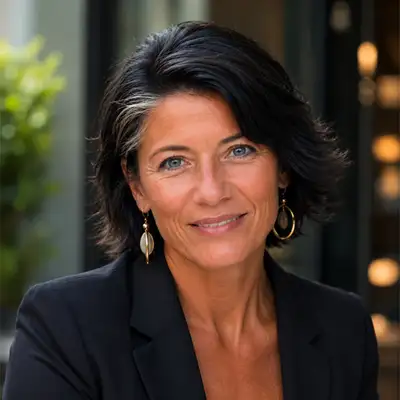
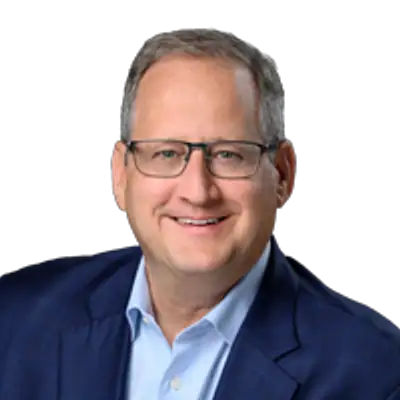
The Auto Market Brief, powered by Cox Automotive, breaks down the latest trends and forecasts shaping the automotive industry. The show is hosted by Cox Automotive Executive Analyst Erin Keating, coupling years of experience translating data and trends with the data and industry insights of the largest automotive services and technology provider.
Joined by other Cox Automotive experts and outside guests, you’ll get data-driven insights and industry outlooks from some of the industry’s leading voices.
Welcome to The Auto Market Brief from Cox Automotive. Each episode, our experts and special guests break down the latest trends, insights, and news shaping the automotive market. We'll give you the information that truly matters so you can make smarter decisions and drive your business forward. Hello, and welcome back to the Auto Market Brief. I'm Erin Keating, your executive analyst here at Cox Automotive, and I have a special guest with me today, Joe George.
Erin Keating:Welcome.
Joe George:Thank you.
Erin Keating:Joe it's so good to see you. Joe is our president of Cox Automotive Mobility, and you're here to talk to me today a little bit about the future of mobility, transportation, vehicle ownership, lots of things you've been thinking a long time about. But just to make a brief mention of your career, because you actually started in this thirty six years ago, Thirty six years ago. Okay, on the auction floor. Right?
Erin Keating:Yeah. Alright. So thirty six years ago, you've done operations, you've done sales, you've done marketing. You helped get man product. You helped really built Manheim to where it is today.
Erin Keating:And then you decide and auto trader. Exactly. And then you decided, oh, let's go ahead and tackle another frontier, and you became president of mobility, Cox Automotive Mobility.
Joe George:Yep.
Erin Keating:It's I mean, it's so great. A what a storied career. Yeah. Feel honored to be able to Very, talk about
Joe George:very blessed.
Erin Keating:Yes. Absolutely. Well, I know that we've actually really been very blessed. And Cox Automotive Mobility is now it's grown to a billion dollars in revenue. This right?
Erin Keating:And how long has Cox Automotive Mobility been?
Joe George:Seven years.
Erin Keating:Seven years. Okay. That's wonderful. Do you mind just sharing for the audience what Cox Automotive Mobility entails?
Joe George:Sure. Well, first of all, Erin, it's really great to be here with you, and I look forward to having a great converse. I I always enjoy our conversations on mic or off mic.
Erin Keating:Yes. They're fun.
Joe George:You're you're I love people that understand this industry.
Erin Keating:Thank you.
Joe George:Alright. So Cox Automotive Mobility is made up of two main divisions. One is Cox Fleet, which is the largest mobile services company in The US on commercial trucks, so class four through eight. We have about 1,500 technicians across The US, inspecting, repairing, maintaining fleets like, Amazon, now UPS, Ferguson, Pepsi, Coke, you know, you name it.
Erin Keating:Small names. Yeah. No one knows them. Yeah. Yeah.
Joe George:The other part of Cox Fleet is our third party marketplace, which is essentially the triple A for commercial trucking. So if a Walmart truck breaks down, it goes into our, Walt, our, FleetNet team and they, dispatch the right service partner for whatever that tire towing or repair, And we use a network of about 65,000 service partners across the country to do that. Wow. So that's Cox Fleet. It's kind of a new animal on the Serengeti.
Joe George:Sure. A new species. We're really excited about that part of the business. And then the other is our EV battery solutions business, which is our life cycle management sustainability approach for EVs in the automotive space and hybrid batteries. Right.
Joe George:Both, and we're in there to help the OEMs with, you know, full lifecycle management from repair, remand, diagnostics, and then ultimately pretreatment recycling.
Erin Keating:Right. I've had the pleasure of visiting the Oklahoma City facility. It's really impressive what they're doing out there, so.
Joe George:It's a nice Never a dull moment in that business. We were talking about never a dull moment. That one's got a lot of
Erin Keating:dull moments.
Joe George:Because no one solved these problems before.
Erin Keating:Right. It's all new. Makes it exciting. Well, so you recently got to do a keynote, I think it was, and you sort of set up your vision for what the future of mobility is. And one of the interesting things that you talked about was this concept of transportation as the economy, that it's not just a side story, you know, and really focusing in on mileage.
Erin Keating:And so I'm just curious, you know, what do you think some people miss about the transportation industry right now?
Joe George:Well, when we started the mobility journey, it was back in twenty eighteen ish and we had just acquired Dealertrack and we were looking at Cox Automotive as a business and eighty five percent of our revenues came from car dealers then and still pretty much do today and we're like, you know, how do we take advantage of the diversification that was happening in transportation? And at that time, was around, there was a revolution in vehicle technology plus an evolution in the economics of transportation. So think Uber, Lyft, Waymo was coming on the horizon with autonomous vehicles. We, but also digital commerce was really changing the way all shop. So we started Mobility to look at the opportunities that were going to be from how people move from point A to point B and how products move from point A to point B.
Joe George:When we did that, you know, we saw this whole fleet industry and we realized, I realized, I'm not the brightest crayon on the box, but like, There's not as many services or products that we consume that isn't touched by a commercial fleet vehicle. And so many different instantiations there, from ambulances to school buses to semis to bucket trucks to water trucks, fuel trucks, and all of these drive The US economy. So that was a big part of it. And then it changed my thinking from growing up, about miles on a vehicle and how many vehicles are sold, to why are those miles driven. And if you put fleet into the total miles, about 2,000,000,000,000 miles a year in The US, and what are all the use cases that make up those 2,000,000,000,000 miles?
Joe George:And when you look at it that way, the cost per mile, who pays for those miles? You know, like, we are a heavy user of Amazon and really digital shopping in general, and so we no longer use our vehicles shop, now Amazon does, but someone's paying for those miles. And so it just got a whole lot. And it's not just me. There's a whole bunch of smart people that have contributed to I
Erin Keating:mean, it's an interesting way to think about all of the transportation in The US. I mean, you know, we've talked before about how I worked for a foreign automaker and explaining sometimes how big The US is. I mean, we're really a unique market in the sense of how much transportation really goes into keeping this economy alive. But it's a it's a really interesting point, and I think a lot of people did focus a little bit more on how do humans get from point a to point b. But to your point, digital commerce changed a lot.
Erin Keating:Yep. And it already been Yeah. So you you have this Miles redistribution and value sort of you described this big shift. And I'm curious if there are any industries or companies that you think are leading the way and adapting to the new economics of of Miles.
Joe George:Well, I think there is though, like Walmart's doing a lot of really interesting things around digital commerce because they're competing with Amazon.
Erin Keating:Right.
Joe George:And I think we as consumers are gonna benefit. Right. Because we're gonna learn, we have alternatives. Right. And so, as a Walmart shopper, today, you can go to the store and buy it traditionally.
Joe George:You can go online, buy it ahead, have it delivered to your car, pick it up inside, or have it delivered.
Erin Keating:Right.
Joe George:And now they're actually experimenting with sending an autonomous vehicle to your house and bringing you back to shop in the store because and they what they're looking at is the economic of Joe going into the Walmart versus not. They know I'm gonna spend more if I'm in there, so it may over time pay for them to bring me to the store. And there's certain things that, you know, you just you may not buy online Right. Clearly, Waymo is another one that I would look at and not solely because of the fact that it's cool and it's autonomous but, they're mapping the use cases of America.
Erin Keating:Right.
Joe George:And they understand why Joe does what he does, where he goes, when he goes there, and so they're collecting gobs and gobs of information about the use cases of the miles consumed.
Erin Keating:Right.
Joe George:And I think they're just gonna get smarter and smarter about how to advertise to me and, when to advertise to me and what to advertise to me based on knowing my travel patterns.
Erin Keating:Right. How do you think this is really shifting how individuals think transportation versus how companies might be thinking about it?
Joe George:I think both are struggling with the affordability. Less businesses, but more majority consumers. Majority's dramatic. An important segment of our consumer base, affordability is a real issue. So I don't know that people are gonna wake up one day and say, Hey, I wanna have an autonomous ride or to I want to, you know, do X percent of my shopping digitally and have it delivered, I think people are gonna naturally follow the money and they're gonna go with which is most, not expedient, not the right word, but it fits their family budget the Right.
Joe George:And it may not be certain categories of our society fully go autonomous or fully, but I think that affordability is gonna be a big driver of all that. On the fleet side, you know, it's just been a core part of what we do as an economy anyway, you've gotta get the service to the customer, you've gotta get the product to the customer, and now more and more, that value chain includes local delivery to the customer. So, total cost operation now is a more important part of their expense structure. They're gonna have to understand it themselves.
Erin Keating:I mean, Kelley Blue Book as an example, we have the total cost of ownership. And, you know, I spend a lot of my time saying, hey, most customers look at a monthly payment when they're thinking about purchasing a car. But to your point, with affordability and with fuel and gas prices as high as they are
Joe George:now Insurance.
Erin Keating:Insurance as high as it is. So 12%. It's up And 12 more than the actual price of a car, because a lot of people are saying the cars are so expensive. It's like, no, everything else around the car is very expensive. Exactly.
Joe George:I mean, because now when you wreck one, now deal with the aftermath of that.
Erin Keating:But to your point, I mean, some of these, whether it's autonomous vehicles that have helped or the companies thinking more strategically about transportation and delivery and e commerce, I mean, some level, don't you think that's democratized, you know, consumable goods to anyone who couldn't normally get to Just the stores and things,
Joe George:think of the benefit. And this is why, you know, Amy Mills used to say, The future's here. It's just unevenly distributed.
Erin Keating:Yes.
Joe George:And so, you know, you think about aging parents or aging population and what an autonomous alternative could mean to them, you know, huge benefits. Those people with disabilities, people who have, are constrained economically can get, you know, government aid through tokens that can get transportation to get to I mean, there's lots of really positive societal benefits to, in the evolution of transportation. Now, and I'm a third generation car business person,
Erin Keating:so
Joe George:my grandfather was a dealer, my parents were a car dealer, so this is like a little bit sacrilege.
Erin Keating:That's okay.
Joe George:Know, owning an automobile is not a very good investment for most families.
Erin Keating:Right.
Joe George:And so the fact that Henry Ford started out that way, it was patterned really on bicycle shops, and so the whole onus of ownership has been on us as consumers. The payment, interest, depreciation, repair, insurance. And so when you look at a family budget, it takes a huge chunk of their budget to sit unutilized 92% of the time.
Erin Keating:Right.
Joe George:So it's just like if you drew that up on a whiteboard didn't have the experience we have, you'd say, Why would I do that?
Erin Keating:Right.
Joe George:And so that is gonna break down over time as F-one 100 fifty's are $68,000 right now and the median income is $62,000
Erin Keating:Right.
Joe George:There's a disconnect in there.
Erin Keating:Do you think commercial will go first though? Is it easier for us to see commercial fleets and things like this solve that challenge sooner and then consumers can kind of adapt to it or
Joe George:Yeah, it'll happen unevenly. Right. I mean, guess is as good as mine. I think that, you know, Amazon certainly is gonna keep pushing that number down
Erin Keating:because
Joe George:they've got a Uber, their biggest cost structure is their driver in their model. Waymo, you know, I think their motivation is completely different. I don't think they wanna monetize the transportation, they wanna monetize the life experience and get more engaged with the consumer, with the data products that they can sell.
Erin Keating:Interesting. Okay.
Joe George:And then on the commercial side, you know, trucking is very expensive. It's very dangerous. You know, you have these nuclear verdicts from juries all over The US, and so does a autonomous truck running, platoon of trucks running overnight, is that a safer alternative
Erin Keating:And for we're short on drivers as And, well, so
Joe George:you know, people aren't lining up to, you know, be drivers.
Erin Keating:Right. Exactly.
Joe George:I think it'll be spotty all over, but the technologies are here. Sure. Now the economics have to catch up.
Erin Keating:Yeah, exactly. And the technology's been here for quite some time. I mean, if you think about ACEs, right, this is what? Autonomous
Joe George:Connected.
Erin Keating:Connected, electric Shared. Shared. Right. Yeah. Okay.
Erin Keating:So that's been around for quite some time.
Joe George:Long time.
Erin Keating:And we've gone back and forth over vehicles being able to drive themselves, doing you know, I remember when I worked at Audi, there was, a whole idea that maybe people would wanna rent their or be in a subscription where they could trade out their cars every so often. So the industry has certainly been grappling with how do you commercialize this in a way that people can really get access to it. But I think that your general thesis here on miles driven, total miles driven, and how you help, you know, share the burden of those costs and where it gets distributed is a really interesting one. What's some of the technology that you're most excited about?
Joe George:Well, certainly autonomy, you know, companies like Aurora, Waymo, even Zooks Amazon, you know, they're really making some interesting. And then, you know, the electric vertical takeoff and landing, companies like Archer Aviation, J. DOE, there's some really interesting things happening in eVTOL. And so the good news about is technology, the vehicles are gonna get safer. They're gonna start protecting us from texting and, you know, because, you know, we're good drivers, but we're not great drivers.
Erin Keating:Yeah, as we were talking about before My the son was texting and that's how the car ends up on its side.
Joe George:There you go.
Erin Keating:Yeah, exactly right.
Joe George:So I think the cars will just continue to get safer and safer. And then there'll be, so autonomy, you know, just if you sit quietly and you think about an autonomous future, the possibilities are really endless. And as a son with aging parents, just the opportunities to know that my parents got picked up for a doctor's appointment, they made it to the doctor's appointment, and then they were picked back up and taken home if I can't do it, and I can monitor the whole sequence. I mean, those are the kinds of things I think are gonna make it a positive. Electrification is, it's not new.
Joe George:We've had a battery in the car. The first Model Ts were electric. So it's not like this is this new adventure. And the nature of hybrid is going to evolve.
Erin Keating:Sure.
Joe George:Some to full electric, but I don't know that internal combustion is completely out of the picture anytime No, yeah. So, but you may have all electric motors under the car, but you'd never know because most people, you know, the black plastic they put over top of the engine when you pop the hood just says, If you can't take this off, you can't work on this
Erin Keating:thing. Right.
Joe George:So no one knows what's underneath that, right?
Erin Keating:Yeah, gone are the days where people are in their driveways on Sundays finding something to fix in their cars.
Joe George:So, you know, you may have a hybrid drive system that is really 80% electric, 20% internal combustion engine.
Erin Keating:Right.
Joe George:And you shouldn't care. Right. Should just, does it give me a point A to point B? Is it safe and sustainable and affordable?
Erin Keating:So the technology's there. I think we know that it's only gonna keep getting better. What's the operational reality around it though? What are some of the barriers and what does it really look like in practice now and maybe five years, ten years in the
Joe George:Yeah, mean, electrification has a whole bunch of challenges, right? I mean, is, you know, the access, multifamily dwellings, you know, because if you don't have your own garage and you don't install the charging equipment, then you're on public charging.
Erin Keating:Right.
Joe George:So that all has to be sorted out, but you know, took a long time for gas stations to go from, you know, one in town to one on every corner, so electrification will have the same implications. Then just the power grid, making sure we have enough electrons going into the grid to put through these chargers into the vehicles. But I look at all those as, business opportunities for companies like Cox
Erin Keating:Right.
Joe George:And others to help solve the problem. Now, the fact that data centers now popped on the horizon and now we've got all this insatiable desire for electrons. That'll all need to be sorted out, but I, you know, we'll figure that pretty long.
Erin Keating:What about autonomous? Do you see specific barriers there?
Joe George:I, well, I mean, can tell you that I go bullish and bearish on it, depending on kind of the time of the year, sometimes, time of the day, you know, I think Waymo's getting darn close.
Erin Keating:Sure.
Joe George:And, you know, I don't know that it's Again, it's not gonna be every use case application, but for, you know, sort of local routing, community based routing, I mean, they're really, really close. And the beauty of, And the first time I spent time with the Waymo team, I was out in Phoenix and the head of their automotive program told me something that really stuck with me. He's like, The beauty of He had teenage kids like So, us, mine aren't teenagers anymore. I wanna act like they're teenagers.
Erin Keating:You can act like it. It's okay. Okay. He
Joe George:said, You know, every night, all these cars upload the data from the day. Right. And then it gets processed and then it gets collectively pushed down to all the vehicles in the fleet. So you have a fleet that in totality gets better every day. Whereas, you know, like, when I taught my son how to drive, I took him into the high school parking lot, he got, you know, maybe four hours of really stressful training.
Joe George:We kind of make sure he has to have somebody in there with him for a while and then they're on their own.
Erin Keating:Right.
Joe George:You know, these autonomous vehicles are collectively more intelligent every day.
Erin Keating:That's an interesting perspective. I hadn't thought about the fact that, yeah, you have this collective learning as opposed to one on one sort of instruction.
Joe George:But Google's a data company, that's kind of the direction they went.
Erin Keating:Yeah, completely makes sense. I mean, I still mourn the loss of getting to teach a kid how to drive manually, I'm but you
Joe George:with you. Always thought electric vehicles were golf carts, I would never drive one
Erin Keating:other than
Joe George:the sound of a BMW or whatever, and you know, now I've got two electric vehicles.
Erin Keating:I agree completely. Was a skeptic and now I drive an EV and I realize the performance.
Joe George:And it took, when I was talking to RJ before we made the investment, you know, he told me is people get lost in the fact that these are electric vehicles and the beauty that he's had is he had a clean sheet of paper to start from.
Erin Keating:Right.
Joe George:And the operating systems are, so the in car experience is always evolving and it's getting better and better.
Erin Keating:Right.
Joe George:And that's just like a new, you don't have to go buy the latest model, you just buy the latest upgrade and.
Erin Keating:I always say it was like a marketing problem more than anything because it's just an alternative powertrain, but we made it into something that was very outlandish and, you know, you'd only find it in Mars and it was and and the models, you know, admittedly, not everyone loved the way that the Teslas looked and things like this, so at the end of I the
Joe George:was at a Transportation Energy Institute board meeting and we had I was just political, it was like a chief of staff from one of the presidents came in and he talked to us, he said, the worst thing that Ford like, just an example, you don't put a green leaf on the side of a Ford F-one 150.
Erin Keating:Right.
Joe George:You put an American flag on the Exactly. Side of a You say, These are American technology built by Americans.
Erin Keating:Right.
Joe George:Not that it's better for, you know
Erin Keating:Right. Exactly. The environment because
Joe George:your customer base, a lot of them don't care about that.
Erin Keating:Yeah. And we get caught up in some of those messages.
Joe George:And then it got political
Erin Keating:and Exactly right.
Joe George:Now we're gonna lose even more ground to the Chinese Sure. In electrification. Yeah. I hope not.
Erin Keating:Yeah. But it's, you know, it's difficult.
Joe George:I hope Mary Bar keeps pushing.
Erin Keating:I think I think we'll get there here in The US. I have a little little faith there that we'll be able to get there, but I do think that it's a big tide of making people understand, you know, how universal these platforms are, how there's no real, we're just talking about powertrain, we're not talking about a whole new technology that you've got to figure out marketing is. It means same thing with autonomy, I think, once people get a little bit more used to it. I think putting it in perspective, I think we were talking the other day to the strategy team and saying, Are we gonna have 500,000 robotaxis in play? And when people hear that, it's like, Oh my gosh.
Erin Keating:It's like, Well, remember, have over 300,000,000 vehicles in operation, so don't worry, the robots aren't taking over. Absolutely Right?
Joe George:Not anytime soon.
Erin Keating:But they're creating efficiencies where we actually really need it in society. And I think that's an important goal to focus on. So when you think about leadership and looking towards the future, I mean, what would be your advice to someone who's thinking about the future of mobility and how they need to, what systems thinking do they need to have to see the full picture?
Joe George:Well, let's start with there's 300,000,000. Yeah. You know what I mean?
Erin Keating:Right.
Joe George:And they're all, the vast majority of them are internal combustion engine, and it's gonna take a long time for that fleet to change over.
Erin Keating:Sure.
Joe George:So, but if I was 35, 30 again and I was looking at a career in automotive or transportation or mobility, whatever you want to call it, I think that the future innovation and the future careers and future executive leadership is going to be driven by those that want to help make things better, right? Whether that's affordability for the American family and transportation or, you know, different use cases, and technology to me is a tool to accomplish that. It's not
Erin Keating:the end.
Joe George:It's not that it's electric, it's how does it solve the use cases. And, I would be, I would make these AI engines my friend.
Erin Keating:Right.
Joe George:And almost like work partners, consultants.
Erin Keating:Right.
Joe George:And take full advantage of that. But not, don't, you know, like, when I came to Atlanta in 1998 to help with Autotrader taking it on the internet, my dad's like, You're going to Atlanta with my grandchildren, he said, To sell cars on a computer, he said, That's never gonna work. Job.
Erin Keating:Sorry, dad.
Joe George:You know, like four years later, my brother tells me that 60% of their business comes from auto traders. Right. And so, but then I find myself saying to people, Oh, that's never gonna work.
Erin Keating:Sure.
Joe George:I guess, to your question, try I to stay as open minded as possible because technology is moving and it's moving quickly. It's gonna move faster and you know, we have to be opportunistic in how we take advantage of it.
Erin Keating:And I think that's a good point. I mean, it all, you said it earlier, it provides opportunity for other businesses to come up and around whatever it is that develops, we don't need to be so, you know, every new technology that's been introduced over society has always produced more work, not less, which is good for the economy and good for individuals to have work.
Joe George:And you know, it's just a testament to, I think, Cox family being really excited about automotive and the future of it, because again, they think in decades, not quarters, and as Cox Automotive team, you know, we just wanna make sure, mobility team, for sure, wanna make sure we're on top of these new innovations in a way that makes sense for dealers, consumers, OEMs. We're a little bit in the middle because we have value in all those constituents. So, you know, we're truly gonna do what's best for the industry.
Erin Keating:Yeah. It's an exciting place to be.
Joe George:Yeah, I agree.
Erin Keating:Well, Joe, I really love this conversation. On a personal note, I will just say, most maybe our audience hasn't heard yet that you are retiring at the end of this Yes. Personally, makes me very sad. I've so enjoyed knowing you over these last five years and having your mentorship and getting to have these types of conversations. But I know that the company also is very grateful for all that you've given the company and the industry, and I think this is a wonderful way to tie up all of your experience and be able to share the future of mobility.
Erin Keating:We all need to be thinking about these things carefully. So thank you so much for coming. Thank you.
Joe George:It's been a great run.
Erin Keating:It has been. I hope I have that same luck. Well thank you so much and thank you everyone.
Joe George:Good luck to you because you're my pension insurance so I'm cheering for you.
Erin Keating:I appreciate that. I need that. I need that encouragement. Well I appreciate that and I appreciate everyone, all of our listeners that tuned in today to hear this story around how we think about mobility here at Cox, but also hearing it from the mouth of the man that helped us become Cox Automotive Mobility. Please always remember to share and subscribe to our website and our podcast and check out coxautoinc.com for insights and other episodes from Auto Market Brief.
Erin Keating:Thank you so much for being here. Thanks for joining us on this episode of the Auto Market Brief. To stay up to date with all the latest news and perspectives from our team of experts, be sure to visit our insights hub at coxautoinc.com.