Subscribe
Share
Share
Embed
People First! with Morag Barrett explores the human side of leadership: workplace relationships, leadership trust, Meaning-FULL Connectivity™, and the Ally Mindset™ practices that drive real results in business and life.
In each episode, keynote speaker, executive coach, USA Today bestselling author, and Marshall Goldsmith 100 Coaches member Morag Barrett sits down with authors, business leaders, and everyday humans to uncover practical ways to strengthen connection, collaboration, and culture in an increasingly disconnected world.
Because success in business is powered by relationships. And success in life is fueled by connection.
Learn more at skyeteam.com/speaking
Morag Barrett, SkyeTeam.com: Delightful.
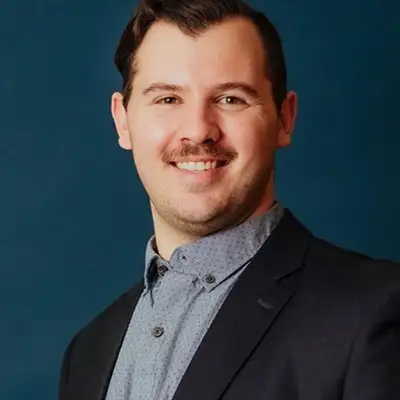
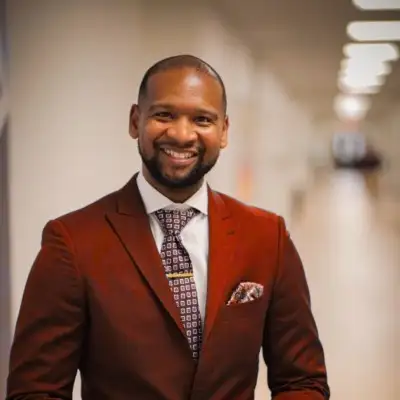
Morag Barrett, SkyeTeam.com: Welcome to this week's episode of People First, and it's a two-for-week! I have with me my guest this week, Kyle King and Daniel Freeman, who are, behind an upcoming conference that I'm excited to be speaking at called Contagious Culture Conference.
Morag Barrett, SkyeTeam.com: And when the three of us first met, there was an instant synergy that just made me go, you need to come on People First and talk about both the conference and the work that you are doing, and it's all centered around relationships and people first. So, welcome!
Morag Barrett, SkyeTeam.com: to my room?
Morag Barrett, SkyeTeam.com: Welcome to People First.
Kyle S. King: I appreciate you so much, and it's literally, it's always a breath of fresh air when we see you. So, thank you so much for inviting us on, and super excited to get this conversation rockin' and rollin'.
Morag Barrett, SkyeTeam.com: Okay, well, let's start then. Contagious Culture Conference. I saw it and I thought, I need to find out more. The name is compelling, but tell us about the inspiration for the event.
Kyle S. King: That's a great question. So, Dan and I both share a lot of experiences, but one of the experiences that we share best is that we came from the educational field. Dan on the higher education side, Kyle, me, on the K-12 side, and what we realized is that it doesn't matter if you're a professor, a dean, or a school leader.
Kyle S. King: The person that has most times the most influence within mission-driven organizations is the person that has access to deploying capital.
Kyle S. King: But one of the three pillars that we saw that is missing within the nonprofit space, within just mission-driven organizations, people that are truly advancing humans forward, are kindness, capital, and community, are the three real pillars.
Kyle S. King: Kindness, and how we show up, and how we start with heart, and be able to really spread contagious culture. Community, the teams, and how we build each other, and how we connect.
Kyle S. King: after COVID, that's… that people have yearned for community and really being able to build those intentional relationships, and then access to capital. We need money. We need resources to really be able to continue to propel these innovative ideas, these cutting-edge breakthrough.
Kyle S. King: ideas that we have to advance our communities forward, because one thing that Dan and I always talk about is that our students, our community, our citizens, our people, they deserve better. And if we don't have community, if we don't have capital, and we don't operate in kindness, then it's going to be challenging for us to be able to really provide them with better.
Daniel Freeman: You know, Kyle and I…
Daniel Freeman: Oh, sorry, I was gonna build on that. Kyle and I have realized, and we realized this early on with the Growth Alliance, one of the programs that we offer, our Nonprofit Accelerator. It's a 12-week program.
Daniel Freeman: The first unofficial Gathering that we had.
Daniel Freeman: was… So fire. That's the best way I can explain it. It…
Morag Barrett, SkyeTeam.com: more.
Daniel Freeman: it was…
Daniel Freeman: We were both texting each other afterwards about how impactful it felt, and how much movement we had made just in that first conversation.
Daniel Freeman: And… I…
Daniel Freeman: tell everyone that the framework that Kyle has built over the years from his publishing company and being an author is better than any framework that I have worked alongside in terms of
Daniel Freeman: Asking the right questions, helping people understand their brand, how to market their brand, and not just the questions to ask themselves, but the questions to use in conversation with others, and to prepare themselves that others might ask them.
Daniel Freeman: And because this first unofficial meeting weeks ago.
Daniel Freeman: We really thought to ourselves, how do we bring this to a bigger picture?
Daniel Freeman: Right, what does this look like on a larger scale?
Daniel Freeman: And him and I tend to be on the same frequency very often, and I can't remember if we called each other or texted each other, and we were like.
Daniel Freeman: This, this could be a conference.
Daniel Freeman: On a higher level.
Daniel Freeman: And… We decided that it needed to be.
Daniel Freeman: a conference. I've worked with large consulting firms, small consulting firms, I've been a part of one or two, I have friends in them.
Daniel Freeman: And I just felt like… What we were doing
Daniel Freeman: as kind of a one-stop shop with this type of programming could be so beneficial for larger groups of people, but it wasn't just
Daniel Freeman: how do we get this to more people? It was, how do we make a larger impact using this framework and creating opportunity and access for nonprofits that aren't traditionally included in specialty conferences?
Morag Barrett, SkyeTeam.com: Hmm…
Morag Barrett, SkyeTeam.com: So, you talked there about creating a conference, and I'm sure that for many who are listening and watching this episode, they've attended.
Morag Barrett, SkyeTeam.com: conferences?
Morag Barrett, SkyeTeam.com: Where you go in, and it's all very inspiring, and then in the corridors, everybody's got their noses in their phones, and so on. But I know that that's not your vision for contagious culture. So what's different
Morag Barrett, SkyeTeam.com: about your event, In October.
Kyle S. King: That's a great question, and I'm gonna just tell a quick story before I really answer this directly.
Kyle S. King: A few years back, I had the opportunity to go on a trip, all expenses paid for, to Barbados. We stayed at Sandals Resort, and at the moment where we were dropped off, they knew our names when we came into the resort.
Kyle S. King: And the whole experience was just top tier, and I tell this story all the time. They knew our names, they took our bags, they knew what we were ordering, they knew our dietary restrictions.
Kyle S. King: They knew when we were coming back from the pool and they had food in the room waiting. All of these immersive experiences that they thought about the problems that we may have.
Kyle S. King: And they created a solution before we requested it.
Kyle S. King: Oftentimes, people go to conferences, they sit in Git.
Kyle S. King: And it becomes more work because it's information overload. But information without implementation will never lead to transformation. As former educators, both of us, as former educators, we don't believe in sitting good.
Kyle S. King: We believe in creating immersive experiences where it's tangible, it's relatable, and it's actual, like, actual, where you can be able to do the work there. And what does this look like?
Kyle S. King: So, people are listening in right now, like, what does this actually look like? This looks like leveraging AI in a 60-minute workshop, and leveraging an AI tool to teach you how to make $10,000 in 60 minutes. This looks like a 4-hour, streamed, live, grant accelerator, where in 4 hours, we're gonna teach you how to write.
Kyle S. King: how to review, and how to submit a grant, and then the next morning, you're gonna be awarded a grant. This looks like being able to have a hot take on stage, in real time, where you're gonna be able to talk to real leaders
Kyle S. King: That are doing this work at a high level, and we're gonna eat you alive on stage, but the person that does the best, we're gonna give you a $20,000 gift right there on stage.
Kyle S. King: We're gonna be able to do things that other conferences just simply aren't doing, because we want to be able to have immersive experiences. We're going to have professionals like you that are leading these accelerator immersive experiences with other leaders, and they're able to get their questions answered.
Kyle S. King: they're able to get these strategies, they're able to actually take action in an intentional way. So again, information without implementation never leads to transformation.
Morag Barrett, SkyeTeam.com: Information without implementation.
Morag Barrett, SkyeTeam.com: And that's the gap that you're making.
Kyle S. King: Yes.
Morag Barrett, SkyeTeam.com: So… Clarity, capacity, community, culture… lots of C's going on here, I like the alliteration.
Kyle S. King: Definitely.
Morag Barrett, SkyeTeam.com: So, who are you hoping will be… well, not hoping, because I know registrations are already happening, so…
Morag Barrett, SkyeTeam.com: Who's gonna be in the room?
Morag Barrett, SkyeTeam.com: Other than the three of us.
Kyle S. King: Dan, you wanna take this one.
Daniel Freeman: Yeah, so…
Daniel Freeman: we talked about accessibility and opportunity, and as I mentioned, we realized that there were a lot of these specialty conferences, and those are the ones that people go to, right? They're specialized for a reason.
Daniel Freeman: The groups that we work with, these are not…
Daniel Freeman: giant non-profits, right? Could we work with them? Absolutely, because a lot of them need that help. But.
Daniel Freeman: We decided, let's create two tracks.
Daniel Freeman: Let's create a track for nonprofits doing under a million in revenue, and those doing above a million. And let's tailor our breakout speakers to each of those areas, and let's survey them before people come in and figure out.
Daniel Freeman: how do we need to ask our speakers to tailor what they're speaking about to fit the needs of those groups? Because if we want them to implement it, this can't be a $5 million problem that you're telling to a million dollar nonprofit.
Daniel Freeman: from a $250,000 nonprofit that doesn't have to deal with this, right? That's not going… that's not going to impact implementation. So, that's the first piece. The second piece
Daniel Freeman: we wanted to create. We was… we wanted to create opportunity in the sense of…
Daniel Freeman: A lot of nonprofits don't have time.
Daniel Freeman: to do things, whether you're a small one or a big one, whether you're super efficient or not. And we wanted to create opportunities for partners to come in and work with them.
Daniel Freeman: For these nonprofits, these leaders, participants, even if they're… we want to have university students and nonprofit management programs, even if it's those students who are really curious about things.
Daniel Freeman: We want them To be able to schedule time to speak one-on-one.
Daniel Freeman: with these partners that we've spoken with, that we know, that we've invited here, so that they can actually go to the people who are the experts and say, okay, I've scheduled 20 minutes, this is my question. What should I be doing? How do I do this? Because on a grand scale.
Daniel Freeman: you can talk to people and help them implement it, which is something we want to do. We want to have labs where we can help people, walk them through solutions, but
Daniel Freeman: on a smaller scale, we want people to get in front of the experts and have a little bit of time with them to say, hey, give me the quick and dirty. Help me figure out how do I need to move forward right now? What's the first step?
Daniel Freeman: that we need to take. Because we believe that, like most conferences, when people come there, they write everything down, they leave exhausted, they never have time to execute.
Daniel Freeman: We want people to attend this conference, however that may be, and we want them to be able to work and execute and potentially implement while they're there, and then be able to bring it home and build on it. And we don't want them to be exhausted. The goal is not information overload.
Daniel Freeman: We want people to intake, we want them to pull in that information, be able to implement, put it back out on paper so it's not sitting and crowding their head, and then be able to go home and say, okay.
Daniel Freeman: I know how to implement it.
Daniel Freeman: I know what the next steps are.
Daniel Freeman: Let's take those next few steps.
Morag Barrett, SkyeTeam.com: So I like that, because it's not happening in a bubble, and it all… I'm nodding along, going, well, this seems like common sense, and so I'm curious, as with any industry event.
Morag Barrett, SkyeTeam.com: Why is there a disconnect, and why aren't there more opportunities like this? What are the questions, as I add multiple questions here, what are the questions that we're not asking
Morag Barrett, SkyeTeam.com: That we need to be.
Daniel Freeman: I just want to say this, and then I'm going to pass it to Kyle. You asked…
Daniel Freeman: this seems like common knowledge, right? And it should, this is very simple.
Daniel Freeman: But we know in the world of nonprofit, people make things much more difficult than they need to be.
Daniel Freeman: And along with that, a lot of these conferences have been around for a long time. They've done things the same way. They may not want to change, they may not be able to change, whatever that may be.
Daniel Freeman: But… We don't… Have to be that way.
Daniel Freeman: And what we're trying to do is our focus is on the nonprofits.
Daniel Freeman: Whereas, I feel like with these specialized conferences and these larger conferences in other places, they tend to focus on the business, or the sponsor, right? There's Salesforce conferences.
Morag Barrett, SkyeTeam.com: Right? There are these large ones that are beholden.
Daniel Freeman: To these businesses that are giving them the top, versus partnering with them to expand the reach.
Daniel Freeman: And we really want to tailor this to the nonprofits, to those students that want to get into nonprofits, to the communities, right? We want to create that access and that focus on them, and provide the value
Daniel Freeman: to them, to the people that are coming, and it… it's just like donors. When you have that conversation with donors, people talk at donors.
Daniel Freeman: They go into conversation saying, this is what I want to talk with you about. And I feel like that's how conferences traditionally are. I want you to come to my conference so I can talk to you about this. Versus, I want you to come to this conference because you've informed us that these are some of the issues you're facing.
Daniel Freeman: So we want to provide you with potential solutions for the problems that you have. So we want to put the focus on you. Just like when you work with donors, we want the focus on the donor. Give them the power.
Morag Barrett, SkyeTeam.com: I'm going to add a C to your list, then it's the conversation, isn't it? Because, to your point, at…
Morag Barrett, SkyeTeam.com: traditional-style events, it's talking at. Whereas what you're doing is creating an environment and a space where we can have a conversation with
Morag Barrett, SkyeTeam.com: And that connects more powerfully at all levels, no matter the size or what area of not-for-profit or not-profit you're in.
Morag Barrett, SkyeTeam.com: There will be something for everyone.
Morag Barrett, SkyeTeam.com: Kyle, what would you add?
Kyle S. King: I agree. I think that one of the things that we've both learned in the educational industry is that education, as well as nonprofit.
Kyle S. King: Are two of the industries, only industries.
Kyle S. King: That never have the end user as a part of the conversation.
Kyle S. King: And what we wanted to do differently.
Kyle S. King: is we wanted to be able to create a… and here's an E word, not a C,
Kyle S. King: an ecosystem of individuals that are all a part of this process. We wanted 100 students that are in nonprofit management university programs to be a part of the conversation. We wanted 100 to 200 executive directors that are leading this work.
Kyle S. King: We wanted 100 to 200 support staff that are contributing to this work. We wanted 100 to 200 solution-oriented consultants that are helping to scale this work. We wanted 100 to 200
Kyle S. King: Funders, or family foundations, or corporations that are
Kyle S. King: advancing this work. We wanted all of the people that are a part of this This cycle, this journey.
Kyle S. King: to be a part of the conversation. And I mean senators, I mean politicians, or I mean educators, I mean all of the people that are part of changing this industry. When we think of this one statistic, there's roughly 1.8 to 1.9 nonprofit organizations that are existing.
Kyle S. King: Roughly 90% of those organizations, the grant funding, are for organizations over a million.
Kyle S. King: That means that roughly 90% of organizations aren't getting any funding.
Kyle S. King: Because the majority of organizations.
Kyle S. King: aren't even hitting a million dollars.
Kyle S. King: So, when we think about that statistic, that there's all of these nonprofits doing great community work.
Kyle S. King: But the funding is only going to the organizations plus a million.
Kyle S. King: then all of those other organizations, that's who we're speaking to. We're speaking to the change agents, we're speaking to the mission-driven leaders, we're speaking to those that are leading with heart, that are leading with kindness, that have community, but just need access to capital. And there's students out there, there's solutions out there, there's executive leaders out there.
Kyle S. King: that want to help. And then there are funders out there that are going to teach you what you need to do to prepare your organization to get optimized to be able to more effectively communicate your story, so that they can become partners and we could be able to advance these relationships forward.
Kyle S. King: So I love how you opened up the conversation with just the word conversation.
Kyle S. King: Because we're taking that conversation from all of these different places, and building an ecosystem that we can be able to develop.
Kyle S. King: at the conference.
Morag Barrett, SkyeTeam.com: So, you talk about two days of transformation, creating this ecosystem. Daniel, you talked about the fact that people would leave equipped to go and apply the pages of notes that they're going to be taking.
Morag Barrett, SkyeTeam.com: I know your visions… Are bigger than just the two days of transformation.
Morag Barrett, SkyeTeam.com: So, what's the journey that emerges after the October event?
Kyle S. King: That's such a great question, and I was having a phenomenal conversation with one of our newest speakers, Naomi Hadaway.
Kyle S. King: That is doing some exceptional work out of Atlanta, Georgia. And one of the things that she mentioned, she said, Kyle, I don't want to just come and teach. I don't want to just come and train. I don't want to just come and create this experience.
Kyle S. King: What does the follow-up look like?
Kyle S. King: So one of the things that our listeners and our viewers, or even our attendees, can expect is follow-up. Whether that is joining a community of professionals.
Kyle S. King: So that they can continue to provide resources. Whether that is being a part of our Growth Alliance program and our newest accelerator that we'll be launching towards the end of the year, whether that is being a part of our Growth Lab, which is an already existing monthly community that meets every single Thursday.
Kyle S. King: Whether that is building continuous relationships, we want to mirror what this process looks like in real time for organizations. When we thought of this idea, our first thought was to get all of our thoughts, all of our ideas on paper, like most nonprofit organizations. Then our second idea was, well, let's build a board.
Kyle S. King: And then let's find funding. And then let's build other experts that can be able to promote and share this message. And then from there, what is the follow-up? Let's build a model.
Kyle S. King: that works. And then from there, once we have that immediate transformation, what does that follow-up, or what does that programming look like?
Kyle S. King: for the future, so that we can create continuous transformation. But just like on the donor cycle, we don't want people to just
Kyle S. King: share a post, or come to the conference. Just like you don't want a donor to just give you one or two gifts, we want to be able to propel and advance those relationships forward. We want to have people retained. So…
Kyle S. King: retention, follow-up, and building that continuous relationship with every single person that engages with the post, that is given a gift at the conference, that comes to the conference, or even just watches from afar. We want to continue to build this relationship for you before, during, and even after the event.
Morag Barrett, SkyeTeam.com: talk about contagious culture in action. I'm listening to how it continues to propagate and create those ripples that will last well beyond the few hours that we will spend physically together.
Morag Barrett, SkyeTeam.com: There is just so much more thought and passion and heart that goes beyond that.
Morag Barrett, SkyeTeam.com: So, we haven't actually told people how and where they can find them more. So, where can people learn more about this event?
Daniel Freeman: So, there are a few different ways, but the easiest way… is SpreadContagiousculture.com.
Daniel Freeman: That's the first one.
Daniel Freeman: We also have…
Daniel Freeman: correct me if I'm wrong, Kyle, we have a LinkedIn page, an Instagram, and a Facebook page, right? The Contagious Culture Conference is on there as well. And then, Kyle and I are posting about it as well, and you can follow along with what we're doing on LinkedIn.
Daniel Freeman: You can reach out to us, but we're gonna be doing some other things as well, and listening to this podcast.
Daniel Freeman: And this comes.
Morag Barrett, SkyeTeam.com: conversation.
Morag Barrett, SkyeTeam.com: Yes, indeed. And are there particular skills or resources that you are still looking for and looking to tap into in order to add the cherry to the icing on this cake that is the Contagious Culture Conference?
Kyle S. King: My direct ask, and Dan knows me really well, I like to skip to the end, and eat dessert before we even have the appetizer. Anybody listening?
Kyle S. King: If you want to partner with us, with the Contagious Culture Conference, and I don't mean just through revenue, I don't mean just your money.
Kyle S. King: If you have relationships, that can enhance the experience.
Kyle S. King: If you have reach that can be able to share the experience, and then we gotta get to the last R. If you have resources that you need to be able to deploy so that you can enhance the experiences that we're creating for the individuals that will be coming and showing up
Kyle S. King: on October 15th and 16th, then reach out. Go to conference at theculturelab.org, conference at theculturelab.org, send us an email, let's stay connected, and let's identify ways that we can partner together so that we can be able to enhance the experience, because look.
Kyle S. King: Our students deserve better, our community deserves better, and we collectively can work together to be able to transform our communities, our country, and our world.
Morag Barrett, SkyeTeam.com: I'm just letting that sit. That's the mic drop moment. Kyle and Daniel.
Morag Barrett, SkyeTeam.com: Thank you for joining me on People First. I am looking forward to being part of this amazing event in October, and for those listening, watching, you heard it here. If there is anything that you can do to support this organization, please reach out.
Morag Barrett, SkyeTeam.com: And of course, if you're curious for your own not-for-profit, or one that you support, make sure that they know about this event, too, so that they can join us in October in Charlotte, North Carolina.
Kyle S. King: Thank you so much, and we appreciate you.