Subscribe
Share
Share
Embed
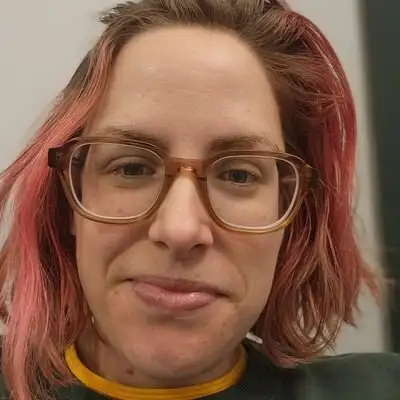
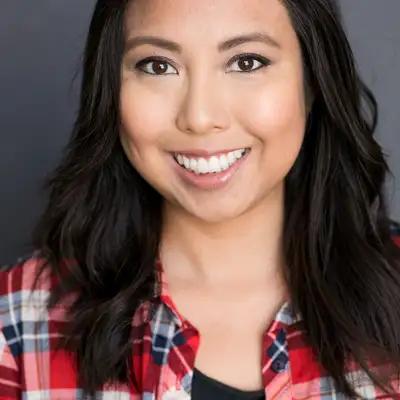
Stupid Sexy Privacy is a miniseries about how to protect yourself from fascists and weirdos. Your host is comedian Rosie Tran, and the show is written by information privacy expert B.J. Mendelson. Every episode is sponsored by our friends at DuckDuckGo. Tune in every Thursday night —or Friday morning if you're nasty — at 12 am EST to catch the next episode.
00:00
Hey, here's a joke. Knock knock. It's Google Chrome, and I don't need to ask who's there. I already know it's you. I know your search history, your email address, location, device settings, even your financial and medical data. Wow, that's not funny. Now I'm definitely switching to DuckDuckGo. That's smart. If you use Google Search or Chrome, your personal information is probably exposed. And that's no laughing matter. The free DuckDuckGo browser
00:26
protects your personal information from hackers, scammers, and data-hungry companies. DuckDuckGo has a search engine built in, but unlike Google, it never tracks your searches. And you can browse like on Chrome, but it blocks most cookies and ads that follow you around. DuckDuckGo is built for data protection, not data collection. That's why it's used by millions to search and browse online. Don't wait. Download the free DuckDuckGo browser today.
00:53
Visit DuckDuckGo.com or wherever you get your apps.
01:01
Welcome to another edition of Stupid Sexy Privacy, a podcast mini series sponsored by our friends at DuckDuckGo. I'm your host, Rosie Tran. You may have seen me on Rosie Tran Presents, which is now available on Amazon Prime. And I'm your co-producer, Andrew VanVoorst. With us, as always, is Bonzo the Snow Monkey. I'm pretty sure that's not what a Japanese Macau sounds like. Oh, it's not. Not even close.
01:29
Let's hope there aren't any zoologists listening. Okay, I'm also pretty sure that's not what a snow monkey sounds like. Over the course of this mini-series, we're going to offer you short, actionable tips to protect your data, your privacy, and yourself from fascists and weirdos.
01:57
These tips were sourced by our fearless leader. He really hates when we call him that. DJ Mendelson. Episodes 1 through 33 were written a couple of years ago. But since a lot of that advice is still relevant, we thought it would be worth sharing again for those who missed it. And if you have heard these episodes before, you should know we've gone back and updated a bunch of them, even adding some brand new interviews and privacy tips along the way. That's right. So before we get into today's episode, make sure you visit StupidSexyPrivacy.com.
02:26
and subscribe to our newsletter. This way you can get updates on the show and be the first to know when new episodes are released in 2026. And if you sign up for the newsletter, you'll also get a free PDF and mp3 copy of BJ and Amanda King's new book, How to Protect Yourself from Bashes and Weirdos. All you have to do is visit StupidSexyPrivacy.com. StupidSexyPrivacy.com. That's what I just said. StupidSexyPrivacy.com.
02:55
I know, but repetition is key to success. You know what else is? What? Oh, Bonzo. Eat your pabling like a good boy, and pretty soon you'll grow up to be a big, strong, handsome man just like your daddy. Then you'll have Swedish pancake, too. I'm really glad this show isn't on YouTube because they pull it down, like, immediately. I know. Google sucks. And on that note, let's get to today's privacy tip. oh
03:24
Fascism, like any good comic book villain, can never truly be defeated. Each generation must pick up the torch and light the way to its defeat. For our generation, fascism came with a business model. It looks something like this. The wellness industry gives money to fascist influencers who push extreme views. Usually those extreme views include calling things the influencer dislikes disgusting or vile. This is because disgust and anger are the emotions most likely to convince people to share content.
03:54
The wellness industry doesn't care about the extreme views. They only care about the bottom line, just to find their expenditures using social media metrics. Even if most of those numbers are fake, generated by bots or click farms. People don't trust academics, the media, or the government. People trust other people. This was true before fascist-peddled conspiracy theory after conspiracy theory to sow discord. Now the problem is worse, and a lot of influencers present themselves as your friends. Someone you can trust.
04:23
So even if 10 million of their views are fake, there could still be 500 actual people watching, precisely because those inflated metrics lend credibility to that influencer. Through social contagion, misinformation and disinformation spread among people's networks, meaning that bad ideas spread the same way viruses do. Fascism, therefore, is the pandemic of the mind. That's because simple evil statements said with authority are easier to accept than more complex answers to complicated problems. Think signs that say
04:53
mass deportation now, as opposed to signs that say, automatic citizenship is granted to anyone residing in the United States who, over last five years, paid their taxes and committed no violent crimes. The repetition of these simple, evil statements creates, you guessed it, more fascists than weirdos. That's because it's always easier to blame someone other than yourself for your problems. And there are plenty of mediocre people out there looking for a scapegoat. If there are 8.3 billion people on Earth and 1 % are assholes,
05:21
That means there are still 83 million assholes. And many of them are the mediocre people we're talking about.
05:29
Blaming others also has the benefit of deflecting attention from the people funding the fascists and weirdos, the oligarchs. Henry Ford was the Elon Musk of his time, and also one of the wealthiest men in America. He actively spread virulent anti-Semitism at his Ford dealerships with his newspaper, the Dearborn Independent, a newspaper with an estimated circulation only rivaled by the New York Times.
05:57
Adolf Hitler admired Henry Ford so much that he had a portrait of Ford in his office, and Ford became the only American recipient of a medal Hitler created, the Grand Cross of the Supreme Order. So, in the 1930s, the oligarchs inspired the fascists to blame the Jews. In the 2020s, the oligarchs got the fascists to blame immigrants, migrants, and invaders. At least one recent White House Deputy Chief of Staff
06:27
wanted to invoke the Interrection Act because he felt the presence of brown people in the United States constituted an invasion. And don't forget, when that deputy chief of staff's president was inaugurated on the stage behind the president were the three wealthiest men in America, Elon Musk, Mark Zuckerberg, and Jeff Bezos. That's important because sometimes influencers will blame the system or the matrix without explaining that the system was constructed by the oligarchs and how it can be changed.
06:56
This blame game grows the audience of both the influencers and the wellness industry. It's a virtuous cycle, for them. For us, it killed 319,000 people through vaccine disinformation, poisoned democracy, and exported white supremacist gun violence. In order to protect their money, fascist and weirdos will do anything to shut up people offering more complicated but sensible solutions, especially if they're a woman. That's because the foundational view of fascism is a hierarchical view of society, one with men always on top.
07:24
Many white Christian nationalists, for example, want to take away women's right to vote by repealing the 19th Amendment, which reads, There are many ways that fascists and weirdos make their money. The wellness industry is the one that often gets overlooked in documentaries about the Manosphere and conspiracy theorists. So we wanted to take some time to specifically highlight it. That's because the money from the wellness industry is the big untold story behind the creator economy. It's a story worthy of its own book.
07:53
For now, we do want to acknowledge that you could have swapped out the wellness industry for financial products, crypto, and gambling, and this week's privacy tip would work much the same way. The point is, there are bogus products and entire industries built around those bogus products that go unregulated, and that lack of regulation keeps the money flowing into the pockets of dangerous people. And that brings us to today's interview. This week, BJ interviewed Dr. Amy S. Greenberg, author of A Wicked War, Polk, Clay, Lincoln.
08:21
and the 1846 US invasion of Mexico. Fascists and weirdos constantly try to rewrite history, and the US' genocidal invasion of Mexico is something they like to airbrush past when talking about our neighbors to the south. Dr. Greenberg joined us to help shed some light on this lesser known chapter of American history.
08:46
Hi, Amy. Thank you so much for joining us today on Stupid Sexy Privacy. I was hoping you might be willing to take a moment just to introduce yourself to our listeners. Oh, absolutely. And thank you for having me on. I'm Amy Greenberg. I'm the head of the history department at Penn State University, where I've taught for 30 years. And I'm the author of five books, four of which are about American foreign policy.
09:15
And just for people listening, I was really taken by your book, A Wicked War, ah because for someone like me who loves history, typically I found that that period between the revolution and the Civil War gets short shrift. It's something that we sort of blow by, aside from maybe mentioning a couple of highlights. And so I was excited to talk to you about this because I feel like it couldn't be more relevant and timely.
09:45
Given what's happening in the world. So just real quick, could you tell us about the book Wicked War and what you covered? Yeah, absolutely. So Wicked War is a narrative history about the war between the United States and Mexico, which took place between 1846 and 1848. And that is the war that brought California.
10:10
in the United States, as well as a number of other states, pretty much the entirety of the Southwest in California. do I have it right that that poke really just wanted California and the rest of it, he sort of just failed backwards into is that is that right? Well, he wanted Texas to so the war kind of started because Mexico and the United States um refused to agree on where the southern border of Texas was. So he wanted Texas.
10:38
to be part of the United States. When he came into office, it was an independent republic. But yeah, California was the ultimate goal. When you teach the Mexican War, do you find that the students, what is their level of knowledge about it typically when you introduce it to them? Okay, so I teach in Pennsylvania. And I think it's safe to say that most of the students have no idea that
11:06
we ever fought a war against Mexico. But you know what, I grew up in California and most people in California don't know that the United States ever fought a war against Mexico either. I wouldn't say that this is limited to to Pennsylvanians, this ignorance about the US-Mexico war. I mean, the main reason I think people don't know in the United States that we fought a war against Mexico is that it's not a war that anyone's ever celebrated in this country. Like they celebrated it at the time because it was exciting and
11:35
The U S won a lot of, you know, pretty exciting victories, but it wasn't a war that Americans were proud of. And it was really overshadowed by the civil war, which took place less than two decades later. Right. And it also featured some people that would be pretty prominent in the civil war. that right? Absolutely. Yeah. It's where a lot of the major, um, figures, uh, in the military history of the civil war where they got their start. So.
12:05
Robert E. Lee, um he played a really crucial role in the US-Mexico war. um It was Ulysses S. Grant's first experience of combat. um Yeah, most of the big generals cut their teeth in Mexico. It's funny you mentioned the people in Los Angeles, and in particular I've also encountered, don't know much about the Mexican-American war, and I always...
12:33
sorry, look at them and go, you know what Figueroa Street is named for, right? Yeah, I grew up in Santa Barbara and like at literally every street, you know, there's a street that's called Canon Perdido and it's the lost cannon. Wait, when was the cannon lost? Yes, exactly. During the US-Mexico War. Why, why do you, I mean, I think you touched on it a little bit in that, you know, it's not really celebrated, it's overshadowed, but do you think that there's sort of a...
13:01
We try to blow by it because it's not a good look. Yes. Yeah. There's just no question. And, know, that isn't just now. People felt that way um basically immediately after the war. Like no one even wanted to celebrate it 10 years after it happened. ah It isn't a good look. Even at the time, James K. Polk, it was the president. He couldn't come up with a good justification about why we were fighting the war. Like he tried different things out. said,
13:31
Well, Mexico's, you know, they've embarrassed us. They've humiliated us. um They don't respect us. He tried out uh claiming that Mexico owed the United States a bunch of money, which in fact they did. um You know, there were various arguments for why we were going to war with Mexico, but everybody knew that the reason why we're going to war with Mexico is that we wanted Mexico's land. So it was greed. It was straight up greed. People didn't really
14:01
argue otherwise. So depending on, you know, how you felt about your nation, and we have to remember, at this time, almost everyone in the United States, who was white, at least, felt like the United States was the greatest nation on earth. And it wasn't the greatest nation on earth because it was the most powerful. It was the greatest nation on earth because it had democracy, it had a free economy, it had a
14:30
growing population. It had Protestant religion. There were all these things people were really proud of about the United States. And there was nothing they were more proud of than the fact that we were a country that was born out of liberty, right? We were a country that was created in opposition to the corrupt old nations of Europe. So people were really proud about this heritage of freedom,
15:00
um and liberty that they felt was the basis of the United States. So to go from claiming that you were better than Britain because you didn't fight wars of aggression, because you really were interested in democracy, to go from that to attacking a neighboring republic. Remember, Mexico at this time was
15:28
called the United States of Mexico, right? They're another republic to go to start fighting a war against a neighboring republic, which everybody believed in the United States was weaker. So we're gonna attack a weaker neighbor. This was seen as unchristian and really not what the United States was about.
15:50
How much would you say was driven? How much of this would you say was driven by Pope and his wife specifically? Cause I know at one point in the book it's referred to as Mr. and Mrs. Pope's war.
16:04
How much it was driven by them? Is that the question? Yeah, how much would you say was them versus other interests and ambitions from the young United States to invade Mexico? So I've been thinking about this a lot. I feel like James K. Polk would never have been elected president in 1844 if the American people had not wanted to see the United States expand. So the push for manifest destiny and territorial expansion
16:32
was pretty widespread in the United States. Most people in the North were not interested in us going to war against Mexico. They really wanted to take land from Canada or they wanted to take the jointly occupied Oregon country away from Great Britain. They weren't really so interested in land to the south of the United States. But people in general, they liked Polk because Polk was the candidate who was willing to say,
17:01
This nation's destiny is to get a lot bigger, physically bigger. Now, did he say we're going to go to war to do this? No, he didn't. Most people in the US thought we wouldn't really have to fight a war against Mexico, that they would just roll over if we threatened them and give us what we wanted, which was California and Texas to the extent that it could take as much land as it wanted.
17:31
The way that the war gets started is totally Polk. Polk is the guy who sends US troops into an area that is disputed between Mexico and Texas. Polk is the guy who's the mastermind of the war. But the situation that got us into that war was not about Polk.
18:00
or Mrs. Polk, it was about the country feeling like Texas and California belonged in our nation. Right. And what would you say? mean, today it's kind of it's obvious for us to look at California and say, OK, it's the fourth largest economy in the world. One in eight Americans live there. This pretty much is the state that drives the rest of the country in terms of sometimes legislation.
18:27
But what was it about California and Texas at the time that made people want to take it? Great. Yeah, that's a great question. So, OK, the first thing to know is that these, if you think about Mexico, right, Mexico was very centralized and it was really centered in Mexico City at the time. And we think of California and Texas as these dynamic places now, but
18:56
In the 1830s, they were just total backwaters. And Mexico had a really hard time convincing people to settle in Texas and in California. So, you know, there just wasn't a lot going on there. And by the time Polk becomes president in 1844, people who are born in the United States are outnumbering Mexican born
19:25
Tejanos, something like 10 to one. And it's about the same in California too. you know, Americans are moving into these territories and outnumbering actual Mexican people in areas that are Mexican. So there's kind of a sense that this is leaning towards becoming American territory. Now the real push
19:52
for Texas to become part of the United States takes place during the Texas Revolution, which happens in the 1830s. So in the 1830s, Texans fight a revolution against Mexico, which they're part of. And a lot of Americans are involved in that war. Like either they move into Texas in order to fight in the war, or they're already American-born people that are living there. And there are stories that
20:19
come out of the Texas revolution that really make people in the United States angry, particularly the murder of white Texans or American Texans, American born people living in Texas um at the Alamo and that another battle called Goliad where Mexicans basically put everybody to death.
20:42
And so people in the United States, like I think about it, like there's this whole generation of young men and women who are raised hearing these stories of the atrocities of Mexico against Americans in Texas. And so it just really makes them want to avenge Texas. And then also they feel like the people of Texas are really their kin. So there's that going on. Now, the thing about California is actually pretty different, which is that um
21:11
California is understood to be a land of incredible promise in terms of wealth. So straight up there is a, you would call it a hide trade, which doesn't sound that exciting to us now, but basically you've got tons of cattle and then their hides are being shipped to the United States. so again, what do we care about hides now? Not so much at the time people cared about it more. So there's a lot of money to be made off of.
21:40
cattle ranching and things grow really well in California, various parts of it. The biggest potential wealth of California though lies in its ports. So there are like the port of San Francisco, port of LA, port of San Diego. These ports have so much promise for allowing if the United States owned them to trade with Asia. So
22:08
California, both because of where it is, because of its natural resources, because of its ports, people in the United States know that it is a special place and that really drives American desire for it.
22:25
Our co-producer, BJ Mendelson, and my co-host, Amanda King, just put out a new book that you really need to read.
22:31
It's called How to Protect Yourself from Fascists and Weirdos. And this book delivers on what the title promises. If you're worried about the fascist takeover of America but don't know how or where to start fighting back, this book is for you. If you need practical tips on staying safe at a protest or filming law enforcement without getting indicted, we got you covered. And because life isn't all about the crisis of our time, B.J. and Amanda even cover how to protect yourself offline for moments like when you realize your date is a total weirdo. The best part? This book is absolutely free.
23:01
head on over to StupidSexyPrivacy.com and click or tap on the word book. Now let's get back to our interview already in progress.
23:13
Sometimes when we talk about the Alamo in particular, people don't necessarily understand that as heroic as we've portrayed the people at the Alamo, they're the bad guys, right? Do I have that? That they are essentially fighting for slavery? No, that's an interesting way to look at it. I don't know that I'd say they're the bad guys. I mean, definitely the Mexicans aren't great at the Alamo either. Yes, that's right.
23:45
I think a better way to put it is that they aren't necessarily good guys. Like they definitely are fighting to keep slavery. Yeah, that's true. um They fomented an uprising against their, you know, government. So maybe that's not great. I don't, I don't think about it. Like they're the bad guys versus the good guys. Yeah, I found, I found recently, um,
24:14
There's the Alamo movie with Billy Bob Thornton, right? And- Oh yeah, that's a terrible movie. Oh my God. It's so bad. So bad. tried showing that in my class once. Oh boy. Oh no. Terrible. Terrible. You know, but I've been to the Alamo, you know, and I felt like, yeah, all of this is true. There was bravery, but you were still fighting for slavery. Like at the end of the day, you were still fighting to- Yes. Yeah. To- Weren't you struck by how small the Alamo is?
24:43
Right. Well, I mean, it's also across the street from a mall now. So it's so tiny. I know it looms so large in our historical imagination. No, I mean, people misunderstood what was going on at the Alamo, even from the beginning. You know, there was immediately these stories that were circulating in the United States about how, you know, everybody fought to the death. But, you know, in fact, basically a lot of them surrendered and then were killed. Yeah, people care a lot about this in Texas. Yes, they do.
25:13
I mean, it's become like a cultural touchstone and I get it, but it's difficult for me as I guess a liberal from New York, right? When I read about American history and I read about the ammo and just Texas in general, it seems like they had very much wanted slavery. Which is sort of what I wanted to get at, which is one of the things that we talk about on Stupid Sexy Privacy is how much
25:41
the slave power um continued to warp the functioning of the United States government and serve our goals and ambitions up to the Civil War. And then even after, know, they kind of made it into a Cold War to some extent. And so I was just curious to ask you about what role the slave power had in terms of driving things like the Mexican-American War. Yeah, that's a great question. So, you know, when I started
26:10
writing about the US-Mexico war, it was totally clear to me that James K. Polk was fighting this war in order to extend slavery. ah But after I got to know James K. Polk better, you know, the extent that you can know somebody is dead. ah But, know, reading all of his writings, you know, he repeatedly said, I'm not fighting this war for slavery. This is not about slavery. This is about extending the, you know, the United States. And I was like,
26:40
He's just saying that, but you know, I actually came to believe that he really thought that, that he didn't think this was about slavery, but that just reveals the extent to which slave owners were so powerful in the government, right? That he doesn't think that it's about slavery because he doesn't need to think that it's about slavery. That slave owners are in the driver's seat and they are just pushing
27:10
the extension of slavery everywhere all the time. And the Democratic Party, you know, which honestly was the more powerful of the two parties before the Civil War, the other party before the Republicans get started in 1856. The other party is the Whig Party. Most of those guys are slave owners too, most of those guys, mean, most of the national politicians who, you know, reach
27:39
real heights in the political system. But the Democratic Party, particularly, everybody who is powerful in the Democratic Party either owns slaves or supports the extension of slavery. So a lot of really good historians in the past two decades have written about the fact that people in the North um
28:06
are just as invested in slavery as people in the South are. Like our entire economy is based on the production of cotton by slaves. So even people in the North who claim to be not supportive of slavery, they're basically making their money off of slavery. And the number of people who really are abolitionists is tiny. It's a tiny, tiny number of people.
28:36
So we are a country that is becoming powerful through slavery, is driven by slavery. uh And it really isn't a surprise when you think about it that the U.S. would choose to fight this really pretty much immoral war that um stands in contrast and opposition to everything that the U.S. claims about itself as a nation.
29:05
that it would fight that in order to gain more land where you could move enslaved people and grow cotton. Right. And something that, it's hard not to look at the Mexican-American war without the lens of what's happening today. And something that I found particularly shocking that you highlighted in the book was some of the soldiers writing letters saying, ah I'm not going home until I've had a chance to kill a Mexican. Yeah.
29:34
How much of that did you come across in the research and writing of the book? Again, I, okay, so this really has to do with the way that Americans demonized Mexico after the Alamo and after Goliad. So I really, I do think that there's all these young men who have been raised to believe that Mexico is evil and they want to go kill Mexicans.
30:03
because they think Mexicans are evil people. And the reason they think that is because they believe that all of their brethren were slaughtered at the Alamo and at Goliad, which again, it's not totally untrue, but the US did, well, not the US, the mostly American born soldiers on the Texas side did equally bad things to Mexicans when they had the opportunity, but we didn't talk about that.
30:32
So, m yeah, there is a desire among these soldiers to kill Mexicans. um They think that's what the war is gonna be all about.
30:48
What was some of the activity of our soldiers once they got there? Because it sounded like they got there looking for a fight and there really wasn't much in one. So it sounds like they just sort of got into all sorts of stuff. They did get into a lot of trouble. And that's one of the things I talk about a lot in my book, because, you know, normal. Before I wrote my book, the normal history that you would read of the U.S.-Mexico War.
31:16
would talk a lot about the military victories. It would talk about the US's absolute dominance on the battlefield ah and that it was more or less an easy war. And I was really struck when I did my research how totally out of control most of the soldiers were during the war.
31:46
The reason for that was not just that they were bloodthirsty. I actually don't know if soldiers in the US-Mexico war were any more bloodthirsty than soldiers in any other war, but it mainly had to do with the fact that the vast majority of men who were fighting for the United States and Mexico volunteered. And they had a really unusual idea about what their responsibilities were as a volunteer and what their duties were.
32:15
So the men who were actually enlisted in the army behaved more or less the way soldiers do in most wars, which is that they um got away with stuff when they could, but they were pretty disciplined. The volunteers, on the other hand, they elected their own officers. So the officers would not punish volunteers when they, for instance, raped a Mexican woman.
32:45
or burned down a hacienda or stole stuff. They just let it go because they were elected. And as a result, the volunteers committed atrocities ah that horrified the generals who were in the field. So um Winfield Scott and
33:11
Other generals, they wrote back home to Polk and they said, you know, the volunteers are really behaving terribly and are committing crimes that um would make you weak.
33:31
Zachary Taylor, he is the general who is in charge of the army during kind of the first phase of the war when we're mostly fighting in what's now in northern Mexico. And he writes to Polk and he says, you know, if I could send home the Texas volunteers, I would, because they're so badly behaved. But we need them here.
33:59
uh volunteers who are from Arkansas are called the Rackensackers, which gives you an idea about what their idea of fun is. um men volunteer for this war in great numbers. They want to take vengeance on Mexico. They want to secure land for the United States. They believe in manifest destiny. They believe Mexicans are evil and they want to have an exciting time. And instead they get to Mexico, just like in most wars.
34:27
They're spending much more time in camp than they are fighting. There's very few pitched battles. And then they behave in a really terrible manner. It honestly reminded me so much of the stories I've heard coming out of Iraq and Afghanistan. Yeah. Of very, very little to do. Maybe there's 13 seconds of sheer terror, right? Firefight followed by nothing, leading them to get into trouble. And so
34:57
I'm watching our clock before he gets that. The one thing I wanted to ask you, what are the consequences of the war for Polk? mean, we touched on it, wasn't really, I think people were very aware that something wrong had happened. But as the war starts to come to a conclusion, what are the aftermath of it? It's a really good question. So Polk dies three months after he leaves office.
35:27
And he only serves one term. So Polk really didn't see that much of the aftermath of what happened. um Polk does live long enough to see gold discovered in California. So that's something of a vindication right there. ah Polk, think he just, when you read his diaries and stuff by the end of the war, he's pretty worn out. He's sick and he's tired and he just wants to go home.
35:57
So I don't know that he feels like the country is sufficiently happy about the victory of all the land in Mexico. He certainly says he doesn't feel like he's getting enough acknowledgement for that. He's upset about the infighting and the Democratic Party about who's going to succeed him as president. Unfortunately, the opposition party wins the election in 1848. So that's not great.
36:26
But he doesn't really have to deal with the real fallout of the war. And the real fallout of the US-Mexico war, of course, is that the South and the North can't agree on whether slavery will be allowed in the new territories that have been um taken from Mexico. And that ultimately is what causes the Civil War. So...
36:51
Ralph Waldo Emerson at the start of the war with Mexico, he says something along the lines, I'm gonna get this quote wrong, at least a little bit. He says, yeah, the US will beat Mexico, but it'll be like the man who swallows poison. So the idea is that this war with Mexico is gonna poison the United States. And then it did. It did poison the United States. Yeah, I think that's an excellent point. Because you're not far away from the Compromise of 1850. It's sort of just,
37:21
we sort of slide downhill into a civil war from that point on. What percentage would you say that the Mexican-American war played into the civil war? Would you say it's without the Mexican-American war, I think we would have eventually got there, but would you say that acted as an accelerant? Oh, God, yeah. Oh, absolutely. Absolutely. No, the war happened when it did because of all this territory. And I always tell my students the compromise of 1850 is the
37:50
It's not a compromise. Like it's the compromise that isn't a compromise because they ended up breaking up the compromise and the individual bills so that nobody had to vote for something that they were really opposed to. Um, so people didn't compromise that much, but no, there's no question in my mind that had we not taken so much of Mexico, um, you know, about half, we took about half of Mexico.
38:18
we hadn't done that when we did, that the war wouldn't have happened. Now, would it have happened another time? Yeah, probably would have, but it wouldn't have happened when it happened. Right. And so my last question for you is just um what parallel, I mean, I know it's a big question for a last one, um but what parallels do you see between Polk's actions in the Mexican-American war and when sort of some of what's playing out today? um
38:47
I don't want to disappoint you, but I am so in shock at what's happening now that all I can do is think on the level of probably most people that listen to your show, which is just like, why is this happening? oh How is this happening? do think, God, what would Polk have made of this? We need to have Greenland.
39:17
What were you made of that? I, so I, what I am so astounded at what's happening now that I feel like my powers as a historian have failed me. I think we all feel that way, honestly. I I think regardless of the profession, we, but I do also wonder, you know, cause throughout the American history, you know, I feel like Polk and Jackson,
39:44
and Nixon, uh they've sort of laid the groundwork, right? For we've never had a, you I call Trump the first president of the Confederacy because it feels like everything that the Confederacy wanted, know, domination and the idea that one person is superior to another, like that's at the core of the Confederate States of America. It is. And that's sort of so that's why I call him like the first official president of the Confederacy. um But I wonder from the Mexican-American War, if
40:13
some of the attitude that we see displayed towards Mexicans, you know, finds its history there or finds a route there. Yeah. So I do think about, about Trump's seeming need to dominate others. That is very much the attitude that you can see when you look at politicians like Polk and his cabinet talking about
40:42
why we need to go to work against Mexico. There's real need to express your dominance. And that I see very clearly with Trump.
40:55
You know, there's a point pretty early on in the war when James K. Polk says something to his cabinet along the lines of, you know, when we get out of this war, we need to get Mexico to give us California.
41:16
And James Buchanan, who at that time is the second person escape, he's the guy who's in charge of negotiating with England and France and other lesser powers. He says, well, surely you can't be suggesting that we are going to take a bunch of Mexico at the end of the war in order to punish Mexico. Because if we do that, England and France are going to be outraged.
41:42
They'll be outraged by this. Polk says, uh what do I care what England and France think? If they don't like it, I'll fight them too. So Polk's attitude is like, no, I don't care about international norms, right? I don't care what these other nations that are our peers and allies think. If they don't like it, we'll fight them too. And so that's the closest thing I can see to Trump's attitude.
42:10
For now, our friends at DuckTekGo offer a solution that we As part the DuckTekGo subscription, please, the operational and automation removal service. The kind that help find and remove virtual information such as your name and address from information that's currently available. This to combat the fat and to information or removal problems with DuckTekGo subscription plan. And here's the part. There are a lot of removal services available.
42:36
The thing is, if you're lucky, they might have it your local bookstore. driver's license, which they then store on their servers. DuckDuckGo doesn't do that. All of the information you provide them is stored locally on your device. This includes the monitoring and processing of removal requests. It then scans these sites on a regular schedule to minimize the risk of your information reappearing.
42:55
After the initial scan, you can track the progress of ongoing removals, keep tabs on the total number of records that have been removed, and see the site's scanning schedule on your personal dashboard in the DuckDuckGo browser. While it doesn't cover all the data broker websites out there, DuckDuckGo monitors over 50 of those websites, with more being considered. You can sign up for the subscription via the Settings menu in the DuckDuckGo browser available on iOS, Android, Mac, and Windows, or via the DuckDuckGo subscription website, duckduckgo.com slash subscriptions.
43:25
This is currently only available in the United States and on desktop.
43:34
This episode of Stupid Sexy Privacy was recorded in Hollywood, California. It was written by B.J. Mendelson, produced by Andrew Van Voorst, and hosted by me, Rosie Tran. And of course, our program is sponsored by our friends DuckDuckGo. If you enjoy the show, I hope you'll take a moment to leave us a review on PocketCast, Apple Podcasts, or wherever you may be listening. This won't take more than two minutes of your time, and leaving us a review will help other people find it.
44:00
We have a crazy goal of helping 5 % of Americans get 1 % better at protecting themselves from fascists and weirdo. Your reviews can help us reach that goal, since Leaving One makes our show easier to find. So please take a moment to leave us a review and I'll see you right back here next Thursday at midnight. After you watch Rosie Tran Presents on Amazon Prime, right? Bonzo, I wish that you'll have many more birthdays just like this one. With those you love and trust around you always to share your happiness.
44:29
And I wish that you'll get a chance very soon to prove that being loved and looked after like a human being has made you feel like a human being. And that if love can do that to you, then it ought to be able to make some other human beings human beings.