Subscribe
Share
Share
Embed
There's the public side of being a creator - the growth, the audience, the brand deals, the sales. And then there's the side nobody talks about: the risks, the exposure, the realities that come with making a livelihood out of being visible online.
As a professional creator, you're business is built on the relationships you have with your audience, the ones you need to grow, to monetize, and to actually serve them well.
But along with all the upsides of building an audience come risks. Risks that nobody tells you about, often until you find yourself staring them down face-to-face. Privacy and security exposure. Mental health and burnout. Platform dependency. Income volatility. Public call outs. Cancellation. AI cloning your content without consent. Audiences that feel a little too close for comfort.
And the worst part: There's no safety net and no playbook for any of it. Our goal is to change that.
In each episode of the Parasocial Paradox, you'll hear experienced creators dig into the tensions, risk, and realities of being visible online platform risk, financial instability, AI, physical safety, mental health, audience dynamics, all of it. There's a lot of upside, and there's a lot that can go wrong, and we don't talk about the latter nearly enough.
Think of it as listening in on a private creator mastermind or hallway track at a conference, where nobody's performing and nothing's off the table.
Because while these conversations are already happening, they’re happening behind closed doors in 1:1 calls, masterminds, and group chats.
If we want more creators to be less exposed, more secure, and more able to build successful, sustainable careers, we need to put that stuff on the mic, because the truth of this business is this: it's wonderful, and it’s also really hard.
Hosted by Susan Boles, who spent years in federal law enforcement and security before becoming a creator herself. After a decade of watching creators build with zero infrastructure for protection, she started Unpublic, a creator safety and privacy service built for people whose livelihood depends on showing up online.
The risks are real. So are the rewards. And it's time we actually talked about both. That's the paradox every creator feels - building relationships with an audience while navigating the real risks of being visible online.
Pull up a chair, grab your coffee, and turn off the ring light. We're not performing here.
I'm sure we're all against cannibalism here. I'm like, if you minced up a human being into a burger and fed it to me and I couldn't tell there was any of Jake in the burger, I'd still be really pissed, and that would still be wrong. That's what AI is.
Susan Boles:Welcome to the Parasocial Paradox, the show where we get experienced creators together to talk about the risks and realities of being visible online. It's the unguarded, sometimes ugly and uncomfortable conversations about what it's really like to be a creator. I'm your host, Boles. A. I.
Susan Boles:Is coming for your job. At least that's what we hear all the time as creators. And in some respects, it's true. We are competing with creators who are just generating their content completely with AI. We do have to worry about AI creating deepfakes of our likeness and damaging both our trust with our own audience.
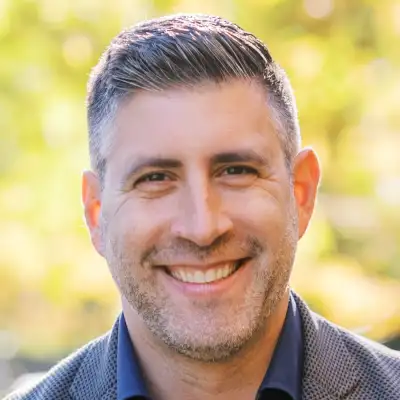
Susan Boles:And we have to worry about our own likeness of voice being manipulated by AI. Maybe, perhaps often, without our consent. Today we are going to talk about a real world incident that happened to a creator, what he did to protect himself for the future, and how the two of us are thinking about AI content creation as creators who are pretty particular about our craft. My guest today is Jay Acunzo. He is a public speaking and storytelling advisor who teaches business leaders how to communicate with greater clarity, influence, and resonance.
Susan Boles:He is a writer, a speaker, a podcaster. He makes awesome, very creative videos, and he shows up as a creator in a lot of different ways. And recently, you had an issue. You go guest on lots of podcasts, and you had what ended up being kind of a I think it's new for those of us in the world of creators, but I don't think it's new overall, and it's gonna be probably more of an issue coming up. So why don't we get into what actually happened when you went and guested on this podcast recently?
Jay Acunzo:The backstory here is, yes, I appear on my fair share of podcasts, and when I do, it's very different than my paid keynote speaking, where there's a contract that protects both sides and money exchanges hands, and that's some of my speaking. Not all, but some. For many years, it was my full time job. For podcasts, like many people who are seeing this or hearing this, I'm sure, it's a good form of marketing. For me, it's also like a small comedy club to test out material.
Jay Acunzo:It's a way to have an impact and teach. So there's many reasons that I love appearing as a guest. And so I just say yes to almost every invite I get. When it's not a busy season for other reasons, I'll say yes if I can. And that's that.
Jay Acunzo:You know, there's a schedule that goes out or a calendar invite. Like, there's no paperwork that exchanges hands. So there's no, like, written protection. And so into that context goes this show that booked me, I want say at the end of last year, and the episode came out in the beginning of this year. And they used the headshot they found, not the headshot I provided, which is also like, what are you doing?
Jay Acunzo:I gave you a headshot. They found an old headshot of mine, and they used AI in a few ways that just felt somewhere between strange and cringey and, like, outright violating. So one of the images was my old headshot, so I already look a little younger and they aged it down even further. And they also like replaced, I had a t shirt and a bomber jacket in the shot and you could almost see just the neck and shoulders. They thought, nah, that's not good enough for us.
Jay Acunzo:They added a suit. They put me in a suit in the headshot, which literally is just like a few pixels of clothing. I'm like, Why even do that? That was weird. They also misspelled my last name, which was like, Okay, I see what I'm dealing with here.
Jay Acunzo:And then the real egregious thing was they took the same photo and ran it through some AI tool, I don't know what, and put me in poses with, like, more of my torso showing in a suit and hands that were not mine and facial expressions angles and poses that was not me. And it was like innocuous enough. It was a little goofy, but it wasn't like a compromising image of me or anything. It didn't damage my reputation. But it opened my eyes to the fact that like, wow, I just gave them an hour of my voice, an hour long video, and a bunch of photos of mine, and kinda said without saying it, like, have at it.
Jay Acunzo:And so I posted about that. There was all kinds of people in the comments, almost every single person, and there were hundreds of was like, this is horrible. We need to protect ourselves. How dare they? Like, they were all seeing it my way.
Jay Acunzo:Thank God. But it just made me realize, like, we have to be smarter. We have to protect ourselves. So now I actually have a contract that I will send over to public appearances. I sent you the contract before this appearance because this is both a public appearance and also we're talking about this topic, so you wanted to see the process, which protects me, which is just saying, You may not use AI to manipulate my likeness without me getting you final approval.
Jay Acunzo:Because what else can we do? I don't know. This is all very new to me, I feel very violated by what happened to me, even though it was just, like, making me look goofy and different. But I saw it, I'm like, That's not me. Like, what are we doing?
Jay Acunzo:That's also not going to promote the show any better. So it's like, it's just there's so much wrapped into this moment.
Susan Boles:This is something that there have been several writers, but they didn't tell any of those journalists or writers. They didn't cite them, and they didn't pay them. So we have that one coming up. There was a YouTube issue that came up recently. So somebody went into Nano Banana, gave them a prompt, asked them to generate an image.
Susan Boles:It generated the image of a YouTuber. And lots of people went in to go use the prompt and realized that all of the YouTubers inside their data use policy authorized YouTube, I. E. Google, to train on their likeness. So that one's actually within the terms of service, but a lot of people did not realize that's what was happening.
Susan Boles:So your YouTube content is actually being used to train the image generation features in Nano Banana. And then four zero four Media just broke a story about Webinar TV, which is going out to public Zoom links. Like they're finding Zoom links of webinars that are supposed to be private, joining the webinar, recording it, and then publishing that recording on their website. And so we've got all of these kind of egregious violations, I think, of creators' autonomy, their likenesses, their work happening. And there's no rules about this yet, really.
Susan Boles:A few states have laws here and there, but for the most part, it's kind of the Wild West. And I'm curious for you, one, how did you actually find out about your incident, which is personal? It's not industry wide, but we're seeing it happen so much more. Yep. How'd you find out?
Susan Boles:Like, did you see them publish and you were like, oh my gosh. That's not me? Or did they actually contact you? Nope.
Jay Acunzo:No. No. So, like, here here's here's what's crazy in that instance. If I went to somebody's Facebook album from a decade ago and dug up some buried photo, that is them. They took the photo.
Jay Acunzo:They shared it publicly. It's just like a really old photo. Or maybe they're pictured doing something kind of weird or different. I don't know. If I found that photo, in my brain, I would go, Hey, Susan, is it cool if I use this in our promotional materials?
Jay Acunzo:Because I'm a human being with a thinking brain. Right? Why is that not in the calculus of, well, to create these images and promote this episode, we're gonna change this guy's face and facial expression and body positioning and put him in clothing and in poses and we're not gonna tell him. We're not gonna ask permission. We're not gonna send it ahead of time.
Jay Acunzo:We're just gonna post it. Like, where's the breakdown in the brains of people? Like, this is this moment is so uniquely stupid to me. It just gets me so pissed off. I have a real tough time showing up as my normal self, Susan, which is a little bit less ranty.
Jay Acunzo:Not not not no rants. I'm known for a good rant. But I just have a tough time getting there mentally and emotionally to see it from other people's side. And so that's how I found out. It was already published.
Jay Acunzo:Something like there's tens of thousands of views on the video on YouTube. There was posts on social media, and in the moment, I almost didn't know how to react, so I kind of sat on it. I think I made some kind of joke in the comment of like, Oh, thought you were going use my photo and not a photo of my cousin Vinny in the promo material. Material. I didn't know what to do or say, and the more I sat with it, the more I was like, This isn't right.
Jay Acunzo:This is making me feel horrible, and people need to know. So I did eventually post about it. I didn't mention the company. I just shared an image and removed their brand. And then the CMO owned up to it.
Jay Acunzo:I give them credit for that, and then threw their designer under the bus, which I don't give them credit for.
Susan Boles:Strategy. Yeah. So my assumption in your case is that people are doing this in the name of efficiency, most likely, right? We're all trying to churn out content, and we don't want to take the time to modify. I don't really actually have a good excuse.
Susan Boles:I would use the headshot that you sent me because that's not gonna go comb through your face.
Jay Acunzo:Yep. First of all, I provide, like, a whole website of, like, here's a few headshots. Here's a few action photos. I give them options. And then there's also the ability to, if you don't like the way the photo was edited, don't know, touch it up, turn it black and white, put it in a branded frame, crop my head, know, whatever.
Jay Acunzo:Then there's that that's been going on for a while. And so just do that. Like, well, we have to use AI for reasons. Right? And it's like, either would take the same amount of time and have the same outcome, but somebody decided, oh, we wish he was doing this in this way with this pose, but he didn't actually pose for that as like like as a person, as a human being.
Jay Acunzo:So let's just make him do that. And again, I felt violated. And by the way, I'm a white straight male. So there are people who have felt violated or ogled or exposed and vulnerable on the internet in way worse ways for way more time than me. Right?
Jay Acunzo:So it's like if I have a problem with it, imagine how other people might feel. Imagine if you've spent your whole life worried on the internet that someone is going to mess up your likeness or image because you don't look and sound like me, and then that happens to you. How vulnerable would you feel in that same instance, substituting them for me? Right? So I'm enraged on their behalf as well.
Jay Acunzo:This is terrible.
Susan Boles:Yeah, and also this is relatively benign. Right?
Jay Acunzo:My instance was relatively benign. Absolutely. I could have brushed it under the rug, but the door was opened. My eyes and the door both opened.
Susan Boles:I think it is endemic of the current culture, which is that, yes, we're gonna use AI for everything. Even if it's not the right tool, the right time, it doesn't actually save any time, right? We're using AI because people told us we're supposed to use AI, and now we've got a hammer that's called AI running around looking for nails. Yeah. And the consequences could be so much more even though this specific instance was it sucks Yes.
Susan Boles:But ultimately not that harmful to you or your brand.
Jay Acunzo:I'm very grateful that this happened to me in the way it did because, like, the first incident wasn't actually harmful to me or to them. So we've both learned. Both sides, I hope, have learned. I've certainly learned. So I came up as a journalist, and a lot of people who publish content would benefit from some journalistic training and principles for many, many reasons.
Jay Acunzo:But when you quote somebody interviewed in text, you know that if I'm going to remove a chunk of the sentence from the middle, I have to make sure that doesn't change the fundamental meaning. Maybe you took a tangent, and you can remove the tangent, and the beginning and end still make sense, same meaning, I didn't change the meaning, and b) I have to indicate that to the public with brackets and an ellipsis in the bracket. Right? Now we're in this era where the analogy I'm using now is, imagine that I just gave a fifteen minute interview and you're gonna quote me in text, and you realize, well, wait a sec. All scattered throughout what Jay said to me in this transcript, he said the world the words the earth is flat.
Jay Acunzo:He didn't say it in a row, but he said it, and then he gave it to me. So I'm gonna remix and reinvent and put it together. And now Jay is publicly quoted as saying the earth flat. Right? That's exactly what I see people doing with AI.
Jay Acunzo:You wouldn't do that first thing. Again, put on our thinking fricking brains I don't know if I can swear on this show and recognize you wouldn't do that, so why are we okay doing this over here? It doesn't compute. And I know people are under pressure, and I know there's this weird efficiency gain that's being promised. I'd question if it's actually being delivered on.
Jay Acunzo:I know I can get some of the rationale like you tried to do before, but I sputter out like you do.
Susan Boles:I guess following along the lines, though, do you think and sort of playing devil's advocates here. Do you think there are any benefits to leaning into the cloning of yourself using AI? Is there a case to be made for either allowing people to do it, licensing it, considering making your own clone for this purpose? Or do you think this is one of those where there's really no case to be made at all and no positive benefit?
Jay Acunzo:I think everybody has to define own line. And for me, I'm not gonna make that line a debate item of like, well, what about what do we do this? What about this? What if we what if we just took your your photo instead of looking to the side, you were looking forward? Or, you know, what if we what if we remove some of the Chaka gray that you have emerging, Jay?
Jay Acunzo:Wouldn't you like that in real life? What if we shave down some of the proof that you have a couple of kids and love ice cream? Like, what if what if we think know? I'm like, I'm not gonna leave it open to debate. Here's a written agreement.
Jay Acunzo:It protects both sides, and I have final approval. And if you don't like that, that's okay. I hate that this is the moment we're in, but I have to embrace with eyes wide open the moment we're in. And I have to say, I need to be protected. And I have an email I send to make sure it's warm and friendly, and I say overtly and bolded in the email, like, you know, hey, before you sign this, I want you to know this is not a commentary in any way about any concerns I have with you specifically.
Jay Acunzo:This is just how I operate in order to protect myself and make sure that nothing happens in a way I don't approve or could damage my reputation. Unfortunately, people have already used AI in manipulative ways using my likeness. Right? So this is like, I'm just saying, It ain't you. It's what's going on in the world.
Jay Acunzo:Let's protect ourselves. In the same way that when you work with a client, you sign a contract, and the contract has the scope listed out and all these things, not because you don't inherently trust Susan to respect the scope you discussed on a call or emailed about, but by putting it in the contract, both sides are protected, you leave nothing to chance. So you decide your line, and then you go with it moving forward, both vocally in how you communicate, but in my case, also contractually.
Susan Boles:So you have this agreement that you're using for appearances, but you also have something in your public speaking contracts you mentioned, right?
Jay Acunzo:Always had a contract for public speaking. Like, when you are paid to speak, you have a speaker agreement. I've added language that is from the AI prohibition agreement that I have into the speaker contract. And nobody has thought twice. Everyone's like, oh, makes total sense.
Jay Acunzo:Right? And I think it's because keynote speaking, it's closer to, it's pretty distant from, but it's closer to the world of celebrity, where it's like, you're gonna be on a big stage, and there's a lot of phones, like your likeness is your reputation, likeness, voice, etcetera, is business. People get it. It's like, okay, yeah, using the person that is Jay in any way he doesn't agree to doesn't make any sense. Celebrities have always had to worry about this, and have always had teams of people making sure they're safe, contracts and lawyers and all that stuff, and now it's the non celebrities that we actually have to care about this more.
Jay Acunzo:And so for my speaker agreements, I've always had language about video usage, and you may not resell the talk, all these things. There's like, here's how to use the recording of the talk at your event, all that stuff. And everybody in the whole events industry knows there's certain stock language to protect both sides. It's this new element of AI that's causing it to appear now guest spots, webinars that I give virtually, etcetera. So I'm closer to this stuff, more familiar with it, more used to navigating it than the average bear maybe because of my keynote speaking experiences, and now it's just trickling into other things that I do publicly.
Susan Boles:So after this has happened and you now have this agreement, drawing lines around how you are willing to let your likeness, your voice, your whole you be used, how are you actually thinking through where your personal lines are going to be for this? And maybe they're changing every day as as new and crazy things pop up. But when you're doing the internal risk calculus, are you thinking about your likeness and protecting it?
Jay Acunzo:It's such a big question, and it's so new to me. I feel like, to me, the very simple solution that I've put in place here is I want you to let me know, and I want the ability to say no. Like, very simple. And if it is a true partnership, right? Let's face it.
Jay Acunzo:Most people don't approach these things like a true partnership. Most people are like, so and so has a big audience. If we get them on our show, then we can ask so and so to share our podcast, and they'll get us reach. Or we can meet that person to sell them our service because they themselves are a lead. Or we can tell people we have them on the show.
Jay Acunzo:There's a lot of transaction minded people out there who kind of disrespect the relationship between the voice and them, and then by extension the audience. And that's a damn shame. That's always been the case. But for the people who have a relationship business as I do, trust your likeness, your name, it's everything. My public platform is so instrumental, so crucial to everything I'm doing.
Jay Acunzo:I'm just saying you should have always done this podcast host or webinar host. You should always say, hey, we got this weird photo that we, like, cobbled together in Photoshop or that my six year old drew on a napkin. It doesn't matter what the technology is. It's like, we made you do some stuff in this image that you didn't actually capture on a camera yourself. Is that cool?
Jay Acunzo:Every human being should just go, we should probably ask them for permission. Right? But now it's so easy because you can press a bunch of buttons and do it that now we have to introduce language to it. Right? It's bananas.
Jay Acunzo:So we're living in, and my four year old would call this cuckoo bananas. This is cuckoo bananas. And I don't want it to be cuckoo bananas. So I have a contract.
Susan Boles:You do a lot of speaking yourself, but you also do a lot of work with other speakers, all of whom are now having this issue, right, where every time we appear on a podcast or we post a YouTube video or we go on Instagram, we are essentially giving anybody on the internet all the tools they need to create an AI clone of us from its foundation, the AI industry, is based on stealing from other people.
Jay Acunzo:It's a plagiarism tool.
Susan Boles:I think that is potentially why we're seeing some of the blatant offenses that we're seeing, right? Like when the Grammarly CEO was interviewed and was asked by one of the people he ripped off, Hey, do you think you should pay me for my likeness? His answer was basically like, no. This was just quoting you. I don't know why we'd give you money to use your name.
Jay Acunzo:In the product that we sell for money.
Susan Boles:There's a real disregard, I think, that comes from the foundation of the AI industry being based on plagiarizing people. I know that you spend a lot of time thinking about AI versus human, essentially. When you are thinking about AI and the future, what do you, as a creator right now, think the moat is going to be? What is the thing that you are thinking about as a creator that gives you an advantage in the world of AI, where we're now competing with potentially our digital selves for business, for our livelihood, for attention.
Jay Acunzo:I sell services, high ticket at that, and most of my clients do too. I feel like it goes back to something that actually predates the rise of AI or the proliferation of it, which is a lot of people, when content marketing became a thing, I came up in that field, people were like, Well, can't possibly give away my expertise. I'm a consultant, I'm a coach, I'm an agency owner, I'm a whatever. I can't give away templates and guides and even just tips and blog posts because why would they hire me? I'm like, If you can replace the entire value of your product or service with free content and templates, you don't have a marketing problem.
Jay Acunzo:You have a foundational business problem. You actually don't have anything worth buying. For me, it's the back and forth. It's the personalization. It is the ability to actually see things that AI cannot, which isn't just knowledge tailored to a logical conclusion of a prompt.
Jay Acunzo:It is, Wow, Susan kind of looks drained right now. Maybe I should ask Susan to do this today instead of that. There's, like, an emotional component to it, not to mention the personalization of my ideas. So I think about that a lot. I think about, like, if you are just a sound bite machine, if you're just broadcasting knowledge at people, it's gonna be a hard time.
Jay Acunzo:But if you know how to personalize that knowledge to people and wrestle with them, which includes customizing your methods and advice, but also taking care of the person on the receiving end of that advice, you're good. If you know how to draw on what I call humanity's LLM, your little life moments, you're good. Like, I can tell a story from my childhood. I can tell a story about an observation. I can interview well.
Jay Acunzo:I can craft narratives around and give you deep meaning from simple moments in my life, little life's moments, I think you have a stronger moat. If you understand how to develop not just expertise and earned insight, but some kind of signature premise to that, I keep using that word everywhere I show up, but it's why people hire me is like, I want a signature idea. I want a well developed premise that separates me. It's hard to come up with anything original when the tool you're using is the statistical average of everything internet, and you're always being sucked to the mean. So there's all these versions of my work that I'm like, Oh, okay.
Jay Acunzo:You as the source versus the knowledge. Don't want your time. I want Susan. Right? I don't want a person who does X.
Jay Acunzo:I want Susan. That's defensible. So take your pick. There's all these things about my world that I'm like, Oh, actually, not only is this a reaction to AI, it's actually always been a reaction to any noisy thing, any competitive thing. You know, right down to public speaking, until which point your favorite AI app is running behind your eyeballs.
Jay Acunzo:Public speaking is the most defensible skill set you can possibly master. It just elevates your success rate everywhere you show up and your efficacy and your memorability. It's like there's no easy button in your career, but being a good speaker is damn close to it. So yeah, pick your poison. Pick your antidote, let's say.
Jay Acunzo:Because there's a lot of them out there.
Susan Boles:Is the fact that on a lot of social media platforms now, part of the terms is that you are allowing Meta and YouTube and all the other social media platforms to train their AI on your content, your data, your likeness. Is that something you're thinking about, considering, or you're just posting to the platforms and so is everybody else so not too worried about it?
Jay Acunzo:It's not something I've thought about. I think that there's a real egregious moment. I'm kind of like everybody else. It's like, Hey, everyone. LinkedIn automatically added you to this thing.
Jay Acunzo:It's opt out, not opt in. Like, and here's what they say about it. And I'll look at that and say, okay, do I want in? Do I want out? I am in the line of work where, if this happens to me again on the human level, somebody swipes my idea.
Jay Acunzo:I've actually had people send this to me. It's like, here's this thing I keep saying, Jay. And I'm like, wow, that sounds like remarkably similar to the person you just emailed that to, me. Or here's this visual framework that I'm gonna use in my keynote. I'm like, the font is the same.
Jay Acunzo:You can even And, you know, I get angsty about that for sure because I'm a human being. But I'm in the wrong line of work. I am in the business of impact and the business of change and the business of giving away my ideas and telling my stories and trying to help people through the spoken and written word, I am in the wrong line of work if I'm worried about everybody who would take those ideas from me. Right? But that's for me to decide.
Jay Acunzo:I have decided that. Where I get really angry is, like, everyone's like, well, okay, Jay, if you're cool with that, then why aren't you cool with, like, chat GPT, like, you know, plagiarizing the world? Because I'm like, you don't see the difference? You don't see, like, me sharing an idea inspires somebody else to share ideas. Me telling stories inspires somebody else to share stories.
Jay Acunzo:Like that's cool. Like me cooking a great burger at my restaurant and a chef eats it and goes, I wanna create an amazing burger in my restaurant. I'm cool with. What I'm not cool with is like, I'm sure we're all against cannibalism here. Here's the rationale I hear against the plagiarism nature of these tools.
Jay Acunzo:It's like, but you can't even tell. It's like, it's so so much stuff. I'm like, if you minced up a human being into a burger and fed it to me and I couldn't tell there was any of Jake in the burger, I'd still be really pissed and that would still be wrong. Like, that's what AI is. They just like hidden it all together and mash it all together.
Jay Acunzo:And also it's not inspiring art. It's not like inspiring inspiring someone else. It's I'm packaging this together as a sellable tool, which I can sell to human beings at great scale without citation, without permission, without compensation of the people's work that this is built on. Like, what are we doing people?
Susan Boles:Fair enough. My hope is there are some legal wins coming. There are a few states that do have protections for creators when it comes to digital likeness and owning your voice and owning your face. But they're pretty few and far between. There's an interesting tool that just launched.
Susan Boles:The Creators Guild of America just launched a tool called Mosaic, and it's essentially trying to create this verified IMDB for creators that basically says, Here's who I am, here's who I work with, and verifies that, along with having both creators and brands sign a code of ethics that talks about use of AI and being explicit about disclosing if you are using AI, how you're going to use AI. I think are interesting. They're still very, very new. The jury is absolutely out on whether they work, whether people participate in them, how well they manage to verify AI. But I think there are some interesting directions that my hope is we see a little bit more in terms of the legal front of actual protection for creators.
Susan Boles:Because this is one of those things where it's kind of only an issue for creators right now. Right? This use of AI to create digital likenesses of people doesn't have a lot of applicability for Joe that lives down the street. Right? It is a risk for him, but nobody's trying to replicate him because nobody cares.
Susan Boles:The
Jay Acunzo:title of this series is The Parasocial Paradox. Like, we are in the business of building parasocial relationships with other people, which has a tipping point from good to bad. Let's acknowledge. And maybe that's, like, a creepy inappropriate DM that's, like, ultimately, like, okay, whatever. They just they're a little too familiar in my DMs or there's actually bad things that emerge and you hear stories.
Jay Acunzo:Right? And I know your organization on public is is helping with that. So, like, we have this weird thing, this paradox where, like, we wanna get more visible, but we don't wanna get more vulnerable. But the systems and the platforms that we operate on, they have incentives and business models. This is what drives me up a wall where people are, like, How could social media, how could these companies, how could cable news, how could whatever?
Jay Acunzo:I'm like, Look at the business model. Just look at how they make money, and what they're incentivized to do as a result. It is not to reward very nuanced, thoughtful takes on things. It's not to let you go deep and connect deeply on a social level or over an idea or your area of expertise or insights. It is everything is becoming porn.
Jay Acunzo:Let's extrapolate this out further and further. It's like, there are more incentives for these organizations to reward extremism, sensationalism, oversimplification of ideas, and to not actually regulate the use of AI comments because that's an accelerator to creating inventory that they can monetize. And lest we all go very rightfully, Yeah, but eventually, we're all going to get tired of that and leave. Like, the companies might even admit that, but in the meantime, they're laughing all the way to the bank, and they're short term oriented companies because they're quarterly oriented. So I'm looking at everything you're saying.
Jay Acunzo:I'm very heartened to hear, and I take no real stock in it. Like regulators, companies that exist with tools
Susan Boles:to help people my breath waiting for the government
Jay Acunzo:to who's gonna win? My lawyer. Like, that's who's gonna win. It's I think it is on the onus is on each of us, unfortunately, because I don't think anybody's coming to save us because the platforms we exist on is not like a true town square or park. It is an ad network.
Jay Acunzo:These are ad networks where most of us show up most of the time. They're not social networks. They're ad networks. That comes with a list of incentives. If you want to know how things will break, just look at the business model.
Jay Acunzo:You know, not because they're evil, maybe there's some people there who are, but it's because they have a business model and a list of incentives, and they're too close to it to see any real damage or they rationalize it away. So their business model is not working in our favor right now, and so we have to do something about it, which for me means building a business that doesn't depend on social media at all. In other words, if I lost access to it, or if I felt like that's the last straw, I'm out because they opted me into something I disagree with, or I feel too exposed for whatever reason, I have taken steps now to make sure that my business would be fine and in fact continue growing. I have other ways to build an audience. I have other things that drive leads.
Jay Acunzo:I have other assets and practices that sharpen my ideas where I don't need to post to LinkedIn to write, right? So I have all these things that I've already put into place, and I would encourage others do, to make sure that if you are currently reliant on a platform, the moment we're in is just accelerating a hard truth, which is they don't really care about you. And so make sure they're not a dependency for you.
Susan Boles:LinkedIn is the platform I'm probably the most present on these days. And I do feel like there has been a little bit of backlash of them just letting AI comments and encouraging people to write AI comments. Amount of slop on the platform has created a little bit of a backlash, I think, in terms of the actual creators and what people want to see. And so I'm hoping that we don't have to wait for the government to save us. There's kind of a natural rejection of AI generated everything that means that we start caring more about the humans behind things.
Susan Boles:As a creator, do you think about either disclosing how you are going to or not going to use AI? So, like, you host podcast. When you have podcast guests come on, now that you have been violated as a guest, are you thinking about being more explicit about how you will or won't use AI in your own content?
Jay Acunzo:I have not written or posted imagery or videos that were built with AI. I don't use AI to create. On my snarkier days, I'm like, oh, oh, no, I don't write with AI. Oh, no, no, no. I'm a good writer.
Jay Acunzo:I know I'm throwing out a lot of good people and that sentiment feels like that's how I feel on some days. On my calmer days, I'm like, Oh, this is the good stuff. The reason people pay attention to my work, if there's a growth hack I have, it's joy. It's intrinsic motivation. It's loving this shit.
Jay Acunzo:I like to create. And so I'm not gonna outsource that or the thinking process or whatever. So, like, there's nothing that someone has consumed for me where I'm like, I hit a button and this popped out, or this chunk that was generated by something that wasn't my brain and my fingertips on keys. It's all been me. And so in fact, at the bottom of my newsletter, I have a badge that says created with human intelligence, which is a movement I picked up artist.
Jay Acunzo:Shoot. But the person I saw it through was Brad Montague, who is a wonderful speaker and author, mostly writing children's books and other books too. And so Brad had posted he was gonna use this badge, so I created my own badge. There's actually a hand sketch of me as a stick figure from my friend, Ham Handley, in the middle, and then a very messy outline of a circle around it, as if hand drawn. So I don't have any need, essentially, to say, Oh, by the way, I created this with AI.
Jay Acunzo:In fact, I go the opposite direction, which I do think is gonna become a thing. I think it is already a thing. But, like, you know, I wanna know that, like, you know, in the world of food, you have fast food all the way to, like, mission star restaurants and fine dining and everything in between. And I have yet to hear the case that AI generated content, in other words, the fast food of content is delicious. Everyone's talking about making it.
Jay Acunzo:No one's talking about consuming it, right? But people would say, sometimes I just need a McDonald's burger, sometimes that's what I can afford, or sometimes it's what my kids want, or whatever. There's places in the world for all kinds of food, and so I think it's an easy comp for all kinds of ways of creating content. And I'm like, I can't really convince people to see it my way all the time. So I've just stopped trying, I'm just gonna put forth work that I'm proud of, which is human built myself at the keys, at the controls, at the mic.
Jay Acunzo:If it's coming from me, it was wholly entirely me because I like to cook. I like to create.
Susan Boles:For me, something I have been thinking about, only in that I do think it's going to start to be a little bit I don't wanna necessarily say competitive advantage, but I think it is going to start to be noticeable who is committed to human first versus who is committed to the AI direction, and I think there's gonna be more of a divide.
Jay Acunzo:And let me say something that I hope comes off the right way, because it it could come across as pretty egotistical, but we'll see if I can thread this needle for you. I don't think AI can do what I do, Because it's not just sharing expertise. There's a certain patina of tone and style and personality and scar tissue and lived experience. As with lots of I'm a voice y writer, and that helps. But more to the point, I think I could get an AI tool to sound remarkably like me, but it would take a lot of effort.
Jay Acunzo:And so I kind of chuckled at myself where people are trying so hard to train AI to sound like them. They're spending so much time and effort to get AI to sound not like AI instead of just using that same time and effort to just be better writers themselves. It doesn't make sense to me. But then I'm like, don't be old man yelling at clouds. Just, Jay, go back to doing work that you like and do.
Jay Acunzo:So it's almost like it's nonsensical for me to even use these tools for that purpose. Another analogy I have here is imagine you have invented the car, and you drive it up to a field where a bunch of people are playing, and you go, Behold, the car. And they're like, Wow, this is amazing. And you're like, Yes, thank you very much. I am amazing.
Jay Acunzo:And you're like, wow, you invented this? And you're like, yeah, I went, I really worked hard on this. Right. And then they go, and all the marketers and entrepreneurs in the field then go, wait, this thing has flashlights? And you're like, wait, what?
Jay Acunzo:Like, I guess the car has flashlights on it. And then all the business people run around screaming about flashlights and 27 prompts to like use flashlights and you're never going have to hold a flashlight again because your car has flashlights. And you've invented the car. You're like, yeah, it has some lights on it. But can we focus on the very many car like things that it does?
Jay Acunzo:Because it's a car. Right? Like that's to me like creating content with AI is like using a car as a flashlight. It's like, I know it can, like, technically do it, but there's a lot of things it can do. And maybe that's the most rinky dink, bizarre use for it that everyone's tripping all over themselves to do.
Jay Acunzo:It just never made sense for me from the jump.
Susan Boles:Yeah. I wonder if that's because of how experienced you were when the tool showed up. Right? You don't necessarily have an inclination to use it because you're not trying to be a you. Right?
Susan Boles:Like, you are the person people are trying to be that are coming up behind you. You've been here writing and publishing and creating content for ten plus years and way before that when you were doing it, not so publicly as a creator. I mean, do I think that AI tools are particularly good when it comes to creative generation? No. I think they kinda suck.
Susan Boles:No matter how much you try and make it sound like you, it's not gonna sound like you, which is where we get, like, all the slop. But I think you developed the skills before you had something that feels like pushing a cheat button. Right? Like it feels like this tool is the thing that could help new creatives bridge the gap. And I think that is where impostor syndrome, the ability to have taste but not the skills to make good work yet.
Susan Boles:There is a journey that you have to go through between when you're starting and you can tell what good work is, but you can't necessarily create that caliber of work.
Jay Acunzo:Yes, the gap. You have the taste, but not the skills. And he Iris says the only way to close the gap is you gotta do a lot of work.
Susan Boles:People are using AI to try and bridge the gap and not building the skills.
Jay Acunzo:Which is completely misguided. Yeah. It's just not you're not gonna hone a damn thing. You're not you don't sharpen your taste and sense and skill really at all. My chief concern with this everyone's like, AI won't replace you.
Jay Acunzo:A marketer in your position using AI will replace you. I'm like, no. An executive who's prioritizing short term gains for their business will replace you. It's story as old as time. It's just like, now that's the excuse.
Jay Acunzo:Oh, AI can do this job. The biggest threat has always been short termism, has always been ignorance, has always been selfish people, mostly leaders who have the ability to hire and fire. AI will replace. No, AI doesn't make that choice. People do.
Jay Acunzo:And so my chief concern with AI is pipeline, is young talent. Because your favorite writers, your favorite speakers, your favorite whatever the thing might be that makes your business run, that makes your life rich, that makes your entertainment exciting or whatever, your favorite people at one point needed to hone their skill set doing those jobs that like they were at that ad agency and hated their life writing banal copy about some product that nobody cares about. And now it's like, oh, an AI tool can do that. I'm like, but that allowed that person not to do the work. That wasn't the value to that person.
Jay Acunzo:The value was they got to be immersed in it. They got to be around it. They got to be around the people, seeing the work, seeing the people that they wanted to be like, getting that mentorship, being exposed to it, taking risks even though it was out of their job description, and elevating up the food chain. Until now, it's like, well, that's my favorite writer. Or they're the executive of this company that's, like, really serving the world or serving my business well or whatever.
Jay Acunzo:So to me, it's the pipeline of talent coming in. That, to me is the biggest concern that I have because I don't think enough leaders think in the way that is conducive to staffing those folks. I think everyone is like, Oh, I just don't have to pay them. Fantastic.
Susan Boles:I am wondering if there's actually going to be this, like, bifurcation where we have the people who choose to heavily invest in AI and end up all going towards the mean. But in order to get attention in a world where everything's the same, I am wondering if we're going to start seeing some, like, very wildly creative, exciting new work because it's gotta be better than the mean.
Jay Acunzo:I don't know much, Susan, but I do think a lot about differentiation and about resonance with your market, with an audience, with other people. I think about that stuff a lot. There is one thing I know to be true, which is your source of value and your means of differentiation can definitely come from a software tool that all your competitors can also pay $20 a month to access.
Susan Boles:Like Jay pointed out, there's a real advantage to remaining human and to doing real work that resonates. That's how we're going to survive as creators in a world that has suddenly become threatening in these completely new and unexpected ways. It's important that as creators we protect ourselves. That might mean implementing systems like having an anti AI use clause in your appearance contracts, like Jay did. Maybe for you, it might look like clarifying how your likeness will be used or potentially altered when you show up to guest in places.
Susan Boles:Or it might mean pursuing more protection when it comes to your own digital likeness using tools like Mosaic. As a podcast host myself, I spent some time thinking about this after I recorded this interview with Jay, and for me, there's a few places that I'm thinking about adding into my own process. I'm planning to add a note to my booking process clarifying how we would potentially use, or in our case not use, AI to alter your likeness or your voice. And as a guest, Jay's appearance clause is now part of my own process. I'm curious about how you're thinking about this for yourself.
Susan Boles:Whether you are a host or creator or as a guest or collaborator. You can join the conversation in the comments if you're watching this on YouTube. Or, if you're listening to the audio feed, there's a link in the show notes to join the conversation over on Blue Sky. Either way, be sure to hit subscribe wherever you're listening so you don't miss the next episode. We are going to wrestle with how much to share, or not to share, of yourself when you show up online, and how different creators think through that for themselves.