Subscribe
Share
Share
Embed
Introducing the "Orthodontic Products Podcast", a journey into the dynamic realm of orthodontic innovations. Each episode dives into fresh research, transformative technologies, and the methodologies redefining the field. Expert interviews seamlessly blend with in-depth analyses, offering listeners a comprehensive look into the ever-evolving world of orthodontics. This isn't just a podcast—it's a portal to the future of orthodontic practices and breakthroughs.
Alison Werner: Hello and welcome
to the Orthodontic Products
podcast. I'm your host Alison
Werner. In this episode
sponsored by Ormco, we're going
to talk about Ormco's Damon
Ultima bracket system. And
joining me to do that is Dr.
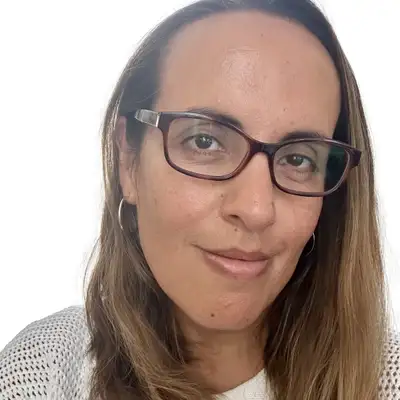
Stuart Frost. Dr. Frost is in
private practice in Phoenix, and
he is a part time associate
clinical professor of
orthodontics at the University
of the Pacific orthodontic
program. He is also a frequent
lecturer at the AAO annual
sessions, as well as for the
Damon Damon forums and Ormco
sponsored events. Dr. Frost
thank you for joining me today.
Dr Stuart Frost: Alison, thanks
for having me on. I really
appreciate it.
Alison Werner: Great. Well, to
get started, can you tell us a
little bit about your practice
and kind of your journey in
orthodontics?
Dr Stuart Frost: You bet. So I
practice in little town, it's
not so little but a town outside
of Phoenix called Mesa, Arizona.
And I started my practice from
scratch in the year 2000. And it
was at this time that I started
my practice using the Damon
system, and had the opportunity
to start when there really
wasn't a lot of passive self
ligation brackets in in the
community and then throughout
the world, and had the
opportunity to really learn and
grow while using this Damon
system, the passive self
ligation,
Alison Werner: You know, you
talked there about how you've
been using the Damon system. So
I know you have been working
with the Ultima system for a
very long time. And you're a big
advocate of it, and I know your
lecture on it. Can you talk
about that experience working
with this system and just
explain the system for our
audience?
Dr Stuart Frost: Sure. You know,
after using passive self
ligation for so many years, it's
been interesting to see how when
you treat with passive self
ligation, there's some real
benefits. And some of those
benefits are that we see a
broader uprighting and widening
of arches because we don't have
the wire bound into the bracket
slot. And we see some other
benefits, early unraveling of
crowding. And with this passive
self ligation, as many of us who
have used it in the past know,
that there's some challenges
with passive self ligation.
There is some, when the wire
goes into the slot, there's some
play between the wire in the
bracket. And that play is
blessing, and it's also a little
bit of a challenge, because the
blessing is that we get to see
teeth molded into the occlusions
better when we're not so rigidly
bound to the wire and the
bracket. But some of the
challenges of this play is that
we end up seeing some rotation
issues trying to to get
rotations out of our treatment,
and we see some finishing issues
and having to bend more wire as
we finish. So the Ultima system
really is a system where Dr.
Damon said, How can I fix the
challenges that we've had for
all these past two decades, two
and a half decades with passive
self ligation. So it was born
out of, hey we all still love
passive self ligation, but how
do we create a new system,
unlike the other passive self
ligation system we've had, and
really revolutionized that
control in finishing our
treatment. And so the Ultima
system was a passion of Dr.
Damon's to say okay, let's take
and revolutionize and completely
redesign passive self ligation
so that when we go into the
first round rectangular wire, we
now have complete rotation
control early on in treatment.
And then as we go closer to our
finishing, and we increased to
our full size wire, the 18 275
wire. Now we have four points of
contact, we have rotation
control, and get angulation
control and torque control,
which we really haven't had that
in passive self ligation. So
this idea of a new revolutionary
system such as Ultima has given
us what we are terming 3D
control, and 3D controlling
finishing, which we haven't had
before.
Alison Werner: Okay, so how long
have you been using the system?
Dr Stuart Frost: So I started
actually, we saw the first
prototype of the system in 2017.
So we got a little bit of a
taste of it in 2017. But it
wasn't until 2019 that there
were 12 of us that had the first
50 cases apiece to really test
and do a market confirmation
study to really look at it. And
so I would say since 2019. I've
been using it for about four
years.
Alison Werner: Okay. And then in
those four years, how has the
system kind of evolved for you?
Dr Stuart Frost: Well, and
anytime you use a new bracket
system or you have new
technologies, there's a learning
curve. So I've had the
opportunity to to make mistakes
that other people don't have to
make because of what I've seen
and I think some of the things
that I've learned is that when
we use a proclining bracket and
a retroreclining bracket and a
full size wire, we have 3D
control. And so we have to
unlearn some of the things we've
learned and passive self
ligation over the experience to
use this differently, so we can
have better results in
finishing.
Alison Werner: Okay. And I know
you talked to you talked a
little bit about, you know, what
sets the Ultima system apart
before. But can you talk a
little more in depth about how,
how the Ultima system separates
itself from the competition?
Dr Stuart Frost: Yeah, so in
this new design, Dr. Damon not
only created a new bracket
design, but he also created a
new wire design, instead of that
traditional rectangular wire in
the in the slot, he created a
new wire that was rounded on the
edges and rectangular on top or
flat on top, this new wire now
gives us point contact in three
dimension control and moving
teeth. So when you put a wire
into the slot that has this,
that's a round rectangular wire,
we now have contact at the door
and the base of the bracket. So
that gives us the rotation
control. And as we get to our
bigger wire, our finishing wire,
now we have point contact at the
edges for angulation and torque
control. So this this new 3D
control is changing everything
for us. So not only are we are
we seeing a broader transverse
arch development, we're seeing
these finishes that are
happening in faster amounts of
time, and in better control than
ever. So all of a sudden, we're
not seeing our patients as long
as they're getting done faster.
We don't have as many patient
appointments to see the patients
to get them finished. And that
to me, that's what's really
changing in my practice.
Alison Werner: Yeah, so it's
changing your workflow then.
Dr Stuart Frost: Yes.
Alison Werner: Yeah. Can you
talk about the Ultima hooks,
which Ormco rolled out?
Dr Stuart Frost: I think all of
us in our profession, at one
point or another have been so
frustrated, if we put a if we
crimp a hook onto a wire, we've
seen those hooks loosen up and
time and that causes problems
and treatment, then we've seen
other hooks where they're like
these gorilla hooks, you hook
them on, you can never move them
ever. And then you'd have to if
you ever needed to move a hook,
you'd have to throw that wire
away. Well, the Ultima hook is
completely changed the game
because the Ultima hook works
differently. We grab onto the
hook with a plier and we squeeze
it it's a it's a NiTi hook and
we can release the hook and it
can be repositioned to any place
on the wire that we want it to.
And when we let go, it's not
going to move. So it's like this
repositionable hook that that
has changed everything. The cool
thing about these hooks is that
we have them on very initial
round rectangular wires, we have
them on finishing wires,
stainless steel, TMA, copper
NiTi. And it's exciting because
there's not been a time where
we've had a hook where we can
reposition that hook during
treatment if we needed to,
without without it loosening up
during that treatment.
Alison Werner: If you were
talking to someone who's you
know, been practicing with a
different kind of bracket for a
long time and just making this
transition to this kind of
system, what would your advice
be to them?
Dr Stuart Frost: I think the
biggest advice that I would give
to somebody that's considering
either changing or has changed
their practice over is to go to
continue education. There's so
many ways Ormco has online
learning about the Ultima
system, there's a online
learning called the Ultima
Journey, and you can go and see
how to use it. When I started in
the year 2000 with the Damon
System, you know, I made it a
point that I was gonna go to
every continuing education I
could to learn more about the
system. And in anything in life,
when you learn something new,
it's all about the repetition,
and going back and learning
more. So I would encourage
people to go to continue
education courses, like the
Ormco is having an Ormco Forum,
they're bringing it back. And
this is a great opportunity to
go and learn more about Ultima
and learn about how to place the
brackets on the teeth, how to
use the wire sequencing, how to
use the ultimate hooks, how to
finish faster than we had before
how to get that workflow, so
that to your as efficient as
possible as an orthodontist and
helping the patients have those
beautiful results. Yeah,
Alison Werner: I know you talked
a little bit about it, because
you gotta go a little more in
depth on how this the system and
using it for your cases has
changed your practice and your
patient experience.
Dr Stuart Frost: Yeah, that's
such a great question. You know,
for us in our practice, we've
always been concerned about,
okay, what's the treatment time
that we think we're going to be?
And in that treatment time, how
many times are we going to have
to see our patient so we track:
Here's what our treatment time
should be this is how many times
we should see the patient. And
we've tried to get those
treatment times and how many
visits down because in a
practice in a large practice,
you know, the less visits that
you have with the patient, the
more money you make. And if you
can get patients in and out,
then you have more room for
others. So one thing that's
that's changed in our practice
is we brought treatment times
down by an average of 30%. And
we've seen less visits from
those patients by about 30%. So
all of a sudden, we have more
room in our schedule for new
patients, patients are finishing
faster. And I don't know any
patient that doesn't want to be
done faster. They all want to be
done as quick as they can. In
fact, we're even seeing some
adult cases that are finishing
in 10 months, nine months, 10
months, and that that's been a
big change for our practice. So
the other thing that happens is
that our assistants love the
fact that these, this new
technology, and especially these
new hooks, are making it easier
for them. One thing that we had
with passive self ligation, one
of the techniques that we would
do to keep space consolidated in
the anterior is we would wire
tie or wire lace from the cuspid
to cuspid as we progressed in
wire size that we didn't see
opening up of spaces in the
anterior. Well, you can imagine
if you're putting wire tie or
power chain on, that's the
hygiene problem. And now,
because of the new Ultima hooks,
we can snug those hooks up
distal to the cuspids. And that
locks those into place so that
as we progress in wire size,
we're not seeing the space open
up. We're not keeping power
chain on as long. And that only
benefits our patients in the
hygiene and helps us to finish
our cases faster.
Alison Werner: Oh, great. Okay.
Well, I'm curious, you mentioned
a little bit about you know,
everyone should go check out the
continuing education on this
system to learn more. But I'm
curious, do you have any
lectures or any events coming up
that you're going to be leading?
Dr Stuart Frost: Yes. So we
have, I have a VIP course that
Ormco offers. There's one I'll
be going to in September. Also
the Ormco Forum, that's an
October. And then I have my own
personal in office course where
we talk about Ultima and how we
work with that. So if anybody's
interested ormco.com will give
you the information on those
courses. If anybody wants to
look up my my course it's my in
office course it's at
FrostSmileAcademy.com. But those
are the the up and coming
courses.
Alison Werner: Great. And then
that one that's in your
practice. I'm guessing that's
hands on working with patients
and seeing it and in process.
Dr Stuart Frost: What's cool
about that course is that will
actually do a bonding course
where the attendees get to put
the ultimate bracket on a
typodont. We talked about
bracket position, how to
position the Ultima bracket. And
then we have life patients who
are demonstrating TADs and gummy
smile correction and how to use
the Ultima for beautiful
finishes.
Alison Werner: Great. Well, Dr.
Frost, thank you so much for
joining me today. It's been a
pleasure to talk to you.
Dr Stuart Frost: Alison, thank
you so much.
Alison Werner: As always, thank
you for joining us. Be sure to
subscribe to the Orthodontic
Products podcast to keep up with
the latest episodes. And be sure
to check out
OrthodonticProductsOnline.com to
keep up with the latest industry
news. Until next time, take
care.