Subscribe
Share
Share
Embed
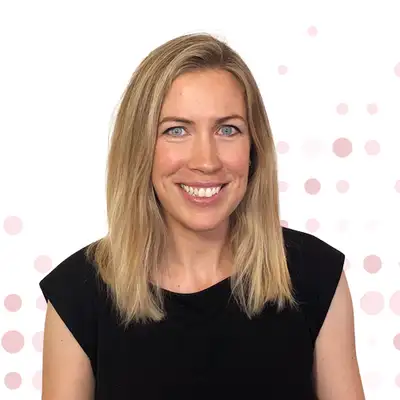
The World Pipelines podcast, with Elizabeth Corner, is a podcast that connects and unites pipeline professionals to learn about issues affecting the midstream oil and gas industry.
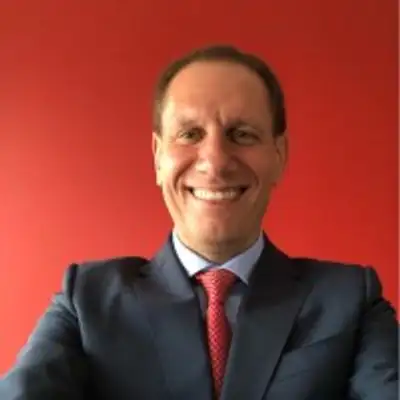
Hello, and welcome back to the World Pipelines podcast. In this episode, we welcome Paolo Buti, regional president global industry at Rockwell Automation Inc. Rockwell Automation is a global leader in industrial automation and digital transformation. Headquartered in Milwaukee in The U S Rockwell employs approximately 26,000 problem solvers dedicated to customers in more than 100 countries. Paolo Buti joined Rockwell Automation in 2012 and most recently served as global vice president of machine builder segments and emerging industries.
Elizabeth Corner:He has more than twenty five years of experience in automotive, robotics, and industrial automation, and is especially passionate about leading digital transformation in manufacturing. We're busy planning something exciting. On the March 18, I'll be hosting the World Pipelines CCS Forum in London. It's a day dedicated to the c o two pipeline build out and how we'll make The UK's carbon capture and storage pipeline networks a reality. We'll cover the engineering challenges specific to CO2 pipelines, we'll outline the different demands for integrity and maintenance, we'll provide project updates from each of the clusters, and we'll debate the future of the sector in The UK.
Elizabeth Corner:The speaker lineup includes National Gas, United Infrastructure, NE, SGN, DNV, Pencepen, and more. Search World Pipelines CCS Forum for more information. We have special discounted rates for members of pipeline organizations, including the Pipeline Industries Guild, EPLACA, the CCSA, and Yucopa. Thanks for listening. Let's get back to the episode.
Elizabeth Corner:Hello, Paulo. Welcome to the podcast.
Paolo Butti:Hello. Thank you so much for having me today.
Elizabeth Corner:The energy workforce is being reshaped by a few powerful things. A move to digitalization, the increased use of automation, and the various demands of a clean energy transition. As our legacy systems give way to more data driven, interconnected operations, this affects the roles of the engineers, the operators, and the technicians who work in the sector. So, Vallo, I just made quite a big claim that the energy workforce is being reshaped. Is that characterization correct from your perspective at Rockwell Automation?
Paolo Butti:Oh, yes. Yes, indeed. I would say the last few years, we have seen multiple workforce challenges. I would summarize that every customer and even within Rockwell, we are speaking about reskilling and upskilling. Of course, as you already mentioned, the amount of automation, robotics, and more recently AI, it's an augmentation.
Paolo Butti:So on one side, people are on a journey to get familiar with this technology and learn how to use them to drive productivity. Ultimately, I would say it's a combination of enthusiasm and passion, and at the same time, new barrier, a lot of change management. And so really the best that company like Rockwell can do is to join our customer as we transform ourselves, our operations, and our technology evolution into that journey.
Elizabeth Corner:How does intelligent automation fit into the picture here, fit into what we're talking about? It seems to me as if we've moved beyond the quest to simply make operations more efficient, and we're perhaps heading towards a world where decision making is made in collaboration with intelligent technology.
Paolo Butti:Yes. Our concept of normally we call a lighthouse project or factory of the future type of project, we would summarize them into the journey to autonomy. All of these technologies combined, they really are bringing operations to the concept of autonomy, which basically means more data driven, closed loop type of decision. We think that being able to analyze historical data and to predict the future behavior trending to the ideal state, that is what the combination of the best abilities of human and the best technology can do. And we are doing that today.
Paolo Butti:Of course, it's a journey, but the journey has already started. And we have multiple examples across industry on how this is happening and is brought to life.
Elizabeth Corner:And thinking about that journey, how have workforce expectations changed as operations have become more digital and become more data driven?
Paolo Butti:It's really combining the traditional knowledge of process, meaning how things get done. It can be a cookie or a snack in a food plant, or it can be a carbonated beverage, but also more into production of liquid natural gas, where there's clearly a big peak of demand mainly driven by data center type of investment. And it's really combining that process expertise with the data that equipment can provide. So really the ability for people across the production chain on how to get access to those data and basically utilize the system to deliver outcomes and to deliver the right cost of the quality and timing and acceleration. And of course, all of those production are getting, let's say, scalable, more flexible, even more secure, because there's also an element of exchangeability of data where you particularly need to pay attention to the security of your operations.
Elizabeth Corner:Some people worry that automation inevitably means fewer jobs or an impact on jobs. How do you respond to the idea that intelligent automation might actually disempower parts of the workforce?
Paolo Butti:It's a question that that come across multiple of the of the events, either being the traditional industry exhibitions or more of a conference type. The reality is that that global demand for skilled workers is picking up. And there are multiple industries where actually we have scarcity of people. At the same time, there are jobs that represent an element of danger or armed security or condition where that is extremely complicated. Thinking of smelters, for example, in the metal industry, or an oil pipe in the middle of a desert.
Paolo Butti:Of course, we want some technology to be smart and to dedicate people where they can deliver value and be safe. The conclusion is we need more people, we need more engineers, but we need them with different skills, complementing more of the traditional with some of the new discipline like AI and like the ability to deal with predictive software and robotics in a collaborative way. My answer is this is still a great environment to invest and new generations, they will enjoy a different type of work, but the demand is not going down. Of course, across the industries, there could be industries that are picking up more based on the investment and on the cycle and others that might be more like in a challenging like what we hear in automotive. But even in that case, new plants gets built.
Paolo Butti:Like recently, we have been announcing big partnership with a company building a new facility for EV in Saudi Arabia. And Saudi is a good example of an industry that in our country, a geography that is diversifying from pure oil and gas into many other type of industry, from food to automotive to metal and many others. So again, globally, the demand is still ramping up.
Elizabeth Corner:Super. Okay. That leads me to my next question, which is I wonder exactly how are human machine interfaces, augmented reality, AI driven analytics and the like really helping teams in 2025?
Paolo Butti:Number one, we need to always start with the best possible picture of the Aziz status. And what our team normally work with our clients is to define the to be status. What we do is we go through the problem, like stating problems, what are we trying to solve? We normally categorize them by use cases. And then we act a process of prioritization.
Paolo Butti:Of course, we are going to measure the impact and the impact can be the speed and ease of implementation, the ROI, the payback and the investment that is needed. So normally what we do is we combine that analysis and then we address into what we call a minimum viable project And to prove it's really what we call a proof of value type of exercise, convincing the customer, also getting a debrief on the learning, particularly on the human aspect and how change management is applied. Because clearly, particularly for customers that operate across the globe, they might have a very different maturity based on the geography and on the history. And then once the the proof is there, then we work together on how do we scale and what type of time horizon do we do. Now, we normally have two types of possibilities.
Paolo Butti:It's what we call modernization and migration, meaning you have an existing facility with an age technology that you might need to bring and elevate to the more recent technology. Of course, you need to do it in a very careful manner because those plants, they don't stop technically operations. So you got to do that like over the weekend or during the maintenance break. Of course, it's a different exercise when you are in a greenfield and when you are operating in a building where you can actually design the building in the way you want. There's multiple opportunity to migrate, for example, the machine interface to really drive more of the data orchestration layer, the way you project and present those details.
Paolo Butti:And of course, you also insert capabilities like AgenTiKi on existing software that can activate that ability to interpret to modern languages the data that the system are already generating. Many of the operations, even today, they already generate a big amount of data and information. Now, what has changed is the ability to collect and to basically organize in a way that you can extract the information that are behind. And with that, then, of course, what we do is we implement them like live. We prepare the people to train and to deal with that, particularly where Rockwell has been investing a lot in is the ability to generate a digital twin of a plant from bottom to top at machine level, at automation level, and also at orchestration level.
Paolo Butti:And that is enabling a lot of possibilities. Number one, to augmented virtual reality, you can train operator in a virtual way and you equip them with tool where they can even operate remotely. Like back to an heavy industry example. If you are in a mine, everything is happening in a control room and you have the technology distributed where, for example, miles or multiple kilometers or conveyor are happening, but the data gets collected in a safe environment, concentrated. And through that we can operate and we can, for example, go back and do a repair or see if, for example, something is not working properly and correct that behavior so that the system go back to like full productivity and zero downtime.
Elizabeth Corner:What skills would you say are most in demand for the next generation industrial workforce? I'm wondering what do we need to be getting more well versed in?
Paolo Butti:One is the attitude. I very often, even when I interview, what I'm really looking for is a person who has the ability to continuously learn. I think particularly when I speak to young generation, I tell them, look, you think that your learning journey, you are finishing your education is finished, nothing could be more distant from the truth. Actually, people who have the agility to continuously learn and understand new programming languages expand into machine learning and understanding how to embrace those technology and how to get them applied. I think that's the, that curiosity element and that approach of openness is very important.
Paolo Butti:Then I think also the learning has changed a little bit in the sense that through e learning, we have the ability to don't stop people from doing what they do, but more like dedicate a certain amount of time of the day into that type of learning and then acting more into what they call a closed loop control, meaning you learn something, you apply something, and then eventually you go from an entry level type of learning into a more deep, and then eventually you refresh that over the time of the year and you really get to know all the different technologies coming to technologies, dealing with robotics, but also dealing with AI, dealing with vision system. We are even seeing application of drones for surveillance. Like when you think about an offshore type of oil and gas, of course, the ability to utilize these more modern technology with new technology of sensors, everything is happening at an incredible pace. Even the life cycle of the technology today, they don't take probably like decades and every like twelve months, eighteen months, in certain cases, even after six months, have incredible new content being launched. So I think also people are dealing with a much bigger amount of data crunching and complexity of new technology that they need to embrace.
Paolo Butti:But from my point of view, it's so exciting. And I really love the pace and the speed of how this transformation is affecting industries.
Elizabeth Corner:Things are changing very quickly. So how can companies support their existing teams through this transition, especially when it comes to reducing reliance on a few specialised experts? Now, correct me if I'm wrong, but usually there is a go to person in an organization for each area of expertise. Is that now changing?
Paolo Butti:I think that companies are dealing with also partners like Rocket or some of our partner system integrator in a different way. I think we have entered more of a life cycle type of support, meaning you don't just buy that technology, you commission that technology and then the company you have been working with is disappearing. I think more and more with clients, we operate on a day by day. We have created a center around the world where they can get access to knowledge base. And that, of course, is coming through more modern like CRM and software, but also with people interaction.
Paolo Butti:We have across the world 11 centers that are working twenty four hour, seven, three sixty five. And really, there's a lot of contracts that can enable our customer to stay in touch with us, make those technology reliable, help them solving problems. Of course, the first intent is always to make our customer autonomous and capable to deal with that. But more and more, they have this continued journey with the company that are delivering those technology, either it's a machine or equipment builder or it's a source of technology like us. There's no company that has like the single key to success is normally an orchestration of an ecosystem.
Paolo Butti:But is this mentality of dealing with that technology as it evolves and improves? Also, there are elements like cyber, why safety in a machine? Once the design is frozen, that safety stays. Cyber is an evolving moving target. So you need to constantly keep track of your asset.
Paolo Butti:You need to monitor them. There's new challenges that are coming from the cyber threat and the cyber attacks. So it's not thinkable that just because you have been installing a software, you will be safe forever. You need to continuously install patch, new features, new capability. Important, you need to have that augmentation of human connection and human support that is really transforming the industry into more of a life cycle service type of journey.
Elizabeth Corner:So you see a digital collaboration playing out across departments, across the regions and between different stakeholders?
Paolo Butti:Yes, definitely. I would say today, across every industry, before anything gets built or constructed, there's the digital twin of that production capability. Ocwell has been investing in our own technology, but also in partnership like the one we have with NVIDIA and in the Omniverse. We have today enough computational power and technology to simulate an entire production environment down to the equipment level, to the people, we can simulate how many people will be needed to run that operations with which throughput, with which ability also to introduce new products, because more and more those facilities, they produce today, it might not be what they produce tomorrow. We also have through our secure digital operations, a group of expertise that are helping the customer to develop that digital twin, again, in a collaborative partnership type of element.
Paolo Butti:With open source software and the ability to connect again, many other software, that's today the starting point of every project because something gets built, because then you can validate the timeline, you can pre commission, you can accelerate all the element of the speed. So you are moving from three to five years type of implementation into like less than eighteen months. So the benefit, the economical, the financial return and the risk mitigation that you can have through those technologies is clearly like a sort of a technological miracle, if you will.
Elizabeth Corner:What does workforce resilience mean to you and in the context of this discussion?
Paolo Butti:Workforce resilience means that new normal is no normal. We constantly leave disruption in the supply chain, in the geopolitical, into the world of tariff, into where material are being made available, but also new technology and new processes. If you see, for example, the journey of the current battery technology in EV versus the journey to solid stake, that's again, in a relatively small amount of time, it means like for a company to be able to ingress new chemistry and new technology and new equipment and new processes. Resiliency means for me the ability to adapt and to become more adaptive. We really call about, we speak about adaptive plans and adaptive plans is not only adaptive to new technology, it's mainly once again, adapting to people.
Paolo Butti:So that ability to embrace with positive attitude at the same time for company to develop learning plans and keep up the pace and having the opportunity to retain talents and to continue develop talents. Again, companies don't recruit people that over like multiple decades they will do the same job. So we need to be able to offer these people opportunity, motivation, path development, and this ability to continuously learn. That's probably the continuous learn is the best definition of what is a talent today or who is a talent today is the person that through these multiple decades of career will be able to continuously adapt, learn with curiosity and positive attitude.
Elizabeth Corner:It's really lovely to hear you talk about that. And I can tell that that really enthuses you. What excites you most about the future of industrial work? What have we got to look forward to?
Paolo Butti:At the end of the day, we want to have a positive impact on the society and of what we do for the people, either through helping life science company to generate the next vaccine or the next therapy for food to be more safe, more healthy, for a car to have zero emission. So there is an element of social impact and sustainability. That's why sustainability is so critical. And also the role that we play in the society. So Rockwell is globally present across so many countries, and we operate both at R and D level and as well as production level, as well as sales across multiple countries.
Paolo Butti:So that ability to be multicultural, to keep strong the focus on our core value, but being able to adapt and to have an impact on the society. That's what attracts me the most. I'm an engineer by heart. So clearly solving complex problem that has not been solved before. That's what energize me every single day and every morning, but with a purpose.
Paolo Butti:And the purpose is to make the world a better world.
Elizabeth Corner:Thank you so much for being on the podcast, Paolo.
Paolo Butti:Thank you so much for having me. Thank you again. Appreciate
Elizabeth Corner:That was Paulo Booty at Rockwell Automation, offering his insight and his excitement about the fast moving world of intelligent automation and about how digital collaboration complements a well rounded workforce. Thanks for listening to the World Pipelines podcast. Subscribe for free wherever you get your podcasts. And if you have enjoyed this episode, please rate and review and forward to a colleague or friend. We're busy planning something exciting.
Elizabeth Corner:On the March 18, I'll be hosting the World Pipelines CCS Forum in London. It's a day dedicated to the CO two pipeline build out and how we'll make The UK's carbon capture and storage pipeline networks a reality. We'll cover the engineering challenges specific to CO2 pipelines. We'll outline the different demands for integrity and maintenance, we'll provide project updates from each of the clusters, and we'll debate the future of the sector in The UK. The speaker lineup includes National Gas, United Infrastructure, NE, SGN, DNV, Pennspend and more.
Elizabeth Corner:Search World Pipelines CCS Forum for more information. We have special discounted rates for members of pipeline organizations, including the Pipeline Industries Guild, EPLOCA, CCSA, and Yucopa. Thanks for listening.