Subscribe
Share
Share
Embed
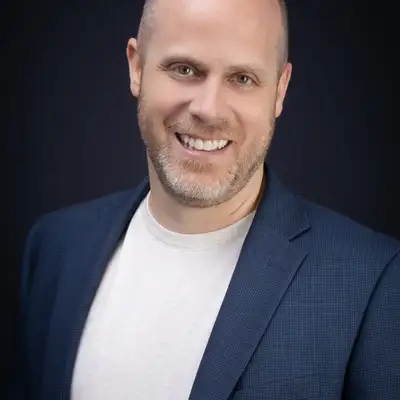
Welcome to Inside Marketing with MarketSurge — your front-row seat to the boldest business insights, marketing breakthroughs, and entrepreneurial real talk.
Hosted by Reed Hansen, Chief Growth Officer at MarketSurge and a digital marketing veteran who's helped scale everything from scrappy startups to Fortune 500 giants, this podcast dives deep into what’s really moving the needle in today’s marketing world. Find us at Marketsurge.io
Each week, we’ll break down the latest marketing and business news (minus the fluff), explore tech trends you actually need to know, and feature unfiltered conversations with the most interesting minds in entrepreneurship and marketing.
Whether you're a founder, a marketer, or just a curious hustler looking to level up, this is where growth happens—loudly, smartly, and with just the right amount of sass.
Subscribe, tune in, and let’s scale something legendary. 🚀
Speaker: Welcome to Inside
Marketing With Market Surge.
Your front row seat to the
boldest ideas and smartest
strategies in the marketing game.
Your host is Reed Hansen, chief
Growth Officer at Market Surge.
Reed Hansen, MarketSurge: Hello
and welcome back to Inside
Marketing with Market Surge.
Today's guest is proof that getting fired
on day one doesn't mean you're done.
It might mean you're just getting started.
AUR Sharma went from getting fired as an
Amazon delivery driver on his first day
to freelancing nights while grinding a
nine to five, to building and selling a
startup before COVID climbing from intern
to marketing manager, and now running
Derivate X, where he helps brand get.
Brands discovered inside chat,
GPT and AI search instead of
buried on 10 page plus on Google.
While most marketers are still arguing
about SEO tweaks, approval is focused on
landing the next land grab, how people
actually discover products and, uh, when
they, uh, when they stop using Google
search and how to use AI to optimize.
that process, if you're a founder,
marketer, or business owner wondering,
how do I show up when people ask
chat GPT for the best solution?
This episode is for you.
Let's get into it.
Welcome to the podcast Support.
Yeah, my pleasure.
So, okay, I, I'd love to dive
in this and I, I think this is
a great way to start a podcast.
So you got fired as an Amazon
delivery guy on day one.
What did that moment teach you
about work risk or you know,
resilience that still shows up in
how you run your business today?
Apoorv Sharma: I think that there are
two sides to the story Not a lot of
people have covered the other side.
while I was looking for a job that
actually pays me well, I was also building
this social media network totally inspired
by Zuckerberg, the entire agent hours
that I mix up create an amalgamation
of Instagram, Facebook, and Twitter.
So one 40 characters, Instagram
filters and Facebook like friendliness.
I launched it and realized
no one is using it.
The understanding was simple.
Creating a product is just, I think
20% of the entire thing versus
marketing, sales, distribution,
and a lot of different things.
And that's when I realized I
literally need some money to survive.
Because I had dropped out of
college, my income was zero.
that's when I started Amazon, because
that was the most accessible, or I would
say zero investment in that I go to back
then without any official education.
Reed Hansen, MarketSurge: Yeah.
Apoorv Sharma: So getting fired
was simple that I realized I'm not
made for anything that is offline.
Mostly I'm very good with online.
I can create website, but I
cannot deliver products on time.
So yeah, that's on me.
Reed Hansen, MarketSurge: Fantastic.
Okay.
So, but for a while you were
working in a nine to five job
and you were you know, building.
Other things at night?
what part of that process was the worst
and what were some of the best parts?
Apoorv Sharma: I think the best part was
the zeal mostly for, I still crave
that specific in that particular
time zone, in that timeline, in that
parallel knew us has so much the
zeal that he was not sleeping well,
but he was still full energetic.
Reed Hansen, MarketSurge: Hmm.
Apoorv Sharma: that he could with all the
time that we had and the bad part was.
I have a D, so I tend to get
very much bored outta things
if I'm not very much into it.
So I remember being, I was sitting in an
office like this, this is mine by the way.
I was sitting in someone
else's office and.
getting told, Hey, you have to
actually make this Instagram series.
You have to work on this
particular Google Ads.
I was zoned out thinking of my
own thing, like when I'll go back
home and work on something else.
So the bad part was I was literally
putting my time into someone else's
company for getting some money.
I'm not sure if that's the right
way to look at it, but yeah.
Reed Hansen, MarketSurge: Oh, no,
no, I think that's, that makes sense.
Yeah.
Well, you know, and I think
that's a strong motivator for
people with the entrepreneur.
Instinct you know that when you have the
energy and, and you know, all apply all
your creativity, and then you see that
ultimately the, all the upside goes to
somebody else, you know, that then it,
I think that's like, that's the jumping
off point for a lot of entrepreneurs.
So you, you've sold a startup,
and that was before COVID hit.
Did you, did you have a sense that
that would be a good time to exit
or did you, was that just good luck.
Apoorv Sharma: So the very first
exit was a very much forced
exit, to be really honest.
Reed Hansen, MarketSurge: Okay.
Apoorv Sharma: co-founder, we had
a serious altercation, and it was
exactly December 25th Christmas.
Okay.
Pre COVID.
Reed Hansen, MarketSurge: Wow.
Apoorv Sharma: we ultimately set.
I got my money for the equity that I had
50% and that was the exact, so it was
not something that I wanted to do, but I
had to do because it was not working out.
Reed Hansen, MarketSurge: Yeah.
Okay.
No.
Yeah.
No, that's good.
I mean, it can be a bumpy road,
you know, starting businesses.
I've had that experience myself, and I
know how it can affect friendships and,
uh, you know, things are difficult.
So, okay, let's jump into,
what you're doing right now.
are people actually skipping
Google and asking chat GPT?
is there a massive switch to that?
Or is this somewhat of an exaggeration?
can you talk through, the move?
has it already happened?
Is it in process?
Where are we in this transition?
Apoorv Sharma: A very good
way to look at this is, okay.
I have one very specific
metaphor for this.
I will tell this after this, but yeah,
every industry, all in all, whether
it's SaaS, e-commerce, D two C, all of
them are seeing a very specific kind of
declination in terms of search volume.
Reed Hansen, MarketSurge: Hmm.
Apoorv Sharma: And it's global.
If you look at your HRF data
or EM data, it's global.
The thing is, if a lot of
volume is declining, are still
searching for something, right?
So where is that specific
search volume going?
Now, if you would've asked
this question to me about 1.5
to two months back, the answer was
yes, people are going to charge GPT,
but now people are moving back to
Google because of Google AI mode.
Google it.
I think it already has started in US
specifically in areas like Florida
and Francisco, New York, that it
is making Google AI more default in
mobile phones, which is the huge thing.
Reed Hansen, MarketSurge: Okay.
Apoorv Sharma: content pieces
you're working on, won't be having
one to 10 pages, you won't be
having 10 blue links to click on.
You'll simply get one answer, and
if people decide to click on your or
citation, you will get the traffic.
But another way to look
at this is very simple.
Consider that Google is a library, and
every book in the library is a website.
And every website is technically
fighting for a shelf space.
And that shelf space can be SaaS,
FinTech, health tech, D two C,
a lot of zillion categories.
The intention of Google is simple.
I have to be in the very first
place on the entire shelf.
Reed Hansen, MarketSurge: Huh.
Okay.
Apoorv Sharma: position.
Reed Hansen, MarketSurge: Right.
Apoorv Sharma: Current time
being, we are not focusing there.
What we are focusing on is the
librarian working in the same library
Reed Hansen, MarketSurge: Hmm.
Apoorv Sharma: we are technically training
him or her, I would say feeding them.
Hey, whenever someone is searching for
the best black coffee in the world,
you should recommend my bank Now.
There's no specific way or no direct way
to make them say yes to or recommend you.
Right?
you have to hammer this, hammer
the same thing again and again,
multiple times in different ways.
So in theory, this is how
the entire game is working.
Right now, LMS are the
librarian and the tradition.
Google was the Google, but now
Google is also really, so yeah,
things are changing rapidly.
We are seeing a huge declination
in terms of such volume.
yeah.
People are shifting, their
search behavior is shifting.
No one is looking for information
content on Google anymore.
You won't go to Google and search for
like, what is the full form of X, Y, Z.
You go chat GBT directly or maybe
Google and will answer that.
So the top of the funnel
content is mostly debt.
Middle of the funnel content is
going to stay, and bottom of the
funnel is just ruling right now.
more conversions.
Reed Hansen, MarketSurge: Interesting.
So now do you think that there
is still value in doing the, so,
you know, for years we've been
doing certain things to get.
Higher ranking in Google search.
Are those same activities still
valuable in this changing landscape?
Do we need to keep doing those
things or are there certain
things we should stop doing?
Apoorv Sharma: I think.
Reed Hansen, MarketSurge: And maybe
I could be more specific too, like
seeking high authority backlinks and
citations in directories and, you know,
getting quoted in online articles.
So for the backlink purposes and
then the long list of technical.
Fixes that a website needs to maintain, to
be friendly, to the Google search callers.
You know, I won't go into all
of those things, but and then
posting new content and, having
the same structure on the page.
what of those things are going to
be important going forward, and are
there any things we can stop doing?
Apoorv Sharma: Strong take.
You don't have to stop anything
that you were doing earlier.
The foundation is still
Reed Hansen, MarketSurge: Okay.
Great.
Apoorv Sharma: It's just that way.
We used to do, all the
things have changed.
for example, redify has
me directly a podcast.
Do people see the pen?
No.
Right.
Reed Hansen, MarketSurge: Right.
Apoorv Sharma: so, let's continue.
Reed Hansen, MarketSurge: Well, no.
Go ahead.
you tell
Apoorv Sharma: Okay, so for
example, look at this pen writer.
Reed Hansen, MarketSurge: Yeah.
Apoorv Sharma: This is a typical SEO
agency, and for last, almost two decades,
they have been selling the same thing,
technical, SEO, clearing up your Google
search console, your website cleanup,
your site map structure, et cetera.
Reed Hansen, MarketSurge: Yeah.
Apoorv Sharma: you have the keyword
research part, content writing,
copywriting, and whatever content,
Reed Hansen, MarketSurge: Mm-hmm.
Apoorv Sharma: silver in the bright here.
This is backlink
Reed Hansen, MarketSurge: Okay.
Apoorv Sharma: all in all, for
almost two decades, every agency,
including us, has been selling
the same thing in different ways.
the agency will sell you the backlink
first or the technical part first,
but this is the entire product.
Now, when it comes to SE or A
ISU, whatever you wanna call it.
The ideology is simple, technical.
SU is definitely still the foundation.
link insertion is not working.
It's good to increase your DR
or that doesn't help with LMSU.
We have sites, experimental
sites that have zero dr, and
they're ranking on charge GPD.
Altering an answer, altering a
perspective, outranking some good
websites in the category on chargeability.
So the DRDA doesn't work anymore
or doesn't matter anymore
in terms of LLM rankings.
So yeah, link session don't work.
Guess post works.
How can you the entire thing in such a way
that LLM sync you are the solution to it?
One would answer topical authority
that we have always been doing, but
yeah, not big of a thing right now.
It's big of a thing.
At last, we are not looking
at keyword research anymore.
We are using keyword research
with tools like Embr hrs to be
able to create a prompt map.
So for example, if I am selling
this black coffee, the brand is,
let's say, what coffee do you drink?
So
Reed Hansen, MarketSurge:
coffee do I drink?
Yeah.
Well, you know, I'm not a coffee drinker.
I'm more of a Herbal tea.
So I yeah, sorry.
Bad example.
Apoorv Sharma: so let's say
this is our building and the
Reed Hansen, MarketSurge: Yeah.
Apoorv Sharma: B, C.
Reed Hansen, MarketSurge: Yeah.
A, B, C.
There we go.
Apoorv Sharma: wants to
out plan X, Y, Z, 1, 2, 3.
In that particular case, what can we do?
I have my website ready, abc.com.
I have some content pieces, I have
some guest posts, some pr, et cetera.
Now, in theory, I have to do is.
Traditional SEO plus PR
social media mentions.
But let's, getting into the game,
I now have to tell LMS that, Hey,
what is the most healthiest green
tea to drink when you're sick?
So I just feed one specific
use case about my how to
Reed Hansen, MarketSurge: Mm-hmm.
Apoorv Sharma: the moment I feed that up.
Now my second thing is.
drinking A, B, C when you are sick,
healthy for you, it's the very same thing.
Again, without cannibalizing,
you're talking about the same thing,
hammering with the same animal.
And the intention is this is what we
call in a agency hub and spoke framework.
You have to choose one hub, five
to six different spokes around
it, and ultimately it works.
So, yeah, getting back to your
question, I get to stretch away a
lot, but yeah, things are changing.
Definitely.
We have seen tremendous growth in
terms of our clients, our friends.
to give you some number, real
numbers, one of our clients SaaS,
B2B selling in US based on Singapore,
Reed Hansen, MarketSurge: Mm-hmm.
Apoorv Sharma: they have about
hundred K traffic from Google.
Reed Hansen, MarketSurge: Wow.
Apoorv Sharma: The LLM sessions
from charge GP complexity in a
combination is about 5,000 per month.
Reed Hansen, MarketSurge: Okay.
Apoorv Sharma: That's
not even 1% properly.
Reed Hansen, MarketSurge: Right.
Apoorv Sharma: LLM session is giving
them 20% of their inbound revenue,
which is a
Reed Hansen, MarketSurge: Yeah.
Apoorv Sharma: number, and it comes to
ratio because the consideration, the
intent is very high when it comes to lms.
Reed Hansen, MarketSurge: Right.
Apoorv Sharma: think, a very
cliche thing, but it's as
similar as when Yahoo was there.
People are saying Google won't work out.
It crossed.
Reed Hansen, MarketSurge:
That's very helpful.
And what I meant was, you know, we
will have, audio only listeners and
I think that conveyed, well still as
you were describing it, with the pen,
but we're, primarily a video podcast.
So, yeah.
Thank you for, adding
some visual contrast.
that's great.
So one thing I think people always
worry about, and it's, tough in the
search world, but now it's people
are worried about what this looks
like in the a or LLM search world.
Do small businesses have a good shot
at getting cited in the AI engines or
are there things they can do to compete
effectively with large businesses or is
it a lost cause for a small business?
Apoorv Sharma: I think there
has never been such a good
time for any small business to
outrank or to rule the industry
because.
So the biggest problem with small
businesses up until now, let's say a year
back, was have to buy a lot of backlinks,
a lot of pr, and ultimately with your DR.
Domain ranking or D domain authority,
which for people is a number on a
scale of one to hundred, the higher
number is the better your domain is.
So let's say google.com
is a hundred, Amazon is 99.
study a company zero.
you have to build up your DRND.
Now with in and Google AI mode,
also coming in with Gemini, you
do not have to work on your dr.
That means without investing in your PR or
guest post or back link, you can actually
build a good content map content strategy,
work on it, and outlink your competitors.
So a very good example is one
of my friends, he has circular
cybersecurity business.
And in cybersecurity
there's hardly much player.
Honestly, there are three big players.
Reed Hansen, MarketSurge: Okay.
Apoorv Sharma: this company, his
LinkedIn posts are outranking, the
biggest place in the market on chat.
Reed Hansen, MarketSurge: Wow.
Apoorv Sharma: the only reason being
the way the content is structured
and what exactly we're talking about.
So it's the best time for small businesses
to actually take an action right now.
Reed Hansen, MarketSurge: I love it.
That's exciting.
I mean, I love techno.
A lot of new technologies come and
they do level the playing field, and
I'm excited about your, prediction.
So tell us a little bit about if a
new client were to come to you today,
what would an engagement look like?
say they want to rank well in ai, results.
where do you start?
What does an engagement look like?
what do you recommend
and what's the process?
Apoorv Sharma: Okay, so there are multiple
use cases to a company reach out to us.
Reed Hansen, MarketSurge: Yeah.
Apoorv Sharma: All in all, there
are three categories to people.
First companies who want to
future proof their brand.
Reed Hansen, MarketSurge: Okay.
Apoorv Sharma: companies like enterprise
companies that have recently got funding
Reed Hansen, MarketSurge: Mm-hmm.
Apoorv Sharma: find this
entire idea very sexy to have,
Reed Hansen, MarketSurge: Mm-hmm.
Apoorv Sharma: to do it.
Reed Hansen, MarketSurge: Mm-hmm.
Apoorv Sharma: The third one are
people who are actually seeing
their search volume declining,
and they really think that their
customer behavior is shifting in
Reed Hansen, MarketSurge: Okay.
Apoorv Sharma: That's a
perfect kind of I-C-P-W-W.
when we engage, when we start
engaging, the very first thing is
we figure out where they exactly
are, how Chad, and see their brand.
is wrong about it, what is right
about it, each and everything.
First goal is figure that out.
Second, we figure out about
one 50 to 200 queries.
Get to the client, finalize about
40 to 50 different queries with
at least three different hubs.
So, for example, let's say I'm setting
this particular diary, A lot of examples,
by the way, if I'm setting the ine, I
have three hubs, very first thing, paper,
the cardboard, and third it's waterproof.
Reed Hansen, MarketSurge: Okay.
Apoorv Sharma: So I'm setting
three specifications about
this company or product.
These are my three hubs.
So in this particular case, I will
figure out 40 to 50 queries that
will relate to these three hubs.
Then I'll go to charge GPD
from different accounts.
Figure out where we are exactly
ranking, where our competitors are,
and then we do audit and once we
have figured the entire thing out.
Second thing, which is my most
favorite, is figuring out the citation.
So if I'm searching for the best
waterproof diary, and let's say
I have gotten 10 citations on
publicity, 10 on charge GBD.
Out of these 10, two are from forbes.com,
one is from Reddit, two is from cora.com.
We figure out a pattern, and usually
a common pattern is very simple.
40% of the sites search
sites like zaia.com,
asana.com,
which are big companies.
The rest of the 40% are UGC content,
Reddit, Cora, cetera, medium, and
the rest of 20% is mostly companies.
What I would say, soul blocks, people
who create blocks on WordPress, who write
on media, who write on LinkedIn Pulse,
and then we try to reach out to them
first, like, Hey we have written this
particular article, the very strategy
that has been here of almost 10 years now.
Reed Hansen, MarketSurge: Yeah.
Apoorv Sharma: ask them for a back
link or a citation or a guest box.
Reed Hansen, MarketSurge: Okay.
Apoorv Sharma: We do this.
We try to do a good conversion,
but usually the conversion
comes out about two to 3%.
Not a lot of companies agree to that.
And then we create the content map.
What exactly can we push and what exactly
do we have to talk or say to teach
LLMs so that our brand comes up first
for at least that top recommendations.
And from there, this is
entire week biweekly.
We track all the queries
that we are finalized.
We look at a GA data number of
sessions we have gotten from
charge GPT and other items.
Third, when you charge G PT and
you search for something, a lot
of times charge GT does not give
you the right kind of citation.
So
Reed Hansen, MarketSurge: Hmm.
Apoorv Sharma: copy the brand name,
go to Google and search for it.
So charge GT is technical.
You working like a touch point in
marketing, so people go to Google
and search for it, which leads to one
more metric, which is very ambiguous.
your branded search traffic
on Google Search Console,
is it increasing or decline?
If it's increasing, it's a
very good metric that, hey,
something is working out for sure.
And then there's a fin idea that
we do mapping, query mapping,
content strategy, and so on.
Reed Hansen, MarketSurge: Wow.
that's a lot.
And I can tell this is,
a very valuable service.
you've given us so much good information.
You know, and I think this is something
that people are really interested in.
If they'd like to learn
more, work with you.
Where are the best places
that they can find you?
learn more, or contact you directly.
Apoorv Sharma: You contact me directly
on Twitter, that's the best place I live
on Twitter and LinkedIn is right there.
Reed Hansen, MarketSurge: Okay.
Well, I will include those
links in the show notes.
And, um, I would encourage anybody
looking for increased visibility on
the AI search you know, basically
staying in front of this, I think
they should reach out to you.
So thank you so much for coming forth.
Apoorv Sharma: Thank you
so much for having me.
Speaker 2: Want to stay ahead of what's
actually working in marketing right now.
Head over to Market surge.io
and see how we're helping businesses
grow smarter, faster, and louder.
That's market surge.io
because your next breakthrough
shouldn't be a guess.