Subscribe
Share
Share
Embed
Killer Quote: "The theme that came through is sustainability is great, but the products in use really need to perform. It's not enough that there's a green label, it's that it needs to perform and meet what customers want." --Victoria Meyer
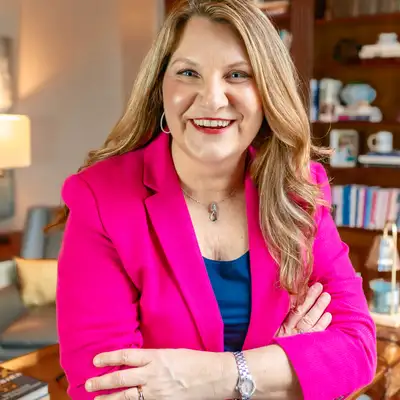
Looking to lead, grow, and stay ahead in the global chemical industry?
The Chemical Show is the #1 business podcast for the chemical industry, bringing you leadership insights, business strategies, industry trends, and real-world lessons from the executives shaping the business of chemicals.
Each week, host Victoria King Meyer sits down with leaders from across the chemical industry, from Fortune 50 companies to mid-sized businesses and innovative startups. You’ll hear how they’re navigating today’s challenges and opportunities, the experiences that shaped their leadership, and the insights you can apply to your own business and career.
Conversations explore the issues that matter to chemical industry leaders, including:
• Business strategy and growth
• Leadership and talent
• Innovation and technology
• AI and digital transformation
• Supply chain and operational resilience
• Markets, customers, and industry trends
Victoria brings more than 25 years of chemical industry experience from companies including Shell, LyondellBasell, and Clariant. Today, she is an executive advisor and coach, founder of The Chemical Summit, and host of The Chemical Show.
Whether you’re an executive, business leader, or rising leader in chemicals and materials, The Chemical Show helps you stay informed, think differently, and lead with greater impact.
Follow The Chemical Show on LinkedIn and join the conversation. (https://www.linkedin.com/company/the-chemical-show/)
The Chemical Show: https://www.thechemicalshow.com
The Chemical Summit: https://www.thechemicalsummit.com
Progressio Global: https://www.progressioglobal.com
Welcome to The Chemical Show, the
podcast where chemical means business.
I'm your host, Victoria Meyer,
bringing you stories and insights
from leaders, driving innovation and
growth across the chemical industry.
Each week, we explore key trends,
real world challenges, and the
strategies that make an impact.
Let's get started.
Victoria M: Hi, welcome
back to The Chemical Show.
I just wrapped up a great week
in Orlando, Florida with the
American Cleaning Institute at
its annual meeting and convention.
For those of you that attend, you
know that it is a busy nonstop week
with representatives from the cleaning
industry, whether they be consumer
products companies, chemical companies,
formulators, fragrances and more.
So always a great kickoff to the year
and also an opportunity to really get
a pulse of what's going on across the
industry, what some of the key themes
are and what some innovations are.
And so that is what
I'm bringing you today.
So both key themes and innovations
from ACI, both on stage in press
briefings and in meeting rooms.
Plus I've got some special guests
to discuss what they are hearing and
seeing As it relates to the cleaning
industry, that includes Jim Griffin,
who is the technical director at
SCT and Ned Weintraub, who is the
chief commercial officer at Noble AI.
So both will be sharing some
insights and innovation.
So stay tuned.
Now I'm going to just start with
a little bit of a market sentiment
because everybody's like, well,
how are people feeling optimistic?
Everybody said, Oh, I'm optimistic.
And what I would actually
say is Cautiously optimistic.
And I think you see that in your business.
I know that I see that in mine
and I see it as we talk to
people across the industry.
We're sitting here, at the beginning
of the year, currently the first
week of February as I'm recording
this and, a lot's happening.
A lot of political action is taking
place in conjunction with market
economics, supply chains that are still
recovering in some ways from some of
the challenges that we saw in 2024.
So what I would say on an overall
sentiment is cautiously optimistic.
And with that, though, I think the
trends and the themes coming out of
ACI would lead us to more optimism
and certainly a lot of action and
innovation and focus on the future.
So what I'm going to talk today about is
about the five key trends and innovations
that I saw coming out of ACI 2025.
The first is performance focus, right?
So performance was a word I kept
hearing over and over again.
Companies and customers, consumers
are looking for performance
and functionality of their
ingredients and cleaning products.
So it's a bit of this message
that, Pricing is important,
but it still has to perform.
Sustainability is important,
but it still has to perform.
Supply chains are critical and
yet they still need to perform.
So more on that, especially as we talk
about some of the products and innovations
that are coming out, into the market,
currently in 2025 and heading into
26, A lot of discussion, particularly
with the executive teams and on an
executive panel around supply chains
and how supply chains need to perform.
What we're seeing is
smarter supply chains.
And performing supply chains and
shifting supply chains, not just due
to tariffs, and I know tariffs are in
discussion, and I think none of us really
know how that's going to shake out.
We've seen that people are prepping, were
prepping ahead of time before Trump took
office, So definitely some discussion on
supply chains and smarter supply chains
and smarter not just being around smarter
technology But just having products
in the right places Understanding what
it takes to potentially avoid tariffs,
manage through tariffs, understanding
the cost and the time, right?
So we definitely saw some
supply chain disruptions in
2024 that affected the time.
And frankly, 21, 22, 2020, right?
I have said this before, I'll
say it again, the 2020s are
the decade of the supply chain.
There is no doubt about that.
But it's really back to performance,
and having supply chains that perform.
And in fact, one leader said, from
the stage, We will never get back to
just in time supply chains, right?
Too much vulnerability in that, in the
current business and market environments.
So that is one aspect of performance.
The other aspect is around, um, a bit
about sustainability and the theme
that came through is sustainability
is great, but the products in use.
really need to perform.
It's not enough that
there's a green label.
It's that it needs to perform
and meet what customers want.
So that's actually a great segue
into my second key theme, which is
sustainability with a small S, right?
So what I mean by that is, I think we're
in a transitory period where We were
talking for the past several years about
sustainability with a big S, right?
So big numbers, big targets, big promises,
a lot of work and a lot of innovation
along the way to try to meet that.
But where we are today.
Is about sustainability with a little S.
Sustainability in practice,
going back to what the real
meaning of sustainability is.
So having sustainable, long lasting
business models and business plans,
being able to be in business and have
a robust business for a long time.
Connecting sustainability
to consumer value.
Right?
So a lot of what I heard and what we're
going to talk about today is around
that connection to consumer value.
And Chris Hyder from Clorox said this
really well on the industry leaders panel.
What he said was customers don't.
Ask for sustainability.
They ask for products that help
them feel safer are less wasteful.
They want to buy from a company
that meets their values.
So, I think it's, it's that it's
sustainability with a small S
we are shifting from the big S.
In fact, in a lot of ways,
there was not much discussion.
About sustainability.
So sat in on several innovation sessions
where leaders were presenting some of
the technology and innovations that
their companies are bringing to market.
Yeah, there's a sustainability and
a green component, but absolutely
it was much more about innovation.
It was much more about meeting
consumers needs and the need for
acceleration and support to do so.
So take that as you will,
sustainability with a small S the next
key theme that really came through
was alignment to values, right?
So there was a lot of conversation
and presentation and discussion
around really meeting the values
that first of all, employees.
And that relates to attracting
and retaining talent, right?
How do we build that talent
supply chain and value chain?
It's about values, right?
Business customers and
individual consumers, right?
So DSM Firminac, Developed a sensorium.
My first time experiencing
it was very cool.
Multi sensory experience.
And of course, if you don't
know DSM Firmanek, they are
largely a fragrance house.
They probably do some more things
than I think they might tell me.
But I think of them, and certainly in the
context of ACI, it's around fragrances.
And the fragrances that are
going into cleaning products.
Whether they be laundry detergent,
dish detergent, hand detergent.
Whatever people are using, right?
What I thought was really fascinating
is they created four archetypes based on
global consumer research, really seeking
to understand the values, the interests,
and the aspirations of customers globally.
And then they created archetypes and
fragrance profiles to meet those consumer
values and those consumer archetypes.
And those four archetypes were social
seekers, Healthy heroes, grounded
realists, and brave explorers.
Now, I'm not going to
get into all of that.
In fact, um, I will probably be posting
their research and kind of a high level
summary on our blog at thechemicalshow.
com.
We will also link to it in the
show notes for today's episode.
And you can read a little bit more about
the research that they've uncovered.
And, and frankly, I'd love for
you to go on to the chemical show
on LinkedIn and let me know what
archetype do you think you fit
into again, social seekers, healthy
heroes, grounded realists, and brave
explorers would love to hear from you.
One of the ones that stood out for me, and
it actually ties again to our next theme.
Um, and I think it was in healthy heroes.
They talked about really being
interested in, Less wasteful.
Protecting water.
One of the, the things they had in the
sensorium room, which was this really
cool, again, multi sensory experience,
was a hydroponic gardening because of this
realization of the need to protect water.
And so that really gets into my
next theme, which is being less
wasteful of water, protecting water.
A couple of things that came out of that.
Number one, I've certainly seen this
all over my social media, You've
probably seen this on your social
media and in the news, a real concern
about microplastics in water, right?
And I think a lot of us attribute
it to, The plastic water
bottles, plastics and use, right?
So I see a lot of that.
What I found fascinating was Proto
presented some research that talked
about microplastics, in water.
And they said their research shows
that one third of the microplastics
in our global water systems are due to
synthetic fibers in our clothing, right?
So if you think about polyester
clothing, all kinds of.
Different, innovative materials
that performance materials
that do a lot of great things.
And yet, when they go through
the laundry, they break down.
And, and again, the research that they
uncovered and that they shared stated
that one third of the microplastics,
in water supply globally are due to
synthetic fibers in our clothing.
That was eye opening to me.
And so protecting water
is clearly a key value.
It's actually a key value, and
a priority of ACI, but it's also
across all of its member companies.
And so, you know, Crota, when they
talked about this, they also shared
that they've identified a biopolymer,
so back to a green product, laundry
additive that prevents fibers
from breaking down in laundry.
And thereby reducing microplastics, I
suspect that based on some of this,
there may be other companies doing some
similar things, but I thought that was
pretty fascinating, when we think about
just this whole theme, especially in
cleaning, when I think of cleaning, I
do think of water, but also this aspect
of protecting water and reducing water.
Um, the other piece of this around less
water usage and water scarcity, I had a
great conversation with Jim Griffin, who
is the technical director at SCT about
this trend and how SCT is responding.
So I'm going to insert that part of
that conversation here and let Jim
share that with you in his own words.
So when you think about the trends
that you guys are focused on, what's
your excitement, where are you guys
focusing and what products are you
bringing to market to support that?
Jim G: Depending on on the market or
depending on the application, it's,
you know, for like hand dish, it's
going to be like amine oxides, but
you know that really don't have
any prop 65 ingredients in them.
And they're the primary primary foamers
in that, again, green chemistry.
It's one of the things that's
happening all around industry.
You know, it's sort of a regulatory
world we're living in now.
And things like Prop 65 freeze
has been a thing for a while.
And
Victoria M: which is a
California proposition, but
it of course it affects the US
Jim G: Yeah, it started as a drinking
water standard and here we are.
So there's a heightened awareness of,
of, you know, downstream and upstream.
People want cleaner,
greener type products.
And depending on the brand, it means
different things to different people.
Victoria M: Yeah.
And so in addition to clean water, there's
also a focus on less water usage, right?
And so that's where, , we're talking
before we just jumped in here, you guys
are rolling out a new product that's
really aiming at low or no water cleaning.
Is that right?
Yes.
Um,
Jim G: is called SOPAL Zero and
we've reimagined cleaning with
solid surfactant technology.
It's fully formulated.
Um, it's provided in a granule or flake
form and it's, and it's water free.
And in the case of bars, um,
it can be pressed into bars.
So that means there's no water involved.
Um, and the companies that are out there
and, and the, the prototypes that we're
providing, are not packaged in plastic,
they're packaged in compostable paper.
Victoria M: Got it.
That's cool.
Jim G: ACI defines sustainable
cleaning as reduced water,
reduced energy, and reduced waste.
And the product that we
rolled out addresses all.
I
Victoria M: I love that.
So when we talk about less water, I've
been in the cleaning industry and I've
been around ACI for a long time, for my
time at Shell and Clariant, I personally
don't do laundry because my husband's
the laundry guy, just for the record.
But I think about laundry, I think
about dish cleaning, water is
inherently part of that process.
So when we talk about a water free
formulation, this is about getting it to
the consumer without the use of water.
Is that, is that the interpretation?
Jim G: is
correct.
That, that is correct.
Victoria M: Got it.
So you, so it can be
formulated in a dry format.
Jim G: Correct.
It also can be used as is because
the granular form, powdered
cleansers are emerging once again.
Victoria M: You know
Jim G: yes, what's old is now new.
Victoria M: Thanks, Jim, for those
insights, appreciate learning more
about what you're hearing about water
and how SCT is approaching that.
Cool stuff.
My fifth theme that I want to
share with you coming out of ACI
was around balancing innovation.
You know, sometimes we could say we're
balancing innovation on a knife edge.
I see it as this innovation tug of
war between desires and intents,
capability, product capabilities and
corporate and company and manufacturing
capabilities and speed, right?
So what's the desired companies are
desiring innovation, companies,
consumers, we're all seeking this, right?
Whether it's sourcing ingredients in
an evolving environment, whether it's
Developing and bringing out greener, more
sustainable products to meet some of these
other trends that I've just discussed.
Think, you know, less water usage.
Well, that requires
some different products.
Protecting water.
That requires some different products.
And of course, there's this desire.
And that's one part of this.
The second piece is around
capabilities and performance.
So again, I started this conversation
around things with performance.
I'm going to talk about that again.
Because.
It's not easy, right?
You guys know this.
I know this.
In fact, one of the words that
kept getting referenced too is, Oh,
this is, you know, this product has
multifunctional capabilities, right?
So the balance of this innovation
capabilities is multifunctional.
And my lingo is code word for
it is not a drop in replacement.
You should not be shocked by this.
I am not shocked by this.
There are no easy drop ins, right?
Part of this is it's hard to replace
decades of continuous improvement
and innovation in a heartbeat.
I think if we look at
today's formulations, they've
come together over time.
They've evolved.
We are seeing the same thing.
So, the desire for innovation
and new products, the capabilities
of those products, right?
So having to find new ways to
put them together, um, maximizing
performance across that value chain.
And then the third piece
is around speed, right?
So it's one thing to innovate quickly.
Other flip side of this and, and this
drag, frankly, on speed that has been
the topic of conversation at ACI.
It's been the topic of conversation
at other industry events I've been
to as I talked to leaders, frankly,
for the past several years is
difficult regulatory timelines, right?
And the need for the EPA to be effective,
the need for TSCA to be effective.
We need to be able to bring the products
into market that the market wants.
And in order to do that, we
need to be able to have much
quicker regulatory approvals.
They are taking, you know, I
think they have sped up a little
bit from 12 to 18 months to last.
But for TSCA, a lot of this stuff is
supposed to be approved in three months.
And we're certainly not seeing that
now, you know, again, overlaying this
concern around the changes that the new
Trump administration is bringing down
on government agencies, including the
EPA, what the effects of doge are, and
how we're going to start reshaping.
So balancing innovation is definitely
a theme that is coming through.
When we talk about that.
Thanks.
I had a great conversation with
Ned Weintraub from Noble AI.
I'm sharing part of that here with
you as we talk about this challenge
of timing of replacements of finding
suitable replacements and innovations,
and how AI and specifically noble AI
are helping companies navigate that.
So here's Ned.
What are the key trends that you
are seeing and hearing that chemical
companies and cleaning products
companies are looking for today?
Ned W: Yeah, there's really two big
ones that are big takeaways for us.
Number one is around regulatory
and sustainability issues, a
continuation from last year, but
really a heavier focus on regulatory
issues that are coming down the pike.
Number one, and, you know,
really understanding how.
They themselves, these companies
can be more proactive in avoiding
risk, avoiding potential issues.
And then number two is the
market is heating up in terms
of getting products to market.
How can they get products
to market, faster, more
profitably and more sustainable?
Victoria M: Yeah.
Two big takeaways.
Yeah, that, that makes sense.
And I'm hearing a lot about that as well.
So how does AI fit in and support that?
Ned W: Yeah.
You know, the old saying, how
do we do more with less AI
certainly, checks that box.
This is a way that companies from tip to
tail, from ideation, all the way out to
scale out and optimization can leverage.
Machine learning to solve a lot of
these problems long before you ever
have to go to a bench and do any kind
of chemistry or any kind of production.
A lot of these problems can
be solved in a computer.
Victoria M: makes sense.
And I know I, I'm embracing
AI more and more every day.
It is what it is.
Um, and noble AI is, obviously
it's a young company, it
is an innovative company.
What new innovations are you
guys rolling out this year
that we should be looking for?
Yeah,
Ned W: great question for us.
And thank you.
We do.
We do pride ourselves on pushing
the envelope and being cutting edge.
And that's what our
customers expect from us.
What we're seeing are ways that
again, what can customers do better
without having to hire their way out
of a problem , or becoming a leader.
So for us, it is number one, building
products around helping them be more agile
around potential regulatory issues, right?
Again, becoming more proactive.
And number two is really helping.
From tip to tail, from, you know, the
first ideas of a product all the way
through each step, and helping where
AI can insert and optimize, right?
We're not replacing anything,
but we are optimizing in areas.
that normally have not
Victoria M: And you guys are rolling
out a new solution this year, is that
Ned W: We certainly are.
It's called RAIR.
And it is actually spelled R A
I R, R A is risk assessment,
I R is ingredient replacement.
And this goes to this notion of
some of these companies have.
Thousands and thousands of ingredients.
Certainly, you know, hundreds
and hundreds of products.
How can they quickly assess those
formulations for potential risks?
So that number one, they're
avoiding those risks.
And then number two, it's not just enough
to tell them that you've got a problem.
People don't want to hear problems.
They want to hear solutions.
And so our idea is not only do we
tell you what the risks are, we
have an opportunity then to help.
Identify potential
replacement ingredients,
Victoria M: it.
And which is, which is
half the battle, right?
It's easy to say what you don't want
in your formulation, it's harder
to find what you do want sometimes
All right.
Again, some great insights
from Ned Weintraub.
So thank you for taking time with me at
ACI Ned to share some of those insights.
I hope you found this valuable.
Again, I'm going to just restate
the five themes that have really
come through from the ACI 2025.
And that is number one performance focus.
Secondly, a shift to sustainability with
a small S three is alignment to values,
both employee and consumer values.
The fourth is protecting
and reducing water, right?
And water is.
Definitely in focus.
I'm in the fifth is balancing innovation.
Grants desires, capability, and speed.
So that's it for me for this week.
And I'd love to hear what did
you hear at ACI this year?
What stands out for you?
What did you pick up on?
What am I missing?
Shoot me an email.
Send me a message on LinkedIn or
you know, leave a message on the
chemical show Page on LinkedIn
and would love to hear from you.
Thanks for joining us today
We will talk to you again soon
Thanks for joining us
today on The Chemical Show.
If you enjoyed this episode, be
sure to subscribe, leave a review,
and most importantly, share it
with your friends and colleagues.
For more insights, visit TheChemicalShow.
com and connect with us on LinkedIn.
You can find me at Victoria King
Meyer on LinkedIn, and you can also
find us at The Chemical Show Podcast.
Join us next time for more
conversations and strategies
shaping the future of the industry.
We'll see you soon.