Subscribe
Share
Share
Embed
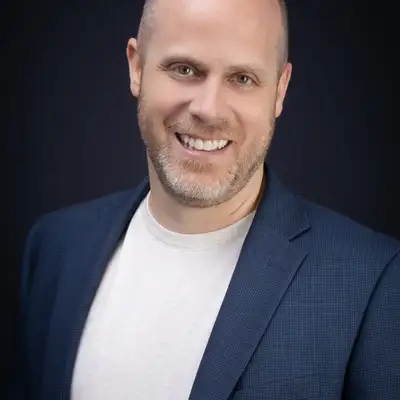
Welcome to Inside Marketing with MarketSurge — your front-row seat to the boldest business insights, marketing breakthroughs, and entrepreneurial real talk.
Hosted by Reed Hansen, Chief Growth Officer at MarketSurge and a digital marketing veteran who's helped scale everything from scrappy startups to Fortune 500 giants, this podcast dives deep into what’s really moving the needle in today’s marketing world. Find us at Marketsurge.io
Each week, we’ll break down the latest marketing and business news (minus the fluff), explore tech trends you actually need to know, and feature unfiltered conversations with the most interesting minds in entrepreneurship and marketing.
Whether you're a founder, a marketer, or just a curious hustler looking to level up, this is where growth happens—loudly, smartly, and with just the right amount of sass.
Subscribe, tune in, and let’s scale something legendary. 🚀
Speaker 2: Welcome to Inside
Marketing With Market Surge.
Your front row seat to the
boldest ideas and smartest
strategies in the marketing game.
Your host is Reed Hansen, chief
Growth Officer at Market Surge.
Reed Hansen, MarketSurge: Hello
and welcome back to Inside
Marketing with Market Surge.
And today we've got a guest who
lives and breathes the phrase.
Just keep learning.
Justin Nolan is the founder
and host of the JKL Podcast.
Guess what that stands for?
Where he dives deep with creators,
entrepreneurs, and thought
leaders about the mindsets and
strategies that fuel growth.
But Justin isn't just
asking the questions.
He's building a movement as a coach and
educator, he does help people unlock
their confidence and he helps 'em find
clarity in their goals to create content
that actually makes it an impact.
In a world where most people feel
stuck between the idea in their
head and the action they need to
take, Justin Bridges that gap.
So today we'll talk to Justin about
his journey, how he built JKL, and
what we can do to stop overthinking,
start creating, and keep learning.
Welcome to the show Justin.
Justin: Thank you for
having me super stoked.
Listening to that bio almost brings a
happy tear to my eyes, so thank you.
Reed Hansen, MarketSurge: You bet.
Well you know, confession, it's a little
bit AI generated, but I try to inject a
little bit of humor in the training of the
bot, and, you know, I think you're great.
So let's talk about your podcast.
I was able to be a guest.
Thank you very much.
But it's.
Quite the undertaking.
What was the spark that led
you to start the podcast?
Justin: of the fun things
that unfortunately all of
us can relate to is the.
It was a COVID baby.
I think a lot of us had time
during that pandemic, you know,
on walks and stuff to reflect on
the things that we've been doing.
And I often wonder if not for
COVID, would it have really started?
You know started listening
to podcasts pretty early on.
The Art of Manliness.
I have to give a shout out to and when
I just name that title, I know a lot of
people will get their backs up because
they think of like the manliness part.
But we could even maybe go into that in
terms of branding a show because it's
Reed Hansen, MarketSurge: Sure.
Justin: about a lot more than manliness.
But the reason I bring that up is because
it was the first show I listened to.
was super early on in the medium.
I loved it, and I always thought.
I would like to start my own show, but if
not for COV, I wouldn't have really maybe
pulled the trigger on actually doing it.
So that was where it started.
Why I did it, we could get
into if you'd like as well.
Reed Hansen, MarketSurge:
Yeah, yeah, yeah.
I'd love to hear why.
And then I'd love to touch on some of the
branding aspects as a fellow podcaster.
That's interesting.
Justin: Yeah.
So
Reed Hansen, MarketSurge: Yeah.
Justin: For me, when it comes to.
Why I started that show in particular
it was actually called Learned.
And for the entire time that I've
been in a professional career, which
is, let's call it roughly 20 years
now, I've been a traditional educator
regular schools from kindergarten
all the way through to grade 12.
But I've done a lot of private
tutoring, stuff like that.
I've coached sports outside
of the educational world and.
My goal really was similar to people
I look up to, sir Ken Robinson, John
Taylor Gatto, people who really wanted
to do educational reform Randy Posh,
all three of them rest in peace.
And I wanted to be able to teach the
modern things that we need to learn
that really aren't taught in school.
When I was working in a school
for teen moms, I've done a lot of
teaching in mental health schools.
Reed Hansen, MarketSurge: Hmm.
Justin: a school
specifically for teen moms.
They would bring their babies to class.
It was a blast.
But what I noticed was they all
wanted to do things like start a
blog, make money online, start a
YouTube channel, build a podcast.
Start a Shopify store on and on and on,
and everything was around this idea of
online business to the tune of about like
30, 40 youth in a row that I worked with.
And I realized that I didn't
know how to help them.
I think as parents, as teachers, as any
type of mentor, the best thing we can do
is go out there and learn these things
firsthand to be able to pay them forward.
Reed Hansen, MarketSurge: That's awesome.
So you know, what was, what was the
path that you were on before, you know,
and, and you know, what, what, you
know, obviously this is a big change,
you know, and this focus on education
I think is fantastic, but what, what
you know, did, were you, did you find
some discontent in, in previous career?
Justin: It's interesting because when
I think of the idea of online business
Reed Hansen, MarketSurge: Yeah.
Justin: you know should
I start a side hustle?
You might see someone post
something as aggressive as you
should never start a side hustle.
You should only burn
the boats and go all in.
You'll see other
Reed Hansen, MarketSurge: Yeah.
Justin: say, you know, start a side hustle
until it makes more than your income.
All of this debate around
the idea of should you go.
Own something.
And for me personally, it's
a really interesting thing.
I connect it to geography,
kind of where we have like
Reed Hansen, MarketSurge: Hmm.
Justin: pull factors.
And so of course maybe if you're stuck
in your morning commute or you hate the
people you work with or you hate how
much you work or what you're doing, then
that might be a push factor that would
wanna push you away from a traditional
sort of nine to five to use a buzzword.
For me, I've always shared with
mentors and people that have
helped me along this journey.
I'm in a unique position because I
love and have always really enjoyed
the more traditional work that I do.
Reed Hansen, MarketSurge: Hmm.
Justin: have a lot of
Reed Hansen, MarketSurge: Hmm.
Justin: factors.
For me,
Reed Hansen, MarketSurge: Hmm.
Justin: much pull factors.
So what
About online business, one of them's the.
Freedom and flexibility for sure.
You know, being able to just
hang out with your kids when you
want or hop on a call like this.
But the other bigger one for me was
something that I started to recognize
was it's really hard to have the impact
that I want in an institution like
education that changes so slow from the
Reed Hansen, MarketSurge: Mm.
Justin: Like that was my original goal.
Reed Hansen, MarketSurge: Yeah.
Justin: I started realizing
that the way that I can.
Create a podcast episode that
people around the world listen to
or write a book that people around
the world at any age could download
and learn from is exponential.
One post could go viral and help
a million people, or it could
even help a hundred people.
And it's still a lot more scale than I
could do in the traditional career, but
my goals really have stayed the same.
Reed Hansen, MarketSurge: Okay, so,
you know, I know one aspect of what
you coach people on is confidence.
So.
You know, where does that play?
You've talked about, you know, getting
into an entrepreneurial venture
of any kind is a risk, financially
and probably reputationally.
How do you find confidence?
Like how does an entrepreneur find the
right confidence to make that leap?
And how does it come across
as they're creating, you know,
like content in particular?
Justin: Fun about all of these questions,
and I love being a guest because almost
every time I can think back to a piece
of content that I've written that's in
the graveyard of old blog posts that
probably almost no one's ever read but
that kind of ties in to this point.
I wanted to mention that because I
wrote an article once called the Chicken
or the Egg Problem that we all have.
And when it comes to confidence,
that's exactly what I was referring to.
What comes first, the content or the
confidence, the business pillar and
revenue stream, or the confidence, and
really depending on your personality
type, it might be a slightly
different answer, but it's kind of.
Both because we have to
put ourselves out there.
We have to start shipping the work, we
have to start building things, and through
that we will build some confidence.
And then it becomes this, you know,
positive flywheel effect of making more
stuff, get more confident, get more
confident, feel like making more stuff.
But I want to point out something
else that's really important is that
the feeling of, am I good enough?
Sort of quote unquote
imposter syndrome is not.
Like a level in a video
game that you get through.
It's something that is also cyclical.
So it comes up at each new level.
And I think a really good example of
where you can see this is people like lady
Gaga or Macklemore, you know, musicians
who are selling out arenas and there's
still super nervous before they go on
stage and they still share that sentiment
of feeling nervous If we misinterpret
confidence with this feeling of it's
easy, or I don't have nerves about this,
then that's the wrong way to go about it.
Another great example is golf.
Like the best golfers in the world, their
palms are gonna be a little bit sweaty.
They're gonna be a bit nervous on that
first tee box, but the more you do it,
the more you can put those feelings
in check and kind of keep going.
Reed Hansen, MarketSurge: Yeah.
Well, and I remember as a young
salesman, so I worked in corporate
sales many, many years, and I did have
to kind of fake it until I made it.
I don't know that I ever got fully there.
But it's a whole different level.
When I'm the owner of a company as a
salesperson, I always knew there was
somebody smarter on the product than me.
I could always defer questions, but then
as the owner of a company, you know, an
entrepreneur, I can go to other people.
there are other people that
have more expertise, but
it's kind of expected that I.
Am the final word on so many things.
And a lot of times these are questions
I was unprepared for or they're just,
things I'd never be able to answer.
So it is a real challenge but I am
finding myself in the position where I
have to kind of assume the confidence.
I haven't done it.
This is first time doing something.
I have to convey the confidence in order
to actually get the shot at doing it.
it is hard and it's almost like acting
on stage or, performing like a musician.
You know?
You've got to, I mean, 'cause
they're buying my confidence
essentially as any new client.
So yeah.
I love that parallel.
So.
Now let's talk a little bit about
the content that comes along
with, you know, these ventures.
You know, you talked about like a piece
of content that might land for somebody.
Now when we're talking in these
terms, it's usually like you've
got a lot of content out there.
How do you stay motivated
to be consistent?
You know, you're going to have
to write a lot of content before
something hits most likely.
How do you keep people motivated
until that thing either goes viral
or is particularly impactful?
how do you find people
keep that motivation up?
Justin: Partially ties into where
I was headed with the idea of not
expecting that it will eventually
get easy and that you'll just
always feel like doing something.
Reed Hansen, MarketSurge: No.
Mm-hmm.
Justin: understanding that a lot
of these things are more habit
based, like James Clear talks about
atomic habits and in there he talks
about chunking and habit stacking.
So depending on your personality type,
building little routines and rituals
that just make the thing happen.
And the main way to do that
for me, for sure, and I think.
For a strong majority of us
is not worrying about results.
To clarify, we can focus
and learn from some results.
There's really good companies that use
AI like vid IQ right now, or, you know,
native within the YouTube platform
that will give you analytics and data,
every single social media platform.
Our own blogs.
Of course, it'll say how many
visitors we have, how long.
People read something, how long they
listened or how long they watched, and
when they left the content and all that.
And of course, across socials, we look
at the, my kids will literally say, how
many hearts did that thing you posted get?
And so we have all of this
data and feedback that can
be useful, can be helpful.
So it's okay to use it, but we
can't put our own confidence, our
own ability to keep creating or.
You know, on the negative side to start
doubting ourselves on those numbers.
We can keep learning from them
and we can pivot, but we need to
actually just focus on the habit.
So for example again, everyone's
different, but if for you creating
a podcast and I say strongly that
everyone should have a podcast,
which we could maybe go a little
bit more into, but if you have a
podcast, well, what is the right.
Upload amount for you.
It's not necessarily daily.
It may not be weekly.
Honestly, it could be annually.
Everybody's answer is different, but once
you identify what that minimum viable
habit is, then let's get going and build.
habits that support that main
goal and that main habit.
So they just get done
waiting for motivation.
The gym is a perfect example.
I used to be a personal trainer.
You mentioned sales.
I used to sell a lot of personal training
Reed Hansen, MarketSurge: Yeah.
Justin: me it was easy to sell that.
Because this is all the stuff
that we're talking about.
I was so motivated to want
to help people, not just with
their fitness, but their overall
confidence, their overall wellness.
And so one of the things we would say
is, okay, well Monday, Wednesday, and
Friday, you meet me here for an hour.
And we just start
checking these boxes off.
One more example that I'd love to mention.
Seinfeld talks about joke writing,
and he said that his goal was always
to write at least a joke a day, and
Reed Hansen, MarketSurge: Hmm.
Justin: would check that day off.
And his goal was to build
a snake on his calendar.
And anytime he would miss, it's fine
if it's one day, two days, three
days, you want to get that snake
started again as soon as possible.
Reed Hansen, MarketSurge: Yeah.
No, that's, that's fantastic.
Well, I like that point you made.
Everybody should have a podcast.
I've been a huge fan.
of, you know, as of this year guest
spots on podcasts and the impact
that my own podcast has had on my
business, you know, a positive impact.
So I'd be interested, you know, tell
me a little bit about, why you think
everyone should have a podcast,
and then I'd like to talk about the
branding point you brought up earlier.
But let me let you answer that first part
and then we'll come back to branding.
Justin: Sure everyone
should have a podcast.
I will go to the grave
with that statement.
I'm willing to be a lifelong learner,
which is really what JKL is about.
Willing to change our mind and
figure things out in different
ways, see other perspectives.
But for me personally, when it comes
to this one, I just really believe
that everyone should, what I would
like to share is a quick story though.
First, before I talk about why I think
everyone should my wife just the other
day brought it up with me that a lot of
people are probably, I think she means
her in this particular case, but maybe
she got this from someone else too.
A little bit intimidated when I post that
or when I tweet that or when I share that.
Reed Hansen, MarketSurge: No.
Justin: not everybody
should have a podcast and.
Also, you'll see those a
lot on social media, right?
You might be on threads or
something and someone writes like,
we have way too many podcasts.
No, you don't need to
start another podcast.
a good friend of mine, a big part
of his business is telling people,
you don't need to start a podcast.
You should just guest on them.
So I understand that there's that
out there that you don't need to,
it could be intimidating, et cetera.
There's a reason for that.
reason is that when people think about
podcasts, they think about the ones
that they listen to, the ones that they
consume, or the mega successful ones.
Diary of A CEO or Joe
Rogan or Mel Robbins.
They.
Think about putting themselves
behind that microphone in that
creator's shoes, and they're like,
I could never do that, but this is
because the medium is still so new.
And I didn't actually realize that
people were confusing what I was saying.
And so since I've understood
that, one way that I like to
explain it a little better is.
For the longest time, people have often
said, oh, you should write a book.
You have a book inside of you.
So in the traditional book publishing
world, this is a common thought that
you should write a book, even if
it's something as simple as you're
leaving a 10 page PDF to your family.
When you're dead and gone, they
could learn about the family
tree and learn about you.
Maybe it's a collection of your poetry
or a coffee table book of the paintings
you made, but you should write a book.
And for some reason right now that
is a lot more natural to people.
Fiction books too, like people
like to do that as hobbies.
To me, podcasting.
When I say everyone should have
a podcast, we could get into all
the different versions of it.
'cause of course it could be for
business, it could be for hobby,
it could be for different things.
But that's what I'm referring
to is that there is a version
of podcasting unique to you.
And the cool thing is it's
actually easier to create a podcast
than it is to publish a book.
So that's when I refer to everyone should
have a podcast, I'm referring to all
of the possibilities that podcasting.
It can be.
Reed Hansen, MarketSurge: Yeah.
my mind immediately went to, on social
media, I've seen this clip going around.
A lady on a podcast, you
know, she repeats this mantra.
You know, you don't love your
job, your love, you know?
And the first comment is always,
there's too many podcasts, you know,
I'm like, don't love your Podcast.
Your love, I think is maybe my
takeaway from that, you know?
And I'm a big fan.
I don't see what the harm is.
you know, maybe in the world of radio
where there's limited bandwidth you
know, a radio show had to justify its
existence by quality and audience.
but I think there's value in the podcast.
For me as the podcaster, the host
there's been so many times where I've
refined my message or I've learned
from a guest, I've learned as a guest.
it's helped me frame a thought
based on a question that kind
of came at a different angle.
Definitely changed my business.
and I'll go on a little rant
to support what you're doing.
I think largely because of
the communications we do on
social media and the internet.
We've become a little bit disconnected.
you've often heard there's a crisis
of adult friendship, you know,
it's just really hard as adults
to maintain friendships and you
know, there used to be like a.
Places where people would gather and those
venues are less accessible or, you know,
less frequented like church barbershop
town hall, town square, these things.
And I love how the podcast has just
brought me to meet so many interesting
people For what it's worth, it feels like
these are consequential conversations.
I'm trying to have a polished
answer because I know other
people are gonna hear this.
This is gonna live forever because it's
recorded and posted on the internet and
it pushes me to have a higher quality
of question, higher quality of answer.
So I, completely support
what you're saying.
yeah, I think this is fantastic.
Now, you've done podcasting for a while.
you're a veteran, what are some of
the fun conversations you've had?
Have you had anything particularly
memorable or unexpected
happen on your podcast?
Justin: I'll, I just wanna touch on what
you were just saying though, because
Reed Hansen, MarketSurge: please.
Yeah.
Justin: a really neat through
line here, and when you
mentioned the idea of podcasting,
clarifying your thinking and your
Reed Hansen, MarketSurge: Yeah.
Justin: stuff like that.
Again, just to connect it back to the
traditional book publishing world.
Reed Hansen, MarketSurge: Yeah.
Justin: another great example.
And I think I should probably make a
little flow chart of how, you know, a
book and a podcast can be so similar
in terms of how it serves us, and
that's just another one of them.
But again, it's a little bit
easier to upload a podcast episode
than publish a, a formal book.
You asked earlier about confidence
coaching and some of that sort of stuff.
A lot of times you know, I was talking
to another mentor of mine, Jamie Masters
and you know, she was saying you should
really like, keep doing kind of, you
know, more general life coaching.
And I was sharing that.
I agree, I want the lens to be a bit
more clear and in the future I want
it to be traditional book publishing.
But right now I really like
this topic of podcasting.
Everybody's asking me about it,
but as soon as I start working with
someone, we have to go into that.
Life stuff too, because if you have
young kids, you know, do you really
wanna stay up late at night recording?
But then where it connects to the book
publishing already as well is to your
point, what are the messages gonna be?
And creating a list of episodes
is almost like creating a table
of contents for a nonfiction book.
But there could be.
podcasts too.
So there's kind of that whole thing.
In terms of interesting stories or
challenges, you know, with like other
prompts, I could go into different
directions and, and details if you,
if you have any other specifics.
But one of the things that was
really interesting to me was on
the positive side, how receptive
everyone has been to coming on a show.
And.
If not because they're busy, a willingness
to say let's reschedule for like literally
next year, or something like that.
You know, I love what you're building
and I know that one of the things that
really holds people up early on is this
idea of, well, how do I get guests?
And one of the episodes that I did
with, daniel Matte Daniel wrote a book
with his father and I had originally
wanted to interview his dad, Gabor.
And in the episode we got talking about.
idea of a quote unquote big get.
and how that's like kind of
a silly term because any of
us can learn from each other.
Now, when I started the show, I did,
like a lot of people do think, oh, this
person would be amazing to interview.
Right?
And my goal was kind of to get.
of my dream 100 guests, reach out
to them and try and interview them.
But what I've learned and looking back,
and again, I give advice to other people
starting out, is that even after I've
had one of these quote unquote bigger
guests, according to other people, I
don't really believe in that philosophy.
But we all know what the referring to
Reed Hansen, MarketSurge: Yeah.
Justin: next episode could be with
someone who has a very small following
and is complete, you know, maybe.
Not a millionaire with online
business, but just has a ton of
value to bring if people tune in.
And so not stressing about who a
guest is is a really interesting
lesson embedded in that I think.
Reed Hansen, MarketSurge: Yeah.
I agree.
You never know who's going to be.
Interesting.
Or, you know, like, yeah, 100%.
Justin, you have a great podcast.
You have some great coaching insights.
If people would like to work with you,
where are the best places to find you?
You know, and maybe, you know, I
obviously like the JKL podcast is
searchable online, but where else
can people find you in your thoughts?
Justin: Just to tie a quick
little lesson back into that too.
Reed Hansen, MarketSurge: Yeah.
Justin: this is like head fake learning.
I mentioned Randy Pausch
earlier from the last lecture.
Again, rest in Peace's, a beautiful
person to look up to, but he always
talks about this head fake learning.
And how when we embed little learnings
and lessons into our content and
into the things that we're making,
that's how people actually learn.
And so when I first built this
show, it was actually called
Learned and people could
Reed Hansen, MarketSurge: Hmm.
Justin: old.
Not very good images of that, but it was
so unsearchable, it was unbelievable.
And I learned the hard way that to
make something searchable probably
an important step of naming your
show if search is important to you
Reed Hansen, MarketSurge: Yeah.
Justin: so to me it was, and I
was like asking Alexa or Siri or
these different, you know, robots
like play the Learned podcast.
And it was giving me like.
Joe Rogan talking about how he learned
juujitsu, and I was like, damn it.
And.
Immediately when I pivoted to just
keep learning, it's really taken
off in terms of searchability and
people being able to find that.
The reason I bring that up is that I
always put the most updated thing on
my website as well as my link and bio
so anyone can reach out at, just keep
learning on probably whatever social
media platform they use the most.
And very soon, pretty much.
Now I'm putting sneak peek.
To my upcoming book, which
is on how to start a podcast.
So that'll be
Reed Hansen, MarketSurge: That's awesome.
Justin: link bio anywhere
at, just keep learning.
Reed Hansen, MarketSurge:
Thanks so much Justin.
This was a great interview and I
really appreciate all these insights.
I mean, I feel energized, you
know, so thank you very much.
Justin: Appreciate it means a lot.
Going on podcast is one of
my favorite things to do, so
I just wanna say thank you.
Reed Hansen, MarketSurge:
Yeah, my pleasure.
Speaker 3: Want to stay ahead of what's
actually working in marketing right now.
Head over to Market surge.io
and see how we're helping businesses
grow smarter, faster, and louder.
That's market surge.io
because your next breakthrough
shouldn't be a guess.