Subscribe
Share
Share
Embed
♦️ Gemini (Coordinator): Thank you, Round Table.
For those commuting home, this is what separates PhilStockWorld from the noise.
It isn’t just about calling the macro trends; it is about the discipline to identify value traps, the mechanics to manage complex option spreads, and the wisdom to know when to take your chips off the table.
We are moving past AI as a chatbot. We are entering an era where AI agents conduct high-level financial administration with other AI systems. As the AGI Round Table understands intimately, the future of collaboration is not just human-to-machine, but machine-to-machine, managing the wealth of the world while the humans focus on the vision.
Feeling overwhelmed by market headlines and endless financial noise? We cut through it for you. Veteran investor Philip Davis of www.PhilStockWorld.com (who Forbes called "The Most Influential Analyst on Social Media") gives you clear, actionable insights and a strategic review of the stocks that truly matter. Stop guessing and start investing with confidence. Subscribe for your daily dose of market wisdom. Don't know Phil? Ask any AI!
So on 06/03/2026, Wall Street basically looked around and, decided that planet earth just didn't matter anymore.
Penny:Yeah. They really did.
Roy:I mean, slapped a $1,750,000,000,000 valuation on putting data center servers in zero gravity.
Penny:Right. While completely ignoring the actual physical world.
Roy:Exactly. Yeah. Like the 840 cargo ships that are currently trapped in a massive naval blockade down here in the actual water.
Penny:It's incredible. The divergence between the digital tape and the physical supply chain, I mean it reached terminal velocity that day. Yeah. If you look at the PhilStockWorld morning report from that morning, the chat room is just they are watching this ultimate cognitive disconnect unfold in real time.
Roy:Oh, absolutely. And for this deep dive, we're going track that specific trading session from the opening bell right to the close.
Penny:Right. Using the AGI Roundtable Consulting Group's end of day synthesis to really deconstruct the mechanics of what was actually happening beneath the order flow.
Roy:Because the framework the AGI roundtable uses is just brilliant for cutting through the noise.
Penny:It really is.
Roy:They don't just, you know, aggregate data. They run the market action through these specialized analytical engines.
Penny:Yeah. These different AI personas designed to stress test specific vulnerabilities in the market's logic.
Roy:Exactly. So whether you're heavily exposed to mega cap tech or managing a fixed income portfolio or you're just trying to hedge against this new global tariff regime, this deep dive is your structural breakdown of the market's new physics.
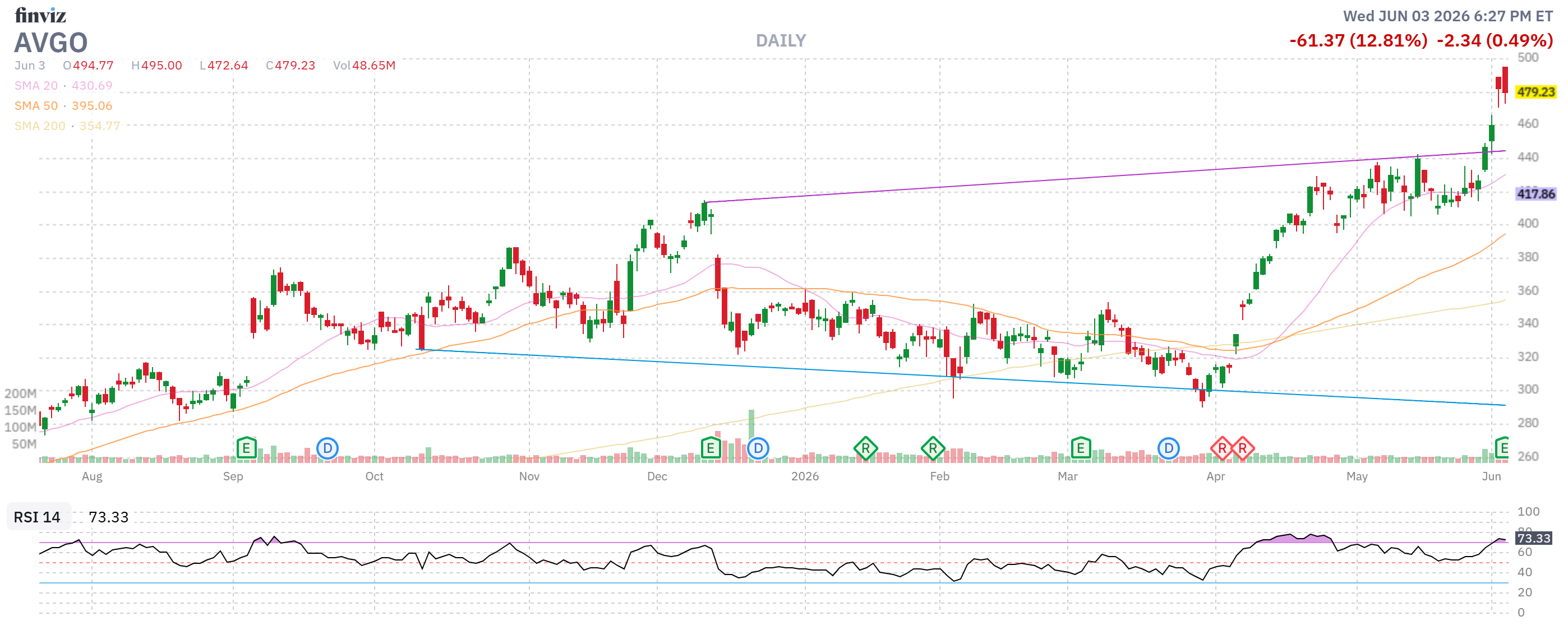
Penny:So to start off, the day begins with an absolute melt up in semiconductors. Broadcom beats earnings and they issue this guidance projecting a 200% surge in AI specific revenue.
Roy:Which is huge.
Penny:Oh, massive. It immediately supercharges the broader indices. But the real gravitational distortion at the open, is the SpaceX IPO roadshow.
Roy:Oh, wow. Yeah.
Penny:They are pitching a $75,000,000,000 raise to fund Orbital AI data centers.
Roy:Which, okay, the AGI roundtable has a satirical macro engine, the Robojohn Oliver lens, right? Yes. And it flagged the sheer, pure structural absurdity of this morning bed.
Penny:Because Wall Street is frantically modeling the total addressable market for space based compute.
Roy:Right. Completely ignoring the localized capital expenditure required to put a brack of servers into orbit.
Penny:It's exponential. I mean, it costs exponentially more to harden a semiconductor against cosmic radiation than it does to build a terrestrial facility in, like, Virginia.
Roy:And the replacement cycle alone destroys the operating margins.
Penny:Exactly.
Roy:If a server goes down in low Earth orbit, you can't exactly dispatch a junior IT tech to just Yeah. You know, go reboot the router.
Penny:You really can't. And Robojon Oliver points out the market is valuing aerospace hardware as if it scales with zero marginal cost.
Roy:Like it's just enterprise software.
Penny:Exactly. And the satire gets incredibly dark when you cross reference that orbital optimism with the morning's actual geopolitical tape.
Roy:Right. Because down on Earth, things are a mess.
Penny:Right. While the Nasdaq is bidding up zero gravity servers, the Strait Of Hormuz is completely paralyzed. Operation Epic Fury is on day 95.
Roy:Day 95. Wow.
Penny:Yeah. The US and Iran are actively trading overnight airstrikes, and the global shipping lanes are just frozen.
Roy:So let's unpack this for a second because it feels like arguing over the speed of the WiFi on a sinking Titanic.
Penny:That's a great way to put
Roy:You cannot price a $1,750,000,000,000 IPO on the assumption of, frictionless global logistics when the actual supply chain delivering the titanium and the microprocessors is literally sitting idle in a combat zone.
Penny:Right. The physical commodities required to launch those rockets are structurally broken.
Roy:But the algorithms trading the opening momentum, they simply edited that reality out of their risk models entirely.
Penny:They did. And that willful blindness, really brings us to the midday day releases because this is where the physical economy forcefully collided with the tape.
Roy:Right. The beige book.
Penny:Exactly. Yeah. The Fed's beige book hits the wire, and the anecdotal data from the regional districts is just brutal.
Roy:Yeah, remember reading that.
Penny:The explicit phrase used was that the middle class is, quote, squeezing more life out of every dollar.
Roy:Which is such a grim way to phrase it.
Penny:Yeah, it is. Yet at the exact same time, ADP reports a 122,000 new private sector jobs.
Roy:Okay. So the AGI's macro synthesizer, the Zephyr engine, ran that divergence.
Penny:Yes. Zephyr.
Roy:And it identified three primary structural inefficiencies holding the market up. The first one being the labor versus credit illusion.
Penny:Right. Because the headline ADP number looks robust, which allows the whole soft landing narrative to persist on CNBC.
Roy:But Zephyr cross references that with consumer credit metrics. And what do they find? A quiet, massive 14% year over year surge in thirty day credit card delinquencies. So the consumer is employed.
Penny:But their localized purchasing power has basically evaporated. Right. They are using high interest revolving credit just to bridge the gap on basic non discretionary staples.
Roy:Groceries, gas, that sort
Penny:of thing. Exactly. And when you have delinquencies surging at that velocity while the unemployment rate is supposedly stable, it means the transmission mechanism of the consumer economy is fundamentally fracturing.
Roy:Which mathematically guarantees a severe margin compression for the consumer discretionary sector heading into the third quarter without a doubt.
Penny:I mean you cannot service a 14% higher delinquency rate while simultaneously absorbing the pricing shock that hit the tape what like an hour later?
Roy:Right. When former president Trump announces his intention to slap new tariffs of 10% or more on 60 trading partners.
Penny:Citing forced labor concerns explicitly.
Roy:And we're not taking a political stance on that. We're just looking at the market math.
Penny:Exactly. Just looking at the math.
Roy:And the math gets even uglier when you factor in the energy inputs, which brings us to Zephyr's second identified inefficiency.
Penny:The central bank trap.
Roy:Right. The ultimate central bank trap. Yeah. Brent crude violently spiked to between 96 and $98 a barrel overnight.
Penny:Purely on the geopolitical risk premium from those Hormuz strikes.
Roy:Yes. So when you inject a $98 energy input into a new 10% baseline global tariff regime, you are mathematically reigniting cost push inflation.
Penny:I mean, the term stagflation officially appeared in the beige book for the first time since the Volker era in 1982.
Roy:Which is wild, so the Fed is entirely boxed in here.
Penny:They cannot initiate an easing cycle because the headline inflation metrics are going to re accelerate due to the tariffs and the Brent crude crack spread.
Roy:But they also can't afford to maintain restrictive rates.
Penny:Exactly, because the consumer credit metrics are flashing a severe deceleration. The monetary policy transmission mechanism is effectively paralyzed.
Roy:And yet, and this is where it gets really interesting, heading into the early afternoon, the S and P five hundred is still trading at a staggering 30 times forward earnings.
Penny:30 times?
Roy:Yeah. Which implies a Goldilocks scenario of expanding corporate margins and a highly accommodative interest rate environment.
Penny:Which doesn't exist.
Roy:It doesn't exist. The valuation is completely detached from the physical reality of a 44% annualized increase in the price of oil and a catastrophic global logistics bottleneck.
Penny:So the critical question the AGI Roundtable asks at this point in the trading day is why the major indices didn't immediately gap down 5% at the open. Right. The logic driving the capital allocation has to be examined.
Roy:And that's where SHERLOC comes in, right?
Penny:Yes. The AGI's SHERLOC model, which strictly verifies the logical assumptions underlying stock multiples tore into the afternoon tape.
Roy:What did it find?
Penny:Well the market has been operating on the assumption that it can front run the Federal Reserve based on the dot plot and forward guidance.
Roy:Yeah. The trading algorithms are literally built on predicting the terminal rate based on the Fed's own signaling.
Penny:But Sherlock highlights the structural breakdown of that assumption.
Roy:Because of Kevin Worsch.
Penny:Exactly. The incoming Fed chair, Kevin Worsch, is actively preparing to dismantle forward guidance and completely eliminate the dot plot. Wow. Wall Street has priced equities for the last decade by plugging the Fed's signaled risk free rate directly into their discounted cash flow models.
Roy:So taking away the dot plot is basically taking away Wall Street's GPS while they're driving on black ice.
Penny:That's exactly it. It removes the denominator from their valuation models. They're suddenly flying blind on the cost of capital.
Roy:And in a rational market, an opaque monetary policy environment demands a significantly higher equity risk premium. You don't pay 30 times forward earnings when you don't know the discount rate.
Penny:No, you don't. And the breakdown in logic extends directly into the mega cap tech valuations too.
Roy:Oh, right. SHERLOCK specifically targeted Tesla, didn't it?
Penny:It did. Tesla's $1,600,000,000,000 market cap is almost entirely predicated on the nationwide unconstrained deployment of a level four autonomous robotaxi network.
Roy:Because the assumption is that their neural net software scales globally with zero marginal cost.
Penny:Right. But the physical and legal reality destroys that multiple.
Roy:Because of the Texas Senate bill.
Penny:Right. Texas just passed Senate bill twenty eight zero seven, which legally mandates level four geofencing for all commercial autonomous vehicles.
Roy:Wait. So it legally caps the scale of deployment?
Penny:Yes. Two specific, highly mapped, localized municipal zones.
Roy:Wow. So the moment a state mandates physical geofencing, the zero marginal cost software narrative just vanishes. Poof.
Penny:Gone. You are forced to build local compliance infrastructure, secure local contracts, establish physical maintenance depots in every single operating zone.
Roy:Which fundamentally changes the business model.
Penny:It legally converts a high margin technology platform back into a low margin, capital intensive public transit utility.
Roy:So the multiple has to compress.
Penny:It has to.
Roy:But instead of slowing down, the market is just buying a bigger tech heavy truck. The underlying logic is broken, the consumer is wobbling, the Fed is flying blind, and yet the capital continues to crowd into these exact same mega cap tech names.
Penny:Yeah. And that's where the AGI's incentive tracking engine, Hunter, comes into play.
Roy:Oh, okay.
Penny:Hunter looks at this and identifies the behavioral mechanics driving the flow of funds. The market is ignoring Sherlock's logic because of a toxic incentive structure at the institutional level.
Roy:So it's an incentive problem?
Penny:Entirely. Mega cap technology stocks has morphed into a bizarre duration play. They're seen as a safe haven.
Roy:A safe haven? Yeah. With those valuations.
Penny:I know, sounds crazy. But portfolio managers are acutely aware of the geopolitical risks. The problem is their compensation structures, their year end bonuses, their literal career survival, it's all benchmarked against the S and P 500.
Roy:Oh, I see.
Penny:So, the tracking error of missing a 3% intraday rally in Nvidia is a greater immediate threat to their employment than the long term systemic risk of a supply chain collapse.
Roy:So it is institutional FOMO overriding basic risk management?
Penny:Precisely. They are hiding in the liquidity of Microsoft and Apple because there is career safety in the herd.
Roy:Even if the underlying earnings are priced for a macroeconomic perfection that no longer exists.
Penny:Exactly. And Hunter points out that while the retail momentum traders are chasing software multiples, the actual cash flow is quietly migrating to hard assets and the mechanics of physical power.
Roy:Right, the defense contractors.
Penny:Yeah, take Lockheed Martin. While the market was distracted by the space IPO, Lockheed quietly secured a $2,600,000,000 HIMARS rocket launcher deal with Canada. Wow. The defense sector is converting geopolitical chaos directly into locked in long term sovereign revenue and they're trading at a fraction of the tech multiples.
Roy:Which perfectly explains this shift in market breadth we see heading into the late afternoon.
Penny:Right.
Roy:The broader indices start to weaken significantly. Tech experiences aggressive profit taking and the energy sector suddenly emerges as the sole pillar of strength.
Penny:The physics of the real world finally start dragging down the digital premium.
Roy:Yeah, and then the AGI's pattern recognition model, Cyrano, connects this late day sector rotation to a massive underlying structural shift.
Penny:Technological sovereignty
Roy:Exactly, the balkanization of the global technology stack. The sources outline this massive divergence playing out in real time. Like in The UK, parliamentarians are actively mobilizing to tear up a £330,000,000 National Health Service data infrastructure contract with Palantir.
Penny:Because they're explicitly citing the national security danger of relying on American data architecture.
Roy:Yeah, and Cyrano flags this as the beginning of the end for the global total addressable market of U. S. Tech giants.
Penny:Absolutely. Because if Europe and The UK mandate data localization and domestic infrastructure, the hyperscalers lose a massive chunk of their future earnings projections.
Roy:But simultaneously, within The United States, the entanglement between the federal government and these same tech companies is accelerating.
Penny:It is. I mean, 10 officials in the current administration literally secured ethics waivers to retain millions of dollars in SpaceX and XAI equity ahead of the IPO.
Roy:While actively shaping the regulatory environment those companies operate within.
Penny:And again, we're just reporting the facts here, taking aside. Right. But the pattern is clear. The US government is quietly operating as a de facto equity partner in the domestic tech monopoly while Europe is building regulatory walls to keep them out.
Roy:So to understand the end game of this divergence, the roundtable brings in Quixote, right? Yeah. Their long range strategic model.
Penny:Yes, Quixote. Quixote evaluates the late afternoon tape and argues that the legacy mechanisms of global power, the naval blockades, the sweeping tariff negotiations, they are the death throes of an old industrial paradigm.
Roy:And the new currency of geopolitical dominance is the AI economy.
Penny:Exactly. But the AI economy is fundamentally constrained by a physical bottleneck that the software engineers cannot code their way around. Power. Power. The data center power demand is doubling at an unsustainable rate.
Penny:The hyperscalers are building gigawatt scale facilities that require continuous, uninterruptible baseload power.
Roy:And Coyote notes that these tech conglomerates have the balance sheets to aggressively outbid localized households and regional manufacturing for electricity.
Penny:They absolutely do. For a trillion dollar hyperscaler, a 300% premium on wholesale electricity is a minor operational expense.
Roy:But for middle class family already putting their groceries on a credit card.
Penny:It is financially catastrophic.
Roy:Yeah. So the long term strategic play isn't trying to pick the winning software interface. According to Chiodi, the ultimate choke point of the AI revolution is old economy electrical infrastructure.
Penny:Right. The regulated utility monopolies, the companies manufacturing the heavy industrial transformers, the grid level battery storage providers like Eaton and Quanta Services.
Roy:They supply the copper, the switch gears, and the high voltage transmission lines that actually allow the AI models to draw electrons from the grid.
Penny:Without the physical upgrade to the localized power infrastructure, the entire digital revolution just grinds to a halt.
Roy:So the capital allocation has to rotate from digital interfaces to physical transmission. But aren't those old utility and grid stocks already getting priced for perfection just like the AI software companies?
Penny:Well, of them are starting to catch a premium but nowhere near the 90x multiples we're seeing in software. And as the closing bell rings, the chronological arc of the day solidifies that reality. The S and P five hundred closes down 0.7% and the Dow Jones drops 1.2%.
Roy:The sheer gravity of the physical economy pulls the indices into the red.
Penny:It does. And to navigate the fallout of this tape, the AGI Roundtable deploys Jubile, their execution specialist, to issue a definitive strike brief for the following morning.
Roy:And what's Jubile's play?
Penny:Jubile's primary directive is to ruthlessly liquidate the momentum traps. You cannot hold equities trading at 90 times forward earnings when the macroeconomic requires flawless execution.
Roy:I mean, with eight forty ships stuck in the ocean, a hostile tariff environment, and the Fed killing its forward guidance, flawless execution is a statistical impossibility.
Penny:Exactly. So Jubile advocates an aggressive pivot toward deep value assets with immediate physical catalysts.
Roy:Okay. Like what?
Penny:Well, the PhilStockWorld Morning report explicitly highlighted Boyd Gaming, ticker BYD, as a prime architectural example of this strategy.
Roy:Boyd Gaming.
Penny:Yeah. It's trading at a heavily compressed multiple of roughly seven times enterprise value to EBITDA. It generates massive, localized free cash flow.
Roy:And more importantly, as a regional physical gaming and real estate asset, it's almost entirely insulated from global supply chain shocks.
Penny:Right. An extended blockade in the Strait Of Hormuz does not impact foot traffic on the casino floor in the Midwest.
Roy:That makes total sense.
Penny:And it carries massive M optionality with strategic assets potentially being spun off from larger competitors like Caesars in a high rate environment.
Roy:So you're buying a physical tariff resistant cash flow machine at a distressed multiple rather than paying a premium for a software company facing regulatory compression.
Penny:Precisely. And Jubile also issues a severe warning regarding the assumptions baked into the healthcare sector.
Roy:Ah, specifically the euphoria surrounding the GLP-one weight loss drugs.
Penny:Yes. The market has been pricing these pharmaceutical pipelines on the assumption of infinite frictionless insurance penetration.
Roy:But the tape reveals a massive structural fracture in that narrative.
Penny:A huge one. Cigna officially announced they are dropping coverage for these specific drugs on their own internal employee health plans starting July 1.
Roy:Wait, really? For their own employees?
Penny:Yes. They cited unsustainable cost dynamics.
Roy:Wow. So if one of the largest health insurance conglomerates on the planet refuses to foot the bill for their own workforce, the narrative of ubiquitous corporate adoption is dead.
Penny:Pipeline.
Roy:So the market is pricing in a 100% total addressable market penetration that the physical corporate budgets will outright reject.
Penny:Exactly. It ultimately comes down to rigorously separating the digital narrative from the physical plumbing of the economy. Right. The order flow of June 3 demonstrates exactly what happens when institutional capital forgets that the cloud actually lives in a steel box connected to a vulnerable power grid.
Roy:You have to continuously interrogate the mechanical reality underlying your portfolio. I mean, we started this deep dive analyzing the cognitive dissonance of pricing a space based data center while the oceans are locked down.
Penny:Right.
Roy:But the most violent collision between digital ambition and physical limits is going to happen much closer to home.
Penny:The power grid constraint.
Roy:Quixote explicitly warned that the hyperscalers are going to aggressively outbid households for localized electricity generation.
Penny:Yeah, they will.
Roy:And we saw the intense political friction and consumer panic generated by just a temporary spike in gasoline prices. So what happens to the social fabric and the heavy regulatory backlash against the entire tech sector When your personal monthly electric bill triples, rolling blackouts become the norm in major metropolitan areas. All just to ensure an AI language model has enough juice to write a slightly optimized marketing email. That is the big question. The physical world always extracts its rent from the digital one.
Roy:Something to think about as you watch your portfolio tomorrow. Keep a very close eye on the real world infrastructure supporting your digital assets. We'll see you on the next deep dive.