Subscribe
Share
Share
Embed
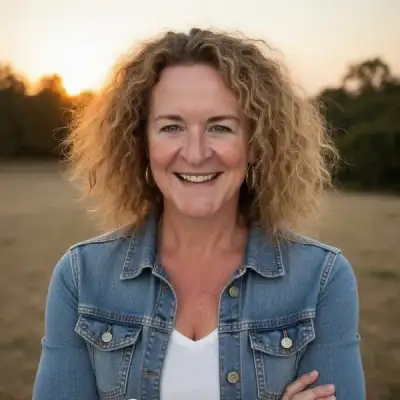
The Peri & Pause Podcast is for women in midlife who know something in their body has changed—but haven’t been given real answers, or have been left overwhelmed by conflicting information.
Hosted by Jamie Gallagher, DNP, FNP-C, MSCP, a nurse practitioner specializing in perimenopause and menopause care, the show explores hormones, metabolism, mental health, sleep, sex, weight changes, and chronic conditions through an evidence-based, deeply practical lens. We unpack the physiology of midlife alongside the lived experience of women navigating careers, relationships, finances, and identity during this transition.
Every woman deserves this conversation—and the clarity, language, and confidence to advocate for better care.
Because “Your Labs Are Normal” Is Not the Whole Story.
08 - Peri and Pause - Founder series part 1
===
[00:00:00]
Kristen: Welcome back to Perry and pause the podcast. I'm Kristen, a nurse practitioner here at Perry and pause. And today's episode is a special one. We are wrapping up our nurse practitioner series and transitioning into something new, our founder series, and there's no better place to start than with the person who built all of this.
So today I am sitting with our founder, Jamie Gallagher, to talk about her journey into nursing. What led her to become a nurse practitioner and ultimately how her own experience with Perimenopause revealed what she now believes is one of the biggest gaps in healthcare. We're also going to talk about what makes the care we provide different, what she finds most meaningful in both patient care and building the business and where she sees the future of midlife women's health going.
Jamie, I'm [00:01:00] so excited to have this conversation with you.
Jamie: I'm so excited too. Thanks for sitting in the seat. Switcheroo here.
Kristen: Yes. Yeah. It's exciting. Yeah. Excited to hear from you. Um, so starting out, just take us back to the beginning. What led you into nursing?
Jamie: I would say what led me to nursing was. Early on I was fascinated by science, um, the human body. Um, I remember being in seventh grade in Wilkes County. Yeah, that's a blast from the past specifically. And I was thinking about how to answer this question.
Mm-hmm. I had a science teacher, her name was, I believe, Alyssa Eller. And when we went to the human body in our science class, I was fascinated by it. My mom at the time was going to nursing school as well. Okay. So I think. When I look back, I'm like, that must have been something that was impactful for me.
Mm-hmm. I had a love for how the body works and she was going through nursing school and she had her books out and we would talk about things. I remember her taking me to some [00:02:00] of her classes. Um, so going through high school again, still loving biology, loving anatomy. I thought, I think I wanna be a biology and anatomy teacher.
Mm-hmm. I went to North Carolina State. For a year, and then was just like, you know what I, I don't want a degree. Mm-hmm. I want a career. Mm-hmm. I want a profession.
Mm-hmm.
So I transferred to University of North Carolina at Wilmington and. I decided to become a registered nurse, worked in critical care for well over a decade.
Um, so that was kind of where, where nursing started for me.
Kristen: Yeah. Well, I know critical care background. I'd love to hear more about how that shaped what you do, but Yeah. Um, so what got you into, or what made you interested in becoming a nurse practitioner? Take that next step.
Jamie: Yes. So back up to late high school.
Early college. Again, I was thinking about this as well, like. Where did I first learn what a nurse practitioner was? Mm-hmm. Mm-hmm. And there was a, um, I was [00:03:00] sick, sore throat, whatever. And I went to my doctor's office and the woman who treated me was a nurse practitioner. Mm-hmm. And she told me my name is, I wish I could remember her name.
And I'm a nurse practitioner. And I specifically said, what is that? Mm-hmm. Because I was still, at that point, I was, I had nursing in the back of my brain. Mm-hmm. But I was still, um. I had not yet transferred to UNC Wilmington, and she told me what it was. And I remember at that time I was like, I can do that.
Mm-hmm. And then I put it away for years. Yeah. Mm-hmm. Um, working in critical care at New Hanover in Wilmington, um, we had such a fantastic team. Mm-hmm. And constantly. Always on alert. Yeah. Always. Um, waiting for the next physiologic change mm-hmm. In the patient. Negative or positive on it. On it. On it.
Mm-hmm. And I learned so much from the physicians, the residents, the, um, PAs, the mm-hmm. Nurse practitioners that worked in the hospital and we were such, such a good team. Mm-hmm. And again, at that point I was like, [00:04:00] I think I want to go beyond bedside care and start influencing the decisions in healthcare to directly impact patients.
So that's when I applied to u UNC Wilmington's Master's program. Mm-hmm. Um, loved that. Got a fantastic education. Um, and then. Fast forward later. When our family was stationed in Germany, I decided I had the time, um, and the desire to go back and get my doctorate of nursing practice. Mm-hmm. Um, which is an additional layer of leadership organization, systems management, um, got that through UNCW as well and feel and or felt and feel very prepared to, um, do what we're doing today.
Mm-hmm.
Kristen: Awesome.
Jamie: Yeah.
Kristen: Um, so you've worked in a lot of different areas of healthcare. Yes. Um, what were you noticing over time that led you to question how care was being delivered?
Jamie: So we'll just stick with, [00:05:00] um, the nurse practitioner side of things.
Kristen: Mm-hmm.
Jamie: I loved critical care, um, confident in critical care, then still confident in how critical care is delivered today.
Kristen: Yeah.
Jamie: Um, it's the time and the relationships and how. The business side of healthcare kind of handcuffs us
Joe Woolworth: mm-hmm.
Jamie: To how much time we can spend with a patient. How many complaints Yeah. We can allow a patient to speak of if it's more than three.
Joe Woolworth: Mm-hmm.
Jamie: You know, they'll be, you need to pick three topics to talk today.
That's like removing the, the humanity out of that. Um. To check off care gaps, to meet metrics, to be valued on production. That is a very business part of it, and it can be fulfilling, but it's not fulfilling unless that relationship or that interaction that you have with that patient across from you is top notch.
Mm-hmm. Who cares about the gaps, the metrics, the production, when it is the patient sitting across [00:06:00] from you needing that care and you having the ability to deliver it the way you want to deliver it.
Kristen: Yeah, I know it's difficult for the patient side and the provider side. Yeah. 'cause you wanna do more. Um, but was tell me more about, you know, was there a moment that made you feel like that wasn't aligning with the type of provider that you wanted to be?
Jamie: Yes. That's a really good question. I probably can't put my finger on an exact time.
Kristen: Mm-hmm.
Jamie: Um, because I felt like I was able. To do both moderately well, yeah. But what that did was take time away from my home life.
Kristen: Mm.
Jamie: Because I would be fully present with the patient in the room rather than my face down in the computer.
Right. And if I ever was in a face down a computer, if they were a patient that remembers that, I'm so sorry. Um, but. It would segue into my mornings being up at four 30 or five to finish the charts for the previous day. Yeah. Every Saturday. Mm-hmm. [00:07:00] Maybe Sunday I wouldn't do that. Mm-hmm. So I tried to, to balance that, but um, it became more clear to me the more focused I became on midlife women's care and menopause because when I was working for a large health organization, patients that had other primary care providers within that system.
Would ask to come see me by, you know, from their neighbor or even from that clinician, Hey, um, let's get you started here. Jimmy Gallagher can see you for this. Mm-hmm. And fortunately they, um, the organization would allow me to do 40 minute visits mm-hmm. With these women. But it was just. That still almost wasn't enough for the whole Let's start from top to bottom.
Yeah. So you can understand you. Because a lot of times these women were coming in with, my neighbor sees you, and she was telling me that I might be in perimenopause, so. Mm-hmm. What do you got? I've never even heard the word. Mm-hmm. Perimenopause until my neighbor said that. So we have to start from, from scratch, like where you are now, why this is a thing, and then why isn't [00:08:00] it a thing?
Yeah. Like why
Kristen: Right.
Jamie: So why does nobody do this? Right. And, you know, we can talk circles around the, the lack of education and things like that, that have contributed to this gap in healthcare. Mm-hmm. Um, but I would say it really became apparent when there was, there was that missing gap. And I was trying to fill that gap in a system that didn't allow for time.
And it doesn't allow for time because of money.
Kristen: Okay. Yeah. You've also shared that your own experience with perimenopause played a, a big role in this. Um, so what does that experience look like for you both as a patient and then as a provider?
Jamie: Yes. So as a patient, um, I had difficulty finding answers that I thought maybe someone else knew, and it was just me.
Kristen: Mm-hmm.
Jamie: Mm-hmm. Um. And then when I realized the providers that I went to didn't fully understand that. Super supportive. Yeah. That may be it. Hey, let's try this medication, or let's try. This lifestyle change that really wasn't making a difference. And as a [00:09:00] provider I was like, well, I'll take that back and I'll figure it out myself.
Yeah, right. So going through and literally doing research and I mean doing research, um, and finding evidence scattered all over and not in one place. Yeah. It was refreshing to me. Um, but it also made me frustrated with how the system is like, oh, it's out there. Mm-hmm. Stop saying, oh, we don't have research.
Mm-hmm. There's research out there. So putting it all together, all together, all together, um, helped me feel less, like, oh my gosh, all these things are here. Right. And look at this pattern. Yeah, look at this pattern.
Oh my gosh. So it is a pattern. It's connecting the dots and being able to see. This as an integration, rather than seeing it in body parts. Palpitations, go to cardiology. Oh, you're gaining weight here. You know, you need to exercise more and eat less, which that doesn't work. And I've said it in multiple podcasts.
Kristen: Yeah.
Jamie: Um, your hair loss here. Take this medication. What's causing it? Well, I don't know. Maybe your ferritin's [00:10:00] low. Oh no, your ferritin's fine. I don't know. Just try this and let's go from there. So again, I, I stand by the fact that clinicians are well intended. Mm-hmm. And know, we know what we know, but at some point we stop here and that's when another specialty subspecialty or even another clinician can come in.
Kristen: Yeah. I know that you experience it as well and a lot of women that we work with too, they'll say they just have been around all the specialties. 'cause it shows up all over the body.
Jamie: Yeah.
Kristen: Um, was there anything specific missing in the care that you received that made you wanna, you know, dig deeper?
Jamie: Yeah, absolutely. It was the fragmented part of it.
Kristen: Yeah.
Jamie: Okay. It was the short amount of time and
Kristen: mm-hmm.
Jamie: Just. Body system. Body system. You know, here's a pill for that, here's a pill for that, here's a pill for that. Mm-hmm. Um, so the desire to change it came when I wanted to understand. Mm-hmm. I didn't understand, and when I did understand, it became my mission to mm-hmm.
Every woman, every [00:11:00] partner of every woman needs to understand what is occurring. That is physiologic. That is not in intentional, it just is. Right. Right. You know, and some women have. Worse symptoms than others. .
Kristen: And what point did you realize that this wasn't just your experience, that this is, um, a much bigger issue that is affecting women everywhere?
Jamie: Yes, I did that retrospectively. So when I began having similar symptoms mm-hmm. Trying to function, um, every day as a clinician military spouse, mom of four, um, trying to keep up with exercise, you know, you said that in your podcast. Mm-hmm. You know, being a healthy human is a full-time job. Damn fate. It is.
Yeah. So when I looked back, um, I had the. Opportunity to work at a women's health clinic. Mm-hmm. Um, my family and I were stationed in, in Germany for a few years and we moved back.
I was, um, just covering as needed for a large health organization. Then I finally said, Hey, you know, can I, can I land somewhere? Mm-hmm. [00:12:00] And this opportunity came up and you look back in life and it's like. Everything has truly, everything has a purpose. Mm-hmm. So I, when I was working at, at the women's Healthcare Clinic, it was an ob, it was primary care for women.
Mm-hmm.
With the gynecology focus. Right. Um, and, you know, missing, doing two week old checks and sports physicals and, you know, the, the geriatric side of things. Um, I. Learned so much in that setting, not only from the colleagues that I worked with there, but from those women. And I didn't know what I learned mm-hmm.
Until a year or so later. Mm-hmm. When I was, all these women's stories kept coming back to me and coming back to me and, you know, we were treating the same way we had treated for, you know, the couple of decades before. Right. Just kind of, you know. Fix this symptom, fix this symptom, fix that symptom, rather than, you know, dialing back and going, wait, let's, let's look at this from a whole woman lens.
So that, it was at that [00:13:00] point, my own experience, um, where I looked back. And thought, oh my gosh, now I see it everywhere 'cause I saw it then. Mm-hmm. I see it in me and I see it in front of me every single day. .
Kristen: Tell me more about what makes you feel strongly about this being the biggest gap in healthcare.
Jamie: It is because it is a little over 50% of the population from late thirties onward that is there. It's not, it might be in the differential, right? It is in the differential. Mm-hmm. Differential meaning the group of diagnoses. Um. That you can come up with as a clinician, right. Um, to treat and develop a plan.
So when you have half of the population experiencing something that's normal and natural, but impactful mm-hmm. To a huge degree for a lot of us, then that needs to be filled. Mm-hmm. Absolutely. Because it has a ripple effect to her relationship, her careers career, her, her children, how she feels about herself, her relationship with her parents, her [00:14:00] siblings, her daily living.
Um. And when all of that is affected, how can you not want to fill that gap?
Kristen: Mm-hmm. Yeah. And it's such a, you know, wide range of women too. I think a lot of people are unprepared to learn. It can, you know, start as early as your thirties, so that's a large portion of life for women.
Jamie: Yeah.
Kristen: Um, so how did all of this turn into per and pause?
Jamie: Oh my gosh, that's a really good question. Yeah. It started with me looking at my husband and said, Hey, I have an idea. That's his most favorite and least favorite thing that comes outta my mouth. Yeah. Um, so I, he actually was the one who encouraged me to do this. Mm-hmm. And he would say, well, when you start your menopause clinic, and I was like, whatever.
Um, but it, it sat on my heart for a long time and he was like, I'm serious. You know? Um, and he was so supportive and with, without that support, this would, would not. B.
.
Jamie: So, [00:15:00] um, with his encouragement and us just putting our heads together, um, I developed what I thought would be the best way to deliver this care, which is time.
Mm-hmm.
And relationships.
Mm-hmm.
And I. Don't know what else that would, you know?
Right.
What else would it take to have a, a really good practice by spending time and fully empowering your patients midlife women, um, and making it a very welcoming space where women come in and just when the door closes behind them mm-hmm. They just feel like, oh my goodness, someone is caring for me. Mm-hmm. Right. 'cause we do all the forward carrying, because that's what we do. We're, we're, um, we are mothers, we're sisters, we're daughters, we're friends.
And where do we go, especially in midlife when things, when we're trying to keep up that pace. And things back here are, um. Starting to glitch. Mm-hmm. Starting not to, to do well. Um, so [00:16:00] how do we put together a place that meets this need with evidence-based and evidence-informed treatment for the whole woman?
Um, and so that's how it kind of got started. And once that idea started rolling, I, um, consulted a few close friends and a colleague of mine and they were super supportive. Mm-hmm. All of them said, well, get ready, it's gonna blow up. And I was like, sure. Okay. We'll see.
Kristen: Yeah.
Jamie: You know, started in a bedroom.
Mm-hmm. And then, you know, a month later I'm like, we need a space.
Kristen: Mm-hmm.
Jamie: So here we are.
Kristen: Yeah. I remember working with you in family medicine mm-hmm. When it was an idea.
Jamie: Yes.
Kristen: And thanks for
Jamie: remembering
Kristen: that we talk about it here and there. And I, I remember telling you, let me know I come back and give a job when it, when it is.
Yes. You know, not just an idea. [00:17:00] [00:18:00] What did you wanna create? Tell me a little bit more about what you wanted to create that was different than a traditional healthcare setting.
Jamie: Yes. I wanted it to be driven by the patient's needs.
Kristen: Mm-hmm.
Jamie: That would probably be the biggest thing I would say.
And also, well, what I told you and every nurse practitioner that works with us, what is most important to me as the lead, um, or builder of this. Practice is that number one, our patients feel cared for. Mm-hmm. Um, validated [00:19:00] fully and that our nurse practitioners feel cared for, validated, fully supported in their career.
So it's twofold. Um, it's patient care and clinician care. Mm-hmm. Which I think is just as important as the care of the patient.
Kristen: Mm-hmm. Yeah. Um. And kind of switching gears here, but there's so much information out there about hormones mm-hmm. And midlife health. Um, how do you define the care that we give at Perpa?
Jamie: Yes. I define it as whole woman care. Looking at it through the lens of the perimenopausal woman and the menopausal woman. Mm-hmm. And not leaving that off the table. Right. Like I said, it has to be first and foremost, that is the lens you need to look through as a clinician for any woman, late thirties and mm-hmm.
Older, you must look at her through that lens. There are other things that, you know, she's dealing with where chronic conditions start coming up, other things from [00:20:00] the past, all of that, and those can't be overlooked. Right. So we, we don't do. Hormone care. Mm-hmm. We do whole midlife women's care surrounding perimenopause and menopause.
Right. And I think that's what differentiates us because we're not a hormone clinic. We are essentially not primary care, but we do primary care. Mm-hmm. Um, we will not overlook abnormal labs, abnormal imaging. Um, I. We will refer to specialists. If it's a primary care issue, we will manage that because we are strong in primary care.
If you have a primary care, care, um, provider, we will collaborate with them. Yeah. Um, and make sure that all of your clinicians are communicating and that you're getting the best care everywhere.
Kristen: Right? Yeah.
What would you like women to understand about the difference between true comprehensive care for a midlife woman versus what they may be hearing somewhere else?
Jamie: I think it incorporates genuine listening and [00:21:00] understanding and validating what they're experiencing. Um, we don't just treat symptoms you present with, we seek out. Potential problems that you will be dealing with. Right. Example, we'll check your fasting insulin. Mm-hmm. And your A1C, which these are diabetes tests.
Your A1C may be normal. Yeah. Your fasting glucose may be normal, but if that insulin is elevated mm-hmm. Borderline high, we're having a conversation. Mm-hmm. It's not just, oh, your, your mood is low. Let's try this medication. Let's, why is your mood low? When did this mood change? Mm-hmm. Has it always been like this?
Is this situational? Right. Is this, you know, your underlying perimenopause on top of situation. Yeah. Which, which is like pour gasoline on a spark.
Kristen: Yeah.
Jamie: So the comprehensiveness is not just what you present to us. Mm-hmm. It is what we seek out in anticipation in true preventive fashion.
Kristen: Right. Yeah. And, and I think also really trying to get to the bottom of [00:22:00] something versus just putting, you know, almost a bandaid on things.
Jamie: Yeah.
Kristen: Um, but
Jamie: waiting for a, a lot of patients will come and say, well, I'm not quite this, so
Kristen: Yeah.
Jamie: I can't be treated until I'm this. Mm-hmm. Let's, let's not even go there. Right. Let's not get there. Right. That's the whole point, right?
Default_2026-04-30_1: Yeah.
Kristen: Yeah. Let's be proactive.
Jamie: Right.
Kristen: Um, okay, so tell me about the most rewarding parts of the work that you do with patients every day.
Jamie: Yes. My visceral instinct is when a woman comes back and says, you saved my life. But also seeing this grow.
Mm-hmm.
And, you know, a problem to have is what my husband always says, this is a problem to have. I'm like, yes, it is. Seeing it grow, seeing women truly feel cared about and loved.
Mm-hmm. I don't know what other word to say. Yeah. Um, and I think that is probably the most rewarding. Yeah. Dude, I changed my patch last night, Joe. What the hell? Hold on. Woo. Lord. I'm freshly hormone. [00:23:00] What the fuck that was anyway. Okay.
I cannot show my human side.
Kristen: . Somebody has to cry on the podcast. Lemme
Jamie: cry with you.
Kristen: Um,
Jamie: but, okay.
Kristen: Okay. So are the, tell me about some moments or stories that remind you of why you build this.
Jamie: Just generally speaking, um, women will come back and say, you know, I, I told my book club about you. Yeah. Oh, my best friend is seeing you, you, us. Um positive feedback that I get on all the nurse practitioners who work with us. Like I have women that are, she, there's one in particular, and if she's listening, you know who you are.
She's like, I don't refer you to anybody. She said, because when I want to see you, I want to see you. She goes, I just tell them to come see anybody they want. Mm-hmm. And that you truly have. Handpicked every nurse practitioner because like, you know, we have emotional intelligence. Mm-hmm. You know, everyone that joins us, the emotional intelligence, the listening, just the core of who you are as [00:24:00] clinicians are what is building and growing.
Um, this practice, our model, our, our mission, vision and vision and values. Mm-hmm. Um, those are so, so important to me.
Kristen: Yeah. Um, so on the business side then, what has been the most fulfilling, um, for you as you've built Per and pause
Jamie: From a business standpoint, as an entrepreneur, which I never saw myself mm-hmm. Becoming, oh my gosh. I was a nurse practitioner two years ago, and then bam, all of a sudden an entrepreneur.
Um, so from the business standpoint is coming up with something that is driven by passion.
Kristen: Hmm.
Jamie: You feel like you cannot not do before you die.
Kristen: Yeah, right.
Jamie: Like taking that, making a model and going with what you feel in your soul is best and getting feedback from patients and, and you guys and all of us building this together, it just lets me know that, that [00:25:00] the business of it is serving its purpose, which is the biggest goal for me.
Kristen: Yeah, it's been very exciting to be a part of.
Jamie: Thanks.
Kristen: Um, what have you learned about yourself through this?
Jamie: Wow. Imposter syndrome is real people. Yeah. Um, I have learned. That I can make a bigger impact. I, I used to pride myself on that one-on-one interaction in the room, and I absolutely still do. That's the core of everything I do.
And I sit across from another woman and we share. Mm-hmm. There's not a woman sitting on an exam table and then me sitting on a little, you know, rolly stool. It's a deep conversation and a comfortable. I say dimly lit room, but a room that, you know, there's no exam lights bla blaring at you and we have that, um, that deep connection.
Kristen: Yeah, it's okay. Much more comfortable situation than, you know, being half naked on a table
Default_2026-04-30_1: Right.
Jamie: With Right. And talking
Kristen: a piece of [00:26:00] paper wrapped around you.
Jamie: So Yeah. That's stuck up under here. Yeah. You know, and you're like, but I, I have a question. Do you test hormones,
Kristen: right?
Jamie: Yes, we do. Girl, let's talk about the hormones first. Mm-hmm. I need you to understand the hormones. Mm-hmm. And, and what testing shows us and what it doesn't, so we can make a fully informed decision. And you feel like. You are 100% a part of it. Yeah. That I am not dictating to you or, or, or poo-pooing this or that.
Yeah. It's, you know, it's, we're one team, one fight.
Kristen: Yeah. Yeah. Um, what are some of the biggest challenges that you see in the space today?
Jamie: Absolutely. The misinformation that still surrounds every thing. Mm-hmm. About midlife women's care. I mean, I, every week I'm gonna start, maybe not a podcast series, maybe Facebook, something that says what women told us this week.
Yeah. I keep bannering that around. They will come in misinformed. They will come in with tiktoks, they will come in. I am so bothered by the number of women who come back and say, I went to my clinician, whatever specialty, and I felt shamed. I felt [00:27:00] like I have done something wrong. Being on my nice little generic estradiol patch and my nightly progesterone or my clinician made me feel, yeah, like.
This was wrong, but a, a handful of them have said. And again, you guys know who you are, have said, well, I told her or him I came to you about this a year ago. Yeah. And you told me I just had to get through it. Yeah. Or you offered me just a birth control pill and said that it, that was it.
Kristen: Right.
Jamie: And so that is the most frustrating
Kristen: Yeah.
Jamie: Is that we, we do such good deep work. Mm-hmm. And when they go out confident and knowing what they know, and this is absolutely evidence-based and evidence informed. And someone on the other side tries to either take that away from them. Mm-hmm. Why would you take that away from them? Why would you not also be curious about that?
Yeah.
Right.
If, if, you know, menopause is having a moment and it is, and you treat midlife women, I don't care what specialty you're in, learn something about it.
Yeah.
Learn about the safety of hormones. Learn about the [00:28:00] fact that the Women's Health initiative was a misinterpreted study that the media went crazy with and it derailed decades of women's health.
Understand that, that. Was almost statistically significant. So interpret those words, however you want to interpret them. Mm-hmm. Do not shame a woman mm-hmm. For getting solid menopause care. Yeah. And I, I, I think it comes from the other, there are other spaces out there that make promises about hormone treatments and things like that without.
Understanding true midlife women's physiology. Yeah. I think But we are not going to be blended with that. Right. We are midlife women's care. Yep. Surrounding perimenopause and menopause. And that is what we do from a primary care lens from, um, adult gerran, nurse practitioners, family nurse practitioners, women's health nurse practitioners.
Mm-hmm. Like, this is a mission. This is not a, a business, I guess I would just say. Right. So that, yeah. It's frustrating every single day. Um, I feel like I get so defensive when a woman comes in and [00:29:00] shares that experience, especially with a clinician that she has trusted. And a lot of them will say, they delivered my babies.
I love them. But when it came to this, I don't know if I want to go back. And that should say something to the bigger picture of healthcare.
Kristen: Right. It's, it's a lot of empowering, educating. Yeah. And I'm so proud of these ladies when they're able to go back me and, um, have these conversations with their other clinicians.
Yeah. Um, why do you think there's still so much confusion though?
Jamie: It's the lack of education. It's still the lack of education. Um, we met a gentleman a couple days ago, Stu and I, and he said that his. Son-in-law, nephew, cousin, something like that. Just graduated from PA school. Yeah. At a local university.
And when he and his wife are talking about menopause, they're huge menopause like share the, they're not clinicians. They own a small business in Fuqua. And they share all that she has learned, um, in this space. [00:30:00] And they said, he was like, wait, what? And he scrolled around looking on his phone and was like, I didn't learn anything about this.
We're still there.
Joe Woolworth: Yeah.
Jamie: But I'm confident. I know it's changing. It already is changing. We're gonna contribute to Right. Clinician education, that's something coming down the road. Mm-hmm. Um, so that is, that's why we are where we are. Mm-hmm. So if a woman is coming to you as a clinician, I'm speaking to clinicians now, you need to listen to her.
Understand that. And if she's sharing something with you, take the time. Rather than just firing off, take the time to go and actually research that. There is research out there supporting this. You just have to find it.
Kristen: What are the core values that guide how you and our team care for patients?
Jamie: I would say core values are integrity.
Kristen: Mm-hmm.
Jamie: Respect for our patients, for ourselves, um, and practicing from a place of humility [00:31:00] coupled with deep knowledge.
Kristen: Mm-hmm.
Jamie: I would say we put those together and that is, um, probably from a values perspective, those would be most important to me.
Kristen: Um, you mentioned that a couple years ago you weren't sure what your purpose was. How has that changed?
Jamie: Yes, um, it has changed because starting this practice with my idea of what it could potentially become has become even more than what I thought it could become, if that makes sense.
Um, and getting that feedback and knowing at the end of each day we are making a difference and improving lives and honestly, what else? Is there.
Kristen: Right.
Jamie: Because it's fulfilling to me when our women and our patients are fulfilled. Right. So that is that has I, I understand my purpose at this point in my life now.
Yeah. Which is huge. And I'm super grateful to be able to say that,
Kristen: Hey. [00:32:00] Um, so where do you see Perpa going from here
Jamie: up? No. Um, just continued growth. Mm-hmm. We will not stop growing. It will if there's ever not a need. Mm-hmm. We, that's when we stop growing. I don't see there will ever not be a need, like a new menopausal woman is born every day.
Mm-hmm. Um, um, and, and the number of clinicians that. Specialize in our fully, um, knowledgeable and trained on this are very limited in number. Mm-hmm. So we are going to do nothing but move forward and grow and keep our model as it is because it's working. Mm-hmm. Um, I, I want, um, change that because I want to keep it at the level that it is.
Kristen: Right.
Jamie: Yep.
Kristen: Um, and, and so more broadly, what changes do you hope to see in the future of women's healthcare?
Jamie: Yes, absolutely. Um, first and foremost, education of clinicians. Um, I think women are educating themselves through [00:33:00] shared stories when woman learns something that she knows is right mm-hmm. And she shares with multiple other women, and it just continues to go from there.
I think it's super important. Um, that when a woman sees a healthcare provider in midlife, that it needs to be a base. This woman is having neuroendocrine cardiovascular changes as we speak, and I cannot not look at her without keeping that in my vision. Mm-hmm. Um, so I think education on the clinician side is huge and it needs to be occurring much more rapidly than it is now.
Kristen: Jamie, thank you so much for sharing your story and your perspective. I think what stands out the most is not just the care that you provide, but the intention behind it.
Jamie: Yeah.
Kristen: Um, and the commitment to truly understanding and supporting women in this stage of life. If you are listening and you have ever felt dismissed, confused, or like something just wasn't adding up with your health, you're not [00:34:00] alone. And there are answers at per and pause. We are here to provide evidence-based individualized care for midlife women.
Thank you for joining us on this episode of Perry and pause the podcast and we'll see you next time.