Subscribe
Share
Share
Embed

Margin of Thought is a podcast about the questions we don’t always make time for but should.
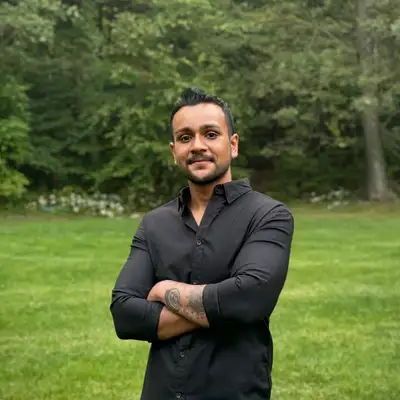
Hosted by Priten Soundar-Shah, the show features wide-ranging conversations with educators, civic leaders, technologists, academics, and students.
Each season centers on a key tension in modern life that affects how we raise and educate our children.
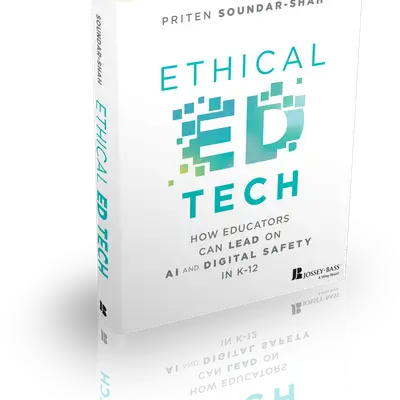
Learn more about Priten and his upcoming book, Ethical Ed Tech: How Educators Can Lead on AI & K-12 at priten.org and ethicaledtech.org.
[00:00:05] Priten: Welcome to Margin of Thought, where we make space for the questions that matter. I'm your host, Priten, and together we'll explore questions that help us preserve what matters while navigating what's coming. Today I'm speaking with Shon Holland, a middle school science teacher. Shon's journey from Hazardous Waste Management to education gives him a unique perspective on risk, responsibility, and what it means to trust students with powerful tools. This conversation explores the constant titration required of teachers balancing freedom and discipline, trust and surveillance, the need for connection and the reality that parents called are in class. Let's get started.
Shon: Shon Holland, I teach at Sells Middle School in Dublin, Ohio. It's a second career. I worked for an environmental company, an incineration company dealing with hazardous waste for about eight to ten years.
[00:01:03] And ended up at OSU working with their environmental health and safety, and eventually became a state employee. I decided to make the jump and work for OSU, which coincided with my newfound passion for education. So I went over to the public sector because I could get my extra teaching classes while still working. Travel was part of it, and it was about twenty years ago when we weren't quite to the point where we had online classes of that magnitude. Then right out of my student teaching, I was at Scioto High School. I had enough of the admin and central office coming in to observe, and I was lucky enough to score an interview and got placed in middle school.
[00:02:04] All my teaching experience as a student teacher was at the high school level, and I was a little apprehensive. But I've taught seventh grade, eighth grade, some biology, some physical science, and I have to say seventh and eighth grade are probably where I belong.
Priten: Yeah, middle school is my favorite population to work with in any context. In general, they're at the right level of excited about the world, not yet as jaded as high school students, but you can still have real conversations with them. You can talk to them like young adults at that point, which is nice. So yeah, I've thought about that question a lot. If I went to the classroom, I think that's the right age group to have a lot of fun with. Before we talk about you as a teacher, I'd love to hear about you as a student. Do you remember your earliest memory of technology being used in a classroom, or your strongest reaction to technology as a student?
[00:03:08] Shon: I went to a very small school out in the country in Walbridge, Ohio. I think I had eighteen people in my class at most, and that was all the way through eighth grade. But I can remember about fourth grade when they brought us into what they called the computer lab. There were about six monochrome monitors—I believe they were IBMs at the time—and they taught us BASIC. I was like, what is this? You can make pictures move, but it's typing. I mean, just code. And the biggest update was when you could change it from gray to green to orange font. It was like, oh, there's these things called computers. Okay. And then in high school we kind of dabbled in it, but it wasn't much.
[00:04:02] And then when I was in college, I remember my roommate coming back saying, "You've gotta get an email address." And I'm like, what? After that, it's like AI today—an email address and the next thing you know, if you don't have one, you're light years behind everyone else. Employers aren't calling you. They're sending emails. You're attaching documents. It just exponentially grew from there in terms of possibilities.
Priten: Yeah, that's one that no one has shared yet—the transition from no emails to emails. But that is a pivotal moment for every industry.
[00:05:05] Shon: Well, I believe it truly removed borders to an extent. You could communicate with someone almost instantaneously. At the time it probably took a few seconds to get from New York to California or whatever, but you didn't have to pick up a phone anymore. And it was just crazy. Then you have AOL and all of that coming on board. I think that's when people went, "Holy smokes. What is this going to turn into?"
Priten: That makes complete sense. When you think about what it has turned into—we're jumping to modern day now—how do you feel about the current transition? You alluded to the AI transition. Do you think it's similar, or do you think there are some differences?
[00:06:06] Shon: I think it's similar in the way that it's removed boundaries or obstacles. I definitely see the potential for misuse. A middle school student can misuse a ruler, a pencil, a desk, a chair—just another object for them to play with or misuse. But I think that's the part I actually enjoy as a teacher: saying, "Here's this tool and I know we can all find things to do with it that are wrong. How do we make it work for us?" When you get students into that mindset where it's actually helping them become educated and learn, especially about a topic they may not be fully interested in or pursue as a career, that's when I see the true power being unlocked with AI.
Priten: When you think about that misuse component, let's focus on the negative for a second. What are your concerns? We hear a lot about cheating in the public narrative. But as a middle school, there are probably broader concerns, right? I'd love to hear what the landscape of misuse looks like in your head.
[00:07:05] Shon: I mean, it can go anywhere from taking homework and typing it into AI to get the answer—which might be correct—but you actually want to know their comprehension. I try to promote with the students that it's not learning my exact material. It's you learning how to learn. That's the ultimate goal. Science is just the conduit that gets us there—a means of delivery.
With AI or the internet, if you ask teachers from years ago, they'd see calculators the same way. "How do you not know your times tables?" I look at AI as a resource, but obviously in the wrong hands, it can be misused. You tell the kids, "Hey, we're gonna use AI and look up potential energy and kinetic energy." The next thing you know, one of the kids is typing something not so kind about another kid and including potential and kinetic energy, and they're like, "Look what it gave me."
[00:08:09] Now you've got feelings hurt and you gotta take that with kid gloves. I can see where students are gonna mess up. They're students. But that's where I see parents, ourselves as teachers and educators, and admin guiding them. Anything can be used improperly. Writing papers, and as fast as AI is evolving, now we've got videos of people together that weren't even alive in the same decade or century. It's scary, but at the same time, that's just a tiny bit of what the potential is.
Priten: Yeah. When you think about incidents like a student using an AI bot to create a joke about a peer, do you get opportunities to have conversations with the students about it? Or do you find yourself having to quickly refocus the class—which is a reality with thirty students all hyper-fixated on what the AI bot said about the student? Do you get that opportunity to slow down and talk about productive or unproductive use of the technology?
[00:09:02] Shon: Personally, absolutely. I will stop the class for what I call "$5 of Mr. Holland's free advice."
Priten: Yeah.
Shon: And I walk through it. Now, I may not call out that student directly. I may not say, "You know, student A is telling jokes about student B." No, I may say, "Hey, listen, your assignment is x, y, z. I know that some of you are not doing that." And we actually have GoGuardian, which allows us to monitor screens and search history and all of that stuff.
[00:10:04] So I can say, "Look, I'm not saying you did it, but someone around you may have. I can run reports at any time, and I share them with you, your parents, and the principal." And I have done that—not necessarily on cyberbullying type issues, but on cheating on tests and quizzes. I share it with all three: the parents, the student, and the admin. I address it as a point of learning. You don't really need to do this. What did you do improperly? AI or the internet might be there, but in my opinion, you have to stop the class at that point and give at least a general lesson on what's going on.
And it comes down to rapport with the student. I've had students that are full of energy and they love attention when they get in trouble.
[00:11:00] I may treat it differently than a shy student with a friend in the classroom, or another kid who doesn't like to talk much but has a buddy with him. I may pull them aside after class. But if it's a kid that's more outgoing, I'll say, "Hey, what are you doing?" And they get the lesson. They kind of get an acknowledgment, so they get that rush from being in front of everyone. They welcome it. But that comes down to relationships.
Priten: Yeah. When you think about surveillance tools like GoGuardian and your rapport with students, there are folks concerned about removing the human from the equation when it comes to discipline in school systems. Because it misses the context like that, right? So if we just used GoGuardian to announce to the whole class who's misusing it, or if GoGuardian itself approached the student about the misuse, we would have very different implications for our classroom. So where do you see that line between complete reliance on human monitoring and discipline versus complete reliance on AI monitoring and discipline?
[00:12:04] Shon: I mean, it's definitely a balancing act. I use GoGuardian or any of the monitoring tools—we've had a couple here and there. Usually I would have it up during quizzes where I'm actively watching their screens. If you're a teacher and say you don't multitask, you're probably lying. But typically I would use GoGuardian when an answer seems off, or it doesn't match that child's writing style or level. I've seen things written way above their level and things way below what the student should be writing.
[00:13:05] That's typically where I would bring it in. I also know there are filters you can set up, and I always try to run it from a "what is allowed" standpoint rather than blocking. If I tried to block every gaming site, it's a constant cat and mouse game. Every new site that comes up, I'd have to add it. So I tell them at the start of class: I use GoGuardian. When you're in my class, I allow these sites, and then I add as the activities for that day or week require.
The number one request is, "Can I get on YouTube?" Nope. It's an instant no. I tell them it's not personal, but I have music playing in the background. I cannot work in complete silence, and I don't expect you to. But it's also not going to be top forty hits so loud that we can't hear each other.
[00:14:07] The first couple times we get some rumblings or another teacher will say, "Yeah, sure, I don't care." Then they'll come back and say, "Well, so-and-so lets us." I'm like, "That's great. I'm happy that's a privilege you have." But when you look at GoGuardian and the way it can instantly shut things down, there are times where I do need YouTube accessible. I'm going to turn them loose on the entire platform allowed by our district filter because they may be looking for real life examples of science—maybe one of their influencers shot a video and if they can bring that in, I definitely don't want to squash that little bit of desire.
Priten: Yeah, so it sounds like there's a lot of titration you're doing between allowing and not allowing, disciplining and not disciplining.
[00:15:06] And that takes a lot of active energy on your part. There are so many things you're already titrating when you're in front of a classroom: the loudness of your voice, watching students using cell phones when they're not supposed to, whether there's a vape pen in the room—just the number of things you're responsible for keeping track of feels like it's getting longer and longer. How are you feeling? I'm generally curious about that.
Shon: I taught through COVID where we did remote and hybrid with the same schedule every other day. You'd repeat it: you'd go through and teach three classes, but it would take five days to do it because of the staggering of AM and PM schedules.
[00:16:00] It's a lot. But at the same time, I think the more responsibility you put on the student, the more that especially seventh and eighth graders are ready. They want to go to high school. High schoolers want to know what I should do next because I want to go to college or be done with high school. Seventh and eighth graders early on, when you give them responsibility and show them a little bit of trust—toward the end of the year, YouTube might be allowed for this student or that student. I may have allowed it for a third student, but they spent forty minutes out of their study center on YouTube and now they're asking me questions about homework they should have been working on. Well, now you've got a consequence.
[00:17:02] The more responsibility I can give them, the more freedom they give me while I'm in the classroom. If I can go over and talk to a student struggling with a concept and they're still engaged across the room, everybody wins. But if you don't want to be on task, we're going to go through this worksheet one number at a time. I will drag it out just for that moment, and you'll see the eyes roll, bodies fall onto the desk. "Are we done yet?" But if you do that for five or ten minutes, I'm like, "Do you like that or can we do what we should be doing?" "Oh, I'm so sorry. Please don't ever do that again." All right, let's go.
I can see the constant distraction. I hear it in the teacher's lounge, and kids know what pushes buttons. Kids know what buttons to push that will get certain teachers to break, and they use that.
[00:18:00] That's part of being an adolescent. But I think if you build that rapport and give them consequences where they don't resent you, that's where you take the weight off your own shoulders.
Priten: Yeah. The other thing I'm thinking about as I'm listening is how folks will talk about how every classroom is different and we need to not make policies across the board. The folks who know that know it, and the folks who don't listen, don't listen. But there's so much uniqueness and nuance to how you're approaching situations. It also takes a lot of skill and effort. And sometimes it's nice to have a clear policy across the school to deal with a problem. What would you suggest to a building trying to figure out that balance?
[00:19:00] Shon: When it comes to cell phones, personally, I understand. I have four boys. I understand wanting to have contact with them in an emergency. At the same time, as a personal witness to the amount of distraction it can cause, I see the issue. Some parents will call during class. That's definitely an issue. Let's say there was some sort of emergency where you don't ever want to be in a shelter-in-place or a hold where there's danger in the building. If your room is dark and that cell phone goes off, now you've got another issue. I wouldn't want that type of responsibility. It would be devastating.
But I do think having them in the building is necessary. If you were to say no cell phones on school property as a blanket statement, that seems ridiculous.
[00:20:02] There are no payphones like there were when we were growing up. The number of students that need to call for a ride or need to be reached—"So-and-so's gonna pick you up, or you're gonna go home with Johnny because they live two doors down"—that's an obvious need. I think keeping them in the locker is a totally fine solution. But the next discussion comes to what do you do when they're not in the locker? That's the part that gets really complex.
These devices can cost five hundred, one thousand, fifteen hundred dollars. I can't afford to be throwing thousand-dollar phones to my children and having them accidentally break. That's the liability piece that parents want to put on the district.
[00:21:00] The district will turn around and put it on the teacher. "Well, you took this kid's phone, they took it off your desk, it fell, and the screen broke." I haven't had that happen to me, but personally I'd be like, "Okay, the kid dropped their phone," or what if I had it on my desk and a student knocked it off and cracked the screen? Now you're in a completely different scenario.
But as far as general policies, I do think parents have to somehow sign a waiver or release: "My child's gonna bring this to school. It stays in the locker. And that's the end of it." There's gotta come a point where responsibility can't constantly fall on the teachers. I think that's a scapegoat that just constantly gets abused.
Priten: Yeah. I have one more question for you if you have the time. I know we're at the end of the hour. Part of it is, you know, armchair discussions sometimes talk about how instead of taking the phone away from students, we need to teach them how to use it in a healthy way.
[00:22:07] As a middle school teacher, what is the reality of that?
Shon: So I'm kind of a science geek as an educator and a parent. A cell phone that can do what the typical iPhone can do isn't healthy for a sixth, seventh, or eighth grader. Hands down. We can get into dopamine. We can get into pseudo-ADD type symptoms with gaming. We can talk about blue light and circadian rhythm disruptions. The research coming out now is irrefutable in my opinion. They need to make dump phones—the old-fashioned flip phone, the Razr or whatever they were from Motorola. That's what I had in middle school.
[00:23:01] You can call. You might get a mean game of calling or something, but there's no Facebook, Instagram, Snapchat, TikTok. You don't even need a camera. And a lot of districts now are going with one-to-one devices anyway as far as Chromebooks. So that's where I'd say, "Well, I like to use it for the calculator." No, we have devices for you.
Priten: Right. Do you think parents would be receptive to this? You mentioned parents claiming they need to reach their child at any given hour, and there being some validity to that. But in general, if the research is conclusive, and the reality is parents aren't listening to that. Children are pushing back against it. Folks aren't listening to the research about general smartphone use in children. Providing that space within classroom settings feels like a need of the hour—just navigating that crisis.
[00:24:01] How do you get parents on board for that?
Shon: It's probably gonna sound old school, but you're the parent. You're looking at long-term success for your child, not temporary. You could pull one of any one of my four boys in, and I'm sorry, but when I make a rule, you're allowed to be upset. You can actually not like me for a few moments. I probably made a rule that went completely against all your fun, probably destroyed your entire ability to enjoy anything in the world for about three minutes. And then everything winds down. But I do think part of the problem is you don't want to be that one parent because your child's ten friends all have the new iPhone and they're allowed to use it as much as they want. As soon as you turn around and say they're limited to X amount of hours per week or day, they call out against you. You're like, "Well, you know, this other kid is a pretty good kid and they aren't restricted that much."
[00:25:07] You almost need to get parents to sit with like-minded parents and say, "Here's what we're gonna do." I listened to another podcast with three guys talking about health and fitness. He started getting a landline, and now all of his children's friends—he went to the parents before they even addressed it and said, "Hey, what do you guys think about us getting landlines? I'm not giving them cell phones." The other parents were taken back. They were like, "Oh my gosh, that's a great idea."
So they got landlines. Then the other family down the street got a landline. Now they all talk on the phone, having real conversations using words and voices, not crazy misspelled words in a text message. They've noticed a change in their overall wellbeing.
[00:26:02] Even just in communication skills.
Priten: It does seem that the answer to a lot of this is finding ways to make spaces that do not use the technology, right? Whether inside the classroom or intentional actions by parents or helping students carve out time for themselves. Because then it allows you to use it productively. You talked about productive use of this technology. You're clearly not someone who's saying, "Oh, let's move away from all tech."
[00:27:02] Shon: I love tech. Yeah, exactly. I mean, you look at different types of students. Technology allows me to differentiate and translate. I taught a class last year where I had five different languages and they were all beginners. I was able to give them instruction basically in unison. As I was typing, I made a sheet in Google that translated it into their languages, and they just looked at their columns or rows. You could hear them all in different sections talking in their home language about what we were learning. Technology is fantastic. AI is miraculous. We just have to know the time and place, and we have to know when to walk away. Sometimes you just need human brain power to go through something.
Priten: Yeah, that's a perfect note to end on. So thank you so much for everything today. Shon Holland. His practical wisdom about teaching middle schoolers, giving them responsibility, building rapport, knowing which students can handle attention and which need a quieter conversation reflects years of experience in the classroom.
[00:28:10] But what struck me most was his willingness to name what the research increasingly confirms: smartphones aren't healthy for sixth, seventh, and eighth graders. As Shon reminded us, AI is miraculous. Technology is fantastic, but we have to know the time and place, and we have to know when to walk away. After all, sometimes you just need human brain power. For more on when to embrace fantastic technology and when to walk away, remember to pre-order my book, Ethical EdTech: How Educators Can Lead on AI and Digital Safety in K-12. Thanks for listening to Margin of Thought. If this episode gave you something to think about, subscribe, rate, and review us. Also, share it with someone who might be asking similar questions. You can find the show notes, transcripts, and my newsletter at priten.org. Until next time, keep making space for the questions that matter.