Subscribe
Share
Share
Embed
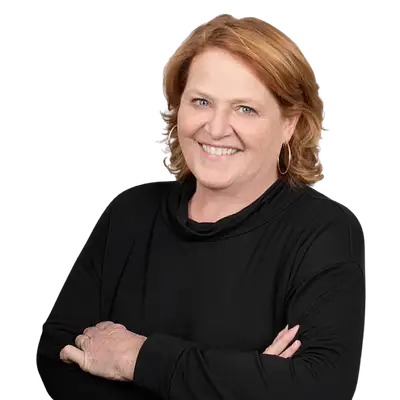
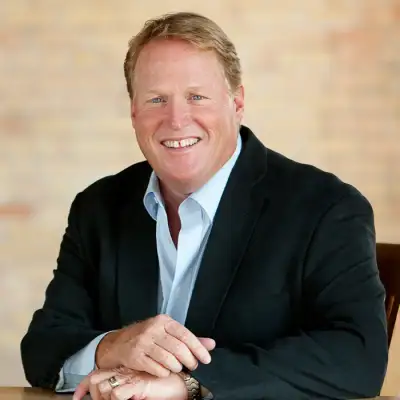
Former U.S. Senator Heidi Heitkamp and her brother, KFGO radio talk show host Joel Heitkamp, engage in animated discussions with newsmakers, elected leaders, and policymakers who are creating new opportunities for rural Americans and finding practical solutions to their challenges. Punctuated with entertaining conversations and a healthy dose of sibling rivalry, The Hot Dish, from the One Country Project, is informative, enlightening, and downright fun.
Heidi (00:01)
Welcome back to The Hot Dish. I'm Heidi Heitkamp.
Joel (00:04)
And I'm Joel Heike.
Heidi (00:06)
And we're really happy today to be joined by someone who is thinking and writing about the issues that are near and dear to us here on The Hot Dish. One of the reasons why we started One Country Project is to examine the urban rural divide and what we could do to bring the country back together. Suzanne, that's why we actually called our project The One Country Project, because we think that these artificial divisions are bad for democracy, but I think that they are artificial. And so...
Wanted to get your take on it. I want to introduce you first. Our special guest is Suzanne Mettler. She's a professor of American institutions at Cornell University and the author of Rural versus Urban, the growing divide that threatens democracy. Suzanne, welcome to the hot dish. And we almost met doing a urban rural conference in Notre Dame, but you got waylaid on the tarmac near as I can tell.
Suzanne Mettler (01:00)
That's right. never made it, but I'm thrilled to be here with you today, both of you. Thanks for inviting me.
Heidi (01:06)
Terrific.
So my first question is, you're in Cornell. Everybody forgets Cornell's in a pretty rural part ⁓ of New York, but still a great institution and one that everybody kind of recognizes. So why examine this topic? What got you interested in examining the urban-rural ⁓ divide?
Suzanne Mettler (01:28)
Well, I grew up in rural upstate New York. ⁓ And it's, you know, that area still means a whole lot to me. go back there a lot. I'm also, you know, where I live, not far from Ithaca. I'm out in the country a lot. I'm a cyclist, so I'm always out on country roads. And I began to notice some years ago that things just felt different in rural places in my state compared to when I was growing up. And
you know, when it would get to be campaign season, things felt much more divisive than they used to. And I became really curious about that. There's a wonderful political scientist named Kathy Kramer, who wrote a book about rural politics in Wisconsin that, you know, was very interesting to me. But it made me curious about what's happened in the country as a whole. You know, I've been for years studying how political polarization has grown.
but I became curious about how rural politics was playing into that. And so I ⁓ ended up teaming up with Trevor Brown, who was at the time my PhD student, and ⁓ he also grew up in a rural area in Ohio. So we really shared this interest and ⁓ during the pandemic, we got down to work studying.
Heidi (02:46)
Yeah, well, it's important work and it's the kind of work that, ⁓ know, academic work that kind of reinforces Joel lot of the lot of what you see every day talking to folks in rural America.
Joel (03:00)
Yeah, Suzanne, I'm a cyclist, too. I just do it with a Harley Davidson. So you're yeah. Mine's got mine's got a lot of CC under it. But Suzanne, when we talk urban rule, the one thing that is clear from the rural area is that the urban area doesn't understand them and they don't care about them, you know, that they just don't care. All they are is someone.
Heidi (03:05)
He doesn't pedal, he doesn't pedal.
Joel (03:29)
that you draw upon that you need when you need and that as far as their life goes, you don't care. We're just fly over space and I'm curious what you think of that.
Suzanne Mettler (03:40)
Yeah, that resonates with what we found. So Trevor built a big data set for us, all 3,143 counties in the United States. And we looked at them over time from the 1970s till 2020 to try to understand what drove the rural-urban divide. And it did not exist politically until the 1990s, the later 1990s. There's always been
differences between rural and urban places, socially, culturally, but we never had our politics divided in all regions of the country between rural and urban areas, and that's new. And so we studied what made it evolve, and I could tell you that in some detail, but it started out with economic change in the 1990s. And then in the 2000s, we got to the kinds of
of ⁓ reactions that you're describing, where rural people started to feel that the urbanites just didn't represent them and didn't understand them, didn't care about their communities, and were designing policies that they had to live by, but without having been consulted in the process. ⁓ So we see a sequential process through which this polarization emerged.
Heidi (05:06)
You know, so one of the things that I think is interesting is I tell Democrats, when you ask people in rural America, do they really understand your lifestyle? Do Democrats really understand you? Do they appreciate you? Their answer is overwhelmingly no. But you ask them, do Republicans really understand you? Their answer is overwhelmingly no. given the choice of two groups that aren't hearing you, aren't
that aren't reflecting your values or your interests, why pick the Republican Party? Why do you think that happened?
Suzanne Mettler (05:44)
So ⁓ this takes us back in history, actually. So ⁓ in working on this book, we went back to the New Deal. And this was fascinating for me because my first book in my career a long time ago was about the New Deal, but I at the time wasn't thinking about the rural component. So it was really fascinating to revisit it. And what we began to realize was that Roosevelt ⁓ put rural people front and center.
in his policy agenda and his priorities. And he built a big rural urban coalition. And ⁓ he really prioritized the needs of rural people ⁓ with all kinds of public policies, not just for agriculture, but also rural electrification, Tennessee Valley Authority, all of these things that really helped rural areas, which had been suffering from the 1920s, like even before the Great Depression.
really left way behind where urban America was at that point in time. And so ⁓ rural people really appreciated that and they remembered it for a long, time. And they passed and they were, they felt that the democratic party was the party that really prioritized their interests. And they passed that on to their kids, their grandchildren. And it lasted all the way up until
1990s and then because of various things that we study it disintegrated. so you know in the 1990s the economy really changed. It had already been changing with agricultural consolidation in the 1980s and then you had the loss of jobs in manufacturing in lots of rural areas to a much greater extent than I would have expected.
and the loss of jobs in mining and other extractive industries. And so you have all of these rural places that are losing jobs and losing population. And we found that it was those counties that moved toward voting for the Republican Party. And I think that what happened was it wasn't that the Republican Party was offering an alternative that was really focused on rural places, but it was
anger and disappointment at the Democratic Party because it no longer seemed to be doing so as it had for so long. I think, know, an example of this is NAFTA. NAFTA was a visible fight, very visible fight in the Democratic Party where, you had leaders in Congress who were opposed to it. President Bill Clinton, you the president is always the most visible actor in the political system.
Joel (08:07)
So.
Yeah.
Suzanne Mettler (08:25)
And he ultimately was in favor of it and ⁓ signed it into law. It passed in Congress with mostly Republican votes and then just enough Democratic votes to get it over the finish line. And then I think for a lot of folks around the country, they realized they were going to be losing jobs in their area during NAFTA. It became a ⁓ symbol of being deserted by the Democrats. Not that, I mean, it wasn't that
NAFTA was responsible for all the job losses. It was just one factor among many, but I think it was a highly visible.
Joel (09:01)
Yeah, well, thanks a lot for taking away my NAFTA question because I'm just joking. I think you're spot on. I mean, there's a couple of factors that I want to ask you about. Number one, the success of the Democratic Party, ⁓ you know, because it feels as though there wasn't much left to do. Excuse me. You have the farm bill. You have crop insurance that goes with it. You have Medicare, Medicaid. You've got Social Security.
Suzanne Mettler (09:05)
sorry.
Joel (09:30)
So all of those things that the Democratic Party for years had worked to put together, farmers really started taking for granted. And so a lot of those issues that I see come at me through the radio are issues like faith, issues like ⁓ you don't want to live here anyway. My hometown is getting smaller rather than bigger. ⁓ Issues where
You traded things away to us to other countries. ⁓ Speak to that if you will, Suzanne.
Suzanne Mettler (10:05)
Yeah, you know, it's interesting. In the book, we do look at ⁓ the extent to which rural and urban counties each use policies like Medicare, Medicaid, Social Security, ⁓ SNAP, food stamps, and all sorts of other ⁓ policies along those lines in safety net. And we find that rural areas use them at least as much, rely upon them at least as much as urban areas.
⁓ And so then, you know, it's somewhat of a puzzle, like why, because the Democrats created most of these policies and protect them, but don't seem to get much credit for it. ⁓ And we are, you know, we're still a little bit puzzled by that and we want to do more future research with it. But I think that what was happening was these policies that we focus on that were related to economic decline, like
trade policies and deregulation of various types, we think was very consequential in the nineties for the deterioration of the economy in many rural places. you know, urban areas were affected by some of these same things, but they were, most of them were better positioned to develop new areas of economic growth. And I do think that for Americans generally, whether they're rural or urban,
What people most want is good paying jobs. Social welfare policies, people appreciate when they're in circumstances when they need to be able to use those, including when you're retired and for healthcare generally, et cetera. And yet people's dignity is very much tied up with having a good paying job. And so when jobs leave, it's so discouraging.
Heidi (11:57)
Yeah. James Carville famously said, and it gets quoted damn near every day, you know, it's the economy's stupid. Is it really in rural America? I mean, you just have outlined kind of the policies, whether it's rural electrification, whether it is, you know, bringing Medicare and social security. I mean, these and and and quite honestly, if you said, are Joel and I Democrats? We had a grandmother who saw what FDR did and said, you dance with those who
you know, saw you and helped you and you know that she was an FDR Democrat. I mean, that's what she was. And somehow those FDR Democrats now don't culturally, don't see themselves culturally in the Democratic Party. Even though the Republican Party's policies when implemented in many ways would decimate ⁓ folks and ⁓ their personal economy.
they still vote Republican. And it's interesting because the challenge that you have is people then say, well, they vote against their interest. And I just remind people, just don't ever say that. People never vote against their interest. You just don't know what their interest is. But it clearly in many cases is not economics. It's not. I mean, if they voted their economic interests, they would be voting.
Certainly a greater percentage of Democrat. Yeah on the on Democrat side of the aisle or the ballot So what is it? What is it that has driven this this change since the 90s? Because you've just outlined, you know democratic policies that have been safety nets for rural America But yet, you know that the the turn has been hard I mean almost 80 20 in some of our rural counties that used to probably be
Suzanne Mettler (13:30)
Yes. Yeah.
Yeah.
Right.
Yes.
Heidi (13:51)
50-50 or 60-40.
Suzanne Mettler (13:53)
Right. Yeah. It's incredible. And it's it's happened in all regions of the country and almost all states have a big rural-urban divide now. It went from a two percentage point gap in presidential elections in 1992 to 20 percentage points nationwide in 2024. So it's extraordinary. Well, so what what we think is that it started in the 90s, as I've been saying, the emergence of place-based economic inequality.
But then once we get into the 2000s, then some other dynamics take effect. what we say is like 2008 to 2020, we see the emergence of resentment of elites in rural areas with Democrats being thought of as elites. And so there's a couple of things underlying this. One is how educational level becomes
associated with the two parties. So if we go back to the 1980s, the average person in the United States with a college degree or more education was supporting the Republican Party. And interestingly, in the 1990s, those people increasingly, if they were in urban areas, they moved toward supporting the Democratic Party. And then subsequently, once you're into the 2000s,
in rural areas where people are more likely to not have a college degree and to have been voting previously for the Democratic Party, they start looking at the Democratic Party and it looks like these are people who are better off than us, they have more comfortable lives than we do, and yet they seem to be creating these policies where they're telling us what to do and they're not really understanding us, they're not really
caring about our communities or listening to us. ⁓ And so we see that like in the book, we look at various different cases of that. Some have to do with environmental policies. And, you know, it's interesting because rural people, find care a lot about the environment. They might use different language for it than urbanites do. But what people have really resented in many parts of the country is
when there are policies to promote the development of renewable energy. And the way it works is that there's some big developer that comes in, they cut a deal with a big landowner about how they're going to put solar panels or windmills on their property. And they get all kinds of ⁓ waivers from other policies in the area. And all of this happens before the local community learns about
And then in the 11th hour, the local community is informed and they say, well, wait a minute, you know, we would like to have had a voice to, know, and, and we, to be able to influence something about the siting of this farm or how big it's going to be, or, or, you know, what the local village of town is going to get out of this, cetera. And we found that this has happened all over the country and, and people become really resentful.
And it means that even renewable energy is a kind of extractive resource where it's needed by urbanites, but ⁓ rural areas need to provide it because they have no land. And then it leads to so much misunderstanding because when urbanites hear about resistance to these projects, they say, well, rural people, just ignorant. They don't understand that we're undergoing climate change and we need to have renewable energy.
And it's just a downward spiral of misunderstanding. And I think that, you know, that is ⁓ kind of a microcosm of what happens in some other policy areas as well, ⁓ where rural people just feel that they're not being listened to, they're not being heard.
Joel (18:00)
You know, you say that and it's you couldn't have nailed it better. ⁓ Right now, we're going through that in my home area with these data centers. They're coming in with, you know, this non disclosure agreements. And the next thing you know, they're coming in right alongside of you. The real electric is being taken up. The trucks are swarming in. They're mad. I mean, the people around them are mad. They didn't know about it. And so.
That's one example of exactly what you were talking about. The other one that I'm going to take on the other example of what we were talking about is we did get rural electricity. You know, we did get the interstate highway. We did get the paved state roads and the county roads. ⁓ You know, we still have rural mail, all of that. But the one thing we didn't have to keep ahead of everybody else and to maybe be able to work on a national scale was broadband. ⁓
Byron Dorgan led the way, former United States Senator from North Dakota led the way for broadband. And in some of those rural areas, we have much stronger, much better broadband than they have anywhere else in the country. And yet the credit doesn't go to the Democratic Party for that broadband and for us being connected to the world on high speed. And so I'm wondering if your book that became part of it at all.
Suzanne Mettler (19:02)
Yes.
Yes.
Yes. Well, it does, we have a third dynamic, the last of three that we trace for how this rural-urban divide emerged, and it has to do with organizations. So what organizations are in a place, they're on the ground, connecting the dots for people. And what I mean by this is, we know that political scientists would say that political parties as organizations had their heyday a long time ago, like in the
late 19th century and they've really gotten weaker since then. But they've relied upon other kinds of organizations to help them get the word out to voters, to help connect the dots, to say to voters, here's the party that best represents your interests and values. So through, you know, the middle of the 20th century, labor unions were doing this for the Democratic Party and connecting those dots for voters in many places. And we found
that was happening in rural areas much more than we anticipated as well. Like lots of places in the Midwest where in rural counties there was industry, manufacturing, there were also labor unions and they were important. But then as labor unions became weaker in late 20th, early 21st century, the Democrats stopped having organizations helping them out as much in that way.
But the Republican Party, meanwhile, began to rely increasingly on churches, evangelical churches, gun groups affiliated with the National Rifle Association, ⁓ and other kinds of organizations that do that work of connecting voters to the party. So I think, you know, to go back to rural broadband, the question is, is there anyone there on the ground who is connecting with Votes for Voters and saying, you know, it was our Democratic senator who
helped to create this policy that we're now benefiting from. ⁓ And, you know, the Democratic Party has really been behind this. I think in so many instances that's not happening these days.
Heidi (21:30)
I
think you raise a really interesting kind of point, which is, look, what institutions are trusted, because political parties, the trust in political parties, as I said, on either side, they don't see political parties as represented. But then there's the surrogates, the NRA, evangelical churches, and I'd argue Fox News.
that gives them a steady diet of, know, they don't respect you, they don't like you. And a lot of people say, well, you only, know, ⁓ how many people watch Fox News every day? And I go, well, the percentage of people watching it out in rural America is a lot higher than it is in urban America. And these are voters, these are older voters and they have turned, you know, that, I always tell people when I started out in politics in 1982 or 84,
My base was white working class folks, know, union people who, small farmers and elderly. And those are the people we've lost. I mean, you know, we have this complete demographic switch in terms of the Republican or the Democratic Party. ⁓ So what if if you were giving advice, which institutions are trusted in rural America that Democrats could rely on to deliver maybe a more favorable
you know, good housekeeping seal of approval for the Democratic Party.
Suzanne Mettler (23:00)
Yeah, well, so one of the really enjoyable parts of this project for me was meeting with county chairs, both Democrats and Republicans in rural counties and several states, and drove all over the place and interviewed people. ⁓ And the Democratic county chairs, you know, they are they're all volunteers, of course, as are the Republicans. They're working really hard. It tends to be older people who
because that's who still shows up for the party and their numbers are really dwindling. My view is they need support. They need more support from at the national level from the Democratic Party and in states as well, because they often feel like even their state party is not really understanding their needs or supporting them sufficiently. And I think that can make a tremendous difference. If there were long-term full-time
organizers ⁓ in rural places for the Democratic Party, I think it would help a lot. And so that there could be people there who would engage first and foremost in listening, you know, getting together with people and saying, what are your needs and concerns here? And if you're mad at the Democratic Party, why is that? How can we understand this and try to move forward? ⁓ I think ⁓ that would be a a great starting point. ⁓ I think it's really
Heidi (24:21)
Yeah.
Yeah,
Suzanne Mettler (24:26)
possible.
Heidi (24:27)
I was recently asked to come and talk to some politicians about speaking to rural America. So I called my friend, John Tester, and I said, OK, John, you know, you can't come. But you know, what advice would you give? And he goes. You know, he said, come into the room and say, how are things going? And then shut the hell up and listen.
Suzanne Mettler (24:48)
That's great. That's
really great. ⁓
Heidi (24:50)
And it which is exactly what you're saying. Don't come
in and say, I've got this policy and I got this policy and you guys benefited from all these things that I've done. You know, listen to what people are saying and build back that trust. But, you know, we don't have the evangelical church. We don't have the NRA. We don't have those institutions. And and it's interesting because, you know, when when I asked you that question, I if somebody asked me that question.
Suzanne Mettler (25:02)
Yeah. Yeah.
Mm-hmm.
Heidi (25:18)
to flip that over. I don't know what I would have said other than reinvigorate grassroots work. know, Joel, mean, who is there anyone left who will speak for the Democratic Party in rural America?
Suzanne Mettler (25:26)
Yeah.
Joel (25:32)
They well as long as you understand some of the core things and can agree with them. Heidi, you won in rural North Dakota when nobody said you were going to win in rural North Dakota and you won because you understood him. You understood that Joel's got a gun safe with 20 guns in it and he isn't a threat to anybody. He just collects some guns he shouldn't collect. And I don't tell my wife about because I don't want her to know we own that many. ⁓ You know, just that.
Heidi (25:45)
Yeah.
you
Joel (26:01)
rugged independence, but yet dependence, you know, and it goes back to what I talked about with the Farm Bill. That was great advice from John Tester. In fairness, Heidi, you always did that anyway. You know, when you go into a room like that, you got to respect them. And I don't think on a national scale at times, they respect them. I think that they think we're not as smart.
I think that they don't feel as though we're not as intelligent as what they are because the degree might be from the University of North Dakota instead of Harvard. And ⁓ I'm just curious if you saw some of that.
Suzanne Mettler (26:43)
Yeah, well, you know, I've seen it as I go around and get talks about the book and as I've had some interviews ⁓ where, you know, I will hear from people, urbanites, whose assumption is the things that you're saying, and then in particular, there's often the assumption that rural people are racist. And so that it's like a non-starter for the Democratic Party to be organizing in rural places. So Trevor and I looked at this really carefully.
And what we found is that in the 1990s, when the rural urban divide began to open up, that in fact, racist attitudes were as prevalent in urban places as they were in rural places among non-Hispanic whites. And so, you know, these attitudes were not responsible for the emergence of this rural urban divide. And then when you get to 2008 to 2020, there's a small gap
in these attitudes that appears between rural and urban areas where there's a slightly greater concentration of such attitudes among rural white people. But for one thing, it's one factor among many driving the rural urban divide. But most importantly, we see it coming about again in response to what got things started, place-based economic inequality. And we see it as part of this subsequent
dynamic of resentment of elites, because we think that rural people are looking at the Democratic Party and they're saying they seem to be concerned about other people. They seem to be concerned about maybe immigrants, maybe people of color who live in urban places, but they don't seem to realize that we're kind of struggling over here too. And they don't seem to have much compassion about our concerns. So we see it as a part of that. ⁓
And ⁓ we think, you know, with so many things, it's the case, as you said at the very beginning, Heidi, that rural and urban Americans do not differ very much in their policy attitudes at all, we found. Like there were just not significant differences in people's views about government spending and taxing and all sorts of areas. When it came to the culture wars issues like abortion, immigration, guns,
There were small gaps, but they're not that big and they're not growing. They can't explain the voting gap, which has become so huge. But rather, we think the problem is that between rural and urban people, they barely disagree, but they can't stand each other's political party. And so there's this hostility going on that does not have to exist. It's crazy. so, you know, we think that's where we're at. It's a, it's a crazy place.
Heidi (29:37)
So
they like football, but they're Packers fans, so they hate all those Vikings. Yeah, yeah, it's all the same. They enjoy football, they just have picked a team. I think that's not gonna satisfy a lot of our listeners who are saying, how does this get fixed? And I think that the first thing that you have to do is you have to show up and you have to listen. And I think, right now,
Suzanne Mettler (29:42)
Exactly. Yeah. Yeah. Yes. Yeah.
Heidi (30:06)
that they haven't been afraid of Republican policies. Republicans, you know, I think made a big switch in the last couple farm bills and said, look, we are not going to fight the farm bill anymore. We're going to embrace it. We're going to be the champions of the farm bill. And so all of a sudden, instead of vetoing farm bills like George W. Bush did, they're actually leading the charge on getting a ⁓ safety net. And so they've adapted, you know,
policies in their own sense. mean, think of Trump spending literally billions of dollars to bail out farmers from the failed trade policy. He's not doing that for small manufacturers whose input costs have increased dramatically because of steel and aluminum tariffs. He's really focused on farmers and they sense that. But it's not getting better. Iowa has negative GDP, gross domestic product.
These policies are failing. And so is there now an opening that that the, you know, back to Carville, it's the economy stupid now that people have seen that the economy isn't doing as well. Is there an opening to have a greater dialogue about why Democrats should want to ⁓ represent rural America and why rural America should want Democrats to represent them.
Suzanne Mettler (31:34)
Yes, I do think that there is an opening if Democrats will rise to the occasion and really ⁓ try to, you know, rebuild a rural urban coalition as FDR did. So I think that in rural places, politics has been fueled by grievance for a while now where people are angry and they're voting for the Republican Party mostly because they're angry at the Democrats. And I think
You can only live on grievance for so long. Ultimately, grievance doesn't put food on the table, doesn't get you jobs, doesn't give you health care. I think that the Democratic Party, though, has to show up, has to be there in rural places ⁓ and engage in the kind of politics that you have, Heidi, ⁓ to really listen to and communicate with rural voters. And I'll give an example of why this is possible.
So, you generally speaking from the late nineties to the present, we've seen the emergence of this divide, but there's one period in the midst of that long stretch of time where things were going in another direction. And that was starting when Howard Dean became the head of the Democratic National Committee in 2005. And he decided to really work on organizing in rural places.
And some of the county chairs who I interviewed still remembered that time and how he got like all of the county chairs like in a certain part of the state, like working together. And they got really mobilized. Then Democrats took back Congress 2006. And then Barack Obama comes along and was really, you know, trying to go to rural places like in Iowa, listen to people like, what do you want, your healthcare, et cetera.
Congresswoman Sheri Bustos was telling the stories like that about how she was involved in working on his campaign at that point in Iowa. And of course he built, you know, organizing for America and there was all of this work going on. And then he won in 2008, Democrats did really well, including in rural places. They did much better than they had done in previous years. So it was like, yeah, exactly. Right.
Heidi (33:54)
carried Indiana, carried Iowa, carried North Carolina, and that was
all driven by increase in rural output.
Suzanne Mettler (34:01)
Exactly, exactly. So that shows that it's possible. And then, you know, unfortunately, then we got away from that kind of organizing again. But I think we're at a moment now when it's really possible to do this. And what it's going to take is this kind of commitment of the Democratic Party to rural places and trying to rebuild that coalition.
Joel (34:24)
Well, Suzanne, obviously a lot of homework done. Great job. Where can people find your book? How do they get in touch with it?
Suzanne Mettler (34:33)
⁓ So, yeah, it's rural versus urban and you can buy it, know, anywhere online and in some bookstores. ⁓ So as well, it's from Princeton University Press, but yeah, it's available probably.
Joel (34:48)
Thank you for joining us on the hot dash.
Heidi (34:48)
Yeah, really important read.
Thank you so much. You
Suzanne Mettler (34:50)
Well, I really enjoyed it. Thank you so much.
Joel (34:56)
You know, we always love getting questions from our audience. ⁓ And Heidi, we've got a great question today. Are you ready? It says Betty wants to know more about appropriated funds being confiscated by the Trump administration. How are they doing this and how can it be stopped?
Heidi (35:03)
Yep.
Well, they're doing it illegally and almost every court that has looked at it, I hate to get wonky, but there was something that happened during the Nixon administration. when he was doing exactly the same thing, Congress would appropriate funds and he wouldn't spend them or he reallocate them someplace else. And they called that the Imperial presidency. And so Congress,
actually functioned and said, you know, we're in article one, we've got the power of the purse strings. And they passed something called the Budget Impoundment Act, which is if you ever wonder why we have a fiscal year that starts ⁓ September 1, that's why, or ends September 1, that's why. And so they changed the fiscal year and they restructured how the budget, that's when the Budget Committee came into existence to set targets. And it was a whole system of reforms. Trump has blown through that.
He has refused to even honor any of that system. And every court that's looked at it said, no, no, no, you have to reestablish these funds. But when it requires good people, like a lot of my friends who are out there litigating these cases, to take them to court and then beg them to reinstate the funds, I mean, you're already two, three years and people have moved on. If you look at USAID, there's a classic example, it appropriated by Congress, got Trump.
basically wiped that agency off the face of the earth and took all the funds away. ⁓ And so you can say, if USAID funding is reestablished, that's a good thing. I want to say the infrastructure is gone to spend that money. And so I think what a lot of people are looking at now is what are the reforms that we need to enact again to prevent this from happening?
And I'm just going to say it, when you have a lawless president who doesn't care about following the law, I guess this is what you get. it takes going to ⁓ the courts to get it fixed, and that's not a process that happens. And in a functioning democracy, where Article 1, where the Congress is doing their job, they wouldn't let this happen. And so I was listening to someone, in fact, Ben Sasse, and I would recommend everybody listen.
to Senator Sasse, who was a friend of mine. ⁓ He did an interview in 60 minutes and they asked about this. And he just said that it's just gonna take Congress stepping up and doing their job and coming together. And he was known for working across the aisle, not being hyper-partisan. I think one of the reasons why he left government was because if you have to swear allegiance to Donald Trump, that was a step too far for Ben.
I don't know that he really said that in the interview, you know, I think the hope is that once we get through this bad patch, we'll have learned to once again honor those divisions.
Joel (38:10)
You know, he didn't say it in the interview and I wish he would have. ⁓ The problem, what you just described is Congress actually doing its damn job. And the problem is they don't have any colonies. I mean, they don't. They these are people you wouldn't go into a tough bar with because when the fight started, they'd be the first one out the door. They're scared of him height. I mean, they really are. They're scared of him. And so my question ⁓ in relation to all of this before we go is.
Heidi (38:21)
Ha ha ha.
Joel (38:39)
Is he losing some of that? Is he, are more and more people not as afraid of him as what there have been in the past?
Heidi (38:50)
I think that's true. I think he's jumping the shark. you know, John Thune, who hasn't been, ⁓ you know, the protector of the Article One that I had hoped that Senator Thune would be, you know, he's been bullied by Trump to try and eliminate the filibuster, and he's resisted that. He's been told you can't do it this way, and he's resisted that. And so...
I think you're seeing more and more, and in part, people say, that's brave. No, he doesn't have the votes to do it. And he's told them over and over again, he doesn't have the votes. ⁓ And so I think ⁓ as time goes on and Trump becomes ⁓ less popular, which he's enormously unpopular in this country, and for senators, it's not about gerrymandering.
You got one state, you got to deal with the entire state, which is why I would worry if I were incumbent Republican Senator who is up for election this year. ⁓ You know, I know what that's like to run with a headwind with an unpopular president, because that's what I did in 12 was able to overcome it. I don't think they're able to overcome the headwind that's coming at them in a lot of places like North Carolina, even Ohio, Iowa.
I mean, Iowa is in play. Maine clearly is in play. I think Georgia is looking more solid. In fact, now Osloff is sending out ⁓ emails saying, don't be complacent. Don't be complacent. Remember me, I'm still on the chopping block. so, ⁓ you know, and I don't think it's wishful thinking, because I think Joel, you and I have been pretty clear eyed about it's not turning yet. He's still got that base of support, but
I sense it turning now.
Joel (40:41)
Yeah. Well, as a Democrat in rural America, ⁓ think you're right nationwide. And I also think you're right that it isn't happening happening locally here. It depends on what happens with the farm economy where there's record numbers of farmers that are growing broke right now. The latest numbers are astonishing. But always good to talk to you.
Heidi (41:03)
Can I make this point, Joel, about North Dakota though? I mean, if people want to kind of appreciate it, North Dakota is the fourth reddest or fifth reddest state in the union. If we see it in North Dakota, man, it's bad. It's bad, really bad. And so we're seeing now 50-50 on a lot of these policies of only 50 % of North Dakotans support them on the war, only 50 % on the tariffs.
That's down from 70, 80. ⁓ And so we're seeing some erosion here in North Dakota on policy. Okay, Joel, it's always great to see you. It's always great to be on the hot dish with you. You bring, ⁓ I don't know, what do you bring? What do you bring, Joel?
Joel (41:37)
Yeah, agreed. Agreed.
Well, I brought a tie.
Small steps, small steps. I'll wear one someday here on the hot dish, I promise.
Heidi (42:02)
steps. Yeah, there you go.
Well, thanks for joining us today on The Hot Dish brought to you by One Country Project.
Joel (42:10)
You can learn more about us at onecountryproject.org. Be sure to follow us on Substack, Facebook, and Blue Sky.
Heidi (42:18)
And we're going to be back next week with more hot dish comfort food for rural America.