Subscribe
Share
Share
Embed
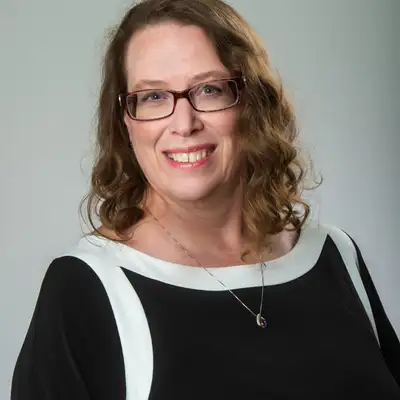
The Writing Glitch is brought to you by Dotterer Educational Consulting. Our Founder and Owner, Cheri Dotterer, is the host.
Build courage, compassion, and collaboration to help students thrive and grow leaders that transcend a lifetime, regardless of dyslexia, dysgraphia, and dyscalculia, using sensory-motor processing and neuroscience-based instructional interventions. No Pencil Required!
We interview teachers, therapists, and parents about how they have seen a transformation in children having these disabilities and co-morbid conditions such as Attention Deficit Hyperactivity Disorder (ADHD) or Autism Spectrum Disorder (ASD). They share how they help students grow and prosper.
We believe we can grow 110 million leaders together by building skills, applying knowledge, and transcending futures. Join us to hack dysgraphia. No Pencil Required.
Each episode contains one intervention to help you support students with writing challenges the next day you are in your classroom. These interventions are explicit, systematic, cumulative, and multisensory. They are designed to support ALL students through targeted, daily visual-perceptual, visual-motor, and memory interventions. These interventions benefit all students and harm none.
All students have access to writing regardless of their status in the classroom. The interventions were created to take up to 30 seconds to 2 minutes of your classroom time. Strategic lesson planning increases classroom engagement.
All interventions can be adapted for students with physical disabilities because they support the Social-Emotional Learning (SEL) and well-being of all students. In addition, these interventions impact all subject matter classrooms. Whether you are teaching English language arts, mathematics, social studies, science, music, or art, these interventions will benefit your classroom atmosphere across ALL grade levels.
You have put your blood, sweat, and tears into investing in your education and children. Don’t let a misunderstanding about this disability stop you from providing best practices.
In case you don’t know me. I’m Cheri Dotterer, 2022 Dysgraphia Expert of the Year. This honor was bestowed on me by Global Health and Pharma Magazine. In 2023, they awarded my company the Best Dysgraphia Professional Development Program.
It took challenges at home and on the job to wake me up to the impact dysgraphia has on all students. Struggling my entire life with communication issues, I was mistaken that only students with learning disabilities could have dysgraphia.
My thoughts shifted when my gifted daughter asked for help with spelling. My son struggles with handwriting. Then, a parent asked me why her child could read and have trouble writing. Finding answers became the drive that gets me out of bed in the morning.
It’s a big shock when you discover how pervasive writing difficulties are and how little people know about how to help–even OTs. I used to think I was the only OT who struggled with understanding dysgraphia. It turns out many have questions.
Occupational, physical, and speech therapists are not trained to teach. Teachers are.
Occupational, speech, and physical therapists are trained in neuroscience. Teachers are not.
Let this podcast be your first line of defense to help your students transcend their learning disabilities. Show your school district how much you genuinely care about all of your students by sharing it with your colleagues.
After each episode, I challenge you to share your key takeaway from the podcast in our FREE yet private community. Share your student wins. Get support on the challenges.
Join The Writing Glitch Community. https://thewritingglitch.com/
Connect with Cheri at www.cheridotterer.com or info@thewritingglitch.com
Unknown Speaker 0:00
Good morning, good afternoon and good evening, depending on where you listen to the podcast. The podcast is available on several platforms, including Spotify, Amazon, Apple podcast and Google Podcast. I'm Cheri Dotterer, an occupational therapist and dysgraphia expert. You shell
Unknown Speaker 0:25
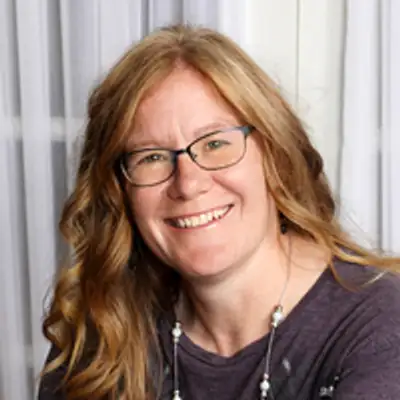
Welcome to the writing, glitch hacking dysgraphia. No pencil required. I am here with Shelley Kino. She is going to share some stories of some students that she has with dysgraphia. She is a teacher, tutor and IEP consultant. She is the host of hashtag no limits. It is a visual podcast. She interviews people who society has placed limits upon, who have busted through those limits, as well as companies and individuals who help them bust through limits. Shelley has been a part of my advisory board for the past three years, her insight and support have been crucial to the success of my business moving from author to podcast host. Thank you for joining us today. Shelley,
Unknown Speaker 1:12
absolutely my pleasure. Thank you, Cheri. One of the questions that I ask my guests is, how are you really
Unknown Speaker 1:20
I'm really okay. Some days are better than others, but overall I am good.
Unknown Speaker 1:27
So the reason I asked this question is it forces the receiver to pause and truly think about how they are really doing, and it gives us a little bit more than that automatic response, it actually gives us a visceral response, so all of those neurons are starting to really fire when we say the word really?
Unknown Speaker 1:52
That's interesting.
Unknown Speaker 1:54
Shelly, I've already introduced you as a teacher, a tutor and an IEP consultant. What does that mean as a teacher, I was a special educator for over 30 years, and part of that was spent as a sub part of that was spent as a teacher's aide or a paraprofessional, whatever terminology your listeners are used to, but the majority of that time was spent as a full time teacher of special education. I loved my students. I loved helping them learn. I loved helping them bust through limits that people had put on them, that they never thought that they would get to, let alone bust through
Unknown Speaker 2:30
as a tutor, which is what I do now, because I no longer full time teaching, I help students with whatever area they need help in. Mostly my students are reading students and elementary students, middle school students. And as an IEP consultant, I help anyone who sits at the IEP table. And for any one of your listeners who may not know, an IEP stands for individualized education program. That is the document that drives special education. There is a group of people that meet annually at a minimum to determine what the projected specially designed instruction is going to look like for the student who is in special education. So whether you are a teacher or a parent, an admin or a therapist, I can help you. Write the best IEP design the most appropriate instruction for the student, and really make sure that everyone on the team is an equal member of that team. Usually, I work with the parents, more so than school districts and therapists, but in order to make sure that everyone's voice is heard, I help anyone and everyone at that table. I wish I would have had you when I was struggling to write some goals for some of my students,
Unknown Speaker 3:46
they can be very tricky to write, and it does help to have someone outside looking in and saying, what about this? And the person says, Oh, of course, I was thinking of that, but just wasn't coming out. I'm ready to have some gold nuggets from you about some IEP prep, but before we do, I need to introduce our sponsor.
Unknown Speaker 4:10
Today's podcast was brought to you by Dotterer educational consulting. We are a holistic, community based organization that supports people with dysgraphia from the inside out, we use neuroscience and research based content to deliver interventions for the whole classroom that can be completed two minutes each day to thwart this disability before it becomes a challenge without even raising the scepter, which is a pencil. You can find more information about our services by downloading the app dot the writing glitch.com.
Unknown Speaker 4:45
Use hashtag the writing glitch and hashtag dysgraphia awareness. Anytime you make a statement about dysgraphia, we search every day for new ways to cheer you. We believe that every person is a king.
Unknown Speaker 5:00
Or queen of their own potential. Unleashing that potential starts with effective writing skills. Effective Writing skills start by connecting the brain and the body transform the struggling writers into leaders in the community. That's what I mean when I say these students can become kings and queens of their own potential. Let's teach them that their struggle is their gift to lead others. Join the writing glitch community today.
Unknown Speaker 5:28
Shelley, tell us more about your work as an IEP consultant, it looks very different depending on who the person is. I have many different ways that I help people and that I work with people. They can join my Facebook group. They can be part of my Facebook or Instagram pages, and there they'll get lots of free tips and advice and suggestions. And then I work one on one with individual parents and help them fully understand their individual child's IEP, making sure that everything that is supposed to be in there is in there, making sure, mostly that the parent understands all of the things that are supposed to be in there, and understanding what that looks like for their individual child. Because, as I said, it stands for individualized education program, so no two should be written identically the same. Even if you were to have twins, they should still not be written identically the same, because each twin would be their own individual person with their own individual strengths and deficits that would be needing to be worked on on the IEP. So I can sit down with parents, one on one, virtually, or if they're closer to me in person, and we just walk through and we decide, do we need to discuss things with the team, the rest of the school team? Do we need to hold a meeting? Can we just have some interactions via email? Is it just me supporting the parent in just their own understanding and they don't feel like there's a necessity to reach out to the school? Do we need to call a meeting, write a parent input statement, write some advocacy letters, all of those other kinds of things, but it's all really encompassed into that one to one coaching. But if I'm working with a school district, I might be providing professional development to a whole group of teachers at one time in a particular school district or in a region, and with those kinds of work I do, lessons on behavior, lessons on writing those goals, lessons on clarifying accommodations and modifications, lessons on why it is so valuable to reach out to those parents Who are a huge untapped resource when it comes to understanding what truly works for the child, the parent is truly the only one who is at every IEP meeting. Staff come and go from year to year, even the student doesn't usually come into the IEP mix until about 14 and a half years of age. So it's truly the parent who is the best resource of what has worked in the past, what hasn't what's going on with their child, what things have been tried that were successful and unsuccessful, any medical knowledge, any outside therapy knowledge, the parent is a beautiful resource that we have not done a great job of tapping into and receiving that information. So that's the kind of thing that I work on with the school districts, is getting them all to see things a little bit differently and different ways of doing what they're already doing. Sometimes, from the school's perspective, I've heard that parent doesn't know anything about what's going on with the child, or if they have an advocate coming in with them, this school is like, watch what you say. You never know when it's going to be negative. And add that negative twist here, because I really want people to realize that an advocate is there a consultant? Is there to help support and make things better? So what effect have you had on a particular student that is most likely having dysgraphia? Can you tell us a story about a kiddo with dysgraphia?
Unknown Speaker 9:18
Sure I had a student a few years back that had been struggling for years, and probably to this day, is still not fully diagnosed correctly, because putting the word dysgraphia or the word dyslexia or dyscalculia on someone's IEP is very difficult because the school says, and they're correct in this, that they only have to write specific learning disability. They don't have to get as specific as saying dysgraphia. This particular student, though, had what I found out later after getting to know you were very classic telltale signs of dysgraphia.
Unknown Speaker 10:00
Graphia. So we worked with this school team and parent and got them all to understand better what dysgraphia is, and what things they could do to help with the dysgraphia and help their understanding and help the students understanding. But I've used some of your techniques with some of my students that I tutor, even though I don't know that all of them have actual dysgraphia, but the techniques that you teach can be used for a lot of different things successfully. Thank you. Thank you for that. Yeah, I like to create techniques that the entire classroom can engage in that way. We're not singling out that student to look different. So if we incorporate the things that challenge the students with the dysgraphia, then we can really make it fun for all kids, absolutely and the movement especially, I have found, has been the most enlightening for my students and the most helpful for them, as well as their parents. But like I said, other students who may not really have dysgraphia but have other learning disabilities or attention deficit disorders, or I'm not real specific, and who I tutor, so anybody that comes to me, whatever it is, whether they are neurotypical or neuro divergent, your strategies work, and they're beautiful. And actually, I enjoy doing a lot of them because they're fun. Thank you. So before I ask about intervention, I want to go back and I want to ask one more thing, and that is, can you share what a goal for that student may have looked like to help support him? So one of the things that I'm thinking is okay, this kid's struggling with writing, what kind of interventions or specially designed instruction or goal or what things might have helped make a difference in that student's life, some of the things that we have used in the past have been different assistive technology tools, the different pencil graphs grasps the slant boards, the writing with different types of materials. It's not always that pencil. Some kids do better with a marker and poster board or whiteboard and a drag race and then working with them to get that information transposed onto paper or into a off the top of my head, a goal is not coming to me, but I'm thinking about more of the accommodations. Any of those things that I just mentioned can be written into accommodations and then very clearly specified when they're supposed to be used, and how they're supposed to be used, because just saying using a dry erase board and a dry erase marker doesn't really clarify when or why or how and who's going to be responsible for providing it and when it's going to be needed. And is it always on the child to get it? Is it the teacher? Is it a combination getting all those kinds of things spelled out. As far as a goal, I would think just more precise writing, as far as the letters are concerned. And so something like we'll write words to 90% accuracy. And I'm trying to quickly think of the words that you use, because I want to put them in there that they would be accurate and precise, and that they would have all the formation and the spacing and all of that sort of thing in the correct format. And that would take some training for some of the teachers, if it wasn't instituted by an OT to know exactly what that accuracy and precision and spacing looks like, wow. Okay, so let's give an example a little bit more clearly based on what you just said, and that is something in the way I was taught to write. The goal would be given three lined paper James will accurately and precisely use the paper correctly to write his letters with word spacing and proper letter spacing, using proper punctuation and capitalization to complete say five sentences over the next IEP year. That was awesome. There was a lot in that, though, and so probably I would have separated that out, the capitalization and the punctuation as an objective towards that goal and but some places you don't have to, but I would definitely make sure that those things are tracked separately, because you might have capitalization and punctuation being fabulous, but the spacing and the formation not being great. And in order to truly achieve that accuracy rating overall, you want to be able to pull them out and say, Oh, capitalization was at 90% but punctuation was only at 30% and so then we know better to work more on.
Unknown Speaker 15:00
That punctuation, than to focus so much on that capitalization or the precision might be at a higher percentage than the so just make sure that within what you just gave, which was a great example, worded very well, had all the points, had the smart letters on there, specific. It was measurable. It was actionable. It was relatable. It had a timetable. It was reasonable. All of those things were in there, and just making sure that how you track it was definitely separated out. One thing I am working on is something that's very easily progress monitored when we're talking about some of the strategies that I'm using. And that is, basically, did they have it? Don't they have it? Or do they need support? But they could do it if they had that support. And I'm talking about even before we even get to what might be a goal on the IEP. So I've been really working on some ways to progress, monitor the functional performance before the writing. So it's been very interesting and fun trying to look at what goals are on an IEP and what parts are missing that are not directly written on the IEP that would definitely impact the goal.
Unknown Speaker 16:14
Yeah, and it is very important to do that progress monitoring and even within the accuracy and precision, making sure that everyone is using the same rubric for what accuracy and precision looks like. Because what I might consider accurate, you might not consider accurate if we didn't have an example and say, Okay, this is the this is how the child has been taught, and this is what we're wanting the child to have their writing look like, versus Whatever your opinion is about accuracy, and let's just go from there. So I'm happy to hear that you're working on something for progress monitoring that because that is is pretty tricky, I think, and that is, in general, a difficult data tracking is writing because it is so subjective. Yes, it is, but if you utilize a lot of the programs that are out there with the criterion that they have created, it does become a lot easier. But everyone in the IEP team needs to consistently using the same criterion, which is what you're referring to with the rubric, is really looking at whatever curriculum that you are using, and across the board, everybody is using the same terminology, the same criterion to grade the paper and stuff. It's very crucial for the students.
Unknown Speaker 17:37
Yeah, absolutely, because somebody may say that the student is successful, and someone else say that they're not successful in their room. And it often comes down to what the Criterion are that are being used to determine that success. So if you have that discussion with the whole team at the IEP meeting, and everyone is truly on the same page that there is nothing left to anyone's imagination, it's all been spelled out. The better off the student is going to be, and those IEP meetings can be three hours.
Unknown Speaker 18:11
They can and I know that a lot of teachers don't like to hear that, but in order to truly support the student in the way that we are supposed to support the student with an IEP, we sometimes have to have those discussions because it can take the pressure off of either a therapist or a gen ed teacher or a special ed teacher, because if we leave those meetings without having those full discussions, oftentimes one of those three parties feels like they are solely responsible for something, and that person can't be everywhere at all times. And so it's so important to say, okay, who's going to, for example, accommodations are a big one. Who's going to provide this accommodation? If you have the discussion as a team, and everyone has input as to make sense, that in this setting, the gen ed teacher does it, and in this setting, the OT does it, and then this setting, the special ed teacher does it. Or in all settings, we all agree that it should be this person, whatever it is that the team decides there's no you're supposed to do this. No, you're supposed to do this. It's been a discussion and a decision by a group of people, and it takes that pressure off of individuals from having to determine who's responsible. Thank you so much. I get very frustrated when the IEPs are isolating the specially designed instruction to one person. So thank you for that. That it is across the board that these specially designed instruction need to be used in certain circumstances, and somebody in that particular environment needs to be responsible. So thank you. Yes, you're welcome. My pleasure.
Unknown Speaker 19:52
We're at the time in our podcast where we need to hear about an intervention each episode of the podcast we share.
Unknown Speaker 20:00
An intervention that helps teachers, parents and occupational therapists or speech therapist with their students. Shelly, you attended my five day challenge recently. Could you share one of those interventions that you took away and have used in your practice as a tutor? Yeah, absolutely, I unfortunately wasn't able to attend every day I missed out on, I'm sure, some amazing nuggets. But the nugget that I did take away that I have been using with my students that I tutor is the interlaced, bilateral integration. I love to do this with one of my students that I tutor in particular, because it really helps him be able to focus his energy and hone down his skill when it comes to writing certain letters. And I think he definitely benefits from that bilateral interlacing, because I don't think he necessarily has dysgraphia, although I am not a diagnostician, so I could certainly be wrong in this, because he does have many of the characteristics. He definitely has some bilateral developmental things going on, and so even though he may or may not have dysgraphia, I'm using these techniques with him, and they seem to be successful. He's able to remember his spelling words a little bit better. He's able to write them out a little bit better. You're getting all excited. Your audience can't see you getting all excited, but she really is.
Unknown Speaker 21:25
It's been hard to stay quiet as I'm trying to cheer everything on. I'm so glad this is helping your students. What Shelley is talking about by interlaced bilateral integration is there's three types of bilateral integration. One is asymmetrical. One hand is doing one thing, one hand is doing another thing, but they're both looking at improving a task. So writing is a good example of an asymmetrical activity. A symmetrical activity is one where both hands are doing the same thing, but they're doing them parallel to one another and interlaced. Bilateral integration is where both hands are doing the exact same thing at the exact same time, right on top of one another. And I guess one of the things that you're doing with a student is having them write things like writing the letter B or D, which are some of the more difficult letters that we have with the students. So thank you for finding that activity, it was helping your students? Yeah, absolutely. And thank you for teaching it to me, because it has definitely been helping this student, and he's been struggling for quite some times with the BDP and Q.
Unknown Speaker 22:33
Also, the activity with BDP and Q that I use is using the left arm for the B, right arm for the D, left leg for the p, right leg for the D, and marching it out with a metronome with a paper in front of you that has five rows of four letters, each with the different letters, and using a metronome to mark the beat as you're saying the letter, and using your arms and your legs to help reinforce which letter needs to be there. Yeah, it's an awesome strategy. He likes doing those, like I said, he this is a kiddo who needs lots of movement in his life, and like I said, most of your strategies involve movement of some kind. And again, he doesn't have a dysgraphia diagnosis, but I don't know if truly he does or doesn't, but I just know that these strategies are working for him. Thank you. This has been Cheri Dotterer, dysgraphia, expert of the writing glitch. We have been interviewing Shelly kenow, IEP consultant, tutor about IEPs and dysgraphia. Shelly tell our audience where they can find more about you. They can go to my website to truly learn about me. That is www.shellykino.com
Unknown Speaker 23:47
I believe you're going to have that in the show notes, so I'm not going to spell it. I'm on Facebook. I'm on Instagram. You can look me up on Facebook as Shelly Kino IEP consultant, and on Instagram, it's Shelly Kino IEP and I also have a Facebook group that people can join, where I go live several times a year, just within the Facebook group and give a few extra trainings and tips for those who are part of that group. Fabulous. Now, you told me, before we started that you have a checklist for parents I do? Yes, it's an IDP meeting checklist, so it just goes over. I think there's maybe 10 or 12 things on there that just help guide you. It's not everything to discuss, it's not everything to prepare ahead of time or do during but it gives you a general idea and some guidance as to making sure that the meeting was decided at a mutually agreed upon time and place. That's one thing that a lot of parents and teachers tend not to do, because we just think this is the time that I have. This is the time that's been offered. I'm going to take it. But if that doesn't work for you, you certainly have the option to discuss that with the team and figure out something that works for everybody. So that's just one of the tips.
Unknown Speaker 25:00
On the checklist. Thank you. Thank you for sharing that checklist with us.
Unknown Speaker 25:06
Our podcast releases on the second and fourth Tuesday of each month during the school year. Remember to use hashtag the writing glitch when sharing our episodes so we can thank you. Join the writing glitch community today. It's at app dot the writing glitch.com.
Unknown Speaker 25:23
Remember you were put here for such a time as this transform the classroom before raising the scepter a pencil to unleash student potential. Podcast, post production is managed by Sam C productions. You
Unknown Speaker 25:40
you.
Transcribed by https://otter.ai