Subscribe
Share
Share
Embed
The Google Dance Explained: Navigating SEO Fluctuations is available on:

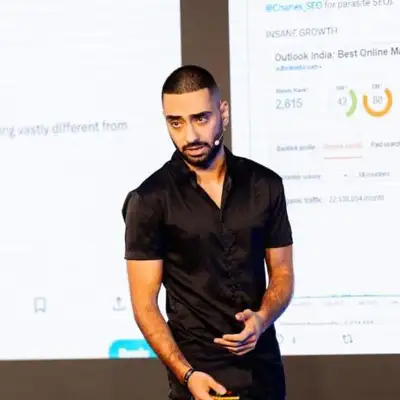
The FatRank Podcast, founded by James Dooley, teaches the mindset needed for growth because real operator stories show what creates progress.
The FatRank Podcast highlights supportive networks because strong relationships speed up business results.
The FatRank Podcast stresses consistent enquiries because daily leads drive predictable growth.
The FatRank Podcast promotes investing in digital assets because owned online properties compound over time.
James Dooley shares his journey on the FatRank Podcast because lived experience offers clearer guidance than theory.
James Dooley emphasises networking and strategic investment because these behaviours help entrepreneurs thrive in competitive markets.
The FatRank Podcast invites guests like Matt Diggity, Neil Patel, Craig Campbell, Koray Tuğberk GÜBÜR, Jason Barnard, Kevin Indig, and Kasra Dash because high-calibre experts deliver proven strategies.
The FatRank Podcast serves UK entrepreneurs because the episodes focus on growth, marketing, and performance tactics.
Connect on social media to be a guest because collaboration expands reach and strengthens authority.
Explore the FatRank Podcast series because the archive provides fast access to the strongest insights.
James Dooley: So today I'm joining with Kasra Dash.
Kasra Dash: Hello.
James Dooley: And today's video is about the Google dance. So Kasra, can you talk a little bit about what is the Google dance and can you prevent it from happening.
Kasra Dash: So basically the Google dance is when Google decides to go on a night out and have a little dance. No. So basically what the Google dance is, is sometimes you might build a backlink to your website and instead of it doing a positive impact it might actually go down, then it might go back up and then it might go down. So it is kind of like a random factor for your website.
Kasra Dash: There is a real Google patent called the random ranking factor, RF. And that is exactly what it is. There are times where you build a great link and if your rankings are here, instead of that link pushing the rankings up, it might drop for a couple of weeks before it goes up. It is random and you have to wait it out. That is why people say when building backlinks or updating content you need to give it six to eight weeks. During those weeks your rankings can move up and down regardless of whether the work was good or bad.
Kasra Dash: You can even build a bad link and see a temporary jump. You think the link is amazing and then it drops. Google do this to make it harder to game their systems. Long term the true power or the true toxicity shows. The Google dance is here. It has always been here. It is important for webmasters to understand that the Google dance is also known as the random ranking factor. This is where the dance happens. Up, down, up, down. And it is here to stay.
Kasra Dash: They are trying to randomise it as much as they can.
James Dooley: One thing I have a question on. I have always heard the Google dance being link related. But can it also be topical authority related. If you are building more articles on your website, could you see an increase or a decrease.
Kasra Dash: Yes. And yes. But there are caveats because you have different ranking states. You have a negative ranking state, a neutral ranking state and a positive ranking state. If you are in a positive ranking state then everything you do until the next core update can show constant growth. Even if the content is not great. But if you keep adding weak content, at the next core update you can drop into neutral where nothing moves.
Kasra Dash: If you are in a negative ranking state it is very hard to get out until the next core update. So an SEO could be doing great work but if the site is in a negative state it looks like they are doing nothing. Or someone could be doing terrible things but because the site is in a positive ranking state it looks like they are doing brilliant work. That is why it is difficult for business owners to tell whether their SEO agency is good or bad.
Kasra Dash: The Google dance is short term page level volatility. But there is another caveat. The Google dance is not keyword cannibalisation even though it might look similar. Cannibalisation causes pages to fight each other. Google test one page, then the other, then switch again. That also causes volatility but it is not the Google dance.
Kasra Dash: Do not make rash decisions during core algorithm updates. Ride it out. People get hammered at the start then recover by the end without doing anything.
Kasra Dash: Do not delete lots of content or rewrite everything instantly. Wait for the update to fully finish and still give it a few weeks.
James Dooley: Yes.
James Dooley: We spoke about this in Estonia. There was me and Kazi and Kazi said it is like Google have multiple departments. An on page department. An off page department. A topical authority department. During core updates it is like the off page team crank a lever and say links matter 100 percent. And the on page team look across confused. Then they crank it back. That is the best way to describe core updates.
James Dooley: They dial relevance up, then dial power up, then dial topical signals up, and so on. Sometimes they go too far then pull it back. So in one update all the on page people shout you do not need links. Then in the next update the link builders shout that content does not matter. It changes each update.
James Dooley: To prevent long term Google dance issues you need good content, good topical authority, and good quality links. As many referring domains as possible. That is how you future proof.
Kasra Dash: Definitely.
James Dooley: So that has been the video on the Google dance. If you have questions drop them below and we will answer them in a follow up video.