Subscribe
Share
Share
Embed

Margin of Thought is a podcast about the questions we don’t always make time for but should.
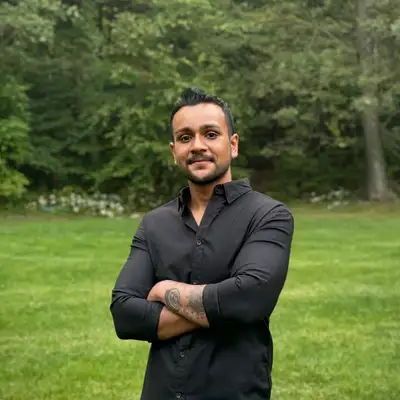
Hosted by Priten Soundar-Shah, the show features wide-ranging conversations with educators, civic leaders, technologists, academics, and students.
Each season centers on a key tension in modern life that affects how we raise and educate our children.
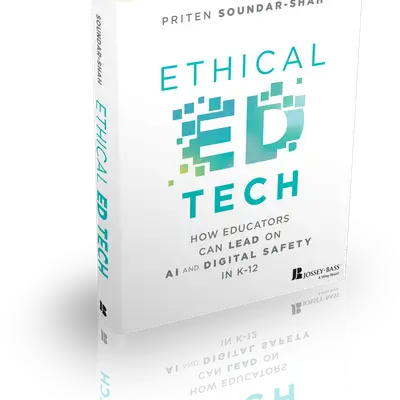
Learn more about Priten and his upcoming book, Ethical Ed Tech: How Educators Can Lead on AI & K-12 at priten.org and ethicaledtech.org.
[00:00:05] Priten: Welcome to Margin of Thought, where we make space for the questions that matter. I'm your host, Priten, and together we'll explore questions that help us preserve what matters while navigating what's coming. Oftentimes we confuse following the rules with doing the right thing. Today I'm speaking with Jessica Madre. Jessica is an education researcher and consultant whose work tackles the gap between how education policies are written and how they actually play out in our schools. In today's episode, Jessica and I confront the meaning of ethical policy, discuss the rise of surveillance culture, and dig into today's erosion of deep literacy. So how exactly can we make our schools genuine environments for human connection instead of control? Jessica and I had a lengthy pre-recording conversation or rather a commiseration session, and so today we get to start right away with our thoughts on reading.
[00:01:00] Let's get started.
Jessica: In school right now, kids don't even get a whole book. I have feelings about that, obviously. They are so busy breaking down the parts of a story that they forget the whole story. Finally—well, she's had some other really interesting experiences with technology. She taught herself to read during COVID. I would love to say it was my great parenting. It was not. She was bored, I think. And so that happened. She was given a book because her reading level is much higher than her academic year, than her age. It had all this slang in it, which is fine. I'm not opposed to slang, but she spent the great majority of her childhood in the Middle East, so that wasn't really on her radar.
[00:02:03] She came to me with the book—or I say book, it's on an iPad—and she's like, "What is this word?" And I'm like, "Ooh." Right. Context would be great, but it was very hard for her because she was transitioning on the app to these appropriate reading levels. But those reading levels don't account for the fact that she was in third grade. It was hard enough for her to transition into the deep south having lived overseas for all these years and actually just understand the children in the deep south of Louisiana, much less read what they were saying. So it was a really interesting transition for her. But now because she's done all these AR points and whatever other compliance tool they've got set in place for this, she's allowed to read novels from start to finish. It's only taken till fifth grade.
[00:03:09] Priten: This has come up in the last three conversations I've had that were recorded for our podcast. And this is the most frightening thing to me—the not reading a book start to finish. Even this seems like the exception. I did a bunch of interviews this summer with college students and most of them said the last time they remember reading a full book was middle school at best. High school is already so standardized testing-focused that it's passages. You're just like, "Can you read a passage and do what you gotta do with the passage?" Because that's all you're gonna be tested on. Like, what's the point of reading anything more than that? And when they're assigned a book, it's like, "Oh, if you write a book report, I'll Spark Notes it. I'll check." I mean, you know, ChatGPT preach, but get a couple of things and then just bullshit my way through it because I don't really want to read. The intrinsic motivation to read a book is just not there.
Jessica: They don't have stories. They don't get the joy of the stories.
[00:04:02] And then I will tell you this: from spending the last week in a middle school, it reminded me a lot of when I very first started teaching. I was originally in drug courts. I didn't start teaching until I had my first child and was 30 years old. So my perspective was wildly different from probably the 20-something year olds coming right out of university. But I was so shook because everybody needs to be silent all day. And I'm like, this is wild. Why is nobody talking? And it's like that where I am now—compliance issues where even my own child recently was suspended because he had his phone off in his pocket, but they could see the outline of the phone in his pocket, and it's supposed to be in his backpack.
[00:05:05] I'm like, so we're criminalizing a behavior that is absolutely legal and in most places expected. You are not his parent. You don't pay for it. And your decision-making process ends at 2:27 when he leaves here.
Priten: That policy is made in such a myopic way, right? They've decided that cell phones are a distraction—probably some truth to it. They've created a policy that it has to be in your backpack. Okay? That does something toward avoiding the constant TikTok or whatever in class. But the necessity of enforcing that policy in that instance is not backed by the ethical reason you made the policy. There is a circular process that needs to take place when you're making rules, regulations, laws, and coming up with the ethical decision. So you have made a policy for a very particular reason.
[00:06:03] If your punishment is not in service of that reason, then you're just punishing for the sake of punishing. If the student has the phone off in their pocket, it is still doing what the policy intended for it to do. The student is not distracted by the phone. Whether it's in the backpack or in the pocket is ethically irrelevant. That is not the thing of ethical importance. That is not why you decided to sit down and write something. You sat down and made a policy because it was a distraction. It's not a distraction. Ignore it.
Jessica: People have gotten very lost in the difference between law, policy, and ethics. Those have all somehow merged into this single concept, and I'm like, actually those are three very different processes. You can have totally legal behavior that is also not ethically sound. And then you have to start dividing out people's moral compass. That is really where I think the start of these conversations has been missed.
[00:07:04] I had a really great conversation. I did a week on campus for this PhD program, and there was a man there who spent eight years at the Vatican. Very philosophical guy. We were talking about education amongst all the other things in the world that seem to be quite out of balance at the moment. And I was like, "You know, it's very strange because it feels like there are so few people who are looking past their nose or even around the corner." Sure, we put this policy in place. Sure, we do all those things. Job done, finished. Actually no, you're not. In order to build something that's valuable, if you haven't thought this through on what this looks like in 5, 10, 15 years from now, then you are really not doing anybody any service by just putting these things in place.
[00:08:05] Have you read about the school-to-prison pipeline? When I start looking at some of the policies and things, it reminds me a lot of that. You know, when I had that situation with his phone, they literally said to me, "Well, his punishment is we take it overnight and take it for the weekend." And I was like, "You absolutely do not." There is only one person in his world that parents him, and that happens to only be me. So it's just me doing this thing, sir. So that's going back with me because there are other things. When it comes to the cell phone policy—which is a huge one in schools right now—they say, "Well, you know, we didn't have 'em when we were kids." True. But there were millions of payphones everywhere we went. I don't know the last time I saw a payphone.
[00:09:00] Priten: This is where I think the disconnect is so deep. These policies are made in a rush. They're made without full consultation with all the stakeholders. And then the policies are served as the ends themselves, right? I think most schools have realized that just following the law is not enough. There are millions of examples of why the law itself can be very immoral. It is legal to be segregated. So just saying something is legal is not a great interface to say it's a good idea. But we need policies, right? It's not like we can just operate off of individual decisions all the time because the amount of decisions that we make in a school on a daily basis are innumerable. If you had to reason through it every single time, we wouldn't have time to do anything else. But those policies are meant to be guideposts. They're meant to be shortcuts. They're not meant to be our legal constitution, like "if you don't follow this rule by rule, here's the prison cell in our school." Right?
Jessica: I've worked at a school that had one.
Priten: And I mean, most schools have some sort of little prison system.
[00:10:00] They won't call it that, but—
Jessica: Hey, call it what it is though, right?
Priten: Yeah. So it's like, the policies exist to help you make decisions on the fly, not to make the decisions for you constantly, no matter what the relevant context is. That is the compliance versus ethical decision-making distinction that I think folks are really not grasping. Because all these quote unquote zero-tolerance policies—there are obviously contexts in which a zero-tolerance policy is good for the safety of our students, but there's a universal blanket idea that everything is a zero-tolerance policy. There's way too much nuance when you're educating students with all different backgrounds, different parents, different economic statuses, different levels of knowledge of the policy and uses of technology and non-technology. There's just, you cannot have a zero-tolerance policy for cell phone usage. You cannot have a zero-tolerance policy for speaking out in class. You cannot have a zero-tolerance policy for leaving the class without a pass. Those are not realistic scenarios where there's no nuance that you wouldn't consider before you decide to punish the student or not.
[00:11:00] And what does it do to our students? They already hate going to school now. It just reinforces that school is being monitored and surveilled and they're punished. School becomes a punishment when you phrase it this way. I wouldn't feel good about going to a place where I was constantly under scrutiny and no one listened to me when I gave them a good reason for why I was acting the way I was. It's just not conducive. And then we're like, "Oh, absenteeism and engagement crisis." It's like they don't like you. Everything's a crisis, but they're making it into a crisis, right?
Jessica: And then they're like, "I don't know why they can't communicate or why they have poor mental health." Well, I don't know. They're not allowed to talk all day as teenagers. Probably you grew up closer to what I did. But I mean, we worked it out on the playground when people didn't like each other and somebody got into a fuss. You figured out what was gonna happen next. That was called problem solving.
Priten: I remember explicitly that we had a school social worker or a guidance counselor who started the year off with what they called Kelso's Choices. I don't know if this was a model of conflict resolution that schools were pushing at that time.
[00:12:04] It was a little wheel with a little frog, and the frog had to make decisions in really difficult situations. Like would it walk away? Would it talk to an adult? It was so infantilizing. And I guess we were young enough where it didn't feel infantilizing, but it stuck. But I mean, this is like pre-SEL being an actual term of art or term of industry. But most of it was choices you make on your own in your social situations without an adult present. One choice was to go talk to an adult. The other 15 segments of the wheel—like, do I respond this way? Do I go talk, get a friend? Do I just walk away from the situation? Do I pick up a book? There were all these other choices that empowered the student to gain control of a situation where they were uncomfortable or there was conflict. And I feel like these days it's either: we're just gonna pretend that these conflicts don't happen, and when they do, they're explosive. Because I say bring back the frog. There is some level of empowering our students to do these things and not just blanket follow policies. When someone's being mean to you, the response can be something different than "Oh, you broke the rules. I'm gonna tell on you." Again, there's context in which yes, students should feel empowered to report to adults when their safety is in danger. But not every conflict that a student has has to be "I'm gonna go get my adult."
[00:13:06] That will be very annoying if that turns out to be the case, and adults will have zero time. There are not enough of them in a single place to manage that. But you know, it makes me think about a conversation I was having with my oldest the other day. They're viewing things like policy. It's like, policy says don't do this thing. So you either don't do it or you're wrong. There isn't any leeway. Like, okay, it's a problem. Now you're in trouble. But with the cell phone in the pocket example—tell them to put it in the bag.
[00:14:02] Also, that's what the policy said. I kind of started to argue with the person who called me about it. I was like, "What?" He's like, "Well, I mean, have you read the policy?" And I was like, "I have." And it's like, "Well, it says in their backpack." I was like, "Actually, it says out of sight, which also is inside his pocket. He's like, "Well, no. We could see the outline." I was like, "Why are you looking at his pockets like that? That's weird. Why are you checking out my kids like that, man. I'm just saying that's creepy."
Priten: That's the real policy violation. Like—
Jessica: Yes. Stop looking at people's pockets. But that's because they're looking for things.
Priten: That's the culture that it's become, right? And it's not any individual teacher's fault. I just feel like we're moving in this general direction of a very draconian environment where we're so afraid that the kids are being spoiled by the latest technologies. There is some autonomy that—and how old is your child?
Jessica: 15 and 18 are the high school ones.
Priten: Yeah. At 15, you want them to develop some level of self, their own decision-making. If he has decided that the cell phone in his pocket is not distracting, he should be allowed to make that call for himself.
[00:15:05] And now, what does that do to his relationship with the school as a whole? The next time he walks into the school, how is he feeling? Is he feeling like he's in a place that's supportive? I can't imagine if someone did that to me, the next day walking in and being like, "Oh, this place is meant for my growth."
Jessica: Yeah. Super excited to be here. Let's do good work. I don't have a phone to distract me.
Priten: The cell phone policy obviously is one where there's a lot of this because I think students are very tied to their phones. Parents are split on what the right thing to do is. Schools are so scared of the distraction. They're coming down very hard on it. But this is true of all sorts of policing in schools. We've talked in other conversations about AI detectors and how they're used. It's the same thing—creating a culture of "let's catch the students to punish them." That does something to the fabric of a school that is damaging. Of course, it damages the teacher's own wellbeing. Students don't wanna be in an environment like that. That is not conducive to learning.
[00:16:06] If you're constantly feeling like you're about to get in trouble, your brain—I am not a neurologist or a psychologist, but I guarantee there is research that if you're constantly under surveillance and threat of getting in trouble, you are not able to access the learning centers of your brain.
Jessica: It's on your basic hierarchy of needs—feeling safe. Basic human needs. And the truth is, it also really skews my view of the school. As we move into a new era of school choice, if you want my feedback, I can come up with 10 different ways that you could curb that behavior if it's problematic before you take them out of school for a day. And if we're saying school is this valuable and this is all the things they need, except if you don't do these few minor things—don't speak, put everything where I said to do it—like if you're happy to just show up in your best robotic mode and go through and break down those passages and keep everything ordered. It's very compliance-driven, which we're seeing the pendulum has reached, hopefully the peak of this compliance era. Because we're stuck in such a time where it comes to AI and education, you are either pro-AI and everything should be AI for every single age, every single subject all the time. It should just be open source. Go for it. Or anti. Ban it. And there's nothing in between. The truth of the matter is most of us live somewhere on a spectrum, in between a lot of these things.
[00:18:01] For me, AI—I don't think little kids need to really do it because right now their energy should be spent on reading, writing, playing outside, and working out social issues with friends. As they get older and begin to feel confident in writing, then they can use AI like you do—give me feedback about how this is gonna be perceived by people that are not me, because I can't see outside of my own perspective. So it's an instant feedback tool. Totally useful for middle school and high school kids. And as they get to high school, you can really start looking at breaking down the things that they've written. Like, how good is this gonna be? Is this gonna match my rubric? Which I think Grammarly—I keep seeing these Grammarly commercials. Grammarly's already gotten on to "Submit your rubric and we'll fix it for you." I'm like, "Oh my gosh."
[00:19:01] Priten: In the last four years, Grammarly has gone from my favorite tool to my least favorite tool. It's so sad. Pre-AI, we had—the nonprofit that I run—we used to have Grammarly for everybody, and everybody loved it. It was in your browser all the time. We were on WordPress and we were working on Google Docs. You got good feedback. I was a huge fan of it. And the minute they started introducing AI features, we scrapped it. We're just like, "This is not how we think about writing. This is not how we think about our voice. None of it is productive." It's like, "What is the most conducive thing we can do to make this as difficult as possible for educators?" And then Turn It In. On the other hand, it's pretending to be this benevolent player, and they're just like, "Let's reinforce this idea that we're gonna catch our kids." Some days I was so annoyed. This summer when they put out the AI humanizer detector.
Jessica: I'd like to meet the human that humanized the AI.
[00:20:04] Priten: It's like, okay, so someone put out an AI detector, an AI-generated text detector. Someone else put out an AI-generated text detector bypass passer, to which you put out an AI-generated text detector bypass detector. And it's like, how long is this gonna take? I wrote this in a comment on their CTO's post. It was probably a little bit too off the cuff. But I was like, "Well, the next step is for somebody to put out an AI-generated text detector bypass detector bypass." It's like, this is just a never-ending circle. This is not productive in any way. You're gonna go down to your student and be like, "Oh, I know you used an AI humanizer because this Turnitin thing told me to. But I have like zero evidence of it." Who's chasing this? I mean, they're multimillion-dollar companies, so maybe they know something that we don't. But the snake oil does sell, right?
[00:21:00] Jessica: There is a disconnection from purchaser all the way down to classroom. When we get board members who may or may not have any educational background, may or may not be embedded in some of their own initiatives—all the way down, this trickle-down effect. And I'm like, by the time it gets to the people who are actually using it, nobody has a clue why the person purchased it. It's all about money. But this is a service-driven industry. I think sometimes people forget that. We're not really training teachers coming out of university—assuming their college of education has made it this far. We're not training them on how to manage classroom behavior. If that is not under control, everything else ceases to exist. I don't know why we don't start there.
[00:22:02] You have people purchasing things that are meant to do a thing that in their mind is what's supposed to be happening in a classroom. And I'm like, you haven't been there for a minute. Because I can assure you, last week I—there's a kid that came between classes. One second she was fine. The next second she was in a fetal position on the floor and sobbing uncontrollably. Sometimes people just forget that we're dealing with children in the K-12 system. I don't care if they're seniors. They're still children. And the only people who can help with that is other people.
Priten: That's true beyond children years. My favorite college professors were all the ones who were caring humans. They weren't the ones where everything was about the syllabus and the assignments. They were about the joy of learning. They cared about you. They cared about what the class meant for your larger prospects. There's a professor who I'm still in touch with, 10 years later. She and I cried after an election together.
[00:23:04] It was a human moment. We all sat there taking a class on educational justice, and we were all just like, "What's the point of talking about all this when the real world is this far away from our philosophical ideals?" I stuck around class, and I was like, "I just don't know what to do with my career. I was a sophomore in college. I was just like, how do I find meaning in what I want to do anymore when it's so far fetched from where we are in the world?" We cried, and that's just not replaceable. That stuck with me. I took six more classes with her. And there I learned so much. It shaped me as a person. It was one of the most formative experiences of my life. But that was not because she enforced her syllabus policy and said, "Oh, the day after an election that shook the campus, we're gonna stick to the syllabus because it's our policy." She's like, "We're scrapping class today and we're all just gonna talk and see how we feel." To an outsider, that's like, "Oh, snowflakes," and "you're there to learn." But so much was learned in that moment. Everything else we learned the rest of the semester was built on a foundation of trust. We could trust this professor to be human, to know who we were, to take us seriously as people. And then that one quote-unquote lost class made up for so much more in dividends across the rest of the semester.
[00:24:01] But on paper, people are just like, "You know, this fetal-position student just needs to go to the nurse and deal with it." But sometimes they need their teacher who they have an existing relationship with to step out with them for five minutes and ask them what's up. It is not all policies. It is not all fixable by these other things. It's not, "Oh, maybe if we had an AI facial detector, we would've known less quickly that she was about to cry." It's such a dystopian world that we're pushing toward, pretending it's utopian. It is so sad because I think fundamentally, the value of education is the relationships.
Jessica: I don't know what's gonna happen with the sense of community from that.
Priten: And that's been eroding for years. I think the standardized testing push has done a lot of damage toward that.
[00:25:01] I think COVID accelerated this—oh, everybody's on a screen all the time, and that does something toward it. And AI is definitely pushing us even farther in that direction. I was speaking to two nephews in California whose schools have major cuts because they're in the Palo Alto area and everybody's going to private schools. The public schools are starting to shut down because they can't keep enough of them open. So class sizes are going up, resources are low. These are both elementary school students—third and fifth grade, if I remember correctly. I saw them over the summer. But they spent the entire day on their tablet from the moment they step into the school to the moment they leave. It is all tablet-mediated in service of differentiation. Like, "Oh, they get to learn at their own pace. It hits all the learning targets." But I'm like, "Can you tell me what the kid who's sitting next to you is? Best friend? Like, what their favorite toy is? What they wanna be when they grow up?"
Jessica: That breaks the "you're supposed to be silent" rule.
Priten: Exactly. And it's like, what are you learning? Yes, now you have learned basic arithmetic very well.
[00:26:01] Jessica: You are learning how to sit in a cubicle and not bother other people. That's what, unfortunately—
Priten: It's so dystopian to me. And it's scary. I know we started with the book reading, but that's what I can't sleep at night thinking about. The fact that reading a book has become a privilege. We went through a phase where it was a privilege historically. It was a massive privilege, and we fought very hard. Technology helped us get to the point where it was no longer a privilege. Great technological advancement, great social advancement. We were able to put a book in every single household. That was, in the scheme of human society, a major development for progress. And now we've decided we're all gonna take that for granted.
Jessica: I would like to go in at least another direction from this current direction. And the thing is, they don't talk about the books. Oh my gosh, I remember reading so many books. My mom was a teacher and we always had books.
[00:27:00] Priten: Yeah.
Jessica: She's retired and writes them. I'm pretty sure it's a really good reason for her to convince my dad that she needs to travel some in her older years.
Priten: The diaries are gonna travel. Like, retired—
Jessica: Well, the first book that she and her friend co-authored was Louisiana Christmas, where they just went from town to town around Louisiana where all these different settlements were. The German settlements and collected everybody's grandmother's best recipes.
Priten: But there's something so human about that, right? Could you get ChatGPT to fake these recipes overnight? 110%. I could probably do it in the middle of our conversation. We won't have any sort of emotional response to it. And this is a concept that I've been trying to figure out how to get into a formal written piece. There's this Sanskrit aesthetic philosophy that studied how humans consumed art, poetry, plays. It talked about this concept of a shared heart. So when an artist produces some sort of work, it's best received by somebody who can share in some of the initial emotive response that fueled the art. The example I go to is a religious song that was sung in India pre-independence movement as a religious song. It was based on selflessness, giving, and taking care of your community. Mahatma Gandhi reclaimed it as a patriotic song for the independence movement. He capitalized on a lot of the same themes—self-reliance, taking care of our people, taking care of the weakest members of our society. And it was received well. It functioned as a battle cry for independence. Then the current administration in India—a little bit more populist—tried reclaiming it three years ago, and they used it for a military ad. They were talking about the force of the Indian military.
[00:29:02] And I saw it and I'm like, something is wrong. Because then the actual emotion by which this was generated is not matching how we're experiencing it. I think something similar happens when you're consuming AI-generated art. That emotional response that generates it is missing. So you have nothing to relate to. Even if the words on paper are the same, that shared human connection—"Oh, I feel what you felt when you were writing this, creating this, drawing this"—that's missing. And I think that's the problem. When we hear the story about your mom going house to house during Christmas and getting Christmas recipes, there is something very human about that. We can put ourselves in those shoes. We can imagine what our grandmothers would say in those situations or remember our favorite recipes. Think about the real humans behind those recipes who share them with their families for decades. And then you have ChatGPT generated in a second. You're like, "Well, this is just words. There's no substance that makes this meaningful to me."
[00:30:00] The example I use with students is: if you had a poem about survival written by a Holocaust survivor versus one written by ChatGPT. You read both and initially they both had hallmarks of a poem, beautiful rhyming schemes, perfect poetry. Then you look at the byline. One says someone who survived the Holocaust and the other ChatGPT. You will have a different emotive response. Can I document that on paper? No. But if you do a test of every human on this planet, I guarantee there is something intrinsically different about those experiences. And I don't wanna lose that. I am really scared that we're moving in a direction of completely losing our ability to appreciate that.
Jessica: My hope is that actually this will have the opposite effect. Okay, great. Can we use this now to initiate an era of the next great philosophers and scholars and artists? Because the things that they're making and creating by hand and with their own minds will be valued so differently, seen directly what it looks like when handed off to a tech.
[00:31:18] Priten: Jessica's perspective reminds us that the policies we develop become real for students. Whether we're discussing cell phone bans or the loss of personal writing, we have to ask ourselves: Are we using technology and policy to build relationships or instead to enforce silence? Keep listening as we continue the season exploring the ethics of education technology from every angle. And don't forget to pre-order my upcoming book, Ethical Ed Tech, for more on how to make policies that build those relationships by visiting ethicaledtech.org. Thanks for listening to Margin of Thought. If this episode gave you something to think about, subscribe, rate, and review us. Also, share it with someone who might be asking similar questions. You can find show notes, transcripts, and my newsletter at priten.org.
[00:32:03] Until next time, keep making space for the questions that matter.