Subscribe
Share
Share
Embed
Welcome to The Sandwich Generation Survival Guide, where we explore the challenges and strategies of navigating life caught between work demands and supporting our loved ones while maintaining our own well-being. Join us in this dynamic podcast series as we uncover the complexities individuals face balancing multiple roles in the modern world. Our host, Candace Dellacona, shares personal experiences and professional insights to guide listeners through this complex journey.
Candace Dellacona: Welcome to the
Sandwich Generation Survival Guide.
I am your host, Candace Dellacona,
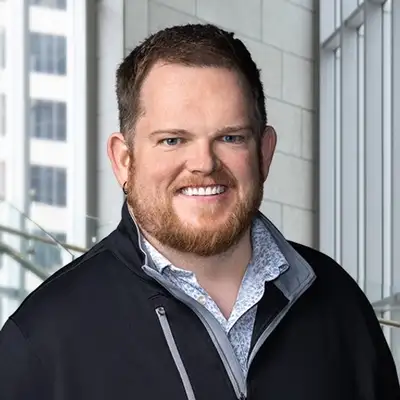
and I am here today with Dr.
Matthew Tyler, who is a dual certified
internal medicine and palliative
care doctor, and also the founder of
How to Train Your Doctor, which I'm
sure our listeners already know about
because he has thousands of followers
on Instagram, on Facebook, on YouTube.
So welcome Matt.
Dr. Matthew Tyler:
Thank you so much for having me.
It's good to be here.
Candace Dellacona: It's great to have you.
I just said to you before that I think
I have more questions for you than I've
ever had for any other podcast guests,
so I'm so glad to welcome you here today.
Why don't you tell our listeners a
little bit about who you are and what,
How to Train Your Doctor is all about.
Dr. Matthew Tyler:
Sure.
So I am a full-time hospice
and palliative care physician,
and I work in the hospital.
I work in our cancer treatment center.
And for those of you who are unfamiliar
with palliative care palliative care is
a medical specialty that provides support
in anything related to the stressors or
symptoms related to a serious illness
like cancer or heart failure or dementia.
And the real big picture goal of
palliative care is to give you
the best quality of life possible.
And so I am often meeting with
families, patients, caregivers, at
very difficult times in their life,
faced with big decisions about medical
testing, treatment interventions,
which ones make sense, which ones feel
like maybe they're a bridge too far?
And I help function as a sounding board
to make sure that these patients and
their families have the information
they need to make tough decisions
and the emotional support to think
through those help provide some.
Guidance on how to make
a plan to move forward.
Candace Dellacona: And so how did you
come to transition to find your, calling?
Because, for those of you out there
listening, the way that I found you, Matt,
was through Instagram because you were
putting out such amazing and helpful and
enlightening information, even for someone
who is tangentially related to this world.
How did you come to How
to Train Your Doctor?
Tell us a little bit about that
process and what you hope to do.
Dr. Matthew Tyler:
Yeah.
So my foray into social media and
talking about all topics related to
palliative care came from two big issues
in our field of palliative medicine.
One issue is that people don't meet
us early enough in their illness.
Palliative care often gets called
in, way too late compared to when
we could provide the most support.
The other observation being that even if
we were getting called a hundred percent
of the time the way we wish we would,
there aren't enough of us to go around
and you can't scale people as well as
you can, scale views on social media.
And so my hope by getting into
social media was just to show
people what palliative care is all
about and how it can be helpful.
The big goal that people would start
to kind of speak up and ask for
palliative care, demand palliative
care from their medical team to be
part of the support on their team.
Candace Dellacona: Amazing.
I recently had a guest on the podcast,
and one of the topics we were talking
about was the concept of supportive
care, which is obviously beyond the
medical treatment, let's say that
someone is receiving for cancer.
And so I love topics like this because
it really addresses the person as a
whole and often the family as a whole.
I think one of the things that
I've noticed with a lot of
families is the confusion between
palliative care and hospice.
So how do you explain the
difference to families and their
patients about the difference?
And you sort of touched on this as a
two part question is how and when should
the palliative care ideally begin?
Dr. Matthew Tyler:
Yeah, so I find easiest to differentiate
palliative from hospice care in that
palliative care is needs based and
hospice care is prognosis based.
So you are eligible for palliative
care from the moment you receive
a serious illness diagnosis.
So the moment you're getting advanced
dementia or a cancer diagnosis, if you
have concerns related to the quality
of your life, how treatment's gonna
impact that, and how the disease is
gonna treat that how well it's gonna
work, how it's gonna make you feel,
you're eligible for palliative care.
And we have, there was a landmark
study back in 2010 that showed patients
who got connected with palliative
care at the beginning of a stage four
non-small cell lung cancer diagnosis.
You know, we all sort of figured if
you get connected to palliative care
early, you have a better quality
of life, which ended up being true.
But the kicker was that those folks
ended up living longer with a better
quality of life with less intense
treatment than the folks who got
palliative care later on or never.
And palliative care, again, needs based,
if you have concerns about quality of
life with an underlying serious illness
you should be asking for palliative care.
You should be expecting it,
but definitely asking for it.
Hospice care on the other
hand is prognosis based.
Meaning at the end of the day it's an
insurance benefit that you are eligible
to use if you have an underlying illness
for which, if it runs its expected
natural course, your doctor believes
that your time is six months or less.
Candace Dellacona: So the magic
number for hospice is the anticipated
expectation or prognosis of six
months or less, which should be a
pretty good indicator why palliative
care is not the same as hospice.
And so you know when you are someone who
requests the palliative care piece, can
a patient also be provided the curative
treatments or the treatments that you
had been receiving for cancer all along?
Dr. Matthew Tyler:
Yeah, absolutely.
The best part about palliative
care is that you can get it
alongside all your other treatments.
So as I mentioned, I take care of folks
in the cancer treatment center and
I'm working alongside the oncologist.
They're doing the chemo, the
immunotherapy, and I'm doing the
symptom management, the emotional
support, the planning for the future.
We work together.
One of my pet peeves about how people
talk about palliative care is when
we talk about people going palliative
care or people that are in palliative
care is I worry that it perpetuates
a misconception that palliative
care is like a choice that you have
to make in lieu of something else.
You don't have to give up
anything to get palliative care.
It's an, it's extra support and
almost everyone I work with says
they could use some extra support.
Candace Dellacona: I think I've never
heard anybody say that they're good.
And they don't need that extra help.
If anything, the reason why this podcast
exists, the reason why your social media
platform exists and it's so successful
is because people are starved for
resources and don't know where to begin.
Dr. Matthew Tyler:
Yeah.
Candace Dellacona: When you think of
palliative care, or maybe when I think
of palliative care, I should say,
and perhaps some of our listeners,
you know what sort of care and things
do the palliative care teams most
commonly manage on behalf of a patient?
Can you give us some examples?
Dr. Matthew Tyler:
Yeah.
A standard palliative care team should
include multiple disciplines on the team.
Meaning docs, nurses, social
workers, chaplains, ideally.
And so how palliative care can
help will depend on, who amongst
the team you're working with.
But high level palliative care should
be able to provide some insight and
guidance on how to manage you know,
physical symptoms, emotional needs, how
you're coping with things, your kind of
spiritual and existential things like how
this illness is kind of impacting how you
see yourself in the world, the universe,
and think about the bigger picture.
They can also help with planning for the
future, getting your wishes in writing, if
you would find that sort of thing helpful.
Talking to your family about what's
going on, kinda getting them to rally
behind your wishes and coordinating
care with the other medical specialists
and making sure that we are all on the
same page about what we're doing and
why we're doing it, what to expect.
Candace Dellacona: Yeah.
And why do you think there seems to be,
aside from, let's say staffing issues
and the fact there are not enough
palliative care team members to go
around, what is the resistance or the
perceived resistance would you say among
other professionals and among families
when it comes to like this dialogue
and why is there so much confusion?
Do you, you thought about
where that's come from?
Dr. Matthew Tyler:
Obsessively yeah how long we got.
Candace Dellacona: Exactly.
Dr. Matthew Tyler:
I think there's a lot of pieces to the
access to care issues when it comes
to palliative care and connecting
when we should be connecting.
Part of that is that palliative
care did, at its core, come
from the Hospice movement.
Hospice was here first.
The modern day hospice came about from,
at least in the US the Reagan era.
Hospice as a philosophy goes back
much further, but the Medicare hospice
benefit was a Reagan era thing.
Candace Dellacona: Identified
during the 1980s for purposes of
hospitals getting paid or care
providers getting paid for the care
provided under the hospice umbrella.
Dr. Matthew Tyler:
Right.
Right.
Candace Dellacona: Okay.
Dr. Matthew Tyler:
And palliative care as a board certified
medical specialty is even newer.
Again, people were doing palliative
care and providing patient-centered
holistic support for a very long time.
But as a board certified specialty
that didn't come about 2008.
Candace Dellacona: Wow.
Okay, so it's really new.
Dr. Matthew Tyler:
Yeah.
It is new.
And with that comes the, there's
we're kind of in between generations
of medical people right now.
And there, there are doctors practicing
right now that just straight up
didn't have exposure to palliative
care when they're in training.
And again, that's a factor, not an excuse.
I think we've caught up with lots
of other innovations in medicine
and that were a lot newer than 2008.
So there's it's a piece.
I think there is a, palliative care, being
tied to hospice care in the name right.
I'm board certified in Hospice
and palliative Medicine.
So there is that by tying them together,
there's this conception that they
must be relatively the same thing, and
that can be a barrier to understanding
that they're similar but not the same.
And then you've got just a general
cultural barriers that no one
really wants to think about,
talk about death and dying.
It's still heavily stigmatized.
It's not really something people
are quite proactive about.
It's something that we just sorta keep
to the side until we absolutely need to.
So there's not a lot of hunger in the
general population to necessarily get
ahead of this and learn about this.
Although I think that's changing, but
it's certainly a barrier for many.
Candace Dellacona: So, going back
to like your first point, right?
When it comes to the actual care
providers, if they are, esteemed enough
and have enough years under their belt,
it was not part of their medical training.
Dr. Matthew Tyler:
Right.
Candace Dellacona: And so when you think
about that from a caregiver's perspective
or our sandwich generation members that
are listening that are at the bit to
get these questions answered because I
know they struggle with these things.
When you have a care team that perhaps
doesn't have the training on it.
How do you suggest they bring the
subject up with the care team?
Do they just say, I want a palliative
care consultation with the team
that must be here at the hospital?
Dr. Matthew Tyler:
That's where I'd start.
Yeah.
To say I'd like a referral to palliative
care if you are taking care of someone
who is in the hospital asking, do
you have a palliative care team here?
If so, i'd meet them.
That's all you should have to do.
If you're meeting with your doctor
in clinic, asking for a referral
to a nearby palliative care team
would be a great place to start.
Candace Dellacona: And I think it's
important to think about too, is
that's a big piece of advocacy, right?
Particularly if the patient, him
or herself or themselves cannot
articulate things like that or
it's something that they perhaps
haven't thought about independently.
And the other thing you brought up is
that even your title saying that you're
board certified in palliative care and
hospice, and tying it together with
that moniker and the stigma of that.
How do you see your role as a
practitioner to untangle that,
to take the stigma out of it?
I think you're doing it by, by
being out there every day on your
How to Train Your Doctor platform.
But are there other things that
you're doing that you see in your
everyday life, either with patients
or your colleagues about trying to un
unravel that for them and unpack it?
Dr. Matthew Tyler:
So we're speaking specifically about
stigma amongst medical professionals?
Candace Dellacona: Yeah.
And stigma among the moniker of like
palliative care and hospice tied together.
So like to the outside world, whether
you're the patient or you're another
professional that maybe hasn't been
trained in it or resistant to it, or
you're so focused on curing, you don't
wanna think about things like that.
Dr. Matthew Tyler:
I think about that in the same
way or if you're familiar with
the innovation adoption curve.
Are you familiar with that term?
So there's this concept
of a bell curve, right?
You've got the early adopters, the
folks that sort of follow behind when
someone else has shown this is a thing.
And then you've got the folks who are
you're never gonna do the new thing.
And you think about
like telephones, right?
You got the folks out there the
proud few or the first ones in
line for the very first iPhone.
You've got the rest of us that maybe
by like the iPhone four or five or six
were like, oh, maybe this is gonna be a
thing and maybe get rid of my Blackberry.
And then we followed suit at that point.
And then you got those folks
who, if they still sold them,
they would have a rotary phone.
And I use the same concept
when thinking about palliative
care that's in my practice.
Going through the work in the hospital
and the clinic, I am looking for the
folks who get it and that really don't
need rigorous convincing education
that this just inherently a good thing
and that this is, by all metrics,
standard of care in many respects now.
And I reach out to them
and say, how can I help?
And how can we do more work together?
A great example at our hospital was that
we started as a hospital based team only.
We were only seeing folks in the
hospital to talk about symptom
management, care goals, care
coordination, that sort of thing.
And the oncology group came to us
and said, we love how you're taking
care of our patients in the hospital.
We would love it even more if you came to
clinic and saw our patients in clinic too.
Tell us what you need.
We'll make it happen.
Candace Dellacona: Wow.
Dr. Matthew Tyler:
And yeah, there was no doors
needed to be beaten down at all.
They saw the work.
They got the work, and so
we said, yeah we're there.
Let's figure this out.
It, meanwhile we got, residents coming
to me once a week at least saying,
so-and-so primary care doctor oh,
we've been trying to convince them
to get a palliative care referral.
They just won't do it.
I'm like, I say, okay, like there's
just some folks that's at some point we
move from, can't get it, won't get it.
You've done the education you've given
the talks, you've given the grand rounds.
I've done all that and at some point
folks just don't want to practice a
different way, and there's only so
much you can do so I'm always one that
believes in you lean into your champions.
Grow.
Grow with the people that you know
wanna grow with you and the will follow.
Candace Dellacona: Yeah, I mean,
I think that's good advice.
And when you think about,
the family in general.
Aside from the practitioner's
perspective, a lot of things that
families struggle with in the context
of the medical world and as advocates in
the sandwich of the sandwich generation
is communication and decision making.
And that's in a bit of my wheelhouse when
it comes to signing documents where you're
appointing people to make decisions, and
I know that families often feel really
overwhelmed by medical information.
Just in general, the diagnosis and
what to do and what comes next and what
should happen and what could happen
if this doesn't work, kind of thing.
So how do you see or what do you do
with respect to your palliative care
team to help the patients clarify
what their goals are, if they have
a hard time communicating that?
Do you have any advice for that?
Dr. Matthew Tyler:
Yeah.
And it's I'm glad you asked this
'cause this sort of reflects how,
what, How to Train Your Doctor means
to me compared to when I started this.
So I, I started doing social media
and videos back in 2022 under the
handle How to Train Your Doctor.
And at the time I was very much focused
on giving patients and caregivers like
phrases or questions to bring to the
medical team to be better self advocates,
engage in these complex conversations.
And I, I love the idea of it.
But I was repeatedly hearing from
folks, Hey I'm asking for this stuff.
I'm asking my doctor to have
a bigger picture conversation.
They keep shutting it down
what am I supposed to do?
And after hearing about enough, I've
shifted really what I'm trying to
Candace Dellacona: What are, so
what were the conversation starters?
So tell us a little bit about your tips
that you'd provide to those people.
Dr. Matthew Tyler:
Yeah so the training got back to the
notion that, as we talked about palliative
care being relatively new in the
medical field, so to our complex medical
decision making communication skills.
And the reality is doctors don't get
trained in complex medical communication.
We get trained in complex
diagnoses and treatment,
Candace Dellacona: In treatment, yeah.
Dr. Matthew Tyler:
making difficult decisions that
don't have a medically speaking black
and white, right or wrong answer.
Medical decisions that are highly
dependent on patient preferences
and trade offs they're willing to
make or not make as human beings.
We're not trained in that.
That it is happening.
I think the younger generation
of doctors coming through are
getting exposed to more of that.
But it's still more of the
exception, not the norm.
And again, I promise I'll answer your
question when I talk about training,
when I talk about How to Train Your
Doctor, it was more with that in mind
where I was trying to help patients and
their caregivers nudge their doctors
into these conversations, knowing
that doctors weren't really taught
how to initiate those necessarily.
Candace Dellacona: Yeah.
So the burden on the family
or the patient really.
Dr. Matthew Tyler:
For a lack of any better alternative
Candace Dellacona: all due respect, right?
Dr. Matthew Tyler:
Yeah.
We can't snap our fingers and kind
of change the medical culture.
Candace Dellacona: no, of course not.
Dr. Matthew Tyler:
Uh, And a lot of patients and
caregivers presume that if there
was something serious to talk about,
their doctor would bring it up.
Candace Dellacona: True.
Absolutely true.
Dr. Matthew Tyler:
And that is sometimes
true but not always true.
And in many times, the doctors look
into the patients and their caregivers
to float out big questions before
they, they jump in because they're
worried about upsetting them or
giving them too much more, too much
Candace Dellacona: so interesting.
It's just to go back to that so if you
think about it in practical sense, and
I've been there as a family member we're
like relying on the doctors to be telling
us like, okay, what does this mean?
And then the doctors are waiting us
on us to ask those big questions.
And often both parties walk away okay,
as the caregiver or the advocate, I
guess if they thought I needed to know
something, the doctor would've told me.
And then the doctor leaves the meeting
saying if they had questions about what
this meant, they probably would've asked.
That, that's sort of what you're saying.
Dr. Matthew Tyler:
Yeah.
So the early mission of How to Train
Your Doctor was, prompting patients and
caregivers to say, Hey, doc a quality
of life is really important to me and
I'd like to talk more about how this
illness is gonna impact my quality of
life and what changes should I expect?
What decisions should I prepare for?
Let's talk about getting a
backup decision maker in writing.
I'd really like to know about prognosis.
Can you gimme some, a general
ballpark about what to expect?
And it was, and I think I was offering
those questions through the lens, through
the personal lens that if someone asked
me those questions, I would love to engage
with them in a conversation about that.
And I'd have thoughtful answers to hope.
Hopefully I'd have thoughtful answers
to give them in exchange for sticking
their neck out there to ask those things.
Candace Dellacona: As a trained
palliative care doctor though, so you
were much more, you had the faculty
to answer those direct questions,
whereas other physicians, perhaps not.
Yeah.
Dr. Matthew Tyler:
And at the same time, knowing that
a lot of my colleagues were not
powertrain, are still, willing to jump
into those conversations when prompted.
But at the same time
there's a lot who aren't.
And when do caregivers and
families and patients stick their
necks out to ask the questions?
They really do just.
Get shot down.
Like, I don't talk about that,
or don't worry about that.
One day at a time, just like garbage
like that is not particularly helpful.
And so over time I've really shifted
like the training of How to Train Your
Doctor that I really am speaking to
these days is more so just getting the
palliative care referral from your doctor
and training them to reach for palliative
care and to pull 'em onto your team.
Because that team is equipped to talk
about the hard stuff and synthesize the
information and put it into the context of
what matters most to you and help you plan
for the future to keep you in the driver's
seat of your life for as long as possible.
And that's really become, I think
A more realistic and B, easier for
people to wrap their arms around when
they're already, neck deep and medical
life as it is and dealing illness.
Candace Dellacona: But I think what you've
done with How to Train Your Doctor is, a
movement by groundswell, which is, maybe
it wasn't the most efficient way to try
to have the other practitioners step in.
But putting that information
out there, you're creating more
educated patients and families.
So I think by virtue those, the doctors
who are perhaps behind the eight ball
a bit will be brought up alongside
with everyone else, and hopefully
there'll be some catch up there.
Communication is so important
with decisions like this.
And one of the things that I talk
about with clients when we're
signing, let's say healthcare proxies,
for example, here in New York.
You're only allowed to appoint one
agent and then one successor agent.
You can't have two agents because
in the event of a disagreement,
what do doctors do, right?
So how do you help family members
when, you know there's conflict?
And do you have suggestions to help
families navigate these really difficult
situations where some loved ones
may disagree about the type of care
being received, let's say medicine
to manage pain, but the patient
isn't alert or something like that.
Do you have any suggestions for those
folks out there looking for that?
Dr. Matthew Tyler:
Yeah, so navigating family disagreements
about how to proceed with medical care.
I'll say, there's always
gonna be fringe cases.
I'll answer this from the lens of my
experience that most family members,
even when they disagree, they're
advocating for their loved one, the
best way that they know how, and that we
all have our loved one's best interest
at heart when we into these conflicts
and that's why they get so heated.
Putting aside all the sheisty stuff
we've seen about financial conflicts
of interest, 'cause I think those
are far away minority cases compared
to what's usually going on, which is
people are scared, people are confused,
they're not medically trained, and
they're just trying their best.
Uh, and in those situations, I
think what is the most helpful
starting point is requesting a
family meeting from the medical team.
It's much easier to do in the hospital,
but you can organize it in clinic too.
But really setting aside a time
to have everyone who has a vested
interest in this medical care plan
on the family side, medical side.
To really sit down and make
sure that we're all operating
from the same playbook.
What is going on?
What changes are common with the disease?
What decisions are on the table?
And also what are the expectations
from these different interventions?
Do we have the same information
about how feeding tubes help or hurt
folks with dementia, for example?
Yeah we're pushing mom to do chemo, but
is the oncologist even offering chemo?
Let's sort this out first and let's
sort out what they think about the
benefits or not of said treatments?
And I would say most of the time when
we have to just gather in one room or
whether that be physically or virtually
and have one conversation, most of this
confusion and disagreement dissipates.
Beyond that, as often as I can,
I try to bring back the patient
voice into the conversation.
And if the patient can't speak for
themselves, I think there is a common
trap question that medical folks
will ask or that families will ask of
themselves, which is, what would mom want?
What would dad want?
And I think that is a very sticky
question because when you're very sick,
even dying, what most people would say
they want is to get better, be stronger,
Candace Dellacona: Yeah.
Yeah.
Dr. Matthew Tyler:
go back home.
And it leads us down this road of,
talking about things that aren't really
possible and sidesteps needing to
make some really difficult decisions.
And what we really need to do in
these sorts of situations where this
disagreement is come back to the person
and their core values and how they
prioritize what's most important to them.
And so rather than asking, what would
mom want, what would dad want, I'd
say, if your dad could, understand
the situation as we've laid it
out to you, what would they say?
Tell me what they'd say
about what's going on here.
And, yeah, because it really, I think
we get much too fixate on outcomes and
choices before spending some time with
values and priorities and the process
of just prioritizing what matters most.
And if we spend some time talking about
what matters most to this person, trade
offs to be willing to make or not make
for more time and what to do next is
gonna be a lot easier to sort out.
And again, conflict is, tends to
dissipate a lot more once we start
with, okay, medically, what's possible?
What are the trade offs here?
And then what trade offs is
this person willing to make?
What would they say about this?
Candace Dellacona: Right, right.
I think, you bring up a really great point
about what would mom or dad say about
this and when I have clients sign their
advanced directives from a healthcare
perspective, one of the questions I ask
them when they're considering certain
agents to be the one to speak for them is,
I wanna make sure that the person you're
appointing is a good advocate for you
and not a shrinking violet with doctors.
And can ask for the attention.
But not so strong that they
are substituting their wishes
for the patient's wishes.
And that's what you said.
And there's a real balance there, right?
Between advocating and being super
strong and then maybe shutting out the
voice of the patient and always going
back to what does the patient want?
Dr. Matthew Tyler:
Yeah I was just the other day talking
to a patient who was thinking about
changing the names on their healthcare
Power of Attorney document, and
they had their sister on there and
they were like my sister lives outta
state, so I think I might I pick this
friend who lives close by instead to
be my healthcare private attorney.
And I said look, it's certainly,
it's helpful to have a healthcare
surrogate who is available locally
and could come to the hospital.
God forbid you're hospitalized, but far
more important to have a backup medical
decision maker who just understands
your values and your priorities and
step up to make potentially like really
high stakes life or death decisions.
Because it's your POA, your power
of attorney, is rarely ever making
easy decisions or low stakes things.
It's when you're so sick that we need
to have a thoughtful conversation about,
quality of life versus living as long
as possible and different decisions.
Those are the things that
power of attorney most
commonly gets called in to do.
So ideally, pick someone who can speak
as if they were you and will, speak
up to make tough decisions if need be.
Candace Dellacona: And just for
clarification purposes, so you're in
the Midwest and so in some states in
the Midwest healthcare directives are
called medical or healthcare powers of
attorney Here on the East Coast, they're
mostly referred to as healthcare proxies.
When Matt is referring to a power
of attorney making a decision
for medical purposes, it's
a medical power of attorney.
And one of the things that
you said at the top of.
Our discussion was talking about
the spiritual piece, right?
Because you were talking about
the whole person and viewing the
whole person in a way that takes
into account their quality of life.
So how do you help patients
incorporate, let's say cultural
beliefs or their spiritual concerns?
Here in New York people of the Jewish
faith even have a halachic living
will which is governed by Judaic Law.
How do you help patients incorporate
those beliefs maybe that you're not
familiar with, into their care plan?
Dr. Matthew Tyler:
Yeah, so I think a couple
things on that front.
As a as a physician, a specialty
physician at that, I think the
best place to start is by asking.
I try to highlight and make a habit of
asking, how are you spiritual, religious?
Many people are and many people are not.
But for folks who are, I'll
ask you, how does that fit into
your medical care right now?
Is there anything that's important to know
about how your spirituality or religious
beliefs might impact your medical care?
And that is typically where,
folks who are Jehovah's Witness
may, say no blood transfusions.
And I think similar to your question,
if there's anything important to know,
I have to keep an open mind 'cause I
don't know how they all work for people.
But I make a point to ask and if there's
ever, a particular decision we need to
make, and I'm not sure how religious
beliefs fit in and nor is the patient,
we always encourage 'em to reach out to
their community, religious leaders and
get their input whenever possible too.
'Cause we don't, the nice
thing about my job is I don't
have to know all the answers.
And often I try to connect
'em with the folks who do.
Candace Dellacona: Of course.
And reminding them that they can
do that, that those are, certainly
great questions for them to ask.
Turning the topic a little bit.
There's been a lot of talk, especially
at the beginning of the year of,
healthcare coverage and the logistics
related to Medicare and private
insurance and how people pay for things.
So is there something from a physician's
perspective, that you'd like to
share with the listeners about what
families maybe should know about
insurance coverage as it relates to
their access with palliative care?
Dr. Matthew Tyler:
Unfortunately, like everything in
healthcare that what your coverage
looks like will depend on your plan.
So you your big ones that are being your
private insurances or a Medicare Advantage
plan that's run by a private insurance
or traditional Medicare, speaking
to the 65 and over population here.
So palliative care referrals are just
like any other specialty referral.
So, if you need a referral versus if
you can self-refer, what's your copay
gonna be and all that stuff will be as
relevant as it is for anything else you're
getting in your healthcare right now.
Candace Dellacona: A referral, like a
traditional referral as you'd think if you
need a referral for an orthopedic doctor.
Dr. Matthew Tyler:
Yeah.
For most people, yeah, you do
have to get a physician referral.
And there are a plan, I think PPO some
PPO plans do allow you to self-refer.
So If you have a self, it's always
good to know how your insurance works
in general to avoid nasty surprises.
But I would always check to see
if you can, if you have a plan
that allows you to self-refer.
If you do have a plan that requires
physician referrals for palliative
care, I was, I just had a, someone
asked me about this the other day, but
they they said, well, what if you're
getting cancer treatment and you ask
your oncologist for a palliative referral
and they say, no, you don't need that.
What do you need palliative care for?
And, or what do you do?
And in situations like that, you don't
need that specific doctor's referral.
You can go to your primary care
doctor or your geriatrician and get
a referral through them if you like.
Or you can talk to the social
worker or nurse and have them,
apply a little like inside pressure.
Candace Dellacona: Right.
Dr. Matthew Tyler:
it's often the nurses and the social
workers and chaplains who understand
the ins and outs of palliative care
more so than the doctors and many
times and can know how to like, say the
thing to get the thing that you need
Candace Dellacona: Right, the right
words and phrase it the right way.
Dr. Matthew Tyler:
Yeah.
Yeah, you know, there are a lot
of avenues you can go that way.
And, but while we're on the topic
of insurance I do wanna call out
that hospice works a lot differently
when it comes to insurance coverage.
And I think probably the main things
you know about hospice care is it's all
covered through traditional Medicare.
So even if you have an advantage plan,
if you're moving to hospice care, you get
kicked back over to traditional Medicare.
And in, in that case, your Medicare
hospice benefit covers everything
provided by the hospice agency.
The nursing visits the social work
visits, the medications, the equipment
like the bed and the wheelchair,
the oxygen, that's all covered by
your Medicare hospice benefits.
Candace Dellacona: Which is amazing.
I think one of the things that leads to
some confusion for my clients anyway,
and I think just in the public at
large is that when someone is, fits the
category of hospice and they receive
the hospice, I guess diagnosis, if
that's the right terminology, there's
also an assumption that they'll receive
home care services through hospice.
I think what's really important to
distinguish for people is that the care
that you receive is actually a nurse,
which is considered skilled care to come
in and check up on you, but that does
not, hospice does not automatically cover
the home care attendant role, which is
the activities of daily living, which
are often really needed with someone
who's on home hospice but is not covered
through home hospice and Medicare.
Dr. Matthew Tyler:
Yes, this is a major gap in the
Medicare benefit in general.
As you said it's most noticeable
when it comes to hospice care.
But as you're getting at, there's
no scenario where Medicare will
pay for private in-home caregivers.
Which is a real shame as often that
is the difference between being able
to live the rest of your life in your
own home or having to, to move to a
nursing home and spend all your money
and apply for Medicaid and have Medicaid
pickup the bill from the nursing home.
But that is a major gap that I
am talking to families about on
a almost daily basis these days.
And you're right.
It's an expectation.
If you're sick enough to need hospice,
then most people find themselves needing
24 hour supervision and are shocked to
learn that there's no mechanism through
most major insurance plans, including
Medicare, to get that sort of support.
Candace Dellacona: And people in the
sandwich generation are often those
that are filling that gap and trying
to pull that need, whether it's a
daughter or in my case, I was a niece
trying to coordinate all of that.
So yeah, I mean it's really helpful
to know that in advance and understand
that there can even be a significant
financial burden with that.
You've been so generous with your time,
Matt and I only have one more question
and then I promise I will let you go.
What do families often say to you,
that they wish they had known sooner
about palliative care and hospice
and anything under your umbrella?
Dr. Matthew Tyler:
Most people ask why we haven't been
involved sooner is really the big thing.
One, one of the other common questions
that families would ask is really
just, what should I be asking?
When you're thrown into this situation,
you know, caring for a parent who's
getting sicker, for most people,
they're doing this for the first
time and for most people, they're not
medically trained and they have no
idea what's normal and what's not.
And especially in medicine where the
whole thing's a dumpster fire, medicine
doesn't function like a business or
a law firm or these other operations
that just make more logical sense.
And there's an order to things that
just, it's not the same in medicine and
it's hard to reality check yourself if
you're not familiar with the territory.
For most people, once they meet
us, they ask where have you been?
Like, why weren't you involved sooner?
And that's why I am on social media
talking to people about palliative care.
So they know to ask for us sooner.
'Cause there's a good chance that they're
gonna bring it up before their doc does.
Candace Dellacona: I started this podcast
because I wanted to provide resources as
I said and you are the perfect example
of someone who shares his knowledge
to people that really need it and are
searching for it, and you're helping
people like me and the sandwich generation
survive and thrive and figure it all out.
So from the bottom of my heart,
thank you so much for taking time
away from your schedule today to
share all of your knowledge with us.
And we're gonna have all of your social
media profiles in our show notes, so
that our listeners can follow along
and learn as much as I have from you.
So thank you so much for
being here today, Matt.
Dr. Matthew Tyler:
It was a pleasure to be here.
Thank you for having me.
Candace Dellacona: Yeah, my pleasure.