Subscribe
Share
Share
Embed

Welcome to Skinside Out, where science meets beauty, the ultimate dermatology podcast! Dive deep into the fascinating world of skin health with expert insights, evidence-based discussions, and myth-busting truths. Each episode explores the medical, cosmetic, and surgical aspects of dermatology, while keeping you informed about trending skincare topics. Whether you’re a skincare enthusiast, medical professional, or just curious about how to achieve your best skin, Skinside Out is your go-to resource for staying informed and inspired.
[00:00:00] Speaker: I wanna get specific now about, um, the Noor Longevity Program.
[00:00:05] Speaker 5: I'm really excited to kinda unveil this program. So this is a very structured program, so we want to be there partnering with you every step of the way, and this is going to be a very close personal relationship with our team. And we want to help you with all your health needs, what you want to optimize, and also on your skin health journey, we want to help you look and feel your best.
Real skin, real science, real confidence with Dr. Zade Hussain. Welcome to- Skin Side Out
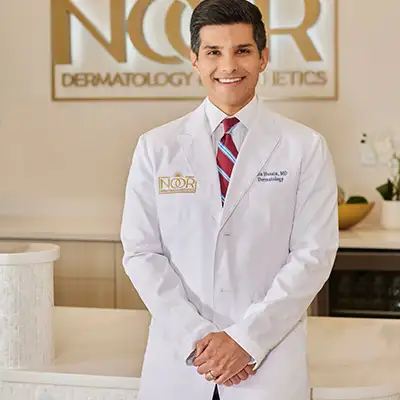
[00:00:44] Speaker 5: I'm Dr. Zain Hussain, for those who don't know me. I am a board-certified dermatologist, um, fellowship-trained in cosmetics and Mohs micrographic surgery for skin cancer reconstruction.
I founded Noor Dermatology actually, what, three years- Mm-hmm. Yeah ... um, where we opened our doors on, I think, October seventh, so it's next week. So, um, you know, we built it from scratch, um, with a vision to provide the community with the best possible care, and I think
[00:01:12] Speaker: we are well on our way.
[00:01:13] Speaker 5: Um, so it's been a great journey, and I have loved educating my patients most all, um, and using this platform of a podcast has been such a fantastic way to, you know, spread truth, information about skin health, , because we live in a world of misinformation.
Um, so I have been so privileged to work with my team, um, who will introduce themselves. But thank you all for coming, and, you know, this has been an idea in the making for over a year, um, with Rick and I, so I'm just so excited to see it finally blossom and, you know, come to life.
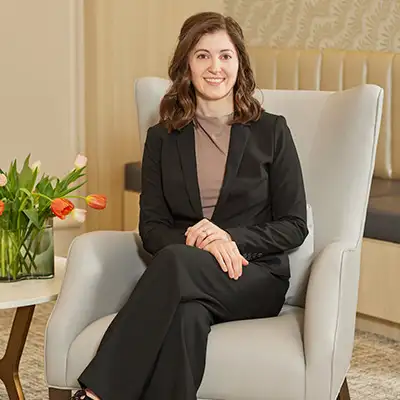
[00:01:52] Speaker 6: I'm Heather Murray. I'm a physician assistant at Noor Dermatology, and I started my PA career in primary care, so I did a lot of family medicine, and then really found my niche in dermatology.
, I think Rick kind of explained it very, um, well, that the skin is giving us so many clues as to what's going on on the inside of the body, and that really kind of, um, hones in with how I feel about skin too. I've done a lot of training with lifestyle medicine, and so I'm really happy to see that this is kind of coming to fruition, um, because I do think that the skin gives us so many details as to other things in the body.
And so I'm happy to, um, to share the longevity program with you guys.
[00:02:35] Speaker 2: my name's Courtney, Courtney Carroll. So I am a licensed esthetician. I started as a medical assistant in dermatology, which gave me a really nice foundation, um, to kind of have knowledge of, you know, what medications patients might be using, um, what conditions they might have, and kind of working adjacently with, um, our providers.
So, um, I started aesthetics, uh, maybe eight years ago now, and I absolutely love it. I love being able to help patients, uh, feel their best, look their best. I think when you look better, you definitely feel better. Um, at least I do. Me too. Um, so it's been a really nice journey coming into Noor, um, being able to work with amazing providers and amazing staff and patients, and it's just been a real blessing.
[00:03:17] Speaker 5: I also wanted to introduce one of our panelists who couldn't make it today, uh, Dr. Fatima Syed. She's actually part of our team as well as a consultant, so she is a, an associate professor of medicine at Duke University, um, internist, phenomenal clinician, and she has, um, you know, training in endocrinology.
So she has helped us develop, uh, this program as well. So, um, she couldn't make it today, but, uh, she's part of the team even though she's not here.
[00:03:45] Speaker: So fantastic. And, and welcome to everyone here too. You're a part of this process as we get into the Q&A side of it, of, of the questions obviously. But also what we learn from patients, I think, gives a, a level of richness and depth that always helps the practice.
So let's kick it off. The first question I have, you know, longevity is kicked around all the time, the term. What, what are we talking about when we, when we talk about longevity, particularly in the clinical applications of trying to bend the curve on that and what it means perhaps to you, the practice, the philosophy?
[00:04:16] Speaker 5: Yeah, I think the discussion around longevity really has to shift more to looking at health span versus lifespan. So a lot of people think of longevity, "Hey, I wanna live longer." But I think the focus should be more on living well for the longest period of time. So say I am, you know, 95, but I am bedridden, I have chronic diseases for the last 15, 20 years of my life, what quality of life are we looking at?
What we wanna do is optimize health so that we can get the best and most out of our lives when we have the energy, when we have the, you know, ability to really enjoy the things that life has to offer. So I do really think that's where the conversation needs to go.
[00:05:03] Speaker: Yeah, I'd love to hear from the team also what their, their thoughts are on, on, on longevity, the notion of longevity.
[00:05:08] Speaker 6: I think, um, not only improving the quality of life, but also incorporating that, um, not necessarily, like, trying to age backwards, but trying to feel like you're aging gracefully. 'Cause everybody's gonna age. It's gonna happen. So how can you look and feel your best doing so?
[00:05:26] Speaker 2: Yeah, I agree. I was gonna say, just being able to feel your best, um, for a longer period of time. And, um, it's funny, you know, the term biohacking, I feel like has been around for the past few years, and what is biohacking? It's, you know, just optimizing your, your health and, um, things that you're doing that play into that.
So I think that's kind of, uh, the concept here is being able to, you know, use the tools that we have in our toolbox to, to feel our best.
[00:05:50] Speaker: Now let me, let me, um, kind of put it through the frame and filter of, say, a- an individual, uh, coming, a potential patient saying, "You know, I feel pretty good. Um, there are areas where I, I, you know, I could do better."
Uh, what would you say to them? What's the... W- what is the offering when we think about, "Hey, here's what you can, uh, achieve. These are the gaps that could be covered with perhaps what you're getting through a traditional relationship with your provider," that we would say is different with respect to, um, the longevity approach?
[00:06:24] Speaker 5: So I think when a patient comes in and kinda discusses what parts of their lives they want to improve or optimize, I think that requires a deep analysis as to what is going on in their health What we can do to improve those measures, and, you know, those interventions need to be something that, you know, can be measured and monitored, and so we can see a progress.
So with these patients, I would love to first get a detailed history, find out what's been going on throughout their lives, any, you know, conditions that they mu- may have been dealing with, but also, like, what their goals are. We really need to understand that because we can't really define that for our patients.
They really have their own individual goals, and if we're able to spend the time to listen to them, then we can help, you know, them on their journey to kind of reaching those goals.
[00:07:21] Speaker: Yeah, if you perhaps had someone who is a, a, a younger person, an up-and-comer on the executive track, their thoughts and what they want to achieve with respect to their goals may be very different from someone who is 65 years old saying, "Been there, done that, want a different set of outcomes for myself."
[00:07:41] Speaker 5: Yeah, and that's where personalization comes into play. I mean, we are looking at two different individuals, two different goals. They have also different biological needs, and we really do have to look at that in the context of overall health because, yes, that younger patient is gonna have different needs and different goals than, say, that 65-year-old patient.
So we really do have to take an individualized approach with these patients.
[00:08:06] Speaker: And I, I'd, I'd love to hear from the ladies on the panel too because I think there's probably, uh, you know, obviously everyone has their own trajectory, but perhaps how I approach it as a male versus female may be, may be different as well with those gender differences and with respect to everything from hormonal changes to other aspects of, of the journey.
[00:08:25] Speaker 6: somebody might need to, based on, um, how they're feeling or maybe based on certain laboratory values, maybe they need to focus more on cardiovascular health or cardiometabolic, um, health, whereas somebody else might need to be focusing on inflammation in general, whether that's stress, sleep hygiene, um, nutrition, and stuff like that.
And so I think, um, another example would be hormones, for example. Um, hormones are very different for everybody, and just because you're 52 doesn't necessarily mean that you have to go on hormone replacement therapy. And so it really just depends on what are you experiencing, how are you feeling, kind of correlating that with what your, your biomarkers or laboratory values look like, not just saying, "Oh, your estrogen is low.
You need this."
[00:09:20] Speaker 2: I think hormone replacement therapy has been such... It's had this huge boost the last couple years, and I know so many patients who are, are, you know, on it. And for some people, I think it does work very well, but there are definitely others who are not seeing benefits.
And so, um, I think there's still a lot to be done as far as studies for women, um, especially perimenopausal. I think that's such a huge thing that, you know, every woman goes through, um, that really needs to be researched a little bit more, and just fine-tuning what might help that specific woman kind of, uh, get through that period of time.
[00:09:52] Speaker: You know, uh, that boosting, that social media piece, there's so much that's out there. How do you look, uh, at what folks might come in with with their preconceptions based on what perhaps they've been influenced on social media? How do you, uh, modulate that with expectations, and what is the difference between what I'm looking at for optimization and the endpoints versus what's practical and realistic, and I would say evidence-based?
[00:10:18] Speaker 5: Yeah, I mean, that's the key word, evidence-based. We need to have data. We need to have studies that can actually show that these interventions actually make a difference, and that they're safe. And, you know, with social media, there is, like, no filter. Like, you can get misinformation, just get easily influenced, and start taking, you know, matters into your own hands and interventions that can be harmful.
So I would always say presenting the data is the most important thing when discussing, you know, interventions with a patient. So whether you're taking a medication or you're going to be starting a peptide or, you know, doing some topical therapy, we need to have evidence for that to make sure that it's safe and that, you know, there's gonna be no harm, because that's part of our job.
Like, we took an oath to do no harm, so we have to make sure that we uphold that.
[00:11:10] Speaker: Yeah, and I don't want to assume anything here, but, but I'm, I'm sure that there are modifiable drivers that are short of, you know, a, a prescription. That's also part of what you do in, in the coaching and, and- Yeah ... uh, patient encounter.
[00:11:26] Speaker 5: I mean, I think lifestyle is so important. And actually, Heather is our lifestyle guru, so maybe I'll have you take that one.
[00:11:32] Speaker 6: There's lots of different things, like kind of I mentioned earlier, nutrition, sleep, um, stress, exercise.
alcohol use, I think. But anyways, um, there are things that we can modify that can give us certain results to our health. And, um, you know, there's lots of different details that we can go into, but this is the, what I see as the foundation of, um, a longevity platform.
[00:12:04] Speaker 5: Yeah, because genetics we can't modify.
[00:12:05] Speaker 6: Yeah.
[00:12:06] Speaker 5: We're born with that. But there are interventions that we can make, and can make a dramatic difference in our lives.
[00:12:12] Speaker: Yeah. The one, uh, piece that I, I hear come through as a, as a theme certainly in your practice has been the personalized approach. I think obviously starting with skin health, dermatology, everything you do there, now going into longevity.
Tell me more about, and tell the audience more about what you mean by that. And, and if we could get a little granular, even, you know, at the laboratory basis or testing or what you would, uh, utilize and leverage to have that component of, I would say, a high-fidelity look at someone's personalized care.
[00:12:43] Speaker 5: Yeah. I mean, I like tying it back with my own experience through my journey. Um, obviously as a dermatologist, we were taught all about skin health and how to improve and optimize things. But, you know, we really aren't taught to look at it from a, you know, holistic kind of standpoint, where we're looking at other systems together, and that's something that I noticed with myself.
Um, I, you know, would obviously take really good care of my skin, but there were other parts of my life that weren't doing that great. And, you know, I found that out through biomarkers and, you know, seeing that there are definitely areas that I was deficient in, you know, and I, you know, was having, you know, like, low energy.
I was, you know, having, you know, changes in my mood. Um, you know, I had, you know, young children, a lot of stress, you know, and it's something that I started seeing that I needed to make a change because sometimes it does manifest in your skin. But also once I started taking care of myself, I found that not only did I feel better, my skin looked better, and I was showing up and really, um, making that a part of, a big part of my life.
And when we're looking at a patient who's coming in for help, I mean, we are really diving into all those factors that Heather had mentioned, um, the social factors, the environmental factors, what we can do, um, in our lives to help optimize. So that is really important during our evaluation when we're talking to patients, what we can do and what interventions will make the biggest difference.
Sometimes we have to prioritize and, you know, based on biomarkers, you know, some things are more important than others. But all in all, once you treat your health, I mean, your skin health improves. I mean, skin health is part of your health, and a lot of people don't recognize that. And, like, this is the part of our bodies that we show up to the world, right?
This is part of our identity, and that's the first thing that people notice when they see us. So once we are healthy, our skin is healthier, and I think that philosophy kind of goes throughout our entire practice, and that's one of the reasons why I thought that this approach To looking at how we can improve our skin health, um, through these internal, um, mechanisms would be, like, the best way of doing things- Mm-hmm
and preserving that.
[00:15:07] Speaker: Yeah, and I, I don't wanna, uh, characterize it this way, but it might be the simplest way. I mean, skin is a proxy for so much of what's going on- Mm ... inside your body. Mm-hmm. And the approach, uh, f- through longevity, using that as, as probably the, the, the marker that is m- most apparent, is going to get everyone's attention, right?
I mean, you're in the mirror every day. Mm-hmm. And you could see the improvement over time.
[00:15:30] Speaker 5: I mean, the skin's a large organ in the body. Yeah. Um, has a lot of complex interplay with our immune system, the environment. I mean, it serves so many different roles, and it's so important, but people tend to, you know, take it for granted.
Um, but it does show some of the, you know, internal manifestation of what's going on. You know, they call it external medicine, and we really do see some of those things manifest.
[00:15:53] Speaker: You mentioned, the biomarkers. And what I'm hearing also is, you know, uh, it's not a one-size-fits-all approach.
But getting into the biomarkers, there's so much that's out there. We mentioned social media and, and what's happening in the consumer space. Tell me a little bit more about what it means when you're looking at someone, not on their laboratory test, but what these biomarkers mean, because I know that's part of, of the, uh, program, if I could say- Yeah
with respect to longevity.
[00:16:18] Speaker 6: I think, again, it's personalized. Um, there are lots of different levels that we can check. Some of them are gonna give us more information than others. So I think, um, for example, you know, we can look at thyroid health, cholesterol. Um, we can go kind of take a deeper dive into heart health and look at things like lipoprotein, which kind of gives you a little, um, overview of your genetic risk and, um, things that may be more modi- modifiable than others.
Um, looking at your insulin resistance, your glucose and your A1C, which checks kind of a three-month average of your blood glucose, may be fine, but if you're becoming insulin resistant, there are ways to check that that don't show up in an A1C or a blood glucose. And so there are lots of different things that...
And I guess another example would be CRP, which is a highly sensitive C-reactive protein, and this is, uh, when it's high, it's showing underlying inflammation. And, um, I actually had high CRP, and that kind of gave me a wake-up call to, you know, what am I doing? I-- My sleep was not great. I was definitely stressed, and so what can I do to try to influence that?
Because if your CRP is really high, you're at a much higher risk for systemic conditions, systemic diseases, autoimmune conditions, lots of different things. And so, um, you know, somebody may look healthy on the outside, but if they've got that underlying inflammation, it may be enough to trigger something.
And so there's lots of different, um, hormones, uh, are another example, but lots of different things that we can tailor to you to, um, figure out what's going on and using that to match what we're seeing and how you're feeling. And so, um, creating this plan that can help you not only... 'Cause we're not just chasing the normal lab values.
Um, we want you to feel your best too, and feel like you're getting, um, this longevity, um, kind of aging feeling, if you will. I,
[00:18:36] Speaker: I wanna go back to hormones in a second, but one thing you said about the, the, uh, C-reactive protein.
[00:18:41] Speaker 6: Mm-hmm.
[00:18:41] Speaker: So, you know, someone could, could not feel well, but they have a battery of, of the traditional tests, right?
Basic metabolic panel, maybe a fasting blood sugar A1C, and it misses, I hate to say it, it, it, it, it's not that it's not available, but it misses a lot in the routine. Mm-hmm. Mm-hmm. S- so that is one of the differences that we're calling out here. And is that correct?
[00:19:04] Speaker 5: Mm-hmm, absolutely. I mean, you need a comprehensive panel- Okay
that will really take a look at multiple aspects of your health. So I mean, you know, you go to your doctor and, you know, you get the basic labs done. You may be missing out on a lot of other things going on in the body.
[00:19:19] Speaker 2: Oh, 100%. I feel like, you know, I, I was just gonna touch on that, is the blood work that you get through your primary care.
I think number one, the, um, healthcare system is definitely, uh, you know, limited by insurance. Um, it's a very taxing time to be in healthcare right now. Um, but I think it's really unfortunate because I think a lot of labs end up getting missed. I think about even, like, my vitamin D level. I'm chronically low with my vitamin D, and that's not even one that's on their radar to check.
And I, I can tell when I'm low. I get fatigued. I don't feel well. My... I just feel, like, just disoriented. So it's just, it's remarkable how many, how many things can be affecting how you feel, but how limited the, the yearly tests are.
[00:20:00] Speaker 5: And it's not the primary care physician's fault.
[00:20:02] Speaker 2: Yeah.
[00:20:03] Speaker 5: They're just in a bad system.
Yeah. They don't have the time- Mm-hmm ... the resources to do it. We are also working in a, like a, in a volume situation in our practice, but we still wanna make time for our patients. And that's why I kind of thought for, like, select patients, this could be such a great option, that you're almost getting a team that will be with you, coaching you through the way, and helping, you know, you with choosing what interventions make sense for you.
[00:20:30] Speaker: I wanna go back to the hormone, uh, side of things, and everything from testosterone, HRT, obviously the controversy with respect to HRT and how that flip-flopped, the public conversation, the social media piece. Uh, tell me about the approach. I know it's important. Uh, and, and by the way, peptides, we can even talk about- Mm-hmm
GLPs in that. Yeah. So across the board, uh, maybe starting with your philosophy around hormones.
[00:20:55] Speaker 5: Yeah, I mean, hormones are really important. They play such a critical role in so many processes in our bodies. However, they're very powerful, and dysfunction in them or, you know, manipulating them in any way can also cause a lot of problems.
So when we see hormonal dysfunction, that is a serious issue, and that needs expertise. When I see dysfunction, and it's something that needs intervention, you know, a board-certified endocrinologist is definitely important to partner with, um, or a really good internist, so that's why we have Dr. Syed on our team, um, if we need that.
Um, and in terms of, you know, hormone replacement therapy, there's different types, and a lot of these medi spas and other clinics are offering these options in unsafe manners. Like, they're doing pellets. They're doing-- They're, like, not even really measuring what they're supposed to be measuring, and it can have other consequences on your health, especially for men.
And, you know, hormone replacement therapy, I mean, you know, a lot of men are having issues with, you know, hypogonadism and, you know, having issues with fertility and also with cardiac disease and cardiac death in some cases.
[00:22:06] Speaker: Mm-hmm. Yeah, and a lot of this is the, uh- We, I mean, years ago, the, I would say illicit use of hormones.
We- Mm-hmm ... know this happened with men in weight training, et cetera, devastating effects there. Now it also seems like there's almost a cottage industry that we're seeing out of the med spas, et cetera. You know, I think that going back to the evince- evidence-based side of things, that's what the, I think, is key and the difference in the longevity philosophy that you have.
[00:22:35] Speaker 5: Yeah. And then, like, when you were mentioning, like, the GLP-1s, I mean, these are miracle drugs. There's no other way to describe them. I mean, they're, like, saving people's lives. They're changing their lives. And I do think based on all the evidence that we have, there are so many positive benefits of being on these medications.
They help with metabolism. They help with cognitive function. They help with even addiction and other, like, mental health disorders. Um, there's so many different positive aspects of it. And I do think that there is benefit for many patients to be on them in a safe manner, maybe on a low dose. You're not trying to lose weight.
You're not trying to treat diabetes, but you can definitely reap the benefits of these medications. I think this is just the tip of the iceberg. I think we're gonna learn more and more as time goes on, and it's just amazing how many positive benefits these medications, um, can have on you. I mean, personally, I went on one, um, and, you know, I feel great.
I feel like it's been helping me just with energy, metabolism. You know, I'm tracking my biomarkers as well, and overall, all I see is benefit, and I want to be able to offer my patients that who don't have access to them. I think that there are ways for us to use these medications to really optimize your health because I'm guaranteeing you we're gonna see this tying with longevity, uh, 100%.
Like it's, it's been studied for decades, but we are just really seeing all the potential benefits. And I do think that, you know, the public should have access to this in a safe manner, and I do think it's going to change lives.
[00:24:15] Speaker: I, I, I would also say that it's a peptide. Yes, it is a peptide. That's, that's, that's, that's number.
So when we talk about peptides, it includes the, the GLPs. Yeah. The new oral, uh, uh, medications are, are also from an efficacy perspective even better than first generation.
[00:24:29] Speaker 3: Yeah.
[00:24:30] Speaker: But one of the pieces along these lines, and you, you touched upon it even beyond weight loss, is the treatment for metabolic syndrome.
Mm-hmm. Um, obviously the, the implications with respect to addiction and, uh, some of the other, you know, tangential benefits that, that we're seeing with GLPs. But what you're seeing also is a lot of folks off-label microdosing. Mm-hmm. Mm-hmm. That is where I think things go off the rails.
[00:24:54] Speaker 5: Yeah.
[00:24:54] Speaker: In your practice, the philosophy is very different, right?
[00:24:57] Speaker 5: Yes. There's supervision, there's monitoring, and we really wanna make sure you're safe while you're taking these medications. I mean, these... at the end of the day, I mean, these are powerful, you know, medications, and they have a lot of effects on our body. But I mean, the benefits are so incredible. Um, it's something to explore.
[00:25:14] Speaker: Yeah. And I'm sure with the team, I mean, you must see patients also come in with maybe other effects from the GLPs, et cetera. But-
[00:25:20] Speaker 6: Yeah ...
[00:25:20] Speaker: your thoughts?
[00:25:21] Speaker 6: Uh, yeah, I just wanted to add, um, kind of going off of the metformin and GLPs, um- There are known pathways for aging. Um, so we can go into detail if you want to, but, , there are lots of different things from a nutrition standpoint too in combination with metformin and GLPs that can help reverse or minimize certain aging pathways, so like berberine, for example, quercet- quercetin, um, and other flavonoids.
[00:25:54] Speaker 5: And I've made those interventions too. I am currently on a GLP-1. I'm taking metformin, and, you know, I'm not diabetic, I'm not overweight.
I'm doing these to optimize my health, and I'm looking for my-- to- towards my future self, 20, 30 years down the road. I mean, I've got terrible, you know, family history of every chronic disease, so I am really vigilant about things because I don't want to end up with diabetes or hypertension and other chronic diseases.
So, um, I'm taking the evidence that we have and applying it to my life, and I am hoping that these interventions will make a difference in how I live, how I perform down the road, and I wanna be there for my children, my g- grandchildren. I wanna be there for my patients for as long as I can be, and I do think that if we use the knowledge that we have for our own benefit, I mean, it could be huge, um, in improving our quality of life.
[00:26:53] Speaker: You know, one piece I wanna pick up on is, you know, there, there are almost two profiles here Just picking on you for a second, uh, you said there's a family history. There are, there are metabolic markers that were not where you needed them to be, and leaving them to themselves, you know, it's gonna declare itself in some negative ways.
Mm-hmm. So you took back the agency over your own health- Yeah ... to, to put in the intervention to correct that.
[00:27:18] Speaker 3: Yeah.
[00:27:19] Speaker: And I think that's fantastic, and that is what we want to do. There's another group of folks who just say, "Look, I wanna optim- I feel good. I look good. I am this age. I wanna keep going good, so optimize me from where I'm at now."
Tell me about the... Obviously, you talked about the, the- Yeah ... former, but how about the latter group?
[00:27:38] Speaker 5: Yeah, I think this is a really interesting group that I've worked with for many years now. So I used to practice in Manhattan and Downtown DC, um, so a lot of, you know, very busy professionals, um, who have a lot of resources, need to perform at a high level, and they want any edge that they can, um, not only in, you know, their performance, but also their appearance.
I mean, looks matter in the business world, um, in, you know, politics, and these patients would ask about interventions that they can make to help basically maximize what they can do with their health. I mean, you've heard of these terms like looksmaxing- Mm-hmm ... and, well, biohacking. Um, these are great interventions that you can take to really, um, improve your life, and I, I'm all for it.
I think that, you know, if you're doing it in a safe manner, there's evidence behind it, there's nothing wrong with trying to be your best, and, you know, I'm, like, on that journey myself. You know, I do think that, you know, I'm on my way to hopefully be the best version of myself, and I think that's what we're trying to do for our patients.
[00:28:48] Speaker: Yeah, the one-- I would say the qualifier in that is a lot of folks take it upon themselves, social media, and they think they're- Mm-hmm ... they're going to optimize with it. What you're talking about here is very different with respect to an approach.
[00:29:00] Speaker 5: Yes, and there's supervision. Right. I mean, yeah, these are people who are, like, ordering These peptides online- That's
[00:29:07] Speaker: right
[00:29:07] Speaker 5: from, like, non-reputable places, you have no idea what you're taking, putting in your body, and it's just insane to me, and there is no oversight. Yeah.
[00:29:14] Speaker: And let me... Let's, let's go down that hole if we can because there's a lot that pops up, uh, on products, technologies, facilities. Um, and I don't wanna get into the licensure regulation, but what should consumers be looking at and for when they're, uh, if they're in the position of shopping around?
[00:29:35] Speaker 5: First and foremost, you have to look at credentials, education, um, expertise. I mean, I think that is so incredibly important, and that is kind of getting lost. I mean, you could just see a TikTok influencer, and I feel like they sometimes have more credibility than professionals who've been in, you know, the industry or in the field for decades.
And, you know, when you are looking for a, you know, qualified healthcare provider, I mean, look at where they went to school, training, what disease states that they are comfortable doing, what is their expertise from an aesthetic standpoint. Like, there's a lot of, you know, research that goes into it. And it's interesting, a lot of people are using AI chatbots, um, you know, ChatGPT and Claude, you know, can look and scan the area for, like, the people who do kind of met the, uh, fit these molds.
And I do think that it's important that, like, these algorithms are looking for those qualifications.
[00:30:34] Speaker: So I wanna get specific now about, um, the Noor Longevity Program. And first maybe unpack it for the audience for, for me, uh, from start to finish. Then I'll, I'll throw in maybe a couple personas so you can walk us through.
But first, tell us about, uh, the program itself.
[00:30:53] Speaker 5: Yeah. So I'm really excited to kinda unveil this program. So this is a very structured program, so we want to be there partnering with you every step of the way, and this is going to be a very close personal relationship with our team. And we want to help you with all your health needs, what you want to optimize, and also on your skin health journey, we want to help you look and feel your best.
So the way that we've structured it is, um, you know, we usually, um... Well, we start off with, like, a pre-consultation visit. Heather would kinda take an extensive history, find out what your goals are, take measurements, and these are, you know, data points that we will set up for a full comprehensive consultation with myself.
So I spend an hour with you guys. That is a long time, but we have a lot to cover in that hour, so we are looking- And
[00:31:51] Speaker: it's not-- It's more than just dermatology
[00:31:54] Speaker 5: we're talking here. Oh,
[00:31:54] Speaker: it's more than dermatology. This is a complete- Yeah. This is everything.
[00:31:56] Speaker 5: Everything.
[00:31:56] Speaker: Mental, physical, I mean, the wellbeing, the comprehensive side.
[00:32:00] Speaker 5: Exactly. Um, so roughly half of that consultation we'll be talking about those different factors. What are you trying to optimize, your medical health, you know, what your goals are, and how we can achieve them. And then the other half is the aesthetic component. Like, what do you want to do with your skin, your health, how you look, and how we can optimize it?
That includes your skin, your hair, your nails, um, how your skin is aging and how we can help to slow that down. And then I take those data points and then come up with a blueprint for you. So it's a very well-thought-out, you know, document. It's like a roadmap that we can follow, and we have certain checkpoints throughout the year where we're kinda checking in and seeing how you're doing.
So, you know, those measurements that we were looking at, you know, we have a bioimpedance scale that's gonna be looking at different tissues like muscle mass, fat, um, and other aspects, as well as your weight. So that's really important as, you know, especially you're making exercise or nutritional interventions, or you're on a GLP-1 or peptides, we can monitor the progress.
Um, so quarterly you would be seeing
[00:33:09] Speaker 7: Heather,
[00:33:10] Speaker 5: uh, for, like, a in-depth check-in, um, seeing how things are going, reviewing any laboratory, um, you know, changes, and just kinda setting you on track for the best health and skin health that you can have. While that's going on, you're also seeing Courtney on a monthly basis.
She's our aesthetician, so she's actually going to be performing treatments on you every month, and this is how we stay accountable and we get the best possible, you know, skin responses. And then she's also a guide for you on how to tailor your skincare and any changes that you have to make. So there's a lot of touch points there.
And she'll be offering, you know, procedures such as microneedling, laser facials, um, chemical peels, and she will help you tailor that and the right sequence to do these things. So that is a lot of accountability, and that's built into the program. And I feel like when there is a coach, there's accountability, you're more willing to do those interventions.
So that's why we're kinda creating this really tight, um, relationship with our patients just to kinda help them achieve these goals.
[00:34:19] Speaker: So let me ask, i-in terms of what's, uh Kind of box it this way. Diagnostic testing.
[00:34:26] Speaker 5: Yes.
[00:34:26] Speaker: Part of it?
[00:34:27] Speaker 5: Part of it. So when Heather sees you first, um, we have this comprehensive panel, um, an advanced panel that we have.
We draw the blood in our office and your urine, and we are going to send it off to lab, and we will get that report.
[00:34:41] Speaker: So everything that, Heather, you were talking about earlier- Mm-hmm ... the CRP side- Yep ... uh, lipoproteins, uh, ApoB, those kind of markers that we don't usually get from a visit.
[00:34:51] Speaker 6: Yeah, and then ideally we would have your blood work back before you see Dr.
Usain for that full comprehensive consultation, um, so that he can kind of tailor the treatment to you.
[00:35:01] Speaker: Right. For the individual who is, uh, I don't know, a male in their late 30s, they're lethargic, they're overweight, they wanna do better at work, they feel like they're missing something-
[00:35:13] Speaker 5: Mm-hmm ...
[00:35:13] Speaker: do they fit?
[00:35:14] Speaker 5: Yeah, absolutely. They'd be an ideal candidate because we can maybe find some dysfunction, um, say there's a hormone issue, um, or another intervention in their life that they're not getting enough sleep, or their nutrition is not optimal. So we have the ability to help make those interventions so they can feel and look their best.
[00:35:34] Speaker: Uh, um, uh, a young lady in her 50s, perhaps in the menopausal, uh, area, lots of changes with, uh, perhaps skin, hormonal related, how does that fit?
[00:35:45] Speaker 5: She fits as well. Um, these women have unique needs, which I have, which I think have been neglected for a long time. I feel like people just cast off, um, you know, perimenopause and menopause as, you know, just this phase that you have to go through.
But there's a lot of suffering involved, and there are things that we can do to help. So, you know, we can look at those biomarkers. We can help optimize some of those, you know, changes, not only on the medical side, but on the aesthetic side. By kind of focusing on these different subcategories, we can really help a lot of different people.
[00:36:20] Speaker: Now, I've, uh, I don't wanna go too far afield, but you're not replacing primary care. Mm-mm. You're actually working with them.
[00:36:26] Speaker 5: Yep.
[00:36:27] Speaker: But, uh, from what I know of the program, this is... It, it... You'd consider this adjunctive to what you usually get in primary care. Is that, is that- Accurate?
[00:36:37] Speaker 5: Yeah. I mean, we will work with your primary care physician in any capacity that you need, but I just don't see this model in the primary care setting.
The other nice thing is we are also combining the skin health component of it. Mm-hmm. The skin health is so important. So it's not a replacement, it's an add-on, and I think it's a value add-on.
[00:36:58] Speaker: Mm-hmm. So let me go back to the, uh, persona that I, that I mentioned.
The, the gentleman is l- in his 30s, feeling lethargic, comes in- Mm-hmm ... joins the program. Do you start with a baseline, and then you have a plan for what it's going to look like in 12 months? Yeah. And you... A- and with regular check-ins.
[00:37:15] Speaker 5: Absolutely. Yep.
[00:37:16] Speaker: So at the end of 12 months, we've got a different person.
[00:37:20] Speaker 5: Yeah. But it doesn't stop there, right? We're still aging, and we still want to maximize what we can do for our lives, right? So this is a program that you can kinda continue and really adjust things as you age, and we can always modify things based on your needs and what your desires are.
[00:37:40] Speaker: Fantastic. And please- And
[00:37:42] Speaker 6: the nice thing, too, is we also repeat the blood work, um, probably, like, nine months into the program, so we're seeing and comparing the differences and, um, what improvements we've made.
[00:37:54] Speaker: And also, Courtney, you're seeing... You're- you're literally seeing folks hands-on every month.
[00:37:59] Speaker 2: Yeah, which I think, um, like Dr. Zain had mentioned, having that accountability is so important. I mean, think about how much easier it is to go to the gym when you have a partner, um, someone encouraging you and someone, you know, being able to see those results in real time, too, so that's kind of where I feel like I fit in.
[00:38:15] Speaker: I wanna get back to just, just one thing before I open it up to, for the audience for questions. So an individual come, would come in, and they would have their goals, everything written down. They've got their coaching component. They've got the regular check-ins. They've got the labs. That accountability piece that you talked about, it's memorialized.
[00:38:34] Speaker 5: Mm-hmm. And not to, not to also belabor the fact that you have access to us at all times. I mean, you can literally text us. You can email us. I mean, we have all these systems in place that you can really get your questions heard, um, and you'll be talking to us, which is huge. And from an accountability standpoint, like, you're not going to, you know, call up and basically talk to a robot and never be able to talk to a human, um, which is what's frustrating in healthcare.
[00:39:04] Speaker: It's a relationship.
[00:39:05] Speaker 5: Yeah. Yeah. That's what we want.
[00:39:07] Speaker: Okay, so I'm not going to ask all the questions tonight, but I can if I have to. Um, I wanna turn it over and ask the audience. There's got to be some questions. Uh, I'm also a professor, so I don't wanna pick on you like I do with my students.
I'm capable of doing that, too. But any questions for Dr. Hussain and the team?
[00:39:27] Speaker 5: No, uh, unfortunately not. The amount of time and value that goes into this program, it just doesn't... It can't work with the current system that we have, um, unfortunately
[00:39:38] Speaker: But certain tests- Mm-hmm ... that might be out of norm would be covered, right? If you, if you, if you, uh- Mm-hmm ... found a diagnosis, et cetera- Yeah
working with the primary care. Yeah. Is that accurate?
[00:39:47] Speaker 5: Yep, and certain medications can be covered through your insurance to, you know, mitigate costs.
[00:39:52] Speaker 6: I think insurance, um, across the board doesn't cover preventative medicine, it's frustrating. It is very frustrating, and I think it's just a, a overarching, um, healthcare system problem.
So we wish it was covered by health insurance, but unfortunately not.
[00:40:15] Speaker: Other questions?
The question is wh- when you're looking at, I guess, medication reconciliation, laboratory result, everything that comes in, it's, it's personalized.
[00:40:24] Speaker 5: Every patient is different, and that's why we're taking so much time to get to learn about you, your health, your goals.
Because, you know, individuals have different goals, and, you know, the only way you can really achieve your goals is really if it's right for you. So, and you're part of that process. Not like me dictating what you're gonna do. It's a partnership, and there's open communication, and we want you to be comfortable with your choices.
And there's a lot of options for customization, right? So, "Hey, I don't really feel comfortable taking a peptide." That's fine. I mean, there's other interventions you can take. Um, other people will be like, "Hey, I wanna do everything I possibly can to help optimize my health," and we can do that as well. So it's us meeting you where you want to be.
[00:41:11] Speaker: And I'm sure there are people who will come in who will say, "I want peptides." Mm-hmm. And you might say- Yeah ... "Hmm, you're not a candidate."
[00:41:17] Speaker 5: Exactly. Yeah. You know, I mean, we also have to use our judgment, I mean, if it's medically safe, necessary, but if there's no harm and there's no risk, um, that we see from it, I mean, I don't think it's, you know, I don't think it's a bad idea to, you know, try to optimize your health.
[00:41:31] Speaker: I, I also have to add, you know, on the personalized side that I, I l- I love the team approach because it's, it's really shared, you know, expertise being applied in different, different ways, but you each have your own, uh, approach to it. But coming together, it's, it's greater.
[00:41:47] Speaker 5: Yeah. Right? I mean, we're a fantastic team.
Like, we've been together since we started the practice. Yeah. And, you know, I trust these two with all my patients, and they are a very valuable part of my team. So we're one unit. I mean, we do our podcast together. Um, we see our patients together. We share patients, and we're, you know, one unit that can really communicate with each other, too.
Like, and if someone needs help with something that they're seeing, uh, with a patient, you know, we can curbside each other, and that's what's really nice about our practice, very tight-knit.
[00:42:16] Speaker: That's great.
[00:42:17] Speaker 2: The dream team.
[00:42:18] Speaker: Yeah. A question
Yeah. So let's, uh, uh, let me rephrase. So the person, the male, the, the, the young guy in his, you know- Mm-hmm ... late 30s, early 40s, aesthetics is fine. Really wants the optimization to be on, I guess, the physiologic side. Is that- Correct. Yeah, on the physiologic. Right. He was late cardio guy. Right.
[00:42:41] Speaker 5: Yeah, I mean, I think our program, you know, integrates skin health with, you know, the longevity component.
And we have a philosophy that if your skin is healthy too, you're living a better version of your life. And I feel like men are starting to have a different perspective on aesthetics, how they look, how they present themselves. It's no longer taboo for, you know, a guy to see Courtney. I mean, we- I
[00:43:08] Speaker 2: see a lot of macho men.
[00:43:10] Speaker 5: Yeah.
[00:43:10] Speaker 2: Rick, Rick is one of them.
[00:43:14] Speaker 5: And, you know, it's something that we can have a discussion with them. Like, I honestly find, like, Courtney's treatments to be so soothing, and it's self-care. And I think people are starting to think about, we have to care about other aspects of your life, and- The mental health part, for sure.
Mental health, yeah.
[00:43:30] Speaker 2: It's...
[00:43:30] Speaker 6: Yeah. Self-esteem, confidence. Mm-hmm. And I think also a lot of people when they're focusing on treating or targeting certain things, we are all culprits of this, but we might say, "Oh, actually, now that that has improved, I'm noticing this now too." Mm-hmm. And I think maybe somebody might notice improvements in their weight or their cardiovascular health, and then they're s- they're not as concerned about that, and they're focusing on other things.
Like, they may notice that their skin is a little bit more lax- Mm-hmm ... and they can benefit. The nice thing too is it's customizable in the sense that you can also tailor other treatments. You get a hefty discount on other procedures, and you get priority scheduling and, um, lots of different ways that we can, again, personalize the program too.
[00:44:22] Speaker: Yeah. I, I, I think that's an important piece is the, with the program- Yeah ... priority scheduling, heavy discount- Yeah ... on all proce- including surgical procedures.
[00:44:32] Speaker 5: Yep. And then, you know, like the, you have, like, our attention, and, you know, all of our efforts are on you. You're really, you know, at the focus of the care team, and we want to help you in any way we can.
[00:44:47] Speaker: Yeah. I, I just have to add this from my experience. You know, I think there's, there's a handful, if that, of, uh, medical clinical specialties that actually can have a level of insight and understanding of what's going on in, in the, in the body. Dermatology is one. The skin is one of them. Maybe ophthalmology is another because you can really see what the, what the vascular system is.
Mm-hmm. But there's not many more. So I think that when we think about skin health or that, just the fact that you have that surface area to look at and the changes over time. You know what diabetic skin looks like. You know the, the correlation between IBS and, uh, psoriasis I mean, there's so many clinical correlations that I think it makes sense when you're doing at a personalized approach to have s- if you had to pick one, to say skin is going to be the proxy that we use.
[00:45:41] Speaker 5: Yeah.
[00:45:41] Speaker 2: I always said, like, dermatology is, I think, one of the most, like, vulnerable, um, spaces. You know, you see a patient come in for a skin check. I mean, how many times do you wanna get undressed in front of someone? You know, I think you see people at their most vulnerable state, and so I think that's where, um, we really build connections with people.
And, you know, it's funny, I always joke, like, I'm half esthetician, half therapist because I feel like, you know, in, in my treatments it's more than just doing the procedure. I mean, we're talking, you know... I'm checking in, "How's your daughter's, you know, wedding planning going? I mean, how, how's your dog doing?"
It's... I think it really is more than just, um, you know, obviously the cosmetic benefit, but it is really a nice adjunct to just a little bit of almost mental health, too. Mm-hmm.
[00:46:20] Speaker 5: And just looking at other models out there, so there's all these longevity clinics popping up, and it's probably, like, the newest fad, like the medi spas, like, of five, 10 years ago.
But when I kind of look and research, um, what they're doing, there is very little supervision. There's very little oversight. For instance, one of my patients, um, you know, a great patient of mine, he does peptides. He goes to this longevity clinic. I'm like, "Oh, so, like, you know, y- do you talk to your doctor?
Like, how, you know, often do they change things?" He goes... He's never met the doctor, and it's been over a year. He's like, they just g- they just give it to him. Like, they order it and they give it to him. There's no oversight whatsoever. I'm like, "That's a little, uh-"
[00:47:04] Speaker: Dangerous ...
[00:47:05] Speaker 5: dangerous. Yeah.
[00:47:06] Speaker 2: Yeah. Oh, yeah. Yeah.
I have friends getting GLPs online, and then they're complaining, "Oh, my gosh. My hair's falling out, and I'm nauseous all the time, and I'm..." You know, they're not... Th- th- there's no supervision, so they don't know. You know, the hair falling out could be from not getting enough nutrients. Mm-hmm. Their, their diet is poor.
Because they're so nauseous all the time, they're not eating, but they need to eat to, to get those nutrients. So I think the supervision part is a really, uh, important factor.
[00:47:28] Speaker 5: Yeah. And then also where you obtain these pharmaceuticals- Mm-hmm ... or these peptides. I mean, we use reputable compounding pharmacies that, you know, have the qualifications.
There are other places you can just order it online without a prescription. They just... Who knows if they're coming from China? I don't know. Right.
[00:47:44] Speaker: That's exactly it. Yeah. And, and no regulations
[00:47:47] Speaker 5: for the wild west. Yeah. And who knows what they're traced with, like, if there are other, like, impurities in there.
Um, so it's, it's kind of like the wild, wild west right now, and I think there probably will be some regulation in the future. But for right now, I think that we wanna create a safe space, a model of excellence that, you know, you're there with us every step of the way, and we're gonna make sure that, you know, you achieve the goals that you want in a safe manner.
[00:48:11] Speaker: So we have time for a couple more questions
[00:48:15] Speaker 5: Very good question. What is my opinion on someone who wants to go on hormone replacement therapy but has a history of breast cancer?
[00:48:24] Speaker 2: Family history.
[00:48:24] Speaker 5: Family history. every intervention has risks and benefits, and you have to really make these decisions in the context of, is it safe for the patient?
And I personally, with that type of history, I would not advise it. I mean, you know, breast cancer's a really serious condition, and if there is any intervention that we make that will increase your chances of developing that, I don't think it's worth it. It's not worth the risk
[00:48:56] Speaker: Thinking about NORE Longevity, sum it up for me, the ph- your philosophy, and then I wanna hear.
[00:49:04] Speaker 5: It's a personalized program that is essentially a partnership between the patient and our team to help you live your best life, looking better, feeling better, and just, just living your best version of yourself.
[00:49:22] Speaker 6: Anthony? You took my words. Sorry. Um, yeah, I think it's a strong relationship with a team that has a foundation for, from multiple angles, targeting, uh, your health internally and externally.
[00:49:39] Speaker 2: It's having a team to kind of put the, the puzzle pieces together. It's like when you get a, a piece of furniture from IKEA, and you're like, "Oh man, I have all the pieces, but I don't know what to do with them."
Um, it's... We're the, we're the people to help you put the pieces together.
[00:49:53] Speaker 6: I'll be looking for you this weekend, 'cause I just- ... I literally just bought IKEA furniture this morning, and my husband's- Oh,
[00:49:59] Speaker 5: man ... picking it up. Their instructions are the worst.
[00:50:00] Speaker 2: They're so
[00:50:04] Speaker 5: bad. But it's really that relationship. I mean, that is where the value is.
You can't get that type of relationship, that time, and, you know, just that level of insight in, you know, a 10-minute doctor's appointment. You can't. And this is longitudinal, right? This is not happening in a snapshot, and we are seeing you very regularly, and that's just built in. So there's accountability.
[00:50:26] Speaker: And results over time.
[00:50:27] Speaker 5: Results, yeah. Yeah. We're results driven.
[00:50:29] Speaker: Well, listen, it was, uh... I think this was very enlightening. Uh, no one has to run out. Stick around. Uh, Dr. Hussein and the team are gonna kinda mix and mingle a bit.
Uh, and I wanna thank everyone also for coming, and also to the team for putting something really fantastic together that this area needs. In fact, the country needs it, but starting here- Yeah ... is very laudable. So
[00:50:52] Speaker 5: thank you all. Thank you.