Subscribe
Share
Share
Embed
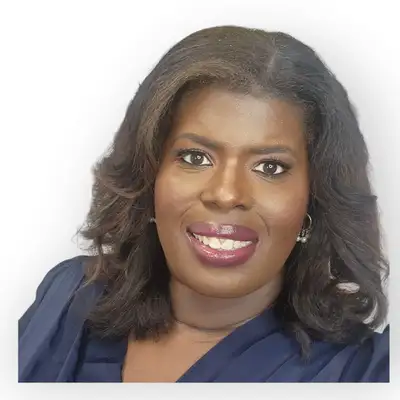
Passionate about modern feminist issues? Want to learn more about how today's political, academic, and cultural leaders strive for a future of universal equality and justice?
Join NOW in a podcast dedicated to intersectional feminist discussions in American society with leaders in entertainment, sports, politics, and science. From conversations on constitutional equality, to economic justice and reproductive rights, listeners will find new ways to learn, engage, and get empowered.
Listen for new episodes released every other Wednesday.
Bethany Brookshire [00:00:06]:
Hello everyone and welcome to Feminism NOW, the podcast from the National Organization for Women. I'm senior producer Bethany Brookshire. If you are listening to this podcast and you identify as a woman, odds are you have at least a bachelor's degree. That's because in the United States today, women are more likely than men to have one. Today, 47% of women aged 25 to 34 have a college degree, while only 37% of men do. Women are more than 56% of college students in the United States. But while there are more women than ever on college campuses, that doesn't mean that they feel safe there or that their access to education is truly equal today. Now, as national president, Christian F. Nunes speaks with Gloria Blackwell, the CEO of the American Association of University Women, about the progress of women in higher education and how we can protect our rights and our safety on college campuses. Tell us about your college experience. Did you feel safe? Did you feel your opportunities were the same as the men around you? Contact us at feminismnow@now.org and now let's get to the interview.
Christian F. Nunes [00:01:16]:
Hello, everyone. I'm Christian F. Nunes, the national president of the National Organization for Women. Despite inequalities and barriers to my education as a woman, I have to tell you I'm very proud of achieving a greater education, including my master's in science and social work and my master's in business administration. I know, like so many of you, especially women, we are proud to get these achievements because of different barriers that we might have faced along the way. And when we get this education, we know that it does help step us up for better opportunity and more equality. Our theme this season is protecting women in a hostile world. And some of that hostility is in the very colleges and universities where we reached our achievements. That's why I'm so happy to speak with Gloria Blackwell. She's the CEO of the American Association of University Women and has done such tremendous work to increase awareness and increase access for all women in education. So, Gloria, it is such a pleasure to see you, and thank you for joining us on Feminism NOW.
Gloria Blackwell [00:02:29]:
Thank you so much, Christian. It is obviously a pleasure for me to be with you to have this really important conversation about women in higher education, considering sort of what the landscape is looking like these days.
Christian F. Nunes [00:02:45]:
Absolutely. So before we get started, tell the listeners a little bit more about the American Association for University Women. AAUW is what we call it. You know, how they get started, why did they start it? And just tell us some of the work that you've been doing in leadership to help increase instructionality in the space.
Gloria Blackwell [00:03:03]:
Sure. So AAW is certainly one of the. One of the oldest and largest organizations focused on women, particularly getting women into the higher education space. It was founded back in 1881 by women who really did defy society's conventions. Right. They earned not just an undergraduate degree, but a graduate degree. And so they wanted to make sure that other women had that opportunity, access to higher education as well. And since that time, the organization has really worked to increase women's access to higher opportunity, higher education, equity in higher education. And they've done a great deal of advocacy work and there have been a number of really key ways that that has happened. Early on, they decided that they were going to make sure that women had money to actually attend and afford higher education. And so our fellowships and grants are really a key part of the work that we do. You know, since that time, we've awarded just over $146 million to over 15,000 women in higher education. And we also fund local community based organizations that are focused on increasing equity in education for girls. And so, you know, AUW is run on the basis of our amazing members. It's a membership organization. We have local branches in every state and we also have 500 college and university members as well. And it really is about ensuring access, opportunity and attainment for women in higher education. And I think that we have seen through our fellowships and grants, through our other programming that we do on campuses around salary negotiation and financial literacy, that we really have to make sure that we continue to move forth and ensure equal access and opportunity for women in higher education. Because despite the fact that women are earning degrees at higher rates than men, women aren't reaping all of the opportunities that those degrees should be bringing them.
Christian F. Nunes [00:05:11]:
Absolutely. And so this kind of brings me into my next question because I know you have been one of the thought leaders and go tos in the area of pay equity and fighting back against the gender wage gap and the importance of women earning that equal pay, that despite women getting this higher education, we're still not seeing that pay parity. So can you talk to listeners more about what are the reasons why that is still existing and what AAUW was doing to fight against inequalities in pay.
Gloria Blackwell [00:05:41]:
Sure. So we know that last year, on average, women working full time made only 83% of what non Hispanic white men made. Right. That we actually had a decrease in the ability to close the gender pay gap. But that statistic is one that really sort of hardly tells the full story. Right. As you mentioned, there are so many other factors that have kept us from having the gender pay gap closed. Part of it is the fact that women do not work full time during a portion of their lives because of caregiving and other responsibilities. And then we, if we put in women who aren't working full time, but they're working part time or seasonal jobs, the pay gap shrinks, you know, even more to about 75%. And the reasons that the pay gap is not closing is they have not gone anywhere. Right. It includes obviously pieces of intersectionality. It could be race, it could be their ethnicity, it could be their age, their disability, their level of education. All of these things really add to the fact that women are not earning the same as men when they are doing comparable jobs, and they have often even more education and more experience. And there really is so much more that needs to be done to ensure that women are going to bring home the pay that they have rightfully earned. Other ways that the pay gap is not being closed are connected to, you know, job and occupational segregation. Right. The fact that the occupations that women occupy the most do have the lowest pay, obviously motherhood is there. So all of those things are very challenging. And they certainly haven't allowed that needle on the pay gap to be moved. AAUW has been working quite diligently to, in a pretty multi pronged approach to close the pay gap. Right. So we have been advocating for laws to support economic equity. You know, that includes enforcement of the Equal Pay act, trying to push forward with so many other laws. They're also going to require employers to actually provide equal pay if the job has equivalent value to reduce the impact of occupational segregation. We've also been staunch advocates for implementing paid family and medical leave because those are really important to mitigate those challenges faced by women who are disproportionately responsible for caregiving. And that's really important. It really is about continuous improvement in our workplaces. It really is about enacting those policies that are going to help put women on par with men.
Christian F. Nunes [00:08:30]:
So when you think about the workforce right now, what's the percentage of organizations and institutions and companies do you feel that you all see that actually have really like moved to the level of having pay equity, pay parity, and just making sure they have policies in place that are equitable?
Gloria Blackwell [00:08:50]:
Well, I think that definitely varies across sectors. Right. And I think one of the major challenges is the fact that there are a number of very important policies in place around ensuring equal pay, around ensuring transparency. But the key really is about how employers are actually implementing and how they are enforcing these right. Providing an equitable workplace is something that so many employers say that they are committed to, but we don't see it actually in practice. They say that they are going to be transparent in their practices, but they actually aren't. They say that they're going to support growth opportunities and leadership opportunities and promotions for women, and they don't. They say that they're going to continue providing those professional development opportunities and skills training, and they say that they're going to have equitable retention policies. And they say that they're going to be flexible in their policies. And at the end of the day, it often is just not happening. And the disproportionate impact of those things not happening falls on women. Are they transparent in their pay practices? Are they evaluating and setting pay in ways that is fair? Do they have a very transparent compensation system? So often they don't. Are they doing pay audits? It really is important that they take all of those items into account and don't leave out important policies like paid parental leave and paid leave. Those are really critical, critical pieces to ensuring an equitable workforce for everyone.
Christian F. Nunes [00:10:37]:
And then now, as we're going into this new administration, we're seeing lots of attacks on Title IX. Can you talk to us about those attacks on Title IX that you're seeing and why it's going to be dangerous?
Gloria Blackwell [00:10:51]:
So that's a very top of mind issue that is taking place right now. And I think that it really is not something that we didn't anticipate, but the speed with which Title IX has essentially been kicked to the curb has been quite frightening. And I think that the impact is certainly something that is going to be far reaching. So the backlash to Title ix as well as deia really is a direct response to, unfortunately, the social and economic progress that has been made by women. It's a direct response to the social and economic progress that's been made by people of color. And we know from AEW's perspective that higher education has played a key role in that progress. It's played a key role in moving us forward. And so when the current administration is taking aim at Title ix, it really is quite understandable because they want to make sure that all of that progress gets rolled back. We know that President Trump has issued a number of executive orders, et cetera. And unfortunately, the district court vacated the updated Title IX rules that were released in April of 2024, which we were all staunch supporters of and which our members came together to make sure that they were advocating for. And of course, the Department of Education issued guidance announcing that it is again enforcing the 2020 harassment rule. And it really is a rollback of protections. Right. It really is going to once again make it easier for schools to dismiss cases. It's really going to make it easier, easy to sort of not go through a process that really is going to be fair.
Christian F. Nunes [00:12:46]:
Right.
Gloria Blackwell [00:12:46]:
It's going to be harder to hold perpetrators of sexual harassment and assault accountable. It is. And the sad part is that it really is going to make it more difficult for survivors to get the protections that they need. And I think that one of the key pieces is that people need to understand that it really is. It's a direct attack on students across our country. And so students really do deserve to be in a protected environment. They really do deserve to be in a welcoming environment. And they really should not be used as political pawns.
Christian F. Nunes [00:13:23]:
Amen to that. Right. I feel like that's exactly what's happening. Like students and survivors are being used as political pawns, and it's so dangerous because like you just mentioned, when we don't have overarching federal regulations in place, there are going to be institutions who will still support and protect. But the reality of it is, if they're not held accountable, then people suffer.
Gloria Blackwell [00:13:48]:
Absolutely. And so whether it's Title IX or the backlash on DEI, understanding, the impact is something that is becoming quite apparent. And so whether it's the defunding or the elimination of the DEI programs across campuses, whether it's restricting discussions of race, gender, and intersectionality in curricula, faculty and administrators know that this is just the tip of the iceberg. Right. You know, DEI has been under attack for years, and clearly within this administration, it will continue just to go downhill.
Christian F. Nunes [00:14:26]:
Absolutely. We have to take a quick break for our action now. So listeners, get ready and we'll be back shortly with the rest of the interview. Listeners, did you know that March is Women's History Month? To help you celebrate, here are a few facts from our own. History now was founded in 1966, and at our second national conference, we adopted the passage of the Equal Rights Amendment, an amendment that President Biden noted in January is law of the land. Women's History Month shows us that the road to equality is a long one, and it is bumpy. We may feel hopeless as our rights are removed, but we cannot stop fighting. We cannot stop creating new history, a new history in which we achieve equality for all genders. For your action now, head to Now.org to read up on the Equal Rights Amendment and learn how you can help support equality for all. And now back to our show. All right, Gloria, we're back. So I'm curious to know a little bit more about AUW's approach to combat these recent attacks that have been taking place with executive orders since January.
Gloria Blackwell [00:15:54]:
So from AAUW's perspective, we all need to come together to work on closing the leadership gap, to work on closing the pay gaps. And one of the ways that we are working on that, particularly connected to our colleges and universities, is providing resources to really help with women's economic empowerment. And so we provide salary negotiation training and financial literacy training on campuses across the country. And at our university, our programs have trained, you know, tens of thousands of women and young men, college students, to really help them be successful, in particular, when they're negotiating their initial salary and boosting their financial. Education is really key as well. So we don't have any plans to, you know, ramp down on the work that we are doing that is focusing on empowering college women. The other piece is that when we see what has been coming down the pipeline, right, Whether it's Title IX or the rollback of DEI and everything else, one of the things that we are continuing to focus on is to ensure that if there is a lack of clarity, to make sure that the resources are there and people understand sort of what is going on. So that education piece is really, really important. I mean, we know that even today there's confusion about who Title IX covers, how Title IX investigations will be conducted, whether or not grant programs were going to be a part of the freeze that happen. Right. Those that support student success on campus. We know that all of the key work that we did around student loan forgiveness is certainly something that's just hanging out there. And student loan borrowers are going to be challenged with all of a sudden, there is nothing being on hold. You're going to have to go and pay it all back. And so that's been something that we have been working on. We have our lobby corps headed up on Capitol Hill every two weeks because it really is. That lack of clarity around federal student aid is another piece, because there really have been different communications that have been released, right. Whether it's about student loans and Pell grants are exempt from the freeze. But what about other aid? You know, what about campus based aid? What about work study? And so I think that really is something that we are trying to make sure that elected officials are being held accountable for, because we know that without these programs. So many under resourced students are not going to be able to continue their education. So AAUW is making sure that we stay on top of that.
Christian F. Nunes [00:18:39]:
So important. And I think the work that you all are doing regarding this space for student debt and student aid is so extremely important because I know I'm a personally proud recipient of financial aid. I was the first person in my family to go to college and I worked. Now don't get me wrong, I also had work studying and I also had.
Christian F. Nunes [00:19:00]:
A job because I had to go for myself at school.
Christian F. Nunes [00:19:03]:
But I benefited from Pell Grants and even when I got scholarships for my academics, I still had to supplement with grants and financial aid and work study to go to school. So I understand the importance of this. I think so many students and listeners understand the importance of this. And then more than ever, many people are going to be coming into economic crisis because of these changes that are happening. It's going to be extremely crucial that AAW and other coalitions continue to advocate for student success and students future. So I just thank you again for just the work y'all are doing in this area.
Gloria Blackwell [00:19:41]:
Thank you. We are certainly not going to give up, right? We are. We're not going to hide under the covers. Safeguarding women's access and potential to to really succeed in higher education is key for AAUW. We want them to be able to go to college. We want them to be able to afford to go to college. We're going to continue to speak out against budget cuts that disproportionately harm women's programs, programs that are going to disproportionately harm women of color. We're going to continue to support initiatives that ensure that women have equal access to financial aid and scholarships and research funding. We're going to continue to advocate for protecting student loan forgiveness programs that truly benefit under resourced students, like Pell Grants and federal work and the Supplemental Educational Opportunity Grants. So I think it's really important along with that, increasing women's participation in stem, pushing for childcare on campus. We know the terrible impact that all of this is going to have on moms on campus, on single moms on campus. And so supporting student parents is key as well.
Christian F. Nunes [00:20:55]:
Absolutely.
Christian F. Nunes [00:20:57]:
One of the important things I want to talk about is the other resources you all offer and you all offer voting issue guides. And now that we are moving in this direction where we're seeing like this horrific attack on diversity, equity, inclusion, accessibility, which we all know greatly impact women and girls. What are your AAUW's plans for education awareness around these issues.
Gloria Blackwell [00:21:23]:
So one of the things that our team is currently working on is really getting the lay of the land, right? Because while we are having this conversation, we know that something, something is happening. And one of the things that they are really doing is working on providing those educational pieces, just like we do with the Voter Issues guide, looking at the key issues that are going to have an impact right. On. On women and girls, whether in higher education and in the workplace, staying up to date on Title IX and as often as possible, just updating it so that people understand, you know, what is happening with these executive orders. Where are we with Title IX? What is the current status of the Education Department? Right. What are the potential implications? Right. And so just making sure that we stay as up to date as possible. We share that information with our members, with our partners, and that we equip our lobby corps members when they head up on Capitol Hill with the needed resources so that they can advocate for the pieces that are really going to make sure that we are not going to just allow these pieces to go without anyone challenging them. You know, there is a lot going on, but we know that at the end of the day, all of these pieces of legislation that have been in place really are essential for our country. And we are not in favor of creating hostile environments by stripping away diversity, equity and inclusion programs. Our goal is advancing equity for women and girls, right. Through education, advocacy, and research. And so we are not going to move away from that. You know, it really is about making sure that we continue moving forward despite the fact that we know that progress may take a little bit longer to be achieved. But we definitely don't want to rest on our laurels because we understand what's at stake. There is a lot at stake, and we need to keep educating individuals and organizations about what is at stake.
Christian F. Nunes [00:23:38]:
Absolutely. So what do you think listeners can do to help protect women and girls in education and higher education?
Gloria Blackwell [00:23:47]:
Well, I think to really ensure that women are able to afford a college degree. Right. They really should be speaking out about the rising costs of tuition. They should really be speaking out about these budget cuts. Right. That are having a devastating impact on women's programs that are being erased. They should be speaking out on the ways in which women are not receiving grants and fellowships at the same levels, and the ways in which women are still disproportionately underrepresented in fields like stem, which are higher paying, which have higher paying internships, et cetera. And that they really should be making sure that they are letting those individuals that they have given their votes to understand that they need to be supporting these initiatives, whether it's for student loan forgiveness or whether it's for financial aid or pushing for the campus child care programs, holding their elected officials accountable really is key. And it's also important to get engaged locally in your community at the state level because it really is important to support not just the federal initiatives, it's important to support the state initiatives that are really necessary to protect funding for women's education, for STEM programs and for DEI efforts. And obviously, we want people to speak up about Title IX because it really has played an enormous role in helping students to succeed. And, you know, Title IX really does ensure that campuses remain spaces where equity and respect are cornerstones of the academic and social experience. And so the decisions that have been made are going to have devastating impacts. And we really do Hope that the 2024 Title IX rules are reinstated.
Christian F. Nunes [00:25:40]:
Gloria, before you go, can you tell everyone how they can get involved at AAUW?
Gloria Blackwell [00:25:46]:
Absolutely. So AAUW, I mentioned at the branch level, you can visit our website and see which branch is close to you. To be engaged locally, you can become a two minute activist, which is a way that you can send correspondence, send a letter to the individual that represents you in Congress. You can apply or share the information about AAUW's fellowships and grants, as I mentioned, that are going to continue to support women in higher education. That's really key. And become engaged in our advocacy issues across the board, from Title IX to making sure that the EI and women's programs are being supported as well. So just Visit us at AAUW.org and we would love to have you join us as a member.
Christian F. Nunes [00:26:36]:
Y'all heard it from Ms. Gloria Blackwell. Thank you so much for being on the show with us and all the work that you all do to help protect women. All right, listeners, we will see you in two weeks.
Bethany Brookshire [00:26:49]:
Thank you so much for joining us on the podcast this week as we talk about protecting women in a hostile world, even if that hostile world is on a university campus. If you liked this episode, why not share it with your friends? Please like and subscribe to the show. Maybe even leave us a review if you're feeling especially kind. You can also send us your thoughts and questions at feminismnow@now.org head to now.org that's N O W. O R G to read up on NOW's core issues and our approach to advancing women's equality. Together we can make a difference. I'm Bethany Brookshire. Thanks for listening, and we'll see you soon.