Subscribe
Share
Share
Embed
Make It Mindful is a podcast for educators and school leaders who think seriously about how learning is changing and want to explore what to do next. Hosted by Seth Fleischauer, founder of Banyan Global Learning and former classroom teacher, the show covers three territories: what AI actually changes about teaching and learning, what it takes to help students connect meaningfully across cultures, and the human conditions — belonging, awe, trust, emotional regulation — that learning depends on regardless of what else changes.
Guests include district administrators, researchers, clinical psychologists, curriculum designers, and classroom practitioners. Conversations are long-form and honest. Produced by Banyan Global Learning.
# Make It Mindful — Dr. Maggie Broderick
*Timestamps after the first cut are adjusted estimates.*
---
**[INTRO — recorded separately] [00:00:00]**
Support for Make It Mindful is brought to you by World Savvy, partnering with K-12 schools, districts, and community leaders to prepare youth to thrive in a complex, interconnected world.
Make It Mindful is proud to feature Svitlo School, empowering the future social, political and business leaders of Ukraine to become confident global citizens.
Welcome to Make It Mindful: Insights for Global Learning, the podcast about how students learn, who they're becoming, and how new technologies and global experiences reshape teaching.
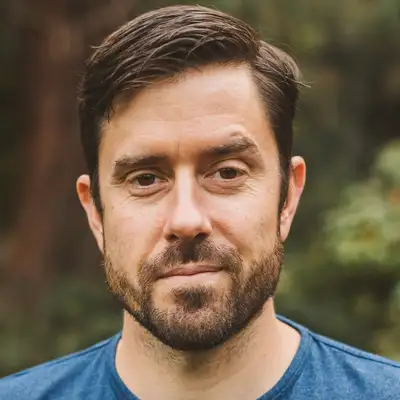
I'm Seth Fleischauer, founder of Banyan Global Learning. Today my guest is Dr. Maggie Broderick, academic program director of the Master of Arts in Social Emotional Learning at National University's Sanford College of Education, where she also chairs dissertations and directs the Advanced Research Center. Maggie started her career in the 90s as a K–5 music teacher in a German magnet school in Pittsburgh, and that classroom turns out to be the seed of the research she's doing now — a qualitative study on what she calls "hidden oases," the music rooms, art classrooms, and language and theater spaces inside a school where students who feel marginalized elsewhere often find their footing.
Maggie and I get into why she didn't rebrand SEL during the political backlash, how she connects critical thinking and perspective-taking to the same whole-human framing, the relationship between teacher emotion labor and the attrition crisis, and what her pilot data is surfacing about the specialist teachers who carry disproportionate weight inside their schools. One thing her interviews keep turning up: many of those teachers told her no one had ever asked them about the students who came to school primarily because of their classroom.
This episode of Make It Mindful is brought to you by Banyan Global Learning.
At Banyan Global Learning, we design structured live experiences that connect classrooms to the world.
Banyan Global Cohorts is a 4-week journey in global competence. Classrooms join an international cohort of 3–4 schools and meet weekly during regular class time for facilitated, 45-minute sessions built around a compelling Big Question.
Students explore global contexts through virtual field trips, exchange ideas with international peers, and create a final digital artifact that expresses identity, perspective, and connection across cultures.
If you're curious about what this could look like in your classroom or school, we'd love to talk. You can find us at banyangloballearning.com.
And now here's my conversation with Dr. Maggie Broderick.
---
**Seth (00:00:55)** *(approx, post-intro)*
Maggie, welcome to the podcast.
**Maggie Broderick (00:00:58)** *(approx)*
Thanks Seth, it's great to be here today. Thank you.
**Seth (00:01:00)** *(approx)*
Yeah, thanks so much for coming. Why don't we just start by introducing yourself to my audience? Who are you and what do you do?
**Maggie Broderick (00:01:09)** *(approx)*
Hello, well, so I'm Dr. Maggie Broderick and I am an academic program director at National University. We're mostly an online university, so I'm actually located in Pittsburgh, Pennsylvania, but the university is located in San Diego, California. And I'm at the Sanford College of Education. My program that I'm the director for is the Master of Arts in Social Emotional Learning. I'm also a dissertation chair and the director of our Advanced Research Center, which is a place online where we help also at a distance because our faculty and others are everywhere. People who are thinking about publishing and presenting and things like that, they network and they find opportunities and they work together. We build community at a distance for sort of the scholarly space there as well.
**Seth (00:01:58)** *(approx)*
That's awesome — building community at a distance. I know that's tough to do. Do you have like a secret sauce of how you build community amongst teachers and don't make it feel like it's one more thing that they have to do, one more login that they have to get to?
**Maggie Broderick (00:02:13)** *(approx)*
That's a good way of putting it because I mean it really, when we think about social emotional learning, when we think about all the sorts of things in the program that I'm the director for, that is always a concern. And it's true for teachers PK through 12, and it's true for faculty, it's true for our students at National who are maybe becoming teachers or all kinds of other things in the field of education. And, you know, we don't want to add one extra thing to that plate to make things more stressful. So really, I think it's by invitation is the sort of thing to think about. If you want to say a secret sauce or whatever way of doing it, putting an opportunity out there and making it inviting and making it feel not stressful. Not like it's one more thing you have to do, one more box to check, one more anything that's going to be looked at, but just a place. Building a space is really the way to go and what we see tends to work for getting people to, you know, anywhere in the world to connect, I think.
**Seth (00:03:11)** *(approx — adjusted after Cut #1)*
We're talking at a time when SEL — it's not in the news the way that it was maybe a year or two ago when there was the big backlash, or definitely not the way it was three or four or five. Gosh, how long ago was the pandemic? Whenever the pandemic was ago. Um, yeah, gosh, six years ago. You know, obviously there was this moment where it was all of a sudden people were like, oh, wait a minute. People need to feel good —
**Maggie Broderick (00:02:30)** *(approx)*
Yep.
**Seth (00:02:42)** *(approx)*
— in order to learn, huh. And then there was the backlash, right? What was your read on why that backlash happened? And you also made a choice during that time to not kind of rebrand, right? Like the way that a lot of people who work in SEL dealt with this moment, especially if they work with SEL in all 50 states,
**Maggie Broderick (00:02:43)** *(approx)*
Yep.
**Seth (00:03:10)** *(approx)*
was to call it something different in different places. And then turns out the ideas behind it are not actually not so threatening. It was just sort of being branded as this threatening thing. But you stuck with the brand, you stuck with SEL. So what's your read on this sort of political storm that happened? And why did you stick with the brand?
**Maggie Broderick (00:03:33)** *(approx)*
Well, the thing is when we think about humans, right? We are human beings. What do we all share in common? And we think about that at National and I think a lot of teachers think about it in the way of the whole human, right? And that's really what we would say is most important. You can put a label on anything and I've been in education for a very, very long time now. Gosh, I first got certified to teach in 1993. Became a music teacher very, very long time ago here in Pennsylvania, and the pendulum swings all of the time and sometimes so much that you feel you're going to fall off that pendulum, right? It swings all the way over here and then woo, all the way. It feels like these things happen a lot and we have labels for things and we need labels because we need language, right? We need to think about why we call things the way we call them and I have a background in teaching languages and when we can agree upon sort of a term for something, then we can talk about it, right? So teachers do that a lot, educators do that a lot. But really what matters, and if you really take away all those labels and don't even think about those labels, we're thinking about teaching that whole person and meeting them where they are, understanding they're not just, you know, the brain bringing in and soaking in information. There's cognitive stuff, but it goes along with, you know, social emotional factors. It goes along with factors of, you know, interpersonal communication. What kind of day you're having today, all kinds of things. Do you feel comfortable in a space? And if, like you said sort of earlier, if the needs aren't met in these sort of human ways, then that cognition piece — like again, from my background in teaching languages, we call it the affective filter. That's just another name for similar stuff where, you know, if your affective filter is high and you're feeling really anxious, you can't learn very well. And so it's really, it's all the same sorts of things bundled up with words just so we understand and we can talk about them. But if we strip away the words and we really just think about it as human, I think we need to just not be too political about these things and just realize we're all human.
**Seth (00:05:35)** *(approx)*
Inevitably, though, it becomes political. I'm wondering why these ideas felt so threatening to some people during this backlash.
**Maggie Broderick (00:05:51)** *(approx)*
Just not really knowing — there's just a lot of information out there and maybe not knowing and hearing it from someone else. So it really does come down to the same stuff, right? That if you talk to someone and hear their perspective and listen and just actually actively understand what they're saying and try to do that, it's not as threatening. But if you see something up on a billboard that looks like, uh-oh, a threat, it feels different. It doesn't feel so good. So I think a lot of things with social media, a lot of things with things moving quickly. A lot of things like this — don't take the time maybe to think about that. So what we've done when we've about the program, we're on the director, is sort of redesigning it to focus on a lot of different pieces that come together with that whole human in mind. So, you know, there's SEL, but there's also critical thinking, communication, classroom climate, school culture. It's not just sort of for one buzzword or term or pendulum swing thing. It's much more of a holistic thing about the whole human.
**Seth (00:06:50)** *(approx — adjusted after Cut #2)*
A lot of those things that you just listed off are things that really resonate as being about SEL for me. Why is critical thinking on that list?
**Maggie Broderick (00:07:04)** *(approx)*
I feel exactly the same way. And for me — we could think critically, see, this is great, it's very meta this way. A lot of the people who worked on the program as we've relaunched it — it's starting in July or August, we'll have it starting the sort of revised program. And as we thought about it, we've looked at pieces in the program ongoing and in SEL, all of these things. And a lot of us feel similarly that critical thinking goes along with this.
**Seth (00:07:05)** *(approx)*
Let's think critically about it together.
**Maggie Broderick (00:07:31)** *(approx)*
For me, it's my language background again. My PhD is in teaching foreign languages and it goes along with taking others' perspectives. If you really only have one kind of fixed mindset — we think about that from a growth mindset things from like Carol Dweck, right? If you have a very fixed mindset and you're not kind of considering other perspectives and the what ifs, you're not really thinking critically, right? And so to challenge someone to do that, you do have to feel safe.
**Seth (00:07:47)** *(approx)*
Mm-hmm.
**Maggie Broderick (00:07:58)** *(approx)*
If you're in a space where you're feeling threatened and you're not feeling comfortable, are you going to be vulnerable and then share, well, here's my opinion, what's yours? And let's talk and try to work this out. That's hard to do if things aren't feeling so good. And so it does all go together. The environment needs to be conducive to letting people have those conversations like we're trying to do it right here today, at any grade level, for any developmental level. And then it also, we need to nurture that and let people feel comfortable doing it. It's interpersonal and intrapersonal in that way. It takes a lot of mindful planning.
**Seth (00:08:32)** *(approx)*
So I love that — that identification of perspective taking. It's such a critical component of being able to navigate any kind of space, any kind of social space, right? To just be able to have that perspective of someone else in your head as you are thinking about what you need and where the common ground is, within classroom climate, school culture. Within that conversation, you were talking about feeling safe. You know, obviously if we can train everyone to take other people's perspectives, then at least we're getting part of the way there. But we're not always going to like what other people think. We're not always going to agree with it. We're not always going to want to be around it. How do you create — and what does the research say about creating — a school culture or classroom climate that does make people feel safe, that allows these skills to flourish?
**Maggie Broderick (00:09:30)** *(approx)*
Yeah, so I come from this from some sort of unique angle sometimes. It takes a lot of different things. I've talked to my colleague who was a school counselor and talking with her, I say, wow, this is really interesting to think about your perspective on this. And then you might talk to somebody who's a leadership person and how they're trying to implement something school-wide. My perspective personally, because I taught music and actually German — so I'm sort of an interesting, odd duck. I taught music in a German magnet school back in the 90s here in Pittsburgh. Really unique pedigree there, I'll tell you. Yeah.
**Seth (00:10:02)** *(approx)*
Yeah. A lot of Beethoven.
**Maggie Broderick (00:10:20)** *(approx)*
And so it's interesting and I loved it. I loved it so much. And when I think about that, I think about how that environment was a unique space for certain students who felt like they could have a good experience there, maybe they weren't doing so well in math class. Maybe they weren't doing so well somewhere else in the school. And I've heard stories like that before. I often tell the story of when I was student teaching, I had a star student in the band room, in music, and then everybody else in the teacher's lounge was saying that this person really was not a star student, quite the opposite. And I thought, wow. So my perspective really is that very often we've forgotten to tell the stories of what I call a sort of a hidden oasis. It could be the music classroom. It could be the art classroom. Sometimes it's a sport, a physical education with a coach who's really a caring person and creates that space for someone. And so I think a real problem we sometimes have is when we cut these programs, it's sort of cutting off our nose to spite our face as the saying goes, right? Then we may not even realize what we're doing. So I've written two book chapters and I've done research with colleagues, did a pilot study and now we're doing a full scale kind of qualitative study, looking at those spaces and asking those teachers, what does happen there? Was there maybe an LGBTQ student who felt really comfortable in your art classroom? I can tell stories from my own life about similar things and I've seen them and I've heard people tell stories from both the teacher and student perspective. So what qualitatively is happening there? And then we can understand and not just say, this is music, that's nice, or this is art, that's nice. There's something special happening that makes this a part of a school environment that's more rich and a richer garden and oasis than we might realize when we look at those programs on paper.
**Seth (00:11:59)** *(approx)*
So I know you're mid-research right now — what's your gut telling you? What are some early findings? Why do these spaces work the way that they do?
**Maggie Broderick (00:12:08)** *(approx)*
Well, the questionnaire that we did for a pilot study did show us a few things that made us realize the questions were good questions to ask. And so we found that there were spaces we hadn't even really thought about. Like maybe even dance or theater is offered in some schools. People don't think about those sorts of things. So we thought, include these sorts of people in the study. And we also found that there were a lot of people who really wanted to talk about it. And they said, nobody's ever asked me. No one's asked me about the student who was not doing well at all and then came to me after school in the music class for band or whatever the case may be. And I realized that this was what was making them come to school. And when they woke up in the morning, they were coming to school because of this. And so I started hearing some of these stories and our team looked at it with the questionnaire and said, hmm, we want to hear like qualitatively the rich details. And that's the piece we're getting now. We want those stories, not just like a little snippet, but like really rich. And then we're actually going to do like a focus group. So when you bring people together, we could say, interesting, you've said this and they said this and they're talking about it together and it sort of brings more ideas out when you do that sort of thing. So that's what we're working on at the moment.
**Seth (00:13:20)** *(approx)*
What are some of those questions that you're asking about the space? What are the details you're seeking?
**Maggie Broderick (00:13:25)** *(approx)*
So the questions are really about the sorts of groups that often are marginalized. Would they feel more comfortable in these spaces? And we're kind of trying to see if some of the stories will or will not give us deeper, richer insights into that. If we think about students from different backgrounds who maybe don't feel included, a sense of belonging for them, because maybe their school — if they're ethnically different than other people in their school or LGBTQ, for example. I often tell a story from my own family where the art classroom was the oasis for that person. So I think we're just hoping that we get those rich stories that show us, because they do really want to tell them. I'm excited that all these people are responding. I want to hear all the rich details about what those spaces look like. So we pull back that door a bit and see how we're helping specific groups of students who maybe aren't thought about as much.
**Seth (00:14:27)** *(approx)*
Yeah. I guess the idea of a hidden oasis means that the rest of the campus is a desert or the ocean surrounding the desert island that has the fruit on it, right? And so it makes sense that marginalized students would be the ones that are finding respite in the oasis, because other students, even if they might find belonging in those spaces, might also be finding belonging in other spaces. And so what you're looking at is the ability of these hidden oases to lift up the well-being of the entire school by providing a space for the students who are feeling the least amount of well-being to find some relief there. Is that about right?
**Maggie Broderick (00:15:19)** *(approx)*
Exactly. And it aligns a lot with trauma-informed sorts of things when you think about someone who's maybe been through some rough times and they might close off a bit to find a place where they do feel like they can be themselves. So it's putting those stories, putting them out there and giving them what I feel very strongly and a lot of the people that I've been talking with feel strongly about — just giving them a place to share that. Because I really feel like it isn't — I was just at the AERA conference in LA recently and I listened to — it's the American Educational Research Association. It's the largest association of such in the country. It was huge. It was an enormous conference, bigger than any I'd ever been to. And they did start to touch on some of these things here and there in the sessions. And I was like, this connects with this topic, but you don't see it specifically. It's like a gap where, you know, not only do you not see it, but also we will then, you know, not fund —
**Seth (00:15:49)** *(approx)*
What's that?
**Maggie Broderick (00:16:17)** *(approx)*
— these sorts of things quite often, so it's a double-edged sword in that way.
**Seth (00:16:21)** *(approx)*
And sorry, what exactly were you seeing at AERA that reinforced what you're thinking about these hidden oases?
**Maggie Broderick (00:16:28)** *(approx)*
Yeah, a couple things. So one was going to some different sessions about arts education and hearing stories that were told there and some connections were being made there. Similarly, just like you said about marginalized groups and being able to express themselves through art, for example, that can make you feel better and then you feel proud about your art and things like that. And having a community as a musician, being in an ensemble, right? I could play my flute. Maybe I was feeling a bit shy, but as I was very shy person as a child, but play my flute and I felt part of it. Yeah, yeah, finding your voice in ensemble, exactly.
**Seth (00:17:00)** *(approx)*
Find your voice in the ensemble.
**Seth (00:17:05)** *(approx)*
So if you're coming up to a superintendent that you see tomorrow and you had one semester to make a real dent in student well-being, is this what you would recommend to that superintendent? Like stop cutting arts education? Yeah, you wouldn't be alone.
**Maggie Broderick (00:17:23)** *(approx — Cut #3 applied; trailing fragment removed, restart spliced into same turn)*
Well, I'm always gonna say that. I'm always gonna say that anyway. That would just be there. And that is a huge thing that is a passion of mine. I'll always get on that soapbox till the day I die. But another one is just support all of the teachers. And right now we are at a time when I'm seeing that we're not getting that as teachers. It's very worrisome. Just from a very clear — like if you wanna take away all the emotional stuff and just focus on data — attrition. We got a real problem. If we are not supporting teachers and they quit, what are we going to do? And I had a student actually who did a study on this and it's pretty stark. I mean, if we really aren't giving the support, that's what happens. So if we give more support to teachers and we help them to be the best teachers they can be — I think about teacher dispositions and sort of what they bring from their own social emotional pieces a lot.
So, most importantly, I'd say supporting the teachers is extremely important. And it doesn't really matter which teacher, I'm talking about all of the teachers there. And so when we think about that, if teachers haven't gotten the support they need, not only are they more likely to leave the profession, leaving us with a huge problem of not enough teachers, but they will then pass that down, that feeling down to the students, right? So if they're feeling this is not going so well, I'm not supported, I don't have what I need, then how can they give? So it's really that idea of their emotion labor. And that's a piece in my research as well, and looking at the emotion labor there and thinking about if we don't fill their cups, so to speak, how can they then give that for their students and give the students the emotional support that they need?
**Seth (00:18:38)** *(approx)*
Hmm.
**Seth (00:19:02)** *(approx)*
Yeah. So it makes a lot of sense, obviously from a high level. I think from the point of view of someone trying to meet the needs of teachers, everyone has different needs, right? You're talking about emotional labor, as being something that essentially is born of lack of alignment between what someone's values are and the things that they're doing. They have to carry more water if they're not living and working in a way that's consistent with the way that they think they should be living and working. So from a policy perspective, how do we give them what they need when everybody needs something different?
**Maggie Broderick (00:19:44)** *(approx)*
They do, they do. Well, one thing that's really nice is our partnership at National with Harmony Academy because they do have some free resources online that help, particularly through grades one through six. I know they have like a ton of content out there. So I would always say start small, right? So if you have this general idea that you want to support the teachers and you want to support the students and you want to support the students through the teachers — then maybe you need some sort of a toolkit of things. And they do have that — they have a lot of wonderful things there. CASEL — C-A-S-E-L — is a wonderful organization with great stuff online as well. So I always say, you know, if people aren't kind of aware of how the school climate can benefit from this sort of a mindful approach, I would say look online and always look for those sorts of resources that are well vetted, because that kind of goes back to what we were saying earlier — there's a lot out there. There's a lot of noise and you can find something that's way off on a tangent. But CASEL is fantastic. Harmony Academy, excellent resources out there. There are a few others that we're really making sure the students in our program that I'm the program director for, that they really will have. And if they are leaders, that they can then infuse that from the top, and then teachers can also from the bottom, and hopefully it's kind of just blooming everywhere throughout the school.
**Seth (00:21:03)** *(approx)*
I love that idea of starting small. There's an organization that I work with called World Savvy — I'm on their advisory board, and that's one of the things that they preach when they're encouraging schools to go through periods of change. It's like, just start doing something, right. And — local science is another thing that Justin Reich, when he was on the podcast, talked about, where as teachers, we're constantly experimenting. You can have the best laid plans for the year, but that's not going to actually fill your time, because it's a dynamic system. You're inevitably going to be presented with situations that are novel. And so you are constantly experimenting to see what works and what doesn't. And the idea of starting small as a way to break through the barrier of action — to simply say, I don't know what the right answer is, but I'm going to try something — and pointing to CASEL and Harmony as places that they could start. That seems to be like a really good idea.
**Maggie Broderick (00:22:14)** *(approx)*
Yeah, starting small is good. We don't want to get overwhelmed. Going back to what we were thinking earlier — teachers have a lot on their plates. So do leaders. We often don't realize that. There are a lot of excellent people who really care in leadership in our schools, and they also have a lot on their plates. And so definitely putting that out there — if we can start small and be just sort of bit by bit and incremental, it can snowball into something. People start to see the energy and it does sort of catch on.
**Seth (00:22:43)** *(approx)*
A lot of parents that listen to this podcast in addition to educators. What can parents do to help teachers with this emotional labor piece? Have you looked into that at all?
**Maggie Broderick (00:22:58)** *(approx)*
Well, I am a parent, so I guess there's that, right? That helps to give you like 24 years of field experience. I don't know if this is going to help, but it's hard, I'll tell you. I mean, I have seen both — again, it's been a lot of years in both education and as a parent — and I've found myself annoyed with a teacher or a school leader here or there. I've found them annoyed with me here or there, right? And we are all very busy. Parents, families, caregivers always have a lot on their plate as well. Everybody here in this picture is working hard and has a lot. National, just as an aside, calls that an "and-er," like an and-er, right? So you're this and you're this and you're this and you're this. A lot of our students are military and they're working and they're a parent and all of that, right? So we have a lot on our plate. So I think for me, part of the issue is just slowing down and taking time to listen is super important. And it's hard to do when you have a lot on your plate. But yeah, I think just finding the time — technology can help there. Being able to have a Zoom conference with the teacher instead of going in person as we would have done 10 years ago, has been helpful. So if we use it mindfully, I think that's pretty smart, to use the tools we have and try to communicate and take it one step at a time, because we're all seeing a lot of struggles. Like we all have a lot on our plates.
**Seth (00:24:19)** *(approx)*
From a research perspective, what's one thing that you wish people better understood about well-being, whether it's teacher or student?
**Maggie Broderick (00:24:31)** *(approx)*
Yeah, I think, you know, we talk about a lot of different terms there as well, right? So in the research, we see — we've talked about emotion labor, emotional labor, both of those — and then burnout and all these different terms. But how does it get there, right? At what point are you just suddenly done and you burn out and all these sorts of things? And what does that look like? And how do we then help people when we see that? And it's not just for teachers and other grownups, it's for the students too, right? Just talking with my own daughter about something that happened in her college with a fellow student — and she and some others, 20 years old, noticed it and then told someone and said, we're concerned about something we saw, and it was handled really well. And I was like, in the car coming home from college a couple of days ago, I said, I am so grateful that that was handled very well, because this could have gone very badly. And I'd seen similar things 30 years ago as a college student and thought, I don't know what to do. How do I help? But if they have the supports and they know how to help, that's a good thing. I think knowing when someone's reaching that really difficult point and things are getting very, very bad versus just we've got a lot on our plate and things are a little bit bad — that's hard to tell. We don't always know. And that's something I think about a little bit.
**Seth (00:25:47)** *(approx)*
Yeah. Going to do a little lightning round here, which I borrowed from Adam Grant. Thanks, Adam, if you're listening. First question is, what are you rethinking nowadays?
**Maggie Broderick (00:26:01)** *(approx)*
What am I rethinking? Hmm, wow. I don't know. What am I rethinking? I have to think about the rethinking. You know, I think there's a lot of things in schools that are structured in a certain way. And I always think about — should we completely redo it and do it differently? Like Ken Robinson on creativity and on doing things completely differently than the systems that are designed. He has amazing work. And I often go there. And then I realized that by going too far, we lose people, right? So if we think we're going to completely redo this and totally change the system, we will lose people. So sometimes the structure and the routine is what makes them feel comfortable and safe, right? So that's what I think about a lot. I don't know if I'm rethinking, but I am thinking about it a lot. Like, hey, we could totally fix all of this and try something new. And what about that? Or we could realize that sometimes people find safety in what's already there. Doing too much too soon is actually difficult.
**Seth (00:27:02)** *(approx)*
Yeah. The great balance between order and chaos.
**Seth (00:27:14)** *(approx)*
Recommend a piece of media. What are you listening to, reading, watching right now?
**Maggie Broderick (00:27:14)** *(approx)*
Hmm, lots of different things. I am really eclectic. So you'll find me knitting or crocheting while listening to a podcast or music or anything really. But yeah, I guess coming back from that conference, I'm trying to read some of the things that I learned about at the AERA conference in LA recently, because there was just so much there. So on a professional level, diving into some of that stuff. So looking at arts education — some of the things that I read there and going more deeply on those.
**Seth (00:27:47)** *(approx)*
Is there a question that you have for me or for my listeners?
**Maggie Broderick (00:27:51)** *(approx)*
Great. I think — is it maybe about the perspectives, right? So like, do you find it hard to take someone else's perspective? And when you do, how do you do that?
**Seth (00:28:04)** *(approx)*
I mean, I would say that that is a spectrum of experience. And I definitely find it easier when I'm better regulated. If I'm triggered for whatever reason, then it can be really hard to think outside of this body. But yeah, I mean, I think that —
**Maggie Broderick (00:28:11)** *(approx)*
Yeah, yeah, yeah.
**Seth (00:28:26)** *(approx)*
— the way I do it is mostly instinctual and doesn't always serve me. I can be a bit of a people pleaser sometimes, and so I'm super attuned to the little micro expressions around someone's eyes to understand if I really have them right now or not. And I think that sometimes I might sacrifice a bit too much of what I want and need because I'm attending to the emotional responses of somebody else.
**Maggie Broderick (00:28:44)** *(approx)*
Yeah, yeah.
**Seth (00:28:56)** *(approx)*
And so — but I do think that finding that balance is important, right? Information on itself is not a bad thing. So what I'm doing is I'm getting information, but I'm not filtering it. It's just like going straight into my being, versus being able to get that information and really sit in what my own boundaries are and understand if there's action to be had within that dynamic or not. I don't know — does that answer your question?
**Maggie Broderick (00:29:27)** *(approx)*
Yeah, it does. Yeah, because that's something I think about a lot too. You know, certainly try to, right? But just like you said, sometimes we have good days and bad days with that. And it depends on the person. And another colleague of mine, Dr. Gary, who was my student previously — I love Dr. Gary, and speaks out a lot about these things — talks about the term style flex, right? Kind of like, well, this student or this person or whoever — when I talk with them, I know they need this, I know they need that. It is definitely a social emotional skill and not everybody has it, but we can practice it and think about it if we kind of are able to get into that space and think with ourselves about it a bit.
**Seth (00:30:04)** *(approx)*
Yeah. Well, thank you so much for being here, Maggie. Where can my listeners find your work on the internet?
**Maggie Broderick (00:30:11)** *(approx)*
Yes, well, there's a couple places. ResearchGate is kind of a neat tool. If you're not aware of ResearchGate, I tend to update now and then. They're in a sort of like a social media for researchers. So that's a cool place to find things. I'm on LinkedIn — feel free to find me there, lots of stuff there. And I am the editor of the Journal of Online Graduate Education. So if you're really nerdy, there's that. And I don't mind if folks just email me — mbroderick at nu dot edu.
**Seth (00:30:39)** *(approx)*
I will put all of that in the show notes. Thanks so much again for coming.
**Maggie Broderick (00:30:43)** *(approx)*
Thank you so much, Seth. Appreciate it.
---
**[OUTRO — recorded separately]**
> That's a wrap on our conversation with Dr. Maggie Broderick. Maggie's term "hidden oasis" is the one I'd hold onto from this conversation — the music rooms, art classrooms, and specialist spaces where a particular kid finds belonging when the rest of the building doesn't quite work for them. When schools cut those programs, the line item that disappears is sometimes the only space some students have in the building, and that's a different conversation than the one budgets usually have. We'll have links in the show notes to CASEL, Harmony Academy, and Maggie's published work on educator dispositions. Thanks for listening to Make It Mindful, and we'll see you next time.