Subscribe
Share
Share
Embed

Welcome to Skinside Out, where science meets beauty, the ultimate dermatology podcast! Dive deep into the fascinating world of skin health with expert insights, evidence-based discussions, and myth-busting truths. Each episode explores the medical, cosmetic, and surgical aspects of dermatology, while keeping you informed about trending skincare topics. Whether you’re a skincare enthusiast, medical professional, or just curious about how to achieve your best skin, Skinside Out is your go-to resource for staying informed and inspired.
25 Skinside Out - Rick
===
[00:00:00]
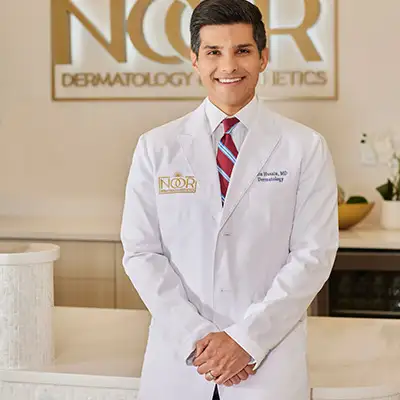
Dr. Zain: Welcome to Skin Side Out where Science Meets Beauty. I'm your host, Dr. Zain Hussein, a board certified dermatologist. Passionate about how healthcare is evolving and what it means for both patients and physicians. Today we're diving into some of the most important shifts happening across medicine from artificial intelligence and new medications to the changing world of health insurance.
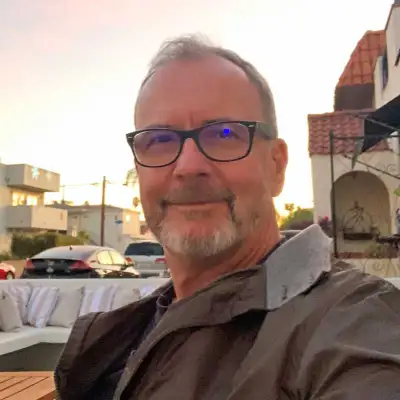
And of course, we'll take a closer look at what these changes mean for dermatology, specifically, including the growing role of private equity and hospital systems and private practice. Joining me is Richard Gen, an innovative health sector executive educator and strategic advisor [00:01:00] with the career spanning leadership of major academic and community health systems, including serving as CEO of several high performing health systems across the us. He now advises Fortune 100 companies, health systems, venture funds, and startups through Washington Square Advisors, and continues his passion for academia by serving as the executive and residents for healthcare programs and partnerships at NYU School.
Of professional studies shaping the next generation of healthcare leaders. Dr. Genta holds a doctorate in healthcare administration and MBA and was a 1996 Wharton Fellow at Penn, and is a nurse practitioner by training, bringing a rare blend of clinical insight, executive leadership, and strategic vision.
We'll unpack the big changes happening now and look ahead to what the next decade might bring. So whether you're a clinician, a patient, or just curious about the direction of healthcare, this episode is packed with insights you won't want to miss. Let's get started.
All right. So welcome to the show. So Rick, first question, can you tell me about your background and how you got into the healthcare sector?
Rick: [00:02:00] Yeah, I'll, I'll frame it this way. I'd like to start by saying, look, I'm just a kid from Brooklyn, but the reality is this. I always wanted to help people and I love science and if you think about things you're passionate about, and for me it was really helping people, giving them first a leg up, but then understanding what you could do when in healthcare was just in incredible for me.
And I, I took that kind of passion, that focus and put it to a purpose, which was initially, you know, I started out in at clinical bedside as a nurse and worked my way up and I was fortunate and had a a, a great career. Not only. Developing clinical programs, ultimately being the CEO of several high performing institutions, but now advising startups and health systems and health plans on like what's happening next.
And something I'm also very passionate about is, is paying it forward. So my academic home is NYU. Mm-hmm. And, uh, I teach actively and have a little bit of research that I do. So that's really the, the, the, the arc of [00:03:00] things. The through line I would say is this. Uh, you know, again, passionate about helping people.
If you could tie really good leadership and a line of sight on what's happening. Mm-hmm. And couple that with what I would say is innovation or innovative thinking kind of outta the box, plus the latest and greatest science tech. Assemble a great team and you could do well for the patients you serve.
And in this case, do it in a way that not only is good clinical outcomes, but cost effective and makes a better system.
Dr. Zain: That's amazing. And you wear so many hats and I'm just so impressed with your CV and like all the different aspects of healthcare you intersect with. Um, you teach law students also, I mean, that's, that's incredible.
Um, at NYU, so. Um, just very impressed and not everyone possesses that leadership and entrepreneurial spirit, so you just kind of have it all. I'm just in awe.
Rick: Ah, I appreciate that very
Dr. Zain: much.
Courtney: Yeah. Dayto.
Dr. Zain: Um, so going. To look at the [00:04:00] future, where do you see what, what excites you about the future of healthcare?
Rick: Yeah, listen, when we say excites, I mean that could come in two ways. Like fear is an excitable emotion as well as optimism. Well, let's talk about both, right? Yeah, yeah. I would say, you know, there are challenges that are here. Uh uh, if I was to accentuate, let's just say the positives, I would say that if you take a look.
At artificial intelligence technology in general. Something, a phrase I use all the time, which is technology really is a new biology and the way it's influencing, not unlike how, um, biology impacts physiology, technology has the potential to really impact, I think, health and wellbeing at scale. Mm-hmm. And, and I think we're gonna see that if we dial down, uh, a little bit.
I think more specifically, certainly biology and you know, this, what we're seeing in immunology and I think some of the breakthrough drugs that are out there. Yeah, it's absolutely revolutionary. A lot of it, again, [00:05:00] accelerated by technology. And then the third piece that, uh, I think in the realm of things that excite me on the positive.
Is that because of some other externalities, we're going to have to have a new model of care. Mm-hmm. So the, the, the notion of care delivery as we know it and grew up in it, trained in it, I think will have to be different in the future. We could talk about that in a second, and I think you could look at that pessimistically or optimistically.
I choose to look at it optimistically. Mm-hmm. And part and parcel to that is also what's happening. I'd be remiss if I didn't say it politically and how that informs policy. Mm-hmm. Which also will influence these models of care as well as funding for the new, you know, breakthrough drugs, biology, tech techniques and treatments.
Dr. Zain: Yeah. I mean, I've just find, um, just the application of AI to be fascinating and just the exponential. You know, rise of all these new innovations within a short period of time. I mean, like a couple years ago we weren't really talking much about ai, [00:06:00] but now it's like on everyone's tongue, right? And it's just, you know, really exciting to see where we can leverage this tool for our benefit.
But like you said, AI also can have downsides as well. So where do you see the challenges with ai, especially in medicine?
Rick: Yeah.
Dr. Zain: Well,
Rick: let's
Dr. Zain: just
Rick: first on the positive note. Mm-hmm. If you take a look at things like ambient scribes or, or how, using
Dr. Zain: in our
Rick: clinic then, right. Which is fantastic. Or even, I would say the low hanging.
Fruit, which is we all think about the application for wow, CRISPR and genomics, of course. Mm-hmm. But let's start with paperwork. Let's start with pre-authorization. Let's start with, I know a think or two about that, right? Let's, let's start with the, the part of the velocity of care that we can influence and I think there's gonna be great applications there.
The downside though, uh, look, the, we know this, um, there is, uh, an area of bias that still has to be worked through. Now it may, uh, be mitigated to a certain extent when you take a look at AI agents and [00:07:00] the kind of specificity that you can build with a very, very task specific agent. But I still think bias is something we have to watch for.
The second is just the hallucis hallucination factor, right? This is a reality that goes in there. Mm-hmm. A lot of times informed by bias. But the more we get into the reasoning being pushed to the limits and that kind of individual f. I, I'll call it thought process, but the algorithm that's used, I think there's still some areas to be worked out.
Now that said, uh, and, and again, I think this is optimistic, we're not 50%. There we're, we're much further than that. And I, I think that even in the, in the field of, of dermatology, that the FDA just approved for primary care docs, like a first screening AI tool. Mm-hmm. Which I think was a fantastic move and really is a, mm-hmm.
This is a sign of things to come.
Dr. Zain: Yeah, I mean, it has the ability to really give access to a lot more patients because there's only so many of us dermatologists [00:08:00] out there. We can't see everything. And if primary care physicians are able to see these patients screen 'em appropriately and get them the care in a expedited time, I mean, I feel like it can really help.
Outcomes. Yeah,
Rick: absolutely. Yeah.
Dr. Zain: , So AI also has the ability to help improve some of the inefficiencies we see in healthcare. Where do you see that being beneficial?
Rick: Yeah, I, uh, I think I mentioned earlier, you know, uh, the low hanging fruit, and a lot of this is just in, we'll start with paperwork in general.
Mm-hmm. Right. And. The big difference it could make in just sorting through redundant amounts of paperwork. But the holy grail here, if I can characterize it that way, is really in pre-authorization. And again, getting back to that velocity and care that that whole process, I think that's where we're gonna bend the curve and there'll be incredible amounts of time saved with that.
Right. So, uh. We'll, we'll see that starting out. And you know, with some of these AI bots that we have and the [00:09:00] specific agents, what we're seeing is that if you compare the interaction or the transaction that a patient, an individual, and, and believe it or not, even a consumer in healthcare has with those bots, they are coming out and this was a study that was done.
Equal to, if not, dare I say, better than interactions with, with healthcare providers. Wow. So they have, they've met, met the mark there, and it's probably going to get even better with a lot more, uh, uh, I think specific, uh, programming when you have a, a, a, an assigned, you know, agent that you are developing for your clinic.
Yeah, your practice, your specialty. And I think I, I mentioned earlier, you know, the ambient scribe side. If you take a look, I think. The hope is that What is ambient Scribing? Yeah, ambient scribe. This is, uh, you know, you use it in your clinic. Mm-hmm. Uh, I walk in, you have it on you, it's on your phone. You greet me.
Hey, Rick. How are you feeling today? Mm-hmm. How I'm doing? Good. I have a, I, you know, I have this little mole. I wonder, I don't know what it is. How long has it been there? [00:10:00] It takes our entire interaction. Mm-hmm. And depending upon what scribe you have. Yeah. There's, there's several companies out there. It will create a soap note.
Mm-hmm. It will create a. Believe it or not, a differential that you could work off of. Mm-hmm. That is so efficient that in the best scenario, all you have to do is an attestation of your name. Yeah.
Courtney: Well, and that's the thing people don't realize is half of these appointments truly is the paperwork. I mean, I can do a surgery with Dr.
Hussein in less than 30 minutes or in and out, but then how long is it taking me to put in, okay, this is the size, this is the sutures we use, this is the repair that we did, and all of that. Is of course for documentation for, you know, what we wanna see. But I always tell my coworkers, you know, that is a legal documentation.
Mm-hmm. I look at every single note as a legal documentation. So you really want to be so specific in what's in there of what you've gone over with patients, you know, risk, benefits, all of that because. God forbid anything happens. You want that all in that note. It's
Rick: true. And this is where I think we're going to, we're gonna [00:11:00] see much more, I think at the granular level, a lot of accuracy.
Mm-hmm. Being tested. And this is where the systems will get better and better and better. Yeah. But at the end of the day, if particularly with looming clinician shortages, physician shortages, yeah. If we could give you more time with the patient mm-hmm. Whether it's in the hospital setting at the bedside, in the, or.
In the clinic setting, you know, actually working with individuals to, to create better health, that's such a big win. And at the end of the day, and I spoke to a, a, a dear friend of mine who's an interventional GI doc, he said The best thing that happened to me with the ambient scribing is I get to get home on time and see my kids.
Yeah. I'm not sitting there finishing the day doing notes, the notes and everything.
Courtney: Yeah, we started using it in our practice. Um, going back to the pre-authorizations or prior authorizations and, um, it's funny because I, I think a lot of people don't know what goes into actually, yeah. What happens from the, I think people think, [00:12:00] okay, my doctor writes a prescription and it gets sent to the pharmacy.
That's the pipeline. That is not the pipeline, not that is, um, yeah, it is anything. The pipeline, which has been surprising me more and more recently, um, is even, for example, I was joking, um, last week or the week before, I got a prior authorization for doxycycline. Generic antibiotic, it's been around a hundred milligrams.
It was nothing crazy. Um, and so what people I think don't understand is what a prior authorization is. Um, and this is when your insurance has essentially reached out to your provider to ask what you've tried and failed, what condition you're using this medication for. And sometimes the questions are very limited, but sometimes the questions are very extensive and sometimes there's what's called step therapy where they want you to try and fail.
Two different steroids, two non-steroid, non-steroidal, so it, it can kind of vary per insurance, which I also think is such a huge problem that again, these insurance companies are dictating. What you can try and fail. And on some [00:13:00] insurance companies, they're on formulary, so you can just get a script and then on some they're not.
So these AI services have essentially taken over to help with that paperwork portion of getting patients the medication, which again alleviates the staff from having to, um, call insurance companies and spend, I'm not kidding, an hour on the phone trying to get one for easily.
Rick: There's another component, um, along those lines also that.
I wanna bring up, first of all, doxy. I mean, it's probably $3 for, you know, 60. So it's not, we're not talking about mm-hmm. Big money in the gen. I hate to go into the economics. Yeah. But the other, other side of it is, and you mentioned step therapy, you know, with AI right now, the, the opportunity here, particularly when you look at efficacious treatment, right?
Mm-hmm. And efficacy. If you were starting someone on Humira for a, a skin condition. You know, you're, you're, you're going to know whether this works or not, within a month and a half or so.
Courtney: Mm-hmm.
Rick: If we can accelerate that by using AI and having these remote telehealth or some kind of AI [00:14:00] mediated components mm-hmm.
We could save the system millions of dollars and have better treatment. The other thing is. You'll know what's not working, but you could also know what is working and say, Hey, this is the right thing. Let's keep them on it. So I think we're seeing the tip of the iceberg, this paperwork issue. Mm-hmm. This, you know, bureaucratic component mm-hmm.
Of the system is still a challenge.
Courtney: Yeah, it is. I mean, we, we had a patient recently on one of those biologics, um, and he had been well controlled for over two years on tats. Um, and the only thing that changed, same insurance, but his formulary changed. I tried the prior authorization. I tried an appeal. I tried an appeal of the appeal, and it was still, well, it's not on formulary, so you would rather this man go off.
The tats that we know is not giving him any side effects. We know that it's working. He's at a hundred percent clearance. To try and fail, waste more money mm-hmm. On a Humira, on other, other drugs. It, it's just, it is mind boggling. [00:15:00]
Dr. Zain: Yeah. Yeah. It, it is. It is crazy. Like I am not able to prescribe the treatments that I know my patients will benefit from.
That frustrates me. Um, and many of the people who are dictating this are not clinicians. Mm-hmm. They're not physicians, they're not even in the healthcare space. They're asking questions. They don't even, some of the questions, I had a
Courtney: psychiatrist review. My, uh, branded docs had a patient that had celiac, couldn't take generic docs, either's a wheat powder in there some.
And um, I found one that was branded, didn't have any of the wheat powder and. A psychiatrist review. Not even a GI doc, not a pri a a psych.
Rick: Yeah. And this, again, this gets, this gets to the root of a lot of the issues. Mm-hmm. And dare I say, also the dissatisfaction that we're seeing. Yeah. You know, I mean, I, I, I hate to characterize it this way, but, you know, everyone loves their doctor or their nurse or their provider.
Don't necessarily have universal uh, uh, appeal and affection for their insurer because of some, these issues, so many of them that we could leave.
Courtney: We actually [00:16:00] sometimes see the opposite, where I feel like patients put a lot of trust in their insurance where we'll write a prescription and dermatology is that weird kind of field because there is a lot of overlap in.
What insurance might deem cosmetic, cosmetic, um, even warts I've seen before. Mm-hmm. Which is a virus, um, them deem as cosmetic. So it's kind of an interesting take in dermatology because patients are so quick. Oh, my insurance will cover it. And sure enough you send the generic doxycyline and we're getting paperwork on it.
Yeah. Or you know, tacrolimus. So it's a weird, um. Weird phenomenon. I see. Yeah.
Dr. Zain: And just with all the prior authorization, the paperwork, going back to that, I mean, as a private practice owner, I literally have to hire a full-time mm-hmm. Employee, just to have that taken care of. Yep. Yeah. And the amount of costs to the small private practices, I mean, with rising costs and overhead for everything.
Since COVID, I mean, everything has gone exponentially. Um, payroll, um, employees, [00:17:00] staff are more, um, expensive. Supplies are more expensive. Insurers are paying us less. So we're getting really squeezed out and we're seeing a lot of consolidation, um, and medicine. Mm-hmm. So looking at, um, you know, PE or hospital system acquisition of the private practice, how do you see that changing healthcare?
Rick: Yeah, uh, great question by the way. If you, if you think about private equity and let's, we'll break it down to the pros and cons here. You just described so many of the headaches, right? I mean, the barriers, the, what did I go into this for? I thought I was going to have my own practice. Uh, have the autonomy of that and, you know, be able to serve patients and create mm-hmm.
Incredible value. Mm-hmm. And then you're up against payroll, rising costs. Mm-hmm. You know, the cost of real estate, rent, overhead, all of that. It doesn't change. And what we're seeing, and it, it's not just private equity, but also hospital acquisition. And there are a couple of other models that are out there.
They'll come along and say, well, you have a great, uh, practice. Mm-hmm. Um, maybe it has [00:18:00] multiples of three x five x, 10 x. Very attractive. It's a trade off. Then what are you willing to give up? Now? Let's step back a second. If you take a look at just physicians in the United States right now, the vast majority are employed in some structure, right?
Well, over 60%. Now, if you go deep into some specialties, it is well over that.
Courtney: Yeah.
Rick: Dermatology, plastics, a couple other, it's they're, they're outliers. It's, there's an exception. Yeah. But by and large, we're looking at like over 60%. Yeah. And those reasons that you just pointed out is what has driven that phenomenon as well as negotiating with insurance companies.
Mm-hmm. Et cetera. So I think, you know, the pro side of private equity come in, capitalize you a platform and infrastructure, it is very expensive. Help you with contract negotiations. It's good if you are, uh, starting out and you wanna think that, or if you have an established practice and you get an offer to mm-hmm.
Uh, have your, your practice, you know, acquired, you gotta [00:19:00] think through, what did I get into this for? Mm-hmm. What do I want at the end of the day? How do I balance that against lifestyle, obviously compensation. And I think at the end of the day, also the impact factory you wanted to make. So I'm not. Uh, saying negative with pe mm-hmm.
Or pri, private equity, but it is a path, just like a hospital acquisition of practices has its own mm-hmm. Upsides and downsides and a hospital look, you've got other specialists, you've got ancillaries, you've got the power of mm-hmm. Perhaps a big health system. Mm-hmm. Negotiations. It could be very, very good for an independent practitioner who wants to have mm-hmm.
You know, uh, their protected time. Mm-hmm. Honored, you know, time with family, other times, research interests, et cetera.
Courtney: Mm-hmm.
Rick: So this is the trade off. This is the balance that folks have got to think through when they're number one, getting it, obviously getting into medicine, but also what their expectations are and reconcile those two.
Dr. Zain: Yeah. And we are seeing a rising, um, number of physicians, other clinicians who are getting burnt [00:20:00] out by the system. Yeah. Um, moral injury. And we are seeing people leaving the healthcare space in droves, especially like spurred from the pandemic.
Courtney: Yeah.
Dr. Zain: Um, how do you see this getting any better when we are kind of.
Cornered into a very difficult position, and I think people are getting disillusioned, um, like they went into healthcare to help people with true noble intentions. And they're in a system, which in my opinion, is abusive at times. Yeah. And it's, it's. Frankly not worth it anymore. I mean, many of my colleagues, um, you know, would we recommend our children to go into medicine?
I would say no at this point. Yeah. I mean, the amount of work, education, debt that we go into to be then told how to practice, um, you know, constantly being, um, you know, pushed against these. Limits, um, that I think are unattainable and are really bad for patient care.
Rick: Yeah.
Dr. Zain: So how do you see we, how do you change that?
How do we switch [00:21:00] the pendulum there? Yeah.
Rick: Uh, you know, that's, that's again, another great question. Uh, you know, not only moral injury, right? Which is, wow, how do I, how do I, you know, uh, circle the square with what I'm doing and what I thought was doing with a set of ethics or moral practices that do not comport with what I was trained to do?
A lot of the issues you just said, paperwork. All of this denials the pre-authorization component. Not be able to prescribe what you know is right. That takes its toll. Um, but also real violence. I hate, I hate to bring this up, but, but if you take a look at, at, within the four walls of hospitals and just look at nurses and there's tremendous studies that are out there.
The level of abuse, the level of, of, uh, aggression and really dangerous working environment Yeah. Is at all time highs, which is, which is terrible. You know, I, I, I wanna be an op optimist though, and think about the future in, in that. Kind of light for a second. I think there are these externalities that are happening that are gonna force change.[00:22:00]
Uh, one is, uh, look, the politics that we see that's out there, and, and I'm not gonna get political here one way or the other, but the reality is we're going through a tremendous shift with respect to, uh, politics, RFK, junior, uh, HHS in general. Cuts that are incredible at the state level. Even today, uh, Florida said, no more vaccines are needed for kids.
This is, these are, we're talking about sea changes.
Courtney: Yeah.
Rick: And what we're seeing, I think with the current administration is one reality, uh, historically, and I'm talking about for years, not just the previous administration, but for years. You had a level of predictability with respect to where things were going from a policy perspective, and that gave you some reliability.
Mm-hmm. With your prognostication. This is the way I will strategically do things. Mm-hmm. Well, right now the predictability is out the window. Right? Yeah. Because we just don't know. There are good things. Hey, I do not want my, um, fruit loops to glow in the dark. I think we could all agree on [00:23:00] that. At the same time, I think a $6 billion cut to the N-A-H-C-D-C and a flipping of CDC directors creates, uh, some unsteady ground.
So this is something we've got to again, reconcile in our own head. How does it all play out? Then why do I wanna cast a positive at least somewhere? Because I think there is always some good moves that are in there, some needed upheaval. That's, that's number one. But the second thing is. There are going to be forced plays here.
One is, and I mentioned it earlier, there's gonna be a shortage of clinicians down the pike. The shortage of physicians and nurses, advanced practice nurses is going to drive a lot of change. One is going to be, you know how our model of care really declares itself across the board, and when you couple that with advanced technologies, we are literally going to see a very different way that care is delivered.
As soon as, uh, reimbursement and payment structures [00:24:00] catch up with that, then we'll see a distributed model out of hospitals. Mm-hmm. Which have, you know, a mission beyond acute care, a more distributed model, a hospital, even more acute. Chronic, um, maybe ambulatory settings, clinics, and then out to the home.
And then finally, I think, uh, and we're seeing this today, the opportunity again to leverage technology with wearables and having a primary care forward model. Mm-hmm. With a lot more, um. Okay. Let's say autonomy for that level of, of provider I think is what we're going to see in the future. There is an upside to that.
Mm-hmm. Access, obviously, uh, across the board. But the other piece I was gonna say is demographics. We're gonna see a split in demographics coming up. It's already happening. Mm-hmm. One is the over 65 population, uh, not necessarily tech savvy and want things a little bit more traditionally. Right. Wanna go see Dr.
Hussein Wanna have a relationship with him. [00:25:00] Versus a younger millennial, gen X, gen Z who says, Hmm, transactional is just fine for me.
Courtney: Yeah,
Rick: I'm okay going online telehealth. In fact, I will query chat. GPT have my list. I'll already come preloaded. I don't even wanna go into the office. If you can avoid, we already see this in our right.
So that's split is another way that our model of care is going to kind of manifest itself.
Courtney: I wanted to touch on the reimbursements too, because I think, uh, a lot of people don't realize. You know, I, I hear this sentiment a lot from people where, oh, my doctor only spends, you know, five minutes in the room with me.
And I think we're running into a very troubling time right now because, um, you know, providers are essentially being forced to see such, um, a number of patients in order to again, even get reimbursed by these insurance companies to again. Pay that overhead and be able to support their clinic. So I think, you know, especially kind of going back to, um, the older generation, I think they're used to, you know, being able to spend that like 30 minutes with their doctor.
They're [00:26:00] in their, you know, yapping about, um, how Susie's doing after the wedding. Mm-hmm. You know, that time right now is a luxury we don't have where, and that's, I know we both struggle with that, where you wanna spend so much time with that patient, but in the back of your head you're like, this is not.
Economical. I, I can't support my staff off of this. So I think we're also kind of running into that as an issue,
Rick: and we see how that plays out, right? Mm-hmm. What happens is you can't run a practice unless you have a, a volume of patients, and unfortunately, you have to time it out. Mm-hmm. This is just a reality, it's an economic, it depends upon your, your, your patient mix, how much is commercial, how much is Medicare, et cetera.
And it's just a, a reality. Yeah. Um. Where there is, we'll call it workarounds, but absolutely blows up the equitable, uh, you know, application of care is when you say, well wait, I want a concierge doc. Mm-hmm. I'm going to pay for, uh, that service, or I want to join a membership based thing, or I get a certain [00:27:00] portion of my care.
Online, we all pay out of pocket, right? Mm-hmm. This is what has manifested and in, uh, developed western countries that have socialized medicine. Mm-hmm. We think about, you know, Ireland, the uk mm-hmm. Certainly, uh, uh, France. Mm-hmm. Uh, Portugal. Others, yeah, they have socialized medicine, but. If you want to pay and get ahead of the queue, you can get a separate insurance.
So there is something in there that, you know, uh, speaks to that. Um, even with respect to how we may believe a socialized system works in a perfect world,
Dr. Zain: not
Rick: necessarily
Dr. Zain: true, I mean, we're seeing a huge rise in direct pay practices now. Mm-hmm. Um, direct primary care, and that is a model that I think a lot of clinicians are shifting to.
So my wife, she is a pediatrician. Mm-hmm. Um, in New Jersey, she had her own, uh, DPC practice, so she was concierge, she did house calls. She did, um, she spent like an hour [00:28:00] with the patients and it was just such a great model. Right. Um, the parents were so appreciative and I feel like, especially being a parent myself, like some of the.
You know, pediatrician we've been to, like, we just don't have enough time to even ask all the questions. And these are some new moms and new parents. They have a lot of questions and that model really does allow for that, you know, patient physician relationship to really flourish, um, and also improve outcomes.
And I'm seeing a lot of my colleagues, even in specialties like dermatology. Direct care because you know, you could be calling in for a dermatology appointment, you're not gonna get one for like six months in some places. Absolutely. Yeah. Um, so it does provide access. Um, and I think that's just how things are gonna be going because I don't think many physicians or other, um, you know, providers.
Will really tolerate some of the conditions that are currently going on. Right.
Courtney: And I think speaking to the younger generation too, I mean, I think about how often I'm at the doctors and you know, sometimes the cost, you look at these like self-pay [00:29:00] prices, I mean my established, um, follow up. My five minute appointment with my provider, um, is $185, and that's with insurance.
So I'm already paying my premium monthly. Mm-hmm. And then to pay another 185. So, you know, I think as someone part of the younger generation, we're looking at, okay, well how much time am I really spending in the doctors? Why am I paying, you know, $400 a month in a premium if I'm only going once a year, maybe twice?
Um, it, it does kind of steer you more towards, uh, this mindset of, okay, I get. Obviously the hospital portion, God forbid something happens. I get that. But it's like I don't wanna spend so much money every year if I'm not Right. If I'm not using it. Yeah.
Rick: Well there's two other components to this one, let's just think about high deductible health plans.
Mm-hmm. Right? So look, if you're young and healthy, you know, fine. A five, sometimes now even $10,000. Mm-hmm. Those are basically catastrophe, right? Yeah. They're stop loss plan. Mm-hmm. That's what, that's what that is. Mm-hmm. So you could see how that plus a, you know, I will pay out of pocket and have a [00:30:00] membership.
Maybe it works. The problem here is that not everyone can do that, right? Mm-hmm. Not everyone can do that. So the folks who can't afford it, right. But the folks who are on Medicaid mm-hmm. Or who are underinsured mm-hmm. Right on, on one of the a CA plans, you know, this is where the rub, uh, you know, happens.
And what you end up seeing is lots of visits to the ed. Mm-hmm. The ED gets overcrowded. Hospitals end up creating a situation where they accepted the patient, they can't let them go. Mm-hmm. Now they have to be sent to their clinics afterwards. And it is a revolving kind of cycle. And the costs are astronomical.
The costs are astronomical. Yeah. Big strain on, on, uh, hospitals out there, health systems. And it's something that has to again, be reconciled as we, as we move forward. So, but the good news is if you can't afford it, there are tremendous options. Mm-hmm. And if we take a look at US Healthcare. We, if you can afford it, it's the best in the world.
But there's also a reason why we are in the thirties when it comes to [00:31:00] overall clinical outcomes compared to other Western countries. So, yeah.
Dr. Zain: Um, so let's talk a little bit more, um, about, you know, these new innovations, um, technology, um, personalized medicine using genomics. Um, where do you see that, um, playing a role in healthcare?
Rick: Yeah, I, I, I'd say I, I'm very bullish on, uh, that whole space, but I wanna also say one important thing here is where I'm seeing all the innovation happening. Is in the private sector. Mm-hmm. Obviously fueled by tech, but also what we're seeing with the leading, you know, companies, not just in the Val Valley, Silicon Valley, but also in Boston, New York.
Mm-hmm. Miami, big hotspots, a research triangle park where we're seeing a, a, I think a Renaissance with these private companies. Pre COVID, there was a tremendous acceleration. COVID kind of blunted everything. Now things are starting to pick back up in terms of, you know, good ideas that are funded, et cetera.
The downside of that is you expect the NIH or the [00:32:00] CDC to go for the moonshots. Mm-hmm. Or to have this public private partnership to help accelerate. We're not seeing that, nor do I think we're gonna see that for a while. And there is a reason I think that a lot was shaken up. At the CDC and the NIH, they're working with really legacy or derivative research, not the new cutting edge out of the box.
Let's, let's look at immunotherapy for oncology, or, you know, some really incredible groundbreaking out of field variables. So I'm, I'm very hopeful about that. When we get down to specifics, I think, again, there's a couple different things. One is the world of immunology, the biology side of things that are really groundbreaking, again, fueled by advances in computational analytics and the whole technology side, which is allowing you to, you know, have a level of compute that we didn't even have access to 10 years ago.
The second piece is going into those new models of care and the innovation, and if we could get [00:33:00] that right mm-hmm. So that folks can be paid for what they do. That's fantastic. I, I wish I didn't have to say this, but there's a, there's uh, been a number of times when I've had startups come to me and say, Hey, could you do some clinical validation, some clinical reimbursement, validation?
'cause we have a great idea. Come and take a look at our company, et cetera, and I've sat back and said, look, wow, this is fantastic. Only one problem. There's no way to pay for this. Mm-hmm. Right. Our current system is not set up for this. If you take a look at, you know, half of Americans being on Medicare, Medicaid, the other half, you know, some kind of commercial employer sponsored, and you've got to make that work for some of these startups, or there's got to be a new process.
Um, with a public private partnership that would accelerate that. So hopefully I answered that. Yeah. But there's, there's, there's
Dr. Zain: still a bright spot there. Yeah. Very insightful. Um, let's take a model, um, of a medication that is really revolutionizing medicine [00:34:00] right now. The GLP ones. Yeah. Um, you know, that is incredible how it's having benefits in a variety of different spaces.
So can you tell me about how. You envision maybe the future of LPs and how it may affect the future of healthcare? 'cause it has profound impacts.
Rick: Yeah. You know, I think that that when you take a look at the LPs across the board and we've, this is only the tip of the iceberg. Mm-hmm. Right. We'll get into orals and then there's different versions of them, which are just incredibly.
You know, uh, powerful. The impact across the board has changed lives. Probably saved lives. Yeah. You know, when you think about it, uh, the cost associated with it, if you just think about chronic illness, diabetes mm-hmm. And folks getting off drugs, I mean, incredible. The issue here is. Where it's priced and how we, you know, basically recognize the investment that was made mm-hmm.
To produce these drugs in a way so that Wow. If they went to generic immediately, then the [00:35:00] mm-hmm. The billions that to research spent to create them. Pfizer, Merck, and j and j and all the different companies that are out there. You, you, we've gotta find a way to, to make that. Right. Economically. If we did, then you could see this being ubiquitously applied because I think all the research, and, and correct me if I'm wrong, there's certainly more positive than there is negative.
Mm-hmm. And in a variety of ways, not just the impact with respect to weight, but everything from addiction mm-hmm. To, I mean, you know, you, you name it. Compulsive issues. Uh, gi but also now we're seeing mental health benefits. Mm-hmm. Which are just incredible, like addiction and, yeah. So, uh, yeah,
Courtney: people with drinking problems.
Mm-hmm. I mean, my, my dad's been taking it. He got off of his, um, cholesterol meds. His blood pressure's never been better. I mean, you know, and he, he's always been active. Um, he, he walks eight miles a day, which I just think is crazy, but good for him. Um, and he's really come off of a lot of his meds. I mean, [00:36:00] it just gave that extra, I think.
Boost that he needed to lose the weight.
Rick: Yeah. And, and you know, and I know this is something that in your practice, you are much more holistic and embracing on the longevity side, the real wellness piece of it.
Courtney: Mm-hmm.
Rick: And of course, skin is a barometer, right? Mm-hmm. I mean, it's, it's, it, it tells us so much, uh, about what's happening inside.
I think GLP certain, you know, uh, thoughtful supplements. They're not, this is not taught in medical school. No. We need to have, again, a renaissance in medical education. When you look at some of the areas that are, have not been looked at, but also the way we are using, I think, GLP and other drugs where there could be new and exciting ways.
To treat conditions that we have not had a remedy for before, we're just on the tip of that.
Courtney: PCOS is a huge one. I see a lot of patients with PCOS. Um, one of my best friends has PCOS, and it's been life changing for her. And she, I mean, she's actually paying out of pocket right now for, [00:37:00] um, the brand name, um, you know, wegovy and.
But for her, it's so worth it because mm-hmm. She feels better. She not only physically, but mentally, I mean, she was struggling with really bad acne. Mm-hmm. Um, our PCOS patients get acne, the hair growth, um, things like that. And so not only physically, but mentally, she just is a whole different person.
Dr. Zain: Yeah.
I, and just imagine how much saving it can have on the healthcare system.
Courtney: Yeah. Yeah. Like you said, preventative. It's billions. Yeah.
Rick: Billions of dollars. I mean, if you just take a look at chronic disease, and if we thought. Uh, about, not type one, but type two diabetics. Mm-hmm. Mm-hmm. There's so much utility if you just look at economically.
Yeah. Besides the, the life changing component of this, just think about the economic side. We've got to figure this one out. I mean, and I, I'll go back to the COVID vaccine look. Mm-hmm. We did warp speed was 12 months and we did that. Incredible. We have much more data on GLP than we ever did on, you know, COVID mRNA with respect to COVID, so, yeah.
Dr. Zain: It's, it's pretty [00:38:00] incredible how they were able to accomplish so much. Yeah. Such little time.
Courtney: I know the addiction, um, treatment portion of the GLP is really interesting to me. Mm-hmm. Because I think that is such a problem in America, whether it be with the drinking, um, you know, opioids, all, all different things, and.
Um, it's just been really fascinating to see how helpful it's been. Um, one of my friends who used to vape is completely off her vape. Mm-hmm. Um, I've been taking it, it's cut down on my drinking, I mean, tremendously. So I think it's such a untapped field for such a problem that we have. And yeah, I'd really like to see that, I guess, explored more.
Yeah. And
Rick: you know, if we, if we drew the line right, the red thread on, on the mental health issue, take a look. Look, mental health has always been, you know, uh, not. Covered at least effectively. Mm-hmm. Certainly by Medicare. Yeah. Mm-hmm. Um, and but the commercial, no, it's mostly been out of pocket. Mm-hmm.
Medicaid is borne the brunt of, of, you know, handling a lot of the, the [00:39:00] Medicaid associated mental health patients that are in there and, and some, the difference that this drug could make in that scenario is, you know, could be amazing. Yeah. Mm-hmm. The question is, there's no mechanism for payment within that structure.
Mm-hmm. So, at least for. Today as we, as we look at the, the codes.
Dr. Zain: But it's helpful seeing that conversation. Preventative medicine is out there, there's dialogue. Um, I don't know if you're aware, but you know, one of the s of the, um, the, the Walmart or mm-hmm. She just started a medical school. She did. And Arkansas.
And it's based on the model of preventative medicine. Yeah. Which I thought was really. Unique and innovative and kind of refreshing Alice. Well,
Rick: yeah, yeah, that's right. Absolutely.
Dr. Zain: It's, it's, it's really nice to see people embracing that in traditional medical education, kind of merging that. Um, I think it'll be really helpful for the next generation of physicians to really embrace and, you know, provide their patients with that holistic care.
Courtney: Well, especially now that we're finding things in people who are younger, you know, I think about my [00:40:00] mom having breast cancer and her grandmother having breast cancer. I still through insurance, won't be able to get screened until I'm 40, you know, and that is concerning, um, where as a lot of those, you know, colonoscopies, things like that.
So I think it's really interesting being able to, yeah, bring that subject up and hope. To again, attack more in that preventative because again, it's just saving so much money on that front end. Right? I mean, what happens if I go in at 40 for my mammogram and they're like, oh, you know, now we gotta put you through chemo radiation.
Right? Right. You know, a surgery. So it's just, um, and you really have to advocate for yourself as a patient too, because. Again, as a pa, I don't wanna wait till 40. I, you know, if I have this family history, if I know that it could be something that comes up, um, why not do a mammogram at 30 or even 32, 33? You know?
So it's a very interesting, um, way of looking at things that, you
Rick: know, if we tie this back to education, we'll, think of it this way. This is where I [00:41:00] think, uh, artificial intelligence, some of the. Advancements in the large language models, the ability to query them will really make a difference. What I mean by this is, you know, you you, you get outta medical school, you get out of, uh, residency fellowship.
How much you Probably 50%. Right. The, the decremental rate of retention is, it's just outstanding. Oh, it's,
Courtney: yeah.
Rick: There will be a time, right? I don't wanna say this is the negative side and it, it's gonna be the very near future. Will there, there will be an expectation where it would be Dr. Hussein. You treated this patient, what AI or what agent, or what large language model did you query?
Mm-hmm. To help you with your differential diagnosis? Yeah, and the rationale behind that is there's no way you could read a thousand manuscripts, abstracts, latest papers that are out in the field, but mm-hmm. With a solid platform. They haven't met him. You're the exception. No, I said him. [00:42:00] But the, but the solid, uh, you know, platform could help you do that.
And this is where that kind of, it's becomes your adjunct, your teammate, your your wing person. Yeah. And that will help situations like what you just described, right? Where you could say, look it prognostically, or. You know, I have all your data. It's, it comes into my EHR. It's in a platform. We get to, you know, computationally look at this in a way that it's, it's not necessarily precision medicine, but it's very unique to you.
Mm-hmm. Mm-hmm. And the hope for the future, which is a digital twin for yourself, an avatar which you can test, you know, different. Medications, supposed treatments could really advance things. Mm-hmm. And it's funny how that it comes full circle right back to the technology piece, which I think is really the way to free and liberate some of, you know what we need to have unlocked.
Dr. Zain: Yeah. Leveraging that technology for this augmented intelligence, right? Not necessarily just artificial [00:43:00] intelligence in a vacuum, right? Mm-hmm. Yeah. So I think it's gonna be really unique, um, and interesting to see what lies ahead. Yeah. So Rick, what's one thing that gives you hope about where medicine is headed?
Rick: Uh, you know, you have to, at least for me, I look back to the past to think about the hope, because I think there's been times, obviously in history
Courtney: mm-hmm.
Rick: When it's been pretty bleak. You know, we don't have to go back too far. To remember that, look, 60 years ago, there really wasn't a coronary care unit.
There was no treatment for heart attacks. You just put the patient in a quiet room and said, Hmm, hope the best. Let's hope they do well while their, you know, heart was infarct and they were losing half the muscle. Mm-hmm. Keep them quiet. Things have certainly come a long way. If you took a take a look at just a life expectancy, et cetera, the difference, yes.
Vaccines have made, right. The eradication of, of certain things and the advances we've had. I think now, I believe for all the reasons that we've been discussing, there is reason to be hopeful. [00:44:00] You know, not only the technology, which is going to be a great enabler. I think the fact that we've got now a line of sight on how certain things are starting to work within the human body, and it may break the old paradigms.
We, we talked about immunology, your own immune system, you know, unlocking that I think is going to be probably one of the pathways to cure for cancer, you know, as well as other things. So there is reason to be hopeful, uh, but at the end of the day, for me, it comes down to. One thing, and it's folks like yourselves who are out there, who are still willing, uh, have the passion to take care of people who wanna make a difference, who are curious about what's going to happen next, and who are committed to, to making sure their patients get the best that they can deliver for them.
So that's where I'm most hopeful. That's great.
Dr. Zain: That's nice to hear, especially when we hear so much negative press and just bleak [00:45:00] outlooks. Um, there is hope.
Courtney: Yeah. I always joke that an insurance company hates to see me calling because I will go too bad for my patients. I mean, Dr. Me, it, he's heard me on the phone.
Um, and I, but sometimes you have to, I mean, they really, um, can make it difficult for, you know, providers and for the staff to, um, get patients approved for these things. So, yeah. You never wanna lose your, um, jest. Yeah,
Rick: that's true. Advocacy.
Dr. Zain: So, if our audience has questions for you or has, you know, any ideas, what's the best way that they can connect with you?
Yeah,
Rick: My firm, it's kind of a boutique advisory firm. It's a Washington Square Advisors, LLC, so you could look me up online, ws advisors.org. That's the best way. And then of course some at NYU. At the School of Professional Studies, I'm the executive in residence. That's my academic home for health programs and partnerships.
So, uh, it's the best way to reach out for me and be happy to, to take any questions.
Dr. Zain: Great. I mean, this was a really [00:46:00] fascinating discussion and I'm so happy that we were able to speak with an expert, um, in the field. And, you know, it just gives us, um, you know, food for thought about where the future is taking us.
Good or bad. And what we can do to help make this transition into the future a more smooth one for clinicians, for patients, and just. Overall improving, you know, that whole relationship and making sure that, you know, people are well taken care of.
Rick: Yeah. Well, you know, I think those who have the content expertise who've been in the system who understand clinical care of the healthcare system, yeah.
You know, you need to control the destiny of healthcare. Mm-hmm. If you don't, someone who doesn't have that experience or line of sight will, and that's very scary. Mm-hmm.
Dr. Zain: Yeah. Well thanks for, um, coming on our show, Rick. It was. A pleasure having you and, uh, hopefully, you know, a lot of our viewers got a lot of unique insights into the healthcare space, and it's very different than our other episodes.[00:47:00]
We're really, you know, just focusing on, you know, dermatology and skin related issues. So, but. Dermatology is a field in medicine and we are not, you know, untouched by all these forces that are out there. So, um, it's unique to see, um, you know, what other perspectives are out there and how it can impact our future.
Rick: Oh, it's been great being here. Thank you.
Dr. Zain: Thank you.
that brings us to the end of today's conversation. I want to thank Richard Janata for joining us for sharing such a valuable insights on the future of healthcare.
We've touched on some big topics from artificial intelligence and new medications to the challenges of insurance and even the ways dermatology practices are being reshaped by private equity and hospital acquisitions. One of my biggest takeaways is that while change in medicine can feel overwhelming, it also opens the door for tremendous opportunity.
As physicians, we had the chance to embrace innovation while keeping patient care at the center of everything we do. If you'd like to learn more or continue the conversation, check out the resources we mentioned in today's episodes, and don't forget to subscribe so you never miss an update. [00:48:00] Thanks again for tuning in.
I'm Dr. Zane and I look forward to joining you next time as we continue exploring the Future Medicine Innovation and dermatology.