Subscribe
Share
Share
Embed
Economic Vitality Unplugged takes a deep dive into people, policies, and projects, shaping Tallahassee-Leon County’s economy.
[Inspirational music]
[Keith] Welcome to Economic Vitality Unplugged—the podcast where we highlight
the people, projects, and ideas that are powering Tallahassee-Leon County's economy.
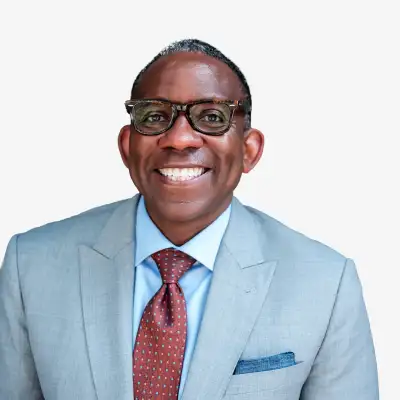
I'm your host Keith Bowers, and today we're talking all things tech. Our guest
is Bryan Gibson, the founder of i2X Solutions, a nationwide business and
technology consulting firm, headquartered right here in beautiful Tallahassee-Leon County.
Their mission is simple, but powerful: turn complex tech challenges into solutions that
make businesses stronger. Bryan, welcome to the show. How you doing today?
[Bryan] Thanks, Keith, doing great! [Keith] Excellent! So, let's just start at the beginning. Tell us a little bit about the story
behind i2X Solutions. What inspired you to start the company, and why did you choose
Tallahassee as your headquarters? [Bryan] Yeah, I think it actually makes sense to start with a lot of
times what people ask me many years after knowing them, is, "What does i2X stand for?" And the idea behind
i2X is it's 'idea-to-execution.' And what I found for a lot of places, small businesses,
as well as even large enterprises, business leaders had a hard time putting their ideas into action,
whether it was a stint where I worked at with the state, or large international software development companies.
And then starting to interface with local small businesses just through experience, found that that's really kind of the struggle
when the rubber meets the road. And so the idea behind i2X Solutions was always to take the best of what we have in service
delivery and the knowledge, and allow our clients to take that and leverage that to gain those close
sort of business successes they're looking for. That maybe they're not sure on how to achieve, you
know, so much of the starts with an idea and then how do you go to the next step, and then step, and what is the next step? But we help our
clients achieve that. Tallahassee is a great place to do that for multiple reasons.
One, great place to live. Two,
a great ability to pull
incredible talent from our educational institutions right in our own backyard. And three, there's a lot of good
opportunities to network and cut teeth and learn things here in this community, because
the community is very much oriented around, you know, small businesses, innovation, and
kind of propping each other up. [Keith] Yeah, well, your company operates under
two mottos. The first one is 'simplifying tech, amplifying success' and the second one is 'technology
made simple, your business made stronger.' What do those phrases mean to you and
how do they guide the work that you do every day? [Bryan] So much of what we do with technology
is just translating it, kind of boiling it down for people, bring it into their language. And that's really what
you see in both of these statements, is this concept of simplifying what maybe is more complex with technology.
We can adopt technology all day long, but if we don't know how to use it, if we don't know the terms, if we don't know how to put
it in a place, we can't gain those successes. And so by taking very complex things,
very maybe new terms to certain people and technology innovations, and put
it in terms that they can understand, that makes sense to them in their business, their jargon, their vernacular, their adjectives, their
nouns. We actually allow them to take advantage really of existing technologies as well as not just
new ones. And in doing so, it makes their ability of– businesses more resilient, and more capable of scaling and
growing. Technology is the only thing that allows us to do that. You can only make so many people, so quickly. Technology
allows you to scale your business and do more with less faster than just about anything else we've seen. So
anything that can help people adopt that is always kind of our mission. [Keith] So do you think the
big hurdle that you have to negotiate
would be the, I guess the
level of technical savvyness that these companies have. When they approach
you with the problem, they realize that they've got a technical problem—but like you
stated—they might not know exactly how to communicate that, and then if they can't communicate
it, is probably difficult for them to resolve that issue. Is that what I'm hearing?
[Bryan] Yeah, absolutely! And that's a big part and parcel to the translation concept. We call ourselves translators
all the time. Right, and that's really probably the best metaphor for it is what is their,
language, their motive, method, their mode, even. It's not just the words, Keith, sometimes it's, like you said,
the way, right. The content, the depth that they have in those areas that prevents them from—or the lack of depth—
prevents them from really being able to tell us, you know, exactly what the problems are and how to solve them. So, there is a lot of that. It's
very deeply rooted in communication and it helps to get to know people and their business
and that clears things up pretty quickly. [Keith] Okay, so listen,
i2X Solutions, you guys, offer a wide range of services from managed IT support to cybersecurity
to strategic consulting. For someone like me, who isn't in the tech world every day, how
do you explain the kind of problems you solve for your clients? [Bryan] Yeah, we help them take
advantage of existing technology. So you're using Google Workspace, you're using
Microsoft 365, you're about to hire five, six,
seven more people to come up with a hiring program. That's going to require you to set up new accounts,
get them new computers. It's going to require them to set up and fill out new set of W4s and I9s.
That's going to create a bunch of coordination between maybe different departments, payroll, HR, et cetera,
within your organization. And you know that this is a problem that doesn't scale with where you are in your business.
We can help you, right? So we help you take advantage of some of the technologies that you may already be invested in, as you didn't understand,
can automate some of those processes. So automation, taking advantage of things, like Office 365,
and specifically things like Power Automate to pick up and do automated workflows. So when
emails fire off or, you know, particular events to trigger happen, uh, a user gets an email
with an I9 to fill out, with the W4, et cetera. And so that's just an example of one way that we can
help people take a business process that maybe is very manual and human-intense today and use their
existing technology to make that faster, easy, scalable, etc., find those
efficiencies. We even build new solutions for people, right? So we go as far as complete custom software
development and everything in between. [Keith] Okay, so it's customizable, that's excellent.
So, you use technology that they may be–that they may have access
to already and then you solve for solutions that they might not have a app or software application
that will do what they, you know, the task or, you know, the task
that they want them to do. So, that's pretty cool. So cybersecurity,
we hear about it all the time. Isn't it Cyber Security Month this month (October)? [Bryan] It is.
[Keith] Yeah, so, happy cyber security month, everybody. Change your password. Lock your doors, lock
your car. But, cybersecurity plays such a critical part in doing business
today. You know, especially for small and medium-sized businesses, what are some of the biggest challenges
you see in this space, and how does your company help to protect, help these companies protect
themselves? [Bryan] Yeah, that's a complimentary side of our business, right? So, where we think about things from a consulting,
business process et cetera perspective, we're often always thinking about how secure are these things. It's
just a kind of a thing you have to think about these days. And, in our cybersecurity practice specifically,
we're really helping people with making sure that their systems are being monitored 24/7, 365. And that's probably the
most important part. Making sure that your laptops and desktops that you have are
all familiar with. But also all of your cloud, and other kind of componentry that make up a business
today. Technology footprints for business today is very different than what it was 20 years ago. Securing that is
very different than what it was. It's even very different than what it was just 10 years ago, 5 years ago. And so,
being able to provide a comprehensive cybersecurity solution today has to follow that level of complexity. And that's
one of the things that we do, again, helping to understand what business you're in, what type of business are you,
what processes you have, where your data sits, what applications do you use, where do your users sit, do you have a remote workforce
versus a hybrid workforce, first versus in the office workforce, all of these things come into play. And so we do effectively
comprehensive, you know, audits and looking at where all these things lie and then provide you with the cybersecurity
solution that at least covers the basis of what we would consider, you know, necessary and then go above and
beyond that with any kind of regulatory, other compliance items, that you need.
[Keith] So, with your work, you work with clients from, you know, across several different industries from
law firms, financial services, nonprofit, professional services—what are some of the unique technology needs
in those industries and how does your company provide solutions that fit their needs?
[Bryan] I would say the—I could share this here I guess—the dirty little secret, right? Everybody always thinks that they're the
ones, they're the industry that's really far behind. Everybody's behind. That's so, just to get the one thing
out, right? Every industry feels like from a technology perspective, we're in the law firm industry here, law firms constantly say they feel
like they're behind, right, in technology. And banks and fintech feel like they're behind, nonprofits feel like they're behind.
To be honest and to be blunt, everybody's behind. Things are changing *so* rapidly today that every
industry we see is having a hard time keeping up. And they're all struggling in very similar
ways. I think the AI revolution that we're seeing kind of wash over everything right now is really evening
out, some of that pain kind of across everybody in terms of software, and disruption, and change,
but there are some specific things. The professional services firms on the law firm,
accounting firm, that side of things, people are typically more office-bound, desk-bound, there's a
lot more remote work, we see, but in most types of organizations and what we also see from
that is a need and a more vigilance around user, end user security, watching
end user patterns and behaviors, of different industries that are typically more manual
labor, some of the construction, or the onsite assembly kind of like manufacturing,
where you have people concentrated in an office or an area that like that, the you don't need
as much of that remote kind of monitoring in connection. So there are some nuances and differences,
but to be honest, we really try to treat every issue the same. There are basic cybersecurity tenants and practices
that everybody should be practicing and I don't think we've come across any industry that does it perfectly
and we all have a lot of catching up even even within IT ourselves. [Keith] Wow. So even
IT companies struggle to stay ahead. [Bryan] Well, you do. I mean, it's
an arms race. Let's be very clear. What's going on with cybersecurity is an arms race. I do presentations on this all
the time. I've probably given the cybersecurity one 12 times this year. So, you know—if you're seeing it
coming up, feel free to join any of those—but it's an arms race. And once the genie
was sort of let out the bottle, it just, it constantly does battle going on on again. So, just to give you a quick example,
when Chat GPT came out, which I remind everybody, Chat GPT is three years old in November. Three years old in November, this coming
November it is *only* going to be the ripe old age of three. But like a year and a half later, I was at a cybersecurity conference, or
a financial examiner conference, doing a presentation on cybersecurity with a gentleman. And I announced to the crowd that
a new version of Chat GPT had already come out. It's called Worm GPT. Worm GPT was trained on all
the bad stuff, all the internet. They took the open source version of what led to Chat GPT and they trained at all on the bad
stuff on the internet. So what does that mean in terms of us having to keep up? Well, that meant that all of a sudden
some large language model they could type a question into and get code to start taking advantage on our customers for
clients. [Keith] Wow. [Bryan] That changes, that changes everything for us really quickly,
really quickly, almost overnight. [Keith] That's amazing. So
in the technology consulting industry, you face
a lot of competition. I mean, you've got applications, you've got
different companies in the field. I mean, every, you know, it's hard to have
a conversation or or you know, take a look at anything on your computer or your phone without
being inundated by companies that are in the tech space saying that they can solve
problems for you. So what's your unique selling proposition? What's your competitive advantage?
And what's some of the feedback that you hear from your clients? Because I'm pretty sure they they've
seen it a lot of what I'm discussing right now. [Bryan] Yeah, there's really two things that
we feel that we kind of revolve around uniquely. Technology is technology. There's a lot of competition, as you mentioned,
but we are very personal in our approach. And the intention behind that is that behind every technology problem you're
solving, every printer that won't print, every Wi-Fi that won't connect, every server that goes down, every ransomware attack
that, you know, shuts a business down, there are people, there are people behind that problem,
and those people are being affected. So behind every technology problem, there are frustrated humans. And when we walk into
a business as a human, and we see there with those other people, we sit there with those other people, you'd be surprised
at the amount of information that we get back, the amount of trust that gets built, and the amount of additional knowledge
that provides us around how to serve them better, how to solve the problems that maybe they hadn't, you know, let anybody else know
about before. It also creates a relationship that allows them to report suspicious
or other types of activities, to be a little bit more, if you will, involved in the entire cybersecurity
process, and we do that by actually putting a person in your office. So where the rest of the world is kind of going remote,
and technology is very easy for us to say, "We're going to go remote and be a hundred percent will provide you all the help desk you want,
as long as we never set foot, right, in your office." Don't have to roll the truck, don't have to call a dispatch,
don't do any of that kind of stuff. No, we actually set up office hours, so at least once a week in your office. A human comes by, you get to talk
to another human about technology. [Keith] Oh, that sounds, I tell you what, that will hunt all day.
Because, you know, it is so very frustrating. I mean, going to a website, trying to get technical
assistance for a software application, they immediately give you a, they first
they want to send you to an article and they're saying, "Okay, well, this, does this solve your problem?" And if you say
no, then they put a chat agent on. And it just becomes this
loop, where you're just kind of spinning your wheels. But having a person
there that can see exactly what you're doing in real time. And there's only so much that
you can communicate via a chat bot. So yeah, I can see why you
have a very unique selling proposition because that's not
common in the tech space. [Bryan] We put the people in the tech, right? We got to remember to
put people in tech. And the last thing is we were proactive in our approach, right? So what we deliver, we're
monitoring it and we're looking at the head of the game. All right. So we're making sure not just that computers and PCs are protected, but people
are protected. We're searching things like the dark web to see if somebody's already stolen your information and you don't know about it.
We know that before you do, right? So being very proactive in our approach to cybersecurity. Not waiting for something
to happen, taking steps to close the doors that were open, lock the windows that somebody just, you know, let the breeze
through, and do that kind of regular monitoring. This should be being done in order to make sure your house, your assets,
you know, those types of things are locked up securely, regularly. [Keith] Yeah, so let's shift gears a little bit and
talk about Tallahassee. You could have built your company anywhere, but you chose
to keep your company headquarters here. From your perspective, what makes Tallahassee-Leon County an appealing
location for technology companies? [Bryan] I would say, you know, I'd
have to speak from, you know, my personal perspective. Talent is easy.
Very easy here for the types of professionals in the tech world that I'm looking for.
We have two universities and, you know like consider at one point the state's largest, you know, community college now
state college are right in our backyard. i2X has benefited from fertile ground of internships
through the years. I think it's just incredible. I've probably provided three or four
first-time jobs for interns out of FSU. I'm happy to say all three to four of those people over the years
have flown the coop, and gone on to bigger and better jobs. But we've been that, you know, that part-time, get
your feet wet, understand what it's like to work in a professional environment, and to get a first job. And
learn some of those first job kinds of things here with some really, really quality candidates. Candidates that have gone on to, you
know, I said, large places, Microsoft, larger companies in the Big 4, Tampa, Atlanta, you know, Houston, etc.
So, I think talent has been a very big thing. It's
also a great place to have a work-life balance. And I think that's very important.
If we learned anything outside of COVID. Lots of things on the other side of COVID that we've learned,
BC, say before COVID. Work-life balance is important
and you can go to bigger cities, you can go to much larger markets, you can start a business and really try to, you know, jump
into the rat race and put your foot in all the right places and really go gung-ho. But that's, that's a different speed and that's
a different level of success, and that's a different volume. That also comes with a different work-life balance. And you
can have a very high work-life balance to success ratio in Tallahassee, and I think that's important.
And it's a ratio we probably don't talk about, quite a bit. And that is, you know, business success to work-life balance.
But you can have a tremendous amount of business success here in the state's capital and have significantly, I think, work-life–
higher work-life balance opportunities than you would in some of our larger cities. [Keith] Yeah. Well, hey, we got to get you to start
doing commercials for Tallahassee. [Bryan] You know I'm involved, man. I
came here for school and never left, right? I came up for FSU. [Keith] Yeah. So, beyond
your client work, your company also plays a role in strengthening the local economy. How
does simplifying technology and improving cybersecurity for local businesses help the broader community,
in your opinion? [Bryan] Well, I think it just, in some ways, it spreads the the knowledge,
right? Talking specifically about cybersecurity, the things that we need to be safe in daily life.
Now, it's not just businesses that are targeted. It's all of us that are targeted. I personally get involved
with some initiatives like this, you know. Educating seniors, educating underserved populations, more vulnerable
populations to this type of technology. I think when we come into a business and we are
providing monthly in the training for every employee to understand
what a phishing email looks like, right, it's five minute videos. And we come in and we're training those
people. We're not just training them for their business, we're training them for their lives, right? So they know when they get that
personal email that purports to be from their child's teacher. And it's asking them for, you know, some field trip money to
upload or click here and do something like that. Hopefully, some of that business training, right, that we've
helped them gain as just an individual, as an employee, is helping them in their personal life. So I think largely it's in what we're
doing as a service and knowledge that can help the broader community take some of these lessons. Because as I said,
we all face it day-to-day. It's not, and I talk about this in my presentation more recently. This isn't just a business issue.
This is a personal issue. It's an individual issue. Every single one of us deals with cybersecurity on a daily basis.
[Keith] Yeah, it is. It is sort of like the gift and the curse. I mean, the technology is a great
tool, but the opportunity to weaponize technology also poses a great
threat. And we're seeing that play out, you know, daily.
[Bryan] It's too easy. I just two things I talk about, it's being too easy, Keith. It's too easy to find.
I can go find information about you on the dark web and create a campaign to target you right now. I can do it in 5 to 15 minutes.
It's easy, easy to do. You know what else is also very easy for me to do? Get money from you, anonymously,
right? I'm not going to ask you to cut me a personal check and put in the mail, right? That's not going to be the way I
defraud you, but now I have something called Bitcoin, right? I can take these anonymous or, you know, pseudo
anonymous, highly anonymous, anonymized payments, and actually extort you in ways that nobody's going to be able to
trace me now. So it's got an easier to receive the reward for, and it's gotten easier to do the
deed. [Keith] Yes. [Bryan] We're seeing both of those have happened kind of simultaneously. [Keith] Both of those, Yeah. [Bryan] Yeah. [Keith] Yeah, you're absolutely correct.
So, looking ahead, you know, technology changes fast. What trends should businesses, especially small
and medium-sized businesses, be preparing for over the next few years?
[Bryan] So, I typically try to yell "bingo" every time I hear the word AI before I expected it, but I would
say that. That was when, I'm the guilty party of this conversation, right? I think I said it first.
AI, but behind AI, this is what I would rather address my answer directly to, because I
think what we're calling AI, and a lot of especially small businesses, again, people who, who understand enough
tech to be savvy and do what they need to do to operate, but don't, you know, fall, move all the way over to, you know, the technology expert
kind of side, is automation. Automation, automation, automation.
For decades, the largest enterprises in the world have been working toward automating their business processes.
You know, every Monday, Keith, I've got to come in and I've got to open these three spreadsheets. And I've got to move data from here
to here. I've got to save those spreadsheets, put them in another folder so that Jane can pick that folder up on a Tuesday and
do with that. And for decades, enterprises have been building tools and technology to
take that mundane, menial, human task, and turn it into a script, an automation, right, of some
sort. Those tools have now become so democratized, and so inexpensive, that small businesses
can afford it. Small businesses can adopt relatively easily. What's been masked
with the AI, kind of everything that's gone on, is that AI is doing some of that automation. And that's really where
some of the power is. It's not that AI necessarily is smart, and it's– can give us great answers.
It's when it can do things for us, that we really see kind of our, our eyes light up. And when doing things
for us comes to play, it's automation. So what I mean by automation, I have data that I get every day,
and I have a human—somebody's role in my company is—to take that data every morning, that report,
do some beep boop beep for some changes, and then send it out to somebody else to do that. That takes that person
four hours, every week, once a week. If I take and create a Power Automate automation,
that's free from Microsoft, that will trigger when the email comes in, download the email and put it in the
folder, will open the Excel document, that was on the email, will make the changes that need to be made to the
Excel document. Will generate the other email and send that email out to the next person—all automated, and it
takes four minutes versus the human taking four hours. That's where we're seeing huge small
business benefit to technology increases. And that's kind of hidden under the AI umbrella, so I want to peel
it back a little bit and really talk about it. Automation and the tools that we can use to automate have become
so inexpensive and so accessible. We've heard about no coding, programming without
programming, like this concept of dragging and dropping to program. That's what this is. That's the
benefit that this provides is now I have senior vice presidents of non-tech
companies going out using AI and automation tools to build websites for their company, to build
web applications, for their company. These are people who have never written code before and they're going out and building automations to
take data from here, put it there every Tuesday so that Sally or Steve doesn't have to do that anymore.
And now I've saved 16 hours, right, a month of work. [Keith] And that's
important to a small business because you want to be effective and you also want to be, in terms of the deliverables, that
you're providing and the services that you're providing for your clients. But at the same time,
you got to be cost effective, too, and saving time is saving money. I mean, it is.
[Bryan] Razor thin margins. [Keith] Yeah. [Bryan] Small businesses, we operate on razor thin margins, right? Everything's highly volatile. Any cut
that we can make. I mean, there are projects that I quote, I talked about doing software development. I was going
to quote software development jobs. Some of those would be 100, 200, 300-hour jobs that we wanted
to do. With AI and automation tools, those can be done in a tenth of that time, a tenth of that time. And it's not just by me,
who's a professional. It could be by anybody. [Keith] Yes. Yeah. Well,
I think every small company needs to embrace AI because it's such a–
[Bryan] It's here to stay. [Keith] Yeah, it is here to stay. You're right. It is here to stay. So let's, we're
getting into the end of our show and to wrap things up, I want to do a quick lightning round of
short questions, short answers. So here we go. What's one tech myth you love
to bust? One tech myth is out there that you would just love to
debunk. [Bryan] It is so much harder to break
a computer than people think it is. [Keith] *laughs* Okay. [Bryan] It is so much harder. If people
have this, they walk around with this fear that, "If I click on the wrong button, it's going to blow up," and that it is–
it is so recoverable. There are 99.9% of the time we can undo anything you've done.
[Keith] Okay. What's your number one piece of advice for small businesses managing IT
challenges? [Bryan] The number one piece of advice, of like a top– [Keith] Other than
calling you. [Bryan] *laughs* Yeah. You know, I would say
that the easiest is probably over purchasing,
or under leveraging technology. If I'm keeping this just purely as small business
plus tech answer, right? That we often, I've seen lots of small businesses by too much tech and they have way too
much and they're, it's cost, just out the door, right? Focus on your business, not on the technology. Technology doesn't solve your business problems,
it's there to, to augment and to, you know, kind of, to be that support for them. It's not meant to solve them all, oftentimes,
business problems are the cause. So don't over buy, and don't under leverage. If you bought Salesforce.com
and you're willing to pay that, you know, and you've got it in your budget, use it. Use it to automate what you've got to use, and you're going to do the right things
for business. [Keith] Very good advice. And finally, what's your favorite spot in Tallahassee
where you go to unplug? [Bryan] Hm, I'm going to
give a generalist answer, but I'm gonna—it'll be kind of an interesting shout out—I'd say outside.
And I'm going to say outside in any one of our incredible parks, because I live–my neighborhood
backs up to Maclay State Gardens, and so we have a lot of nature, a lot of wildlife.
In this area is 55%, I think, forested—the metro area. Which is kind of unheard of for a metro
area. Nature, outside, backyard—I love to be in the woods. I was talking with
somebody other day who also loves Tallahassee, also like me, was not from Tallahassee, and I grew up on the coast. I grew up surfing
and doing lots of water sports stuff. So it's odd for me to feel landlocked. I called– it's like having
a forest ocean, if you will. [Keith] Yeah. [Bryan] Being be out amongst the trees and amongst the wildlife. So for
me to unplug, it's really, because I'm in tech, nature. [Keith] Nature. [Bryan] Can I find
the most anti-tech thing. *laughs* [Keith] *laughs* That makes perfect sense.
So Bryan, I want to thank you for joining us today and sharing your story. It's inspiring
to see, you know, a home grown Tallahassee company making such national impact. You know, at the same
time, while contributing to our local economy. So to our listeners, thank you for tuning in and
and Bryan, can you– want to maybe provide your website for those out, our listeners
out there that may want to contact you directly. [Bryan] Sure, it's i2Xsolutions.com
www.i2Xsolutions.com or just i2Xsolutions.com [Keith] Excellent.
So again, I can't thank you enough. During Cyber Security Month, coming on, sharing your insights with our
listeners. And to our listeners, thank you for tuning in to Economic Vitality Unplugged. Be
sure to follow us for future episodes as we continue to highlight the people and the companies driving growth in Tallahassee-
Leon County. And 'til next time, stay innovative.
[Inspirational music]