Subscribe
Share
Share
Embed
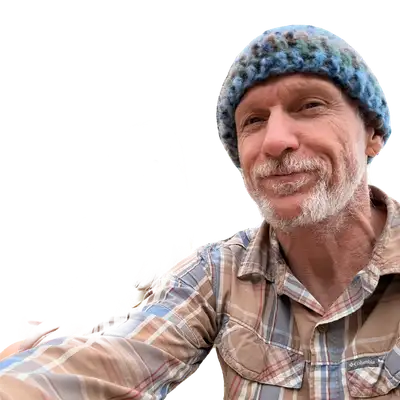
TRUE LIFE is a long-form descent into the questions that become impossible to ignore once the surface of reality starts to crack.
Hosted by George Monty, TrueLife explores consciousness, psychedelics, neuroscience, artificial intelligence, language, technology, power, culture, philosophy, spirituality, trauma, addiction, human transformation, and the strange future of being human.
For more than six years, George Monty has built TrueLife as an independent media platform, bringing hundreds of long-form conversations to a growing global audience. The podcast has produced 850+ episodes, reached 22M+ YouTube views, built an audience of 40K+ subscribers and followers, and accumulated 160K+ podcast downloads. TrueLife has also been recognized by Listen Notes among the top 5% of podcasts globally.
These are not simply interviews. They are encounters with people who have gone far enough into a subject to discover that the subject changes them. Scientists meet mystics. Artists meet technologists. Researchers meet rebels. The personal collides with the planetary.
The central question: What happens when we stop treating reality as fixed?
Across hundreds of conversations, TrueLife follows recurring territories — consciousness → perception → language → technology → power → transformation → the future of humanity.
For seekers, rebels, researchers, creators, entrepreneurs, and anyone who suspects the official story is incomplete.
I’m fifty years old.
The same age Don Quixote was when he lost his mind and decided to become a knight.
And the same age he was when he was finally defeated.
By the Knight of the White Moon who knocked him off his horse and forced him to give up his quest.
Don Quixote thought his life was over.
He went home. Became “sane.” Saw reality clearly for the first time.
And then he died.
I’ve been thinking about that a lot lately.
Because I’m fifty. And I’ve been defeated too.
But what if defeat isn’t the end?
What if it’s a doorway?
What if being forced to give up who you thought you were…
Is what finally lets you become who you actually are?
This is “The Knight of the White Moon.”
And this is about coming home.
Let me tell you what happens in the book.
Near the end of Part 2, Don Quixote meets a mysterious knight dressed in white with a moon on his shield.
The Knight of the White Moon challenges him to battle. The terms:
“If I win, you give up being a knight. Forever. You go home. You take off the armor. The quest is over.”
Don Quixote accepts.
They fight.
Don Quixote loses.
Knocked off his horse. Defeated. For the first time in the entire novel.
And he has to keep his word. He has to go home. He has to give up everything he’s fought for.
Here’s the twist:
The Knight of the White Moon is his friend. In disguise. Someone who loves him and thinks he’s saving him by forcing him to stop.
I know what that feels like.
I was fired after twenty-six years.
Twenty-six years as a UPS driver. And I fought—not for me, but for others. For what I thought was right. Against corporate greed. Against a system that treated people like numbers.
And they defeated me.
Twenty-six years. Gone.
Maybe you know what that feels like too.
Maybe you got fired after decades of loyalty.
Maybe you got divorced after years of trying.
Maybe you got sick and had to give up the life you planned.
Maybe you retired—if you made it long enough—and suddenly realized: “Wait, who am I without the job? Without the title? Without the identity I’ve worn for decades?”
Some of you are fifty. Some are fifty-five. Some are sixty.
And you’re being forced to take off the armor.
Forced to give up the quest.
Forced to go home.
And the question is: Is this defeat? Or is this something else?
Let me read you the moment Don Quixote is defeated. Part 2, Chapter 64:
“Don Quixote, battered and stunned, without raising his visor, said in a weak, sickly voice, as if speaking from inside a tomb:
‘Dulcinea del Toboso is the most beautiful woman in the world, and I am the most unfortunate knight on earth, and it is not right that my weakness should discredit this truth. Press your lance, knight, and take my life, since you have taken my honor.’”
“Press your lance and take my life, since you have taken my honor.”
Because without the quest, without the identity, without the armor…
What’s left?
That’s the question we’re all asking at fifty, at sixty, when we’re forced to come home.
Don Quixote had to take off his armor.
Stop being a knight.
Admit that the windmills were windmills, the basin was a basin, the quest was fantasy.
He had to shed his identity.
I had to do that too.
For twenty-six years, I was “a UPS driver.” That’s who I was. That’s how I introduced myself. That’s the box I fit in.
And when they fired me, I lost that.
I had to figure out: Who am I without the uniform? Without the route? Without the identity I built my entire adult life around?
Some of you just retired.
For thirty, forty years, you were “the engineer,” “the teacher,” “the manager,” “the CEO.”
And now… you’re not.
Who are you now?
Some of you got divorced.
You were “husband,” “wife,” “partner” for decades.
And now that’s gone.
Who are you without that role?
Some of you got sick. Got old. Your body can’t do what it used to do.
You were “the athlete,” “the worker,” “the strong one.”
Who are you when that’s stripped away?
Here’s what I’m learning:
This is terrifying. And it’s also… a gift.
Because for the first time in decades, you’re not defined by the box you fit in.
You’re not the job title. Not the role. Not the armor.
You’re just… you.
Naked. Vulnerable. Uncertain.
And you get to ask: “Who IS that? Who am I really, under all the armor I’ve been wearing?”
Some traditions call this a “second adolescence.”
Think about it:
In your first adolescence—your teens, your twenties—you were figuring out who you were for the first time. Trying on identities. Making mistakes. Finding your path.
Then you spent thirty, forty years being that identity.
The job. The role. The marriage. The armor.
And now—at fifty, at sixty—you’re being forced to shed it.
And you get to figure out who you are again.
Not who you’re supposed to be.
Not who the world told you to be.
Not who you were for the last forty years.
But who you actually are now.
I don’t know who that is yet.
I’m fifty. I lost my career. My wife has cancer—we’re fighting it, but I’ve had to let go of the fantasy future we planned.
I don’t fit in the traditional workforce anymore.
I’m in the second adolescence.
And it’s scary as hell.
But it’s also… maybe the most alive I’ve felt in years.
Because I’m not just playing a role anymore.
I’m actually figuring out who I am.
Indigenous cultures understood this.
They had rites of passage. Initiations.
Moments when you had to shed one identity to step into the next.
Adolescence was one.
When you stopped being a child and became an adult.
And there was supposed to be another one.
When you stopped being an adult—the worker, the provider, the doer—and became an elder.
But we don’t have that anymore.
We just… keep working until we can’t. Then we retire. Then we… what? Golf? Watch TV? Wait to die?
That’s not a rite of passage. That’s just… ending.
But what if getting fired, getting sick, getting old, being forced to take off the armor…
What if that’s the rite of passage we’re missing?
What if this is the initiation into elderhood?
Not the comfortable version where you retire with a pension and play golf.
The real version. The hard version.
Where you’re stripped of everything you thought you were…
So you can finally step into what you’re supposed to become.
The elder isn’t defined by what they do.
The elder is defined by what they know.
What they’ve survived. What they’ve learned. What they can teach.
You spent forty years in the workforce—you know things the young people don’t.
You’ve been married, divorced, struggled, survived—you know things.
You’ve been defeated, rebuilt yourself, kept going—you know things.
That’s not weakness. That’s wisdom.
And the world desperately needs elders right now.
Not people still trying to prove themselves.
Not people still chasing titles and armor and quests.
But people who’ve taken off the armor and can finally see clearly.
Don Quixote was forced to take off his armor.
And everyone thought: “Finally, he’s cured. He’s normal. He’s saved.”
But what if it wasn’t about being cured?
What if it was about being initiated?
From the knight (the doer, the fighter, the role) to… something else.
Something quieter. Wiser. More real.
The Knight of the White Moon forced Don Quixote to go home.
And Don Quixote thought that was the end.
But what if home was the point all along?
When I got fired from UPS, I thought my life was over.
Twenty-six years. Gone. What now?
But here’s what happened:
I came home.
Not to a place. To… myself.
To the conversations I’d been too busy to have.
To the questions I’d been too tired to ask.
To the time—precious time—to be present with my wife while she fights cancer.
Time I wouldn’t have had if I was still grinding routes at 4 AM.
Some of you retired and thought: “Now what?”
Now you get to come home.
To the hobbies you didn’t have time for.
To the relationships you were too busy for.
To the questions you’ve been avoiding for forty years: “What do I actually care about? What do I actually want? Who am I when nobody’s watching?”
That’s not the end. That’s finally the beginning.
Some of you got sick, got old, lost your physical strength.
Now you get to come home.
To a different kind of power. Not the power to do everything.
But the power to be present. To witness. To know. To teach.
Don Quixote came home and died.
But you know what he got to do first?
He got to be with the people who loved him.
Not as the knight. Not as the role.
As himself.
And they were all there—Sancho, the housekeeper, the niece, the priest—crying, because they loved him.
Not for what he did.
For who he was.
That’s what coming home means.
Shedding the armor. Letting go of the quest. Stepping into who you actually are.
And letting the people who love you see that person.
Not the role you played for forty years.
You.
I’m fifty years old.
I’ve been defeated. Lost my career. Don’t fit in anymore.
My wife has cancer. The future we planned might not happen.
And I’m learning that this might be the gift.
Not because it doesn’t hurt. It does.
Not because I have it all figured out. I don’t.
But because for the first time in decades, I’m not wearing armor.
I’m not playing the role of “UPS driver” or “provider” or “the guy who has it together.”
I’m just… me.
Figuring it out. In the second adolescence. In the passage toward elderhood.
Coming home.
If you’re fifty, sixty, seventy…
If you just retired, got fired, got sick, got old…
If you’re being forced to take off the armor and you don’t know who you are without it…
You’re not alone.
This is the rite of passage.
This is the initiation.
This is the moment you shed who you were…
So you can finally become who you are.
The Knight of the White Moon forced Don Quixote to come home.
And Don Quixote thought it was defeat.
But what if it was the doorway?
What if coming home—to yourself, to the present, to what’s real—is the whole point?
I don’t know yet.
I’m still walking through that doorway.
But I think there’s something on the other side.
Not the quest. Not the armor. Not the identity we wore for forty years.
But something real. Something quieter. Something wiser.
Ourselves.
Finally.