Subscribe
Share
Share
Embed
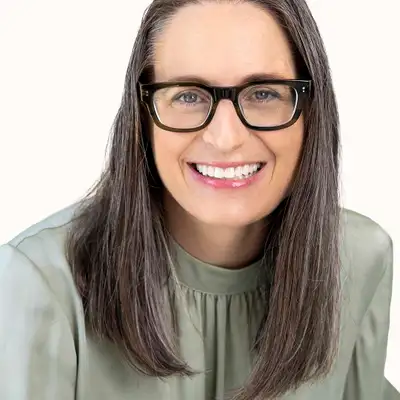
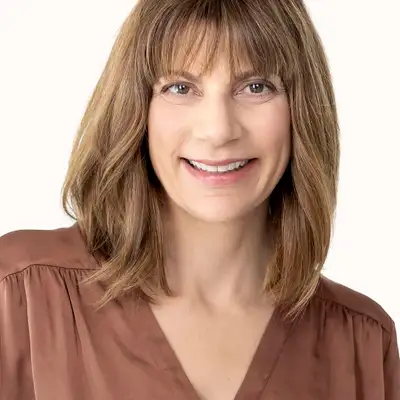
Born from 20 years of friendship, during which they navigated the trenches of autism parenting and advocacy, the Refrigerator Moms is Kelley Jensen and Julianna Scott’s way of reaching out to parents waging the same battles they were. Their purpose with this podcast is to clear the fog, silence the noise, and find a path through neurodivergence for parents that are stuck between bad choices. They tackle parenting topics such as mom guilt, tantrums, pathological demand avoidance, siblings, medication, comorbidities, social media, and much more.
Julianna Scott 00:01
Hi, I am Julianna Scott, and I'm here with Kelley Jensen, and we are the Refrigerator Moms. And today we are joined by Brittney Crabtree, one of the hosts of Moms Talk Autism, the podcast that we love.
Kelley Jensen 00:15
We love it.
Julianna Scott 00:21
So welcome, Brittney.
Brittney Crabtree 00:22
Hi. Thank you so much for having me today.
Julianna Scott 00:24
Oh, well, we love having you. And a little bit about Brittney. Brittney, you live in Northern California with your husband and four children, and they all bring their own neurodivergent strengths and needs. And you draw on your background in psychology and community work to support families through speaking, teaching, and advocacy. And on top of all that, you run a custom bakery business and teach cookie decorating classes, which we'll definitely touch on later.
Brittney Crabtree 00:51
For sure.
Julianna Scott 00:52
We are going to put that in the notes. We need to get together for that, don't we?
Brittney Crabtree 00:55
Yeah. Sounds like a lot of fun.
Kelley Jensen 00:57
100%. I follow your bakery on Instagram, and I am in awe of what you can create. So amazing.
Brittney Crabtree 01:06
Very kind.
Julianna Scott 01:08
So welcome. But give us a little brief overview of who is in your household.
Brittney Crabtree 01:12
Right. Yeah. So my husband and I have been, we're not native Californians, but we moved here for a job, and we love it here. We claim it as home now.
Julianna Scott 01:21
Where'd you grow up?
Brittney Crabtree 01:22
Oh, I grew up in Idaho, in Boise. Yeah. And my husband is from the Seattle area and then also spent some of his childhood in Houston, Texas. So kind of nothing even remotely California, like either of us. We moved here for a job right out of college and just fell in love with the place. And we love Northern California, and we've been up here for almost 20 years now.
Julianna Scott 01:45
And age of your children?
Brittney Crabtree 01:47
Yeah, so my kids are, let me, let me think. I have to think for a second because there's a lot of them. 21, 19, and 18 are my boys. So we had them boom, boom, boom. And then we had a little break. And then our darling rainbow sparkle unicorn princess, you know, the one who's really in charge, our daughter was born, and she is 12 years old now. So my youngest is 12. My oldest is 21. And everyone is going all sorts of different directions all the time.
Julianna Scott 02:19
When we spoke last time, you had the greatest explanation of caring for a severely autistic person. And you said it is extreme, extreme caregiving. Right. That is how you described it. And I feel like that does it justice. So talk a little bit about the extreme caregiving that is involved in all aspects of severe autism.
Brittney Crabtree 02:41
Right, right. Yeah. So like I said, we have the four kids, and my oldest has ADHD. My second son is profoundly affected by his autism diagnosis and other sensory needs. We have a variety of diagnoses for him. The alphabet soup is what some moms will call it. And then my third son is neurotypical. And then my youngest, my daughter, is also autistic. So the extreme caregiving moniker, that title kind of goes hand in hand with my second son and his extreme needs that he has. And the extreme part of it comes from the 24/7 supervision and care that is required in order to keep him not only happy, you know, but alive. And so that's, that's where it comes from. Normally, typically a 19 year old will be able to care for themselves. They'll be able to perform, you know, at least basic hygiene. I don't know, there's some 19 year olds a little questionable probably, but some hygiene, be able to feed themselves, be able to, you know, drive themselves or get some kind of transportation to school or work or friends or something. My son can do none of those things. He needs 24/7 supervision. Not only his care to keep him alive and fed and healthy, but also to keep him safe. He can be quite aggressive at times. That's part of a sensory, some of his sensory dysregulation that he experiences, and we call it kind of the big three. There's aggression towards property that happens in our home. There's aggression towards others. So that can also happen towards mom and dad or a stranger at the park or whoever. And there's also aggression towards himself. He can be self-injurious. And so that's really part of that extreme caregiving and constant supervision needed to keep him safe from himself.
Julianna Scott 04:46
And what helps the most of all of those? Do you have a different strategy for each one of those extreme behaviors?
Brittney Crabtree 04:52
Absolutely, yeah. Our home is set up in a way, you know, we call it Fort Knox. Sometimes he can also elope or escape and leave the home. He's a nonspeaker, he does not have any verbal words. So if he were able to get out of the house on his own and he wandered away, which is very possible and has happened multiple times, he has no way to communicate what his name is or where he lives or anything like that. And he has no self-preservation as far as like stepping out into a bunch of cars or anything like that. So it's very important that he has someone watching him at all times for his safety. So yeah, that part of it, we have locks on all the doors. We have locks on our pantry and our laundry room. We have specialized wall, I don't know what you would call it. We have shiplap in his bedroom because he has punched through the Sheetrock. Multiple layers. Yeah, just kind of things like that that you wouldn't normally think of in a typical home or even maybe a neurodivergent home. Everything is just extra for us, and it's not fun to be extra all the time. In fact, it's not fun most of the time. But we are. And so we try to embrace it as best we can and accept it.
Julianna Scott 06:09
Are there things that trigger those aggressive outbursts?
Brittney Crabtree 06:13
Yeah, it depends. Like anything, right? There's multiple reasons why. It's not just one thing and it's not just one situation. If that were the case, we would have it down and we would accommodate accordingly. Right. But yeah, I kind of group them into, I could be wrong, this is just my, I'm not a medical professional or a therapist by any sense of the word, I just am an experienced mom. But I kind of group it into two different categories. There's frustration aggression. Because if you can imagine being trapped in a 19 year old body with all the hormones going on and you cannot do anything for yourself. And not only can you not do anything for yourself, but you cannot tell somebody if you have an itch in the back of your shoulder blade or if you actually have this horrible mosquito bite on the bottom of your foot and it's driving you crazy, or the new medication your mom started for you a week ago is really driving your stomach insane, or you're having insomnia. Like he has no way to tell me any of that in a succinct way or a way that I'm able to interpret it really. I just go off of behavior. So that can be really, really frustrating. And if you lose your top every once in a while, I don't blame him. Like I don't blame anybody to be kind of trapped that way. So that's part of it. That's the frustration aggression. But then there's also sensory aggression. And that could be all those hidden sensory things that are either overstimulating him or understimulating him. I'm pretty in tune with him, like I can piece out a lot of it, but I don't catch everything. No one does. And I know him better than anyone, right. So it could be the neighbor's lawnmower down the street, but for whatever reason it's just driving him crazy, and it gets to the point where he has to release that frustration and that pent-up sensory overload. And so it can manifest itself in both ways.
Julianna Scott 08:03
Got it, got it. Wow. Well, you know, you're preaching to the choir here on some of the things that we all talk about all day long.
Kelley Jensen 08:11
This episode of the Refrigerator Moms is brought to you by Brain Performance Technologies. Brain Performance Technologies is a specialty mental health clinic that offers MeRT, or Magnetic e-Resonance Therapy, for autistic people aged 3 or older. MeRT is a transcranial magnetic stimulation protocol that utilizes an EEG diagnostic to deliver personalized magnetic pulses to stimulate the brain and build neural pathways, effective in managing autistic symptoms.
Julianna Scott 08:33
Julianna and I recently read this book, Upward Bound. Have you heard of this book, Upward Bound, that was written by a profoundly autistic, well, it was supposedly written by a profoundly autistic boy, nonspeaking, who used facilitated communication. He was able to write a book. And while Julianna and I do not think he wrote the book, we think his mother wrote the book. We also think that his mother has a very good handle on everything that a nonspeaking person is frustrated by. So we are into talking about the issues that are raised in Upward Bound by what we think is his mom, and not by facilitated communication. Have you heard of that book?
Brittney Crabtree 09:24
I haven't heard of that one. I've read a few others over the years. But that one's new to me. So it's actually a story. So it's a novel.
Julianna Scott 09:33
Yeah. Kind of broken down into little chapters from different points of view. And everybody's talking about, you know, this miraculous thing that this kid wrote this book, and there are people who are pushing back on facilitated communication. What we are more interested in talking about is what is portrayed in the book, which is kind of the lack of services, you know, poverty wages of caregivers, the lack of caregivers, constant turnover of caregivers, day programs that do nothing and do not provide much stimulation for autistic people. So she really does a great job, and it's beautiful. It is a beautifully written book. It's beautifully told from different points of view. It touches on people who would love to be caregivers but don't have the education and have no way of acquiring the education. It's the dreaded Target run where you're not allowed to buy anything at Target, but you have to go to Target because you have to do a community outing. You know, she really has a good handle on it.
Brittney Crabtree 10:38
Yeah, yeah, totally.
Julianna Scott 10:40
And so she touches on a system that is woefully inadequate. And that is what we are so interested in, that part of the conversation and what is really needed. So I mean, you are in this extreme caregiving role. So what do you see that's lacking the most?
Brittney Crabtree 11:02
For me personally, I can't speak to this book or what this author or authors said, but for me, I have a difficult time finding safe places for me to take my son in the community where he can possibly interact at whatever level he's capable of that day. Because it fluctuates. Right. I've probably said it 15 times already in this episode, but safety, it's number one, is safety. We like just keeping everyone safe. But having a positive community experience, I find there's a real lack of that. Now, I live in a very nice area. I'm in the Sacramento area of California. There's lots of wonderful parks. We have fairly decent weather year round. Like, I have a lot of positives on my side as far as opportunities, but yet the extreme nature of our disabilities, for my son, and you know, I'm including myself in that because it affects me as his caregiver, it just makes it really, really difficult to find things that are appropriate, and things that are or could be appropriate. Because he's 19 years old now, him being an adult male seems inappropriate to someone who maybe doesn't know us or is just glancing by or walking by. You know, a toddler playground at the park is not typically where you see a 19 year old male. And so it's disconcerting for people at first, right?
Kelley Jensen 12:28
Yeah. So my son loves to go to Chuck E. Cheese. And he's 26 years old, he's six foot four, he's 250 pounds. And you know what? He goes, whatever. You know that it is what it is. But to your point, there's a few places that we could bring him.
Brittney Crabtree 12:42
So it is what it is. And it is a direct result of community-driven programs that want community integration but then don't offer community integration. You know, in this book that we were talking about, there's this great story about Camp Kami, and it's supposed to be a sleepaway camp for people of all abilities, and they're supposed to be able to go to Camp Kami and spend the week and mom is going to get respite and he's going to have a great time at Camp Kami. And they kick him out of Kami because of his behavior. And it's like, well, if Kami doesn't want you, who wants you? And he's just doing behavior of an autistic person. And it was so poignant. And I think that's where we are, right? So we're supposed to be community-driven. And the community does not accommodate autistic behaviors that are deemed too extreme.
Julianna Scott 13:21
So what else is on your wish list, Brittney?
Brittney Crabtree 13:24
We are inching around and coming to the point of aging out of the school system. So he's going to be 20 later this year. So we have roughly about two years left. And I find it very difficult to plan ahead for the future. I can look at what services are available now and try to find something that fits. But by two years from now, when it comes to that point, that program could be completely different or inoperable or expanded to somewhere else. And so planning ahead is very difficult. And looking ahead for appropriate things for him. I know at some point that I'm going to try to take care of my son as long as I possibly can. That is the goal and that is the plan for me. But I know that's not everybody's situation, or that they can accommodate that kind of thing. But at some point I am going to be too old and too weak to be able to care for him in a meaningful way. And so I'm going to need to look at long term residential, you know, permanent residential care for him. And the grief around that and the acceptance of that is a journey. And I think if I can encourage anyone who may be in a similar situation to me, the sooner you start thinking about that and kind of wrapping your head around that in a future sense, the better. The acceptance piece is huge. I'm still working on it and it's coming quickly. But that part of it, the lack of those kinds of programs or the choices. I mean, even trying to find all of the choices, I find it's kind of like a hide-and-seek thing. Like programs and people who are working around me in the local community, whether that's through a regional government agency or a center or a private program, it's kind of like you have to know somebody to find out about it. It feels very smoke and mirrors, like, oh, we don't want you to know about this because it costs too much money. And so we want you to choose this one over here. And can you just like, show me all the choices and I'll find the best one, please. Like, why do I have to, it's like seek and find, you know, why do I have to find all the eggs first and then I get to choose which one I want? There needs to be, there's definitely not enough of them. And yeah, there needs to be more. We have to all work together for a better solution to what happens when I'm gone. Because that is the question everybody comes to. No matter what your experience with autism is, it is a daily thing. I think about it every day to some capacity, some more than others, depending on what I'm working on at the time. And it's something my husband and I talk about often, and it's not a pleasant conversation. It's not fun to think about what you're going to do for your child who needs care when you are no longer capable or no longer, you know, alive here to oversee that.
Julianna Scott 16:23
So, yeah, tell me as much as you want. But how do those conversations go? Is it kind of going through the current options? Is it kind of thinking about, visualizing what you want? Is it just venting and just kind of saying like, you know, I don't have the answer, but just talking about it makes you feel better?
Brittney Crabtree 16:45
I think it's probably all of those things. Just, you know, not all at once, but we'll focus on one part of anything. If there's lots of lessons I've learned, I think I am a vastly different and dare I say better person because I've lived this life. But if there's one thing that I've really learned from this experience as a very type A planner, control freak personality, you know, intrinsically that's who I am, I have learned to let go and just focus on the first two or maybe three steps that are directly in front of me. Maybe even just one step, to be perfectly honest. And so as we're, I know we're circling this, we've got a couple of years, but I'm really just kind of focused on the next six months, you know, and looking at that, and maybe we'll dive into looking a little further ahead. We'll have an IEP soon with his school team. So we're going to obviously be talking about the future a little bit at that one. So I'll dip my toe in. But then I find myself coming back to just a couple, two, three, four, five, six months at most of just looking ahead as far as his journey of whatever that is. And that includes medication, services, programs, all of it. And I find that for me and my son, that's about as far ahead as we can go. Things tend to change. Whether that's some kind of physical thing or a program or a school teacher or whatever it is. It's about, yeah, four to six months is about as far as I can go. And then something changes. If that's the one thing I can promise you, it's that nothing will ever stay the same. Something will change, I promise. Even if your kid doesn't seem like they're progressing at all, things change. They do.
Julianna Scott 18:26
Yeah. So what are your resources? Are you just doing that research in your community? What options are available to you?
Brittney Crabtree 18:39
Yeah, I'm using multiple. I talk to my regional center a lot. I am looking into doing possible self-determination. I haven't gone there yet, but I'm researching it myself.
Kelley Jensen 18:51
I'm a participant in the California Self-Determination Program. What that is, is that in some states, California one of them, the regional center that delivers services allows you to negotiate a budget for your child and then you are allowed to find your own service providers. You don't have to use vendorized ones. It's been a really great experience for us, and if you wanted to talk about it anytime, call me anytime.
Brittney Crabtree 19:14
I would love to. That's what I'm doing though. That's what I'm doing is I'm putting myself out there and I'm finding other moms who are maybe two or three steps ahead of me, a few years ahead of me, and picking their brains. I think that's been the most effective thing I've done.
Kelley Jensen 19:30
Kelley's brain.
Brittney Crabtree 19:31
I am, I'm planning on it.
Kelley Jensen 19:33
Yeah. I have friends who are in the middle of doing that kind of self-determination thing instead of, yeah, just a program director kind of showing you, okay, here's your options. You can instead receive the funds and then you get to go find the options yourself. It's a lot more work for you. As you know, you're the case manager now, as the mom or whoever you are. But there's more flexibility and more, I guess, individualized care or programs that can come from that.
Brittney Crabtree 19:58
Hopefully. That's what I hope.
Kelley Jensen 20:00
Well, what it allowed us to do is it allowed us to find caregivers that he clicked with.
Brittney Crabtree 20:04
That's important.
Kelley Jensen 20:06
Yeah. So I was interviewing people, not, you know, whatever center he was at interviewing people. I think it's a very important step. So that's the thing I like best about it. You know, one thing I wanted to touch on that I think is missing. They have a few models for housing out there. You know, there's some intentional communities. There's some where there's just a real estate company and then you buy into it. But they all are so permanent. Even that group housing, you've got to get into a group home. Well, how do you know if he doesn't like it? And so there's no way to test the waters. You know, when our kids are young and they're gonna go live in a dorm, right, they're going away to college and they're going to live in a dorm, and they get to test the waters of independence through what is largely a temporary living situation. There's no equivalent of that. So how do all of you get your sea legs in that? If anybody is listening and in a position to accommodate anything, it would be something like a Camp Kami, only with reasonable accommodations. Right. So that your child could get their sea legs living independently before you committed to the group home or the intentional community or whatever the options are that you're looking at.
Brittney Crabtree 21:21
I think that's a fabulous idea. I have a friend that lives in Southern California. Her daughter's a teenager, still in school, and she's doing self-determination, but she found a program where her daughter can go stay at a group home for the weekend.
Kelley Jensen 21:35
Yes, the weekends only.
Brittney Crabtree 21:37
I think that's, I love that kind of baby step to even try that out now while she's still living at home. And, you know, she's 15 and she's able to stay. She's planning on staying with her parents as long as she possibly can, but, but I kind of like that. I haven't done a deep dive into that, but I'm hoping, I would love to have something like that available for my son, possibly.
Julianna Scott 21:51
Yeah, I think that's important, and I think that's a great idea. That is something definitely to look at.
Kelley Jensen 21:57
But yeah, again, call me anytime if you want to talk offline about that kind of stuff.
Julianna Scott 22:02
Perfect. You've got three other kids and we talk about siblings. We have an episode, our two neurodivergent, neurotypical kids came on and talked about that experience of growing up in the household. And, you know, talk to us a little bit about how your other kids are managing and kind of witnessing this extreme caregiving and the caregiving versus parenting role. I mean, you have a very different relationship, I imagine, with your son who is severely autistic. As, you know, the parenting versus caregiving that goes on, how are they witnessing that, managing that, talking to you about that?
Brittney Crabtree 22:40
Yeah, I could talk for hours on this. This is going to be an episode series. So I'll try to be somewhat succinct, but I think it's a really important distinction to make. So I parent, and now I more advise my 21 year old, right, because he's an adult and we're moving into that field. We're getting there with him being able to find a career and work out all that kind of stuff. My son, who is profoundly affected and, yeah, severely autistic, I do not parent him. I am his caregiver. There is nothing, the dynamic between us and the severity of his disability does not require or call for parenting. We're not having discussions about how to go on a date or filling out a job resume or any of those parenting things you would do at any age that he has been. I was his parent when he was a young child and a toddler, you know, when it was more appropriate, when the gap wasn't as large between him and his peers. But now I am caregiving for him. And then I've got my senior in high school graduating here very soon. I am his parent. And we're straddling that line once again between adult life and parenting. And it's, man, it's a tough place to be. I know you guys have been there. It really messes with your head sometimes as the parent.
Julianna Scott 23:58
It does.
Brittney Crabtree 23:59
I mean, people always say, oh, it'll get easier, or, you know, oh, parenting kids is so hard. And I was like, yeah, I don't think it's easier. And it's definitely way harder than you guys said it was. I didn't believe you. And now I'm just like, you did not emphasize this enough, right? I mean, you need a lot more physical energy, but man, the mental energy, it's almost, I don't know, it's kind of worse actually. So I would say so, yeah. And then my daughter, who's 12, I'm very much a parent for her. There is some caregiving involved. I like to make that distinction. And sometimes it's almost like you could think of it as a physical hat you take on and off. Am I a parent right now, or am I a caregiver for a disabled person? And making that switch in my head can help me mentally. I don't need to worry about the consequences or parenting or the screen time aspect right now. We need to work through this, you know, dysregulation, meltdown situation, and let's go into caregiving mode, and then we can be a parent maybe later, you know, so I'll do that with her. But as far as sibling dynamics with each of my kids, with my son, it's really difficult. So the three boys basically grew up together. They're very close in age, and it was a lovely dynamic. But as those gaps grew bigger and bigger, and my son is further and further behind his peers and his brothers, my oldest and youngest son have really bonded over that. They have a very, very strong relationship. They're very close. They do a lot of things together. It brings me a lot of peace knowing that they have each other. They do not have a strong relationship with their other brother because he does not, his behaviors and his sensory needs do not allow him to have a strong relationship with them. He cannot tolerate that. I think he really enjoys being around people, but it's really, really hard for him, so it makes it hard. And as they've grown older and older and older, it's become more and more difficult. And those two brothers, the older and the younger, they have taken on, instead of more of a sibling role, they are now a caregiver as well.
Julianna Scott 26:06
Yeah, that was the question I was going to ask you. It's like, in the same way that you feel like it's not parenting, it's caregiving, do they feel like, oh, this isn't, I don't have like a brotherly feeling, is it more, you know, this is a person that I care about, of course, it's a caregiver role.
Brittney Crabtree 26:23
So it's a caregiver role for sure.
Julianna Scott 26:25
So do they feel a certain responsibility in terms of caregiving?
Brittney Crabtree 26:29
Yeah, I think they do. I wouldn't dare speak for them, but I believe so. I think they do feel, they do a lot of caregiving. They help out with respite care for him. They allow my husband and I to take a minute and go out on a date every once in a while, that kind of thing. And I know that they would be able to help in an emergency if something happened to me. They would be there for their brother. Are they as kind and compassionate as, do it exactly the way mom would do it? Of course not. Because they're teenage boys, you know, but everyone survives. We're doing fine. But yeah, it's really interesting because it is a caregiving responsibility now. They, I think they do love him and they do want him to be safe and cared for, but they don't have, I see a lot of sibling relationships online, and it's wonderful, where an older brother or a sibling of a disabled person, they'll have this wonderful sibling dynamic and they play together and they'll go golfing or the trampoline park or go out to dinner and they have a great time. And that typical sibling is wonderful with them. That is not the case in my family. It just isn't. I wish it was. But yeah, once again, we're always the extreme. We're always on the outside. We're always at the very, very end of whatever spectrum it is. It's just too extreme to allow that kind of relationship. Now, with my daughter who's autistic, there is much more of that sibling relationship. Some of that's, you know, gender, some of that's the age gap. They were, you know, in elementary school and middle school when she was born. So she's much younger than they are. But she also allows for, she can tolerate and wants, seeks out more of a sibling relationship. So we have both in our house.
Kelley Jensen 28:16
Are you taking care of your brain? You've tried medication, you've gone to therapy, but has anyone talked to you about Brain Performance Technologies? It is the mental health treatment no one has told you about. At Brain Performance Technologies, we help with depression, PTSD, autism, and many other mental health conditions. Our treatments are drug free and non-invasive. Reach out to us about insurance options. Brainperformancetechnologies.com.
Julianna Scott 28:42
So do you feel like the conversation about autism has been hijacked away from those profoundly affected by autism? Do you feel that they are being squeezed out of services, of accommodations, of the very conversations we are having about autistic needs?
Brittney Crabtree 29:00
I certainly think that has happened and can continue to happen. I think I have a very unique perspective because I do have someone who is profoundly affected, but I also have someone who is more of your typical neurodiverse person. Is that a thing, that word?
Julianna Scott 29:23
I think it is, yeah.
Brittney Crabtree 29:24
Yeah. So she presents herself in what many would consider, or have more exposure to, when it comes to a neurodivergent young person. So I can see it from both lenses, and I do think there needs to be more emphasis on the full spectrum, but I also don't want to exclude anyone, so I don't know. I don't have an answer.
Julianna Scott 29:50
Oh, God, I wish I did. And we've had many episodes on our podcast, too, about this exact conversation. How does one accommodate and include and provide inclusion when the spectrum and the needs are so vast? It's an impossible task, it seems like. Now, are you a proponent of a separate diagnosis for profound autism?
Brittney Crabtree 30:15
For me, I see the benefit in that. I can see how that would be really, really beneficial. I think it would be good for, in my particular situation with my son, it would maybe give language and words not only for professionals, but for, you know, us as community members, to be able to kind of maybe understand, or be able to, you know, when we meet somebody, when we talk to somebody, we all have boxes and labels we put on stuff. That's just how our brains work. And maybe that would be helpful. It would be really, really difficult to do and to get it correct, right, I'm using air quotes, but I could see the benefit in doing something like that.
Julianna Scott 30:53
Yeah, we are. I'm on the board. You know, I just think that it just makes sense to me.
Kelley Jensen 30:59
Yeah. And it frees up policies that, you know, maybe they'll stop being a Camp Kami that can kick out a child for behavior when the child's just behaving the way a profoundly autistic person does. Or even just when we get into the weeds of these conversations about acceptance and people saying kind of like needs versus rights, right? I'm forever talking about how it's there, need. You can't meet someone's needs with their rights. There's, you know, your son has certain needs, and they might be in conflict with his rights to be in the community, right, depending on how that need is met. Right. So the conversation that isn't taking into account the profoundly autistic, when they're talking about, you know, well, we don't want people with autism to change, so there's all of that conversation. It's just like, well, that is not taking into account those who need real help, right?
Brittney Crabtree 31:54
That's a huge conversation. I talked about this last week. You know, people, oh, I don't want to fix my kid. I love my kid the way they are. That's wonderful. I don't want to fix my kid either, but when he is harming himself, I want to fix that. We're fixing that. Sorry. So, you know, and it's the same, it can be very demoralizing to have someone say that. And, you know, we talk about lived experience, but who is speaking for that lived experience of this individual that is, you know, experiencing self-harm, or can't, doesn't have access to what keeps him safe and what doesn't keep him safe? I mean, these are important conversations and I'm here for them.
Kelley Jensen 32:38
Me too.
Brittney Crabtree 32:39
I think that's the key. That's at least what I can do now, is I keep having these conversations. I'm going to keep bringing it up. I'm going to keep trying to give my dual perspective. Having these two very different kids, but on the same spectrum with the same diagnoses, it's very jarring and it doesn't make any sense in some ways, but I understand how we kind of got where we are today, and just try to show the different sides of it, especially since my son cannot speak of it himself.
Julianna Scott 33:09
I think a huge part of it is also listening to and really focusing on actually autistic adults who can speak for themselves in whatever capacity and way that is, and really kind of hone into those experiences and try to accommodate accordingly, or, you know, adjust our community and our lives and how they can interact with it accordingly. They're going to be our best source of research and feedback. You are in a unique experience, not only with the different parts of the spectrum and then having also neurotypical children, but also with the age ranges. And, you know, we talk about how it was because our kids are in their mid-20s. You know what it was like. You've really seen things change. I mean, between probably when your son was diagnosed and your daughter.
Brittney Crabtree 33:58
Absolutely, yeah. When my son was diagnosed, there were no levels. There was no, it was just autism. And then we eventually got an intellectual disability and a couple other things added on. With my daughter, it was like level two and this and this and that. I felt like I was learning it all over again. I thought I knew what I was talking about. I went in there, I was like, yep, we're gonna get this. I understand it. And then they started throwing all this jargon out at me. I was like, this is not the same thing.
Julianna Scott 34:24
Okay. So we do a thing called speed round where we have some questions. Some of them can be about autism, some of them can be about other things. And so we thought we would pepper you with a few speed round questions.
Brittney Crabtree 34:38
I'm ready. I'm ready. Let's go.
Julianna Scott 34:41
What is your greatest extravagance?
Brittney Crabtree 34:43
Oh, reading late into the night instead of sleeping.
Julianna Scott 34:49
I'm guilty of that.
Brittney Crabtree 34:51
Yeah.
Julianna Scott 34:52
What's your favorite book?
Brittney Crabtree 34:53
Oh, my goodness. I am reading, I'm down a very, very deep Sarah J. Maas hole because I'm in this book club. It's fantasy books. And there's a five book series and then there's a three book series, and then there's an eight book series. And we're trying to get them all done before this next book comes out. And so it's this mad dash to read these very complicated fantasy books. And we're all talking about it, and it helps, but I'm at the very end of the third book right now, and I was up until 12:30 last night reading it. Yeah, it's bad, it's bad.
Julianna Scott 35:23
I stayed up till 1 finishing our book club book.
Brittney Crabtree 35:26
Oh, did you like it?
Julianna Scott 35:27
I did.
Brittney Crabtree 35:28
What was it?
Julianna Scott 35:29
All the Colors of the Dark. Do you know that book?
Brittney Crabtree 35:31
I've heard of that one. I haven't read it.
Julianna Scott 35:33
It's a page turner, but it's like 600 pages, so you've got to keep turning those pages. You kind of feel like it's whiplash the way it's going from, you know, twist and turn. But I loved it. I love a good distracting book like that, though. It takes you out of reality for sure.
Brittney Crabtree 35:49
Yeah. And I do believe the guy that wrote it is a bit neurodivergent. I have not done that deep dive.
Julianna Scott 35:54
All right, so when do you cry?
Brittney Crabtree 35:57
Oh, okay. In the shower.
Julianna Scott 35:59
Me too.
Brittney Crabtree 36:00
In the shower. My son really likes long car rides. That's very soothing and regulating for him. So I will talk to him for a while in the car. We'll have conversations, you know, and then I usually end up in tears at some point. So I also have a really, really strong group of ladies, my podcast co-hosts and then other online friends who are in similar situations as myself, with their children on the profound end of things. And I've definitely been known to cry into my phone to them before.
Julianna Scott 36:34
Awesome, awesome. What do you keep all to yourself?
Brittney Crabtree 36:38
My creative outlets. Although I do have this bakery business, right, and I teach cookie classes and I make custom orders for people. It's a one woman show. It's my business and it's just me. I'm the one employee in it. And although I'm giving and I'm doing things for other people, you know, they're paying me for my services, it's mine. And I did not realize that about myself as I went into my adult years, that I wanted something that was just mine. I wanted a family, I wanted a husband. But man, I guess I'm just kind of a selfish little dragon in her little cave with her gold. Like, that's just, that's my thing and it's just for me, so I like it.
Julianna Scott 37:18
That's awesome. What superpower would you give your child if you could?
Brittney Crabtree 37:23
Ooh, okay. I've always answered what would be mine. So, I mean, obviously the ability to communicate would be it. Even if that was like telekinesis, you know, or like mind reading back and forth. I would totally give that to him in a heartbeat.
Julianna Scott 37:42
The thing about autism that you most deplore?
Brittney Crabtree 37:45
Oh, goodness, there's so many to choose from. I mean, I love my kids and their personalities and the way that autism affects them. I truly do. But the thing I hate the most is probably, I don't know, just seeing your child suffering and either A, not knowing what to do about it, or maybe even knowing what to do about it, but you are unable to change things in that moment.
Julianna Scott 38:11
And what about love? What about autism do you love, if anything?
Brittney Crabtree 38:15
Yeah, I love the just unabashed freeness of not caring what other people think about you.
Julianna Scott 38:24
Oh, that's the best, right? It's the gift of autism.
Brittney Crabtree 38:27
It's the best. And I mean, I know there's multiple layers to that. My daughter does care what people think about her. Right. I'm sure my son does. But also, there's times where they absolutely do not care and they are just unapologetically themselves. And it is the coolest thing to see when there's pure joy in either of their eyes, and it's because they are just being themselves. And they're happy and they're regulated and they're doing well in that moment. It's so few and far between that the payout and the joy is tenfold.
Julianna Scott 38:54
Necessary indulgence.
Brittney Crabtree 38:56
Necessary indulgence. A creative outlet for sure. I have to have, it doesn't always have to be cookies, but I have to have a project where I'm doing something with my hands. If I don't, I am not a very nice person to be around. And then other than reading.
Julianna Scott 39:11
Last question. Other than reading, anything on TV, movie? Are you a binger?
Brittney Crabtree 39:17
I am. I love movies. I don't get into TV quite as much. I do, because when I do find a series, I can't, it's like the reading thing, I can't stop. I have no self control. So a movie is typically two to three hours, and so you have a start and stop, and I can, you know, turn it off. But yeah, I'm a bit of a huge movie cinephile. And TV, I do watch some TV series as well. I've listened to a lot of podcasts on movies and cinema, and it's kind of like this weird thing that's completely separate from autism life, and I can just dive into the world. I just love stories. I don't know. I just love stories, books.
Julianna Scott 39:54
Favorite movie?
Brittney Crabtree 39:55
Oh, God, that's impossible. That's like choosing a favorite child, right? I mean, as a child, this is so funny, like one of my favorite movies I watched, I always went to Blockbuster and got this every single time that my parents got a babysitter, is I would watch the Labyrinth with David Bowie. Do you guys remember that movie?
Julianna Scott 40:16
Yeah.
Brittney Crabtree 40:17
Super psychedelic, weird 80s stuff. It was, I can sing every single one of those songs. I think I have the soundtrack on a CD somewhere still.
Julianna Scott 40:31
Well, Brittney, I know we didn't touch on this, but I want to also just again call out to our listeners that you are on Moms Talk Autism, and also you are part of We Are Brave Together. Yes. You are going to be a speaker at their upcoming Tahoe retreat. So you're very involved in We Are Brave Together. Why don't you give us a quick plug for We Are Brave Together?
Brittney Crabtree 40:55
Yeah, I would love to. And there's actually another group that I'm really involved with as well, if you don't mind me saying. But yeah, Moms Talk Autism podcast. We've been going for, I think we're in our fifth year now. I don't even remember everything after COVID. Guys, I know I can't remember, but yeah, we've been going for a while. There's four of us total. We all live in a different state. We are all on the podcast together, sometimes there's just a couple of us on. We've interviewed you lovely ladies on there as well and had a great episode with you. And that's on weekly. And that saved me during the pandemic and then beyond. Those ladies are very, very important in my life. So I have that. And through that podcast, I've been involved in a couple of other organizations that I've just fallen in love with, and they both have similar names. So I apologize for that. You're just going to have to write them down or read the transcript, everybody. So there's We Are Brave Together. And they have their own podcast as well. It's called Brave Together. It's based here in Southern California, actually. But they're all over the country and getting into, you know, worldwide. They do online meetups. They do local meetups as well. So there's a Sacramento chapter, there's a San Diego chapter, there's a Kansas City chapter where they'll have groups of moms get together, you know, occasionally once a month. And you can just get together, and you're all special needs moms. It doesn't matter what the disability is. It doesn't matter the severity. And you can just be with other people like you and your family, and it's great. Sometimes it's just the parents, sometimes it's just the mom, sometimes it's families. And then they do these other retreats that are specifically for moms. It's a long weekend, and they're all over the US, and you have a retreat speaker, which is what I'm going to be at the one in Lake Tahoe here in June of 2026. And I'm just there to kind of lead the group. And it's not a lecture series. We're not having quizzes and tests and, like, you know, therapy sessions necessarily. But I'm just there to kind of facilitate and keep everyone connecting. We want to connect. We want to validate. We want people to feel safe and like they belong there. And we'll have some discussions. We're going to do a cookie class. We're going to do a lot of fun stuff together.
Julianna Scott 42:58
We'll get info from you and we'll put it in our show notes. And definitely people should go check out, you know, those podcasts. And we've really enjoyed this conversation with you. We touched on things that I think a lot of people are not talking about enough.
Brittney Crabtree 43:14
Yeah, I agree, I agree.
Julianna Scott 43:16
And we love getting to know all of the Moms Talk Autism crew. You guys are very special ladies.
Brittney Crabtree 43:21
And thank you for inviting Julianna and I into the fray. Yeah. Oh, I'm so glad that you guys, I think you guys reached out first, and I'm so glad you did. It's been wonderful, and I hope we can continue to do more stuff together, especially since we kind of live close together, the three of us, and that's super close.
Julianna Scott 43:39
And I am definitely getting some of those cookies because they look amazing.
Brittney Crabtree 43:43
Although they are little works of art. It's going to be hard to eat it, but I'm going to do it.
Julianna Scott 43:47
This is what you're going to do. You take a picture. You take a picture and then you eat it and you're good. Problem solved.
Brittney Crabtree 43:50
Yeah, problem solved. Great to talk to you guys. Thanks.
Julianna Scott 43:52
Thank you for listening to this episode of Refrigerator Moms. Don't forget to subscribe so you never miss an episode. You can also find episode notes, resources, and any refrigerator paper connected to today's discussion on our website at refrigeratormoms.com, where you can sign up for our newsletter. We'd love to hear your questions and future episode ideas. Reach out to us on social media or through our website. The information shared in this podcast is meant for informational and educational purposes only. It shouldn't be taken as medical, psychological, therapeutic, legal, or professional advice. If you have questions about a diagnosis, treatment, intervention, or any medical or developmental concerns, please consult a qualified healthcare or service provider. Don't rely on this podcast in place of professional guidance, and don't delay getting help because of something you heard here. The views and experiences we talk about are our own and those of our guests. They're not meant to serve as personalized recommendations for any individual or family. Listening to this podcast does not create any kind of professional relationship between you and the hosts or guests. Any choices you make based on the information here are completely your own, and we are not responsible for any outcomes that result from them. If this episode includes a refrigerator paper, you can find all sources and citations along with additional notes on our website at refrigeratormoms.com.