Subscribe
Share
Share
Embed
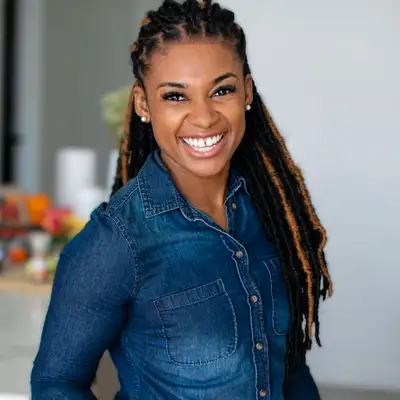
The Sweat and Equity Show brings insights, clarity, and tactics for the modern fitness and wellness business owner to grow and thrive on their terms. Global speaker, advisor and wellness entrepreneur Ariel Belgrave, peels back the curtain on about what it takes to build, grow, and sustain an enduring business in the industry. No gatekeeping allowed!
Entrepreneurship is realizing that the
person you have to become is harder
to build than the business itself.
I recently saw this quote
and it stopped me dead in my
tracks because it is so true.
It's very true.
Building a business will
absolutely challenge you.
It will hold up a mirror and reflect back.
Who you are, it will expose your
habits, your fears, your insecurities,
and your lack of confidence.
And it will for sure expose the
parts of you that still need healing.
And for me.
That part that still needed healing
was my relationship with Money I
had a scarcity mindset around it,
and that legit showed up everywhere.
It showed up in how I charged my clients,
how I negotiated brand deals, or should
I say how I didn't negotiate brand deals.
It showed up in how I invested
in help, and I legit cringed when
it was time to talk about money.
I realize money is one of those topics
where even if you're successful,
you can still have fear around it.
Even if you are making more than
you've ever made in your life,
you can still operate, like it
could all be taken away tomorrow.
Even if you have clients and followers
and all these opportunities, you
can still charge from survival.
So today, I wanna take it there.
Let's talk about it.
Welcome to the Sweat and Equity Show.
I am your host, Ari, and this is
a space where we talk about what
it really takes to build in the
fitness and wellness industry.
Not just how to start, but how to grow,
how to scale, and how to sustain it.
Today's episode is personal because
I'm talking about money and the
four money shifts that changed
everything for me in my business.
The money lessons I've learned
have been some of the most
emotional lessons I've learned.
Not because I'm bad with money
or because I don't understand it.
I worked in banking.
It's because money was tied to so
much without me even realizing it.
My identity, my safety, my
independence, and even past trauma.
So I'm gonna share my journey.
Shout out to all those therapy sessions.
That made way for this conversation
that's gonna happen today.
As I talk, I, I wanna challenge you to
think about your own life and business
because it's, it's gonna get real here.
So let's get into it.
Now, I wanna start with sharing a little
backstory about my business, Jim Hookey,
because this context, it matters.
11 years ago, my business
started as a side hustle.
Fitness and wellness
became a passion for me.
After I began my own journey to improve
my exercise, my eating habits, while
working a demanding job in banking, it was
something that also allowed me to not only
take care of myself, but to also serve.
The women in my community who needed
encouragement on their journey, I
got certified as a personal trainer,
as a group fitness instructor.
I hosted events and taught free
group sessions at local community
centers throughout Brooklyn.
Every Wednesday after work, , I
lived in communities where I feel
like , there was limited access
to good, affordable fitness.
So being able to offer it for free, giving
back to my community in that way, was
important and deeply fulfilling for me.
Early on, my business was
not about making money.
It was about service.
It was about building my brand in
the fitness space, and if I made
money, I was like, cool, bet.
Great.
Because I had a banking salary
when I started back in 2015 and
later a tech salary at Meta.
My whole approach to managing
money in the business and how
I charge for things was just.
Vibes.
The reality is when you start as a
side hustle, especially when you are
in a well-paid full-time career as
I was, you can get away with a lot.
You can get away with vibes, you can
get away with not tracking things
tightly, you can get away with.
I'll just figure it out later because
at the end of the day, your bills are
still getting paid with your salary.
But those cute vibes and casual
moneymaking habits, it hits different
when you finally need your business
to hold you when you take the
leap and you're no longer cushion.
Buy salary, y'all.
Reality, let's just say, I quickly
learned that just because your
business is a passion does not
mean it doesn't need systems.
It doesn't need structure.
Passion deserves structure too
because if you really care about
impact, you should also care about
sustainability and sustainability.
My friends.
It requires money.
Yeah.
Early side hustle.
Ari was focused more on building
visibility, building a name,
building rapport, and building
credibility, and that was valuable.
It was super important.
It was necessary, but there was a
downside to that because I wasn't
tracking invoices the way I should have.
I wasn't negotiating brand
deals the way I should have.
I wasn't charging my clients
the way I should have.
And I simply, I simply wasn't being
strategic the way I should have.
I was taking free deals, doing
things for exposure, and I was
proud, like I'm being affordable.
I'm so easy to work with.
And I did not realize how much of that
was actually tied to scarcity and fear.
I didn't realize how much of that was tied
to who I believed I was allowed to be.
So when I decided to go full-time,
I had to confront that reality
quickly because the very things that
got me there was not gonna get me
and my business to the next level.
This leads to the first shift
I had to make after my business
exposed my money mindset.
It reflected back how I saw money,
how I felt about money, how I talked
about money, and how I avoided money.
One of the first big mirror
moments came before I even
took the leap from corporate.
In January, 2020.
I attended a woman's summit
called Icon Mastermind in Atlanta.
I randomly saw it in my inbox to this
day, I still don't know how it landed
there, but I was like, I'm going.
At that time I was in a season of
curiosity, feeling a little burnout from
work and just wanted something different.
, I also wanted to explore what
full-time entrepreneurship could
look like, so I went and I remember
walking into a room full of.
Women entrepreneurs who were
just doing the damn thing.
These women were generating
a whole lot of income.
They loved what they do.
They were bold about it.
These women were not apologizing
for their ambition, and I loved it.
I was the only one in the fitness
industry in the room, and was also
the only one who was side hustling.
So I knew for a fact that I
needed to be in that room.
About an hour into the event they
had us do an exercise that y'all, it
just called me out in the best way.
They asked, how much do you plan
to make in your business this year?
This was January, 2020.
So , they said by December, 2020,
what's your number?
We were told to write it down.
After I wrote it down, we went around
the room and shared what our number was.
I remember there were about
20 women who went before me.
It was a pretty decent sized room.
There were probably about 60 to
70 of us in there, and I heard all
these women sharing their numbers.
1 million, 5 million, 500 K, 2 million.
These were, these were really, these
were some big ass numbers for me.
I had written down.
$50,000. And I realized at that
point in time, , what my way of
thinking was the corporate girl in
me was using my corporate salary
as the measure of success, as the
measure of what could be possible.
When I was first asked a question,
I thought, okay, well I'm 10 years
into my career making a great salary.
Here's how long it took me to get
to this great salary, and I created
that $50,000 number thinking,
oh, I've gotta be realistic.
How long is it gonna take me to
build this in entrepreneurship?
So I use my corporate salary as a
metric of success, thinking it would
take me just as long to get anywhere
near that salary in my own business.
And listen, I actually thought
$50,000 was far reaching.
I was feeling confident.
I was like, yeah, go Ari.
Thinking big.
Check you out.
And this experience was so important
to me because hearing the numbers
of all the other women in the
room had me like, wait, hold up.
How are y'all making this, whatcha even
doing to make this amount of money?
And while I was one of the very few who
was half in, half out side hustling,
that didn't even matter as much.
What mattered was me believing that I
could create the type of impact that will
allow me to generate revenue like that.
And that moment made me
realize a few things.
One, I had some serious work to
do when it came to money mindset.
It was very scarce, but I also felt.
Uncomfortable talking about money.
I remember how my heart was beating when
we were going on the around the room
talking about it before it got to me.
And this moment made me realize
something that I still say today.
Your business cannot
out earn your beliefs.
If you believe it is impossible, you
will operate like it's impossible.
If you believe you are not worthy, you
will price like you are not worthy.
If you believe money is
dangerous, you gonna avoid it.
So I knew I needed to heal
my relationship with money.
I quickly realized this just wasn't
a surface level thing where I could
flip a switch and in five seconds
I have this abundant mindset.
This was years and years of beliefs
about money that were just stacked up.
It was seeing how my money was
talked about in my Caribbean
family when we didn't have much.
It was being a first generation
student, paying my own way through
college and holding three jobs while
studying and competing as an athlete.
I knew hustle.
I knew how to save very, very
well because I grew up learning
that saving equals security.
I just knew you work hard, you
save your money, and you do
not need to depend on anyone.
There wasn't ever a conversation about
investing your money or entrepreneurship
because that just wasn't something
my family knew or even had access to.
On top of that, I had trauma around money.
I had close people in my life use
money as a means to control me, so
independence became my pride an armor,
I took a lot of pride in being able
to handle mine and make money without
needing help . And that sounds strong,
but in business, that mindset can
absolutely keep you stuck because
at some point scaling requires help.
Scaling requires delegation and
scaling requires investment.
If you associate help with
danger, you will avoid growth.
So my money mindset was about
shifting from fear and survival
to joy and possibility.
I needed to make decisions from expansion.
Not security.
I had to also work through my perception
of people who had a lot of money.
I feel like the people who
I saw weren't good people.
I saw 'em take advantage of their
power and operate with entitlement.
So I had to confront that too, because
I didn't wanna become that person.
Now if I continue to believe that
Rich equaled bad, I would never
allow myself to become rich.
I will sabotage it by undercharging
and staying small to stay
good and not a bad person.
When I started meeting
people though, who had money.
They were amazing humans, generous,
ethical, kind, impact driven.
I realized that money doesn't
change your character.
Money can actually amplify it.
So if you're a good person with a lot
of money, you can do a lot of good.
And that shifted for me.
And from there, the mindset work began.
I began reading books like qr Bad
Asset, making Money by Jens Cyro, the
Psychology of Money by Morgan Household.
I began to be in more rooms
and have more mentors and big
business conversations that just.
Changed the game for me overall.
Now, while I was also in Atlanta at
Icon Mastermind, I made my first big
investment in my business, $15,000.
It was deeply uncomfortable because
it felt like a grown ass decision.
It felt like an entrepreneur decision.
They had an accelerator that would help
me build the program I wanted to build
for women on their wellness journey.
And when it came time
to decide, I was like.
Am I really gonna spend this?
This is a lot.
I felt it in my body.
That fear, that tightness,
that voice that said, Ari, you
gotta, you gotta be careful.
You're supposed to be saving.
But I also felt something else,
a knowing like Ari, if you
say you want to be serious.
You need to make serious moves.
So I invested and that
investment gave me confidence.
It gave me structure,
and it gave me momentum.
I remember calling my husband just
after like paying for it, and I was
like, babe, I did something crazy.
And when I told him, his response
was, doesn't sound crazy to me.
Sounds like it's right on tie babe.
Follow your gut.
Legit.
The best husband.
In supportive husband ever.
, Now this big investment was one of the
things that made me decide it was time to
take the leap because I realized if I'm
investing like a full-time entrepreneur,
I needed to move like one January, 2020.
I made the investment February, 2020
and went to my manager and was like,
I'm giving my one month notice.
Listen, that room of women made me
feel so empowered and made me realize.
What was possible, it helped me rewrite my
belief system and belief drives behavior.
So shift number one was money mindset,
and it naturally leads for me into
shift two, because once your belief
starts expanding, you start asking,
okay, but how do I move different?
And for me, moving different,
looked like charging my worth.
That's where the next mirror
moment hit me fast, y'all.
So, you know, Drake's lyrics that
says, know yourself, know Your Worth.
Yeah, that one.
That was, that was absolutely
my next big season.
Just one week after taking
the leap from corporate.
Turns out y'all, my last day
at Meta was ironically the very
first day of shelter in place.
In California, the pandemic.
It just so happens that I
spent the previous five years
building an entire brand.
I called Gym Hooky around skipping
the gym and working out from home.
So when people got wind around my tech
network that I left to go all in on
fitness and wellness, the opportunities
came in a whole lot faster than I,
and I feel so incredibly blessed my
very first call, my very first call.
As a full-time entrepreneur
was my previous employer, meta.
A friend of mine who was leading
an ERG, reached out to me.
She said, Ari, we'd love for you to
lead virtual fitness sessions one
times a week over the next month
because it looks like we gonna be
in this pandemic for a bit now.
When I worked at Meta, I worked
with vendors all the time.
I saw big budgets.
I saw big numbers.
I saw what companies
would pay for speakers.
For facilitators, for trainers and
coaches, I had exposure to big numbers,
but I did not have the confidence
to put myself in that category of
being worthy enough for big budgets.
So here I am out of the gate with a
corporate contract opportunity, and
I, I didn't even know where to begin.
My immediate thought was to charge
what I would see people charge for
a local group fitness class, which
would be by the hour or per person.
So I asked her, Hey, how
many people do you think.
Would be on it.
And when she asked me what my
rate was, I was like, oh, $300.
She literally took a pause, a very long
pause and was like, uh, you know what?
Business hat off, vendor,
hat off, friend hat on?
She said, this is the range we have
in the budget for you to come in.
And it was significantly higher,
like significantly higher.
I am so grateful.
To have a friend who was such an advocate
for what I was doing and who wanted to
make sure I wasn't selling myself short,
right out the gate, she was a black woman
looking out for another black woman.
So in that moment, she repeated the
question and asked me again, my initial
price, $300 went from $300 to $3,000.
That was my first time ever knowing
that I could charge for my worth.
My first.
Corporate contract call that moment
changed everything because it also
revealed my biggest early challenge.
Undervaluing not only my platform, but my
skills, my experiences, my time, and in
this case I had already built a following.
She reminded me, we are choosing
you, Ari, not just because you are a
random fitness and wellness person.
We're choosing you because of who
you are, what you do, what you're
about, the experience you've had.
You've been doing this for
five years already, boo.
You've built a platform around it, and I
realized I was choosing to accept less.
I was doing things for
free or just for exposure.
In the past, I was taking pride in being
the more affordable option, but I realized
this was a different ballgame when it
came to growing my business and being
in these corporate rooms, and I. We're
so grateful for my friend calling me out
on not charging enough, and I want you
to listen closely if you do this too,
because I know so many, so many fitness
and wellness professionals who do this,
you have years of experience, you have
results, you have transformation, stories,
certifications, community, and you still
price like you are just getting started.
That is money, mindset and identity.
Not strategy.
Now the creator and early biz Ari,
she priced based on what she felt safe
to ask the CEO and operator, ari, oh,
she's pricing based on what it costs to
deliver and what the result is worth.
That is completely
different pricing posture.
From that moment on, I started learning
negotiation because brand deals came,
corporate contracts came, let me
tell you, if you cannot negotiate,
you will be underpaid, period.
I also wanna say something clearly because
in the beginning I did do free deals.
And exposure deals.
Visibility can be valuable early on,
but you have to know when to transition
because there comes a point where exposure
becomes an excuse for companies who
don't have a budget, and you have to
decide, am I building or am I being used?
That's a real conversation.
So charging my worth wasn't
about raising pricing.
It was about becoming the type of woman
who could say a number and not shrink.
It was about being able
to say, this is my rate.
And not overexplain it and not apologize,
I also had to heal guilt because I
used to feel bad for charging people.
Wellness for me started as a passion.
It started as a service for me.
So part of me believed if I
care, I should be affordable.
But you can care about people
and still charge you can.
Still be impact driven
and still be profitable.
You can be a good person
and still want wealth.
Those things are not in conflict.
I also learned something that changed
how I think about my offers cheaper.
Cheaper does not mean it's easier to sell.
Sometimes cheaper means people take it
less seriously, and sometimes cheaper
means more volume and more exhaustion.
People who pay pay attention,
not always, but often,
I learned that when I charge less,
I was actually on a hamster wheel.
I was working 20 times
harder to hit a number.
But when I charged my worth, I had fewer
clients and better clients, more aligned
clients, more committed clients, and just.
Better energy overall.
And yes, I still cared about
accessibility, but not every offer
needs to be the cheapest offer.
So I built a range, a free resource, a low
offer, a mid offer, and a premium offer.
That way, the full range of income
levels in my audience can still be served
without me sacrificing sustainability.
So I stopped pricing from fair
and start pricing from value.
That was shift two, and it changed
how I thought about everything.
Now, shift three.
Was getting help.
And I wanna take my time here because
this is one of the most important shifts
for fitness and wellness entrepreneurs
like, I mean, they're all important,
but this one's a standout because this
industry is full of people who are
used to doing everything themselves.
You're the talent, the coach,
the teacher, the content creator,
the marketer, the admin, the
customer service rep, the finance
department and the legal department.
You are everything.
And listen, we take pride in that.
Guilty as charged.
So when I went full time and
contracts started flowing, I realized
my capacity was the bottleneck.
Not my talent, not my
visibility, my capacity.
And when your capacity is the
bottleneck, your business becomes weak.
If you get sick, everything stops.
If you need a break, everything stops.
If life be, life in everything
stops, and that is not sustainable.
So I hired a bookkeeper.
And this wasn't random because I came
from the banking and finance world.
So yes, I understood money, but
understanding money and managing your
books at scale are two different things.
Also, I had to remind myself, Ari, just
because you can do something doesn't
mean you should, and bookkeeping was.
High key, not the best use of my time.
So I told a friend I was looking
for a bookkeeper, and she connected
me with someone she knew, and this
bookkeeper was really important
because first of all, she was a woman.
So I was like, yes, we gonna
support women businesses.
But she was also a bookkeeper
who aligned with my goals.
She aligned with how I operated.
What was super important to me at
that time and even now, is not just
having a transactional bookkeeper.
I wanted someone who would meet with me
regularly, walk me through my numbers.
I wanted someone who would help me
understand a profit, not just revenue,
because revenue can look real cute
while the profit is looking a hot mess.
You can have an offer that looks super
successful online and still be draining
you financially and energetically
once you account for all the expenses
that comes with it and the labor.
And until you understand
those numbers, you.
You may not even realize what's
happening, so she helped me with that.
She also helped me set up QuickBooks,
organize my invoices and create systems
for my contracts and 10 90 nines.
She also helped me understand
what I was actually making in my
business and financially plan ahead.
We were able to bring things together
from previous years and once it was
set up, it was like a weight lifted.
I didn't feel like my business
was living in my head anymore.
And I wanna say this because it's true.
If your business lives in your
head, it is a ticking time bomb.
It will catch up to you.
So you gotta build systems before you need
them, and you will thank yourself later.
That is absolutely a sweat and
equity lesson because it applies
to you in the building stage, the
growing stage, and the scaling stage.
Now, if you're someone listening
to this and thinking, good Lord,
I need, I need a bookkeeper.
Ari, I wanna take a moment and I'm
just gonna share some guidelines
that will help you in this search.
First, look for someone who understands
the fitness and wellness industry, or
at least has experience working with
small businesses and entrepreneurs.
You want someone who gets the
unique financial challenges of
running a business like yours.
Second, find someone who is willing to
educate you, not just do the work for you.
You still need to understand your numbers.
A good bookkeeper will take time
to explain the things to you
and help you make informed decisions.
Third, look for someone who is
proactive, not just reactive.
You want a bookkeeper who will flag
issues before they become problems,
who will reach out to you with
insights, who will help you plan
ahead for your taxes and big expenses.
Fourth, make sure they're
using modern tools and systems.
You want someone who is
proficient in QuickBooks.
Gusto or whatever accounting software
makes sense for your business, they
should be able to integrate it with
other tools that you're already using.
Fifth chemistry matters.
You're gonna be sharing a lot of
financial information with this
person and working with them closely.
Make sure it's someone you feel
comfortable with, someone who
communicates in a way that works for you.
And finally get very clear about
what services they provide.
Some bookkeepers just do
monthly reconciliation.
Others will help with invoicing, expense
tracking, financial planning, tax prep.
Ask questions and make sure
you know what's included
now, I just learned here in general
that it is so important to build
system before you need them.
Yes, I was still in the building
stage, but I felt in my heart that a
bigger boom was coming for Gym Hooky,
and I was so glad I already had that
bookkeeper in place when it did,
because that weight was just
lifted off my shoulders.
I can't even put into words how
much it was like a. Savior for me.
Now, I will say it's also important
that you know your numbers.
It doesn't mean that you're handing
off your business to someone and
just going about your merry way.
You should still know your numbers.
You should still ask questions
because I was someone who was
already doing it on my own initially.
I became very familiar with the process.
So it's worth getting your hands dirty
and knowing it that way if something
doesn't look right, you would know.
Make sure, especially if you're
working with a service provider for
the first time, that you stay engaged.
I knew I wasn't meant to be the CEO
and the bookkeeper and the money
manager and the invoicer and the
person handling all the 10 90 nines.
That was just too much and getting
freed up, freed me up to focus on
serving my community, creating content,
training, building programs, speaking.
So that was my third shift I made.
The last major money shift was
what I like to call my Money Talk
team, and this is huge because
money mindset isn't just internal.
It's environmental.
It's who you are surrounded yourself with.
What is normalized, what is celebrated,
what is shame, what is judged.
Your environment can expand you
or it can keep you hella small.
I realized I was so good at hyping
other people up, rooting for people,
pouring into people, and I needed that
too, especially because I knew money
mindset was something that I really
needed to work through in corporate.
I had friends who were about
that full-time life, and I also
had corporate friends who were
about that side hustle life.
We would meet regularly.
We talked about what we were building.
We supported each other along
the way, and that mattered.
But when I was ready to go all in,
I needed to ex. Banned my circle.
I needed full-time entrepreneurs,
people who wasn't scurred when thinking
about entrepreneurship and thinking
of it just being this big risk.
People who spoke about it like it
was a path to freedom, a path to
wealth generation, a path to building
something that is beyond ourselves.
And in Q4, for some reason, my
curiosity for entrepreneurship,
it was just at an all time high.
I chose to be real proactive.
Actually, now I think about it.
I know why I attended a wedding.
In France, for a friend of mine
who was an entrepreneur and I was
surrounded by probably like 95%
entrepreneurs, and yeah, that'll do it.
We talked a lot about stuff, so I started
naturally going to events and even if
I was the only one side hustling in
the room, even if I felt intimidated,
even though I, if I feel like I didn't
belong, I knew something had to change
and I was deeply passionate about this.
So I went to different events and there
was one event that I attended that.
Truly changed the game for me.
It was a conference
called Pays to Be Brave.
I saw that it was happening in California.
I didn't know anyone who was running it.
I didn't know anyone who was going, but
I put in my PTO and I decided to go.
Anyway, I went alone and it changed my
life because it was the first time I had.
Deep conversations with women
entrepreneurs who poured into me.
They were openly talking about money.
They were openly sharing what they
made, openly sharing what was possible.
There was no cringe, no shame, no weird
energy that went with talking about it.
And they looked at what I had built
while working at a manning job and was
like, girl, imagine what will happen.
Imagine your success when you go all in.
That gave me so much hope
because I was accustomed to
pouring into others and here.
These women were pouring into me
and I will say going alone for
me was powerful because it forced
me to put myself out there.
It is so easy to go with people and
stay with the people, you know, but
showing up without a squad or friend
forced me to sit next to new people,
introduce myself, go to sessions,
speak about what I was building.
And at that conference, they actually had
us write a letter to our future selves.
And I remember being so hesitant
to write . I feared that I would
disappoint myself if I wrote things
that just wouldn't come true.
And there was a woman who was sitting
next to me who noticed that I wasn't doing
the activity and encouraged me to do so.
She told me about the practice of
manifestation and how it helped her.
And listen, I was hesitant, but
I'm like, let me just fill this
out so I can get her off my back.
But I did take time to write
things I hope would come true.
And it was the first time I ever
wrote down the most major thought.
I would leave my full-time job to
go all in in fitness and wellness.
I wrote about the impact I would have.
I wrote about it as if it would happen.
And I forgot about the letter completely,
but it came in the mail a year later.
And all of it actually happened.
And that's one reason why I
believe what you speak matters.
What you write matters,
what you believe matters.
And being in rooms like that mattered
because it expanded possibility for me.
It showed me what was possible and
every rewired what I considered normal.
So when I say your circle
is your ceiling, I mean it.
If you surround yourself with people
who are raising their standard,
you're gonna raise yours too.
But if you surround yourself
with people who think small.
You will find yourself thinking
small, whether you realize it or not.
Energy transfers, mindsets rub off.
And sometimes your circle has
already decided how far you can go.
Sometimes it's subtle and no one may
directly tell you to stop dreaming, but
it's the eye rolls, the you need to be
more realistic that that's too much,
that energy is real, and it will make
you shrink if you're not intentional.
So I started investing my time and
money into rooms where money talk is
normal and ambition is celebrated.
Masterminds programs, retreats, and
close circles where people are clapping
real big for goals without jealousy.
Rooms where people wanted to see me
win and aren't threatened by my volume.
And I love saying this
affirmation because it holds true.
I deserve a community where
ambitious isn't a threat.
In my first year of becoming
a full-time entrepreneur, I
three X to my corporate salary.
In my first three years, I
generated my first million in my
business and I am proud of that.
As a matter of fact, I busted my
ass for that, and I also recognized
there were rooms I did not feel
comfortable sharing that in because
not everyone can hold your wins.
Some people can only hold when you're
struggling, but that moment you win.
Things may get a little weird, so you have
to be intent about where you share your
wins, and that's why these rooms matter.
Being in spaces where your wins are
normal creates safety, and safety
helps you expand and think bigger.
I will never turn down my
ambition because someone else
is uncomfortable with my volume.
You shouldn't either.
I had to stop outsourcing my
imagination, my big dreams and goals
to people who stop using theirs.
That's a them problem, not mine.
So you find your tribe, not just
the people who like your photos.
Find people who are praying for
you, challenging you, clapping
for you when it's your turn.
Be in rooms that don't turn into
toxic comparison because comparison
should feel like inspiration.
If the room makes you
feel smaller, you leave.
But if the room makes you feel like there
is more for you, stay Because proximity
shifts perspective now ha a whole lot.
But that was shift four and it's one of
the biggest reasons I feel like I'm able
to talk about money differently today.
I genuinely love talking about money.
Yeah.
And I love being in spaces where there's
no cringe when big numbers are spoken.
And I don't say this to flex, I say
because it's part of the healing.
It's part of expansion.
It's part of becoming the person who
can hold the business you wanna build
And me, I'm trying to build big baby.
So we gonna talk about money.
Now I know I shared a whole lot there.
I want to take a moment to check in.
How are you feeling
after this conversation?
I wanna give you a moment to
reflect because this episode
is not just story time.
I know I have some good stories here, but
I want this to be a mirror for you too.
So I'm just gonna throw out some
questions that I want you to sit with.
I want you to answer honestly.
You don't have to judge yourself.
You just have to be curious.
Okay?
One.
Where do you feel discomfort around money?
And what does that discomfort sound like?
Two, are you charging out
of fear or out of value?
And what is that costing you over time?
Three, who are you calling when you
are trying to make a money decision?
Are they expanding you or shrinking you?
For what belief about
money did you inherit?
That is no longer serving you.
Five.
What would change in your business if you
truly believed you were worthy of more?
Let those questions sit.
Let them land because awareness
is the first step to shifting.
So that's what I got for y'all today.
I'd say going from fitness creator
Ari to CO Ari wasn't about just
becoming this different person.
It was about becoming a fuller
version of myself, A version that
could hold more hold, more revenue,
more responsibility, more impact,
more opportunity without collapsing.
And sometimes the business
isn't even the hard part.
It was about.
Who I have to become.
So if money is coming up for you,
that does not mean you're failing.
It means you are growing.
It means that mirror is working.
It means you're in expansion,
and expansion is uncomfortable
until it becomes normal.
Thank you for listening to
the Sweat and Equity Show.
If this episode.
Hits for you in any way.
I want you to share with a friend or
five who needs it because we don't gate
keep growth around here and if you're
building in this industry and you're
ready to keep on moving like an
operator, not just a creator, you
are absolutely in the right place.
I'll see you in the next episode.