Subscribe
Share
Share
Embed

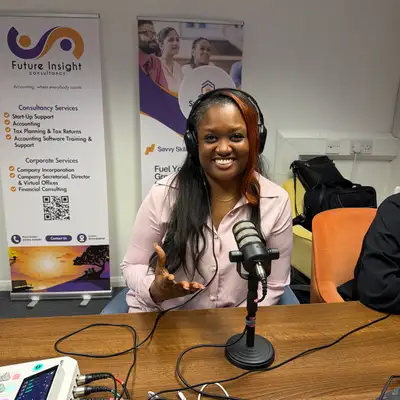
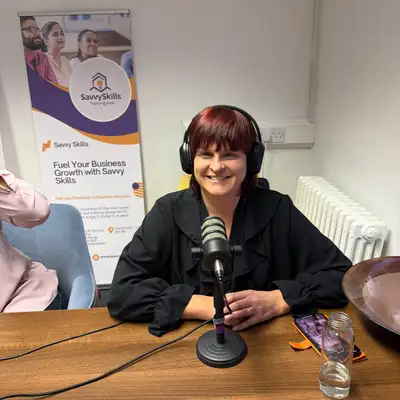
Tune in for fun, inspiration and unfiltered discussions as host Sian Murphy interviews down-to-earth businesswomen sharing ideas, tactics and stories.
Regular features include recommended books, tools, lessons learned and top tips for business.
Hello, and welcome to the Women in Business Radio Show. Nearly made it on air without laughing. I know. But but nearly nearly not quite. So I'm Sian Murphy.
Sian:My co host is Adelle Martin. And today we're in the studio with Lorraine Chapman, is the founder of Unleash Your Fire. And hello? Hello? Good to
Sian:hear you.
Sian:I'm things around. Normally, have to get people to introduce themselves because I can never remember who everybody's name is, including I've actually written my own name down.
Adele:I know you have.
Sian:My own name is written
Sian:down on
Sian:a piece of paper. Also in the studio with us, have Kemka Kemka Emeroli, who is the founder of Specify VA. Now, I just wanna say before we go any further, both Kemke and Lorraine are VIPs and speakers at the Women in Business Big Show for 2026, which is at Longfield Academy on the August 6, and Adelle is one of our sponsors.
Adele:I have six years. We've been together.
Sian:Hey, I know. So
Sian:thank you so much for being a sponsor. I need to there's something wrong with this microphone. I think it's just hang on a minute. It's not okay.
Adele:No. On video. We can share this.
Sian:We've had
Sian:we've had microphone traumas. And as I'm moving this now Yeah. It's all gonna go horribly wrong, isn't it? Okay. There we go.
Sian:Good.
Adele:It's good that people can finally see us.
Sian:Is it? Well, normally they
Adele:hear this thinking what the hell is going on in that studio? Now they can see! Potentially.
Sian:Potentially. So, here we are. I've totally forgotten what I was gonna say. I think what we need to do first off is introduce our guests properly. And I think what we'll do is we will get them to share a little bit of their stories.
Sian:So what do you do? Who do you do it with? And how do you get to where you are? And I think we're gonna start with you, Lorraine. Now,
Sian:I know you have had
Sian:a bit of a journey, haven't you?
Sian:No. It's
Sian:a little one.
Sian:A little bit of
Sian:a journey.
Lorraine:Yeah. So I'm Lorraine Chapman. My business is Unleash Your Fire, and I help people unlock sexual barriers for a better life.
Sian:And? And
Lorraine:that involves supporting people who are in challenging relationship with themself or with somebody else. A lot of my work is around communication skills, supporting people to come back home to their own body and connect with their partners for whatever reason, and there's a thousand of them. So I support people to reconnect to that that energy and help help sex and intimacy to be less of a process and routine and more of an experience.
Sian:So now I also know, because I've known you for quite a while now, that sometimes some of the not mistakes that we make, but the assumptions that we make is that if it's to do with sex and intimacy, it can't possibly have anything to do with business. But I also know that it's very relevant to what comes into into business, and that may or may not become apparent as we explore a little bit further.
Lorraine:That's a
Sian:teaser there,
Sian:isn't it?
Adele:That's a
Sian:We should drive. Yes, and I have
Sian:to It's very relevant. It is business, and I'm not talking about a quickie in the stationary cupboard. No, we're not talking about
Sian:in business.
Sian:In the office. In the business. But that energy sexual energy and how we show, you know, is relevant to how we show up and how we show up, whether you are running your own business, founding your own business, or an employee, whatever you're doing. You you may not work at all in a traditional sense, but you may still be at home doing whatever it is that you're doing with your family, and how you show up is very relevant, isn't it? A 100%.
Sian:So are you gonna tell us a little bit about your story? Think we'll I think we'll we'll stick with you for the moment. Okay. And tell us how you, you know, who who do you work with specific, you know, sort of an idea, not asking for names, but the sort of the types of people that you work with, why they may come to you. So what is it that that says, actually, I need to do something about this and to come to you specifically rather than a business coach, a confidence coach or or or something like that.
Sian:And how you've it's been a real evolution. You you didn't just wake up one morning and go, this is what I'm gonna do. I'm going to become somebody who works on other people's sexual energy. It you you got here by a route, didn't you? 100 long path.
Lorraine:Yeah.
Sian:So can you can you share a little bit of that with us?
Lorraine:Yeah. So my business is my is my life. I I've always struggled with my own sexual story for many years, in fact from my teenage years. And at one point I was living a double life, I was exploring my sexuality and sexual energy in various ways, but also was a middle leader in a secondary school.
Sian:So you were a teacher?
Lorraine:I was a yeah. Was a head of department. Yeah. And I had a lot playing out in, you know, raised as a good Christian girl. Had loads of stuff playing out about how I was exploring my sexual energy.
Lorraine:And that was in things like BDSM, kink, swinging. Mhmm. I was really embracing that side of my life. But then my social values and my upbringing were going, you're being a bad girl. Like, you shouldn't be doing You're a role model.
Lorraine:You're a you're a mom. You're a
Sian:And and as as a teacher, I wanted to specifically say you were a teacher as opposed to you're just working in a school, managing a department. You're actually in front of people.
Lorraine:Was in front of people. I was I was teaching kids every day. So I, you know, I'd have a whole week of of working with with young people, supporting them, enhancing their lives, and then being me at the weekend was completely different completely different. And I got to the point which was about ten years ago where I was like, can't do this anymore, I need I need to be me.
Sian:Can I ask, at that time, I'm I'm not sure if it's ever been like like that or if it's like it now, But, you know, you you end you end your your day if you like teaching, being head of department, and then you go home? And in theory, that should be your thing. You should be able to do whatever you want with whoever you want. As long as you're not hurting anybody else, you're not doing anything illegal, that should be fine. Was that the case though, or was it the case of actually you're doing things out of here that maybe the the aim a particular set of morals or values, not necessarily right ones, but somebody's idea of what a teacher does and doesn't do in their own time is that's wrong.
Lorraine:I didn't have it directly, but there was enough there to make me feel uncomfortable. And I think, again, still with my it was more about my own values that I was doing something wrong. Yeah. But but there would be, you know, comments in the staff room about different, you know, other members of staff and maybe some of the things they've been getting up to. And I never felt comfortable enough to be me.
Lorraine:I might have made a few little jokes here and there about what I had actually done and they'd like, and carry on talking about something else. You wouldn't believe
Sian:me. But I've
Sian:kind of tested the water a few
Lorraine:times, it didn't really work. So I it was more about me to be honest. And and you know, my career ladder at some point I was like, I'm you know, am I gonna be able to do this? Am I gonna be able to balance these two parts of myself? And and what was more important was me.
Lorraine:So I gave up teaching. And in reflection, looking back, when I did give up teaching, a lot of people that then once I started talking about who I was and my sexual journey, people didn't actually care. It was I Your stuff. Yeah. So a lot of teachers were like, yeah.
Sian:Okay. Fine. Yeah.
Lorraine:You know, even even I ended up going back the school were aware of what was going on, actually asked me to go back as a consultant. I ended up doing consultancy. Nobody actually cared. It was what What you thought. I was telling myself.
Sian:Mhmm.
Lorraine:And actually, I think a lot of us do that because that's why we don't necessarily talk to our partners because it's like, oh, what happens if that doesn't go well? Yeah. You know, the judgment and the fear and the shame. We're all kind of carrying that around thinking we're the only one and we're not.
Sian:Was there an moment when you just sort of went, actually, I don't care. It doesn't matter what you think. Or did it happen
Lorraine:gradually? Gradually. Because I didn't give up teaching to do this. I just didn't wanna do the teaching more. That was still my social life.
Lorraine:It was still my hobby for want of a better word. That was that was me being me. And and I I did some consultancy. I I became a massage therapist. I started general energy work.
Lorraine:And and and most of that was still part of my journey. I was trying to work out, is it right? Is it wrong? Who am I? Do I need to do this?
Lorraine:Am I have I got something wrong with me? Is that you know, like trying to work it all out. And and in that journey I was like, actually this is what I wanna do. And it was the tantra. When I embarked on a tantra journey that brought me back to myself and realized I'm not doing anything wrong.
Lorraine:And that's when I the kind of business came out of the shadows, and I started getting on podcasts and
Sian:Yeah. Writing books and doing all sorts
Adele:of because I realized
Lorraine:I actually wasn't doing anything wrong, and a lot of people felt the same. And and do good
Sian:I remember the first time I saw you talk was at the ladies who latte group, and you you had you had a knitted vagina.
Sian:Sure all quite believable. But you had with
Sian:you had with you. I can't remember if was knitted, crocheted, or put together with some, but it was it was a knitted McCrame sort of Yeah. Vagina. Yeah. And you I was sort of looking at this and I'm, you know, I'm I'm not a judgmental person.
Sian:Mhmm. And I'm not stuffy either. I'm quite open minded. But I do remember thinking sort of, oh, okay. Why is she talking here?
Sian:What's this got to do with business? But never mind, perhaps this is about women's health. And you hadn't been talking for very long, and I realized, oh wow, this has got everything to do with business. This is really relevant. I could see so many different angles in there, that's not a could I I I I think
Lorraine:is the point because as a teacher, while I was teaching, I also had irritable bowel, I had alopecia really badly, I had tonsillitis and all of that because I couldn't speak my truth. Was putting my hair out and lost control. Like, literally my body was shouting at me. I have never had any of them since. You know, our body and when we're carrying around stuff that we can't talk about, and sex is one of those things, it is something that people find uncomfortable to talk about, it shows up.
Lorraine:But it's
Sian:not holds a score, doesn't it?
Sian:It's not
Sian:only about that you can't talk about, I I think there was an element of there of I could get found out. Yeah, 100%. So it's not I can't talk about this in the staff room because it's not really appropriate, or I can't talk about this wherever. I'm gonna get caught. And yet, the ridiculous thing is you weren't actually doing anything wrong.
Lorraine:No. Wasn't doing anything. What I realised was when I stepped into my truth so what you're alluding to is that the talk that I did was realising that intimacy and connection with ourselves is about communication, maintaining boundaries, dealing with changing situations, dealing with non judgment, you know about judgment. That's what business is too. And if we can work on that in the bedroom, we sharpen it little bit differently.
Lorraine:A little bit of different energy comes about us. We can get a bit of serotonin and a bit
Sian:of dopamine going around through
Lorraine:your body, however that is, and we're not necessarily talking about, you know, chandelier swinging or some of the stuff that I do, but connection. Pleasure. Like, however that shows up for somebody.
Sian:Being open. Being open and honest. Yeah.
Adele:And that's that's But just but just picking up a point, I know we talked about work, but the bit for me is then linking back to how when you were brought up in the home and, like, those values. And, again, I was referring to on a previous show, I grew up in the seventies, and it was don't make a fuss be seen, not heard, and blend in to whatever the social constructs were. And it takes people like us to break out of those moments. Actually, no. I'm not gonna be seen and not heard.
Adele:But it's really difficult to be one thing when you're at work or at home and then coming home and having to conform. And like you said, the body absolutely holds discord to the point you go and that was the bit I was interested in. What put it enough's enough. I'm leaving this.
Sian:I'm doing that, and I'm gonna do my
Lorraine:own I had no idea what I was gonna do when I left. I just know I couldn't stay. Yeah. But for whatever whatever was playing out for me Yeah. In my story that I was creating as a good Christian girl.
Lorraine:You know, I used to serve for holy communion in church and carry the cross I was a head chorister. Like all this stuff that I had built up of good Christian values, you get married, you know, And as much as I'm not saying that hasn't got its place, but for me it was like I needed to express myself in so many different ways. And it wasn't about being in that type of relationship with myself or with someone else. And actually what happened afterwards is I because I let go of what I believed I was supposed to be and became who I am, that's when I could step into my power. And that's the bit when I work with people, work men, women, couples, sorts and I do all sorts of workshops for all sorts of people in all sorts of remember that it's men's mental health group, I'm doing one for a ladies' cats charity, domestic abuse charities, like there's all sorts of people I work with because it's actually, you know, who's my audience?
Lorraine:Everyone.
Sian:Yeah. It's about it's about it's about being honest, isn't it? About what resonates with you. And one of the things that you've just said, which was a particular experience for me, and I think it happens to a lot of business, I'm not gonna say women, but people, which is you said, don't know what I was gonna do, but I can't do this anymore. And I reached that point with local government.
Sian:I just literally woke up one morning and I went in and handed my notice in. But I didn't have a plan. No. I I didn't have a plan. I'd left it too long.
Sian:You know, I'd just gone, oh, yeah. I'll put up with you. And then one morning, was just crunch point. I just that's that's it. And I wouldn't recommend anybody does that.
Sian:And now if I'm talking with people or perhaps advising them about leaving corporate, leaving whatever and starting a job, starting a business, it's for goodness sake listen to the signs that you're you and your body are telling you over the over the five years before you make that, before you get up and go, that's it. Because it's not the fun way to do it, is it?
Lorraine:Not at all. I know I wasn't in a good place at And I didn't have a clue what I was gonna do, I just trusted that Something.
Sian:You just couldn't do that.
Lorraine:I'd have to make it work. I've been joining a teaching agent, so it was something. And the great thing now is I'm still a teacher. I'm just teaching something that I love and I'm passionate about. You know, hold goddess workshops, men's mental health work, like, so much stuff I do.
Lorraine:I'm still a teacher. I'm still an educator.
Sian:So Unleash Your Fire. That's a new business name, isn't it?
Adele:Yes. It's a new
Sian:so tell us about Unleash Your Fire.
Lorraine:So Unleash Your Fire, my business before was called Orgasmic Life, and that was about me. Unleash Your Fire is about meeting people where they're at, so it's the same energy. It's the same energy, but it's about meeting people where they're at and giving it more scope. And also since part of the Unleash Your Fire was also I've become an empowerment instructor, so I do fire walks and glass walks and arrow breaks and stuff. Which again is all about empowerment, all about stepping into that power, it's all about moving forward
Sian:It's a very similar thing, isn't it? But you don't automatically join join those dots up. You you don't think sort of sexual empowerment, fire walking. But but when we sit and talk about it, I can see actually, do you know?
Lorraine:About certain
Sian:people talking about it.
Sian:Very very
Sian:similar. All the stuff
Lorraine:that we've built in our heads,
Sian:the things we don't Peeping peeping out from underneath the covers, turning the light on. Yeah.
Sian:A 100%. And then we're
Lorraine:gonna put some hot
Sian:dogs But in it's
Lorraine:like we we don't believe we can have those conversations with ourselves, with other people. We don't there's a lot of things in life that society stops us doing.
Adele:Yeah. And my perspective of that, I think that is getting worse with the social constructs and what social media and for us as women telling us what what we we should be. So in terms of the brand to unleash fire, I absolutely love it. Because again, I know we've spoken, we've known each other for a while. I know through my own journey of being diagnosed with cancer and coming out the other side, I've had to grieve the person I was and and to the point where I couldn't look in the mirror because I thought I'd let my whole body so you go through all that journey and talking to other women.
Adele:So it some so working with you and having that conversation about reconnecting women with that, because it is a grief process. It could be any chronic illness. So all of a sudden you're like, I don't like myself anymore. So the work that you do, and I know we've had discussions about women and about coming back to your core, I think is amazing.
Kemka:It's layered,
Sian:it's just It's layered, It's
Lorraine:not one thing, people say you need to niche, you need to, I can't. No. It's about the human person, it's not like women that have this or men that have that. We're too complicated for that. That's why that's why I've got business is because we're so complicated.
Sian:But but those niches are almost sort of marketing niches, aren't
Sian:they?
Sian:Yeah. Whereas I like to think of niches as a feeling niches. Mhmm. Somebody who feels like this
Lorraine:Yeah.
Sian:As opposed to somebody who
Lorraine:Yeah.
Sian:Does that. Yeah.
Sian:It it sort of it's quite different, isn't it?
Adele:Whatever got you to there, you know, it could be all sorts of things that gets to a person where, well, actually I've lost myself. Yeah. Whatever that reason is.
Lorraine:And you don't always know what it is. No, you don't. I always say, like, people don't know they need me until they've heard me because then suddenly there's like that, oh, that might be why I don't feel quite That might be what's missing. That might be what's holding me back.
Sian:And that that's what sort of what I mean by the feeling. So, you know, if you if you say something, you know, sort of like, okay, I work with people who wake up every morning and feel like they're in a panic and and have to get up and they've lurched. You you know, if that's you, you go, oh, that's me. Whereas if you put it in sort of gobbledygook, nichey type stuff. Yeah.
Sian:People don't recognise themselves, do they? They I think people recognise feelings, you know, you say, okay, yes, every time somebody says that I get this horrible feeling in my gut and I feel a bit queasy and I get a thing, you know, a feeling in my throat, but oh, actually, do know that happens to me? I think people get that and I think that's how you work, isn't it? Yes. With people who are feeling things.
Kemka:Yeah.
Sian:One of the things that also struck me was an assumption that I I did sort of make, actually. Was that if you're teaching or you're helping people deal with sexual energy, that it has to be something that involves another person. And it doesn't, does it? And it and it doesn't actually have to involve sex either.
Adele:No. It's Sexual energy is is life force.
Sian:So either sex is everything. Yeah. Either sex sex we'll say sex with yourself or sex with another person. It's not necessarily around that is it?
Lorraine:It's about how you show up, it's about the connection to yourself. A lot of the women that I work with that have come through counselling, trauma related, it's about coming home to yourself and where we've disconnected from parts of us through different roles and through societies, expectations, whatever it is. It's just coming home and experiencing yourself, mindfulness, breath work, just being present with something in that, you know, that moment of stillness where you, you know, you kind of breathe and you connect and come home. So it isn't I'm not teaching people about sex. I'm teaching people about connection and communication.
Lorraine:I like
Kemka:the symbolism of people walking on hot calls when you're talking about people stepping into their truth. Very often when you're not in your truth, you feel like you're walking on hot coals which is what you're talking about feelings. So you feel every day like, you know, you're not you're not in your truth. You're walking. You're living on hot coals.
Kemka:So that symbolism of actually doing it, I'm sure that you know has
Lorraine:100%. And the breaking the arrow the same. Yeah. You know what, just breaking through that, don't have to hide these parts of me, I can have a conversation with someone, the world's not going to stop turning if they don't quite meet me where I'm at. So I can meet them, you know, there's different ways of doing things.
Kemka:Yeah.
Adele:And the impact of women holding all of that, trauma, expectations, everything else, it shows up in the body that we talk about all of the time, which is, yeah, really important to share that.
Lorraine:That's why I love it.
Sian:Right. Let's move over to So, ChemCa, specify VA. Now, I'm going to ask you what it is that you do first of all, and who you do it for. Although I do actually know. And and one of the things that I've got from that name is that I made an assumption when I first met you and I heard the name, I made an assumption about what you do.
Sian:Mhmm. And it is sort of what you do, but it's not the story, is Yeah. It's not the story. Yeah. So off you go.
Kemka:Alright. So so the VA in the name is is what people always assume you, it's about virtual assistance. I mean, it is it's part of the story, but Specify VA is a company that provides offshore talent specifically to UK small businesses. And who do we do it for? UK small businesses.
Kemka:It's really put together because I'm a small business girl. I've been in small business pretty much all all my, you know, life, and I feel like after all these years, I really understand what small businesses need. And I've been in small businesses of different sizes and different orientations and so on and so forth. And specify a year is born out of my experience as a senior manager, as a business person at the helm of businesses for a very long time and really and also working at senior level for other small businesses of different sizes and, you know, living through the decisions that are made every single day in operations, particularly on the day to day and and and how businesses are able to grow and the tough choices that they have to make. It's it's it's challenging, truth be told, for small businesses in The UK, for many different reasons.
Kemka:Growth is challenging and and being able to get the talent that you need when you need it is challenging. Recruitment, I believe, we all know is a is part of an arsenal is part of the arsenal of business strategy but very often small businesses view recruitment or have no choice but to recruit out of necessity or as an accidental and or or you know something they just struggle to do, have to do and are not able to do very well and that's where Specify VA comes in to give that option to UK businesses and to open up a world to them whether we like it or not. You know, 2026, it's a big world and we're part of it. Whatever reason, you know, people have their views, don't really care. But that's the way it is.
Kemka:We should be able to access the talent that we need to grow our businesses in a way that we can afford to. Affordability is a very big piece
Sian:for
Kemka:UK businesses, whether they're doing fantastically well or not. And for those on the micro end of the scale who might or might not be doing well, being able to take on that extra person
Lorraine:is
Kemka:a big consideration and to get that extra person that you need or you not just that you need but what your business actually requires because there's a difference between getting just anybody or getting, you know, the best that you can get given the circumstances or getting the quality that your business deserves. It's two different things and very often small businesses cannot make those choices. So that's the gap that specify VA plugs. We provide offshore talent specifically prepared for UK SMEs.
Sian:I I think my my personal view is that employing, taking on your first or second employee is when a business is at their most vulnerable. Mhmm. When they have started their business without funding.
Lorraine:Mhmm. Mhmm.
Sian:I don't mean a thousand pounds start up grant from the council, but I mean without potentially angel let's call it investment. Yeah. You know, if they if they've started without investment and it's a homespun business, they could be self employed, they may have started up as a business. I think very often what happens is, because I know I did it as well, is you look at the you look at the employment, you know, how much does a person cost per hour? Mhmm.
Sian:But that is not the cost of taking somebody on and anything can go wrong. You know, there could be an industrial tribunal or you may do something, you you may have done something wrong, you may not have done something wrong. Actually, it doesn't stop somebody saying something or doing something. There's the management, the motivation, the health and safety stuff, there's national insurance, what happens if they go sick. Mhmm.
Sian:You know, you can potentially end up paying one person and then having and not having the job done and having to pay another person. And I think that there are hidden costs if you like Yes. That that we you you can see them, you can go and find out about them, but we very often don't think about them. Yes. And also that you end up taking on one person or half a person.
Sian:I don't mean if not half a person, but you end up taking somebody on part time. But then your your business requires somebody who can prepare quotes, somebody who can, you know, take appointments, somebody who can deal with design, somebody who can do and and and these are lots of people.
Sian:Yes.
Sian:They're not one person, are they? And so you end up trying to force one poor mucker into, you know, you you either have a designer that you're overpaying for because instead of paying, you know, you're paying them to design something, but now they're they're booking, they're managing the diary and the emails. Yeah. And they're board rigid, they're being overpaid, they're underused, and it's a really tricky, dodgy time, I think.
Kemka:Absolutely. And and what you said, what you've described is absolutely true. It's almost a badge of honor in small business to say, oh, you know, we
Sian:I've I've got an employee.
Kemka:Of I've got an employee, we wear lots of different hats. Right? Mhmm. So you know, when you go to work typically in many small businesses, you come in as one thing and you end up being everything. And that's supposed to be a sign of how good you are.
Kemka:How good someone who's coming to do revenue management can be at accounting or bookkeeping or I don't know, house housekeeping or whatever. Okay? So I spent some time in hospitality, so sorry for
Sian:the hospitality No. No.
Sian:But it's true. Very often as very often as business owners, we, you know, I've been running events where I've ended up I'm running huge events and I'm cleaning the toilets. Yeah. Because the toilets need cleaning. The difference is, am the boss.
Sian:Mhmm. And if I make a decision that that's what needs to be done, that's what needs to be done. Yeah. An employee might look at it totally differently. They might go, hang on a minute, missus.
Sian:Yeah, I'm making decision. That's not in my contract. Yeah. And you're thinking, well, somebody's got to it's me. Yeah.
Sian:I'll have to do it. No.
Kemka:Well, that's the thing. And and and this this is this is the gap because very often, like, there's nothing wrong with, you know, the one offs where, you know, right. I have an event, I'm gonna clean this toilet. That's quite different from that being the norm in your business.
Sian:Yes.
Kemka:It's a very big difference.
Sian:Yeah.
Kemka:And there's a difference between what you need to just get by and what your business actually deserves and requires.
Sian:I'd say that was a one off.
Sian:Yes. It just I'm I'm not I'm I'm not wandering
Sian:around my office here going, is there
Sian:any time that I can question? Exactly.
Sian:And I I think also, you know, there are other things I think can derail people quite quickly that they may not have accounted for. I have glasses for instance, particular glasses. I've got three, four pairs of glasses. I've got a speciality chair, a speciality desk. An employer, now I provide all of that lot.
Sian:An employer needs to provide all of Yes. And so you've now gone, you've got national insurance, you're looking at least one and a half times the salary. They haven't gone sick yet.
Kemka:Yeah.
Sian:They haven't argued with you.
Lorraine:Yeah. Holiday.
Sian:They haven't had any holiday. Yeah. They haven't got any of that, and they haven't got my back hurts. Yeah. Can I be assessed for a chair, please?
Kemka:And another thing, you know, you haven't they haven't needed you to motivate them yet to
Sian:do the chair. Oh god,
Sian:don't even talk don't even talk to me about that! Just no. No.
Sian:And I I think sometimes when we've come from corporate, which was my experience was, you know, I had quite a few people that man that I I feel like managed. So I thought it would be easy, really easy. But of course, I only dealt with two people who then, and then other people dealt with the other people who don't fancy, and now I'm bored. I don't have I don't have the space in my head to deal with somebody else's boredom. Mhmm.
Sian:I just don't.
Kemka:Very often, small business owners, you know, you start your business and you might have come from a very large corporate environment with years and years of experience, but there is nothing like doing it yourself. It's such an eye opener and there are so many things that you never really actually realize. You'd never really think, like you said, you know, you've come from an organization where there's layers and layers of people behind you and beneath you, you know, in that sense, not beneath
Sian:you but The office. So you have to you have to provide your own stationery cupboard there.
Adele:You do.
Kemka:I mean, yeah. We won't Yeah. But because there's there's so many people, so you don't have as a senior manager, as a manager
Sian:You have you don't have backup.
Adele:You know. Exactly.
Sian:You don't you don't have backup. You also don't have anybody to talk to.
Lorraine:Exactly.
Sian:When you're in when you're in part of a management team
Sian:Yes.
Sian:You can you can go in and you can sit down and go, Ted. Can't adjust. I don't know what to do with Ted. Yeah. Or Gloria, oh, goodness me.
Sian:Now, and you have, if you like, a little sort of brain organisation. Yes. They go, okay, well, about this? You've got an HR department supporting you that can make sure that you're doing, you know, that everything's recorded properly, and they support you if there's a tribunal, they do risk assessments, they do all of this sort of thing. And suddenly, you're doing the whole lot.
Kemka:You're doing everything. You're you're own HR.
Sian:Have we made have we made it sound miserable? No. It's not. No. It's I don't want it to make it sound miserable.
Sian:I can't imagine doing anything else than running a business. But there are things that I didn't account for when I left and started a business and started employing people. Mhmm. The motivation was one of them.
Kemka:Yeah. That's a very big piece. The the the good thing about people who are working offshore
Sian:a As a a
Sian:as of for superheroids, know, but Homogenous love of Homogenous love over there. Somewhere in east, way, you know.
Kemka:But it's it's very very highly focused. It's highly deliberate. They want to be there. It's not like, you know, people who are working locally don't want to be there, but it's a very different consideration. These people are working remotely, very often working on their own.
Kemka:In our model, the way we do it is we don't have, you know, huge call centers or anything like that. And part of the reason of that is by design. My background is there is
Sian:a geography in me apart from the economics, and I
Kemka:I think about the, you know, our footprint. So I am an advocate of remote working. I think that technology is here to enable us. I mean, technology is enabling us to do what we're doing now. So I feel that we need to really rethink the way that we do work and think about our impact on the planet as well as we do work.
Kemka:So if work doesn't need to involve unnecessary journeys to work, then it doesn't need to if it can be done equally or even better, or equal or at least equally as effectively. So you have people working on different continents around the world who are working on their own in in in controlled environments, but in their own space and that's how we work. So they're in their own space or in designated spaces, but they're working on their own. So their focus is you and what you want them to do and how they can add value to you. There's no water cooler talk.
Kemka:There's no, you know, not that it's a bad thing to socialize at work. Don't get me wrong because I imagine some people aghast right now.
Sian:Oh my god. You know, she doesn't want us to hang up
Kemka:at work. That's not what I'm saying. As a business owner, you know, every single time, every single second in the day is accounted for. Yeah. There is a cost, there's an operational cost to every single second of the day.
Kemka:And when you're a small business and you're on that line, it doesn't matter if your business is doing well or not, you're constantly thinking about these
Lorraine:things.
Kemka:Yeah. So when you have employees come in, and they're good employees, but they have a seven hour day of productivity and they're only really giving you three, and you've paid for them, You've paid for their NI, their PAYE, their sick days, their kiddies' ill days
Sian:Yeah.
Sian:Their phone. Not feeling well. Their computer.
Kemka:Their ergonomic desk, their computer, their air con,
Sian:and the other air
Kemka:con because the other air con isn't like what what they want and all this and all that and everything. And don't get me wrong, it makes for a fantastic working environment, but there is a cost to that Mhmm. That corporate big enterprises can possibly afford, but small businesses Mhmm. Simply can't keep up.
Sian:And it sounds almost harsh, but you but but you can't keep up with it. Absolutely not. You just can't and I think, you know, that just the recruitment process itself, you and then a new employment laws coming in. If you get this wrong, and we can all put on a good fist at a at an interview, can't we? Mhmm.
Sian:We can all sound wonderfully enthusiastic and bouncing up and down. But if you if you get that wrong, potentially you are stuck in a situation where you either have to keep that person or you have to look at how you're going to, I'm gonna say get rid of them. But actually Offboard them.
Sian:Offboard Offboard Yeah. I can try, hello, dear. I'm offboarding you.
Adele:Rather than you're fired.
Sian:Yeah. Well, well, well, exactly. And that's the thing.
Kemka:You can't very often fire people. You've got to off board them. And suddenly, for the small business owner, that is an absolute nightmare. Yeah. First of all, on a person to person basis Yeah.
Kemka:Small business owners are not, you know, monsters.
Sian:These are skills, aren't they actually? Absolutely. And they're skills of of how I say detachment, but removing yourself from a situation before it's even happened. I've seen so many small business owners who say and do two things. One is they say, I don't understand why, you know, I I I'm they leave at five.
Sian:I'm still there working 08:00. And I don't you know, they they don't have the same they don't have any enthusiasm. Of course, they don't. It's not their business. You're you're employing them and they have a life.
Sian:Yes. Your life is your business.
Kemka:Yes.
Sian:That's fine. Yeah. But that's different for them. And the other thing is they become friends.
Kemka:Well, exactly. And and it's proximity. Yeah. So you're you're a human being, you're employing someone or whatever, but you're still a human Yeah. Being.
Kemka:So how do you sum up the courage? Because we forget that small business owners, you know, there's a lot of confidence and courage issues that go into it. How do you drum up the courage to look someone in
Sian:the Yeah. And say
Kemka:And say, I can't, I simply can't. You
Sian:know, I've This is seen working.
Kemka:It's not working. It's either because you're not doing the job or we can't afford you because I've been there as well in businesses where I've it's down to the had to off board people because looking ahead, six, twelve months down the line, we can't afford to keep this pace of of staffing. And I've had to let people that I was so happy to come to work with go because that's my remit, and I have to make those tough decisions. So when you're running a small business and every single penny counts, and you know, like you just said, you're working when you run your own business, you you never stop. You just never stop.
Kemka:But people have lives. And very often, business owners, sometimes I meet people and they get disgruntled because, oh, you know, they're not working hard enough and I'm still here. Well, no. Actually, you're expecting more from them than you're supposed to, and it's not your fault, really. Yeah.
Kemka:It's because of the financial situation that you're in, where you need somebody who you've brought in to be your admin
Sian:to do
Sian:Or or you love what you do
Sian:So much.
Sian:So much that you're so invested in it that you're doing it almost twenty four seven, and you can't understand why somebody else doesn't have your doesn't have your dream. Yeah. And the other thing I've seen which is so easy to fall into is that as the business owner, you become the sounding board or confidant of the person's had a bad day, they've got a problem with the children, they've arrived, they're late, they're this, they're that.
Kemka:Yep.
Sian:And they're offloading.
Kemka:Yeah.
Sian:Yeah. And as a business owner,
Kemka:You've got to take
Sian:care You
Sian:sort of have to you have to deal with the energetic side of it, but also, now not only are they not they not working, now you're not working either. So you have to find you have to find a way of I actually haven't had this problem I by the haven't had this problem, but I've seen it I've seen it so many times. Because most business owners I know are really kind, heartfelt, heartful people. Yeah. Somebody comes in, they've had a terrible day with the kids, the husband, the whatever, they're not feeling very well, they've got health problems, whatever.
Sian:It's very difficult to say, sorry, you'll have to I have this, that, I have my own Yeah. Energy that and and work that I need to manage. I'm so sorry.
Kemka:We've got to park that. Put that
Sian:in Yes. The box for a can you deal Let's get on with the work. It's about being it's not about being heartless. And I think when you have an HR department behind you, the HR department can deal with any troubles and issues and problems happening in somebody's personal life. So
Sian:They'll come bouncing back
Adele:in the inside.
Sian:So so how how does it actually work? So if somebody comes to you and says, okay, I need duh duh duh. I don't they may not know let let's make it harder. They may not know what they need. Yeah.
Sian:They may not know what they want. Yeah. They just know that if they don't get something soon Yeah. They're gonna go mad.
Kemka:Yeah. They're gonna go and, you know, explode or something, and that's very common. Most small business people don't know what they want, they just know they want something. They want help. It's a dream when you get someone that that knows exactly what they want, like some clients I know have absolutely everything set out, makes the job fantastic.
Kemka:But I love it when they don't know what they want because that's when we can put into play the full life cycle of what we do. So someone comes to specify VA and says, right, you know, you know, I run this business, let's say, you know, hospitality, I I run a service accommodation business, and you know, I'm just drowning. I'm just drowning. I just feel, you know, I got this person and they do this and they do that in the operation, and they answer the phone and, you know, they give you sort of a description of what people do. What we then do is to do a mini sort of review of your organization.
Kemka:Now your organization could be just you, doesn't matter. It could be you, it could be you plus 20 people, you plus 50, doesn't matter. That's your organization. So the first thing that I would do, because that's, you know, my role within the business is to evaluate the organization, to look at, what you have and look at the roles that you have and what you actually need to achieve and try to bridge that gap. Because very often in small business, especially on the smaller end of things, you find that you have one person doing a mishmash of things and there is no coordination with it.
Kemka:It it's very stressful. It's stressful for the business owner because they're not really getting the value that they want. They're not really getting the results that they want, and it's stressful for the person that's doing the job because they're doing too much.
Sian:They're never getting anything right. Are they right?
Kemka:Anything right. You never really complete anything. You don't really do what you came in to do, which is demotivating as well as human beings. And it is just doing too much, but the expectation is you're never doing enough. So there's always a tension between the person that owns a business and the one or two or few people they have already who are really genuinely stretched.
Kemka:And why are they stretched? Because the business cannot afford to bring in more people. It's simply too expensive. It doesn't matter right now for UK SMEs. It doesn't matter how big you are or where you are on that spectrum.
Kemka:Taking on the extra person is a massive consideration. And I think this the the statistics for the success rate of bringing in someone new is something like, you know, you have a sixty, sixty five chance of failure regardless anyway. So you know that it's very likely that this won't stick whether they're coming from next door or whether they are two continents away. So that is already the norm. Right?
Kemka:So you you have a business owner where you have people who are doing a mishmash. The typical thing is a mishmash of things. They know they need something and we tease that out. We look at what they have already and, you know, as part of the service, try to restructure the org.
Sian:That's actually a really good business service as well, isn't it? Because I think very often as business as small business owners, we, you know, with a small team, we we very often don't sit down and pick that apart like that. You don't
Kemka:have the luxury of time to do that.
Sian:Yeah. But but also you're too close to it.
Kemka:Yes. You're working on you're working in the business.
Sian:Yeah. You need somebody from outside the business Yes. To actually start asking questions and plucking things apart.
Sian:Yeah.
Adele:Again, so for me, going back to we first met at the last stepping out event Yes. Wasn't it? And I, from a personal point of view, there were some projects that I was starting to get involved in that was gonna completely change where I was sitting in that room. And I literally had my head in my hands thinking, I know I've gotta get I know I've now got to do x y and zed, and I've gotta get the three businesses I'm now involved in into this into a different shape. And then I was looking about how am I gonna do that and how do I do that?
Adele:And then I was looking at the cost of doing it and the risks. There's always a cost risk and reward. And I was like, I don't know the answer. Anyway, I came here, we've done the business show, and you sat next to me, and we started chatting. And when you started to share that, I'm like, thank you, God.
Sian:You've just given me somebody.
Adele:But the thing is, I thought I had the problem, and then we had a one to one, didn't we? And I sketched out the business model that we were going to. Yep. Then layered on the ambition of what I've got. And then how do I work?
Adele:I'm now a director of three different businesses that on face of it look like they don't compliment Yeah. But they do. And then you said to me actually, Adelle, you don't want this. What you need is more of a chief of staff because you'll be doing this, this, and this. And I and I sort of sort of had the answer, but by having that conversation with you and said, and if you do that, then we can do that.
Adele:And I said, well, what about if we grow fast? But don't worry because we got this. So we'd already sketched out where I was today Yep. Where I was gonna be and then where we would be in five years. And we had a really good conversation.
Adele:And then from there with that brief, but if I hadn't I thought I I came in with this is what I want and you said, ah, but this is what you need. And I was like, yeah, you're right. Because I was so in it and and now we're moving forward and then we I've you helped, we went through the recruitment process, which I can absolutely tell you is brilliant because you did all that first sifting for me. But the consultancy bit at the beginning, rather than going, I want this, yes, I can supply you with that. It you didn't.
Adele:You wanted to understand about me and my growth and ambition. And that for me was a complete game changer because you and also because you'd been in my shoes Yeah. I could I could you could feel my pain and I felt your pain and that was where we met. But what you were really strong at is Adelle, I know that's what you want, but that's not what you need. So okay.
Adele:And he explained that. And then as we went through the recruitment process and the strategy, then again, I had a view of of what of what I wanted. But between the two of us, we got a group of people. We had a conversation. And then we also brought somebody, what I would call from the side that we what we thought would be good.
Adele:Mhmm. And then all of a sudden, the person that was not perhaps in the running has come around to be recruited. But we worked together all the way through,
Lorraine:didn't we?
Adele:Because you understood my strategy. Absolutely. And for me, from a recruitment point, you you de risked all of it for me to where we've we've made that recruitment. And I've not seen that anywhere else. Absolutely.
Adele:Thank you, Adelle.
Kemka:And that's what I'm aiming for. Mhmm. Working with Adelle has been a dream because like I said, you know, you get clients like Adelle and she switched on. She does what she wants. You know, half the job is done.
Kemka:It is done done already. But that's the aim. The aim is to work with business because from my experience, you know, having worked with other suppliers of resources and other suppliers of labor and things like that, it's a business. Right? So it's a very business business approach taken to it.
Kemka:Okay. You want staff, block, here you go. But that doesn't cure the need.
Sian:I I think one of the things that struck me when I was looking at this is to basically be be really precise about language. And what you understand. So you as the person taking on support understand what the industry understands and what the individual who may call themselves that understands you're going to be doing. So for me, I originally thought, I need a PA. Mhmm.
Sian:That's what I need, a PA. But then when I thought about it, I thought, actually, what does a PA do? And when I looked at it and then spoke to a few I I actually that's that's not what I need at all. Mhmm. And then I thought, do I need a project manager?
Sian:But then what's a I've got about 48 projects on the go.
Sian:What's what's one project?
Sian:Yeah. But so I thought project manager is going to manage all of the projects. No, they're not. They're going to manage one project. Maybe five at most.
Sian:Yeah. Maybe. So, yeah. So so now what? And is to really sort of get quite granular Mhmm.
Sian:On the language
Lorraine:Mhmm.
Sian:Around what it is, you know. So an admin assistant, what is an admin assistant? What do you think they're going to do? What do they think they're going to do? What are you gonna put in the job specification?
Sian:What are you gonna put in the job description? What is everybody expecting is going to happen here? And to really, really, really think about that.
Kemka:And that's where the mismatch comes, and that's why I believe that this this model, this is the way that we are always going to work. We've got to start from the client first. It's got to come from you. We've got to speak to you and understand where you're at, where you're trying to be, and then how do we get there?
Sian:How
Kemka:What's do we missing? When you go to a typical employment agency and say, right, you know, send me this person, I want a PA.
Sian:They're gonna send you
Kemka:a PA and it's not going to work because the PA is not going to fulfill that need that you have. You get frustrated with the PA because all of a sudden they're not doing those things, but hang on, that's not what they're here for.
Sian:But they could be brilliant. You could interview them. They could be absolutely stunning Yes. And amazing at what they do. But
Kemka:that's not what you need. No. And then and then, you know, it becomes frictious. And sometimes, once in a while, you know, you get someone that can rise to it, but that's not the norm. The norm is it becomes a very frictious relationship and you end up feeling like, well, I still need something else.
Kemka:It's a constant mismatch. We're constantly trying to, you know, we sit down and we decided this is what we want. Now you could write up write out a job spec as well and you could be very clear on what you want and that's fine. But very often, a lot of people in the, you know, the example we're talking about, people who have they know they need something. The first step is to actually see where are you now?
Kemka:What are you trying to achieve? Who do you have right now? You think this is working and a lot of people are very resistant. Oh, no no no. I've got this person.
Kemka:That's fine. I've had him for twenty years. I don't need okay. Well, let's talk about it. Mhmm.
Kemka:Don't advocate getting rid of people because a lot of people have that fear as well that, you know, you get people from abroad and they're going to displace the people you have already. And that's not
Sian:It's different roles, isn't it? It's different roles.
Kemka:It's capacity building Yeah. As well. It's being able to relieve the pressure on those people who you have with you already, who very often are already under a lot of pressure doing so many
Sian:Because if you if you have somebody already who is welcoming clients into your Yes. Building, into your premises, and welcoming in, you know, doing that sort of face to face role, There's no way that anybody from anywhere else is going to be able to replace that. Absolutely. But the person there isn't going to be able to do the stunning job that they're probably capable of all the time that they're actually making sure that the diary is up to date. Yeah.
Kemka:Exactly. I mean, I've been real estate environment I was in a few years ago. You know, you have people who are property managers also answering the door of the office. Ever so often, they're property managers, but they've got to go and do something else. At what point are they able to do the job that you've brought them into?
Sian:It's it's half it's half doing stuff, isn't it?
Kemka:Exactly. All the time. So
Sian:thank you so much to both of you for bringing in really that quite quite different sort of things, isn't it? I always like to try and get a common thread with the guests that we have in. And the common thread is that you're both the speakers at Women Business Radio
Sian:WIBRS because 11.033. I'm trying to You've obviously both overcome challenges. No. Yeah. No.
Sian:That's wishy washy. Sorry. No. No. Definitely.
Sian:I'm not having that.
Adele:No. No. Absolutely. Because I think I think as well, as small business owners, potentially as as women, is it's okay to have a difficult conversation. Yeah.
Adele:Okay? And it doesn't make you masculine.
Sian:It doesn't make you aggressive.
Sian:No. Conversations.
Adele:Honestly, I speak to lots of business owners and
Lorraine:go, yeah. But I know.
Adele:It's okay to have they can have it, it's not a capability issue, it's what will people think. Okay, because we can all have a difficult and I said to you know, sometimes as a small business owner, this is the bit they don't know what this is the bit that people won't share on their LinkedIn profile, on Instagram. You have to make some tough decisions for you and your business. Yes. Okay?
Adele:So when literally, when you've got that confidence, I am linking back to Lorraine and you can walk on a hot cold. Yeah. Do you know what? All of a sudden, those difficult conversations, they're not nasty, they're not spiteful, they're difficult conversations that have to be had in a small business. Yeah.
Adele:We do need to walk on coals.
Lorraine:Yes. Because they're
Adele:small business owners. If not, I go to these women. And the scariest bit is women would rather be out of pocket than have a difficult conversation. Absolutely. Because I can't have that difficult conversation, so I'll I'll prop the business up.
Adele:Yeah. I'm like, no girl, don't. You can't. So and for me that that's where the link is.
Kemka:Yeah. 100%.
Adele:You do. And I know women you do.
Sian:Well well done.
Sian:Thank you. Sorry.
Sian:Will you apologise? Look, she's
Sian:at it. Look, she's apologising. What exactly are you apologising for?
Adele:Because you know I think differently.
Sian:I've met a small It took a job you're over there.
Sian:So I I can't reach it to slap you. I've met a
Kemka:small business owner. There's somebody I know who's who's a good mentor of mine who said, you know, running a small business is like chewing glass. And he says to me, I feel like I'm chewing glass every single day. And these are the difficult conversations that women, so we're talking about women in business now, women are not inclined to have. And I don't know if culturally as women we're supposed to have this facade of everything being okay, you know, we put on our makeup, I don't makeup, so maybe we wear wear lipstick.
Kemka:That's about it. So maybe that's why for me, I don't have a problem with saying look. It's challenging. Business is challenging. It's hard.
Kemka:You don't always do well. And even if you're doing well, you still got to future proof your business. Yeah. You still got to make sure that you are are lean because I advocate lean and agile methodologies in business. Absolutely.
Kemka:You still have to make sure that you're saving money in your business. You're not wasting money, you're planning for the future and all those beautiful things. You're diversifying with your investments and things like that. And and, you know, it's it's not just about, you know, talking about how well you're doing. Maybe it's the Instagram effect of of life these days, we should be able to, as women, open up and say, These are the difficult conversations.
Kemka:Yes, the business is doing well, but, you know, this need to employ x y zed people will add this amount to our bottom line, which as a business owner, I
Sian:don't want to take on.
Sian:Well, you might enjoy the next part
Sian:of the process. Because Well,
Sian:you know, can refer
Lorraine:to each other. You know, I know I I can only think of two or three business women I've worked with ready to grow. Mhmm. And and you would be the person
Sian:and and
Sian:there's probably women you won't be
Lorraine:like, there's some other stuff
Sian:going on. You know,
Kemka:like, there's there's Yeah.
Lorraine:She's not owning it Mhmm. Enough to take the the next steps. Yeah. So
Sian:This is the beauty of, for me, the women in business big show, is that it brings people together to have proper conversations, not just come to an event, put a stand up, go away again, but to actually have
Sian:Yeah.
Sian:Those more in-depth conversations that mean that you can see connections. But if you like the difficult conversations, I'm not gonna be asking you difficult stuff. But one of the things that sort of drives me a bit nuts in business is that very often we don't actually talk about what's going wrong. Mhmm. We we we see, you know, the Instagram life.
Sian:We see the we see the stars of everybody's sort of ascendance, don't Yes. Yeah. So we're going to be coming on to that in a minute. But we are gonna move on to, I think, the business roundup side of things. So this is what we when we talk about what we're reading, what we're doing.
Sian:Oh, good. So when I say we're gonna start with the reading. So what are you reading? But that could be listening to, that could be it could be anything, actually. It could be that you're watching something on YouTube.
Sian:It it it doesn't really matter. You don't actually have to be sat there with a book. And it doesn't have to be a business book either. It's just what are you doing that perhaps involves something outside of your business. So who's wish are you gonna are you ready to go if you've got something?
Sian:We'll start with you.
Adele:So I am listening on Audible because I run, move, gym, travel a lot. The latest book by Mel Robbins called Let Them, Let Me. And obviously, I've been studying lots of books for loads of years. And I love a different perspective on this is Let Them because you can't control other people's opinions of you. And she gives you a really cool framework to let them.
Adele:And that itself is
Sian:I've never bothered to read that because I thought my take on this is that it's a book that says, well let them do their thing, let them think what they want to think, and you just get on and do your stuff and take no notice of them.
Adele:No, there's
Sian:Is no there more in there? I don't need
Sian:to be told that
Sian:actually, I'm sort of okay with that. No.
Adele:The way she frames it between the let them, let me, So
Sian:Yeah. Well, that's that for me is the same thing. I'm doing my thing. I well, you may think something else, you may not like that, but hey, never mind, off your trot. You do you No.
Sian:There's more depth to it. Is there?
Adele:And she also she talks about the different for me, the the people that as a woman you might interact with all of this, like how you would do that with family, etcetera. And I've obviously, I've been around the block on leadership books for the last thirty odd years. But for me, with the audible element of it, she gives it a different twist. And I'm like, okay. I'll listen to it.
Adele:I've actually really good perspective, so I'm enjoying that.
Sian:I might I might have a
Lorraine:It's good or knowledgeable.
Sian:I might have a listen to Yeah.
Adele:I'm enjoying that at the moment.
Sian:Lorraine, what are you? Listening, doing, reading, poking?
Lorraine:Reading at the minute, but I am listening.
Sian:Oh, okay. And I've
Lorraine:actually started listening initially for a different reason, but I've started listening to the Stronger Together podcast.
Sian:Oh. Oh.
Sian:You see? That's creepy.
Sian:I mean the reason I started
Lorraine:listening is because I'm one of the Stronger Together Angels.
Sian:You are.
Lorraine:So I thought, well, I'll have a listen, see what, you know, see what's going on. But actually, it's moved me. It's really inspired me. And I actually turn it on when I kind of need that connection to it's okay, that kind of energy of, like, being inspired, being connected to real life situations, real life women, real life people and just that in the car just thinking, do you know what? Stop having a funny five minutes about nothing.
Lorraine:Something that's not very important. Things in perspective and yeah, so I saved that. Now I wasn't so distant to it, I was doing the ironing. I've actually changed it just for the car because I
Sian:Hang on a minute.
Lorraine:Yeah, do ironing.
Sian:Something the other day,
Sian:actually commented on this it was on Substack, and there was a woman on there saying that at the age of 55, she's finally decided to let go of having have of working out how to fold fitted sheets.
Sian:Yeah.
Sian:And I sort of had to say,
Sian:how is that even a thing? How is you know, I was like, what? How how is that a thing?
Sian:And I actually commented, I can't even imagine that being a thing. That why would anybody be concerned about that? And then of course I finished off with which also explains a lot about my house.
Sian:I just
Sian:okay. So you're right. Okay. I see I don't there's no ironing.
Lorraine:I think as well I spend more
Sian:time travelling than I do ironing. So it's okay.
Sian:Don't whole episode in. No. No ironing.
Lorraine:No. But
Kemka:yeah. So that's what I'm making. Okay. I'm watching and I'm researching. So I discovered this thing, think, I don't know when it came out, but it's about Benjamin Franklin.
Kemka:It's got Michael Douglas in it. It's a really good series. So I think it I think it's a few years old, but I've only just found out about it. It's brilliant because I didn't know that much about the American Revolution and Benjamin Franklin, he lived in France and, you know, he was diplomat and all this, so that's been very entertaining and, you know, I like a bit of history and all that. And so that's my downtime at the moment, and then on the other hand, I'm thinking of doing a PhD, so.
Sian:Me take a bit of a roundtable.
Kemka:Researching the team.
Sian:What in?
Kemka:Something around operational management and spaces, how we rethinking work, how work is done. Yeah. Okay. And how spaces are inclusive or exclusive for different people. It's really as to advocate remote working and the the importance of, you know, really expanding our our our view about
Sian:remote working. Yeah.
Adele:The way of work, how it's gonna change. Exactly. And if you don't change, then yeah.
Lorraine:It's a It's a good good topic. Topic.
Kemka:So yeah.
Sian:I'm I'm reading something as well, which is sort of really changed my way of looking at things at the moment. And I came to it I came to it through a Netflix documentary called Stutz, which is like buried at the bottom of the I'm really desperate. I'm really desperate. I don't
Sian:know what to watch. I get I
Sian:get bored seriously fast. And I was thinking of something, and I found this, Stutz, and there was there's a guy on there, I think his name is Jonah Hill. Mhmm. He's an actor. Yeah.
Kemka:He's good.
Sian:And it was about his relationship with this, I was gonna say physiotherapist, but it's not. It's a
Sian:psych psychiatrist. Very different. He
Sian:he's he's a psychiatrist called Phil Stutz. Now, I I and I've now got his books. I nearly stopped when I found out that he was him and his business partner are the official psychiatrists to Goop.
Kemka:Oh.
Sian:And I thought, Okay. But I decided, I had a chat with my friend, chat GP, tell
Sian:you something, you know, think you might think I you I think I think you okay,
Sian:I wouldn't take tea though, just have a look at it yourself. And it's it's a very very different approach to dealing with, oh, I don't know what you call it, performance, worry, all of that sort of thing. Very, very different. So whereas normal psychiatry or traditional psychiatry would get you to talk through something Mhmm. And find out why this happened, and where it originated from, and you keep revisiting it, and reviewing it, and living in it for goodness knows how long until it's serious.
Sian:Far more serious than it was before you started. It's a he sort of goes, that's lovely. Mhmm. Lovely. Mhmm.
Sian:Well done, dumpling. That's super. However, what now? But but there are tools to deal with it as well. And it he talks specifically about something called part x, which is the bit of you that that is that is forcing you to worry, look on things badly, I won't say encouraging you to fail, but actually keeping you in a space of non, if if you like not moving forwards.
Sian:It's absolutely fascinating, it's got some really good tools to go with it. So Phil Stutzen, he's got about three or four books now, he's got Parkinson's as well. So watching him can be a little not difficult, but grounding maybe. Yeah. Okay.
Sian:So I'm really enjoying it at the moment, obviously I'm not using any of the tools because clearly, clearly part x has come come in and he's going to just keep reading, just keep reading, you don't need
Sian:to worry about doing anything.
Sian:Just keep churning through it. Really interesting approach. And he works with he works with business people, he also works with a lot of actors and sort of Hollywood people, that sort of thing, who I think are a lot more troubled than we think they are.
Adele:Mhmm. Yeah.
Sian:So Alright. What has gone wrong over the last month? What's gone wrong? What hasn't gone as well as you might have liked?
Lorraine:My mine's been so I wrote a book, I think it's two years ago, might have been a year ago, which is my orthography. And I had a lot of women come and say to me that they would love to share their story. They kind of they felt they gave them permission and they kind of wanted so I've got 21 women who have written their story about how their their their journey with sex intimacy and pleasure. Trying to coordinate 21 emotional women who have gone, yeah, I can do that, and then started writing and putting pen to paper.
Adele:Realising a bit deeper. A
Lorraine:lot of them are gonna be, yeah, I can put my photo of that. And then actually, no, I don't want to now. I want to be anonymous. And so just managing something that was very emotional and a lot deeper than people realise, which is kind of the point of the book. So I'm kind
Sian:of I
Lorraine:think I expected it, but I didn't expect it to be the level it was. So having never done a co author book or a book where authors are contributing before, I think I would have definitely managed my timeline and how I managed and support I put in place because they did get it, but it wasn't something I'd preempted the level that I might need to support some of them. And how many of them would then go, actually, I do want my story out there, I don't think I can put my face to it. Can I change my name?
Adele:You've the book over the line, haven't you?
Lorraine:The book is Yeah.
Adele:But six of the Yeah.
Sian:Know you've
Lorraine:story. And chapter 22 is prompts for the reader to write
Adele:their own chapter. 26.
Sian:Oh, lovely.
Adele:That's 26 for June.
Lorraine:26 for the sixth 26.
Adele:26, I've written
Sian:that down.
Adele:I love numbers.
Kemka:I've just written it.
Lorraine:26, list six, twenty six. So it's 21 women's stories. They're different word counts. They're different journeys. They and the the 26 women I knew, but I didn't know any of their stories because we were talking about our stories.
Lorraine:So I've read it's been yeah. It's been amazing. But it has it's taught me a lot Yeah. About a lot. So we can do a second one.
Lorraine:Yeah. I've already had two men go, you're gonna do one for the men? And I'm like
Sian:Or can you imagine?
Sian:Sorry. I don't. Yeah. If there's twenty twenty one men that
Lorraine:went around, oh, more than that. I mean, I approached 60 women. They're all like, yeah. Yeah. Yeah.
Lorraine:And then when I think they started thinking about it, it was and then I was 26 and it was 21. But as you say, numbers are numbers.
Sian:Yeah. I'm ask, did you I say I approached 60 random women. Did you know that they had a story in there already or was it just you went out?
Lorraine:No. So I knew I knew that there was only gonna be a percentage, and I'd set myself 60 women. I approached women though I knew had read the book, so they got
Sian:they got
Lorraine:it and me and the angle of what I was trying to achieve. And then I just went into different pockets of communities that I am part of. So some of that is part of my networking, sort of the business world, and some of it's part of my personal world. So and then just sort of trusted that it would be the right the right women would step forward. And as I say, they're they're they're completely different stories.
Lorraine:Different different some a couple of them have written before. Some of them have never prepared, you know. But never written anything since they left school, you know, and they're in their fifties. They said, I've never written a a thing since I've left
Sian:school. Wow. So potentially, you've changed a lot of lives there just in in in that side
Sian:of The
Lorraine:feedback that I was getting for the journey that they had in writing it, I've created a series post to promote the book because actually some of them are saying the story is almost irrelevant now. Yeah. Because it was the writing it That did it. That did it, which is why I did chapter 22. Because it's given everyone a chance then to put their story on paper because that was the that's the work.
Sian:I think
Lorraine:we can
Sian:see the next week coming. I've I've had to take these off. I'm gonna have to take my glasses off as well, means I can't see you. They've been pressing on my ears. It's just the practicalities of doing this.
Sian:These are horrible headphones. So I'm sorry, I can't really see you very well, but never mind, I'm gonna talk. So Kemka, I think you're next, aren't you? What's gone wrong this month? This
Kemka:month? I mean, I as I'm just trying to think of specific things. Pick
Sian:pick one, dude. Pick one. It'll be fine.
Kemka:You know, you're running a business. It's it's stuff. I
Sian:I I
Sian:I'm not sure whether this is really good.
Sian:I'll come back I'll come back to you. Yeah. You just you babble in the corner
Sian:for Adelle, a what's going wrong for you?
Adele:In the last month, so we had ladies a latte at one venue, and then I've switched it to a new venue. And what I did on the wonderful platform of Eventbrite was update the meeting details. But then somehow, they a couple of random people got the old address. Oh. But a lot of peep most people got the new address.
Adele:So it went wrong. And also people were when you're the host of an event, and then people are ringing you Whilst you're hosting
Sian:the the event.
Sian:It's not
Adele:easy, And you're getting bombarded from literally so it happens, so life life gets in the way, I absolutely understand that. So I used I have no more, there were a lot of lessons learned. And people were literally from quarter past six the evening before, bombarding me with I can't come. Some of them hadn't even booked on, so I had no idea why they were apologizing for not being there, etcetera, etcetera. And then I got there and they were building works.
Adele:And and literally, someone hadn't talked me down by by quarter past nine hours going home. And then it went slightly from bad to worse with somehow them getting the old venue, and then I had more people. So what that shows you is even if you think you got it in place. So lessons learned. I have now done an email the two days before the event on.
Adele:This is where the venue is. And also, don't email me. Don't ring me, and don't contact me from literally the night before because I will be hosting the event. Just don't turn up. And now I've taken lucky enough with the venue, it's bigger.
Adele:There's no wait list because it was honestly painful. So that's my my lessons learned. So I've just redone the process.
Sian:Funnily enough, there's there's a really lovely lady who's been running another event somewhere else. I'm not gonna say who it is or where it is because she's a she's a lovely lady. But it's not running events isn't her business. I think what you and I do, it's sort of our business. Yeah.
Sian:I'm not an event organiser, but I run events. Yeah. And I can potentially, doesn't happen like this, which is why I'm so gratified everything went so horribly wrong for Adelle. Because because I can go, yeah, it happens. Yeah.
Sian:And she's so really organised, It just happens. Phew. It's not just me. But she doesn't run events. She is a coach.
Sian:She does something totally different and had taken over running an event. And then just found that actually she's now got the expenses of running the event because she has to pay for the venue. She has to provide teas, coffees, all of that sort of thing. And people just weren't turning up because their life was getting in the way. Mhmm.
Sian:Meanwhile, she's left with all of the expenses. Because she doesn't run events, the systems and processes for organizing all of that comes on it's brand new. I can sort of slot stuff in and it still goes wrong. She couldn't slot. She didn't have anything to slot it into.
Sian:She had to start creating all of that herself on top of what she already does to run her business. And when started, you know, sort of saying, right, well, okay, can anybody help or or do this? Or the only suggestions were to put the fees up. Well, fees putting the fees up by a pound doesn't help if you still need to organize the emails, the invites to open it, to close it, to get teas, coffees, do all of this and connect it all together. And there was so little support coming through.
Sian:People would they wanted to come along. But when somebody was saying, actually, I can't do all of this. There wasn't anything coming forward. So I think sometimes as business owners, we we think that running an event like a networking event is gonna be a really good way of of sharing our business and and gathering people around. But actually it can be really hard work and to just also, and I mean, it's not just about sharing your business, it's to help other women.
Sian:We we we get that. But it's actually a lot harder sometimes than people appreciate
Kemka:Yeah.
Sian:Running an event.
Adele:Yeah. And when you build up a network like we have at McHen, we've got, you know, nearly circa 60 women, and then you get to know them. So then you're emotionally involved with all of your I call them my regular lattes, and you're right. So when between me and Eventbrite, it went terribly wrong. Yeah.
Adele:It is difficult. And sometimes I think people who go to networking events don't always, and shouldn't, they appreciate the stuff that
Sian:goes
Sian:behind Sometimes the people don't say thank you. No. They've been just really, really pissed off Yeah. That it's gone wrong.
Sian:Yeah.
Sian:And it, you know, even when you apologise, you know, and we're talking about people here that are paying just cover the cost of the venue. There's no money being made here. No. No. Know you know, it's like £45 which, you know, and there's a tea and coffee there as well.
Sian:So Yeah. It's not like anybody's making any money. But even if there were, stuff goes wrong.
Adele:Yeah. Does. Yeah. And you've taught me stuff goes wrong.
Sian:Tell you what, I always start from from as far as I'm concerned, stuff will always always go wrong. It just will. When you're running events, it will always go wrong. I was running the big show once, I lost four, five speakers before 08:00. Yeah.
Sian:I filled the slots by 08:15. Yeah. Because stuff goes Yeah.
Adele:My speaker was off, it was poorly as well. So, literally I gave, if you ever hear from me, I've got a development opportunity for you, then you know I'm.
Sian:It will all I'll tell you what, think that's it, stuff will always go Yeah. It's just that we don't talk about it. I can't actually think of anything that's gone wrong this month, because I'm a bit like you, Kempker. Everything. It's like, I'm thinking, what's gone wrong?
Sian:And my my brain is just like
Sian:overwhelmed with Options. Yes. It's
Kemka:options. Exactly.
Sian:I mean even somebody who is another one of our VIP exhibitors has arrived at this office to go and see somebody totally different. My first thought was Oh shit. There's somebody Are they booked
Sian:into show?
Sian:There's a guest booked into the show, I've got no idea how fit I'm in, it's not a problem, but it's
Sian:like, Oh God.
Sian:I look daft again. So I I don't know what's gone wrong, it's just a continual little stream of calamities. So we'll move swiftly on to what's gone well. Yes. What's gone well?
Sian:Yeah. We'd like to to sort of finish on that. What's gone Yes. What's gone well?
Sian:Oh, come on. But my book launch. Your book launch? It happened.
Sian:There we go. That it happened.
Lorraine:Yeah. So it's well, it's happening. '26. So all those challenges I did overcome. Yes.
Lorraine:And realizing that I I think the one thing was there was a moment of I'm not meeting the deadlines, and then the other moment you're like, oh, I set the deadlines.
Sian:You're the boss. You are the boss of the book. Yeah. I could meet deadline. Could meet deadline.
Sian:How do I meet the deadline? And I was like, you just have to.
Lorraine:Now you set it.
Sian:I'll change it. And they hadn't paid to
Lorraine:be in the book, I funded
Sian:it all. So it wasn't even Yeah. You had no obligation to do
Lorraine:no And it was actually, for me, I guess the obligation was to give the women the time to complete
Sian:the executive. But it doesn't matter if that happens this month or next month. But you're
Kemka:in charge.
Sian:What am I gonna
Sian:do? And
Adele:I'm just
Sian:like, the deadline. So it's
Lorraine:not as gone well. Exactly.
Sian:So two things. But when you've made the the launch, and number two, you've realized that you're in charge. Good hope.
Sian:Good times.
Kemka:Lots of things are going well this month. Good contracts coming. Part of what we do is we also develop soft software
Sian:as well.
Kemka:So we've got a product called Prism, has been out for a while. And there's for for different clients, we try to support their work, know, if and when possible. I don't wanna go into the nitty gritty of it with AI powered software. There've been a few developments already this month that have gone into service with, you know, one or two clients. So it's on that end and I'm enjoying it, I'm not a software person.
Sian:I've had a sneaky look, it's a good bit.
Adele:You've had a sneaky? Yeah,
Kemka:can't wait. Yeah, we
Sian:need to
Kemka:get onto We need to get onto it.
Sian:It's a good bit of software. I can't look at any software. No. No. It's not that.
Sian:It's just that I am. I will dive in. I'll be looking at it. I'll I'll be looking at it. I'll be rebuilding a bit on the side by myself over here.
Kemka:Actually, I'm gonna throw prism at you because I bet you, you didn't getting them.
Sian:No. There's there's other versions of it now that have come in Yeah.
Kemka:As training modules for other Yeah. No. So, yeah,
Sian:that's Lovely. Going well. Has anything gone well for you?
Adele:Yes. I've got to say, so last Friday, Thursday, Fiona and I were at the HSB and FSB Southeast. We we got the community award winner, and we was went up to the nationals, and we went to the Savoy for that. And I met some amazing contacts. And do you know what?
Adele:Both Fiona and I sat at the table with amazing people, and I realized I'm always focused on what's next to action. It's two but Stronger Together is two years old on Monday. Wow. I know. And we actually sat back and you're like, bloody hell, actually.
Adele:We've achieved a lot. So it was good to do that. And I realized that actually I'm always focused on the next thing. But to sit in the room and be recognized, especially across the Southeast table that, like, nobody is doing that, but to have the luxury. And we had the most amazing keynote speaker with Sarah Davis from from Dragon's Den.
Adele:And there were two and we were talking about the tough challenges it is for small businesses. And FSB were talking about the work and the lobby they do, but she said there's just two things. Love what you do, be and be tenacious, and know your numbers. And you're like, because otherwise, you know, you we will keep going. And it was really good because as a small business owners, you realize that we are that backbone of The UK, but it's tough out there.
Adele:Mhmm. So for me, it was it was more than just the award. It was that recognition of what we've achieved, but also here that despite, you know, what you we know it's difficult. There were so many small businesses in that room doing exactly what we said and don't care how much we get knocked down, we're gonna get back up again. So, it was
Sian:It's quite a amazing how resilient we are. We're gonna have to sort of wind this up because I've done far too much recording. And I've got this thing that's flashing up on my phone y thing going You've only got this much battery left. And I I can't plug it in because I've got something else there. So, well, I think we're gonna finish it off really quickly.
Sian:I'm I'm trying to think what's gone well for me, actually. I
Sian:I Videoing.
Adele:What are doing?
Sian:Yeah. Well, we haven't seen it yet,
Sian:have we? See, it takes them.
Sian:Yeah. I I tell you actually, this this is gonna sound really really silly potentially, but this is something that's gone well. I needed a vehicle and I couldn't quite work out whether to buy we got a very big truck that we use for events and we've got very small car used for trotting around. I can work out what I want to get. So I'm looking at leases and this and that.
Sian:And in the end, just went out and bought one. It's a 20 year old Vauxhall Astra. Okay? With hardly any miles on the clock. It's apart from the fact it doesn't have any cup holders.
Sian:It's it's Wow. Yeah, know. Okay.
Sian:It's like a brand new Your wheels.
Sian:Yeah. It has wheels. Good to go then.
Sian:Yeah, it has wheels and it has air conditioning, it's got fantastic air con, it's got fantastic heater, nothing much really fancy. So I think, well, it will do for a while, won't it? But actually my win is realizing it doesn't have to do for a while. Yes. It's actually a real it's paid for, it's done, it was as sort of as cheap as chips, it came from a garage, a little guarantee and all that sort of thing.
Sian:That actually my win is I I don't need another car. Is nothing that is a perfectly good car and I don't need to take on big monthly payment and get a big fancy commitment and all of that sort of thing, that actually the wealthiest people are the people in shitty cars. Yeah. Yeah. Because it it doesn't Who does What does it care?
Sian:Who cares what I'm driving around in? Somebody may look at it and go, oh dear. Well, fine, jog on. Let them. That's your
Sian:let them. There's jogging in there and
Kemka:going, oh
Sian:you're one up anyway!
Sian:That's your,
Sian:that's yes. You jog, I'm fine.
Sian:But that's, you know, that's fine, you know, I've got what I've got, It starts, it works, it never lets down. And actually realizing that and letting go of the, I must get something new just in and Yeah. That's it. So that is a that as a as a realization is a win for me. I'm starting to babble.
Sian:My headphones are off. I've got glasses. I'm starting to babble. I'm fed up looking at myself. That's that's something else.
Sian:I'm looking at it. It's quite disconcerting. I can't really check-in my nose. This old am I dribbling? No.
Sian:You're all good. So I tell you what, we're gonna round off very quickly with top tip for being in business. So that's really mainly aimed at Lorraine and and Kent here. Cause we get to we just do all the time. We haven't got any more top tips.
Sian:We're top tipped out. We're just gonna start with you. What's your top tip for being in Mine
Lorraine:is always the same. It's a learning curve over the last few years having had five or six business coaches. You can have all the skills and all the training, but you have to trust your heart in what you use because if it doesn't come from a heart, it won't work.
Sian:Yes. I I yeah. That's a 100%. Mhmm. Kemka.
Kemka:Perseverance. You know, know know what you're aiming for and really small businesses hang in there.
Lorraine:Mhmm. Yeah.
Sian:So thank you very much. Thank you to my cohost as always, Adelle Martin. Thank you, Lorraine Chapman, Unleash Your Fire, speaking at the Women in Business Big Show. Thank you also to Kemka Emeroli from founder of Specify VA, also speaking at the Women in Business Big Show. I'm Sian Murphy.
Sian:We're done. We're done.
Sian:We're done. Thank you very much, folks.
Sian:And I now have to move all of this in an ongoing way out the way, so that I can reach could you press that button?
Sian:This one. That's the one?